How to Fix a Lawn Overgrown With Weeds
Find out when to mow, pull weeds, overseed, or renovate a lawn overgrown with weeds—and how to correct the conditions that caused the takeover before you seed.
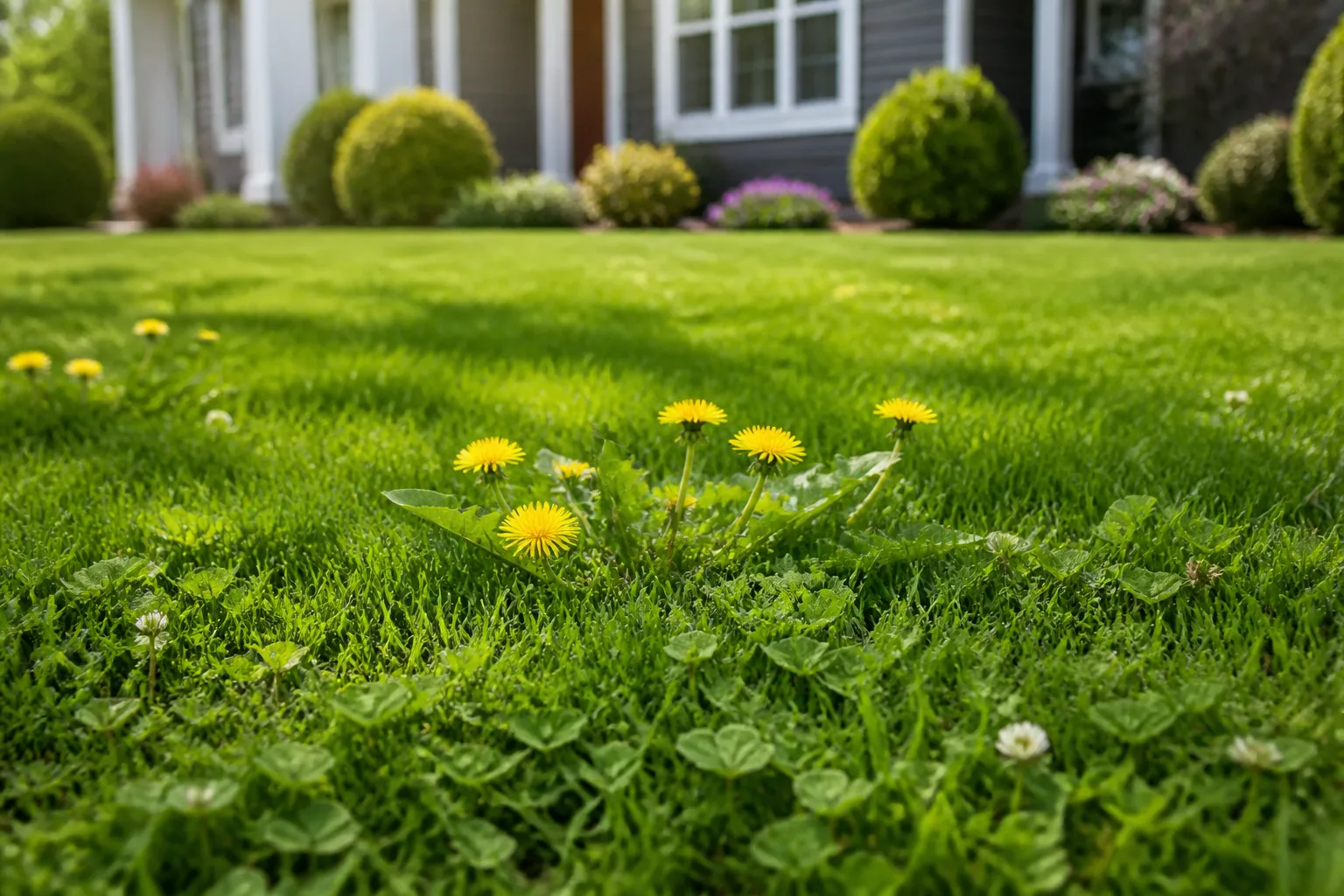
A lawn full of weeds is not automatically a lost cause, but it does need a different response from a few dandelions in otherwise dense grass. The first job is to find out how much living turf remains, which weeds are present, and what made the grass thin. That quick assessment tells you whether to spot-treat, overseed, replace a few patches, or renovate a larger area.
Do not begin by spreading fertilizer or weed killer over the whole yard. A product cannot fix deep shade, standing water, hard soil, or grass that is poorly suited to the site. Start with the lawn itself, then work through a staged recovery plan.
The Short Answer: Diagnose First, Then Choose a Repair
If desirable grass still covers most of the lawn, preserve it: mow carefully, remove or control the weeds you can identify, correct the site problem, and fill thin areas during the right growing window. If weeds and bare soil dominate, repeated spot treatments may cost more time than rebuilding the affected section or starting over. For a small, isolated patch, lift or suppress the problem area and reseed or lay compatible sod.
The sequence matters. Identify the weed before choosing a control method, and check any product’s label before planning new seed. Some treatments can delay or prevent germination, so a “weed first, seed tomorrow” plan can waste a season. Penn State Extension’s lawn-renovation guidance likewise starts with correcting the cause of turf decline and distinguishes renovation programs by how much desirable turf remains.
Start With a Lawn Check, Not a Product
Walk the yard when the grass is dry enough to see its structure. Look at several representative spots rather than judging from the greenest edge: note where grass is thick, where weeds form a continuous mat, and where soil is exposed. Pay attention to patterns. Weeds concentrated under trees, along a wet downspout, on a compacted path, or in the hottest strip often point to a condition the turf cannot tolerate.
Take photos of the dominant weeds and keep a quick map of the worst patches. A patch that expands from runners needs a different plan from isolated plants scattered through healthy grass; a low, blade-like plant can also be difficult to distinguish from the lawn itself. The University of Minnesota Extension’s weed diagnostic tool is one starting point for identification; a county extension office or local turf specialist can help when a large renovation depends on getting the diagnosis right.
Identify broadleaf, grassy, and sedge weeds
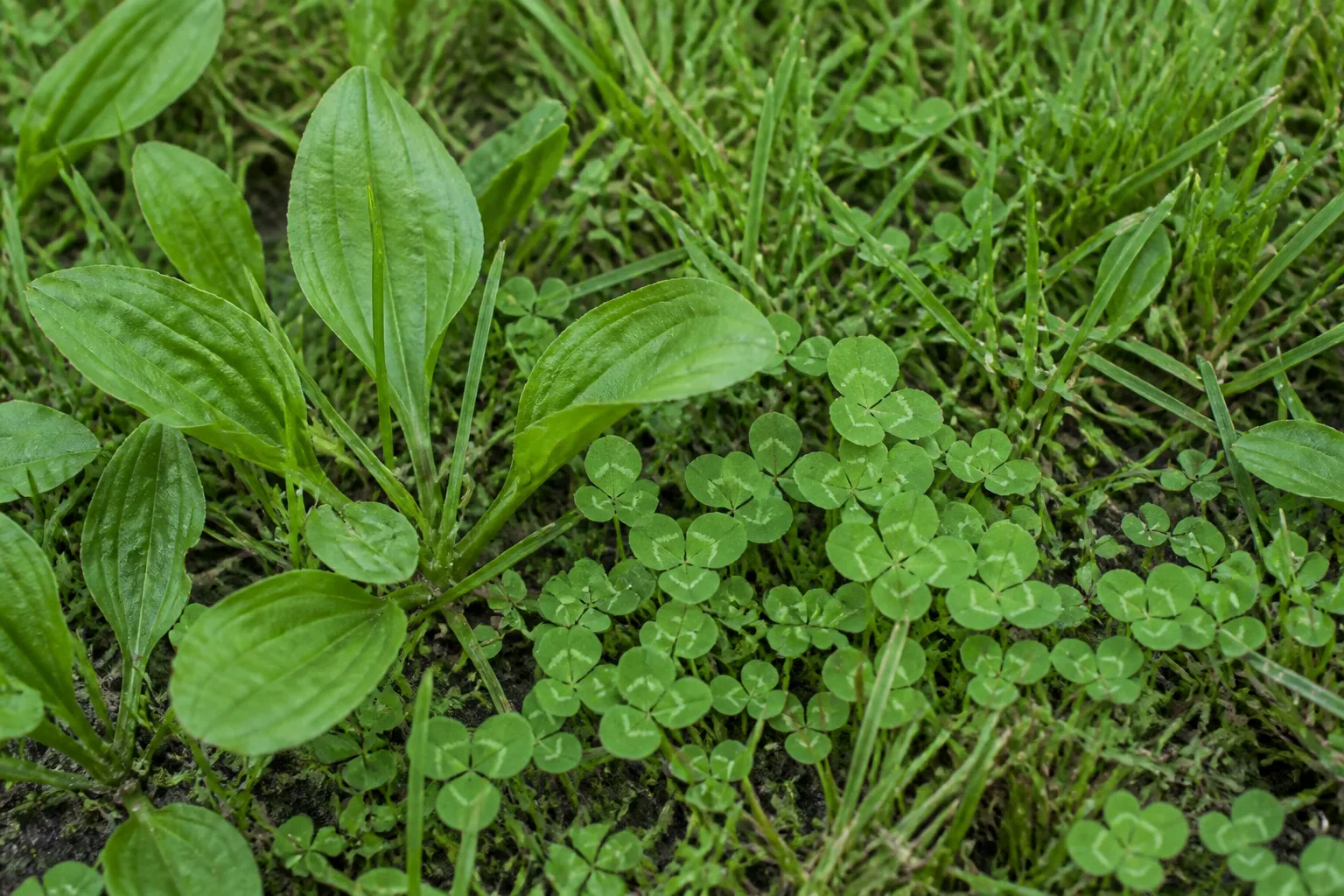
Broadleaf weeds such as dandelion, plantain, clover, and chickweed have leaves that look unlike ordinary turf. Some grow from a central crown or taproot; others creep along the surface and root at nodes. Grassy weeds, including crabgrass, have narrow blades and can blend into the lawn, while sedges such as nutsedge often have upright, glossy leaves and a triangular stem when rolled between your fingers.
These groups are not interchangeable. A hand tool can remove a small taprooted weed; digging every runner out of a creeping plant may tear up more lawn than it saves. A treatment labeled for broadleaf weeds may not control sedges or grassy weeds, and a product safe for one turf species may injure another. If you cannot name the weed confidently, postpone a whole-lawn application and get an identification first.
Also look for clues about how the weed spreads. An annual that is about to flower is a seed-spread problem; a perennial with a crown, taproot, or creeping stem is a regrowth problem. Mowing can prevent some seed heads from maturing, but it will not remove an established root system. That distinction helps you decide whether to pull, dig, mow repeatedly, use a labeled product, or replace a patch.
Also decide what counts as a problem. A lawn can include clover or low flowers without being unhealthy; the RHS notes that some gardeners deliberately retain lawn wildflowers for their flowers and lower-input maintenance. If you want a uniform grass surface, that is a valid goal too. Choosing the goal first prevents unnecessary treatment of plants you would have been happy to keep.
Decide Whether to Patch, Overseed, or Renovate
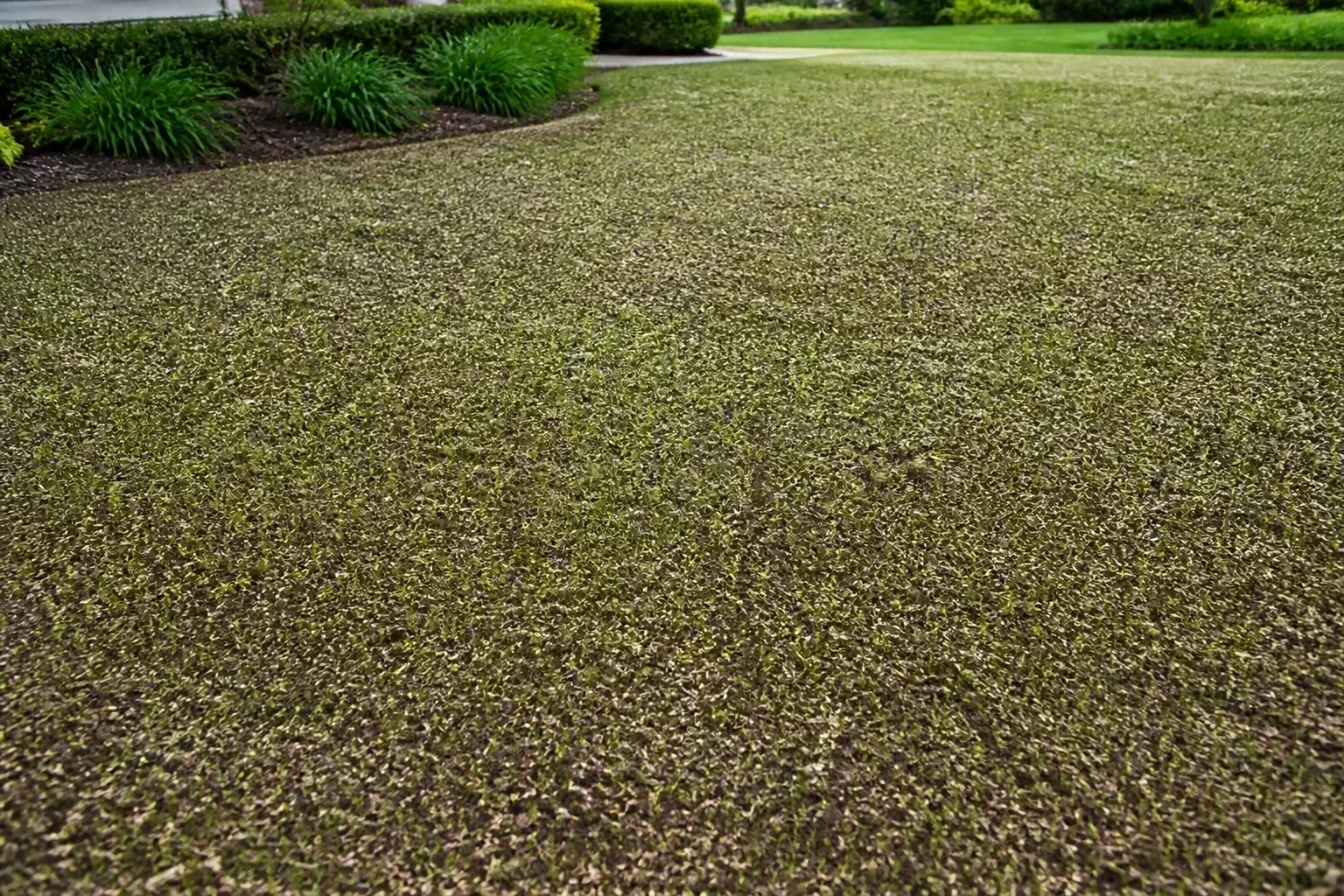
Use the amount and continuity of healthy grass to choose the scale of the job. A few weeds in thick turf call for targeted removal and better maintenance. Thin but continuous turf may respond to overseeding after the weed and site issues are addressed. A lawn that is mostly weeds, bare soil, or an unwanted perennial grass may need a more complete renovation because new seed scattered over living weeds usually has little room or soil contact.
| What you see | Better starting plan | Why |
|---|---|---|
| Dense grass with scattered weeds | Spot removal or a correctly matched treatment; keep turf vigorous | Preserve the established lawn and avoid disturbing good grass |
| Grass throughout, but thin or patchy | Correct the cause, then overseed or repair individual bare areas | Existing turf can help fill in while new seedlings establish |
| Weeds or bare ground dominate; persistent grass-like weeds are widespread | Plan a section-by-section or full renovation | Seed needs exposed soil and the old vegetation may keep competing |
Use the 50% turf benchmark as a starting point
Penn State Extension’s renovation guidance uses 50 percent desirable turfgrass as a dividing point between lighter renovation and programs for lawns with less desirable turf or perennial grass weeds. Treat that as a useful benchmark from a Pennsylvania program, not a universal law: climate, grass species, weed biology, budget, and how you use the yard all change the decision. If you are unsure, estimate the lawn in a few sections and ask a local extension office whether overseeding is likely to compete successfully.
The more important question is whether you can give new grass a fair start. If the area is still packed with living weeds, or if a spreading weed returns from underground stems, seeding over the top is unlikely to solve the problem. If most of the grass is alive and the weeds are scattered, destroying everything would create an unnecessary bare-soil project. Choose the smallest intervention that can realistically change the outcome.
To make the estimate repeatable, divide the yard mentally into a few sections and inspect several spots in each one. Count only the grass you actually want to keep as desirable turf; green weed leaves do not count as lawn cover. You do not need a survey-grade measurement—the point is to stop one unusually green edge or one especially ugly patch from making the decision for the whole yard. Mark problem areas on a phone photo and reassess those same spots after mowing.
Cut an Overgrown Lawn Down in Stages
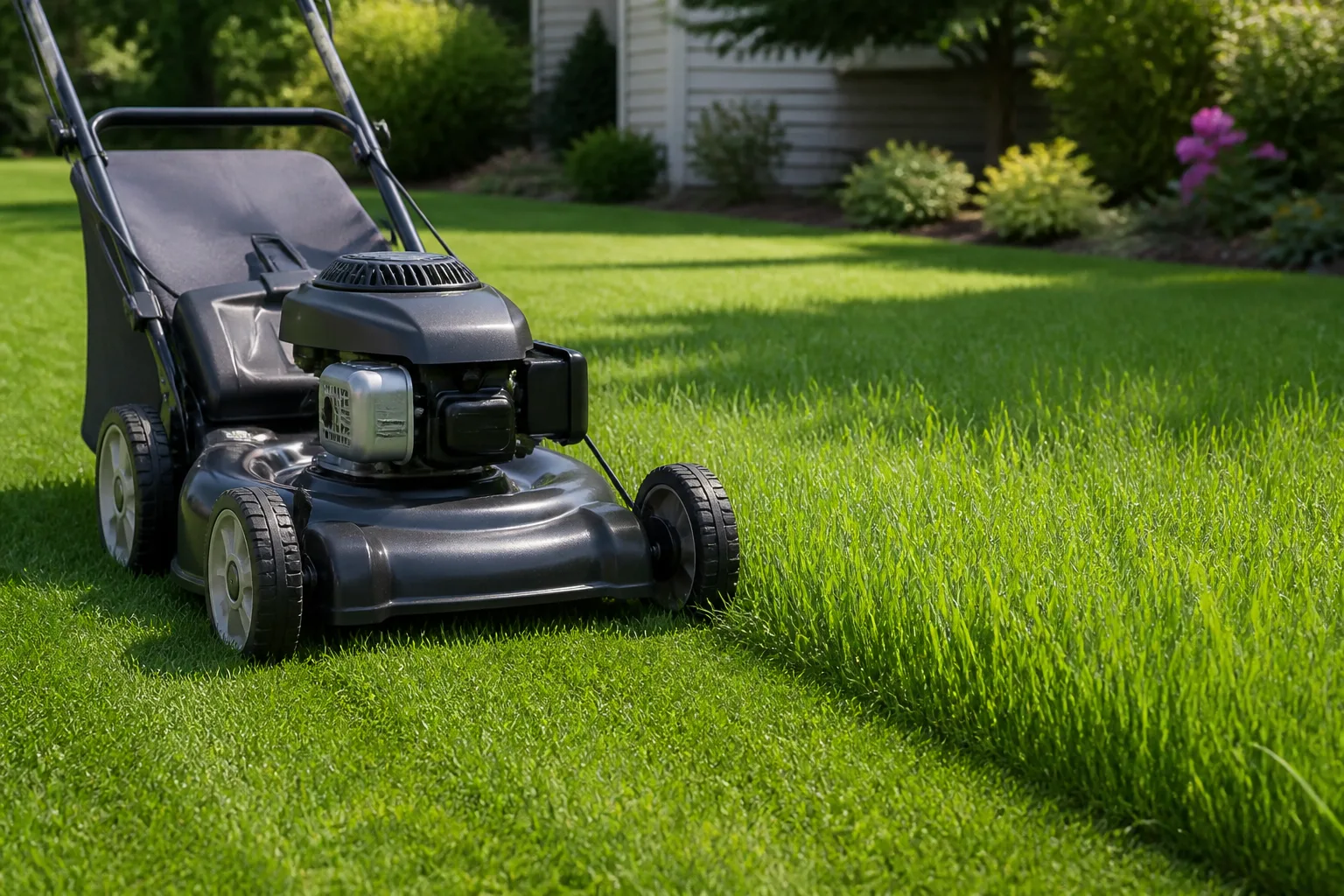
When weeds tower over the grass, do not scalp the lawn in one pass. Set the mower high and remove only a portion of the leaf growth, then let the grass recover before lowering the deck for another cut. Penn State Extension describes the one-third rule as a useful mowing guide and explains that a taller, denser turf canopy shades soil and can reduce weed pressure in its article on mowing and weed pressure. Its precise recommended height is regional and grass-dependent, so use your local turf guidance rather than copying a single number for every yard.
Before you mow, check for branches, toys, wire, holes, and other objects hidden in the growth. Use eye protection and sturdy shoes, keep children and pets away from the work area, and avoid mowing saturated soil that the mower could rut. If the grass is taller than the mower can handle safely, use a brush cutter or professional service for the first pass, then return with a mower once the surface is visible and reasonably even.
Decide whether to bag or mulch the clippings
If weeds have seed heads, bag and dispose of the clippings according to local yard-waste rules; returning mature seed heads to the lawn can spread them. If the weeds are not seeding and the clippings are short enough to fall through the grass, leaving them can return nutrients. Penn State’s mowing guidance supports returning ordinary clippings when mowing is frequent enough that they do not clump.
For a very tall first cut, clumps can smother the surviving grass. Rake or collect them rather than leaving a thick layer over the turf. Clean the mower deck and check the wheels after working in a patch with mature seed heads, rhizomes, or sticky plant material so you do not carry them into a clean area.
Choose a Weed-Control Method That Fits the Lawn
Pull or dig isolated weeds when the soil is moist and you can remove the crown or most of the root without making a large hole. For spreading weeds that weave through the turf, repeated mowing can limit flowering but may not remove the roots. If the lawn is healthy and one identified weed is widespread, a selective treatment may be an option only when its label names both that weed and your grass type.
Pre-emergent products are for preventing listed weeds from establishing from seed; they do not remove weeds already growing. They may also interfere with grass seed, so check the label’s reseeding interval before planning overseeding. If the new grass is the priority, do not guess at a compromise interval. Pick the recovery season first and ask a local extension source or the product manufacturer when the label does not answer your situation.
When a labeled herbicide may help
Herbicides are one tool, not the repair plan. Do not broadcast a product over unidentified weeds, stressed grass, or a lawn you are about to reseed. The current label controls where, when, and how a product may be used; it also specifies protective equipment, weather limits, re-entry instructions, and intervals before seeding or mowing. If those directions conflict with your recovery schedule, choose another method or postpone the application.
Avoid home remedies such as vinegar, bleach, salt, or boiling water on an active lawn. They do not distinguish weeds from desirable grass and can leave dead patches that need repair. “Weed and feed” is not automatically the right choice either: fertilizer can feed unwanted growth, and a combined product may not match the species or timing you need. Test soil before adding lime or nutrients, and apply only what the results and product label support.
Fix the Conditions That Let Weeds Win
Weeds often take advantage of an opening; removing them without changing the conditions can leave the same opening for the next crop. Penn State Extension lists shade, drought, poor drainage, compaction, unsuitable grass, pests, disease, thatch, and improper mowing among the possible causes of declining turf. Diagnose the part you can see before buying seed or fertilizer.
Check compaction, drainage, shade, and soil
Push a screwdriver into both a healthy and a weak patch when the soil is moist, not saturated. A sharp difference in resistance can point to compaction, especially in paths or play areas. After ordinary rain, look for water that ponds in the same spot or runs across the surface; fix drainage or grading rather than repeatedly seeding a basin that stays wet.
Assess sunlight over a full day. If tree shade is too deep for the grass already there, choose a shade-tolerant turf for that region, reduce competition where appropriate, or replace part of the lawn with a bed or groundcover. Do not keep reseeding a surface that gets too little light for the seed mix to persist. In a hot, dry site, a locally suitable warm-season grass or a lower-water landscape may perform better than a cool-season mix.
If soil acidity or nutrient shortage is suspected, use a soil test instead of applying lime or fertilizer by guesswork. Core aeration can help compacted soil when the grass is actively growing and the ground is moist enough for tines to penetrate; it does not correct poor grading, heavy shade, or weeds with spreading roots. Avoid aggressive dethatching or aeration when heat, drought, or muddy conditions would add stress.
Repair Bare Areas or Rebuild the Lawn
For a small patch, remove weeds and roots, loosen only the surface enough to expose soil, level it, and sow compatible seed at the label rate. A piece of matching sod gives quicker cover but costs more and still needs careful watering. The RHS lawn-repair guide recommends reseeding or returfing in spring or autumn and notes that a broadly patchy lawn may be better reseeded or returfed as a whole; adapt its seasonal advice to your local climate and grass type.
For a large renovation, divide the work into manageable sections if you cannot prepare and water the entire area at once. Remove or control the existing vegetation using a method that fits the weed and your safety preferences, then correct the cause of turf loss, prepare the soil, and seed or lay sod during a suitable window. Penn State’s lawn-renovation guidance emphasizes correcting the underlying cause before investing in renovation and describes programs ranging from overseeding a lawn with substantial desirable turf to rebuilding a heavily deteriorated one.
Prepare the seedbed and protect new seedlings
Seed needs contact with soil, not a layer of thatch or tall weeds between the seed and the ground. Rake away loose debris, loosen the upper surface, spread the seed evenly in two directions, and press it into contact without burying it deeply. Use a mix suited to the region, sunlight, traffic, and irrigation you can provide; a bargain bag chosen only by its label color can contain grasses that will not fit the site.
Keep the seed zone consistently damp during germination, using light watering when rain does not provide enough moisture. Once seedlings are established, gradually shift toward deeper, less frequent watering that encourages rooting. Keep foot traffic and pets off the new area as much as practical, and wait to mow until the young grass is tall and rooted enough to tolerate the cut. Seed and sod need different aftercare, so follow the product or local extension directions for the specific grass.
Sheet mulch belongs to a different decision. Fine Gardening’s sheet-mulching guide describes cardboard or paper under mulch as a way to suppress vegetation and prepare a garden bed. That is useful if you are converting the area, but it smothers the grass as well as the weeds; it is not a way to rescue living turf.
Time Recovery for Your Grass and Climate
There is no single “best month” for every lawn. Cool-season grasses such as tall fescue, ryegrass, and Kentucky bluegrass generally establish best when temperatures favor active growth in fall or, in some regions, early spring. Warm-season grasses such as bermudagrass, zoysiagrass, and centipedegrass are usually repaired while they are actively growing in warmer weather. Local extension calendars are more useful than a date borrowed from another state.
Time weed control around the seed plan. If the product label requires a waiting period before seeding, count from the application date and follow the stated interval; do not assume every active ingredient behaves the same way. If the ideal seeding window is close, it may be better to hand-remove or mow the weeds, seed at the right time, and handle later flushes selectively once the new grass can tolerate the method.
Avoid major renovation during heat, drought, frozen soil, or heavy rain. Seedlings need moisture and time to root before weather turns harsh, while working saturated ground can compact or rut it. If you miss the reliable establishment window, stabilize the area, prevent weeds from setting seed where feasible, and plan the repair for the next suitable season rather than forcing seed into poor conditions.
Keep Weeds From Taking Over Again
After the grass fills in, keep the mower high enough for your grass type and avoid removing more than one-third of the leaf in a cut. Mow often enough to prevent clumps, use a sharp blade, and adjust watering to weather instead of running a fixed schedule through rain or drought. A thick lawn is not weed-proof, but it leaves fewer open sites for new seedlings.
Walk the same weak spots every few weeks during active growth. If weeds return in one location, ask what changed there: sprinkler coverage, runoff, shade, soil compaction, foot traffic, or a seedhead that escaped the mower. Remove new isolated weeds before they set seed, repair fresh bare spots promptly, and reassess the grass choice if the same area repeatedly fails.
You do not have to pursue a perfectly uniform lawn. The RHS guidance on weeds in lawns explains that some people retain low-growing wildflowers, while those seeking an all-grass surface can remove selected plants and repair the resulting gaps. A deliberate mixed lawn, a smaller turf area, or a groundcover bed may be easier to sustain than repeatedly fighting plants that are well matched to the site.
Mistakes That Can Make the Lawn Worse
The most common setback is treating the visible weeds while leaving the root cause untouched. Repeated seed, fertilizer, or herbicide cannot compensate for deep shade, standing water, compaction, or a grass species unsuited to the yard. Correct one or two clear site problems before judging whether the lawn can recover.
Avoid scalping tall grass, using a broad treatment before identifying the weed, applying pre-emergent right before seeding, or spreading fertilizer without a reason. Do not till a perennial weed patch without a follow-up plan; cutting creeping roots into pieces may distribute them. And do not lay cardboard or thick mulch over turf you intend to keep—the method works by blocking growth, including the grass.
Finally, do not expect a single cleanup to deliver a weed-free lawn. Annual weeds may disappear after mowing or frost, while perennial weeds can return from surviving roots. A realistic goal is to reduce the dominant weeds, rebuild the turf where it can thrive, and make the next round of seedlings easier to manage.
Conclusion
To deal with a lawn overgrown with weeds, first identify the plants and estimate how much healthy grass remains. Preserve dense turf with staged mowing and targeted control; repair thin areas when the grass and season can support new seed; renovate larger, weed-dominated sections only after correcting the cause of decline. Use local guidance for grass-specific timing, and follow any pesticide label before treating or reseeding.
The lawn’s recovery depends less on one powerful product than on giving desirable grass the conditions and space to return. Check the weak spots again after each repair, and deal with new weeds before they set seed. That steady follow-through turns an emergency cleanup into a lawn that is easier to manage next season.