How to Get Coconut Oil Out of Clothes Safely
Treat fresh or set-in coconut oil stains with fabric-specific steps. Learn when to use powder, laundry detergent, cool or warm water, and a dry cleaner.
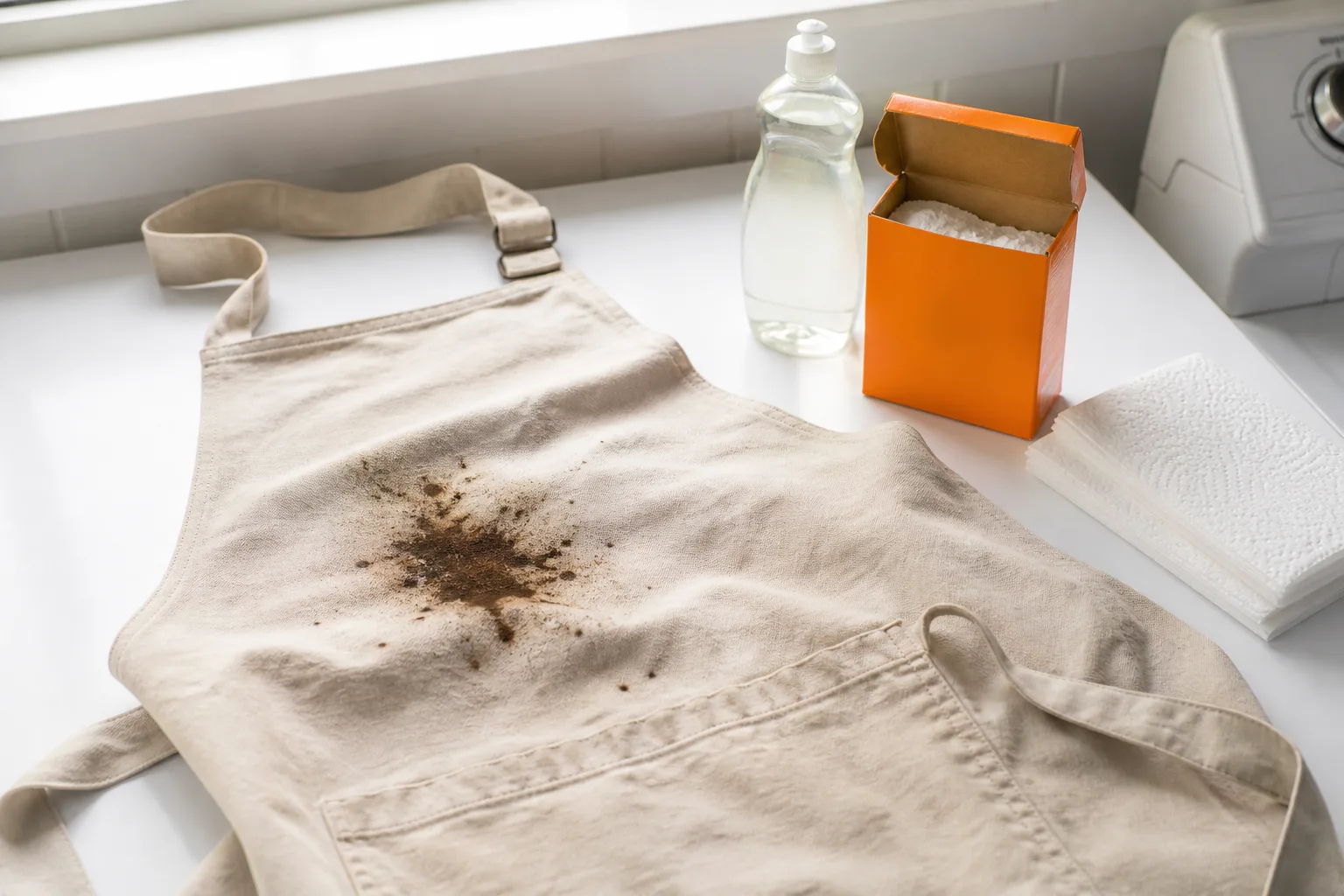
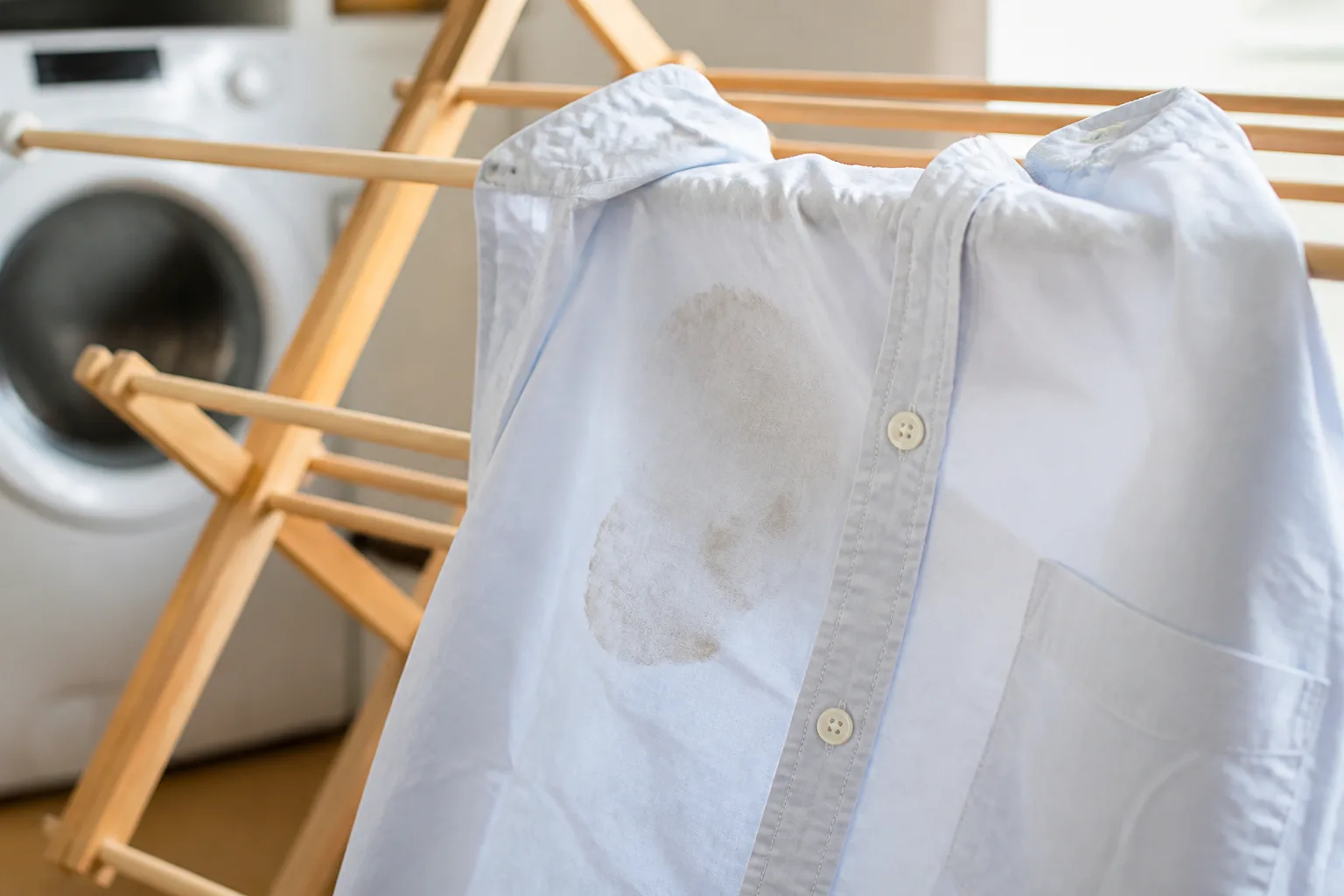
A dab of coconut oil can spread farther through a shirt than it first appears. The spot may look small on the surface, but oil can travel between layers of fabric, leave a translucent ring, and show up again after the garment dries. The right response is to remove the excess before it spreads, give a suitable cleaner time to work, and keep the garment out of the dryer until you have checked it.
For washable, colorfast clothing, start by lifting away any solid oil and blotting any liquid with a clean white towel. A little cornstarch can absorb residue, and a small amount of liquid laundry detergent or grease-cutting dish soap can help release the remaining oil before washing. The fabric’s care label should guide the water temperature and whether home washing is appropriate at all.
The Short Answer
For a fresh coconut oil stain, scrape up any firm pieces with a spoon, then blot the spot without rubbing. If the garment is washable, cover the remaining mark with cornstarch for about 20 to 30 minutes, brush the powder away gently, and work a small amount of liquid laundry detergent into the stain. Wash according to the care label and detergent directions, then let the item air-dry while you inspect the area. Repeat pretreatment and washing if a shadow remains; do not use a heated dryer until it is gone.
If the label says dry clean only, or the item is silk, wool, lined, embellished, vintage, or valuable, stop after lifting and blotting the excess. A dry cleaner can choose a method for that fiber and construction. Do not test a solvent, hot water, or a home stain cocktail on a garment that cannot safely be washed.
Why Coconut Oil Leaves a Clothing Stain
Coconut oil is a fat, so water alone does not carry it away. When it lands on fabric, it can coat the fibers and create a darker, translucent spot even if the oil has little visible color. If it cools and firms up, the residue may feel waxy; if the room or fabric is warm, it may be liquid and more likely to spread when pressed or rubbed.
The practical distinction is between lifting bulk oil and removing the thin film left behind. A spoon or paper towel handles the first job. A dry absorbent powder can draw out some surface oil, but it cannot finish the job on its own. A surfactant in liquid laundry detergent or dishwashing liquid helps loosen oily soil so water can carry it away during a proper rinse and wash. The University of Georgia Cooperative Extension’s textile guide for oil stains separates vegetable oil from other oil categories and warns readers to follow garment care labels and pretest cleaning agents. Its apparel directions use specialized cleaning methods, so treat that page as a boundary for what fabrics can tolerate rather than a universal home recipe for coconut oil.
The stain can be harder to see while the fabric is wet. On a pale cotton shirt, the area may look clear in the washer and reappear as a gray or yellowish shadow once dry. That is why the last step is not simply “take it out of the machine”; it is to inspect the dry fabric in good light before using heat.
The First Move: Keep the Mark Small
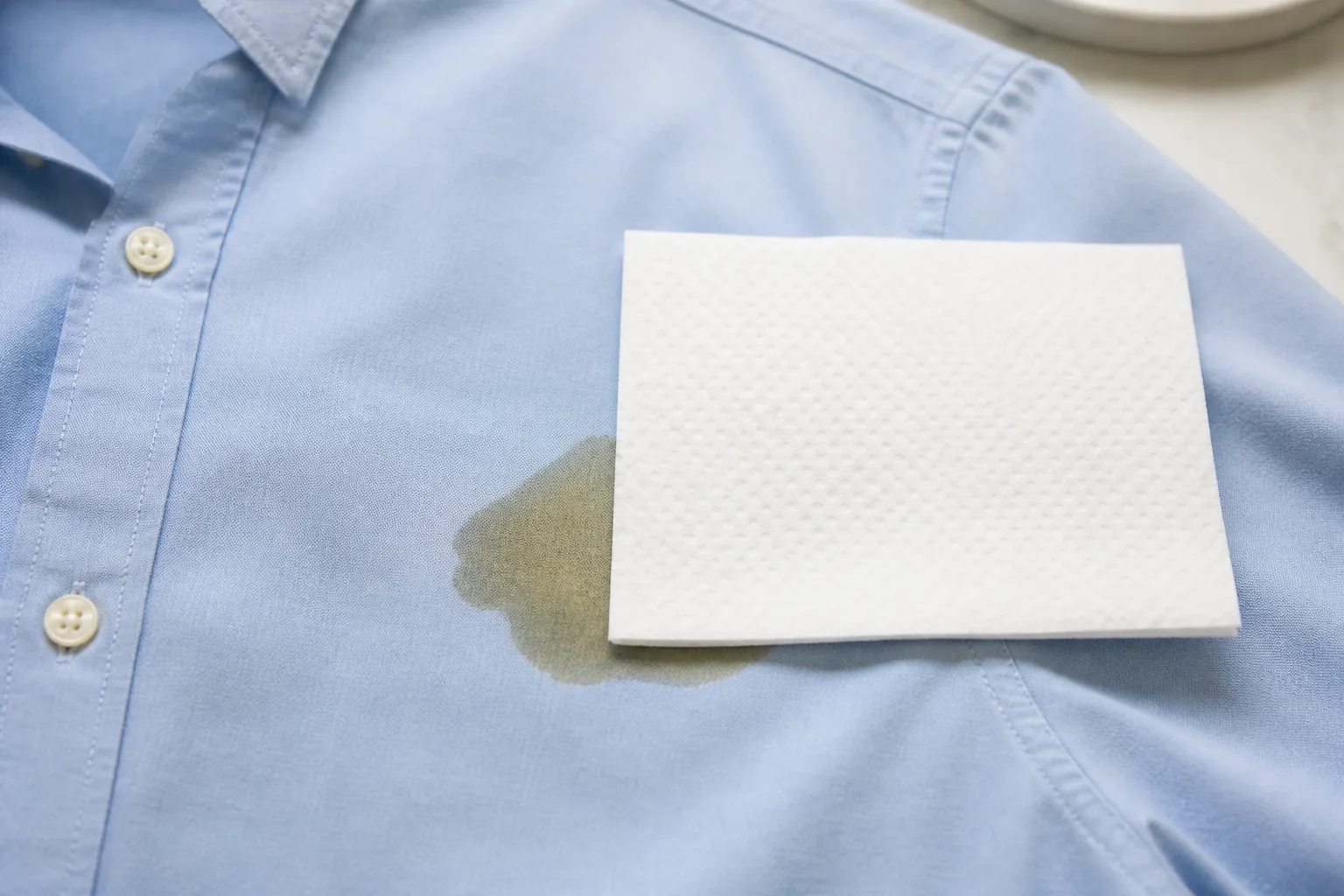
If you have just spilled coconut oil, resist the urge to scrub it immediately. Scrubbing pushes oil sideways and deeper into the weave, and it can roughen knits or raise the nap on brushed fabric. Put a clean white paper towel or cloth over the spot and press straight down; replace it when it becomes oily rather than sliding it across the material.
If the oil is cool and solid, lift it with the edge of a spoon, dull butter knife, or plastic card. Work from the outside toward the center so you do not widen the ring. On a shirt, place a clean towel or piece of cardboard between the stained layer and the back of the garment; otherwise oil can soak through and create a second mark beneath the first.
For a large spill, do not fold the stained section onto itself or toss the garment into a laundry basket against clean clothes. Keep the spot facing outward, away from other fabric, until you can treat it. If you are away from home, blot and contain the spill now, then finish treatment when you can read the garment label and use the right cleaner.
Check the Care Label Before Treating
Look for the garment’s washing, bleaching, and drying instructions before you add water or cleaner. The label matters more than a stain-removal shortcut: a washable cotton T-shirt, a silk blouse with a lining, and a structured blazer may all show the same oil mark but cannot be treated the same way. University of Georgia Cooperative Extension’s textile guidance advises readers to follow the care label and pretest each cleaning agent on an inconspicuous area to check colorfastness.
If the care label permits machine washing, test your chosen detergent or pretreatment on an inside seam or hem, especially on dark, saturated, printed, or contrast-dyed fabric. Dab rather than scrub, wait the product’s stated interval, and check whether color transfers to a white cloth or the test patch changes appearance. If it does, rinse only as directed by the label and move to a professional cleaner.
For a dry-clean-only garment, do not use dish soap, powder paste, or water as an experiment. Gently lift any solid coconut oil and blot liquid with a white cloth. You can tell the cleaner that the mark is coconut oil and point to its exact location. If powder is used to absorb surface oil, remove it carefully before taking the garment in and avoid grinding it into the weave.
How to Remove a Fresh Coconut Oil Stain
Work in this order: lift the excess, absorb what remains, pretreat the oily film, wash within the garment’s limits, and inspect before drying. For most sturdy washable clothes, one careful round is more effective than adding several products at once. Start with a small amount of cleaner and repeat only if the first wash leaves a visible shadow.
Lift solids and blot liquid
Use a spoon to pick up any cool, firm coconut oil. Hold the spoon almost flat and slide it under the solid instead of scraping hard across the fibers. If the oil is liquid, press a white paper towel onto it and lift; use a fresh section each time so you are not transferring oil back onto the garment.
Do not rub with a damp cloth. Water can make the oil spread around the yarns before a detergent has loosened it, and colored towels can leave dye behind. Keep the cardboard or towel between garment layers until the stain has been pretreated and rinsed.
Let a dry powder draw out leftover oil
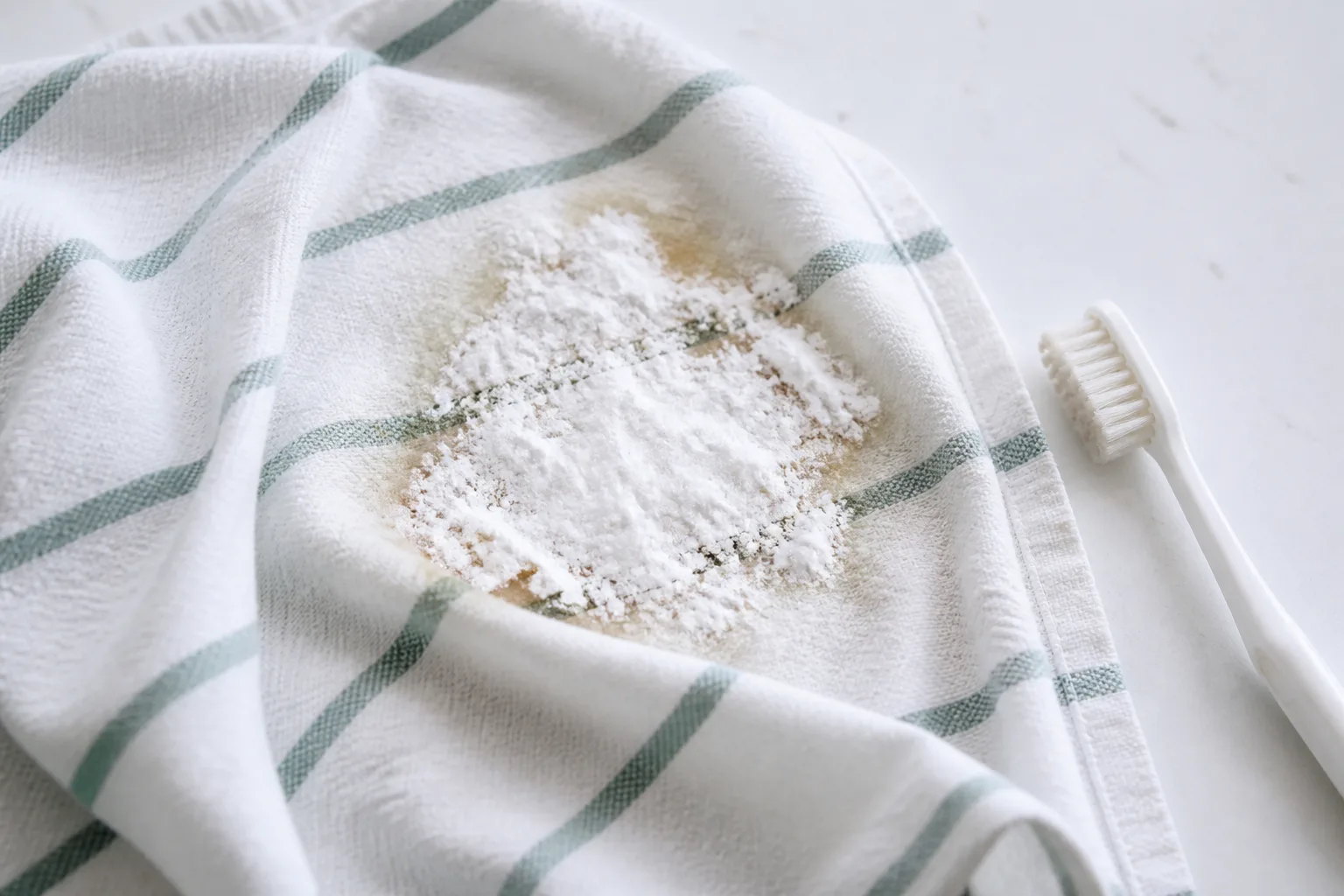
For a washable item with an oily sheen still visible, sprinkle a thin, even layer of cornstarch over the spot. Leave it in place for 20 to 30 minutes, then brush it into a bin or sink with a soft, dry brush. If the powder becomes visibly greasy or clumps, it has taken up some oil; remove it and apply a fresh layer once rather than rubbing the clumps into the fabric.
Cornstarch is an absorbent step, not a complete stain remover. Real Simple’s oil-stain method uses dishwashing liquid, then rinses and launders according to the care label. Consumer Reports’ stain-removal guide recommends a laundry pretreatment and detergent for washable oil and food grease, then repeating if needed before drying. If you do not have a dry absorbent powder, blot again and move to pretreatment; do not delay for a particular pantry product. Avoid making a wet baking-soda paste on delicate fibers, where gritty rubbing may damage the surface or leave residue.
Pretreat with a grease-cutting cleaner
For everyday washable clothes, apply a small amount of liquid laundry detergent directly to the remaining mark. Choose a product whose label is suitable for the garment and stain; a liquid can contact the oil more directly than sprinkling dry detergent over a small spot. Gently work it into the fabric with your fingertips, then leave it for the time printed on the detergent or pretreatment label. Do not allow a concentrated product to dry on the garment.
If the spot is still oily and you do not have a suitable laundry pretreatment, a drop of plain grease-cutting dishwashing liquid can be used on sturdy, colorfast fabric. Use it sparingly and keep it on the stained area; avoid formulas marketed as moisturizing or containing added oils. Gently massage the fabric together or use a soft toothbrush only on durable cotton, denim, or canvas. For knits and synthetics, use your fingers instead of bristles.
Real Simple’s practical oil-stain directions use a small amount of grease-cutting dish liquid and a short dwell time, then rinse and repeat if needed. For a machine wash, however, follow the garment and product labels and do not pour dish soap into the washer as if it were laundry detergent. The pretreatment belongs on the spot; the washer should get the correctly measured laundry detergent.
Wash at a fabric-safe temperature
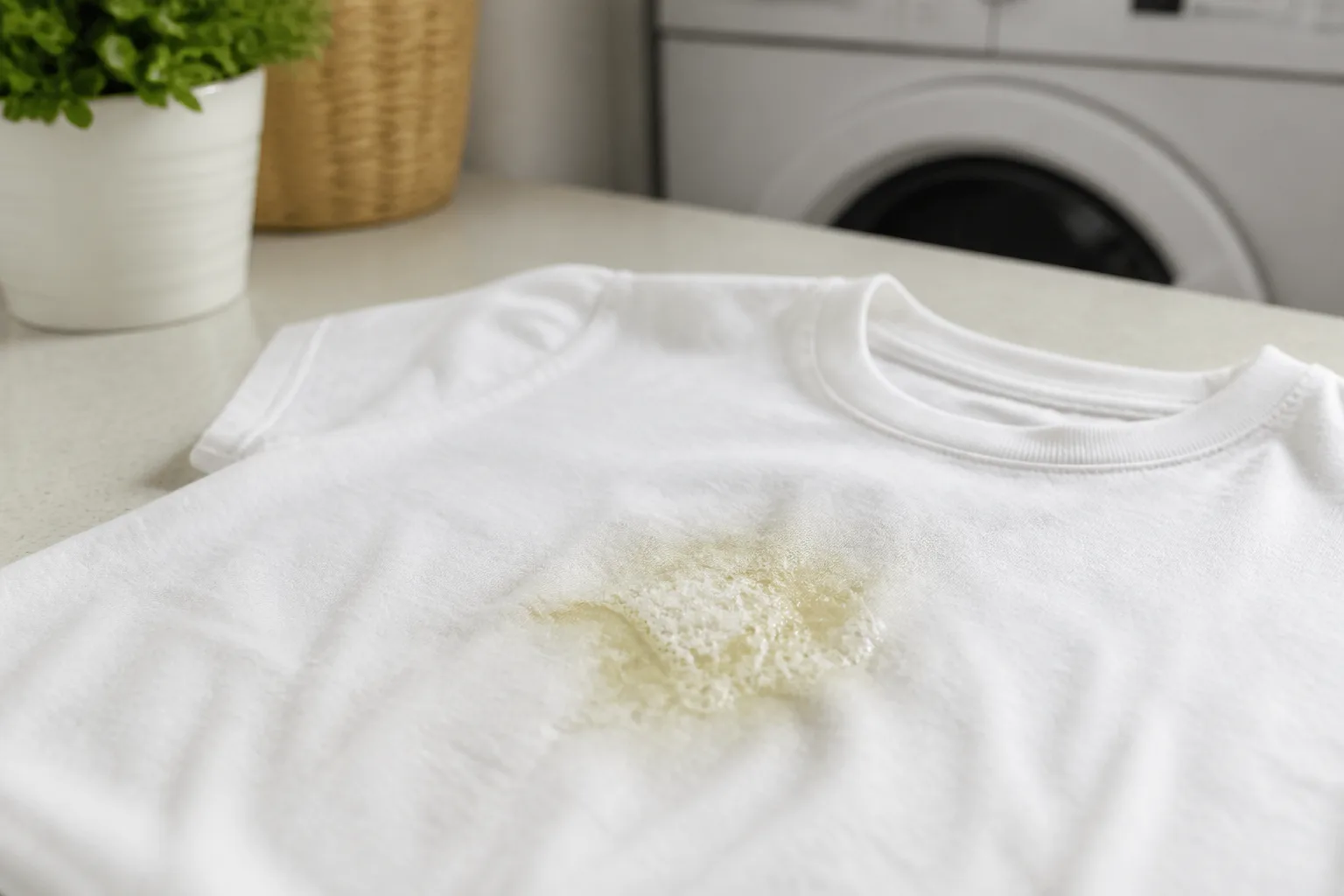
Rinse or wash away the pretreatment as directed by its label, then launder with the normal measured amount of detergent. Keep the garment separate if the stain is large enough to transfer or if it has a lot of pretreatment on it. Do not overfill the machine; clothing needs room to move so detergent and rinse water can reach the treated area.
Recommendations differ. Real Simple’s oil-stain guide says to launder in the warmest water allowed by the care label, while Consumer Reports’ oil and food-grease directions use cold water and advise keeping heat away until the mark is gone. Neither temperature applies to every fabric and stain product, so let the care label and cleaner’s instructions set the limit. Use cold when the garment requires it; use warm only when permitted. Avoid pouring boiling water onto a garment or ignoring a temperature warning because the stain is oily.
Air-dry and inspect before using heat
After the wash, check the spot in strong natural or bright indoor light. Look at both sides of the fabric and compare the treated area with the surrounding weave; a faint ring may be easier to spot from an angle. If you are unsure while the garment is damp, let it air-dry completely before deciding. Do not iron it, tumble-dry it, or place it on a radiator while you are still evaluating the stain.
If any translucent patch or greasy feel remains, repeat the absorbent and detergent pretreatment, then wash again within label limits. Consumer Reports and Real Simple both advise keeping stained fabric out of a heated dryer until the mark is removed, and UGA Extension likewise allows a second treatment if grease remains. Repeating one measured process is safer than escalating immediately to bleach, a solvent, or several products mixed together.
How to Treat a Stain That Has Already Been Washed or Dried
A stain that has gone through the washer but not the dryer is often worth treating again. Rewet the spot only if the fabric label allows it, apply liquid laundry detergent or an oil-stain pretreatment, and let the product work for the full label-directed time. Wash with the regular detergent dose and inspect again before machine drying. Do not keep adding detergent to the drum; a correct dose and focused pretreatment work better than an overloaded, sudsy wash.
If the stain has been tumble-dried, set expectations: the mark may be much more difficult to remove, and some discoloration can remain. Start with a product labeled for grease or oily food stains, test it on a hidden area, and follow its instructions exactly. A long pretreatment or soak is appropriate only if both the product and garment label permit it. Wash, air-dry, and repeat once or twice if the fabric remains in good condition.
Avoid using WD-40 or another household lubricant to “dissolve” the coconut oil. That adds a petroleum-based product, odor, and residue to a garment and can create a new cleaning problem. Do not use a solvent unless the garment maker or a professional cleaner recommends that exact product for that fiber. If several careful wash cycles do not improve the mark, or the garment is expensive, structured, or sentimental, ask a professional cleaner before trying a more aggressive treatment.
A compact decision guide helps set expectations:
| Stain condition | Best next move | What to avoid |
|---|---|---|
| Fresh, still oily | Lift or blot, absorb with cornstarch, pretreat, then wash by label | Rubbing, spreading it to another layer |
| Washed but not dried | Pretreat again and wash; inspect before drying | Assuming one wash proves the mark is permanent |
| Put through a heated dryer | Test a labeled grease pretreatment and repeat cautiously | Promising complete removal or adding an unapproved solvent |
| Dry-clean-only or delicate | Blot, lift solids, and tell a cleaner what caused the mark | Water, dish soap, or a home solvent experiment |
Adjust the Method for the Fabric
Cotton, linen, denim, and sturdy blends
Cotton, linen, and many sturdy blends generally tolerate spot pretreatment and machine washing, but colorfastness and garment construction still matter. Use the full lift-absorb-pretreat-wash sequence, and inspect seams, pockets, cuffs, and the reverse side where oil can collect. Thick denim or a folded apron may need a second treatment because oil can travel into the fabric’s inner layers.
If you see a large dark area after blotting, use enough cornstarch to cover it without packing powder into the weave. Then brush away the powder before applying detergent. Do not scrub with a stiff brush just because the fabric feels sturdy; rough handling can fade a printed design or abrade a finish long before it damages plain cotton.
Polyester, nylon, and activewear
Treat polyester and nylon promptly and gently. Oil can leave a persistent-looking shadow on smooth synthetics, and some athletic garments also contain stretch fibers, coatings, or bonded seams that are sensitive to heat or abrasion. Use a product whose label permits synthetic fabrics, massage it with fingertips, and wash at the temperature the garment allows.
Skip vigorous brushing and hot-water experiments on stretch fabric. Avoid fabric softener during the stain-removal wash if the garment maker says it can affect performance finishes. If the mark remains after one or two careful rounds, check the garment maker’s care instructions or a cleaner experienced with technical textiles rather than soaking it in a stronger chemical mixture.
Silk, wool, rayon, and dry-clean-only garments
Silk and wool can lose shape, sheen, or surface texture when exposed to the wrong detergent, water, agitation, or enzyme formula. Rayon and some acetate garments may also distort, shrink, or water-mark. If the label calls for professional cleaning, follow it. Blot liquid, lift cool solids with a spoon, and take the garment in with the stain clearly identified.
If a washable silk or wool item has a care label that explicitly permits washing, use only a product labeled safe for that fiber and follow its directions. Test an inconspicuous section first, avoid brushing, and stop if dye transfers or the fabric changes texture. An expensive garment is a poor place to test several internet remedies simply because the spot is small.
Mistakes That Can Make the Mark Worse
- Rubbing before lifting the oil: This can widen the spot and drive more residue into the fabric. Blot with vertical pressure and work from the edge toward the center.
- Rinsing before removing excess: Water alone does not dissolve coconut oil. Lift or blot first, then use a cleaner that can loosen grease.
- Applying too much dish soap: A thick puddle is difficult to rinse from a garment and does not make the process faster. Use a small spot treatment and wash with measured laundry detergent.
- Assuming baking soda or cornstarch is the whole treatment: Powder can absorb some oil, but a detergent pretreatment and wash are still needed.
- Using heat to “melt it out”: Household guides differ about wash temperature, but they agree that a heated dryer can make a remaining mark much harder to remove. Follow labels and air-dry while checking.
- Treating bleach as a grease remover: Bleach does not replace a grease pretreatment. If a discoloration remains after the oil is removed, consider a label-approved oxygen bleach only when the garment and product directions permit it. Never combine bleach with ammonia, vinegar, or other cleaners.
- Testing a solvent on the front of the garment: A solvent can damage dye, print, finish, or fiber. Dry-clean-only and valuable garments belong with a cleaner, not a sequence of home experiments.
Conclusion
To get coconut oil out of clothes, first stop it from spreading: lift any solid oil, blot liquid, and place a barrier between garment layers. For washable fabric, cornstarch can absorb some residue before you pretreat with liquid laundry detergent or a small amount of grease-cutting dish soap, wash according to the care label, and inspect the garment before applying dryer heat.
Repeat the same careful process if a fresh or washed-only stain remains. A dryer-set shadow may take more than one round and may not disappear completely. For delicate, dry-clean-only, structured, or valuable clothing, blot the spot and let a professional choose the next step. The safest result comes from matching the treatment to the fabric and stopping before a stain-removal attempt becomes fabric damage.



