How to Remove Grass Stains From Every Kind of Shoe
Learn how to remove grass stains from canvas, mesh, leather, suede, and rubber shoes with the right cleaner, brush, rinse, and drying method.
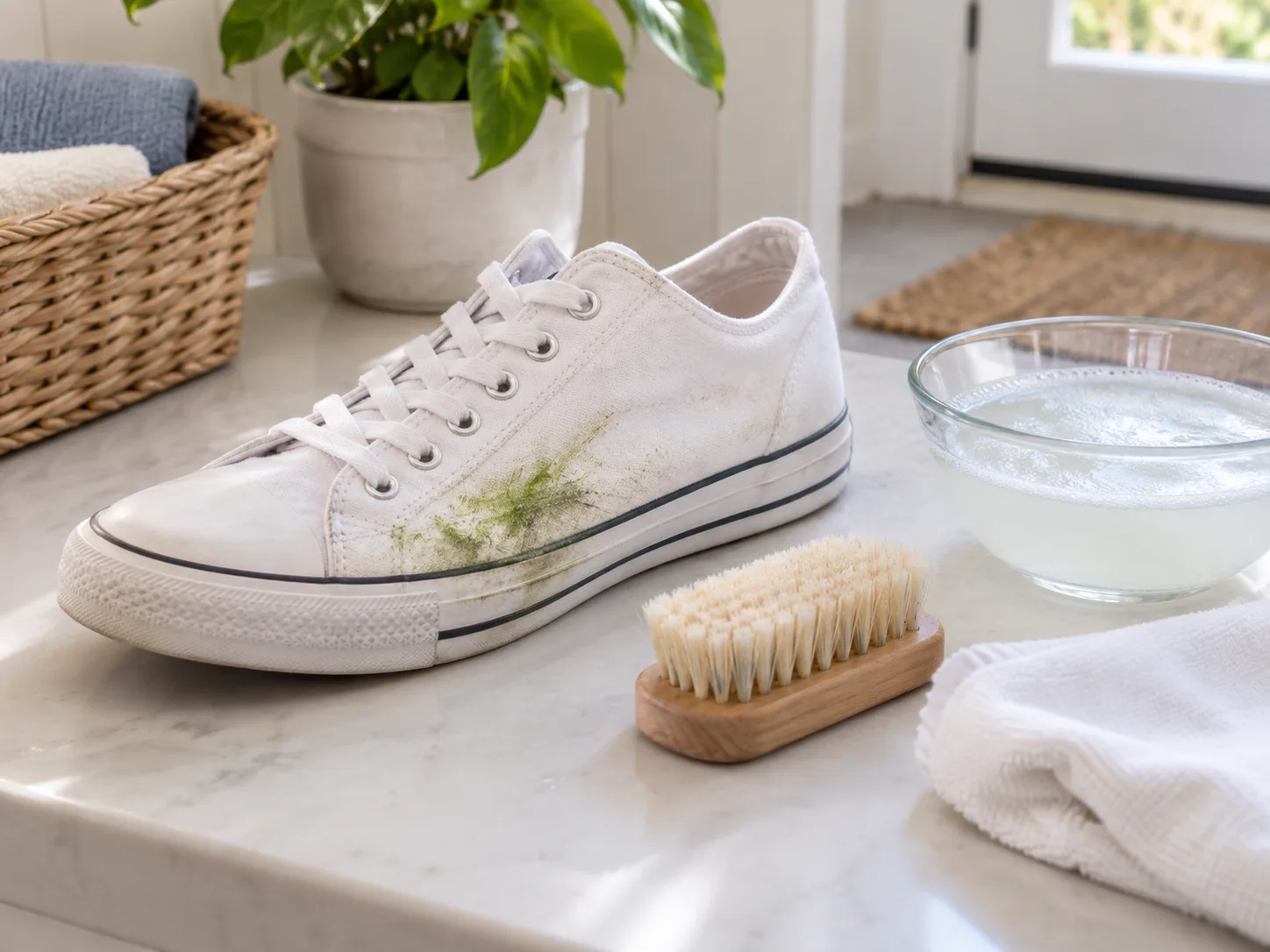
Grass stains are easiest to remove when you treat the shoe material—not just the green mark. A mesh running shoe can usually tolerate a diluted detergent solution and a careful rinse. Suede needs a mostly dry approach. Finished leather needs limited moisture followed by conditioning. Rubber soles can take firmer cleaning than any of those uppers, but an abrasive sponge can still dull or scuff some finishes.
The safest general method is simple: let mud dry enough to brush away, remove laces and loose dirt, test a mild cleaner in a hidden spot, dab or gently brush the stain, remove residue with a barely damp cloth, and dry the shoe slowly with its shape supported. Do not start with bleach, a washing machine, a soaking bucket, or a hard scrub. Those shortcuts can spread dye, loosen adhesive, shrink fabric, or permanently flatten suede.
The quick answer: identify the upper before cleaning
Look at the part that is green. If it is woven fabric, knit, or mesh, use a diluted water-based cleaner. If it is canvas, you can use a little more agitation, but you still should not saturate the shoe. If it is smooth finished leather, keep the moisture controlled and avoid strong household solvents. If it is suede or nubuck, begin dry and use very little liquid. Treat rubber soles separately so a stronger scrub does not touch the upper.
If the label or manufacturer care page says “spot clean only,” follow that limit. Shoe construction varies even within one brand: a washable textile upper may sit on colored foam, leather trim, or a glued-in insole that does not tolerate a full soak. The American Cleaning Institute’s stain-removal guidance supports the same broad principle used here: remove excess first, test treatments, and avoid setting a stain with heat before it is gone.
What you need for a low-risk cleaning setup
Gather a bowl, cool or lukewarm water, a white microfiber cloth, a soft-bristled toothbrush or shoe brush, liquid laundry detergent, cotton swabs, paper towels, and a dry towel. Add a suede brush for suede or nubuck, leather conditioner for smooth leather, and a melamine sponge only for compatible rubber soles. White tools make dye transfer easier to see; a brightly colored cloth can transfer its own pigment to a wet shoe.
Use a small amount of detergent. A few drops in a cup of water is enough for most fabric uppers. More soap does not equal more cleaning: excess surfactant leaves a film that attracts dirt and can create a pale tide mark as it dries. Keep a second bowl or cloth with plain water for removing residue. Never mix cleaners, especially bleach with vinegar, ammonia, or other acids.
The safe sequence for a fresh grass stain
Fresh stains deserve a quick response, but speed should not make you reckless. Follow this order:
- Blot moisture. Press a dry cloth against wet grass residue. Lift rather than rub.
- Remove loose grit. If soil is muddy, let it firm up and brush it away. Scrubbing wet grit into a knit upper creates a larger, darker mark.
- Remove laces and insoles. Clean these separately so the tongue and footbed do not stay wet.
- Patch-test. Dab the intended solution inside the heel or under a tongue edge and wait several minutes.
- Treat the stain from the outside in. Use short, light passes so the green area does not spread.
- Rinse by wiping. Use a clean cloth barely dampened with water; do not hold the shoe under a running tap.
- Dry with airflow. Stuff the toe loosely with white paper or a clean towel and leave the shoe at room temperature.
Remove grit without grinding it in
The brown halo around a grass stain is often soil, not stubborn grass pigment. Let wet soil dry until it is crumbly, then brush from the edge toward the center. On mesh, use a vacuum with a soft brush attachment if available, or tap the sole against your palm outdoors. Do not use a stiff nailbrush on knit: it can fuzz the yarn and make a clean area look permanently worn.
Protect the shape and lining
Support the shoe before you wet it. Remove the insole, loosen the laces, and insert a shoe tree or loosely packed white paper. Avoid newspaper inside light-colored shoes because ink can transfer. Never pack the toe so tightly that the upper stretches while wet. Cleaning one shoe at a time helps you compare the color and finish before treating the pair.
Cleaning mesh and knit athletic shoes
Mesh and knit uppers are porous, so grass pigment can migrate through them. Mix a few drops of liquid laundry detergent into lukewarm water and make a lightly sudsy solution. Dip a soft brush or cloth, wring it until damp rather than dripping, and work in small sections. Use the brush with the weave, not against it, and stop if the fabric begins to fuzz.
For a green mark that remains after the first pass, let the shoe dry completely before repeating. A second light treatment is safer than one aggressive scrub. Enzyme detergents can help with organic residues, but the product must be suitable for the shoe and thoroughly wiped away. Avoid pouring detergent directly onto the upper. Rinse with several passes of a clean damp cloth, rotating to a clean area each time.
Do not use undiluted vinegar, rubbing alcohol, acetone, or chlorine bleach on mesh without explicit manufacturer approval. They can alter dyes, degrade coatings, or create a lighter patch that is more obvious than the original stain. White mesh is not automatically bleach-safe; many “white” uppers contain optical brighteners, colored threads, or bonded films.
Cleaning canvas shoes
Canvas can tolerate gentle brushing better than knit, but it still absorbs water quickly. After dry brushing, apply the diluted detergent solution with a soft toothbrush. Keep the shoe level and work from the edge of the stain inward. If the canvas is white and colorfast, you may use a small amount of oxygen-based laundry product only if the shoe label permits it; always dissolve it first and patch-test it.
Wipe the shoe with a clean damp cloth until the fabric no longer feels slippery. Do not leave a ring of concentrated soap at the edge. If the entire pair needs cleaning, clean both shoes evenly so one does not dry with a noticeably different brightness. Canvas can stiffen as it dries; brush the fibers lightly when almost dry, then allow complete air drying.
Cleaning finished leather shoes
Smooth finished leather is less absorbent than fabric, but the finish can still stain, haze, or crack if you soak it. Start with a dry cloth. If the stain remains, dampen a microfiber cloth with clean water and wipe gently. For persistent organic residue, use a leather cleaner made for the shoe’s finish, following its label and testing it in an inconspicuous area. The Leather Naturally care guidance emphasizes matching care to the leather rather than assuming every leather responds the same way.
Avoid household rubbing alcohol as a first-line treatment. It may remove some color along with the stain and can strip oils from the surface. Avoid vinegar on delicate, painted, aniline, unfinished, or heavily dyed leather unless the manufacturer specifically allows it. If you use a commercial product, apply it to the cloth—not directly to the shoe—and keep the treated area small.
After the leather is clean and fully dry, apply a compatible conditioner sparingly. Conditioner cannot reverse a stripped finish, so it is not a rescue product for over-cleaned leather. Buff with a soft cloth and allow the shoe to rest before wearing it. If the stain is on a pale or luxury leather, a cobbler is safer than repeated home experiments.
Cleaning suede and nubuck shoes
Suede and nubuck need the most restraint. First let mud dry, then brush the nap gently in one direction with a suede brush. A grass mark may be a flattened nap that looks green; brushing alone can improve it without adding moisture. Do not rub hard or use a toothbrush with stiff plastic bristles.
If pigment remains, put a few drops of distilled white vinegar on a white cloth and dab—not soak—the spot. Work from the outside edge toward the center and move to a clean part of the cloth as color lifts. Stop if the nap changes color or the damp area grows. Let the shoe dry naturally, then brush the nap again. The vinegar smell fades with ventilation.
Do not use a magic eraser, oil, leather conditioner, dish-soap bath, or hair dryer on suede. A melamine sponge is abrasive and can permanently polish a suede patch. Nubuck may require a nubuck-specific cleaner or eraser, and vintage, dyed, or water-sensitive suede is a strong candidate for professional care. The goal is not to force every green shadow away at the cost of a bald or shiny patch.
Cleaning rubber soles and midsoles
Rubber and many white foam midsoles can be cleaned more firmly than uppers. Remove dry dirt first. Apply diluted dish soap or laundry detergent with a brush, then wipe away the foam. For a white rubber edge only, a damp melamine sponge can lift scuffs and grass residue; use light pressure and keep it off mesh, leather, suede, printed logos, and painted midsoles.
Test a small section because some “rubber” edges are coated or dyed. If the sole has deep grooves, use a cotton swab or old soft toothbrush rather than flooding the seam. Water trapped where the sole meets the upper can loosen adhesive over time. Finish by wiping the entire sole edge evenly so one bright spot does not stand out.
Washing laces and removable insoles
Laces hold green residue against the shoe, so clean them separately. Remove them, shake off grit, and soak them in warm water with a small amount of laundry detergent for 10 to 20 minutes. Rub lace against lace, rinse until the water runs clear, and air-dry them. For white cotton laces, an oxygen-based product may be appropriate if the care label allows it. Do not use chlorine bleach on colored laces.
Wipe removable insoles with a damp, soapy cloth rather than soaking foam. Rinse with a clean damp cloth and dry them flat. If an insole smells musty or remains damp after a day, replace it; forcing a wet foam footbed back into the shoe encourages odor and can keep the upper from drying.
Fresh versus dried grass stains
Fresh stains usually respond to one mild treatment because the plant residue has not had time to dry into the fibers. Dried stains may need two or three light passes, with full drying between them. Do not keep adding cleaner while the shoe is wet; wet fabric can look darker and make you over-treat a mark that would fade as it dries.
If an old stain leaves a pale green shadow, ask whether the remaining color is in the material or whether the shoe’s finish has changed. On dyed fabric, repeated treatment can create a bleached-looking spot. On suede, the “stain” may be altered nap. On leather, it may be color transfer or finish damage. Once the treatment begins changing the surface, stop cleaning and choose restoration rather than stain removal.
When a washing machine is reasonable
Machine washing is a construction decision, not a shortcut for every sneaker. It may be reasonable for inexpensive, fabric athletic shoes whose manufacturer permits it, after laces and insoles are removed. Use a mesh bag, cool water, a small amount of mild detergent, and an air-dry cycle or no heat. A machine can still distort foam, damage adhesives, transfer dye, or make a stain harder to remove.
Never machine-wash suede, nubuck, leather, shoes with fragile trims, shoes with lights or electronics, or valuable footwear. Do not put shoes in a heated dryer. If you are unsure, hand-clean the stained area and consult the care label. “Washable” does not mean “safe to tumble dry.”
Dry shoes without shrinking or cracking them
Drying is part of stain removal. Press away excess moisture, open the tongue, and insert loosely crumpled white paper or a clean towel. Replace the paper if it becomes wet. Set the shoes in a ventilated room away from radiators, hair dryers, fireplaces, hot car trunks, and strong direct sun. Heat can shrink fabric, harden leather, warp foam, and set a remaining stain.
Let the upper dry completely before brushing suede, conditioning leather, or applying a water-repellent product. If a shoe is still cool and damp inside the next morning, keep drying it. Wearing it wet compresses the lining and returns moisture to the footbed.
What commonly makes grass stains worse
The most common mistake is scrubbing before removing grit. The next is using one cleaner on every material. Other avoidable errors include soaking only one panel, applying undiluted vinegar, using bleach because the shoe is white, treating suede with an abrasive sponge, and drying with high heat. Mixing vinegar and bleach can release dangerous chlorine gas, so never combine cleaning products.
Another mistake is judging success before the shoe dries. Wet fabric is darker, and a damp nap lies flat. Wait until the shoe is fully dry before escalating. If you see dye on the cloth, stop and switch to plain water or professional help. A smaller original stain is preferable to a large, chemically lightened patch.
When to stop and use a professional cleaner
Choose a cobbler or specialty cleaner when the shoe is valuable, made of unfinished or exotic leather, heavily dyed suede, vintage material, or decorated with fragile trims. Professional help is also sensible when the stain covers a large area, the finish has already lifted, glue is visible, or a home treatment has created a tide mark.
Take a photograph before treating the shoe and tell the cleaner exactly what you used. “I tried a cleaner” is less useful than “I used diluted detergent for five minutes and wiped with water.” Do not keep experimenting with stronger products while waiting for an appointment.
How to prevent the next grass stain
Brush dried lawn debris from shoes as soon as you come indoors. Keep a soft brush near the entry, and store grass-work shoes separately from pale canvas or suede footwear. A manufacturer-approved water-repellent spray can make some fabric or suede easier to spot-clean, but it is not a license to soak the shoe or skip patch testing. Reapply only as directed and keep sprays away from ventilation openings and finished indoor surfaces.
For yard work, choose washable mesh or rubber-trimmed shoes rather than delicate suede. For sports, rotate pairs so one shoe can dry fully. Clean white soles after each muddy outing instead of waiting for a dark buildup that makes the upper look dirtier. Small maintenance is gentler than a deep rescue clean.
Conclusion
To remove grass stains from shoes safely, start by identifying the upper, brushing away dry grit, and testing a mild cleaner in a hidden spot. Use diluted detergent for mesh and canvas, controlled moisture and compatible conditioner for finished leather, a dry brush followed by cautious dabbing for suede, and a separate stronger approach for rubber soles. Rinse by wiping, dry with airflow and shape support, and wait until the shoe is completely dry before deciding whether another pass is needed. When the finish changes, dye transfers, or the footwear is valuable, stop before stain removal becomes permanent damage.