How to Get Rid of a Spider Nest Safely
Found a spider egg sac? Use this careful removal sequence, know when to step back, and reduce the insects, clutter, and gaps that attract spiders.
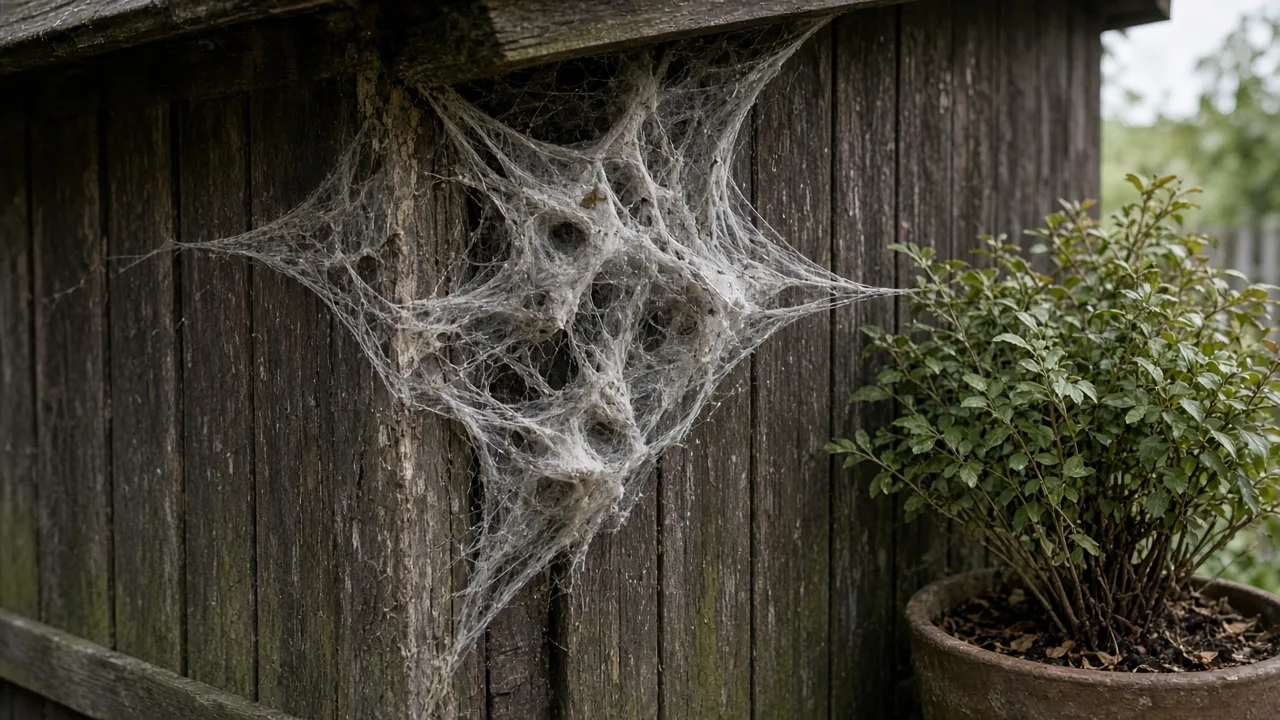
If you find a fuzzy ball in a ceiling corner, behind a storage box, or under patio furniture, do not poke it to see what is inside. The safest quick response is to create distance, keep children and pets away, and use a vacuum hose or long-handled tool only after you have decided the spider is not one you should approach.
The word “nest” causes confusion here. Spiders do not build a nest in the same way birds do: what you see is usually a web, a retreat, or a silk egg sac. One sac may contain a few dozen eggs or many more, but its size and color cannot reliably identify the species. Treat an uncertain sac as occupied until it has been removed and sealed for disposal.
Stop within arm’s reach of the sac. Put on shoes, move people and pets out of the room, and turn on the light from a distance if the area is dim. Do not reach behind furniture, into a box, or into a woodpile with a bare hand; a spider hiding beside the sac may react to pressure, vibration, or being trapped.
If the sac is high overhead, above a bed, deep in a crawl space, or beside a spider you cannot identify, the correct “fast” option is to leave the area and arrange professional removal. A few minutes saved by improvising a close-up inspection is not worth a bite or a shower of spiderlings.
Spider nest versus spider egg sac
A web is a structure used for catching prey, moving, or resting. A retreat is a sheltered hiding place, often tucked into a crack or corner. An egg sac is a silk container made around eggs; it may be attached to a web, a wall, a plant, or the spider’s body, depending on the species.
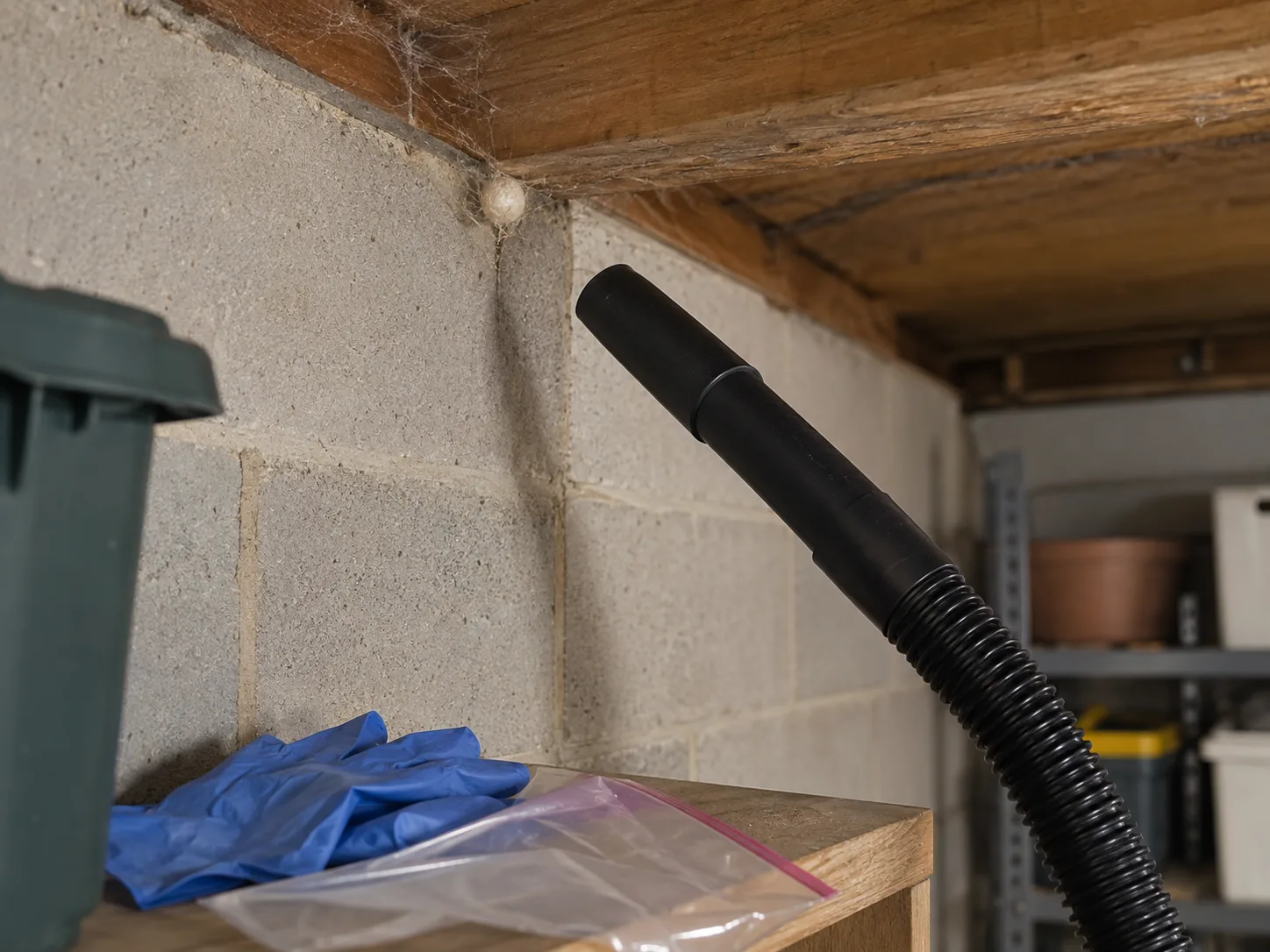
That distinction changes the job. Removing loose webbing is mainly a cleaning task. Removing an egg sac is a containment task: avoid crushing or tearing it, then make sure the sac cannot remain alive in the vacuum or trash.
What a sac can look like
Common sacs are white, cream, tan, gray, or brown and may be round, oblong, flat, papery, fuzzy, or loosely woven. Some look like a cottony ball; others are so thin that individual eggs show through. A sac can be pea-sized, marble-sized, or larger, and some species make several small sacs rather than one conspicuous one.
Location helps, but it is not a diagnosis. Indoor sacs often occur in quiet corners, behind furniture, near window frames, in closets, basements, attics, garages, and storage areas. Outside, look under leaves, rocks, eaves, patio furniture, bark, and dense plant growth. The National Park Service field guide to spiders documents striking differences among local spiders, including species that guard or carry their sacs, so do not identify a spider from the sac alone.
Full, empty, and uncertain sacs
An apparently deflated sac, a sac with exit holes, or a loose papery remnant may be empty. A plump, intact sac is more likely to contain eggs, but appearance is not proof. Do not squeeze, shake, or cut one open; treat “uncertain” as “possibly full.”
| What you see | Sensible interpretation | What to do |
|---|---|---|
| Plump, intact, silk-covered sac | Possibly occupied | Use no-contact removal or call a professional |
| Deflated sac with visible holes | May be empty | Vacuum it and nearby webbing, then dispose of contents outside |
| Sac with an adult spider guarding it or carrying it | Active spider and eggs | Step back; do not attempt close removal |
| Several sacs in different rooms | Repeated activity | Inspect food, moisture, clutter, and entry points; consider professional help |
Where sacs turn up indoors and outside
Spiders follow shelter and prey. A dark corner with flying insects, a warm garage with clutter, or a porch light that attracts moths can be more important than the room’s general cleanliness. Look for a web and sac together, then look for the conditions that let the spider remain undisturbed.
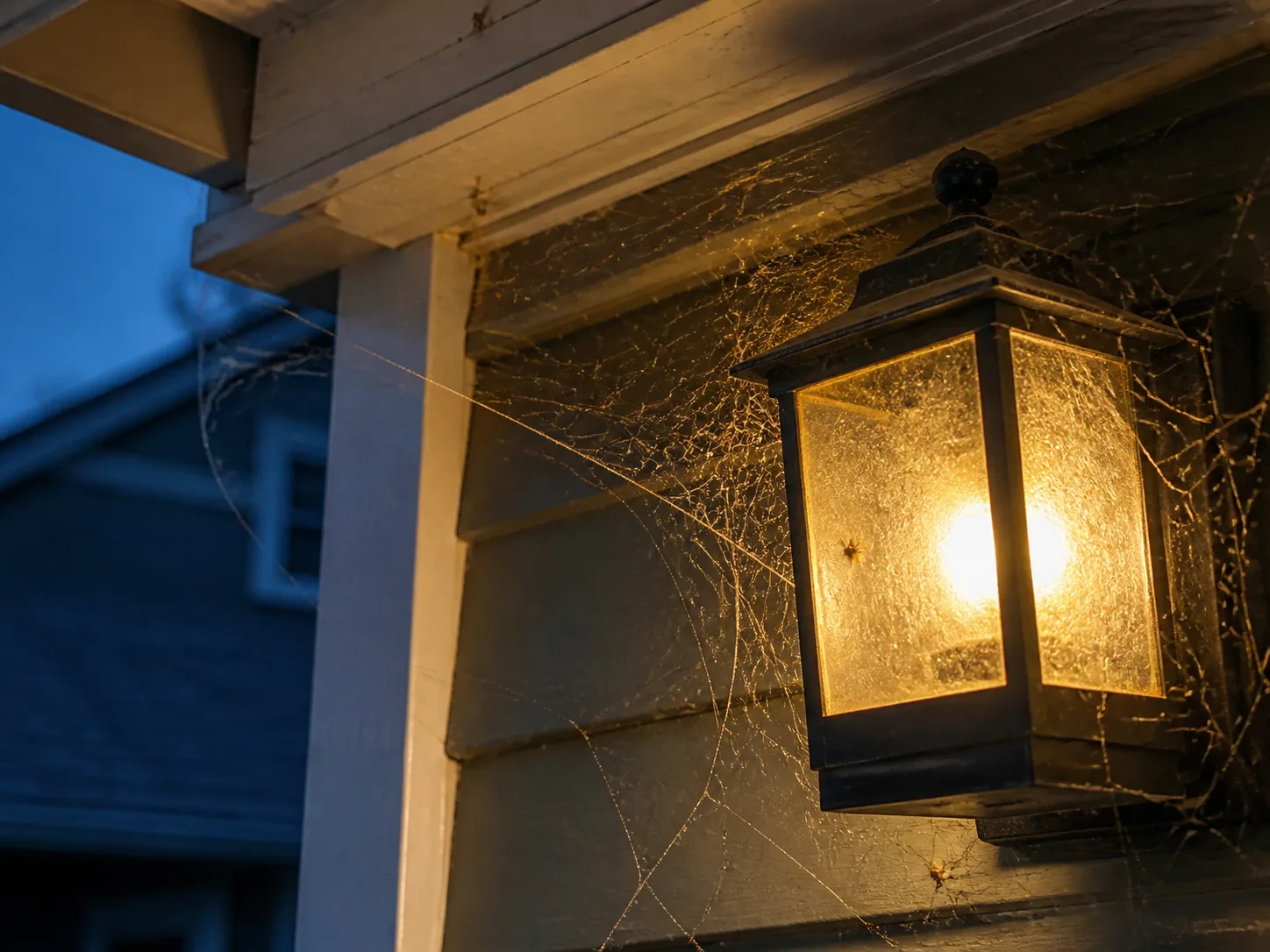
Indoors, inspect the edges of rooms rather than searching randomly: ceiling-wall joints, behind appliances, under furniture, window and door crevices, basement joists, attic corners, and boxes that have not moved recently. Outside, check eaves, vents, woodpiles, garden sheds, dense shrubs, and the underside of chairs or tables.
Check the risk before you get close
Most house spiders are not aggressive and will try to escape. That does not make every removal attempt safe, because a trapped spider may bite and visual identification from a distance is imperfect. A black widow’s web is often irregular and low in a shaded, protected spot; a recluse is associated with dark, undisturbed storage areas in its range. Neither label should be assigned from a sac’s color alone.
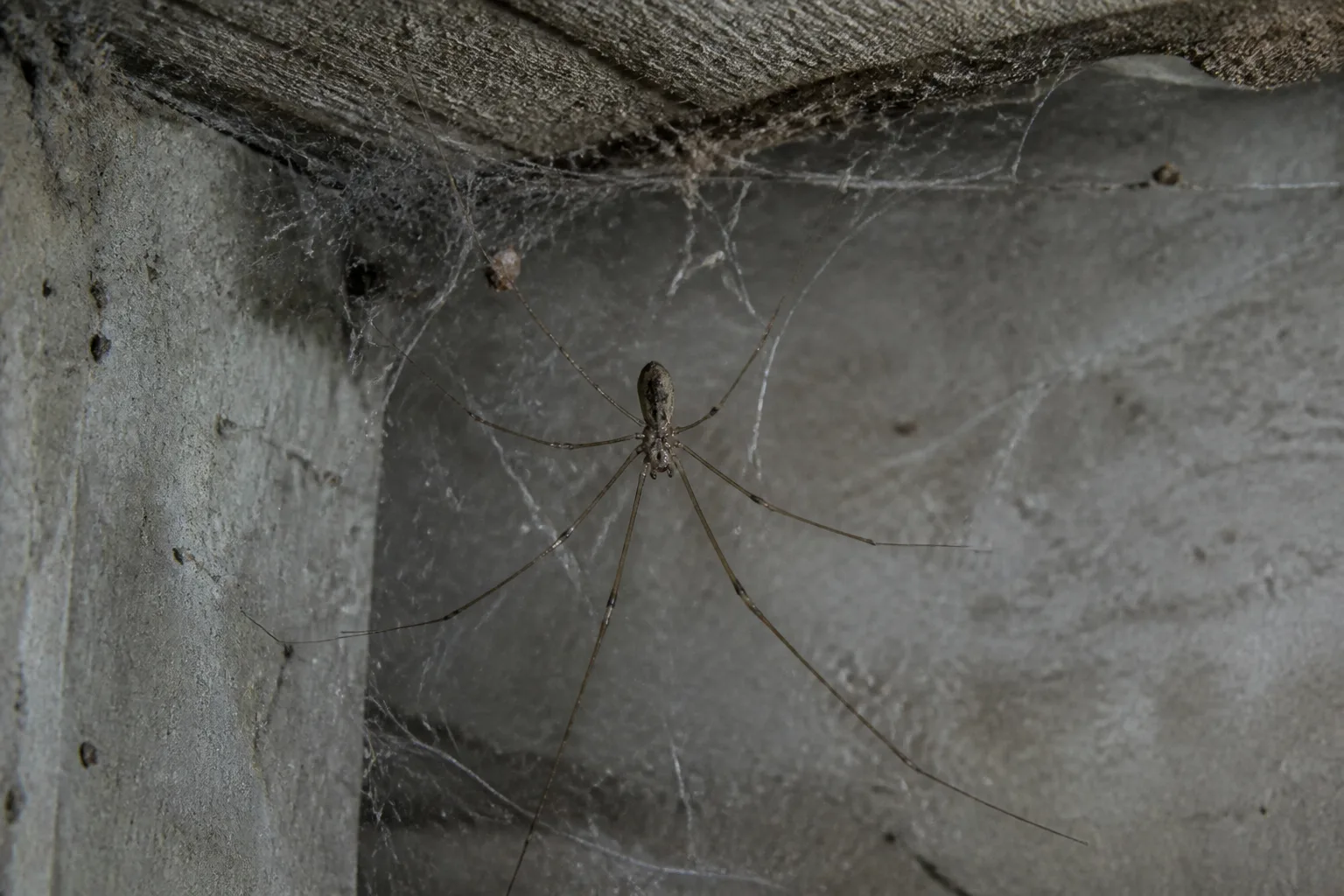
Step away if you see a spider with a distinctive widow-like abdomen, a spider that repeatedly charges or remains defensive, a large number of spiderlings, or a sac in a location you cannot reach without moving heavy objects. Regional species lists differ, so use a local extension or agriculture department for identification. The Oregon Department of Agriculture recommends saving an arthropod when possible and submitting a photo for expert identification; that is a better path than guessing.
Gather a no-contact removal kit
For a single, reachable sac with no concerning spider visible, use a vacuum with a hose and crevice attachment, disposable gloves, a flashlight, a sealable bag, paper towels, and ordinary soap and water for the surface afterward. A broom or telescoping duster can add distance, but a short stick is a poor choice if it requires you to stand directly underneath the sac.
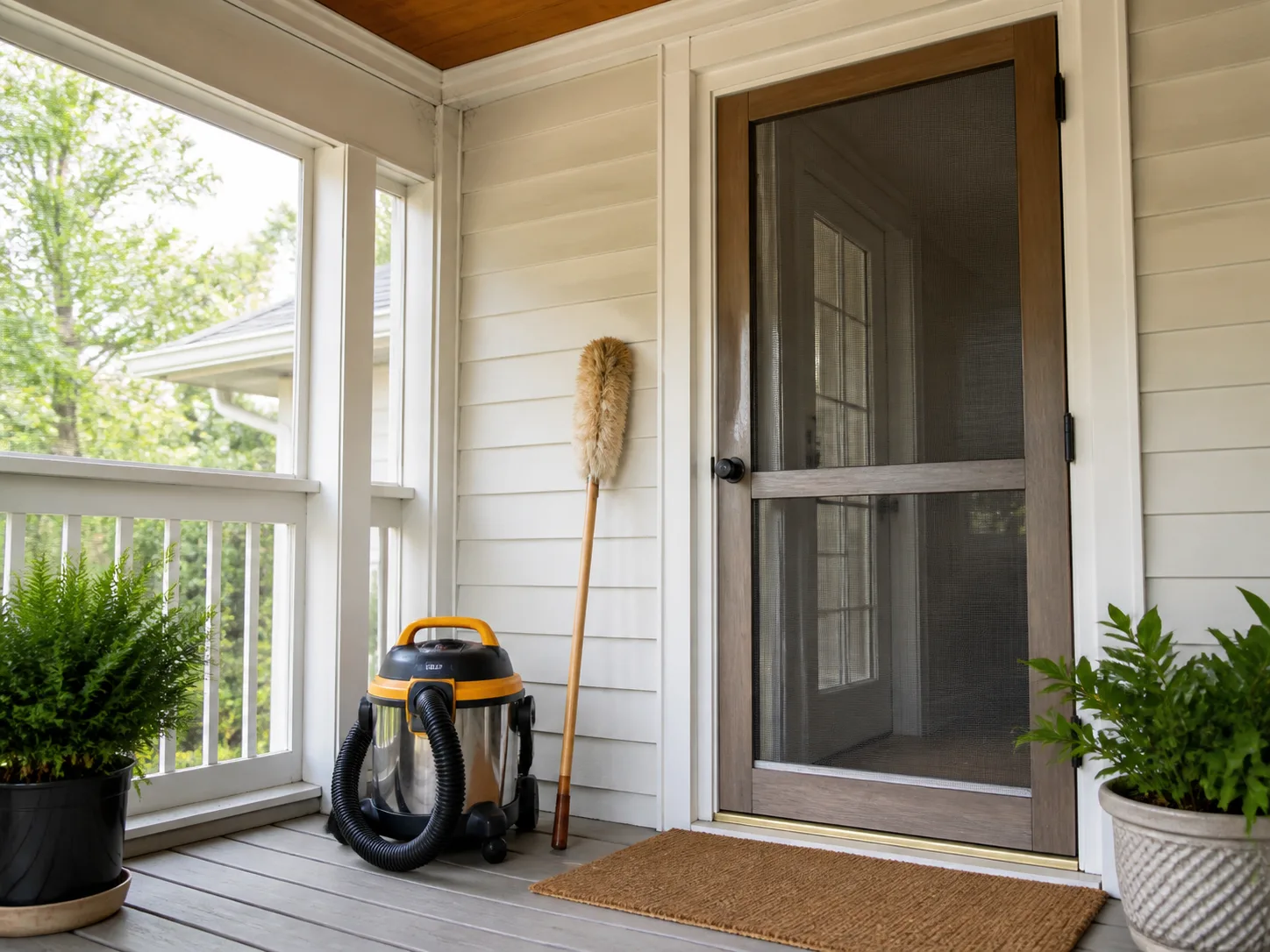
Do not mix cleaners. Do not use a fogger, pour a household chemical into a crack, or spray an unlabeled product near children, pets, food, fish tanks, or plants. If a pesticide is necessary, the product label—not a social-media recipe—controls where and how it can be used.
Remove one indoor sac with a vacuum
Vacuuming is usually the cleanest no-contact option for an isolated, reachable sac. Fit the hose, stand to the side rather than directly below it, and approach slowly. Keep the nozzle against the surface long enough to collect the sac and the loose webbing around it; do not jab the sac with the metal end.
The critical part comes after suction. If your vacuum has a disposable bag, stop and seal or replace it according to the manufacturer’s instructions. If it is bagless, take the canister outdoors before opening it, empty the contents into a sealable trash bag, close that bag, and wipe the canister as directed by the manufacturer. Do not empty it into an indoor bin or over a compost pile.
Vacuuming can disturb a sac, especially if the nozzle catches its edge. That is why the hose and distance matter, and why the approach is not appropriate when an adult spider is guarding the sac or the sac is in a hard-to-see recess. If spiderlings emerge, close the room, avoid chasing them into corners, and call a professional if you cannot contain the situation safely.
Remove a sac with a long-handled tool
A broom or duster can work when the sac is attached to a smooth, open surface and you can place a bag or dustpan directly beneath it. Wear gloves, keep your face away from the work area, and use one controlled sweep to drop the sac into the bag. Do not repeatedly brush at it or crush it against the wall.
This method is less controlled than vacuuming because the sac can fall, roll, or tear. Use it only when you have a clear landing area and no need to reach through a web. For a ceiling corner above stairs, a ladder, or a child’s room, choose a professional instead.
Dispose of the sac and vacuum contents
Containment is part of removal. Tie the bag closed immediately and place it in an outdoor garbage container with a secure lid. If you used paper towels or web-covered debris, bag those too. Do not leave the sac on a porch, in a garage corner, or in the garden unless you deliberately want to relocate an intact, harmless outdoor spider and can do so without handling it; “moving it outside” is not a reliable way to prevent hatching.
Wash gloved hands before removing the gloves, then wash bare hands with soap and water. Keep the bag away from children and pets until collection. If the sac was in a food-preparation area, clean the surface with the normal product appropriate for that material.
Clean and inspect the surrounding area
Wipe residual silk from the wall, sill, or furniture with soap and water. The goal is to remove the web and its dust-catching debris, not to sterilize the room or coat every surface in repellent. Avoid spraying a cleaner into electrical openings or onto a finish that the product can damage.
After cleaning, inspect a small radius around the original find: the underside of nearby furniture, the back of storage containers, adjacent cracks, and the nearest window or door. One sac does not prove an infestation, but a second sac changes the question from “How do I remove this?” to “Why can spiders keep settling here?”
What not to spray on a spider sac
Bleach, vinegar, glass cleaner, essential oils, and improvised mixtures are poor substitutes for identification and containment. They can damage paint, stone, fabrics, plant leaves, or indoor air quality, and they do not solve the entry or prey problem. Never mix bleach with ammonia, acids, or another cleaner.
Some commercial products may kill spiders or affect egg sacs, but effectiveness depends on the species, formulation, coverage, and label directions. A water-based household spray is not automatically an egg treatment, and an oil-based product is not automatically safe indoors. For a single sac, physical removal and sealed disposal are easier to control; for repeated activity, diagnosis matters more than a stronger smell.
When one sac is an infestation signal
One sac in a garage, shed, or quiet basement corner can be an isolated event. Escalate your response when you find multiple sacs, fresh webs returning after cleaning, spiderlings, spiders in several rooms, or prey insects such as flies and moths in unusual numbers. Also pay attention to moisture, unsealed storage, and a door or window that does not close tightly.
Make a simple record: photograph the location from a safe distance, note the date, count sacs by room, and mark whether a live spider was visible. That information helps an extension entomologist or pest professional distinguish a seasonal outdoor spider from a recurring indoor route.
Outdoor webs: remove or leave them?
An outdoor web is not automatically a pest problem. Garden orb weavers, jumping spiders, and many other species eat insects; a web in a shrub or low-traffic corner may be providing useful control. The National Park Service describes garden orb weavers as efficient predators, and a peer-reviewed review in Insects discusses spiders as natural enemies of agricultural pests.
Remove an outdoor sac or web when it blocks a doorway, attaches to play equipment, repeatedly traps people on a walkway, or is beside a light that draws insects to the home. Otherwise, relocate the activity by switching off unnecessary lights, pruning vegetation away from doors, or allowing a quiet garden corner to remain undisturbed.
Make the home less attractive to spiders
Prevention works best when it targets the whole chain: shelter + prey + entry point. Removing a web without changing any of those conditions often produces a temporary win.
Reduce prey insects and night lighting
Repair screens, use door sweeps, and keep doors closed instead of relying on indoor sprays. Clean crumbs and pet food, fix leaks, and reduce standing moisture where flies and other insects can multiply. Outdoors, turn off decorative lights when they are not needed or move fixtures away from doors; a bright entry can concentrate prey where spiders hunt.
Vacuum corners and ceiling edges periodically, especially in rooms that open to a garage, porch, attic, or crawl space. Move stored boxes far enough from walls to inspect behind them, and use sealed plastic bins when cardboard storage becomes a repeated hiding place.
Close entry points and remove hiding places
Caulk small cracks around window frames, utility penetrations, and foundation joints when the material is appropriate for that surface. Repair torn screens and add a properly fitted sweep beneath exterior doors. Outside, keep firewood, dense mulch, and overgrown plants from pressing against the wall, and shake out gloves, shoes, furniture cushions, and gardening tools before bringing them indoors.
Do not seal a gap that is part of required ventilation, a dryer exhaust, or a drainage system. When in doubt, identify the opening’s purpose before covering it. A sealed house still needs safe airflow and functioning moisture control.
When to call a pest professional
Call for help when the sac may be associated with a widow, recluse, or another locally significant species; when it is in a crawl space, attic, wall void, or high ceiling; when there are many sacs or spiderlings; or when someone in the home cannot safely avoid the area. Professional help is also sensible when repeated cleaning has not reduced activity.
Ask what the inspection will cover: species or group identification, entry points, prey insects, moisture, clutter, and a treatment plan that follows product labels. Be wary of a promise to eliminate every spider permanently with one generic spray. The durable fix is usually a combination of exclusion, housekeeping, targeted treatment when justified, and monitoring.
What to do after a possible spider bite
Wash the area with soap and water and avoid squeezing, cutting, or applying harsh chemicals. If pain is severe or worsening, swelling spreads, muscle cramps, breathing trouble, vomiting, fever, a blistering or darkening lesion develops, or the person is a child or otherwise medically vulnerable, contact a medical professional or poison-information service promptly. Seek emergency care for breathing difficulty, faintness, or other severe symptoms.
Do not try to capture a spider with bare hands to prove what caused a bite. A photo from a safe distance or a carefully preserved specimen can help an expert, but treatment decisions should be based on symptoms and medical advice rather than an internet species guess.
Conclusion: remove the sac, then fix the invitation
For one reachable indoor sac, keep your distance, vacuum it with a hose, seal the contents outside, and clean the nearby web. If a live spider is defensive, the sac is inaccessible, or multiple sacs and spiderlings are present, stop and call a professional.
Then fix the reason the spider chose that spot: fewer insects at night, less clutter and moisture, intact screens, tight door sweeps, and sealed—but properly ventilated—gaps. That sequence handles the immediate nuisance while making the next spider nest less likely.