How to Get Rid of Aphids Naturally: 10 Ways That Work
Learn how to get rid of aphids naturally with water, pruning, predator insects, row covers, and labeled sprays—plus remedies that can injure plants at home.
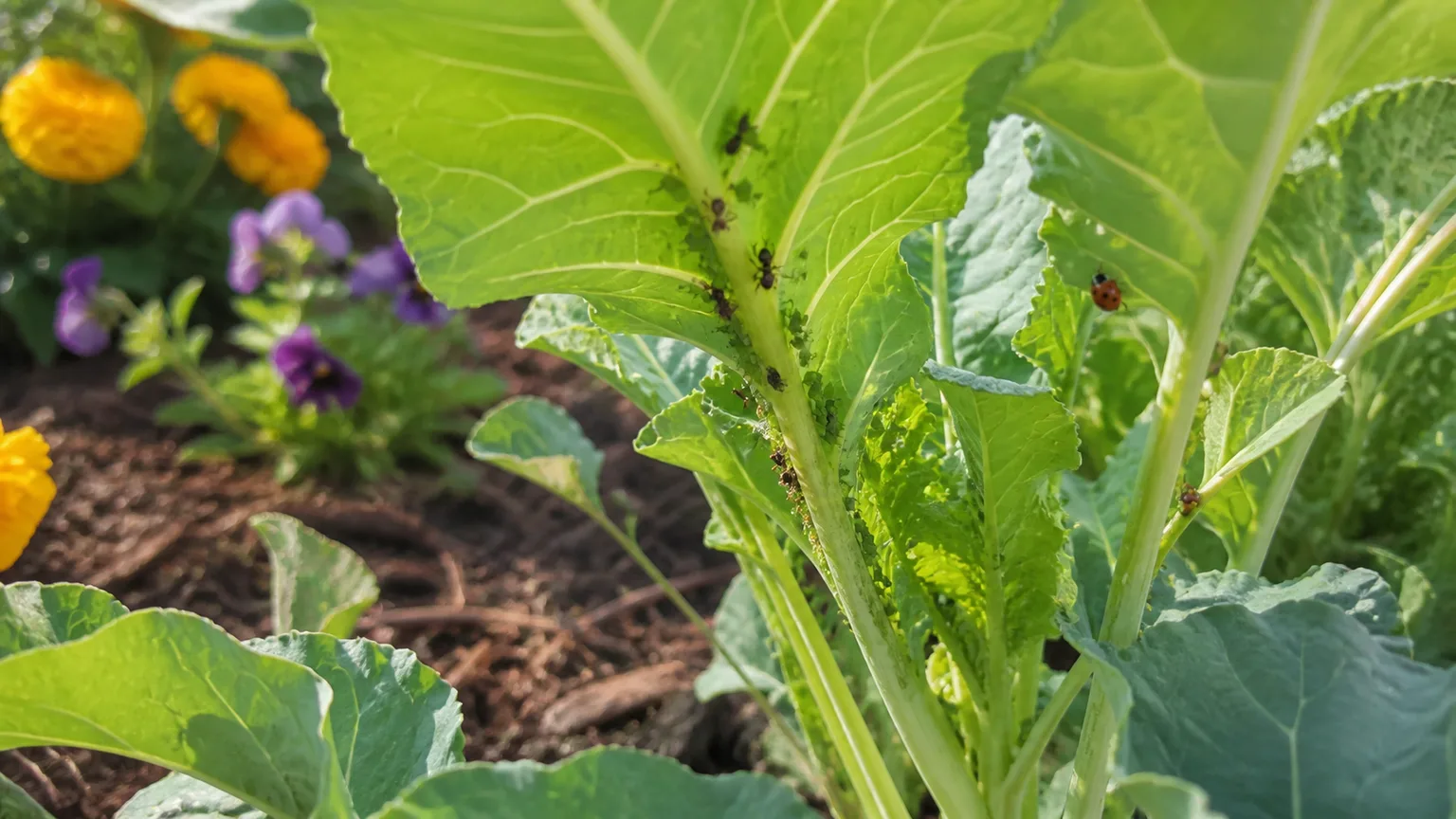
Aphids are small, soft-bodied insects that cluster on tender stems and the undersides of leaves. On a vigorous shrub or mature perennial, a small colony often causes less harm than a broad spray would; on seedlings, curled shoots, or a plant already struggling, act sooner and focus on the infested growth.
Start with water, hand removal, or pruning. Leave predators room to work, then use a product labeled for aphids on that plant only if the infestation is still growing. “Natural” does not automatically mean harmless: dish detergent, homemade oil mixtures, and plant extracts can injure leaves, while neem and insecticidal soap products are still pesticides that need careful use.
Decide whether aphids need control
Confirm the pest before treating
Aphids are usually pear-shaped and smaller than a grain of rice, but their color varies by species and host: green, black, gray, yellow, pink, or even white. Look for groups along soft new shoots and leaf veins, especially underneath leaves. A hand lens can reveal a pair of small tube-like cornicles near the rear, but a dense colony and the symptoms around it are usually easier to spot.
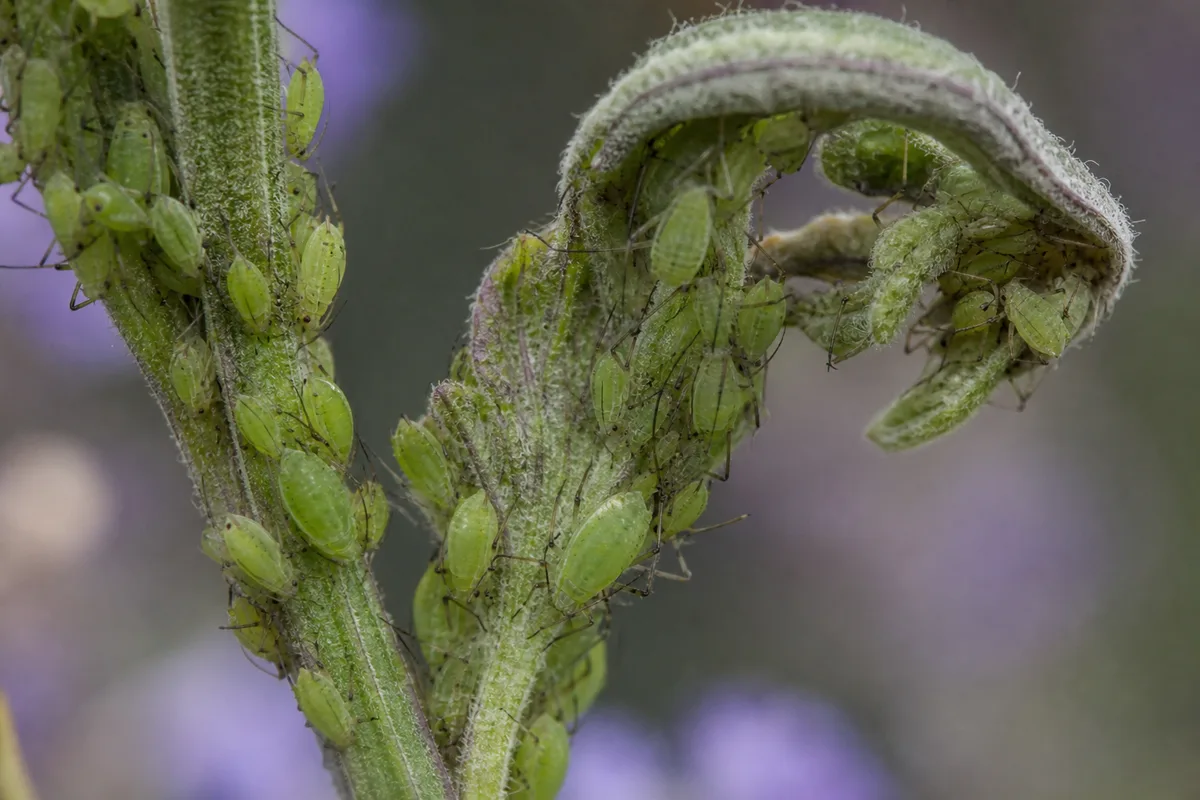
The sticky coating on leaves and stems is honeydew, the sugary waste aphids leave after feeding. Black sooty mold may grow on that coating; it is usually a surface fungus using honeydew as food, not a separate infection of the plant. Shed white skins, curled young leaves, distorted buds, and ants moving up and down stems strengthen the diagnosis, while yellowing alone can come from many other causes. The University of Minnesota Extension’s aphid guide explains these common signs and notes that sooty mold itself does not harm the tree.
During active growth, many common aphids produce live young without mating, so colonies can appear to multiply overnight. Winged adults may then move to nearby host plants when a colony grows crowded or its food quality changes; outside, some species also leave overwintering eggs on woody plants. That biology explains why follow-up checks on new growth work better than trying to find and remove every egg in a summer garden.
Do not assume every tiny insect is an aphid. Whiteflies flutter when a leaf is disturbed, spider mites leave fine stippling or webbing, and scale insects stay fixed to stems or leaves; a mistaken identification can send you toward an ineffective treatment. If the leaves are mottled, ringed, or distorted after visible aphids are gone, consider a virus or another plant problem rather than repeating a spray.
Match your response to the plant and damage
A few aphids on a mature tree, shrub, or sturdy perennial do not automatically need removal. Many established plants tolerate light to moderate feeding, and the colony may decline when lady beetles, lacewing larvae, hoverfly larvae, parasitoid wasps, or hot weather catch up. The UC IPM aphid guide recommends checking plants regularly and weighs the level of damage against the natural enemies already present.
Be more prompt with seedlings, young transplants, vegetables grown for their leaves, or a plant whose new growth is visibly curling and failing to open. Some aphids transmit plant viruses, and removing aphids later may not reverse an infection that has already begun. In that situation, preventing winged aphids from landing on young plants and removing infected weeds or crop debris can matter as much as killing the colony you can see.
Before reaching for a spray, ask three questions: Is the colony expanding? Is the plant losing usable growth, not just carrying a few insects? Are predators already feeding? If the answer is no, monitor the plant every few days instead of treating on a calendar. This simple threshold prevents repeat sprays that kill beneficial insects while solving little.
The plant’s job matters as much as the number of insects. A vegetable seedling can lose a larger share of its growth to a small colony than a mature shade tree can, and aphid feeding can be more consequential when a crop is especially vulnerable to a virus. Conversely, if the plant is blooming well and new leaves are normal, visible aphids may be an ecosystem signal rather than an emergency.
Ten natural ways to control aphids
1. Rinse aphids off with water
For a sturdy garden plant, a firm stream of plain water is usually the best first move. Aim under the leaves and along the growing tips, where aphids hide; rinse until the visible insects release, but do not use enough pressure to tear foliage, strip flowers, or break stems. A hand sprayer or kitchen sink sprayer works for small plants, while a hose with an adjustable nozzle makes larger shrubs and vegetables easier to reach.
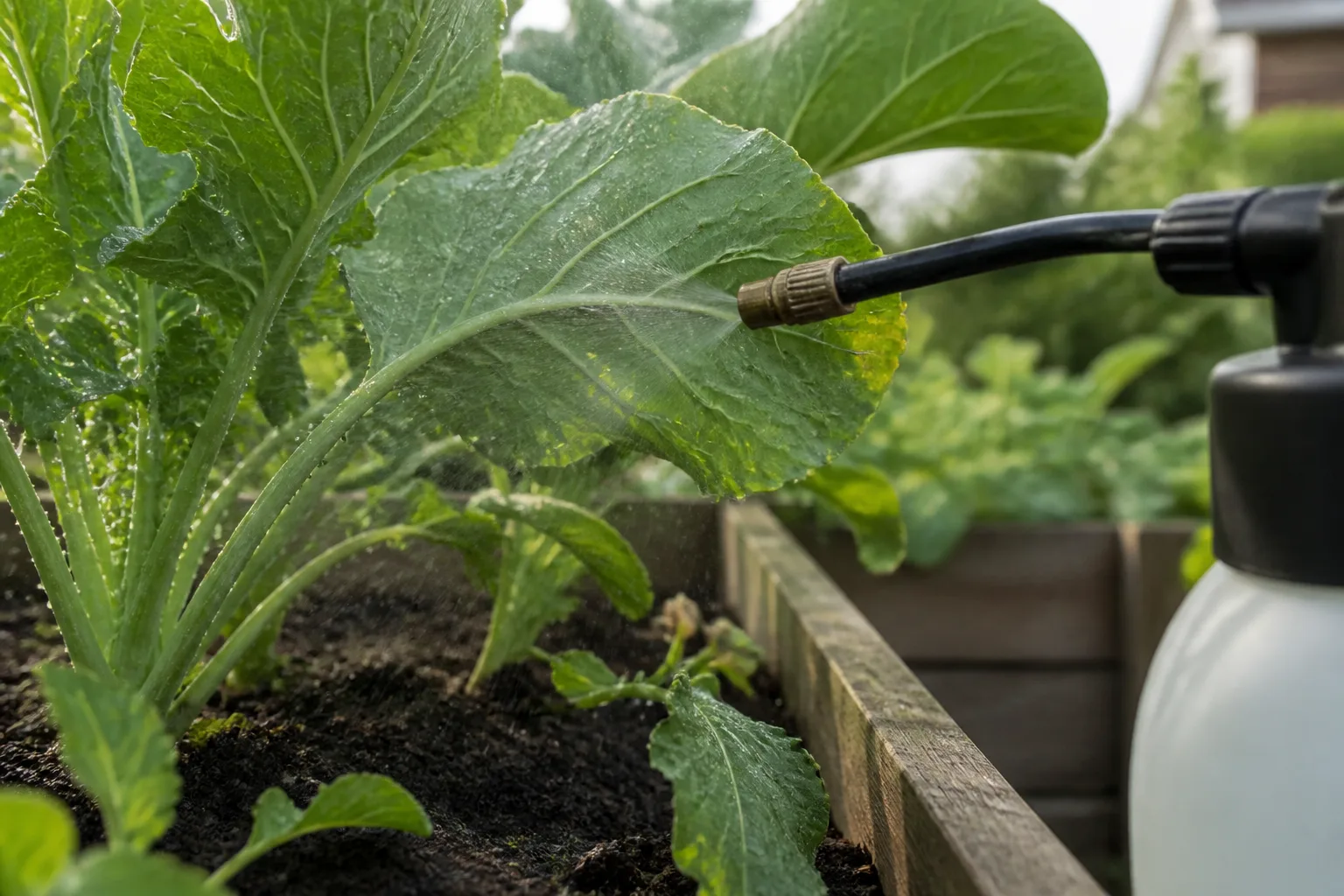
Spray in the morning so foliage has time to dry, and support delicate shoots with your free hand or a stake. The goal is to dislodge aphids, not drown them; many will fall away and fail to climb back to the same feeding site. Check again after two or three days and repeat if a fresh cluster appears. Both UC IPM and The Old Farmer’s Almanac put a strong water rinse among the first garden-scale controls.
Work around the plant rather than aiming from one side only: leaves overlap, so a single pass may leave a pocket of insects untouched. If you are unsure about pressure, begin with the nozzle farther away and increase it only until aphids release without bruising foliage. A brief rinse is easier to repeat than a forceful blast that leaves the plant damaged and unable to replace the growth you are trying to protect.
Skip a forceful spray for wilted or very fragile foliage, open blooms that could be damaged, or indoor pots too heavy to handle safely. For a houseplant, use a sink or tub sprayer at low pressure, shield the soil if it is waterlogged, and let leaves drain before returning the plant to its saucer. Water removes exposed aphids but cannot reach colonies tucked inside tightly curled leaves, so combine it with pruning when the damage is established.
2. Wipe or squash small colonies
On a few stems or a compact houseplant, wipe aphids away with a damp cloth, tissue, or gloved fingers. Pinch only the colony, not the soft shoot beneath it, and rinse the cloth often so you do not smear honeydew across unaffected leaves. For a plant with rough or delicate foliage, test a small area first; sometimes a light rinse is less damaging than rubbing.
This method is useful when you see only a few clusters and want to avoid spraying an entire plant. Check the undersides of nearby leaves and the newest growth because aphids are easy to miss where leaves overlap. Warm-season aphids may give birth to live young, so you do not need to hunt for every egg; removing the visible colony and checking again matters more than a one-time wipe-down.
3. Prune out heavily infested tips
If one or two shoot tips are tightly curled and full of aphids, clip those sections instead of trying to force a spray inside them. Put the cuttings directly into a bag or the trash, then clean your pruners if the plant also has suspicious spots or disease symptoms. Remove only what is heavily infested; cutting back every tender tip can slow flowering or remove the plant’s healthy growth.
Pruning works particularly well on small infestations on roses, shrubs, herbs, and houseplants where the damaged section is replaceable. It is less practical on a large tree or a plant with aphids scattered across many branches. If new growth keeps coming in distorted after you remove aphids, pause and check whether the pest is still present or whether virus, herbicide drift, heat, or root stress could explain the symptoms.
4. Let natural enemies catch up
Lady beetles, lacewing larvae, hoverfly larvae, soldier beetles, and tiny parasitoid wasps all feed on aphids or develop inside them. The most visible lady beetles are not always the hungriest stage: their dark, alligator-shaped larvae eat aphids too, and parasitized aphids turn into swollen, tan or brown “mummies.” If you see these predators or mummies, give them several days before applying a contact spray.
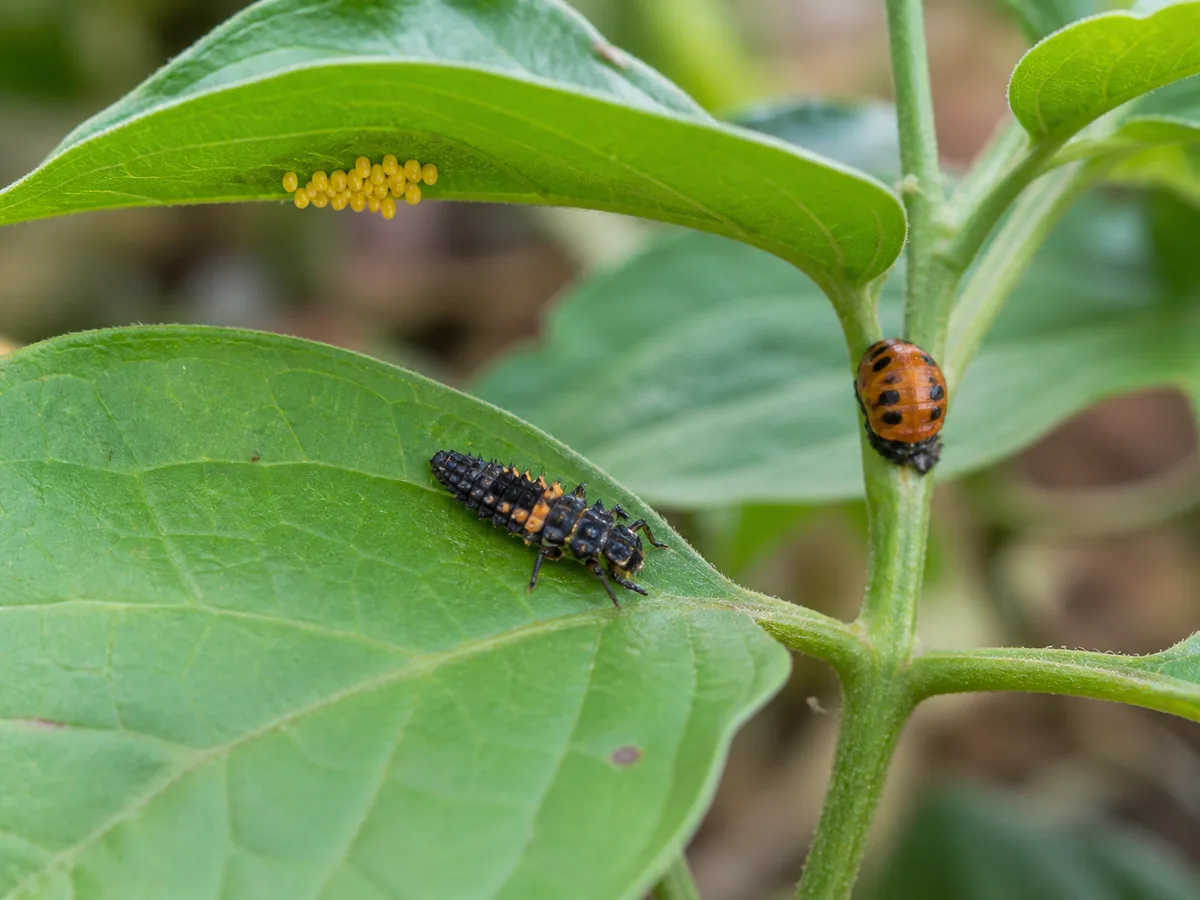
Aphids are prey for many garden insects, so a perfectly pest-free garden is not a realistic or necessary target. The RHS guide to aphids recommends tolerating colonies when possible, and UC IPM describes how naturally occurring predators and parasitoids can reduce numbers. Avoid broad-spectrum sprays that remove these allies along with the aphids; even a short-lived product can kill predators it directly hits.
Buying lady beetles for an outdoor garden often disappoints because released adults can fly away before they settle. Commercial predators are more predictable in an enclosed greenhouse when the species, timing, and release conditions match the pest. The RHS aphid-predator guide lists biological controls such as lacewing larvae and parasitoids for suitable settings, but for an open yard, conserving the insects already present is usually the simpler first choice.
5. Grow flowers that support aphid predators
A flower border will not make aphids vanish, but it can feed beneficial insects that help suppress them. Many adult hoverflies and parasitoid wasps use nectar or pollen, while their larvae or offspring attack aphids. Keep small, accessible flowers blooming across the season and avoid spraying them when pollinators or natural enemies are active.
Think of this as habitat, not a force field. Claims that a ring of marigolds, chives, or garlic reliably repels every aphid are too broad for a home garden; results depend on the aphid species, plant, layout, and growing conditions. A peer-reviewed review of companion plants for aphid management describes several possible mechanisms, including confusing, attracting, or diverting pests, but that does not turn every traditional companion pairing into a proven control.
Fine Gardening’s practical aphid-control guide also emphasizes water, pruning, and beneficial insects. You can borrow that low-disruption sequence without relying on a specific flower as a pesticide substitute. Choose regionally appropriate flowering plants that fit your garden and let a mix of predators and parasitoids provide background control.
6. Interrupt ant tending when it matters
Ants often collect aphid honeydew and may defend aphids from predators. A steady trail of ants climbing a shrub or tree is a reason to inspect leaves and shoot tips, not proof that the plant itself has an ant problem. If ants are actively guarding a damaging aphid colony, block their route by pruning branches that touch fences or buildings, clearing debris bridges, or using a physical trunk barrier on a woody plant where it can be applied safely.
A sticky barrier can trap non-target insects or injure bark if it is smeared directly on a trunk, so follow the product’s directions and use a protective wrap where required. Do not coat every plant or spray ant trails indiscriminately; the target is the ant access that is protecting an aphid outbreak. On herbaceous vegetables, simply washing aphids away and conserving predators is usually more practical than trying to exclude every ant.
7. Cover young crops before aphids arrive
A floating row cover or fine insect mesh can keep winged aphids from settling on susceptible seedlings. Install it over clean plants at planting, secure the edges against the soil, and leave enough slack for growth. A cover applied after a colony is already inside can trap aphids with the crop, so inspect transplants before covering and remove any insects first.
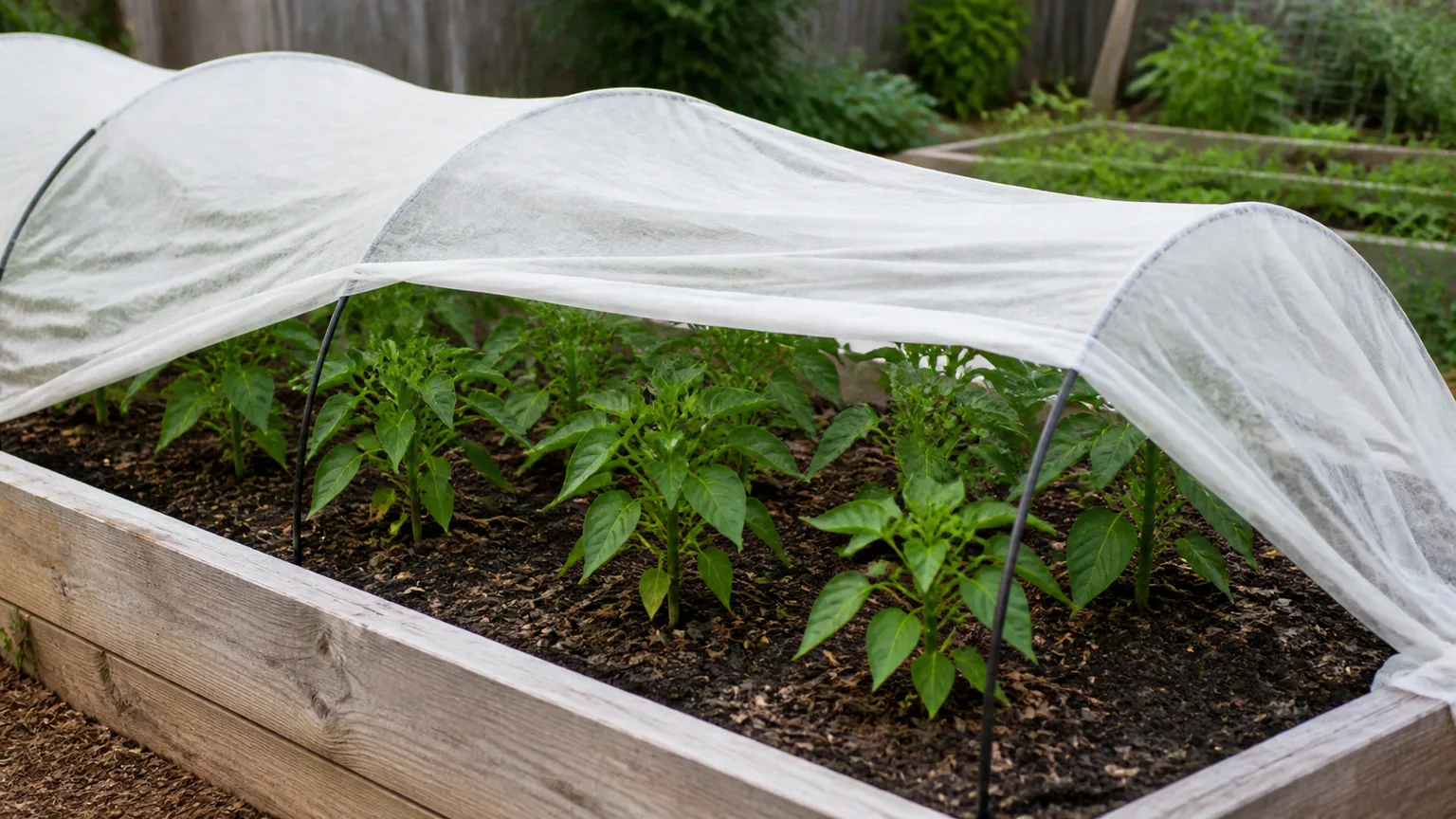
Use covers while plants are young and most vulnerable, then remove them when pollination is needed for flowering crops or when heat builds beneath the fabric. This is most useful for vegetables and short rows, not established trees or large perennials. Utah State University Extension notes that row covers can exclude some vegetable aphids in the right crop and timing; match the cover to local pollination and temperature needs instead of leaving it on automatically.
Do not cover a row that already has aphids hidden in it, and lift the fabric periodically to water, weed, and inspect the plants. Covers also exclude lady beetles and other predators, so remove them if the plants need pollination or if a crop-specific pest guide gives different timing. In regions with warm, intense sun, watch for overheating under tightly closed fabric and use a breathable material suited to the crop.
8. Use reflective mulch on small vegetable plants
Silver or gray reflective mulch can make it harder for winged aphids to locate small vegetable plants. Lay the reflective surface before aphids colonize the row, then plant through openings or transplant into prepared holes. This is a prevention tool for young crops, not a treatment for an established aphid colony already feeding beneath curled leaves.
Reflective mulch loses much of its value as the plant canopy covers the shiny surface, and it may be inconvenient or too warm in hot weather. The UC IPM guide to reflective mulches describes its usefulness on seedlings and its limits as plants grow; remove or change it if heat becomes a problem. Aluminum foil scraps are fragile and awkward at garden scale, so use a purpose-made material or choose row cover instead.
9. Avoid excess nitrogen, not all nitrogen
A lush flush of soft new growth can be attractive to aphids, and high nitrogen inputs may favor their reproduction. If a plant is dark green, pushing long soft shoots, and has been fed repeatedly, stop adding fertilizer until you check the product schedule and soil needs. A soil test and label-based feeding plan are more reliable than switching blindly to an “organic” fertilizer.
Do not starve a vegetable or container plant to control aphids. Nitrogen is essential for growth; reducing it below the plant’s needs can create a second problem without removing the insects already there. Utah State Extension recommends avoiding excess fertilization and adjusting nitrogen management as part of integrated aphid control. Keep plants steadily watered and properly nourished, and reserve pruning or rinsing for the colonies you can see.
10. Use a labeled contact spray only when needed
If water, pruning, and natural enemies are not keeping up, consider a ready-to-use insecticidal soap or horticultural oil labeled for the aphid, the plant, and the place you will use it. These products work mainly on contact, so the spray must wet the aphids and the leaf undersides; one application will not protect new growth from later arrivals. Repeat only at the interval and rate on the label.
Aphids sheltering inside curled leaves may escape a contact product. Prune those tips rather than soaking the rest of the plant in repeated treatments. Soap and oil can also injure drought-stressed or sensitive plants, especially in heat; test a small area first and avoid spraying when conditions exceed label restrictions. Utah State Extension’s vegetable aphid guidance stresses complete coverage and warns that soap or oil can be phytotoxic to some plants.
Coverage means wetting the insects, not merely misting the top of the canopy. Read the label to confirm that the product is appropriate for the crop and site, then check the undersides of leaves and the newest stems while applying; avoid runoff and follow any temperature, protective-equipment, re-entry, and harvest directions. Soap and oil have little residual action against aphids that arrive later, so a second application may be needed, but a new inspection should decide whether to repeat it.
Do not substitute dish detergent for insecticidal soap or mix detergent with cooking oil, garlic, or pepper. Dishwashing products are made for dishes, not foliage, and their additives and strength vary; Penn State Extension explains why home remedies with dish detergents can injure plants and beneficial insects. Homemade tomato-leaf, garlic, alcohol, or essential-oil sprays also have inconsistent strength and little crop-specific guidance, so “plant-based” is not proof that a mixture is safe.
Neem products are another option only when their label fits the plant and site. Neem oil and azadirachtin products do not all work the same way, and oil can harm a plant or an insect it directly hits. The National Pesticide Information Center’s neem fact sheet describes neem as a pesticide and emphasizes following the product label; keep any spray off open flowers and avoid treating when pollinators are foraging. On edible crops, check that the crop is listed and follow the preharvest interval before picking.
Follow up based on where the plant grows
Treat houseplants without spreading the colony
Move an infested houseplant away from other plants before treatment, then inspect its newest leaves, petioles, and leaf undersides. For a small plant, wipe colonies or rinse foliage over a sink or tub; for a large plant, use a gentle shower and let it drain completely. Clean the saucer and nearby shelf, and check neighboring plants because winged aphids can move between hosts.
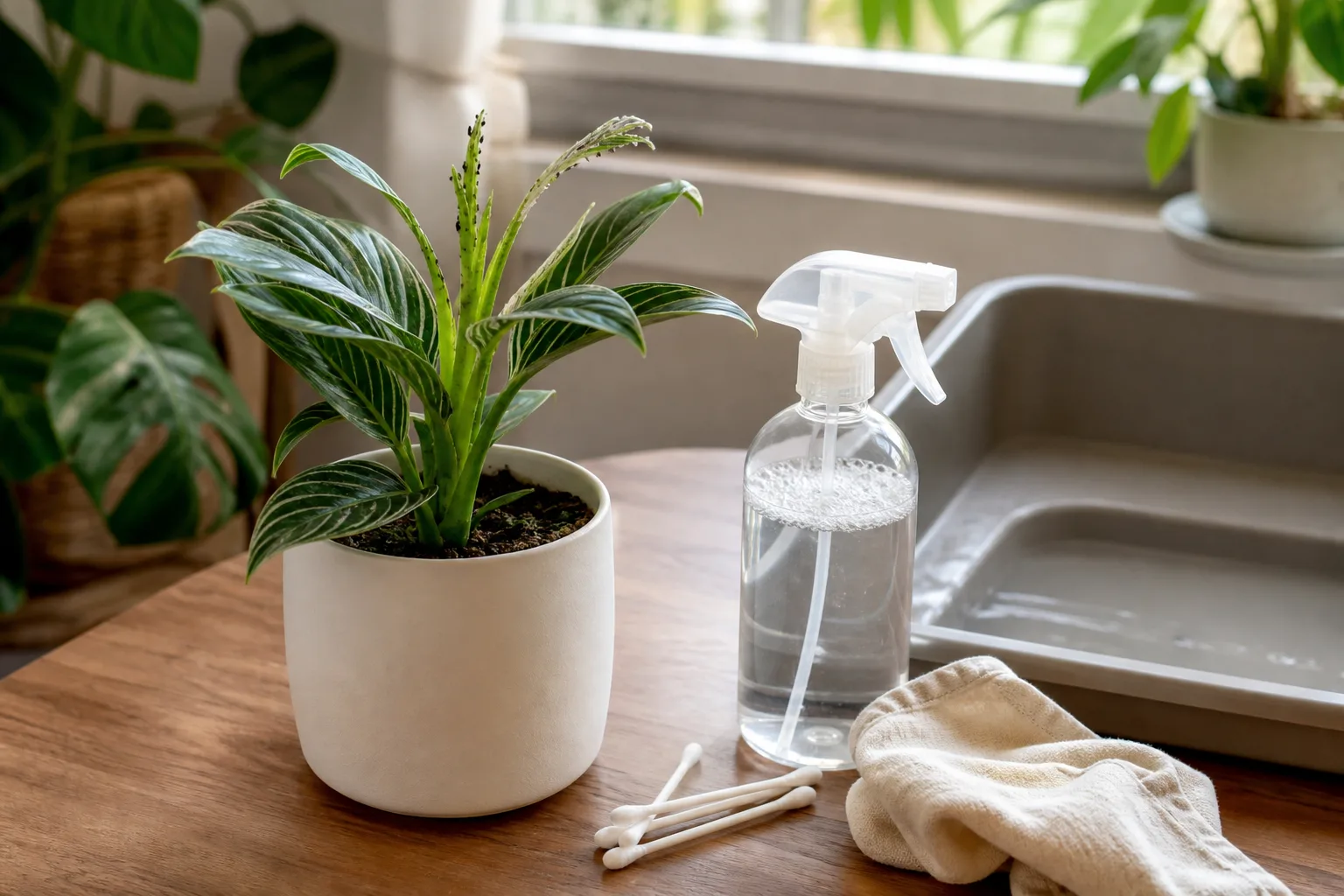
Recheck every few days for two weeks and repeat physical removal if live aphids return. If you use a soap or oil product indoors, make sure its label permits that use, protect nearby surfaces, ventilate the space as directed, and keep children and pets away until the label says it is safe. Sticky traps may catch winged insects and help you notice movement, but they do not remove the hidden colonies feeding on leaves.
Use a simple schedule: inspect the plant again after two or three days, check neighboring plants at the end of the first week, and keep watching new shoots for a second week. If you find no new aphids and leaves are opening normally, return the plant to its usual place; if colonies reappear, repeat the physical step before escalating. Old curled leaves may not uncurl, so judge recovery by clean new growth rather than the appearance of damage that happened earlier.
Protect food crops and pollinators
Before using any pesticide on an edible plant, confirm that the label lists that crop and aphid, then follow its rate, protective-equipment directions, re-entry interval, and time to harvest. “Organic,” “natural,” and “neem” are not substitutes for a crop label. If you have blooms, pollinators, or aphid predators on the plant, choose water or pruning first and treat only the affected plant parts when practical.
After any method, check the plant’s new growth rather than judging success by whether every old leaf looks perfect. Leaves that were already curled may stay distorted after aphids are gone, while a few winged aphids can arrive from nearby plants and start a new colony. If the pest remains after two careful physical treatments, compare the symptoms again, improve coverage or prune the sheltered tips, and ask a local Extension office or diagnostic clinic when disease or a valuable tree is involved.
Conclusion
The most dependable natural aphid plan starts with identifying the insect and deciding how much damage matters. Rinse, wipe, or prune a small colony; give predators time where the plant can tolerate it; use covers or reflective mulch before aphids reach young vegetables; and correct overly lush growth without withholding needed nutrients.
Save insecticidal soap, horticultural oil, or neem for a persistent infestation, and choose only a labeled product used exactly as directed. Skip homemade detergent mixtures and promises that a companion plant will repel every aphid. A quick inspection every few days, followed by the least disruptive action that fits the plant, usually prevents a small colony from becoming a season-long problem.



