2 Vinegar Methods That Stop Pink Showerhead Mold
Weak spray and pink crust around your showerhead? Two vinegar routines—quick spray and deep soak—remove Serratia biofilm and help keep it from returning.
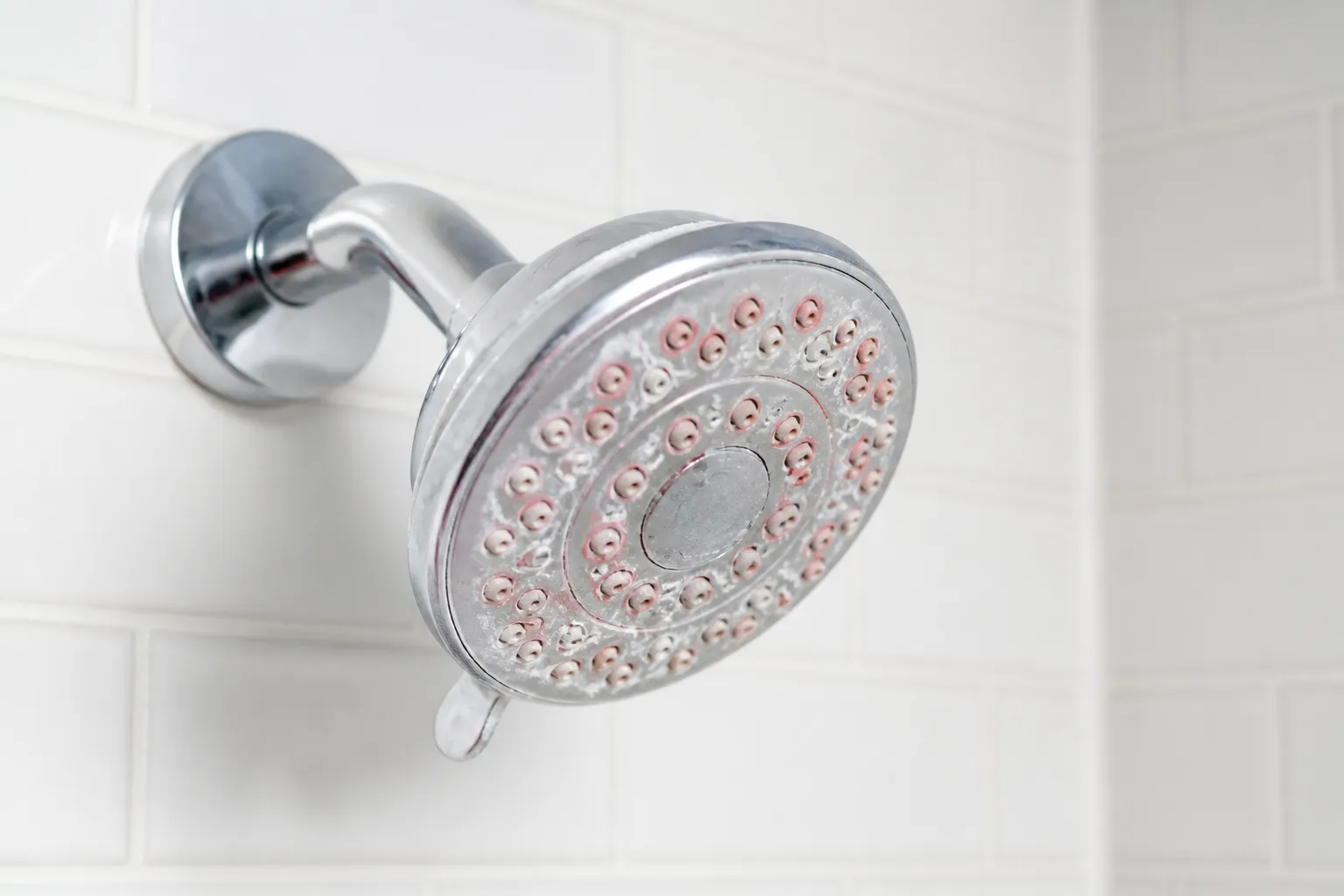
That blush-colored crust around your shower nozzles is not a gardening problem—it is a bathroom hygiene issue that still belongs in a home-care routine worth doing right. Pink “mold” on a showerhead is almost always a slimy bacterial biofilm, not a fungus. Left alone, it traps soap scum and mineral scale inside the spray face, which is why your shower suddenly sputters, sprays sideways, and never feels fully clean even after you scrub the tile.
White vinegar handles this job well for most households because acetic acid breaks down mineral buildup and disrupts the biofilm matrix without the finish damage bleach can cause on some metals. The winning approach is not one heroic deep clean—it is two routines: a quick weekly vinegar spray that stops new film from setting, and a monthly soak that clears clogged holes before pressure drops. Use both, dry the fixture afterward, and pink film comes back far less often.
What That Pink Stuff on Your Showerhead Actually Is
The pink residue on showerheads is commonly caused by Serratia marcescens, an airborne bacterium that produces red-to-pink pigment at room temperature. It is not mold in the fungal sense, even though everyone calls it pink mold. Taste of Home’s cleaning editors note that this bacteria arrives on air currents, then settles wherever moisture and fatty deposits overlap—which is why it loves bathrooms fed by shampoo and body wash (Taste of Home).
On a showerhead, the colony starts invisible. A few cells land on a wet nozzle, feed on soap-film residue, and multiply. As the biofilm thickens, you see pale pink rings around rubber nozzles or pink-tinted scale on the metal faceplate. Lehigh County Authority, which fields customer calls about “pink slime” in bathrooms, describes it as a biofilm of airborne bacteria, mold, and yeast spores that thrives in damp places with fatty residues like soap scum (Lehigh County Authority). Your water utility did not put it there—the bathroom environment grew it.
Why Showerheads Collect Pink Biofilm Faster Than Tile
Tile gets pink stains too, but showerheads fail faster for three mechanical reasons. First, nozzles stay wet longer than a squeegeed wall because water pools in the spray plate and inside flexible rubber outlets. Second, hard-water limescale builds on the metal face, creating rough pockets where bacteria anchor. Lehigh County Authority specifically notes pink slime grows very well on limescale surfaces (Lehigh County Authority). Third, the inside of the head is warm, dark, and rarely dried—perfect for biofilm once a thin mineral crust forms.
That combination explains the symptom most people search for: weak or uneven spray. Biofilm and scale narrow individual holes, so some streams die while others blast. Cleaning only the bathroom tile but ignoring the showerhead leaves the actual clog untouched.
Is Pink Mold on a Showerhead Dangerous?
For most healthy adults, touching pink biofilm while showering or cleaning is low risk. Gwinnett County’s water-quality fact sheet on Serratia marcescens states the bacterium is commonly found in soil, food, and water, and that casual skin contact is not typically dangerous for healthy people (Gwinnett County Water Resources). Problems become more plausible when bacteria enter the body—through open cuts, eyes, or when someone is immunocompromised. In those cases, urinary tract infections, wound infections, and—in rare severe situations—respiratory issues have been reported in medical literature summarized by public health agencies.
The practical takeaway for a household showerhead: treat pink film as unsanitary and worth removing, not as an emergency—but wear gloves if you have broken skin, avoid splashing spray into eyes while scrubbing, and prioritize more frequent cleaning if someone in the home has a weakened immune system. Vinegar cleaning is appropriate for routine biofilm control in residential bathrooms; it is not a hospital-grade disinfectant protocol (CDC environmental cleaning guidance).
When Vinegar Maintenance Is Enough—and When to Escalate
Vinegar is enough when pink color is light, spray pattern is mostly normal, and you are willing to run the weekly spray plus monthly soak schedule. Escalate when any of these appear: black or green mold mixed with the pink (possible additional fungal growth on caulk or grout—address surrounding surfaces separately), persistent musty odor after vinegar cleaning, visible corrosion pitting on the metal, or spray remains blocked after two monthly soaks. At that point, a dilute bleach rinse on a bleach-safe head, a commercial limescale remover compatible with your finish, or showerhead replacement may cost less frustration than repeated vinegar cycles.
What You Need Before You Start
Gather supplies once and the two-method routine takes minutes each week.
Vinegar: Standard 5% white distilled vinegar works for maintenance. For heavy pink-plus-scale buildup, 6% cleaning vinegar gives more acidity without jumping to bleach. Default mix is equal parts vinegar and warm water (50/50). Bump to 75% vinegar / 25% water only on stubborn crust, and spot-test decorative finishes first.
Tools: Spray bottle, measuring cup, soft nylon brush or old toothbrush, rubber band or twist tie, sturdy plastic bag large enough to cover the head, microfiber cloth, and optionally a small wrench or pliers padded with cloth if your head unscrews.
Protection: Rubber gloves if you have sensitive skin or small cuts. Eye protection if you scrub overhead aggressively.
Vinegar Strength, Tools, and Finish-Safe Choices
Chrome and stainless showerheads tolerate vinegar well with normal dwell times. Brass, oil-rubbed bronze, gold-tone, and painted finishes are more sensitive—use 50/50 only, shorten soak time to 30–45 minutes, and never leave vinegar on decorative coatings overnight. If the manufacturer label says “do not use acidic cleaners,” believe it and consult their care sheet.
Avoid steel wool or metal scrapers. They scratch plating and give bacteria new grooves to colonize. Plastic nozzle pins can be cleared with a toothpick after soaking softens scale—never force a pin into a dry, clogged rubber outlet or you can tear it.
Method 1: The Weekly Vinegar Spray That Stops New Pink Film
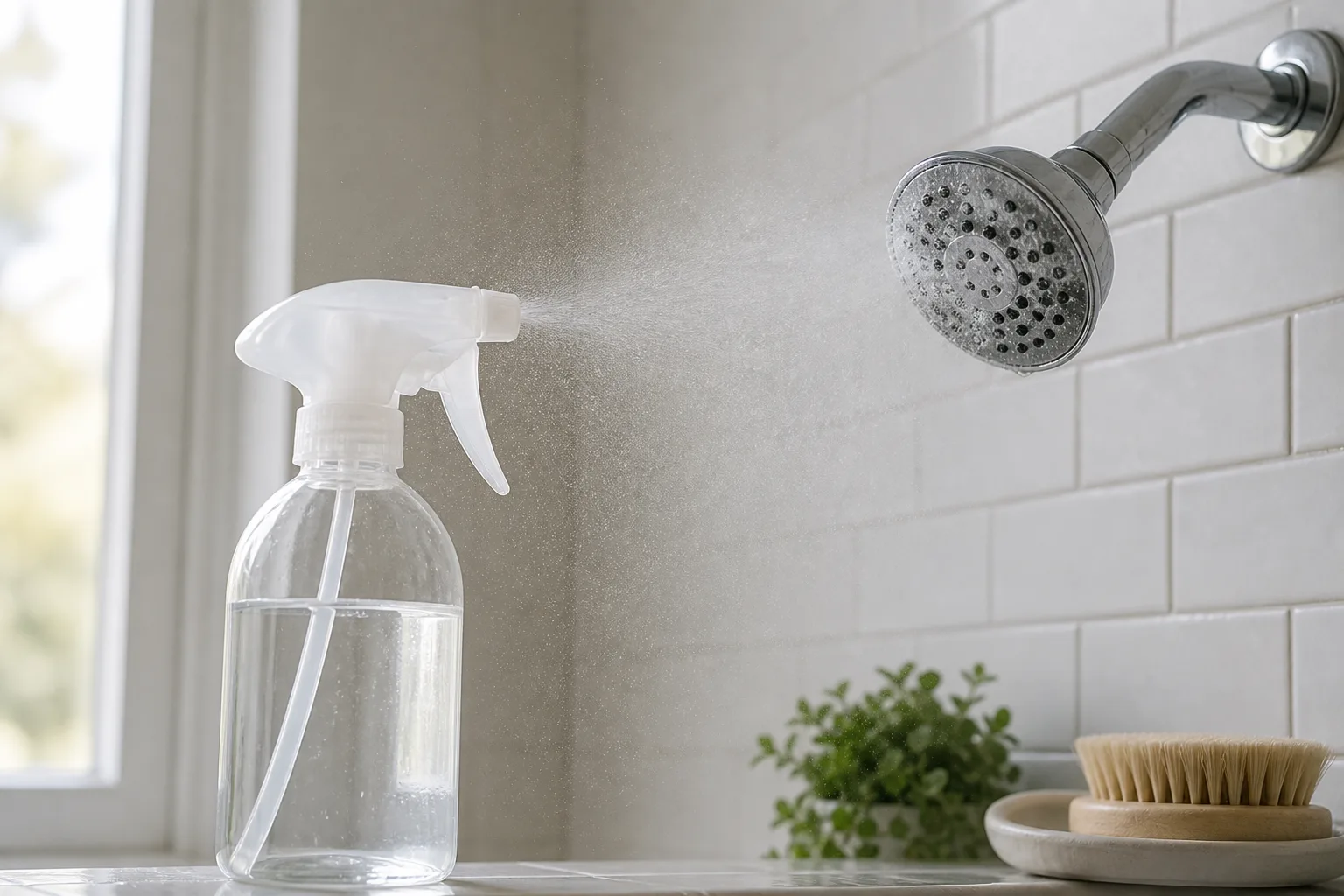
This is the maintenance method. It interrupts biofilm before it thickens and keeps soap scum from becoming bacterial food. Think of it as brushing teeth versus a dental deep clean—the monthly soak is the deep clean; the spray is what keeps problems small.
Mix Ratio, Dwell Time, and Where to Spray
- Mix ½ cup white vinegar and ½ cup warm water in a labeled spray bottle. Warm water helps dissolve soap residue faster.
- Spray the showerhead face, underside of the spray plate, neck where water droplets collect, and nearby tile corners that splash back onto the fixture. If you see pink on the hose collar or arm threads, mist there too.
- Wait 10–15 minutes without rinsing. In The Wash’s pink-mould cleaning guide, cleaners stress that Serratia is not killed on contact—acidity needs dwell time to work (In The Wash).
- Scrub lightly with a soft brush around nozzles and the rim where pink meets metal.
- Rinse by running hot water through the head for 60 seconds.
- Dry the face with a microfiber cloth. Leaving the fixture wet invites the biofilm to restart within days.
Schedule: Once a week in humid homes or shared bathrooms; every 10–14 days in a guest bath that dries quickly. If pink returns within a week, your problem is past spray-only stage—add Method 2 immediately, then keep spraying after the deep soak.
Method 2: The Monthly Soak That Clears Clogged Spray Holes
The monthly soak dissolves mineral scale and loosens biofilm inside nozzle channels—the stuff a surface spray cannot reach. Plan 30–60 minutes for light buildup, up to 2 hours for heavy pink crust, then always flush and dry.
Bag Soak for Fixed Showerheads
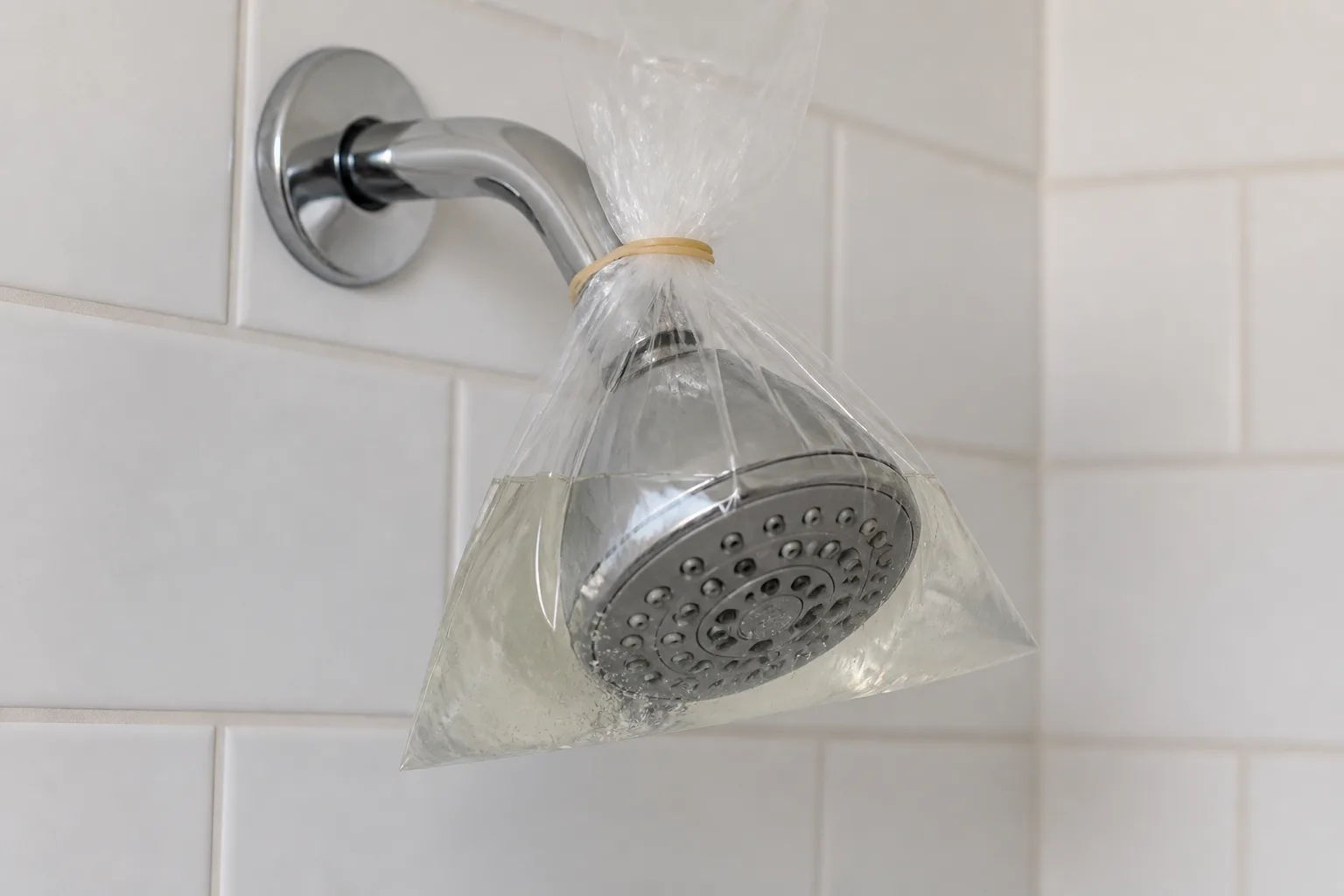
When the showerhead does not unscrew—or you rent and do not want to risk the arm—use the bag method:
- Turn off water at the shower valve if your setup drips; otherwise work quickly.
- Fill a quart-size plastic bag halfway with vinegar solution (50/50 default; 75/25 if scale is thick). Warm the solution in the microwave for 20–30 seconds if your bag is heat-safe, or mix with hot tap water.
- Lift the bag over the showerhead so all nozzles sit submerged. Secure the bag neck to the shower arm with a rubber band or twist tie. Check that the faceplate is fully covered—air pockets above the nozzles mean uneven cleaning.
- Soak 30–60 minutes for maintenance; up to 2 hours for heavy buildup on chrome or stainless. Set a timer—do not leave acidic solution on sensitive finishes overnight.
- Remove the bag, discard solution, and scrub nozzles with a toothbrush while residue is soft.
- Flush by running hot water for 2 full minutes, toggling between spray settings if your head has multiple patterns. This pushes loosened biofilm out of internal channels.
- Dry thoroughly with a cloth.
If pink returns within two weeks after a proper bag soak, scale may be packed behind a flow restrictor. Unscrewing the head—when possible—for a bowl soak is the next step.
Bowl Soak When the Head Unscrews
Removable heads clean more thoroughly because solution reaches the inlet screen and gasket area.
- Unscrew the showerhead from the arm by hand or with a padded wrench, turning clockwise as you face the head (standard threading). Note any rubber washer so you reinstall it correctly.
- Disassemble only if the manual allows—many modern heads snap apart at the faceplate; others are sealed. Do not force sealed units.
- Submerge the head completely in a bowl of 50/50 vinegar solution. For heavy scale, use enough vinegar to cover and add hot water to warm the bath.
- Soak 30–60 minutes (up to 2 hours on durable chrome/stainless). Agitate once or twice by swishing the bowl.
- Scrub nozzle faces and threads, then rinse all parts under hot tap water.
- Reassemble, hand-tighten onto the arm with fresh plumber’s tape on the threads if the old tape looks frayed, and flush hot water for 2 minutes.
- Dry the exterior and polish if desired.
Schedule: Monthly in primary showers; every 6–8 weeks in little-used guest baths—unless you see pink sooner.
Scrub, Rinse, and Flush: Finishing Steps Both Methods Share
Whether you sprayed or soaked, the finish sequence determines if cleaning sticks.
Scrub when soft, not when dry. Biofilm removed dry flakes back on. Rinse upward into the nozzles, not just down the tile—gravity already worked against you while it grew. Flush longer than feels necessary; a 30-second rinse leaves acidic vinegar and loosened slime inside channels. Two minutes of hot water is the standard after soaks.
Dry the fixture every time. Standing water on the faceplate is how Serratia gets a head start before your next shower. A quick cloth wipe beats hoping the air dries it.
Check the arm filter when the head is off: some homes have a mesh screen in the shower arm that traps debris. Rinse that screen separately in vinegar if it is pink-tinted.
Prevention Habits That Keep Pink Mold from Returning

Cleaning removes today’s biofilm; prevention changes the bathroom environment so tomorrow’s airborne bacteria have nowhere to settle.
Reduce fatty residue. Rinse walls and the showerhead with hot water after the last daily shower to wash shampoo film away before bacteria feed. Pink slime thrives where soap scum accumulates (Lehigh County Authority).
Squeegee and wipe. Pull water off glass, tile, and the showerhead face. Thirty seconds of squeegee work buys days of clarity.
Run ventilation. Turn on the bath fan before showering and leave it on 20–30 minutes after. Open a door or window if humidity still fogs mirrors. Bacteria grow slower in dry air (Taste of Home).
Fix drips. A showerhead that weeps overnight stays wet 24/7. Replace worn washers or cartridges so the fixture can dry between uses.
Wash fabric liners and curtains monthly; plastic liners every couple of months. Curtains harbor biofilm that re-seeds the showerhead via steam and splash.
Dry-Time and Ventilation Rules That Actually Work
Humidity is the hidden variable. If your mirror is still fogged 45 minutes after a shower, ventilation is insufficient for biofilm control—add a portable dehumidifier, upgrade the fan, or leave the door cracked with a fan running until relative humidity drops. In winter, bathrooms that stay damp for hours will outrun any vinegar schedule.
Carbon-filter showerheads that remove chlorine can make pink slime establishment easier because chlorine naturally dissipates as water sits exposed to air (Lehigh County Authority). If you use one, lean harder on weekly sprays and monthly soaks.
Common Mistakes That Make Pink Mold Come Back
Rinsing too soon. Ten minutes of dwell time is the floor, not the ceiling, on heavy buildup. Vinegar needs contact time to penetrate scale.
Soaking decorative finishes too long. Acid etches brass and dulls oil-rubbed bronze. Match soak duration to material.
Skipping the flush. Loosened biofilm that stays inside the head re-clogs nozzles the next day—exactly the frustration that sends people searching again.
Cleaning the head but not the hose collar. Pink film on the swivel joint re-contaminates the faceplate every shower.
Bleach everything weekly on metal. Harsh oxidizers can pit cheap plating, creating rough surfaces where bacteria return faster.
Ignoring limescale. Vinegar dissolves mild scale; thick mineral armor may need a longer soak or a limescale product compatible with your finish before biofilm stays gone.
Vinegar vs Bleach on Showerheads: Honest Trade-offs
Vinegar strengths: Safer for most metals with repeated use; dissolves mineral scale; adequate for routine Serratia biofilm in homes; smells sharp but ventilates quickly.
Bleach strengths: Stronger disinfectant on bleach-safe surfaces; useful when pink returns rapidly after proper vinegar soaks or when immunocompromised household members need extra margin.
Bleach weaknesses: Can damage finishes and rubber gaskets with frequent use; dangerous if mixed with other cleaners; overkill for light pink maintenance.
A reasonable split: vinegar for scheduled weekly/monthly care, dilute bleach only on compatible chrome or plastic heads when vinegar failed twice and health concerns warrant it—always rinse thoroughly, never mix with vinegar or ammonia, and ventilate. For natural stone surrounds, keep either cleaner off adjacent tile; acids and bleach both harm stone.
When to Replace the Showerhead Instead of Cleaning Again
Replace the head when:
- Spray remains blocked after two monthly soaks and nozzle pins are intact
- Rubber nozzles are cracked or tear when you flex them
- Corrosion or green pitting shows through plating
- Internal plastic parts rattle or the head whistines—signs of deteriorated internals
- Age exceeds 8–10 years on budget plastic heads in hard-water areas
A new mid-range head plus a vinegar maintenance calendar often costs less than endless frustration—and uses less water once spray holes are fully open again.
Conclusion
Pink mold on a showerhead is bacterial biofilm—usually Serratia marcescens—feeding on moisture and soap residue, often anchored to limescale that steals your water pressure. Method 1, the weekly 50/50 vinegar spray with a 10–15 minute dwell, stops new film from hardening. Method 2, the monthly soak—bag for fixed heads, bowl for removable ones—clears clogged nozzles and scale you cannot reach with a spray alone. Scrub while residue is soft, flush hot water for two minutes, and dry the fixture every time.
Keep pink film from returning by ventilating aggressively, squeegeeing after showers, rinsing soap film, and fixing drips. Match vinegar strength and soak time to your finish, escalate only when cleaning fails twice, and replace worn heads instead of fighting clogged internals forever. Two vinegar routines, done consistently, beat one desperate scrub every few months—and your shower spray will feel like it was meant to again.