DIY Fly Trap From a Soda Bottle: Step-by-Step
Turn an empty 2-liter bottle into a funnel fly trap. Get bait recipes for house flies and fruit flies, placement rules, and safe disposal tips.
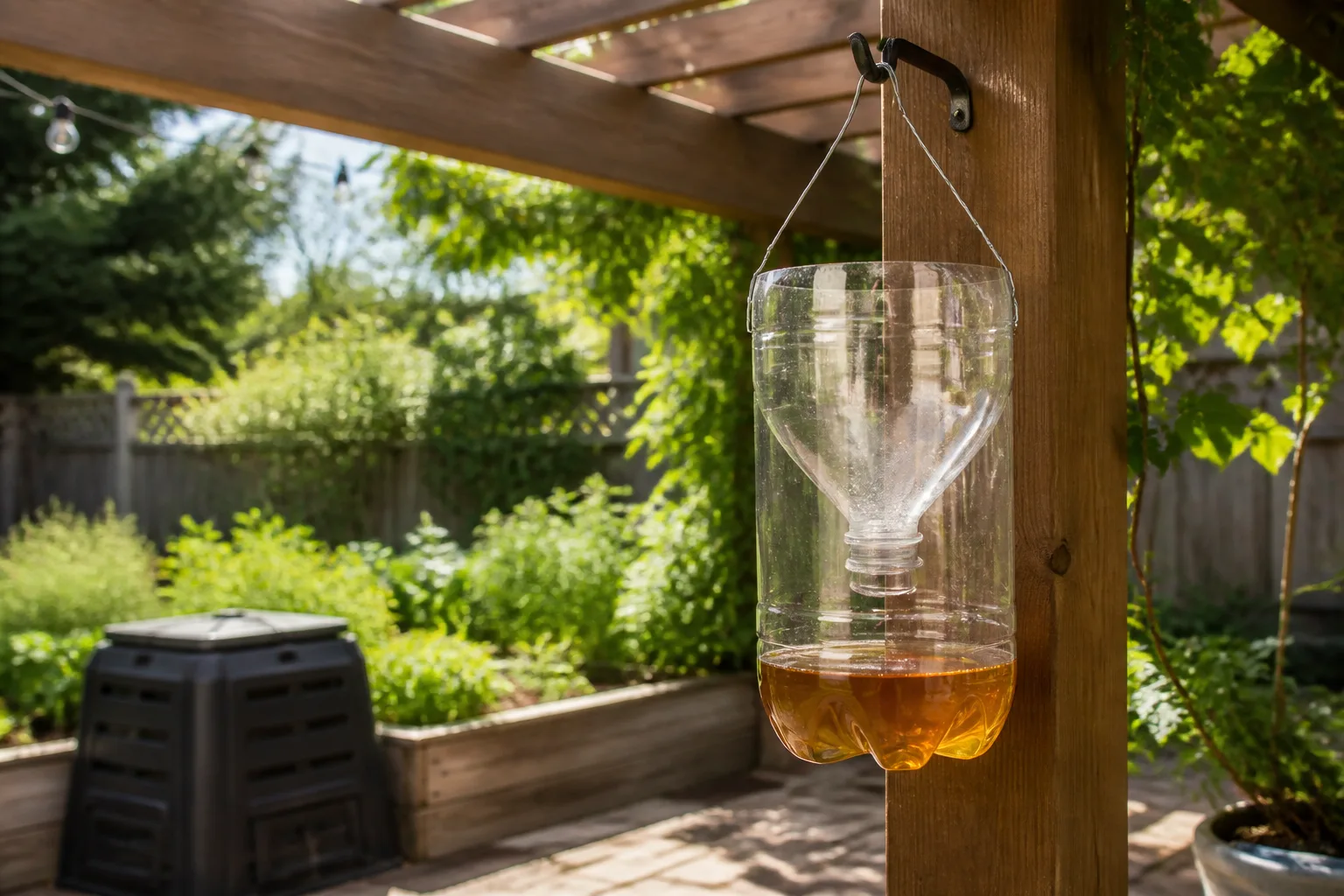
A gray house fly on the window and a cloud of tiny brown flies over the fruit bowl look similar from across the room—but they respond to different baits. Build the soda-bottle funnel trap first; it takes about ten minutes and costs nothing beyond bait you may already have. Then match the lure to the insect. Get that wrong and you will swear the trap “does not work” while the real breeding site keeps producing new adults.
The design is simple: cut the neck off a 2-liter bottle, invert the top like a funnel, and fill the base with attractant plus a few drops of dish soap. Flies crawl or fly down the funnel toward the smell, hit the liquid, and drown because soap breaks surface tension. Texas A&M AgriLife Extension illustrates this exact bottle method for small flies and notes that eliminating the breeding site—not trapping alone—is what finishes the job (Texas A&M AgriLife Extension).
Why a Soda Bottle Trap Beats Swatting (for Some Flies)
Fly swatters work for the occasional intruder, but they do not touch eggs and larvae in a forgotten trash liner, a compost bin, or pet waste. Aerosol sprays can knock down adults fast indoors, yet repeated indoor spraying raises exposure concerns; a 2016 review in Frontiers in Public Health highlighted growing evidence linking chemical pesticide use to human health risks and called for safer agricultural and home practices (Frontiers in Public Health).
A homemade bottle trap sits in the middle: no broadcast chemicals, reusable materials, and steady adult capture while you hunt the source. It will not replace cleaning. It will buy you quieter evenings and tell you whether your bait choice matches the fly species in the room.
For fruit-fly-heavy kitchens, also see our guide to DIY fruit fly traps. For a broader indoor trap comparison, read four DIY fly traps that use what you have.
Know Your Fly Before You Pick the Bait
Trap geometry is forgiving. Bait is not. The inverted soda bottle catches anything that enters and cannot climb back out—but only if the smell matches what that fly is seeking.
House Flies vs Fruit Flies vs Drain Flies
House flies (Musca domestica) are the chunky gray flies about 1/5 to 1/3 inch long with four dark thorax stripes and sponging mouthparts adapted for liquid foods on surfaces (LSU AgCenter). They breed in decaying organic matter—garbage, manure, compost, and spilled pet food—and can complete a generation in as few as seven days at 95 °F, versus about 45 days at 60 °F (Texas A&M AgriLife Extension). Sweet or fermenting baits may catch a curious house fly, but protein and decay odors outperform vinegar for this species outdoors.
Fruit flies (vinegar flies, family Drosophilidae) are tiny—roughly 1/8 inch—with reddish eyes and a stubborn attraction to fermentation: overripe fruit, cider vinegar, wine dregs, and the yeasty slime in drains and recycling (Texas A&M AgriLife Extension). The soda-bottle funnel with apple cider vinegar and dish soap is one of the most reliable fruit-fly setups extension guides photograph.
Drain flies (moth flies) are fuzzy, weak fliers near sinks and floor drains. They breed in the bacterial film inside pipes. A vinegar trap may catch stragglers, but scrubbing the drain is the fix—not sweeter bait.
Spend thirty seconds on identification before you pour liquid. If you are unsure, set two bottles side by side: one with cider vinegar, one with a pinch of canned fish or raw shrimp scrap outdoors. Whichever fills first tells you what you are dealing with.
What You’ll Need
Tools for Cutting and Hanging
- Serrated kitchen knife or sturdy scissors — a sharp blade cuts PET plastic cleanly; dull scissors crack the bottle.
- Permanent marker — marks the cut line below the shoulder.
- Cutting board — protects counters from slip cuts.
- Hole punch or awl (optional) — for wire hanger holes through both plastic layers.
- Wire, twine, or a zip tie (optional) — to hang the trap away from food prep zones.
Materials and Bait Options
- Empty 2-liter soda bottle (1.5-liter works; wider base holds more bait).
- Liquid bait matched to fly type (recipes below).
- Liquid dish soap — two to three drops per trap; more is not better.
- Tape (optional) — secures a loose funnel if the neck fit is sloppy.
You do not need the bottle cap. Leave it off so scent escapes up the funnel.
Step-by-Step: Build the Bottle Funnel Trap
Texas A&M AgriLife Extension describes this as cutting off the funnel section of a soft-drink bottle and inverting it inside the base (Texas A&M AgriLife Extension). The steps below add fit, bait, and safety details the one-line summary skips.
Mark and Cut the Bottle Neck
Place the bottle on a cutting board. Draw a line just below the tapered shoulder—where the straight sides meet the neck—using a permanent marker. A line too high makes a shallow funnel flies can walk back up; too low wastes bait volume.
Pierce the plastic with a knife tip, then saw around the bottle with a serrated blade, rotating the bottle as you cut. Scissors work on thinner bottles if you make a starter slit first. Trim ragged edges so flies do not land on plastic burrs instead of entering the funnel.
Assemble the Inverted Funnel
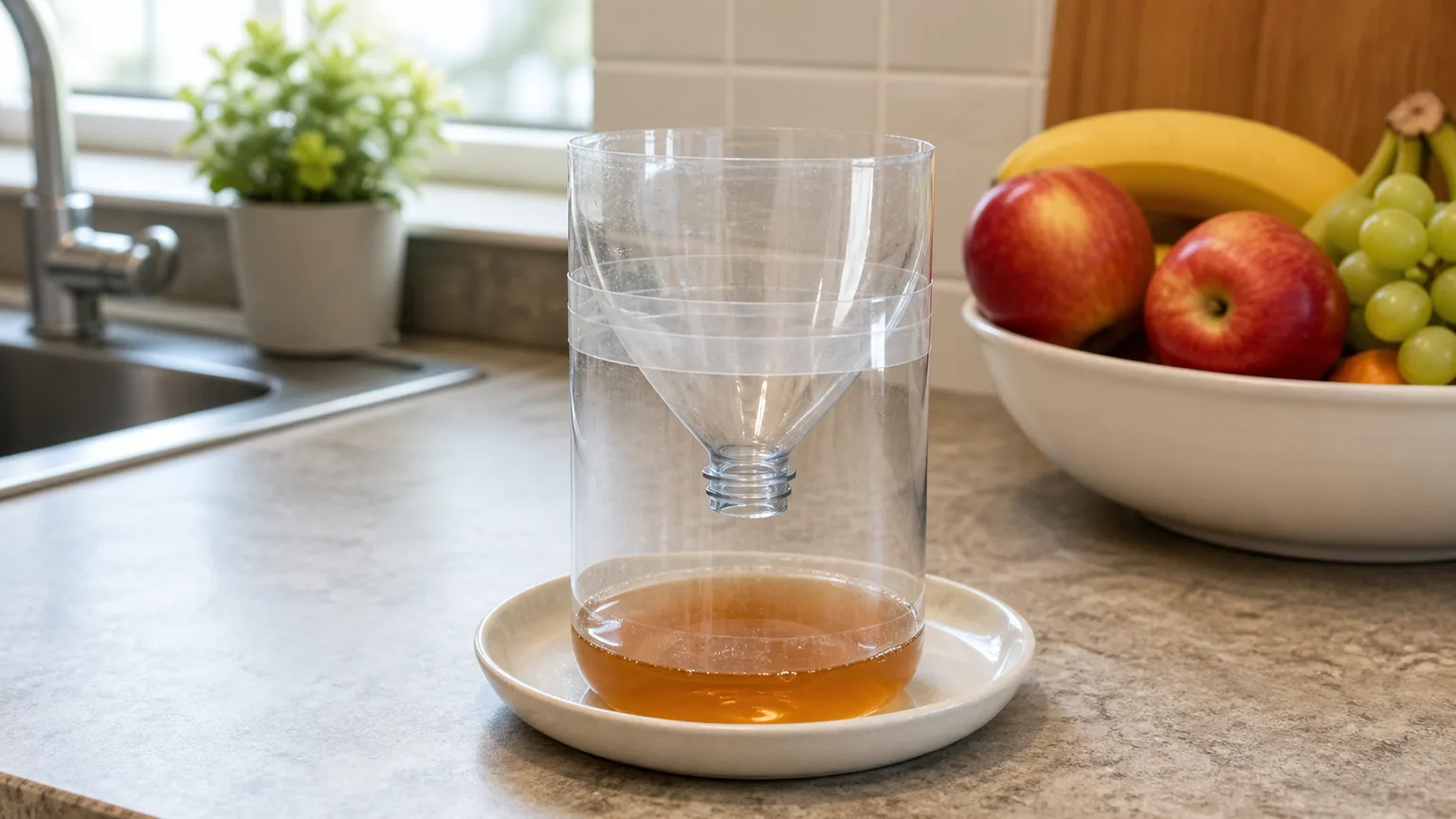
Remove the cut top, flip it upside down, and slide the neck into the base so it looks like a rain funnel sitting inside a cylinder. The neck opening should hang an inch or two above where the bait liquid will sit—flies need room to enter, then drown below.
If the funnel wobbles, tape the rim to the base or pinch the plastic slightly. A snug fit matters outdoors in wind.
Add Bait and a Few Drops of Dish Soap
Pour 1 to 2 inches of bait into the bottom—enough to drown flies, not so full that liquid touches the funnel tip (which can create a bridge for escape artists).
Add two or three drops of dish soap and swirl gently. Dish soap is a surfactant: it collapses the water’s surface tension so flies cannot skate on top and fly away. Texas A&M’s fruit-fly bowl trap uses the same principle (Texas A&M AgriLife Extension). Avoid half a teaspoon—thick foam can repel insects or let them land on bubbles.
Lower the funnel in place. Test stability before you hang it.
Best Baits for Indoor vs Outdoor Traps
The competitor DIY pages list honey, syrup, and vinegar as interchangeable. Field comparisons tell a different story: container shape matters less than bait chemistry, especially for large outdoor flies (The Art of Doing Stuff).
Sweet and Fermenting Baits for Kitchen and Patio
Use these for fruit flies and for occasional house flies near food waste:
| Bait mix | How to prepare | Best for |
|---|---|---|
| Apple cider vinegar + 2 drops soap | Fill 1 inch in base; unpasteurized cider smells stronger | Fruit flies indoors |
| 50/50 sugar water + pinch of yeast | Warm water dissolves sugar; yeast boosts fermentation in 24 hours | Fruit flies, some house flies on patio |
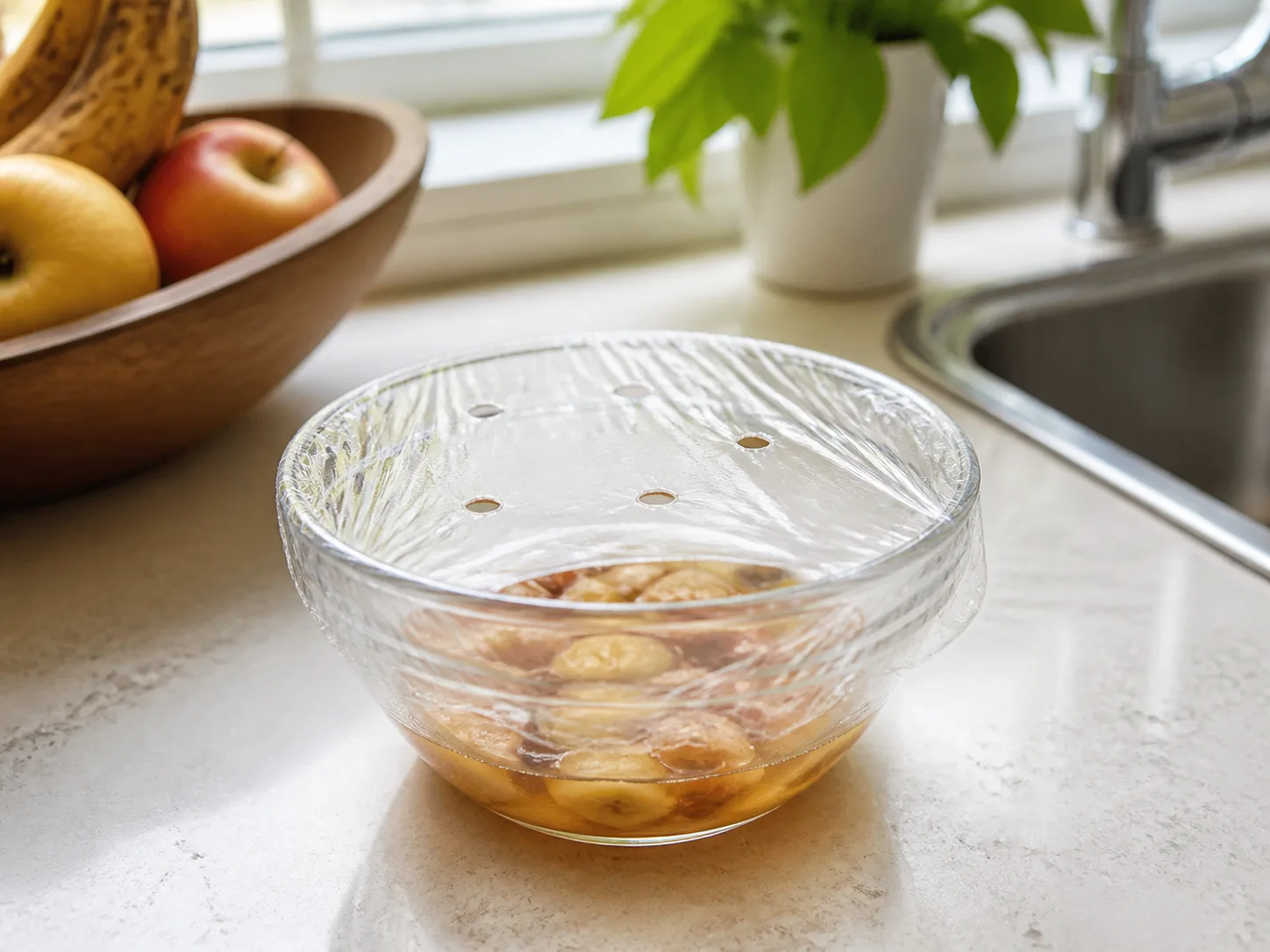
| Overripe banana or peach scrap | Mash a thumb-sized piece in ½ cup water + soap | Heavy fruit-fly pressure |
| Red wine or beer dregs | Last inch from the bottle + soap | Party cleanup, patio tables |
| Honey or maple syrup swirl | Thin with warm water so it is not glue-thick | Sweet-lure backup when vinegar fails |
Replace fermenting indoor baits every two to three days before they turn rancid (Texas A&M AgriLife Extension). Gardening Know How recommends starting traps early in warm weather before populations explode (Gardening Know How).
Without apple cider vinegar? Use any row above—sugar water with yeast, wine, or overripe fruit. White vinegar is weaker for fruit flies but acceptable in a pinch.
Protein Baits for Yard, Barn, and Compost Flies
Outdoors, house flies and blow flies orient toward decaying protein—pet waste, compost, fish, meat scraps. Sweet indoor baits often catch zero large flies in yard tests while a small piece of raw shrimp in water fills a jar in days (The Art of Doing Stuff).
Outdoor protein options:
- Raw shrimp tail or fish scrap in 2 inches of water + soap — top performer in side-by-side backyard tests.
- Canned cat food or fish oil — teaspoon mashed into water; extremely odorous; keep far from doors.
- Chicken or meat trimmings — small pieces only; never use where pets can reach the trap.
Expect maggots inside a full outdoor trap within a week—that is trapped flies laying eggs on the bait. It is disgusting and effective. Plan disposal before you hang it.
Never use meat or fish bait indoors unless you enjoy replacing your kitchen air with landfill aroma.
Where to Hang Your Trap (and Where Not To)
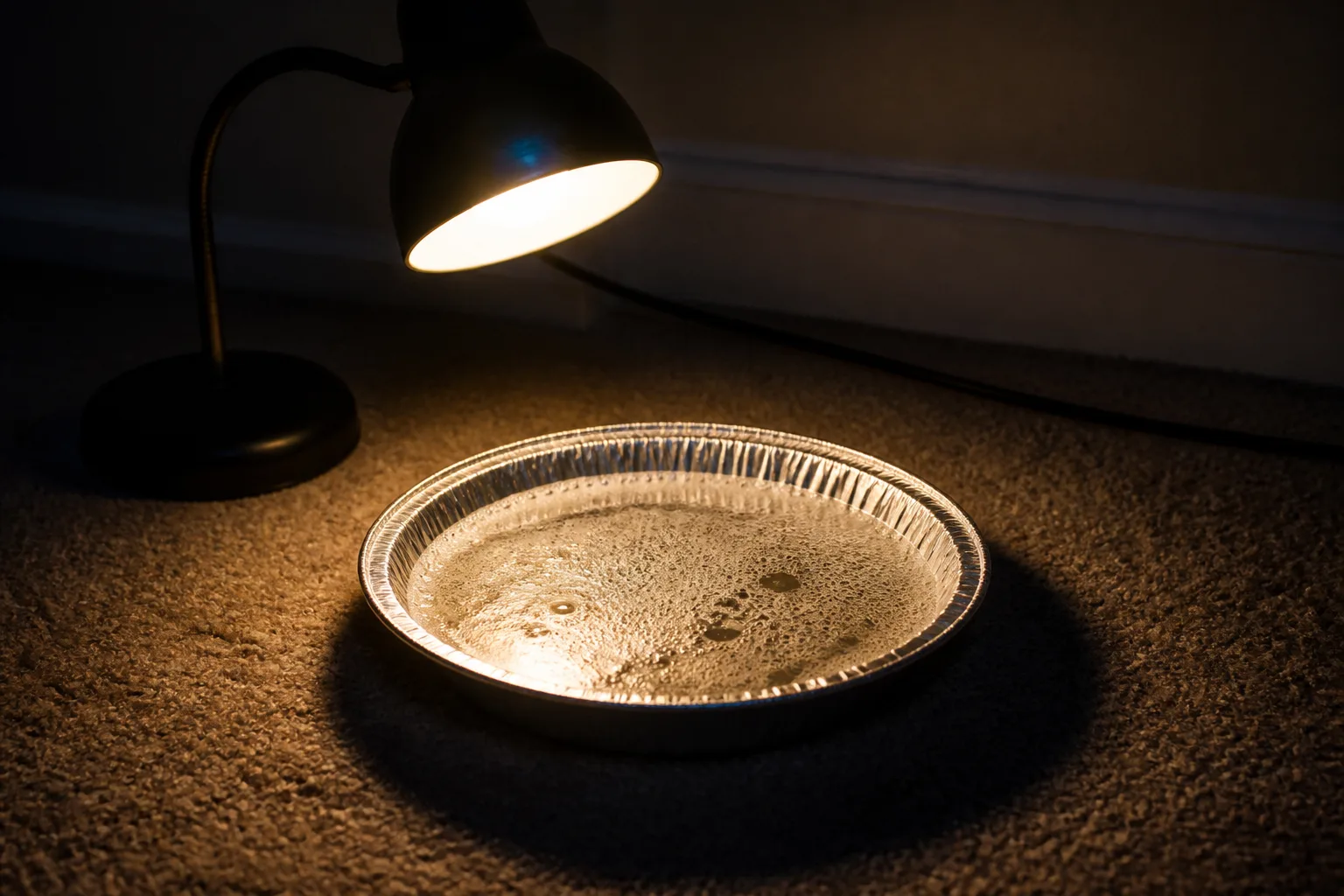
Yes—fly traps attract flies. That is the point. A baited bottle pulls insects from a radius around the trap. Place it wrong and you invite flies toward the back door, the grill, or the fruit bowl.
Do hang:
- Downwind and 15 to 30 feet from doorways you want protected—lure flies away from entries.
- Near confirmed breeding zones outdoors: compost bins, garbage cans, chicken coops, dog run perimeters (LSU AgCenter).
- On patios at shoulder height or above for protein baits—reduces smell at nose level (The Art of Doing Stuff).
- Within 12 inches of indoor fruit-fly activity—counter edge near the bananas, not across the room.
Do not hang:
- Directly above food prep surfaces, pet bowls, or dining tables.
- Inside a closed room with no breeding source— you may catch a few strays but miss the real problem elsewhere.
- Beside an open window without screens—flies enter faster than the trap removes them.
For porch and patio season, pair traps with the exclusion habits in things I do to keep flies away in summer.
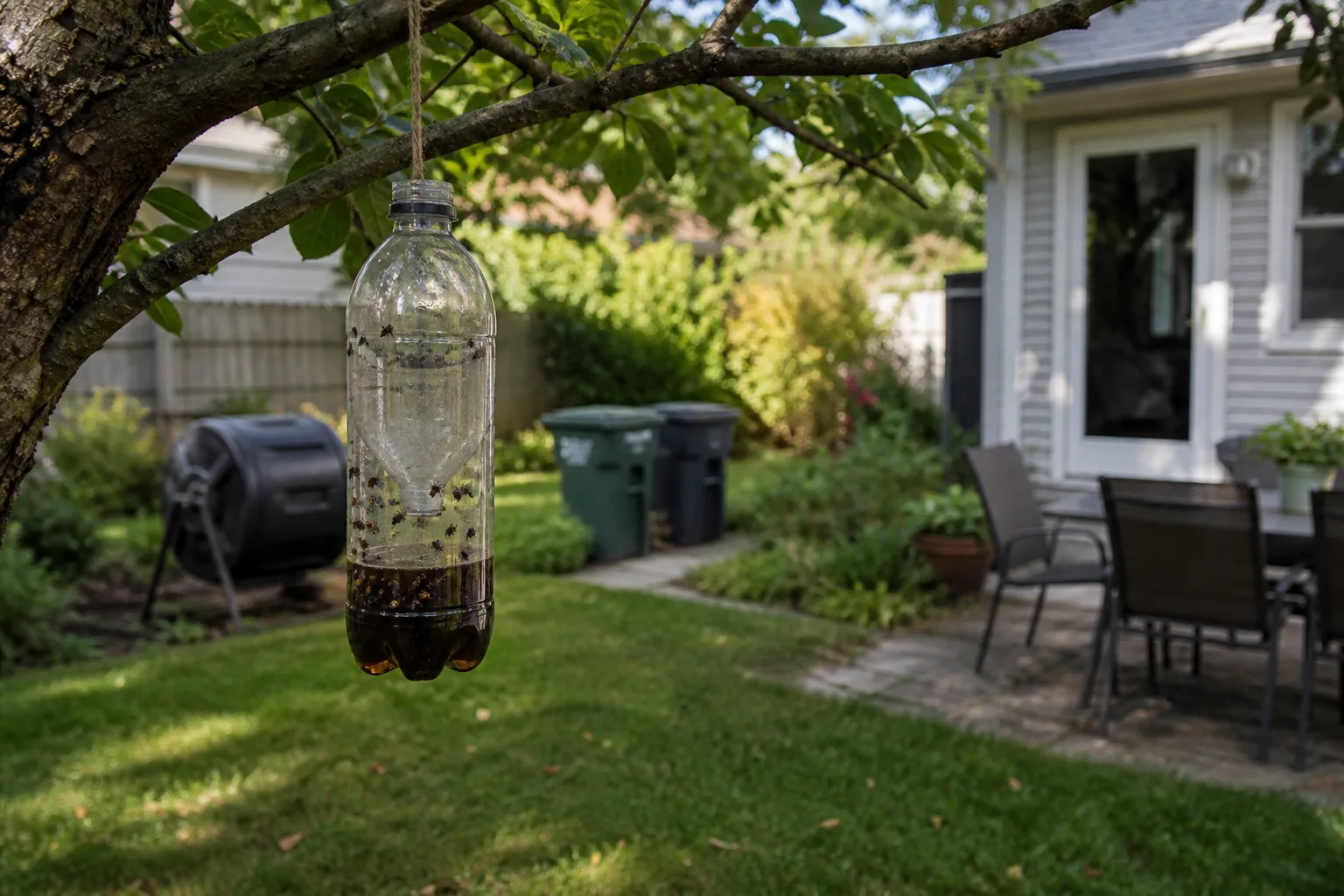
Empty, Refresh, and Dispose Safely
Indoor vinegar traps: empty every 3 to 5 days or when full of flies. Rinse the base, refresh bait, reuse the bottle until plastic cracks.
Outdoor protein traps: empty every 5 to 7 days or sooner in heat. A trap so packed with flies that it muffles the shrimp smell still works—but disposal gets worse daily.
Disposal method:
- Cap is already off; slide a plastic bag over the entire trap without tipping.
- Twist the bag closed at the neck wire or bottle top.
- Place in an outdoor garbage bin with a tight lid—not indoor kitchen trash.
Wash hands after handling. Keep traps out of reach of children and pets; soapy vinegar is less toxic than commercial fly bait, but open meat lures are not pet-safe.
Do not pour bait down the kitchen sink in large quantities—it can feed drain-fly biofilm.
When DIY Traps Are Not Enough
Bottle traps are monitoring and adult-reduction tools, not structural control. Texas A&M notes bait traps alone rarely provide adequate fly control; they help pinpoint problems while you eliminate breeding sites (Texas A&M AgriLife Extension).
Call a stronger response when:
- Dozens of house flies appear daily after trash removal and deep cleaning—check neighbors’ bins, compost, or animal waste within a half mile (Texas A&M AgriLife Extension).
- Flies return within 48 hours of emptying traps—breeding material remains hidden (cracked tile under appliances, liner under the bin, forgotten lunch in a backpack).
- Restaurant or childcare settings need documented pest management—open DIY baits may not meet health codes.
- Drain flies persist after pipe scrubbing—professional plumbing or biofilm treatment may be required.
LSU AgCenter lists sticky traps, UV light traps, and exclusion as cultural controls for house flies in agricultural settings; indoors, screens and swatters still matter (LSU AgCenter).
Stop Flies at the Source
Traps catch adults; sanitation stops the cycle. House flies lay up to 75 to 150 eggs per batch and hundreds over a lifetime on moist decaying material (LSU AgCenter). Remove that material and the trap becomes a mop-up tool instead of a permanent fixture.
High-impact habits:
- Line trash cans, rinse recyclables, and take kitchen garbage out before fruit flies breed (life cycle as short as eight to ten days in warmth) (Texas A&M AgriLife Extension).
- Refrigerate ripening produce; toss bruised fruit the same day.
- Rinse pet food bowls and pick up yard waste within 24 hours in fly season.
- Turn compost weekly; bury fresh scraps in the center so they are not exposed on top.
- Repair torn window screens and install door sweeps—exclusion beats trapping at the threshold (LSU AgCenter).
Repellent scents—lemongrass, lavender, eucalyptus, cinnamon, citronella—may reduce fly landings on porches when used in diffusers or diluted sprays near (not on) food areas. They do not kill flies or remove breeding sites. Think of them as a complement to traps and cleaning, not a replacement.
Set the first outdoor protein trap a few days before sustained warm weather if you had fly pressure last year—catching adults early slows the summer curve (Gardening Know How).
Conclusion
An empty soda bottle, a clean cut below the shoulder, and the right bait turn into a funnel trap that catches fruit flies indoors and house flies outdoors—if you match lure to species. Use cider vinegar and dish soap for kitchen vinegar flies; use shrimp or fish-scented protein bait for yard and compost flies. Hang traps away from doors, refresh bait before it rots, and bag the whole unit for disposal when maggots appear.
The bottle is the easy part. Finding and removing what the flies are breeding in is what keeps them gone. Run the trap while you clean, screen, and compost smarter—and read our fruit fly trap guide or indoor fly trap roundup when the species in your kitchen does not match this bait chart.



