4 DIY Fruit Fly Traps You Can Make at Home
Fruit flies in the kitchen? Make an apple cider vinegar trap, bottle funnel, paper cone jar, or wine bottle lure—then remove the fermenting food they're breeding in.
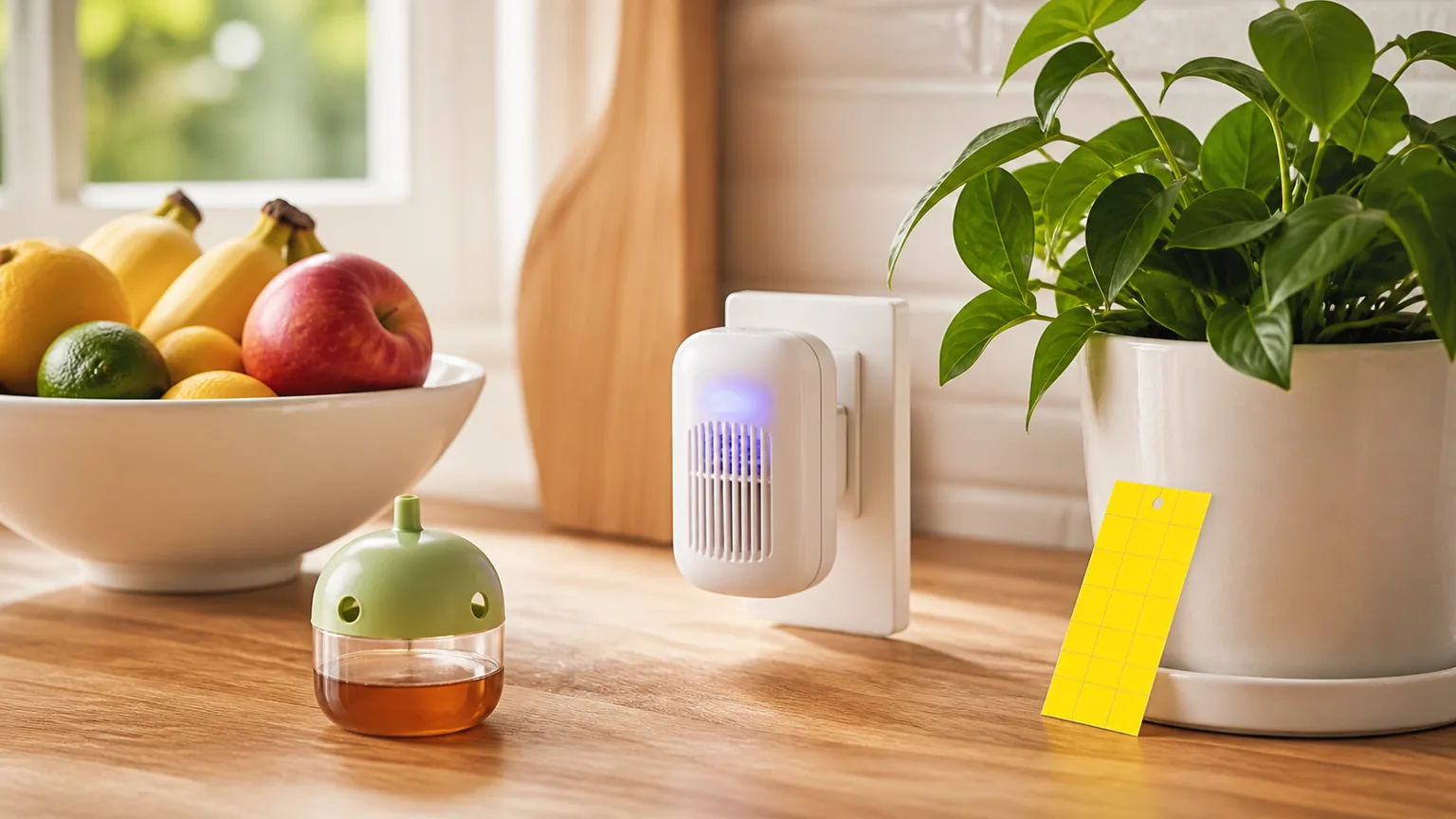
A bowl of peaches on the counter can turn into a cloud of tiny brown flies by evening. Swatting feels productive for about thirty seconds, then the swarm returns because adults are only half the problem—eggs and larvae are already in the fermenting fruit, the wet trash liner, or the beer bottle you meant to rinse. Homemade fruit fly traps pull adults out of the air while you hunt the breeding site. Texas A&M AgriLife Extension notes that under warm conditions a fruit fly can complete its life cycle in as few as eight days (Texas A&M AgriLife Extension), which is why a single overripe banana can explode into a kitchen invasion before you finish the week’s groceries.
The four traps below use supplies most kitchens already have: apple cider vinegar, dish soap, a plastic bottle, paper, and leftover wine. None of them replaces cleaning—but paired with source removal, they are the fastest way to see fewer flies tonight.
Why Fruit Flies Show Up in Your Kitchen (and What They’re After)
Indoor fruit flies are usually vinegar flies in the family Drosophilidae—small, stocky flies about 1/8 inch long, often with reddish eyes (UC IPM). They do not bite. They do chase fermentation: overripe fruit, vegetable peels, spilled juice, wine dregs, and the yeasty slime at the bottom of a trash can or recycling bin.
Fruit flies enter through open doors and window screens fine enough to pass a pencil but not a fly. Once inside, they lay eggs on moist, decaying organic matter. Larvae feed on yeasts in that material, pupate nearby, and emerge as adults that repeat the cycle. Warm kitchens accelerate everything. Farmers’ Almanac puts the egg-to-adult window at 8 to 10 days for the common species Drosophila melanogaster (Farmers’ Almanac), which matches extension timelines.
That biology explains trap design. You are not trying to poison flies—you are mimicking fermentation well enough that adults land, enter, or drown while you eliminate the real nursery.
The Best Baits for Homemade Fruit Fly Traps
Good bait smells like something already rotting. Weak bait means empty traps and a false sense that “nothing works.”
Apple Cider Vinegar and Fermenting Fruit
Apple cider vinegar is the default for a reason: fruit flies are sometimes called vinegar or pomace flies because they orient toward acetic acid and the broader smell of decay (Texas A&M AgriLife Extension). Unfiltered cider vinegar with sediment often outperforms plain white vinegar because it carries more fermentation cues.
Overripe fruit scraps—banana peels, pineapple cores, melon rinds, bruised strawberries—work when flies are ignoring vinegar. Place a small piece in the bottom of a jar trap; the juice that pools is often more compelling than vinegar alone. Rotting onion or potato skins can also draw flies when fruit is scarce.
Wine, Beer, and Other Quick Baits
Red wine, beer, and hard cider are ready-made fermenting baits. Leave an inch in the bottle or pour a splash into a funnel trap. Fruit juice plus a pinch of yeast can boost attraction, though the smell may be stronger than you want on an open counter.
Extension guides list suitable attractants as vinegar, wine, bananas, orange slices, and cider (Texas A&M AgriLife Extension). Replace fermenting baits every two to three days before they turn rancid enough to repel new flies.
| Bait | Best for | Caveat |
|---|---|---|
| Apple cider vinegar + dish soap | Fastest setup, highest catch rate | Keep away from curious pets |
| Overripe banana or pineapple scrap | Flies ignoring vinegar | Messier; change frequently |
| Red wine or beer | Bottle traps, party cleanup | Sticky residue if spilled |
| Sugar water + yeast | Large bottle funnel | Strong odor indoors |
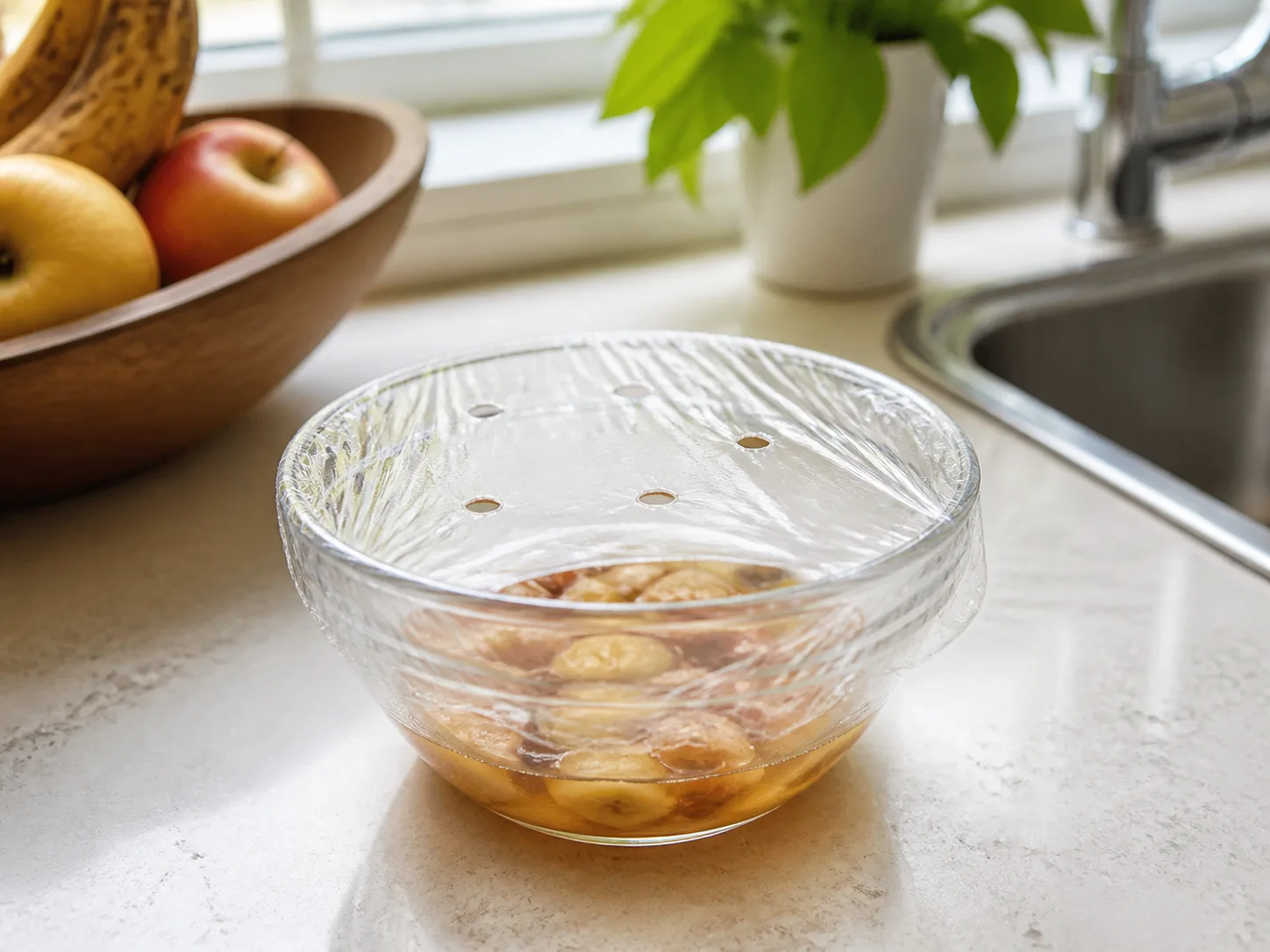
Trap 1: Apple Cider Vinegar and Dish Soap Bowl
This is the trap extension photos illustrate for a reason: a shallow bowl of liquid attractant plus a few drops of soap catches large numbers quickly (Texas A&M AgriLife Extension).
What you need: a small bowl or mason jar, 1/4 to 1/2 cup apple cider vinegar, 2–3 drops liquid dish soap, optional plastic wrap and a toothpick.
Steps:
- Pour vinegar into the bowl or jar until it is about 1/2 inch deep.
- Add dish soap and stir gently—you want a thin film on the surface, not a foam cap.
- Open bowl method: leave uncovered on the counter beside the worst activity. Flies land on the liquid and sink.
- Covered jar method: stretch plastic wrap over the mouth, secure with a rubber band, and poke several small holes with a toothpick. Flies enter through the holes and have trouble finding the exit; soap still drowns stragglers.
Place the trap within 12 inches of where flies cluster—beside the fruit bowl, compost caddy, or recycling bin—not on the opposite side of the kitchen.
Why This Trap Works
Fruit flies detect fermentation with remarkable sensitivity. Dish soap breaks surface tension so flies cannot skate across the vinegar when they land (Texas A&M AgriLife Extension). Farmers’ Almanac ranks vinegar plus two drops of soap as the most reliable of common DIY recipes (Farmers’ Almanac).
Common mistakes: too much soap (flies avoid foam), trap placed far from activity, or bait left unchanged until it smells sour enough to repel new visitors. If catches are low, swap vinegar brands or add a tiny piece of banana peel to the bowl.
Trap 2: Plastic Bottle Funnel Trap
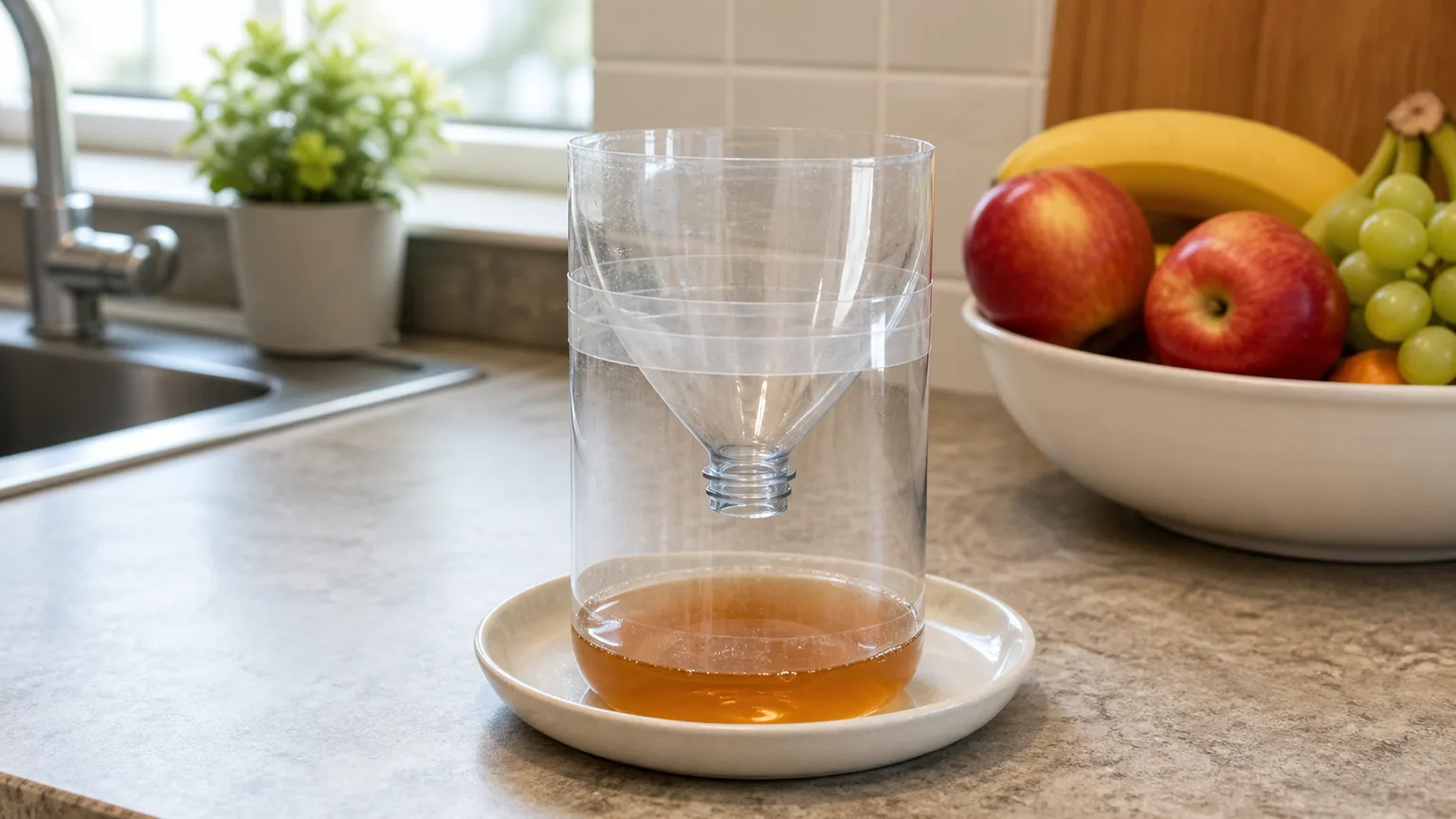
When you want a higher-capacity, mostly enclosed trap—especially during a heavy outbreak—repurpose a soda or water bottle.
What you need: a 1- or 2-liter plastic bottle, scissors or a craft knife, tape, apple cider vinegar or wine, optional dish soap.
Steps:
- Cut the bottle about one-third down from the cap, separating the funnel-shaped top from the base.
- Pour 1/2 to 1 inch of vinegar or wine into the base. Add 2 drops of dish soap.
- Invert the top section and nest it funnel-down into the base so the neck points toward the liquid. Tape the seam if it wobbles.
- Optional: poke tiny holes in the original cap before assembly for extra entry points.
- Set near the infestation. When the bottle fills or smells off, tape the cap shut and discard the whole unit.
Why This Trap Works
Flies follow the scent up the funnel, crawl or fly downward toward the bait, and struggle to navigate back out through the narrow neck. Texas A&M’s indoor fly guide shows this exact inverted-bottle design as an inexpensive fruit fly trap (Texas A&M AgriLife Extension). The disposable format matters when you are catching hundreds—you are not washing maggoty vinegar out of a favorite jar.
Upgrade: add a small piece of overripe fruit in the base when vinegar alone underperforms. Downgrade warning: wide-neck jars without a funnel let flies escape; the geometry is doing real work.
Trap 3: Paper Cone and Mason Jar
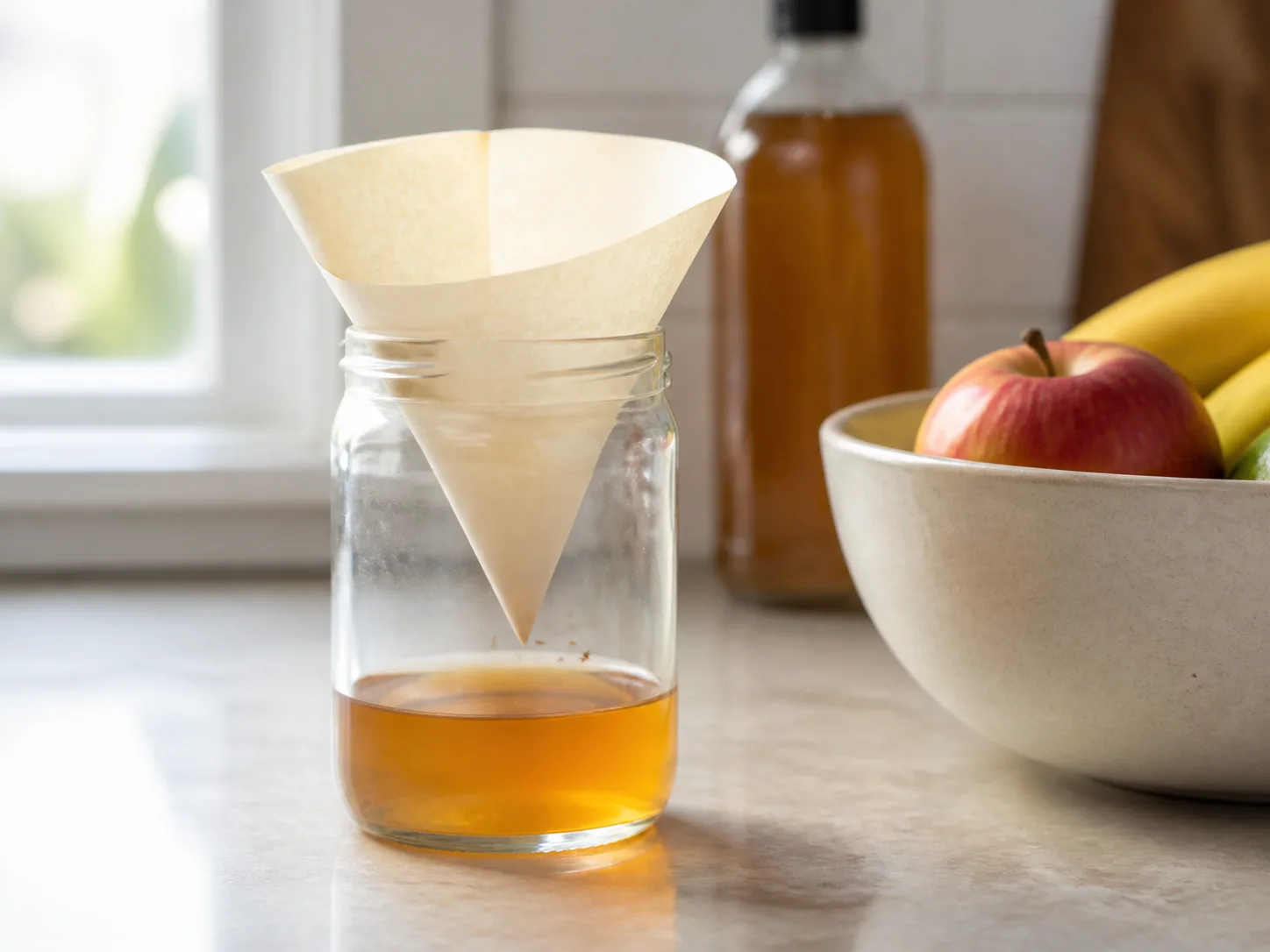
No plastic bottle? A paper funnel in a glass jar is the classic homestead method and still one of the best-looking traps if you mind kitchen aesthetics.
What you need: a pint or quart mason jar, sheet of paper or cardstock, tape, fruit scraps or vinegar.
Steps:
- Drop banana peel pieces, pineapple chunks, or 1/4 cup vinegar into the jar.
- Roll paper into a cone with a pencil-tip opening at the point—this is the critical dimension.
- Tape the cone seam so it holds shape. Set the cone in the jar mouth without letting the tip touch the bait; flies need room to enter the chamber.
- Tape around the rim so there are no side gaps. Flies walk down the cone toward food and rarely find the single exit hole.
Refresh bait every two days. Wash the jar between refills so old slime does not breed new larvae inside your trap.
Why This Trap Works
The cone creates a one-way visual maze: wide entrance, narrow exit. Sweet, juicy scraps like pineapple are especially enticing when flies are choosy. Farmers’ Almanac lists the paper-cone-in-jar method as a top DIY option (Farmers’ Almanac).
Failure mode: a hole too large at the cone tip lets flies come and go. If you can see daylight around the rim, seal it.
Trap 4: Wine Bottle Trap
The half-empty wine bottle at the back of the fridge is not waste—it is a ready-made narrow-neck trap.
What you need: a bottle with 1–2 inches of wine left, optional dish soap, optional paper cone, optional fruit chunk.
Steps:
- Leave red or white wine in the bottle—sour wine works fine.
- Add 2–3 drops of dish soap to break surface tension.
- Drop in a small piece of overripe fruit if flies are ignoring wine alone.
- For extra insurance, roll a paper cone and tape it into the neck like Trap 3.
- Stand the bottle on the counter where flies congregate. When catches peak, cork or tape the opening and discard.
Why This Trap Works
Wine is concentrated fermentation in a vessel flies already associate with food. The long neck limits escape even without a cone; soap handles flies that land on the liquid surface. This trap shines after dinner parties when multiple open bottles may have seeded the infestation.
Note: sweet dessert wines can attract more flies but also create sticky rings—wipe the base daily.
How to Place, Refresh, and Dispose of DIY Traps
Placement beats perfection. Put at least one trap next to the source you can see (fruit bowl, compost bin, bar area) and a second near a suspected hidden source (sink, trash pull-out). During heavy outbreaks, run two or three traps with different baits to learn what the population prefers.
Refresh schedule:
- Vinegar and soap bowls: every 2–3 days, or when full of flies
- Fruit scrap baits: every 48 hours minimum
- Wine bottles: when wine evaporates or smells off
Disposal: seal traps before moving them—tape over jar mouths or bottle necks. Flies escape easily from open bowls in transit. Wash reusable jars with hot soapy water; do not pour live flies down the drain where they may re-establish.
If you want a pre-made lure after DIY experiments, our guide to commercial fruit fly traps compares liquid lures, light traps, and drain products by breeding site.
Remove Breeding Sites While the Traps Work
Traps explain why you still see flies after a “successful” night of catching. Eliminating breeding sites is essential for complete control (Texas A&M AgriLife Extension). Think of traps as pulling adults off the board while you remove the nest.
Same-day cleanup checklist:
- Refrigerate or discard overripe produce; wash new fruit that sat in a bowl
- Empty trash and recycling; rinse bottles and cans, especially wine and soda containers
- Wipe sticky spills under appliances, bar mats, and cutting boards
- Wash damp mops and dish rags; hang them to dry instead of piling in the sink
- Check potato and onion bags in the pantry—flies love hidden rot
Common Hiding Spots You’ll Miss
Extension lists breeding sites people overlook: wet trash-can bottoms when liners leak, floor-drain films, cracks under commercial-style kitchen mats, condensate pans under refrigerators, and unrinsed recycling (Texas A&M AgriLife Extension). In homes, the fridge drip tray, garbage disposal splash zone, and the inch of juice in a “empty” kombucha bottle are frequent culprits.
If flies persist after a spotless fruit bowl, read the overlooked spots that attract fruit flies—especially drains and disposals, where dark-eyed fruit fly species breed more often.
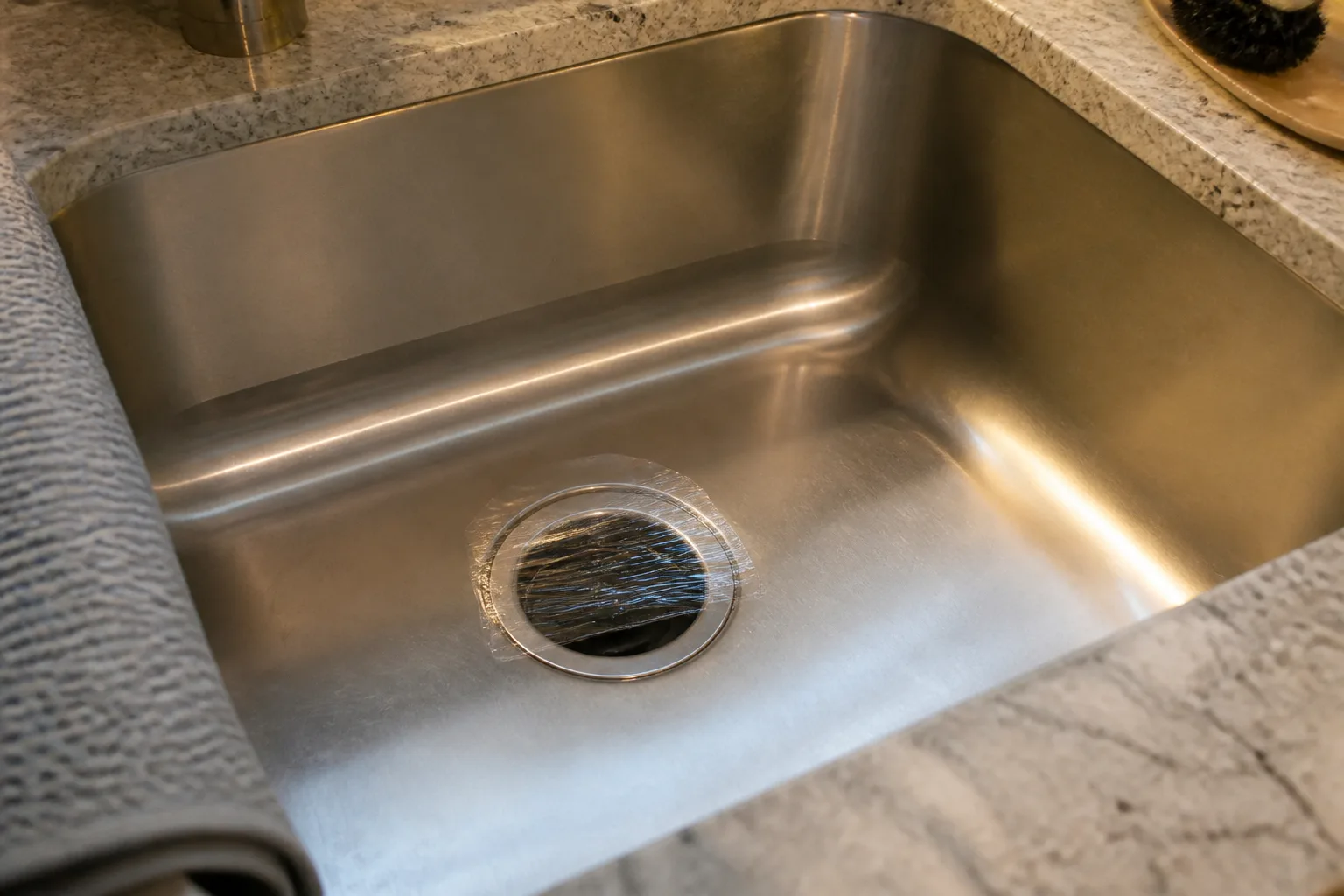
Timeline: when you remove sources and run traps on day one, most kitchens see a sharp drop in adults within 24–48 hours. Allow 5–10 days for the full life cycle to exhaust if a hidden site remains (Farmers’ Almanac).
Fruit Flies vs. Fungus Gnats vs. Drain Flies
Misidentification wastes vinegar. All three are small and annoying; fixes diverge.
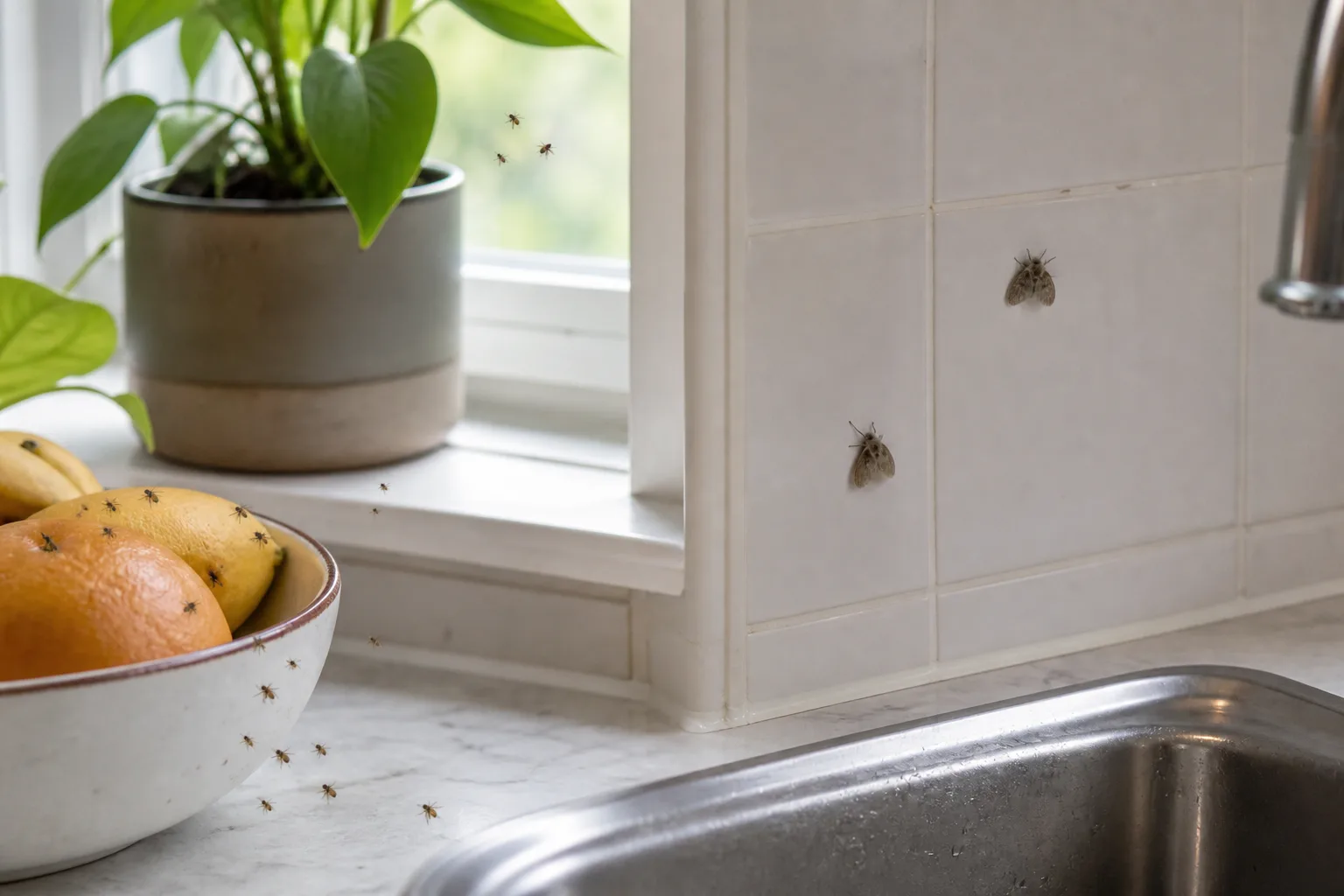
Fruit flies are stout, quick, often with reddish eyes, and they hover near fermenting food and vinegar. A cider trap beside the fruit bowl should fill.
Fungus gnats are slender, mosquito-like, with long legs. They emerge from wet houseplant soil, not a peach. Yellow sticky cards and drier soil help more than vinegar; see how to get rid of fungus gnats in houseplants.
Drain flies (moth flies) are fuzzy, moth-shaped, and rest on bathroom walls. They breed in drain biofilm, not a banana. Scrub drains and test with tape over the opening overnight; vinegar traps catch stragglers but do not clean pipes.
If your trap catches nothing while flies hover near a sink, you may be fighting drain flies or dark-eyed fruit flies tied to a drain—not a fruit bowl problem.
Prevention Habits That Stop the Next Swarm
Prevention is boring and effective:
- Wash and refrigerate produce when you unpack groceries; room-temperature fruit ripens—and ferments—faster on the counter.
- Rinse wine, beer, and soda containers before recycling; dry bin bottoms if liners leak.
- Seal compost caddies and empty them before fermenting smells build.
- Screen windows and doors; fruit flies slip through damaged screens easily (Texas A&M AgriLife Extension).
- Dry sinks, mops, and dish brushes; moisture plus organic debris equals larvae anywhere, not only in fruit.
Late summer and early fall bring peak outdoor activity, but indoor populations can persist all winter if fermenting food remains available (Farmers’ Almanac). Treat fruit flies as a year-round sanitation habit, not a one-week annoyance.
Troubleshooting When Your Trap Isn’t Catching
| Symptom | Likely cause | Fix |
|---|---|---|
| Trap empty, flies at sink | Drain flies or drain-breeding fruit flies | Scrub drain; move trap; read drain guide |
| Trap empty, flies on plants | Fungus gnats | Dry soil; sticky cards; not vinegar alone |
| Few catches, visible swarm | Trap too far from source | Move within 12 inches of activity |
| Catches then rebound | Hidden breeding site remains | Audit trash liner, recycling, fridge drip, bags of potatoes |
| Flies enter but escape | Hole too large or missing soap | Shrink cone opening; add dish soap |
| Vinegar smells awful, no flies | Bait too old | Fresh vinegar; add fruit scrap |
Try two baits in parallel—vinegar in one trap, fruit scrap in another—to see which the population prefers. If both fail after source cleanup, step back and re-identify the insect before buying random sprays.
Conclusion
The fastest path through a fruit fly outbreak is trap plus cleanup, not trap alone. Tonight, set a bowl of apple cider vinegar with dish soap beside the worst cluster, start a bottle funnel or wine bottle if you need higher capacity, and spend fifteen minutes eliminating fermenting food and moisture you would rather ignore. Within a day or two the swarm should collapse—unless the real source is a drain, a wet mop, or houseplant soil, in which case the trap told you exactly where to look next.
Four DIY designs, one principle: give flies fermentation they cannot leave, then remove the nursery that keeps hatching replacements. Keep a vinegar trap ready during stone-fruit season and you will spend far less time swatting at nothing.



