Houseplant Faded Flowers: Aging vs Bleach, Heat & Ethylene
Tell aging from bleach and ethylene on open houseplant blooms, then deadhead and judge the next flush — not the spent petals.
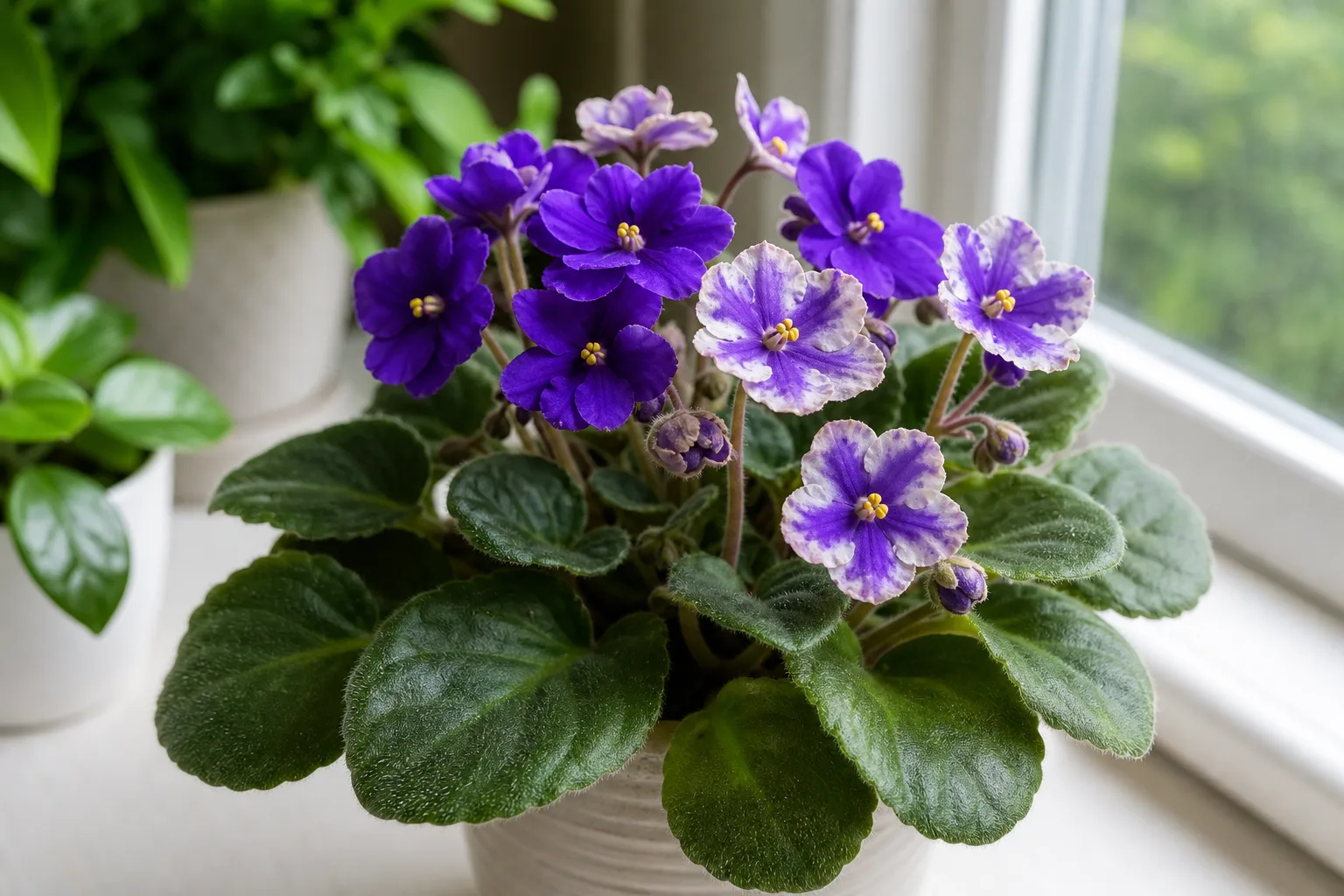
Before you reach for bloom fertilizer, answer three forks. Did color drain slowly from the oldest petals while younger buds stayed vivid? Did the window-facing side of open blooms go chalky after a bright afternoon? Or did every mature flower dull overnight while the leaves still look fine? Those three patterns — aging, light bleach, and ethylene or heat shock — explain most faded flowers on indoor plants, and they need different first moves.
This page is the open-bloom color-loss hub: petals that already opened and then lost intensity. It is not bud drop (unopened buds aborting), not flowers turning brown (necrotic tissue), and not a plant that never sets buds. If you already know the species, jump to the plant notes below or its faded-flowers problem page; if you are still sorting several symptoms, use this diagnosis path first, then the houseplant symptom checker.
Written by Sai Ananth (B.Pharmacy; LeafyPixels lead writer, flowering houseplants and bloom troubleshooting) and reviewed by the LeafyPixels Review Board. The cases below are attributed LeafyPixels grower notes with room conditions and next-flush outcomes — not a promise that your timeline will match.
What Faded Flowers Means (and What It Is Not)
Faded flowers means open petals have lost saturation. Color may drain from the margins inward, look sun-washed on the glass side of the plant, or dull across a whole flush in a day while foliage stays mostly green. The bloom may still be attached and soft, or it may be thinning toward collapse — the shared feature is pigment and display life, not brown necrosis.
Homes shorten bloom life. Limited light, dry heating air, hot glass, ripening fruit, and irregular watering all push flowers to finish early. Missouri Botanical Garden notes that stress such as lack of water, overwatering, temperature change, reduction of light, or relocating a plant can trigger leaf and flower drop — a common first reaction after a move. That stress language includes color collapse on open blooms as well as abscission.
Fertilizer is rarely the first fix. Bloom food cannot re-saturate spent tissue, and stacking feed on top of heat, drought, or ethylene usually adds salt stress without buying you color. Stabilize the room and moisture first; feed only after the next buds are forming under steadier conditions.
Three Questions Before You Treat Anything
How fast did color drain — days to weeks, or hours? Slow edge fade on the oldest blooms is usually senescence. Whole-flush dullness inside 24–48 hours after a room change points to stress.
Are neighboring buds and younger flowers still vivid? Fresh neighbors beside one pale old bloom support aging. Every open flower looking chalky at once supports bleach, heat, ethylene, or drought.
What changed in the last week? New south-glass exposure, a fruit bowl on the same counter, a heater kicking on under the sill, a missed watering, or a sudden move matter more than a new fertilizer brand.
If the answers point to aging, deadhead and keep culture steady. If they point to stress, pick one likely cause from the table below and change one variable. Do not relocate, repot, and double-feed in the same afternoon.
Quick Diagnosis Table
Use this as a first pass, then read the matching section. Change one major factor at a time once you pick a direction.
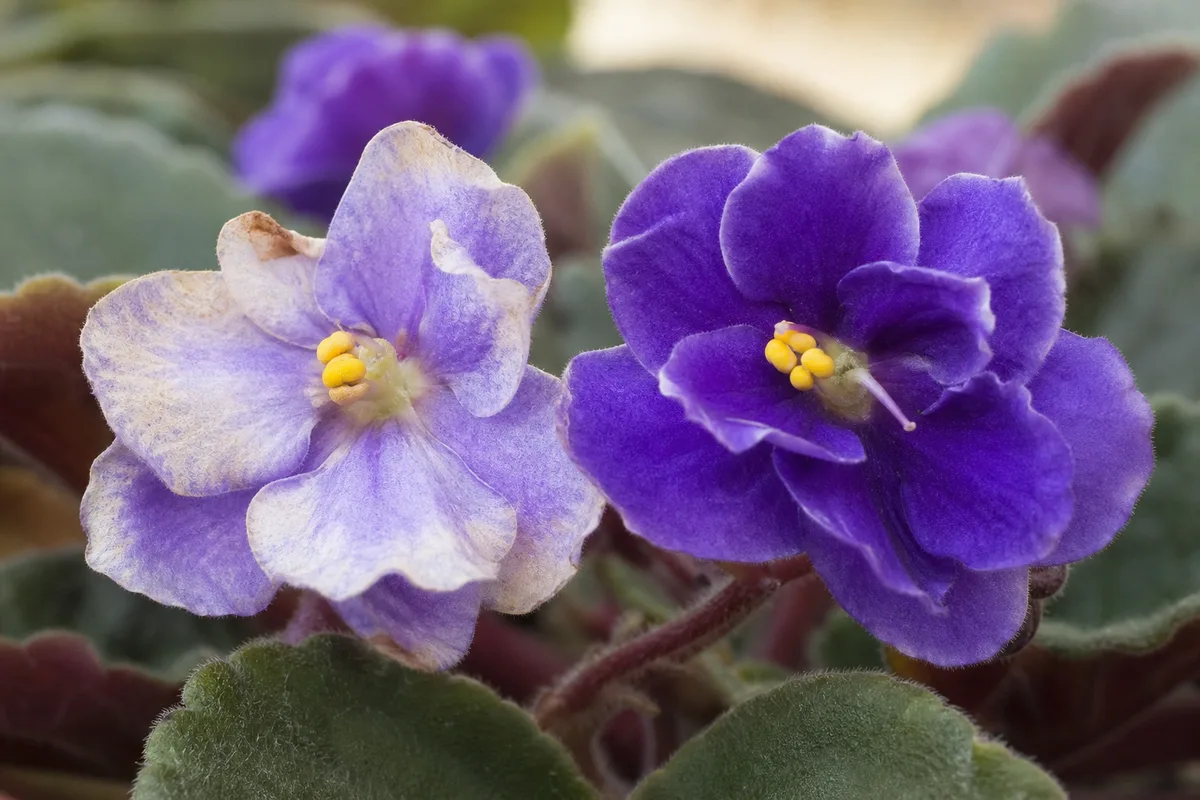
Example species: African violet — margin fade and dull open flowers are easier to read against deep green leaves.
| What you see | Speed | Leaf state | First check | Most likely direction |
|---|---|---|---|---|
| Oldest blooms pale; new buds still rich | 1–3 weeks | Firm, normal | Stalk age | Normal aging |
| Window-side petals chalky; scorch on same face | Hours–days | May scorch sunny face | Afternoon glass | Light bleach |
| Soft collapse on hot sill or above radiator | Same day–few days | Soft or rolling | Temp at leaf height | Heat stress |
| All open flowers dull overnight; leaves mostly fine | 24–48 hours | Often OK | Fruit, smoke, exhaust | Ethylene |
| Flowers fade/fall; pot light, mix dusty dry | Days | Wilt or crispy edges | Finger probe 3–5 cm | Drought |
| Early drop plus crispy tips in winter heat | Days | Crispy margins | Hygrometer | Low humidity |
| Silvery petal streaks; pollen dust when tapped | Variable | May stipple | Magnifier | Thrips (lookalike) |
| Soft brown or grey fuzz on spent blooms | After petals die | Local mould | Airflow + debris | Grey mould on dying tissue |
RHS guidance on poorly houseplants is blunt about watering: wilted leaves, brown crispy edges, and flowers that fade or fall quickly are classic signs a plant is not getting enough water. That one line alone saves people from chasing fertilizer when the pot is simply too dry.
Normal Bloom Aging and Senescence
Every flower has a finite display life. Pigments break down, petals thin, and the plant shifts energy toward seed set if you leave spent blooms attached. That is biology, not a care failure.
How long a bloom stays vivid depends on the species. African violet flowers commonly hold strong color for roughly one to three weeks on a healthy plant before edges pale. Hibiscus and many day-bloomers cycle much faster — sometimes a single day of peak color. Continuously blooming cultivars can show fading petals and fresh buds at the same time, which is expected grooming, not collapse.
Aging fade starts at the petal margins or tips and progresses inward. Neighboring buds keep their intensity. If that describes your plant, deadhead and keep culture steady. Do not repot or blast bloom fertilizer to “save” tissue that has already finished its job. Judge success on the next flush, not on old petals.
Peace lily and anthurium spathes often green as they age. That greening is normal senescence on a bract, not the same problem as chalky bleach on a pigmented petal. Treat it as aging unless the spathe crisps with a dry root zone or collapses after heat or ethylene.
Light Bleach vs Pale Flowers From Low Light
Strong direct sun through glass can wash pigment out of petals and scorch tissue. Missouri Botanical Garden describes sunburn as brown or tan damage on the side of the plant aligned with the sun — a directional pattern that is a strong clue. RHS notes that strong direct sunlight, such as from a south-facing window in summer, can scorch leaves and give them a washed-out appearance. Flowers sitting in that same beam often bleach before leaves show full scorch.
These two look related and are opposite problems. Bleach is excess light: washed-out color on the sunny face, possible scorch, compact or stressed growth. Low-light pale blooms come with thin, deep green or stretching foliage and weak flowering overall. UF/IFAS notes that African violets in too little light grow thin, deep green leaves that reach for light and flower poorly, while excessive light turns leaves pale or greenish-yellow and slows growth.
If blooms are pale and the plant is leggy toward the window, raise light carefully — see the grow lights guide for indoor plants when window light is the limiting factor. If blooms are bleached and the window face looks scorched, pull the pot back, add a sheer, or shift to an east window. Do not answer bleach with a brighter grow light.
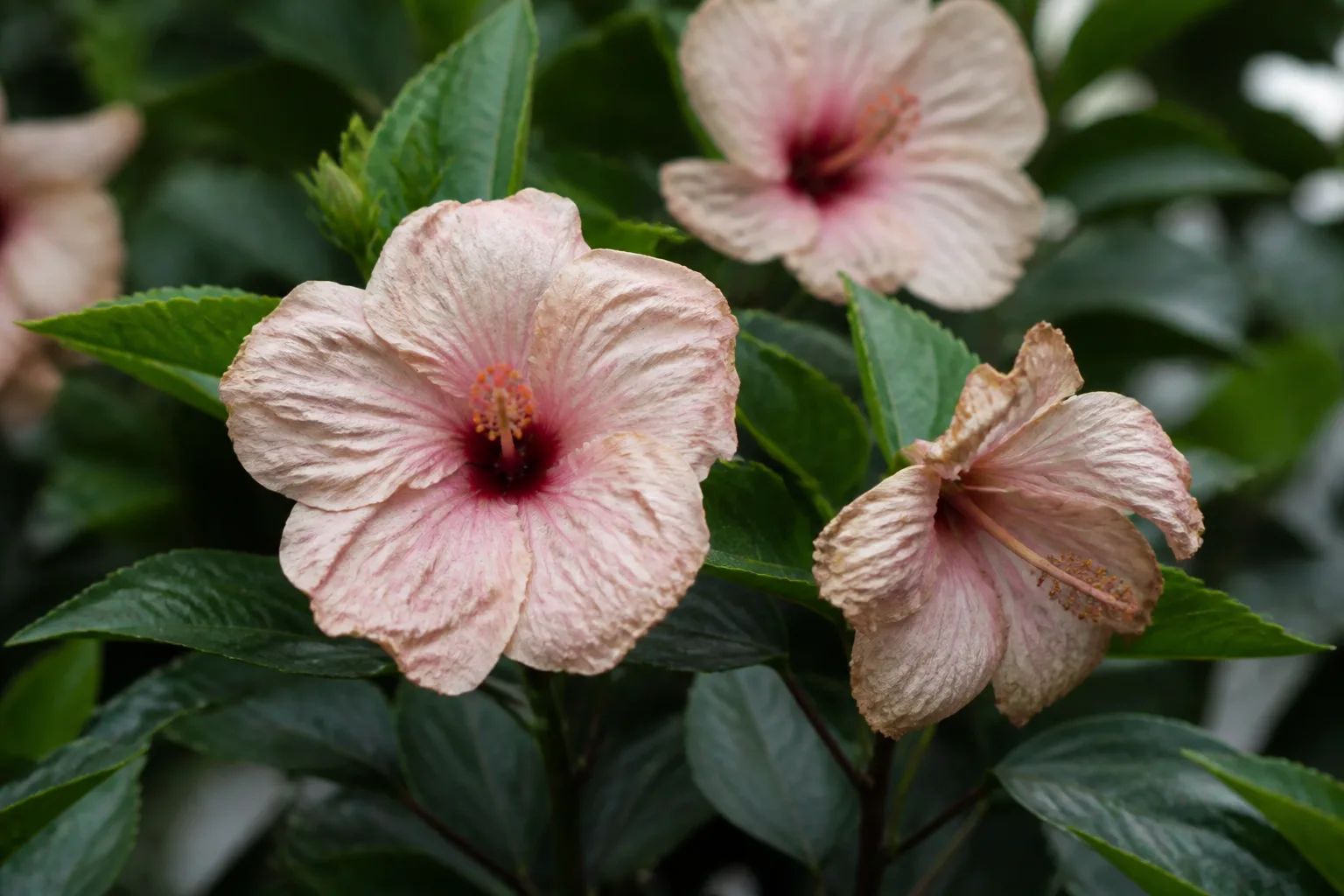
Example species: hibiscus — high-light bloomers still bleach when afternoon glass overheats petals.
Window Bleach: A LeafyPixels Home Case
LeafyPixels grower note (African violet, unshaded south glass). We kept a standard violet about 40 cm from unshaded south glass in late spring. After two clear afternoons, the window-facing petals looked chalky pink while buds on the room side stayed deeper. Leaf surfaces on the same face showed early pale patches. We pulled the pot to ~1 m from the glass and added a sheer. The bleached open flowers never recolored — we deadheaded those peduncles. The next flush, opening about three weeks later under the sheer, held even color on both faces of the plant. Lesson: directional chalkiness is bleach; move light, then judge the next stalk.
Heat Stress Near Windows and Vents
Heat shortens bloom life even when light intensity looks moderate. Sills above radiators, sealed south windows in afternoon sun, and conservatories in midsummer create petal temperatures that drain color and collapse tissue. RHS links leaves wilting, rolling, bleaching, and going crispy to heat stress in very hot rooms. Missouri Botanical Garden also flags hot air from indoor heating as a driver of leaf and flower drop when plants come indoors.
Heat fade often arrives with soft, limp petals rather than the slow edge fade of aging. Nighttime temperature spikes near glass, or daytime blasts from HVAC, can do as much damage as a single hot afternoon. UF/IFAS notes that prolonged high temperatures reduce growth and flowering on African violets and recommends moving plants to the coolest spot or an air-conditioned room in hot weather.
If you suspect heat, measure temperature at leaf height during the hottest hour. Move the plant off the radiator line, leave a gap from hot glass, and improve airflow without aiming a cold AC draft at the blooms.
Radiator-Sill Collapse: What We Recorded
LeafyPixels grower note (Christmas cactus above a warm radiator). In early heating season, a holiday cactus sat on a narrow sill with the radiator running underneath. Open blooms went soft and dull within a day; unopened buds held longer. Leaf pads were not scorched, but air at the pot rim read roughly 28–30°C during the heat cycle. We moved the plant to a cool bright shelf away from the vent path and left fruit and fertilizer alone. Remaining buds opened with better hold; the next flush several weeks later lasted through normal senescence instead of same-day collapse. Heat often looks like “mystery ethylene” until you check the radiator line.
Ethylene: Fruit Bowls, Exhaust, and Overnight Collapse
Ethylene is a colorless plant hormone gas that accelerates flower senescence. Indoor sources include ripening fruit, decomposing plant material, cigarette smoke, vehicle exhaust near open windows or attached garages, and incomplete combustion from poorly vented heaters. Ethylene fade is distinctive because leaves may look nearly normal while every mature bloom dulls or shatters.
Scan within about two meters of the pot for fruit bowls, banana hangers, compost scraps, and gas appliances. Move the plant first; do not fertilize. If blooms collapse after a heater starts in autumn, ventilation and combustion safety matter more than bloom food — a poorly vented heater is a household safety issue beyond plant care.
Greenhouse Thresholds Applied at Home
Cornell University greenhouse research shows that even low concentrations can trigger premature senescence of open flowers. In that controlled work, petunias exposed to just 0.01 ppm ethylene for 24 hours showed early senescence of pollen-shedding flowers, with flush loss noticeable within 24 to 48 hours. Cornell also lists ripening fruit, decomposing organic matter, and furnace or vehicle exhaust among sources.
LeafyPixels translation (not a home ppm measurement): we do not claim your kitchen hits a specific parts-per-million reading. We treat Cornell’s greenhouse thresholds as a sensitivity map. If every open bloom dulls overnight and a fruit bowl or combustion source sits nearby, remove the source or move the plant — the same logic growers use when flowers collapse near a furnace. The numbers justify urgency; your diagnostic cue is the overnight pattern plus a nearby source.
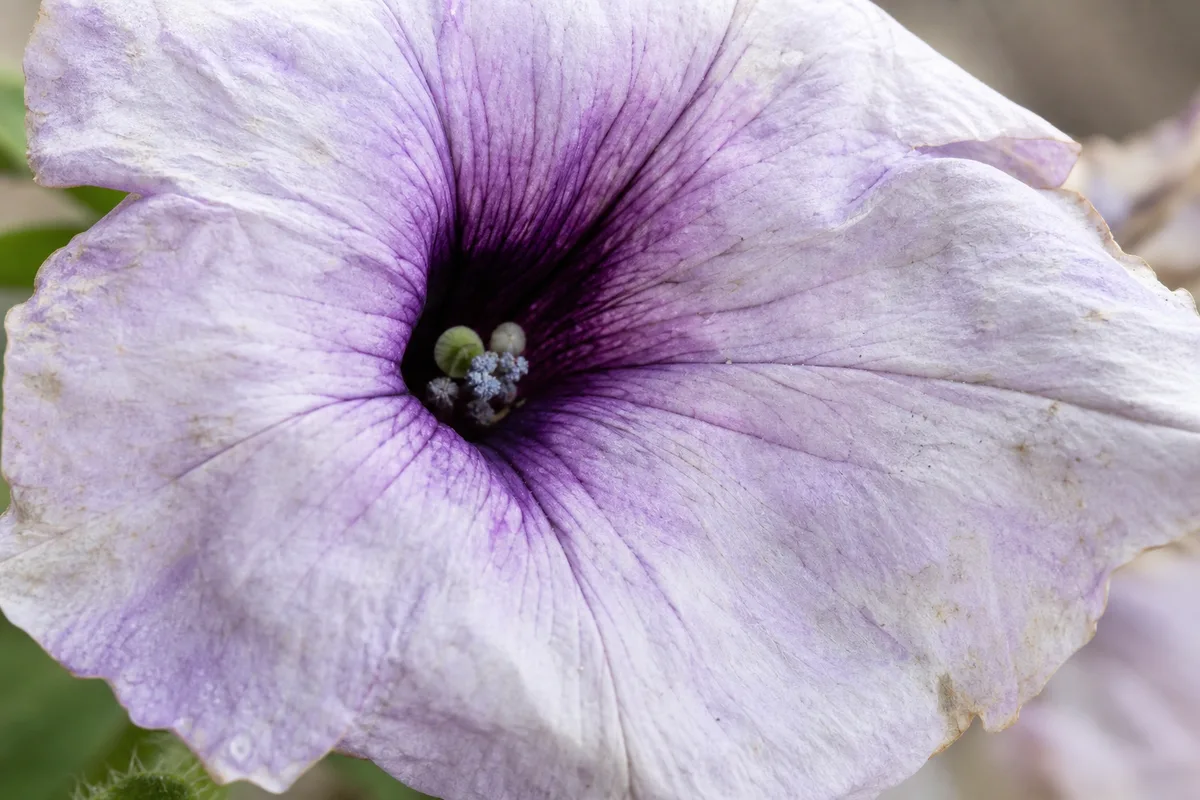
Example species: petunia — classic ethylene-sensitive bloomer in Cornell greenhouse trials; useful indoor comparison for overnight flush loss.
LeafyPixels grower note (container petunia near a fruit bowl). A balcony petunia brought indoors for a cool spell sat on a kitchen island about 1.5 m from a bowl of ripening bananas. Overnight, open flowers dulled and several shattered; leaves stayed green. We moved fruit to a closed pantry and shifted the pot to a bright hallway. Remaining buds held better within two days; the next wave of open flowers kept color through normal daily turnover without the overnight wipeout. Fruit distance was the single change.
Drought, Wet/Dry Swings, and Root Mismatch
Open flowers are expensive tissue. When the root zone runs dry, plants often sacrifice blooms first. RHS lists flowers that fade or fall quickly among underwatering signs, alongside wilted leaves and crispy edges. Missouri Botanical Garden describes drought decline with wilting, slight drooping, or an off color, and notes that leaf and flower drop is a common stress reaction when water is lacking.
Confirm with the pot, not the calendar. Lift it. Probe the mix a few centimeters down. If it is dusty dry and the pot feels light, water thoroughly until drainage runs, then empty the saucer. Chronic wet/dry swings also shorten bloom life because roots never stabilize. For a steadier indoor method, see how to water indoor plants the right way.
Overwatering can mimic drought above the soil because rotting roots cannot take up water. If the pot is heavy, the mix smells sour, and flowers fade while leaves yellow, check roots before you water again — and read the root rot houseplants guide if the mismatch between wet soil and wilted growth persists.
Low Humidity and Dry Indoor Air
Dry heated air pulls moisture from petals and buds. RHS notes that low humidity commonly causes crispy tips and edges plus early dropping of leaves, buds, and flowers, especially in winter. Kitchens and bathrooms often run higher humidity than living rooms; grouping plants or using trays of damp pebbles can raise local humidity if pots sit above the water line.
Humidity fade usually pairs with crispy leaf margins and bud abort on thin-petaled species. A hygrometer reading below about 40% in a heated room is a useful red flag for many tropical bloomers. Raising humidity helps the next flush more than it restores already faded petals. For practical indoor targets and setups, see the houseplant humidity guide and signs your houseplants need more humidity.
Deadheading: Pinch, Cut, and When to Skip
Deadheading is the removal of fading or dead flowers. RHS defines it as a way to keep plants looking attractive and encourage more blooms by redirecting energy away from seed production. Penn State Extension explains that removing spent flowers before seeds form interrupts the plant’s drive to finish its reproductive cycle, which can extend flowering — especially on plants that behave like annuals or reblooming perennials.
Indoors, deadheading also improves sanitation. Missouri Botanical Garden recommends discarding faded flowers and improving airflow to limit grey mould, which colonizes dying bloom tissue. UF/IFAS similarly advises prompt removal of faded African violet flowers and unhealthy leaves to help prevent disease.
For soft stems, pinch or snap the faded bloom between finger and thumb, removing the flower with its stalk. For thick or stringy stems, use clean scissors or secateurs and cut back to just above the next bud or leaf joint. On plants that hold clusters on a long peduncle — African violets, some geraniums, spent anthurium spathes — remove the whole stalk at the base once the flush is finished. Work with dry hands on fuzzy-leaved plants; wet crowns invite rot. Bag spent blooms instead of leaving them on the soil surface.
Skip or delay deadheading when you want seed. Self-cleaning types that shed spent flowers cleanly need less work. Do not deadhead as a substitute for fixing ethylene, heat, or drought — grooming hides the mess but does not correct premature fade.
Lookalikes: Brown Flowers, Bud Drop, Thrips
Flowers turning brown means necrotic tissue — dry papery brown or soft wet brown — not just loss of pigment. Treat that as a separate problem, especially if grey fuzz is present.
Bud drop is unopened buds that abort. Stress, drafts, and dry air are shared causes, but the tissue never opened, so deadheading open blooms will not explain missing buds. Use the bud-drop houseplants guide when abortion happens before petals show.
Thrips rasp petals and leave silvery streaks; tapping flowers over white paper may show tiny moving insects or pollen-like debris. Missouri Botanical Garden notes silvery streaks on flowers or leaves and contorted growing points with heavy thrips pressure. Penn State Extension also flags thrips on African violets with silvery spots on flowers and foliage. That is pest management, not a light or heat tweak alone — see thrips on houseplants. If ID is unclear after a careful check, a local extension or master gardener clinic can help before you spray.
Step-by-Step Fix Plan (Change One Variable)
- Confirm it is premature. If only the oldest blooms are fading on schedule, deadhead and stop here.
- Room scan for ethylene and heat. Move fruit away. Shift the pot off radiators and out of hot glass beams. If a combustion heater is suspect, prioritize ventilation and appliance safety.
- Check moisture honestly. Water if the mix is dry; investigate roots if the mix is wet and the plant is fading anyway.
- Correct light directionally. Sheer or pull back for bleach; increase bright indirect light for weak, stretching bloomers.
- Deadhead spent tissue and clean debris. Improve airflow around the canopy.
- Stabilize for two weeks. No repotting, no fertilizer doubles, no daily relocation while you judge the next buds.
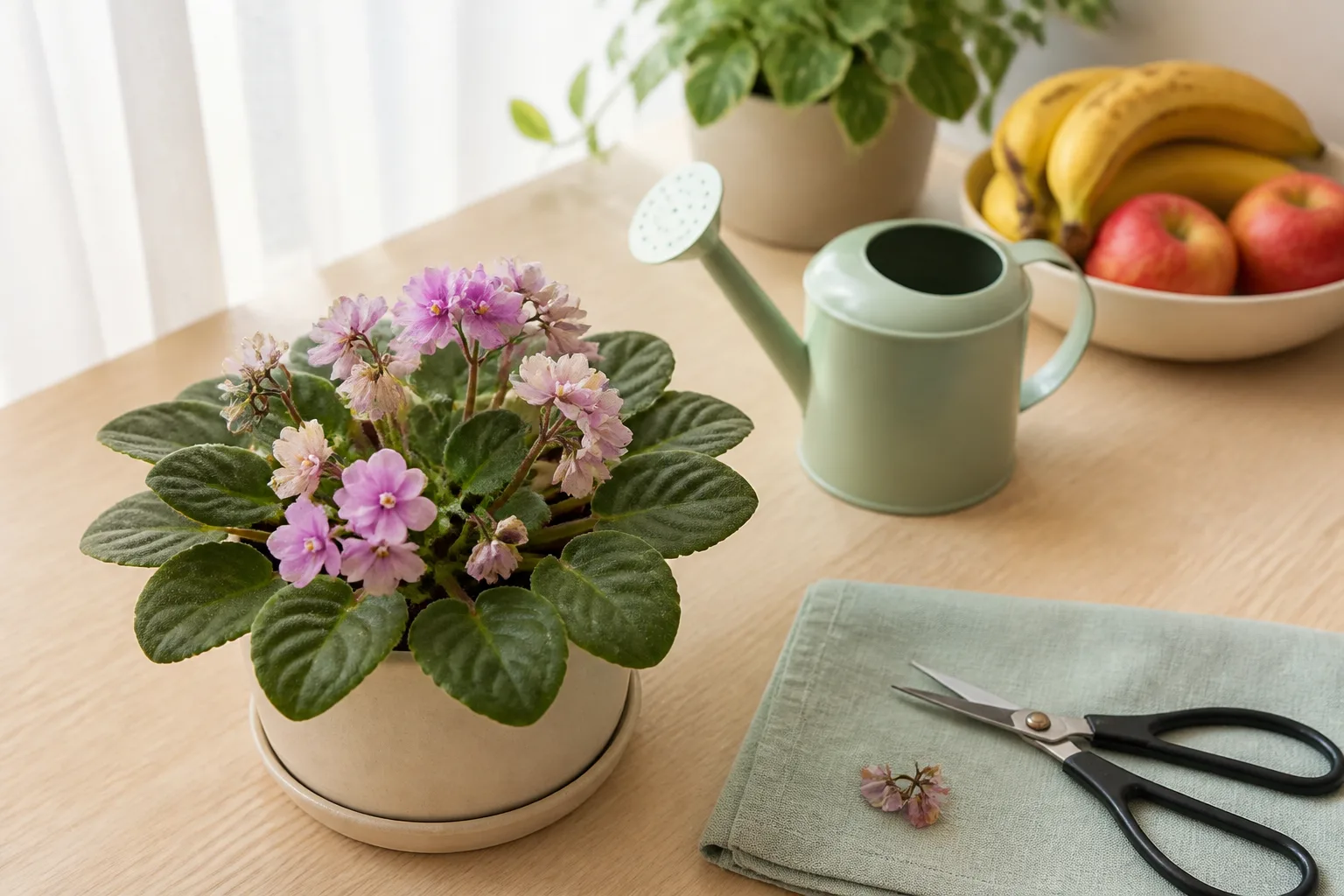
Change one major factor at a time so you know what worked. Stacking fertilizer + repot + relocate in one afternoon creates new stress and muddies the diagnosis. If the only change you make is moving fruit two meters away, and the next open flowers hold, you have a clean ethylene lesson.
How Long Until the Next Flush Looks Better
Faded petals do not regain saturated color. Judge recovery by the next open flowers, not by old tissue. After you remove an ethylene source or correct drought, remaining buds often hold better within days. A full new flush may take weeks depending on species — African violets commonly need several weeks for a new stalk after a stress reset, while hibiscus and petunias turn over blooms much faster when heat and water are stable.
LeafyPixels rule of thumb: treat spent tissue as closed history; treat the next flush as the grade. If no quality blooms appear after a full cycle despite stable care, switch diagnosis toward light duration, maturity, and feeding rather than repeating fade fixes. For species-level timing, use the plant’s care hub — for example African violet, hibiscus, or peace lily.
Species Notes for Common Indoor Bloomers
African violet: Bright indirect light, no hot direct sun; deadhead spent blooms and whole peduncles; watch ethylene and temperature swings. Excess light pales foliage; low light kills flowering quality. Unique trigger: cold water on warm leaves spots foliage while light extremes degrade bloom quality. See faded flowers on African violet.
Anthurium: Spathes age to green or dull tones as a normal cycle; premature dulling with limp leaves points to drought, low light, or cold drafts more than “needs more fertilizer.” Unique trigger: cold drafts on a warm room plant dull spathes faster than mild underfeeding. See faded flowers on anthurium.
Christmas cactus: Short-day bloomer; heat vents and sudden moves during bud and bloom stages commonly shorten display. Fade paired with bud drop after relocation is stress, not aging alone. Unique trigger: radiator-sill heat under a short-day flush. See faded flowers on Christmas cactus.
Hibiscus: High light and consistent moisture; heat and dry air can bleach and collapse open flowers quickly. Deadhead spent blooms to keep the plant pushing new buds. Unique trigger: one-day flowers that look “failed” when the real issue is afternoon glass heat. See faded flowers on hibiscus.
Peace lily: Spathes naturally green with age; that is senescence. Crispy faded spathes with dry mix point to underwatering or low humidity. Unique trigger: mistaking normal spathe greening for a nutrient emergency.
Petunia (indoor/outdoor containers): Classic ethylene and heat responder; Cornell work shows mature flowers can senesce within a day or two of low-level ethylene exposure in greenhouse conditions. Deadhead regularly for rebloom. Unique trigger: fruit-bowl proximity indoors. See faded flowers on petunia.
Prevention Habits That Keep Color Longer
Keep flowering plants in bright, appropriate light without hot midday beams on sensitive petals. Hold a steady moisture rhythm during bloom. Raise winter humidity for tropical bloomers. Keep ripening fruit away from ethylene-sensitive species. Deadhead as flowers start to look scruffy, as RHS advises, rather than waiting for a full collapse. Avoid relocating or repotting while a plant is carrying a heavy flush unless the root zone is failing.
Prevention is mostly microclimate discipline. The plants that keep color longest are the ones that never face a weekly shock — and the growers who change one variable when something does go wrong.
Related guides
- Bud drop houseplants — buds abort before opening (different tissue stage than open-bloom fade)
- No flowers houseplants — the plant never sets buds
- Small flowers houseplants — blooms open undersized rather than washed out
- Houseplant symptom checker — map vague bloom and foliage symptoms before treating
- How to water indoor plants the right way — stabilize moisture when drought is shortening bloom life
- Houseplant humidity guide — raise winter humidity for thin-petaled bloomers
- Thrips on houseplants — silvery petal streaks that look like fade but are pest damage
- Faded flowers symptom hub — plant-by-plant pages for this symptom
Conclusion
Faded houseplant flowers are usually either normal aging or a readable stress signal. Slow edge fade with fresh neighbors means deadhead and continue. Fast whole-flush dullness means check light bleach, heat, drought, dry air, and ethylene before you change soil or fertilizer — the fruit-bowl move is often enough when leaves look fine. Spent blooms will not recolor. Remove them, stabilize the room, and grade success on the next flush. That sequence turns “my flowers look sad” into a specific diagnosis you can act on without stacking three fixes before lunch.