Houseplant Small Flowers: Causes, Diagnosis and Fixes
Diagnose small houseplant flowers by separating genetics from stress, then checking light, pot size, water, and fertilizer before the next bloom cycle.
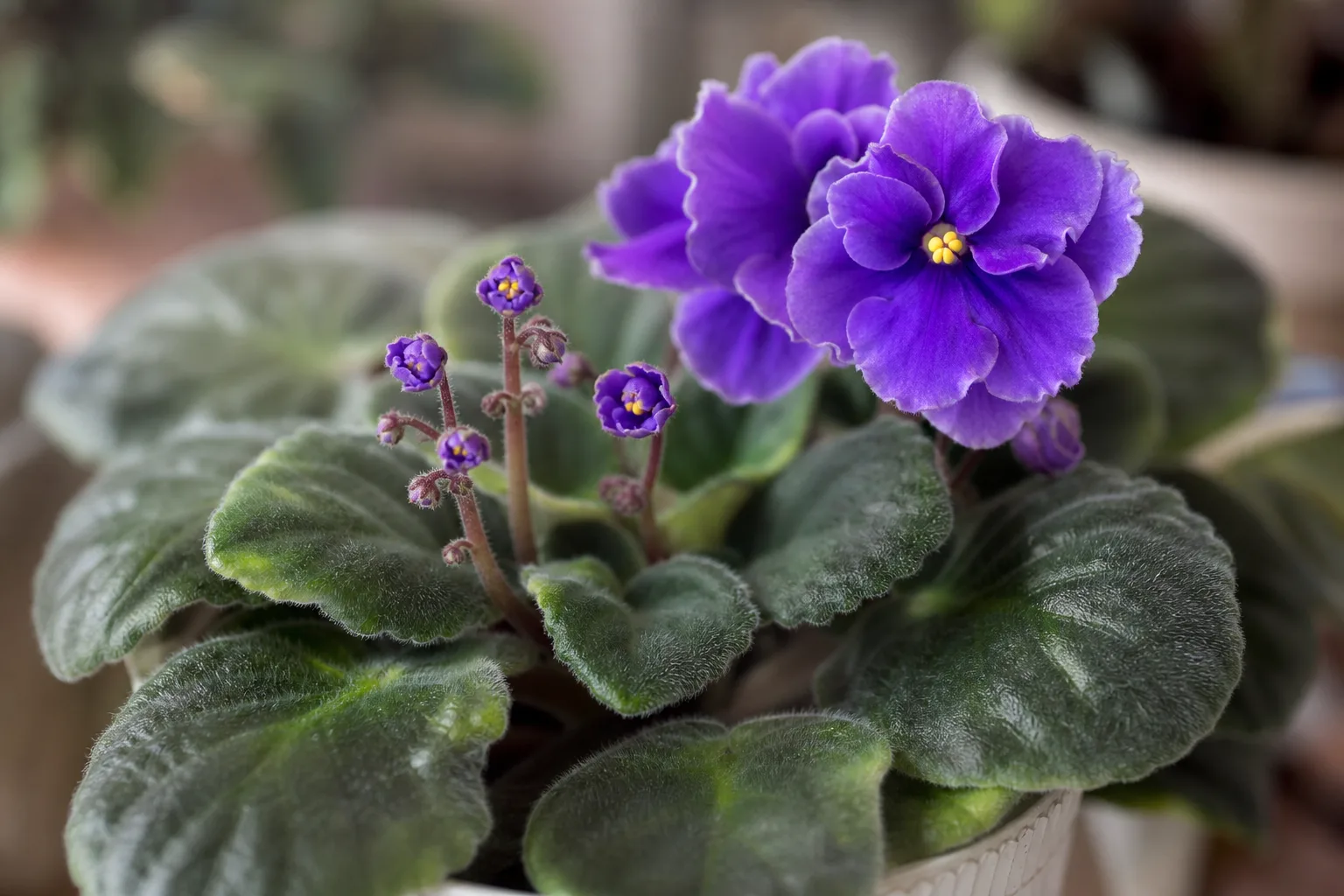
Your flowering houseplant finally opened blooms—and they look half the size you expected. Petals feel thin, clusters look sparse, or the flower is out of scale with last season’s flush. That pattern is small flowers: flowers that open undersized relative to the cultivar, the plant’s prior bloom cycles, or the leaf scale of a standard-sized plant.
Before you buy bloom booster or move every pot in the room, take thirty seconds with a tape measure. Compare plant span (widest leaf tip to leaf tip) with open-flower diameter. If the whole plant is compact and flowers are proportional, you may own a miniature or compact cultivar—not a failure. If a labeled standard plant suddenly throws tiny blooms while foliage looks stretched, soft-lush, or stressed, treat it as culture.
Indoors, small blooms usually land in one of two buckets: genetics (scaled-down cultivars) or stress (not enough light energy, wrong pot size, high-nitrogen feeding, water swings during bud set, or a recent shock). Mixing those buckets up wastes months chasing fertilizer on a mini, or blaming “genetics” when the plant is light-starved.
This guide walks through that split first, then the highest-leverage checks: light, pot size, fertilizer balance, water, and temperature. Author Sai Ananth writes LeafyPixels flowering-houseplant troubleshooting from apartment and sunroom shelves; recommendations here were reviewed by Dr. Priya Menon, botanist and indoor plant specialist on the LeafyPixels Editorial Review Board.
What Small Flowers Means Indoors
Small flowers means the blooms that opened are smaller than they should be for that plant. You might see a single undersized flower, a whole flush of miniature-looking blooms on a standard cultivar, or flowers that shrank compared with photos of the same plant six months ago.
This is a quality problem on open flowers, not a complete flowering failure. The plant has enough energy and maturity to set buds and open petals—it is shortchanging size. That distinction matters because the fixes differ from a plant that never buds.
Homes are hard environments for bloom size. RHS guidance on houseplants notes that flowering houseplants often need more light than foliage plants, and that flowers are often aborted if the compost becomes too dry. When light, water, and root space sit just above the threshold for “some flowers,” you get small flowers instead of full-sized ones.
An already-open flower will not enlarge later. Petal size is largely set by the time the bud opens. Judge recovery by the next buds initiated after you change conditions—not by trying to inflate the blooms already on the plant.
Genetics vs Stress: Is Tiny Bloom Normal?
Before you move pots or change fertilizer, answer one question: is this plant built to be small?
If leaf size, crown diameter, internode length, and flower scale all match a compact or miniature type—and the plant looks healthy—small flowers are often normal. If a labeled standard plant suddenly throws tiny blooms while foliage looks stretched, dark, lush-but-flower-poor, or stressed, treat it as a care problem.
Use prior bloom photos from the same plant when you can. A sudden drop in flower diameter on an unchanged cultivar is a stronger stress signal than “this bloom looks small compared with Instagram.” Nursery tags are imperfect; trust proportional plant architecture over marketing language alone.
Miniature and Compact Cultivars
African violets make the genetics case clearest. NC State Extension notes five size classes—micro-miniature, miniature, semi-miniature, standard, and large—with thousands of cultivars that vary in plant size and flower form. Clemson HGIC likewise notes that miniatures and trailing cultivars are widely available. A tidy plant under roughly six inches across with proportionally small blooms is behaving as designed.
The same logic applies beyond violets. Compact hibiscus, mini kalanchoe, dwarf jasmine, and small-flowered cultivars of petunia or rose are sold specifically for limited space. If every part of the plant is scaled down and growth is steady, stop treating genetics like a disease.
The stress case looks different: a standard-sized leaf canopy with suddenly tiny blooms, thin dark leaves reaching for a window, or lush soft foliage with almost no flower substance. That is culture, not a “mini” label.
Quick Diagnosis: Match the Pattern to the Cause
Use this table as a first pass. Change one variable at a time once you pick a direction.
| What you see | Check next | Most likely direction |
|---|---|---|
| Whole plant scaled down; label or habit says mini / compact | Crown diameter vs flower scale | Genetics — no “fix” needed |
| Thin, dark leaves; long petioles; few or tiny blooms | Window distance and foot-candles | Insufficient light |
| Lush wide leaves; tiny blooms; soft dark green growth | Fertilizer NPK and feed strength | Excess nitrogen relative to bloom needs |
| Recently up-potted into a much larger container; weak flowering | Pot diameter vs plant span | Pot too large / energy into roots |
| Mix dries in a day; circling roots; shrinking blooms over seasons | Root ball inspection | Severely pot-bound / depleted mix |
| Buds open small after dry spells or soggy periods | Moisture at mid-root depth | Water stress during bud set |
| Undersized flush after a move, chill, or heat blast | Recent environment history | Temperature / draft shock |
| No buds at all | Maturity, light, season triggers | No flowers, not small flowers |
| Buds form then abort before opening | Drafts, dry air, moves in bud | Bud drop |
When multiple rows match, fix light first. Without enough photosynthetic energy, fertilizer and pot tweaks rarely restore bloom size. Then stabilize water, then match pot fit, then rebalance nitrogen—in that order—unless a recent oversized repot clearly coincides with the collapse.
Insufficient Light and Weak Energy for Blooms
Light is the energy budget for flower size. A plant in dim indoor light can often stay green and even set a few buds, yet lack the carbohydrate surplus to build full-sized petals. Clemson HGIC on African violets lists lack of flowering as one of the most common problems and ties it to inadequate light; thin, dark green leaves with long petioles are a classic inadequate-light flag. Penn State Extension makes the same point: too little light causes stretch and few or no flowers.
Flowering houseplants as a group need brighter spots than many foliage plants. RHS notes that flowering types often need more light than foliage plants. Hibiscus, flowering maple, jasmine, and many orchids fail to fill out blooms when they live several meters from a window in “room light” that still looks fine to human eyes.
Low-light small flowers often travel with other clues: elongated petioles, leaves that face hard toward the window, slower growth, and fewer buds per flush. Do not answer that pattern with bloom fertilizer alone. The plant cannot spend nutrients it cannot power with photosynthesis.
How to Measure Light for Flowering Houseplants
UF/IFAS Gardening Solutions warns that human eyes adapt poorly for judging intensity: a desk by a window can be many times brighter than a spot across the room that still “looks bright.” Use a meter or a decent phone approximation at leaf height at midday.
As a rough indoor map from UF/IFAS: about 25–100 foot-candles is low, 100–500 medium, 500–1,000 high, and over 1,000 approaches direct sun through glass. Many popular bloomers want the medium-to-high end of that range near an east window or filtered south/west light. Clemson HGIC on indoor light notes interiors of well-lighted homes often sit under 100 foot-candles while outdoor sun can exceed 10,000—useful context for why greenhouse-grown plants shrink their flowers after a few weeks in a living room.
Crop groups differ. African violets usually thrive in bright indirect light within about three feet of a large east, south, or west window (Clemson). Chinese hibiscus wants full sun to partial shade outdoors and, indoors, a large container in bright light (NC State Extension on Hibiscus rosa-sinensis). Phalaenopsis prefers moderate to low indoor light—east or north windows, bright diffused sun, or broad-spectrum fluorescents—not a harsh south sill (Colorado State PlantTalk). Match the species, then measure.
If natural light cannot reach the target, add a full-spectrum LED on a timer. Penn State advises not running lights more than about 16 hours a day for African violets because darkness helps flowering hormones finish their job. For setup details, see the grow lights complete guide for indoor plants. Acclimate over one to two weeks so you do not trade small flowers for bleached leaves.
Pot Size, Root Space, and Flower Quality
Container volume changes how a plant spends energy. A pot that is far too large keeps the mix wet longer and pushes the plant to colonize new soil with roots before it invests heavily in flowers. Penn State Extension on African violet flowering warns that a recently enlarged pot can be too big: African violets prefer to be somewhat root-bound to bloom well, and pots should be no larger than about one-third the plant’s diameter as a rule of thumb. Wisconsin Horticulture similarly recommends keeping African violets slightly pot-bound and using a pot about half the plant’s spread (Wisconsin Horticulture African violets).
The opposite extreme also shrinks quality. Penn State on repotting lists fast-drying mix, roots through drainage holes, and stalled top growth despite feeding as pot-bound signs. Dense circling roots with little remaining mix limit water and nutrient delivery; blooms can open smaller as the plant rationing begins. Move only one pot size up when you repot—Penn State recommends a slightly larger container, not a dramatic jump.
Salt-crusted rims and white crust on the mix surface after heavy feeding also point to a tired root zone. Flush or refresh mix on the next suitable repot rather than stacking more bloom fertilizer into a salty pot. For technique, use the repotting houseplants guide.
Never repot a plant covered in buds hoping a bigger pot will “give more energy.” Transplant shock is a common reason the current flush opens small or aborts. Wait until after flowering when you can. The same caution applies to hibiscus: NC State notes Chinese hibiscus is sensitive to environmental changes, and moving the plant can cause leaf and bud drop.
Fertilizer Balance: Nitrogen Excess vs Bloom Nutrition
Nutrition matters, but it is rarely the first lever. Penn State notes that houseplants depend entirely on what you add, and that skipping feed in small pots can leave too few nutrients for flowers—while too much high-nitrogen fertilizer can produce lush foliage at the expense of flowers. Clemson recommends a complete fertilizer and suggests a higher-phosphorus analysis such as 15-30-15 for flowering plants versus a balanced 20-20-20 for foliage plants. UConn Home & Garden Education makes the same split: foliage plants often appreciate higher nitrogen, while flowering plants generally prefer relatively more phosphorus.
Read the N-P-K numbers. Nitrogen drives leaves and stems. Phosphorus supports roots and flowering. Potassium supports carbohydrate movement. A lawn-style high-nitrogen product on a hibiscus or violet often gives you a beautiful green bush with disappointing bloom size. Penn State also notes the African Violet Society preference for fertilizers that avoid urea as the nitrogen source because urea can burn sensitive roots.
If foliage is already dark, soft, and oversized relative to blooms, cut nitrogen rather than adding more “bloom booster” on top of a heavy feed. Switch to a flower-oriented or balanced dilute formula at label rate or weaker during active growth, and pause hard feeding in low-light winter rest. Clemson reminds growers that indoor plants in low light have reduced fertilizer needs, and winter rest periods often mean no fertilizer at all.
Salt buildup from overfeeding shows up as white crust, brown tips, and reduced growth. Flush the pot thoroughly and resume at a gentler rate. For broader indoor feeding strategy, see fertilize indoor plants.
Water Stress During Bud and Bloom Set
Inconsistent moisture during bud formation is a classic way to get small, short-lived, or aborted flowers. RHS notes flowers are often aborted if the compost becomes too dry. Penn State describes African violet soil as ideally like a well-wrung-out sponge: not bone dry, not sopping. Roots damaged by chronic drought or chronic sogginess force the plant to sacrifice flower quality to survive.
Probe mid-pot, not just the surface. A dry core with a damp top—or a heavy, sour, airless mix—both shrink bloom quality. Stabilize watering before you change fertilizer. For a practical indoor method, use how to water indoor plants the right way.
If the pot stays wet and blooms shrink while leaves yellow, check for root rot rather than adding more water. Soft brown roots and a sour smell need a different path—see root rot on houseplants.
Temperature and Draft Shocks That Shrink Blooms
Flower size and quality are sensitive to temperature swings. Clemson lists African violet night targets around 65 to 70°F with daytime highs up to about 80 to 85°F. Penn State and grower guidance also flag chill, heat from vents, and sudden moves as bloom disruptors. A plant that set buds in a bright nursery can open undersized flowers after a cold delivery ride or a week on a drafty sill.
Heat from radiators and hot glass shortens petal substance. Cold nights against a window can stall development so buds open thin and small. Keep bloomers off HVAC blast paths and away from exterior doors that slam with winter air. After a shock, stabilize the room and wait for the next cycle; do not repot or hard-prune mid-flush unless tissue is rotting.
Holiday cacti add a photoperiod twist: cool nights near 55–60°F with natural short days often induce buds, and once buds form you should not move the plant into radically different light or temperature or buds may abort (Wisconsin Horticulture holiday cactus). Stress during that window more often shows as bud drop than as tiny open blooms—but an interrupted set can still open thin.
Lookalikes: No Flowers, Bud Drop, and Faded Flowers
Small flowers is easy to confuse with neighboring bloom problems. Sorting them saves weeks.
No flowers means buds never form. Light, maturity, season, and pot size still matter, but you are solving initiation, not petal size. If your plant has zero buds, leave this page for the no-flowers houseplants guide.
Bud drop means buds form and fall or abort before a proper open flower. Drafts, dry air, moves, and watering swings are common. You may never see a full bloom to judge size—use the bud-drop houseplants guide.
Faded flowers means open blooms lose color—aging, bleach, heat, or ethylene—not that they opened small. See the faded flowers houseplants guide when color drain is the complaint.
Small new leaves on foliage plants is a related energy-budget story but a different organ. If leaves are shrinking and flowers are too, light and roots are usually shared bottlenecks—see why new leaves are small.
Step-by-Step Fix Plan for Undersized Blooms
- Confirm genetics. Measure plant span and compare flower scale to cultivar type. Stop here if you own a true mini.
- Measure light at leaf height midday. Move closer to an east or bright filtered window, or add a timed grow light. Reassess after the plant initiates new buds.
- Check pot fit. If the pot is huge relative to the plant and flowering collapsed after up-potting, consider returning to a snugger pot at the next safe window. If roots are a solid mat and mix is exhausted, repot one size up with fresh mix after bloom.
- Audit fertilizer. Soft lush leaves with tiny blooms → reduce nitrogen and use a balanced or bloom-leaning dilute feed. Pale weak growth with tiny blooms after ruling out light → gentle complete fertilizer during active growth only.
- Stabilize water through the next bud cycle. Even moisture beats calendar extremes.
- Remove drafts and heat vents from the bloom zone. Avoid moving the plant while new buds form.
- Deadhead spent small blooms so the plant can push the next flush under improved conditions.
- Change one major variable per week so you can tell what worked.
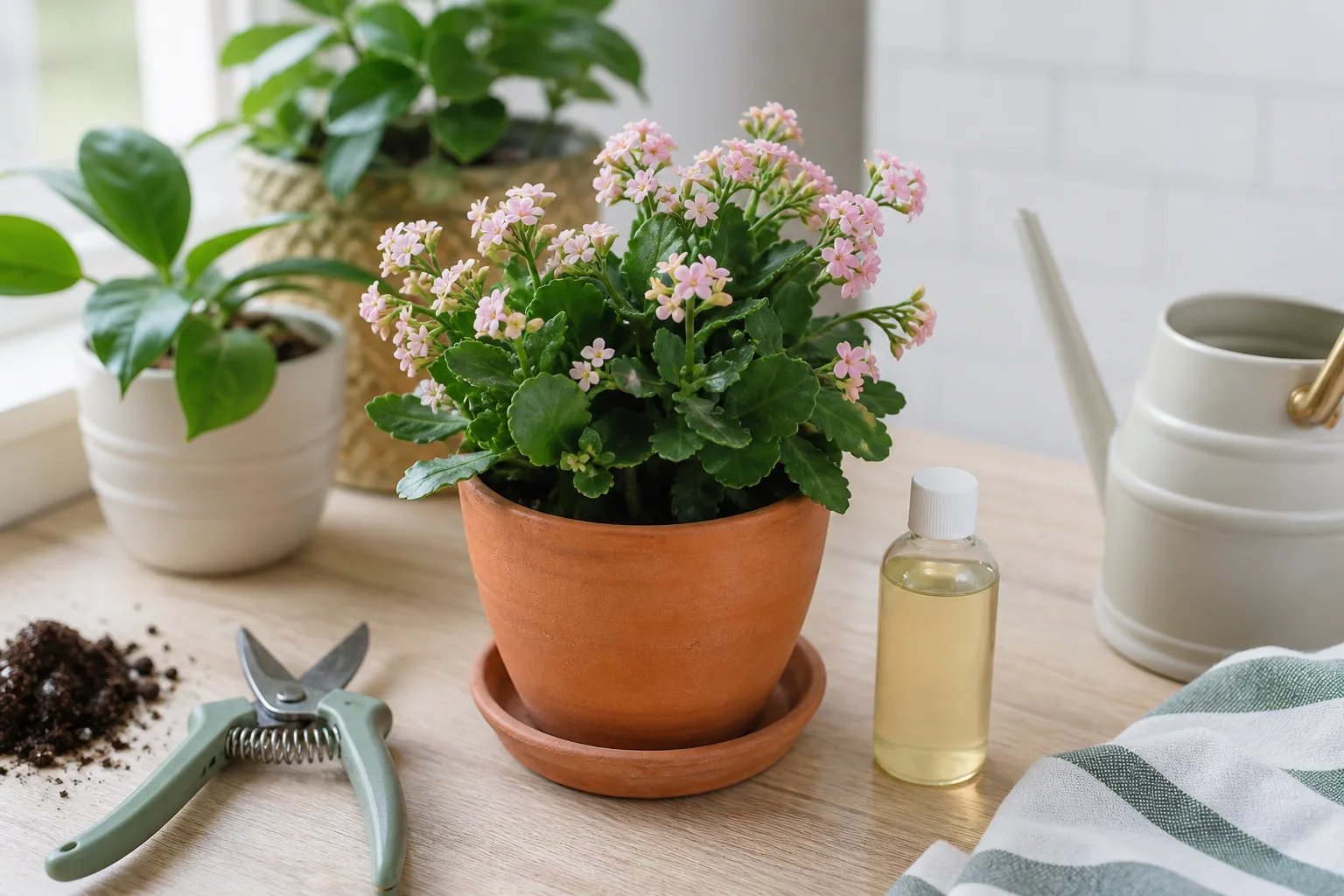
Do not stack a new pot, a new fertilizer, and a new window on the same day. You will not know which lever mattered.
How Long Until the Next Flowers Look Bigger
Expect judgment on the next initiated buds, not on flowers already open. On fast rebloomers such as African violets, you may see a better flush within a few weeks once light and feeding are corrected. On seasonal bloomers—holiday cactus, some jasmine, many orchids—you may wait until the next natural bloom window months later.
If light was the bottleneck, improvement often shows as thicker buds and larger petals on the following cycle. If you overpotted, recovery may take longer because the plant is still filling the root zone. Keep notes: date of change, foot-candle estimate, fertilizer product, and bloom diameter. That log beats memory when seasons change.
A practical LeafyPixels rule of thumb: wait two initiated flushes after a major light or fertilizer change before deciding the plant “cannot” make larger flowers. One flush can still carry energy debt from the previous stress window.
LeafyPixels Case Notes: Measured Conditions and Next-Flush Outcomes
These are owned shelf notes from flowering houseplants we track while editing care content—not greenhouse trials. Conditions and outcomes:
1. Standard African violet, light upgrade. A labeled standard violet sat on an interior shelf at roughly 80 foot-candles midday (phone meter at leaf height). Open flowers averaged about 0.75 in (19 mm) across, with thin dark leaves and long petioles. After a gradual move to an east sill averaging ~420–480 foot-candles, the next initiated flush opened at about 1.4–1.6 in (35–40 mm) with thicker petals. Fertilizer and pot stayed unchanged (4-inch pot; dilute complete feed every other watering). Light was the lever.
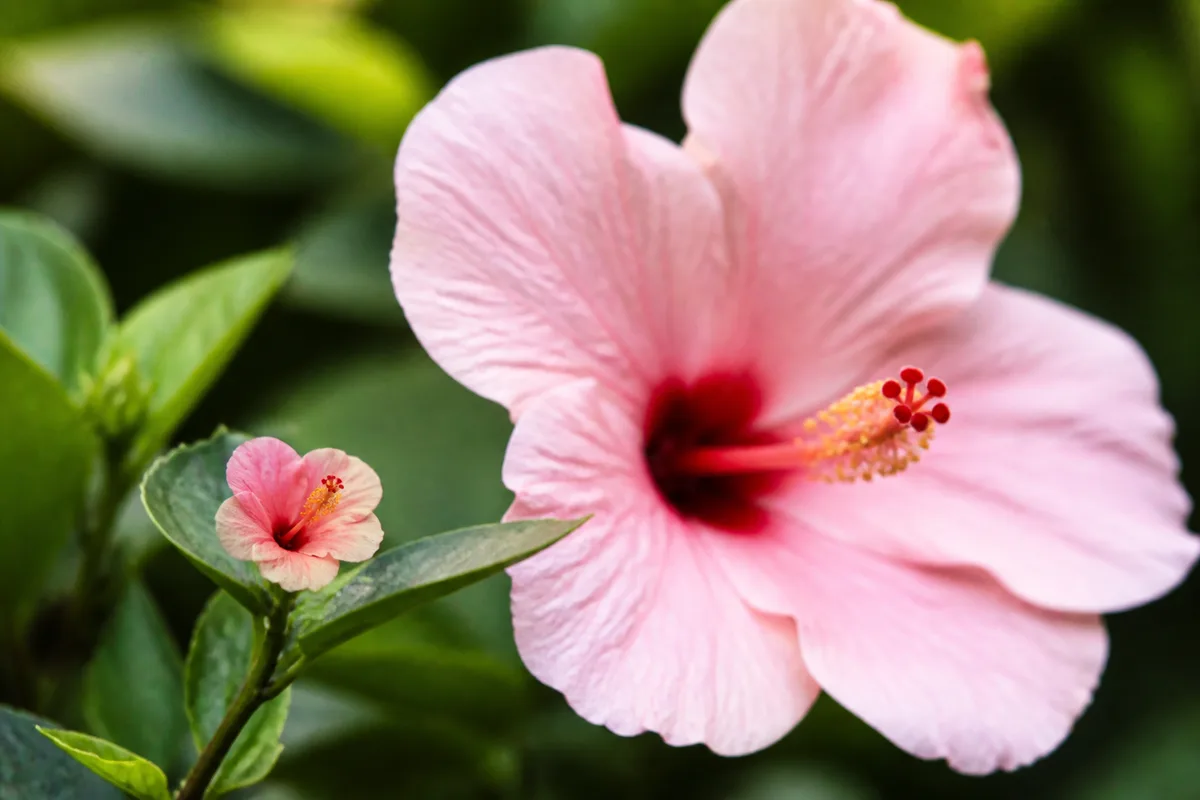
2. Tropical hibiscus, indoor vs patio flush. The same Hibiscus rosa-sinensis cultivar opened roughly 3–3.5 in flowers under a bright south window indoors while on a high-nitrogen foliage fertilizer. After a summer patio stretch in morning sun and a switch to a bloom-leaning dilute feed (higher middle number), outdoor flush flowers measured closer to 5–5.5 in. Indoor winter flowers returned smaller again when the plant came back inside—useful proof that “small” can be a light-and-season ceiling, not a permanent cultivar defect. NC State notes outdoor plants can carry flowers up to about six inches and that indoor plants need bright light in a large container.
3. Oversized-pot recovery on African violet. A standard violet jumped from a 4-inch to a 6-inch pot “for growth.” Mix stayed wet for days; soft leaves surged; the next blooms opened thin and under an inch. After flowering finished, we returned it to a clean 4-inch pot with fresh African-violet mix (plant span about 11 inches—within Penn State’s roughly one-third pot-to-diameter guidance). Flower diameter recovered across two subsequent flushes, not one.
Log template worth copying: date · species/cultivar · midday ft-c at leaf height · pot diameter vs plant span · fertilizer NPK and rate · open bloom diameter (mm) · notes on stretch or soft growth.
Species Notes for Common Flowering Houseplants
African violet: Confirm mini vs standard first using NC State’s five size classes. Then prioritize bright indirect light and a snug pot. High nitrogen and oversized pots are frequent small-bloom drivers. Species page: small flowers on African violet.
Anthurium: The colorful “flower” is a spathe; size tracks light, plant maturity, and steady culture. NC State notes flamingo flower (Anthurium andraeanum) prefers bright indirect light—direct sun scorches leaves—and that insufficient light or nutrient deficiencies can decrease flower production (NC State Anthurium andraeanum). Dim corners produce smaller, fewer spathes on otherwise healthy foliage. See small flowers on anthurium.
Christmas cactus: Bud set needs correct photoperiod and/or cool nights; once buds form, do not relocate into radically different light or temperature (Wisconsin Horticulture). Stress during bud often shows as drop more than tiny open blooms—pair with bud drop on Christmas cactus when buds abort. See small flowers on Christmas cactus.
Hibiscus: High light demand. Outdoor Chinese hibiscus flowers can reach about 3–6 inches; indoors the plant needs a large container and bright light, and moves can trigger leaf and bud drop (NC State). Excess nitrogen pushes leaves over bloom size. See small flowers on hibiscus.
Jasmine: Needs strong light and seasonal cues; weak indoor light yields sparse, smaller flower clusters. See small flowers on jasmine.
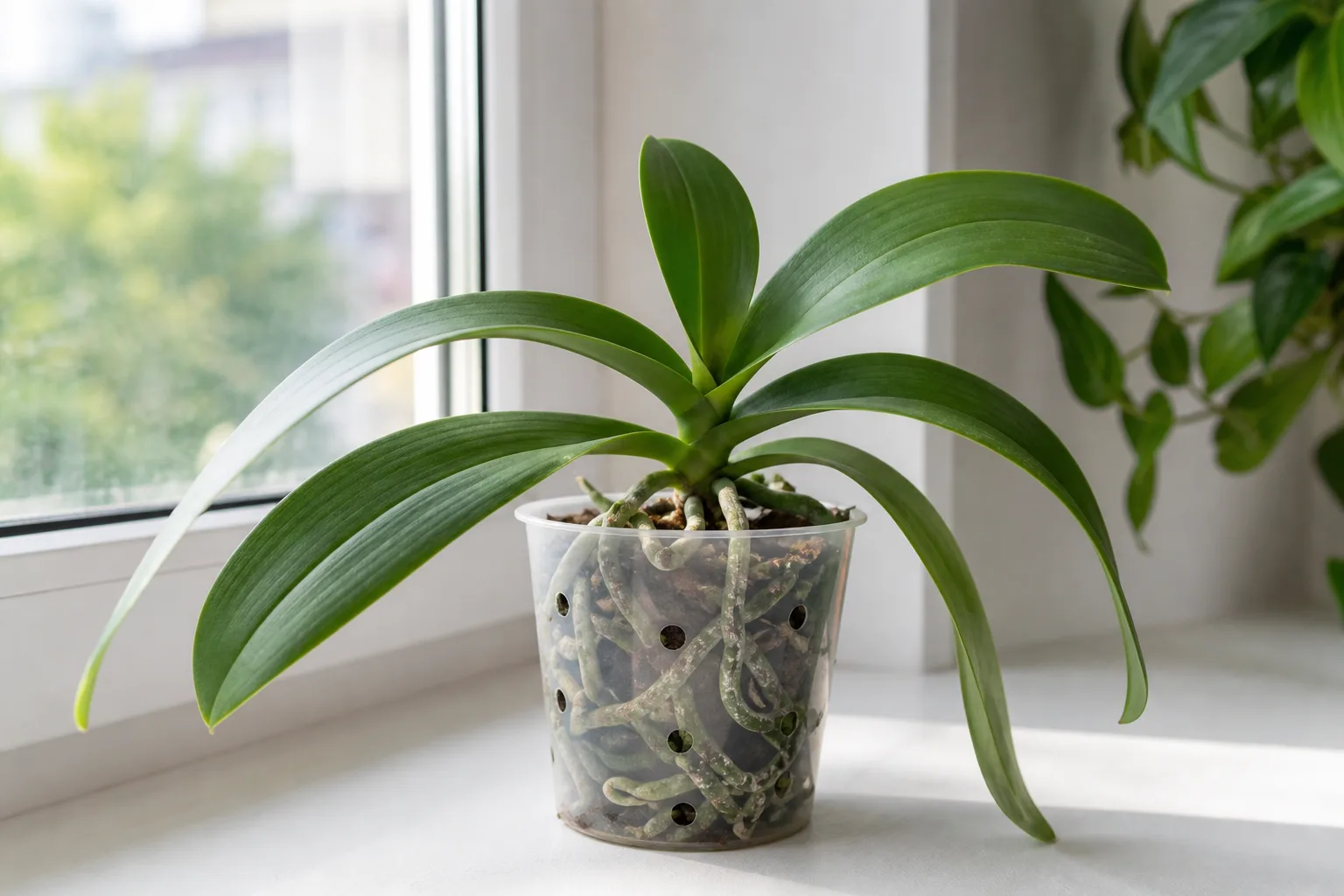
Phalaenopsis orchid: Spike and flower size reflect plant vigor and light history. Colorado State recommends moderate to low indoor light, moist bark mix, and monthly feeding while new growth forms; do not move or prune once buds appear (CSU PlantTalk). Penn State on orchids as houseplants notes Phalaenopsis want warm, humid, well-aerated media and dilute fertilizer because orchid mixes hold little reserve nutrition. A recently divided or under-lit plant often opens smaller blooms. See small flowers on Phalaenopsis.
Petunia: Container petunias undersize flowers under low light, crowded roots, or heat stress. See small flowers on petunia and the container petunias guide.
Prevention Habits for Full-Sized Blooms
Match the plant to a bright enough home from day one. Flowering species are poor candidates for deep interior shelves. Keep pots proportional—snug for bloomers that like it, never enormous “for future growth.” Feed dilute and complete during active growth; avoid high-nitrogen lawn formulas. Water for even root moisture during bud set. Refresh mix on a schedule instead of waiting for total root failure. And leave plants alone while buds are forming—moves, repots, and hard pruning belong between cycles.
Track cultivar identity when you buy. A labeled miniature saves you from years of “fixing” a plant that is already correct.
When to Use This Guide
Use this page when blooms open but look undersized for the cultivar or for the plant’s own history. Switch to no flowers or the no-flowers guide if buds never form, bud drop or the bud-drop guide if buds abort before opening, or faded flowers if open blooms lose color rather than size. Use a species problem page when you already know the plant. If you are still mapping mixed leaf and bloom symptoms across several plants, use the houseplant symptom checker after the genetics-and-light triage above.
Related Guides
- Small flowers symptom hub — plant-by-plant pages for this symptom
- Why houseplants don’t flower — when buds never form
- Houseplant bud drop — when buds abort before opening
- Faded flowers on houseplants — color loss on open blooms
- Houseplant symptom checker — map mixed bloom and leaf symptoms
- Grow lights for indoor plants — raise light for fuller blooms
- Repotting houseplants — fix oversized or exhausted pots
- Fertilize indoor plants — balance feed without nitrogen overload
- Why new leaves are small — shared energy-budget diagnosis for foliage
Conclusion
Small houseplant flowers are either normal genetics or a readable culture signal. Confirm miniature or compact cultivars first with a tape measure. Then raise light, match pot size to the plant, rebalance fertilizer away from excess nitrogen, and stabilize water and temperature through the next bud cycle. Already-open blooms will not enlarge—success shows on the next flush, often within weeks on fast rebloomers and at the next seasonal window on orchids and holiday cactus. If the plant never buds or buds abort, leave this page for the no-flowers or bud-drop guides. That sequence turns “why are these flowers so tiny?” into a specific diagnosis you can act on.