25 Types of Philodendron to Grow Indoors
Compare 25 philodendron types by leaf shape, growth habit, light needs, and difficulty. ID tips, pet safety, and picks for beginners and collectors.
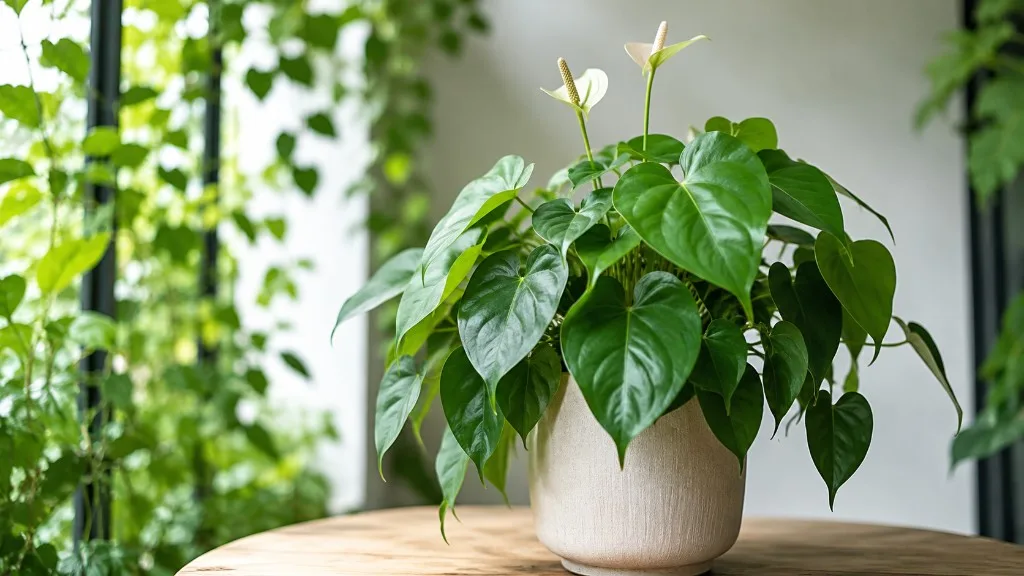
Walk into a plant shop today and philodendron might mean a trailing heartleaf in a hanging basket, a white-striped Birkin on a shelf, or a velvet gloriosum creeping across a moss tray. Botanists recognize more than 480 species in Philodendron, yet retail tags collapse that diversity into one word and one generic care card. That works until you put a humidity-hungry verrucosum beside a heating vent, or buy a Pink Princess in a dim corner and watch the pink disappear.
This guide covers 25 philodendron types you are most likely to see labeled for indoor growing, grouped by growth habit and parent species so the names actually stick. For watering rhythms, soil mixes, and troubleshooting yellow leaves across the genus, start with our philodendron houseplant care overview; the philodendron plant hub links species-specific guides when you are ready to go deeper on one plant.
How to Pick the Right Philodendron Before You Buy
Nursery labels are unreliable. Wholesale growers reuse tags, cultivar names shift between marketing nicknames and Latin synonyms, and two pots with identical stripes may be different species. Before you compare leaf colors, decide how the plant grows and how much light you truly have.
Three Growth Habits That Change Your Setup
Vining and trailing philodendrons produce long flexible stems that look best cascading from a shelf, hanging basket, or moss pole. Philodendron hederaceum and its cultivars (heartleaf, Brasil, micans, lemon-lime) are the classic examples. They root easily from cuttings, tolerate a wider light range than most variegated types, and reward a support with larger leaves.
Self-heading philodendrons grow upright from a central crown without long runners. Birkin, Prince of Orange, Imperial Green, Black Cardinal, and Green Princess stay comparatively compact and suit tabletops or floor corners where you do not want vines wandering. The Royal Horticultural Society notes that bushy philodendron species generally need less pruning and training than climbers. (RHS)
Creeping rhizomatous types spread horizontally along the soil surface rather than climbing vertically. Philodendron gloriosum and P. mamei are the indoor standouts here. They need wide shallow pots, excellent drainage, and humidity that stays steady—not the occasional misting most beginners attempt.
If you only have a north-facing room with moderate light, start with a solid-green vining type. If you have bright filtered light and want a color statement, erubescens hybrids are fair game. If you are chasing velvet leaves or white new growth, budget for humidity gear and accept slower growth.
Indoor Care Basics Most Philodendrons Share
Philodendrons are tropical aroids, not desert succulents. Most indoor failures come from wet cold soil, not from missing a weekly calendar watering date.
Light, Variegation, and Humidity
Bright, indirect light is the default sweet spot. East windows, a few feet back from south or west glass, or a filtered skylight usually works. Direct afternoon sun through glass can bleach or scorch leaves, especially on variegated and velvet types.
Variegation is a light tax. Brasil, Birkin, Pink Princess, White Knight, Florida Ghost, and Calkins Gold need enough brightness to hold their markings. Low light rarely kills these plants quickly, but new leaves often emerge greener, smaller, or less patterned. Solid-green heartleaf is the main exception—it survives lower light but will stretch with smaller leaves.
Humidity matters most on velvet and collector leaves. Philodendron verrucosum, P. melanochrysum, P. gloriosum, and Florida Ghost hybrids push better growth when humidity stays roughly 50–70% and air does not bake them from a radiator. Average household air can work for heartleaf and many erubescens hybrids if watering and soil are sound.
| Factor | Most vining philodendrons | Variegated / velvet types |
|---|---|---|
| Light | Bright indirect; tolerates moderate | Bright indirect required; weak variegation in shade |
| Water | Soak when top 1–2 in. of mix is partly dry | Same rule; rot risk rises if mix stays soggy in cool rooms |
| Soil | Chunky aroid mix with bark and perlite | Same; extra drainage helps velvet roots |
| Support | Optional moss pole for larger leaves | Moss pole or plank often improves leaf size |
| Humidity | Average household OK | 50%+ preferred for best foliage |
Water when the upper layer of potting mix has partly dried, then soak until a little drains and empty the saucer. Fertilize lightly during active growth; skip or dilute heavily in short winter days.
Pet Safety: Every Philodendron Is Toxic to Cats and Dogs
All 25 types on this list belong to genera treated as toxic to pets because they contain insoluble calcium oxalate crystals. Chewing leaves or stems can cause oral pain, drooling, pawing at the mouth, decreased appetite, and vomiting. ASPCA lists Philodendron hederaceum (heartleaf philodendron) as toxic to dogs, cats, and horses. (ASPCA) Pet Poison Helpline reports similar signs across Philodendron species when crystals contact mouth tissue. (Pet Poison Helpline)
That includes trailing heartleaf, self-heading Birkin, and rare gloriosum alike. Hang baskets out of jump range, anchor moss poles away from curious dogs, and contact your veterinarian or ASPCA Animal Poison Control at (888) 426-4435 if ingestion occurs. For a deeper toxicity breakdown, see our philodendron toxicity guide.
Heartleaf Philodendron and Its Best-Known Cultivars
The Philodendron hederaceum cluster is where most indoor collections start—and for good reason. Missouri Botanical Garden describes heartleaf philodendron as an easy vining houseplant with heart-shaped juvenile leaves that can climb or trail in bright filtered light. (Missouri Botanical Garden)
Heartleaf, Brasil, Micans, and Lemon-Lime
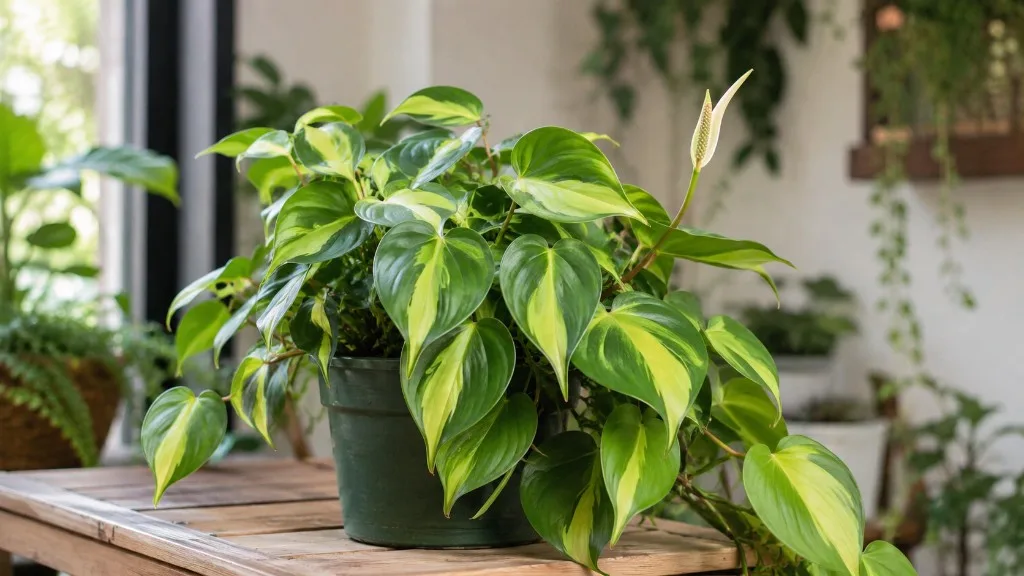
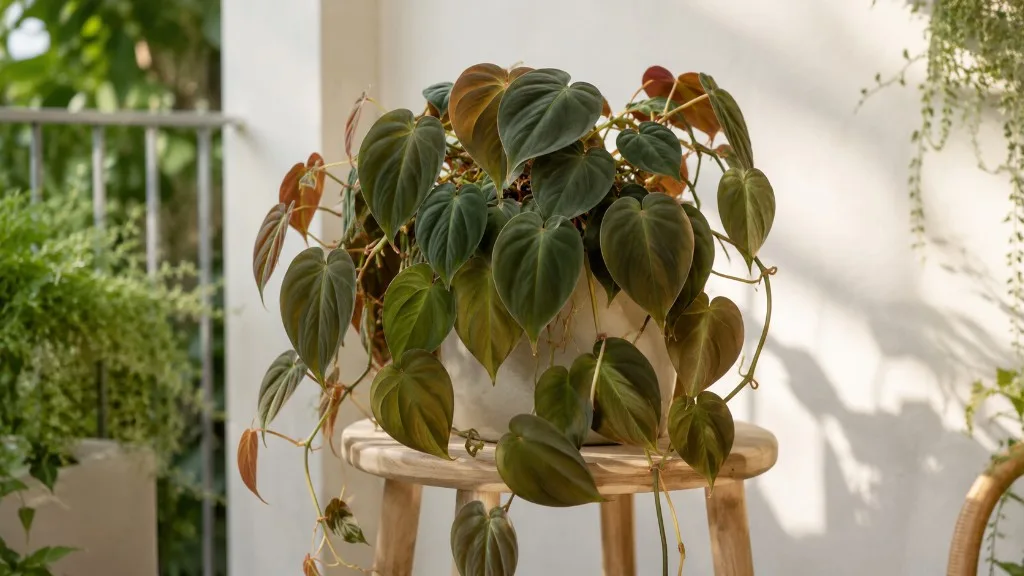
Heartleaf philodendron (P. hederaceum) is the baseline: glossy jade-green hearts on thin vines, usually 1–3 ft. wide indoors with stems that can reach several feet long. It is the most forgiving philodendron for beginners, tolerates moderate light better than variegated relatives, and shows thirst clearly when leaves soften slightly. Full care: heartleaf philodendron guide.
Brasil (P. hederaceum ‘Brasil’) adds a lime-to-yellow stripe down the center of each leaf. It needs brighter indirect light than solid green heartleaf or the variegation fades. Otherwise care matches the species. See Brasil philodendron care.
Micans (P. hederaceum var. hederaceum, often sold as micans) has small velvety leaves with a bronze undertone that shifts with the light. It trails beautifully and stays compact compared with large-leaf climbers. Care details: micans guide.
Lemon-Lime (P. hederaceum ‘Lemon-Lime’) is the neon chartreuse heartleaf cultivar—distinct from Golden Goddess (an erubescens hybrid with larger climbing leaves). Lemon-lime vines hard in bright indirect light and look sharp in hanging planters. Care: lemon-lime philodendron guide.
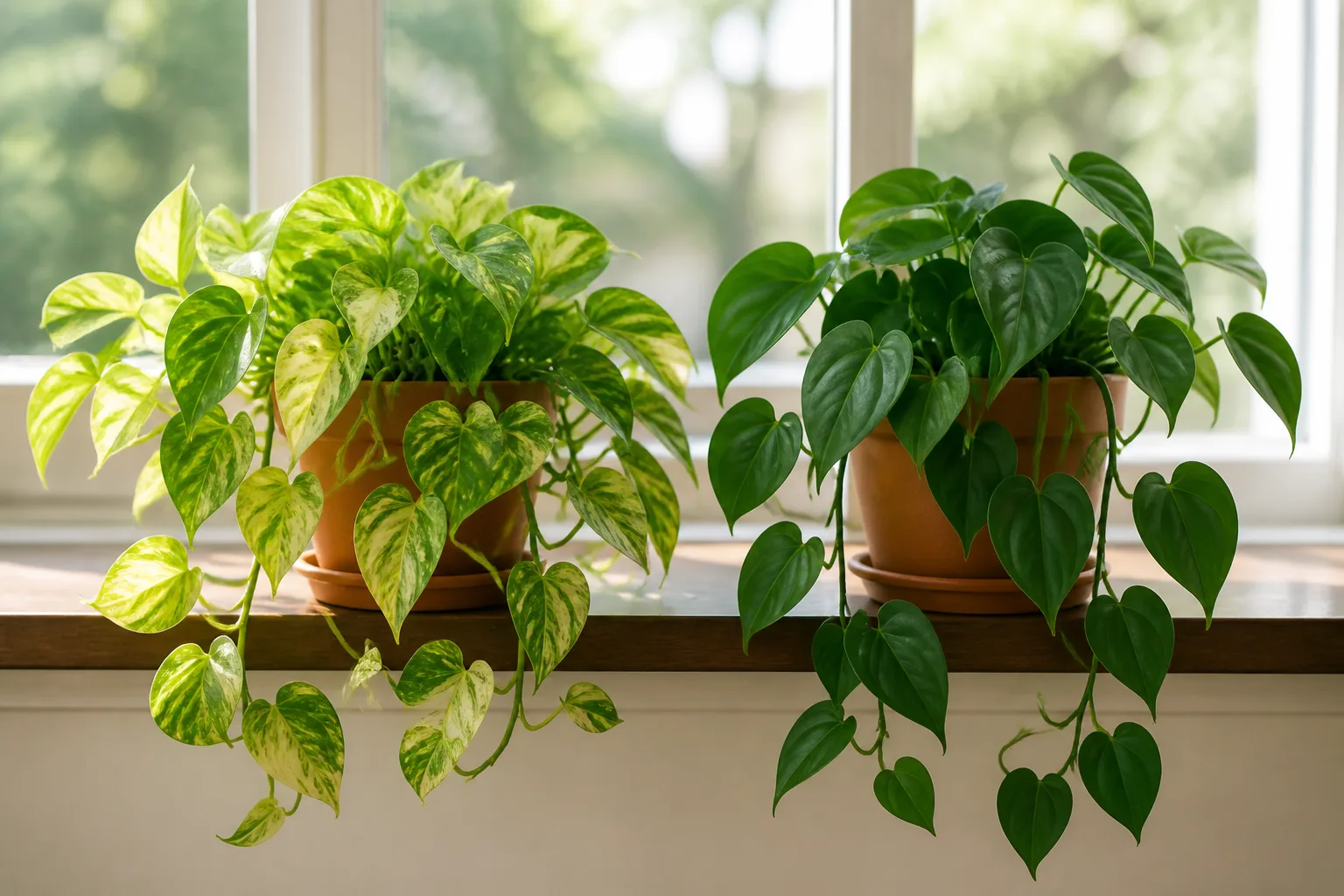
Shopping tip: Heartleaf, Brasil, micans, and lemon-lime are often mislabeled as pothos. If the petiole has a papery sheath and the leaf base is more deeply notched, you are likely looking at philodendron. Our pothos vs philodendron guide walks through the ID cues.
Philodendron erubescens Hybrids and Color-Forward Cultivars
Philodendron erubescens is a climbing species with large emerald leaves and reddish leaf undersides—the parent behind many colorful indoor cultivars. Most erubescens hybrids want bright indirect light, airy soil, and a moss pole if you want maximum leaf size.
Birkin, Imperial Green, Black Cardinal, and Prince of Orange
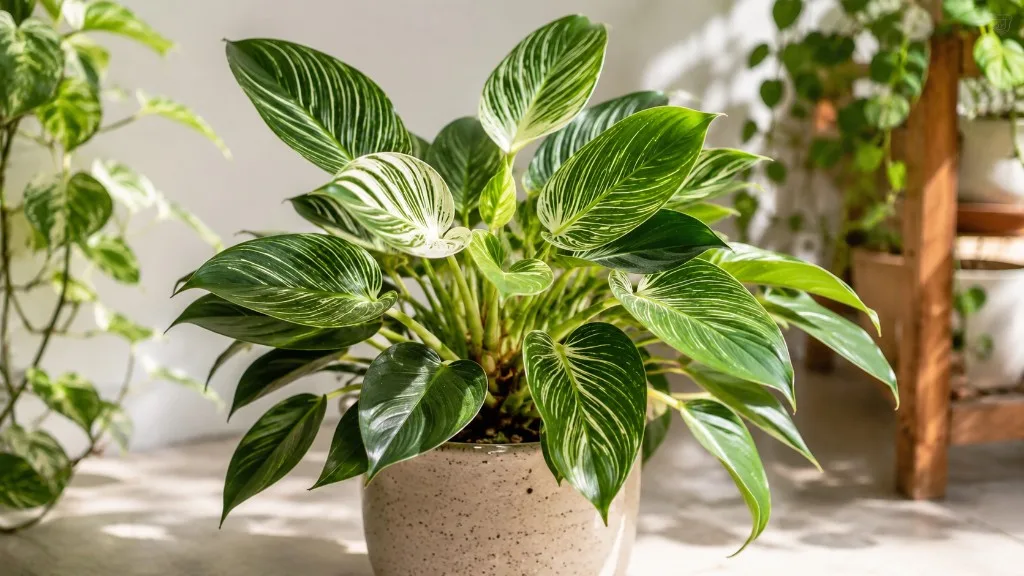
Philodendron Birkin is a self-heading hybrid (linked in trade to Rojo Congo lines) with dark green leaves and white pinstripes. It is slow-growing and can revert to solid green or produce red-toned leaves when stressed. Bright indirect light and stable humidity help hold the pattern. Deeper care: Birkin guide.
Imperial Green (P. erubescens ‘Imperial Green’) is a self-heading cultivar with a small crown of large smooth green leaves—often only five or six at a time, each potentially 12–18 in. long in good light. It stays architectural without taking over a room. Care: Imperial Green guide.
Black Cardinal (P. erubescens ‘Black Cardinal’) pushes new leaves in burgundy that mature toward deep green and near-black tones. Gentle morning or late-day sun can deepen color; harsh midday sun scorches. Treat it like other self-heading erubescens types: bright indirect baseline, less frequent watering than heartleaf.
Prince of Orange (P. erubescens ‘Prince of Orange’) is named for new growth that opens yellow-orange before settling to green. Mature plants reach roughly 2–3 ft. with leaves up to a foot long. It is self-heading and does not need a pole, but it does need enough light to keep the color show going.
Pink Princess, White Knight, and Green Princess
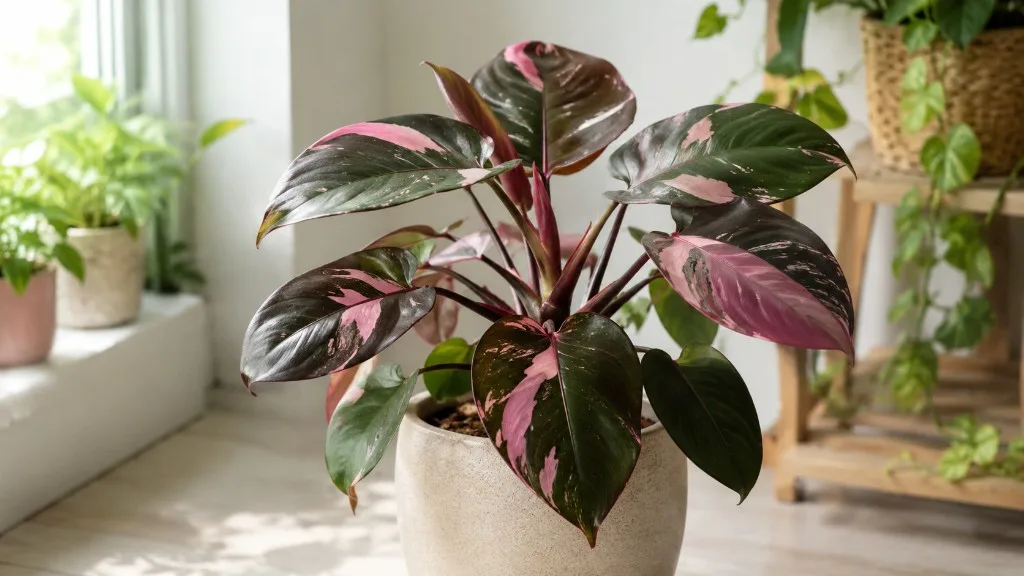
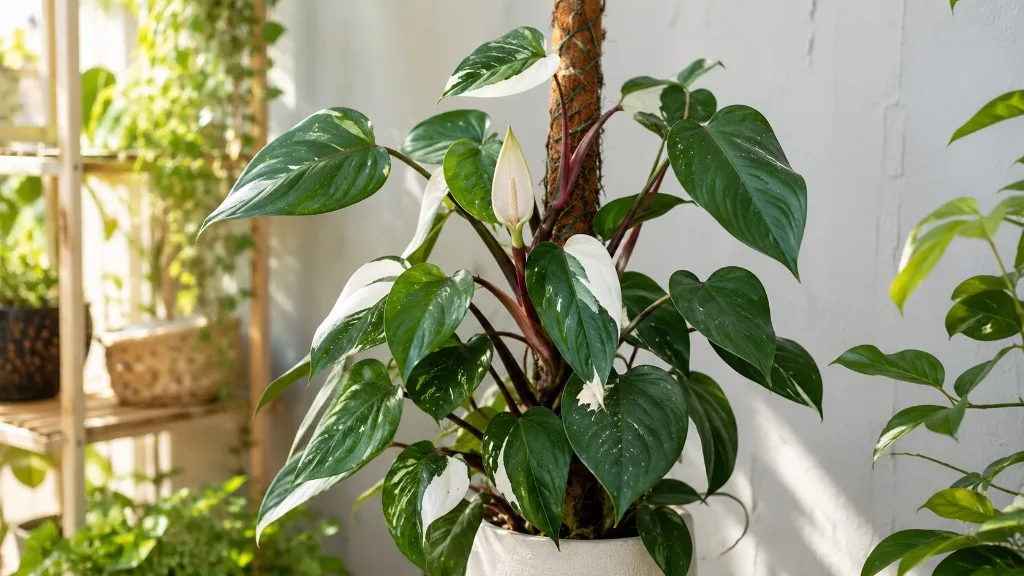
Pink Princess (P. erubescens ‘Pink Princess’) is the collector favorite: dark leaves splashed with pink variegation. Stable pink needs bright indirect light, moderate humidity, and patience—cheap tissue-culture plants sometimes produce mostly green leaves. It climbs; a moss pole improves size. Full guide: Pink Princess care.
White Knight (P. erubescens ‘White Knight’) trades pink for bold white sectors on long pointed leaves. High variegation raises stress sensitivity: avoid wet soil, cold drafts, and dim corners. Care: White Knight guide.
Green Princess (sold as Philodendron mia or similar trade names) is a compact self-heading plant with glossy oval emerald leaves, usually 8–10 in. tall and wide. It tolerates moderate light better than heavily variegated erubescens cultivars and suits desks and windowsills.
Erubescens species note: The species itself (P. erubescens) is a robust climber with red-flushed leaf undersides and cultivars like Imperial Red still common in trade. Imperial Red care overlaps with other erubescens lines: Imperial Red guide.
Large Self-Heading and Architectural Philodendrons
Some of the biggest “philodendron” floor plants are no longer classified in Philodendron—but nurseries still label them that way, so they belong on any indoor types list.
Tree Philodendron and Xanadu
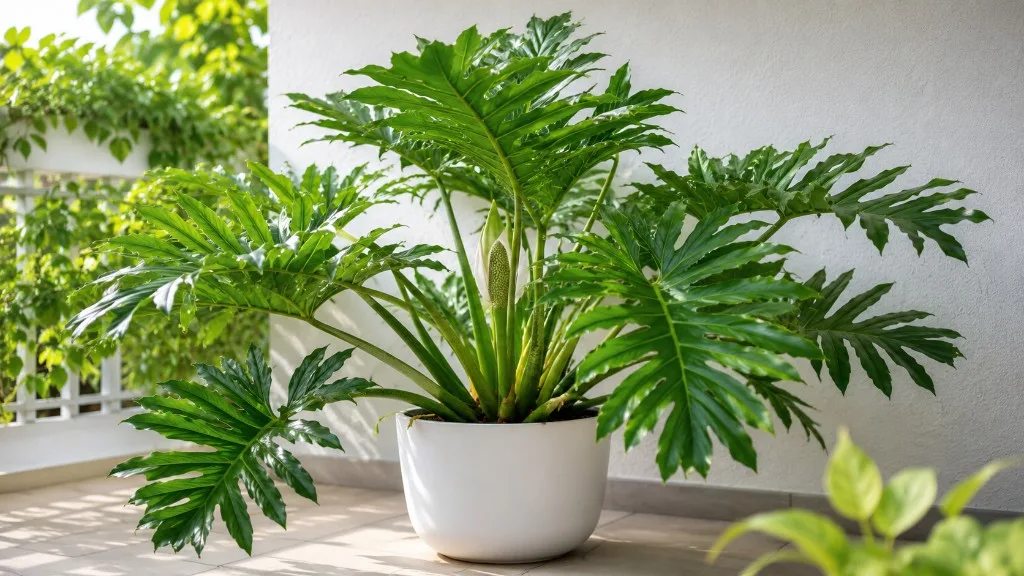
Tree philodendron (Thaumatophyllum bipinnatifidum, still sold as Philodendron selloum or P. bipinnatifidum) develops a trunk-like stem with large deeply lobed leaves and aerial roots at maturity. Indoors it can reach 6 ft. tall and 8 ft. wide over years. It wants bright indirect light, room to spread, and soil that never stays waterlogged. Profile: tree philodendron guide.
Philodendron Xanadu (Thaumatophyllum xanadu) is a compact bush with deeply lobed medium leaves—no climber, no moss pole. It tops out around 4–5 ft. indoors and works well as a tropical floor plant in bright filtered light. The RHS lists it among popular philodendron houseplants with lobed foliage. (RHS)
Climbing Philodendrons for Vertical Drama
These types look best with a moss pole, plank, or trellis. Climbing raises leaf size and speeds growth compared with letting stems flop.
Golden Goddess, Burle Marx, and Calkins Gold
Golden Goddess (Philodendron ‘Golden Goddess’, also sold as Malay Gold) is a climbing neon-chartreuse philodendron with larger leaves than lemon-lime heartleaf. Do not confuse the two: Golden Goddess climbs; lemon-lime trails. Bright indirect light keeps color sharp.
Burle Marx (P. burle-marxii) is a fast horizontal spreader with narrow glossy leaves, usually staying under 2 ft. tall but widening with age. It prefers evenly moist—not soggy—soil and bright indirect light. In frost-free climates it works as ground cover; indoors give it a wide cachepot.
Calkins Gold (P. erubescens ‘Calkins Gold’) is a rare climbing hybrid with lime-speckled pointed leaves. It is collector-priced but not fussy if you keep it bright, warm, and on the drier side between waterings.
Velvet Foliage and Collector Favorites
Velvet-leaf philodendrons are the glamour tier. They are not impossible indoors, but they punish inconsistent humidity and overwatering faster than heartleaf.
Verrucosum, Lynette, Silver Sword, and Florida Hybrids
Philodendron verrucosum has velvety green leaves, contrasting burgundy undersides, and hairy petioles. It is not a beginner plant—aim for stable warmth, high humidity, and excellent drainage. Treat it like other cloud-forest aroids, not like a pothos.
Lynette (P. campi ‘Lynette’) is a compact self-heading type with narrow textured lime leaves. It wants filtered light and careful watering: let the top half of the mix dry before soaking. Overwatering shows up as yellowing lower leaves.
Silver Sword (P. hastatum ‘Silver Sword’, syn. P. domesticum in older tags) produces silvery sword-shaped leaves on a climber that can reach 10–15 ft. with support. It tolerates medium light better than many variegated types but grows faster in bright indirect conditions.
Florida Green (P. squamiferum × P. pedatum hybrid lines) has multi-lobed emerald leaves on a warm-loving climber. Florida Ghost is the same hybrid background with new leaves emerging white or pale before hardening green—a high-light, high-humidity plant with collector pricing. White Princess (P. erubescens hybrid) is a different white-variegated erubescens line; see White Princess care if that is the plant on your bench.
Melanochrysum, Gloriosum, and Mamei
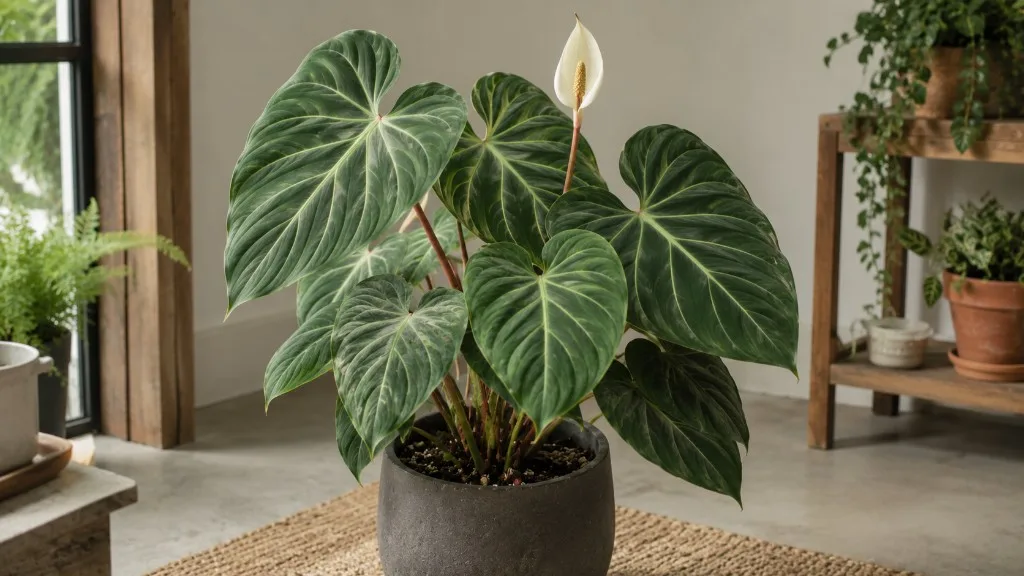
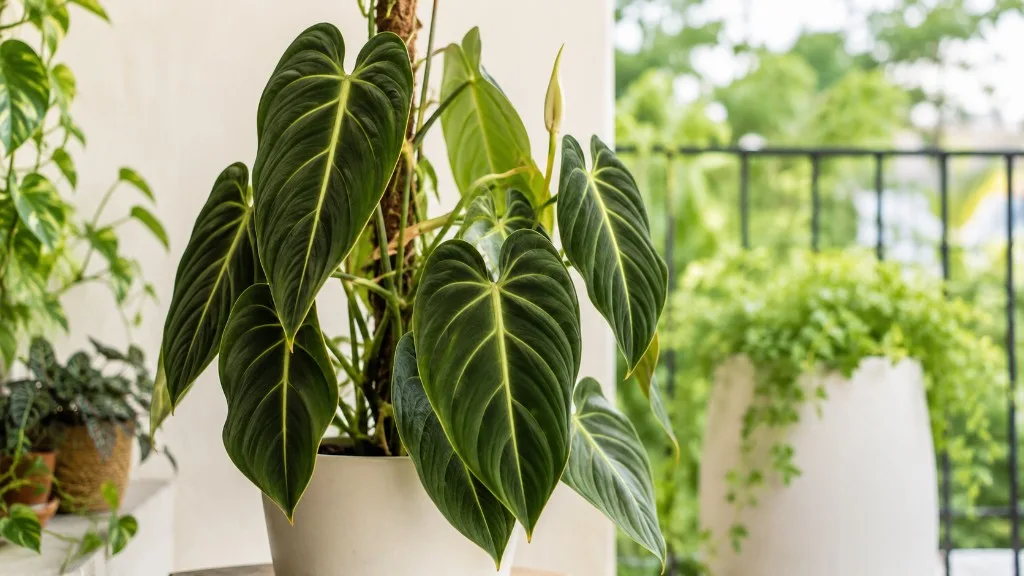
Black gold philodendron (P. melanochrysum) has dark velvet leaves with pale veins on a climber that can reach 3–5 ft. indoors. It is more available than a decade ago and surprisingly manageable with a moss pole, bright indirect light, and evenly moist airy soil. Care: melanochrysum guide.
Philodendron gloriosum is a creeping rhizomatous species with huge heart-shaped velvet leaves and white veins. Leaves can exceed 2 ft. wide in ideal conditions. Grow it in a wide shallow pot, keep the rhizome on the soil surface, and maintain humidity. Care: gloriosum guide.
Blotched philodendron or silver cloud (P. mamei) climbs with large green leaves streaked in silvery patches. It is lower-maintenance than gloriosum for many growers but still wants bright indirect light and a dry-down watering rhythm.
Philodendron vs Monstera: A Quick ID Checklist
Both are tropical aroids with split or heart-shaped leaves, so misidentification is common—especially on juvenile plants.
Leaf texture: Philodendron leaves are often slightly softer or velvety; many monsteras feel smoother and thicker, though exceptions exist.
Growth pattern: Philodendron leaves typically emerge from a cataphyll sheath on the stem. Monstera new leaves unfurl from within the previous leaf’s arch in a different pattern.
Splits and holes: Monstera deliciosa and adansonii are famous for fenestrations. Philodendrons may have lobes (Florida hybrids, tree philodendron) but rarely produce the same round windowed holes as Monstera adansonii.
Petiole cues: Grooved or ridged petioles point toward pothos (Epipremnum), not philodendron. Free stipules on vining philodendrons help separate them from pothos in the nursery aisle.
When in doubt, photograph the whole plant—stem, petiole, and new growth—and compare habit, not a single leaf. Our pothos vs philodendron and types of monstera guides cover the lookalikes in more detail.
Conclusion
The “best” philodendron is the one that matches your light, space, and attention budget—not the one trending on social media. Start with heartleaf or Brasil if you want easy trailing growth. Choose Birkin, Prince of Orange, or Imperial Green for compact color without vines. Reach for Pink Princess, Florida Ghost, or gloriosum only when you have bright filtered light and a plan for humidity.
Every plant on this list is toxic to pets, so place pots before you fall in love with the leaf pattern. Once you shortlist a type, open its dedicated care guide from the philodendron hub and set up support, soil, and watering for that growth habit—not for a generic “tropical plant” label.



