How to Grow and Care for Tree Philodendron
Learn tree philodendron care from light and soil to watering, pruning, propagation, root rot, and pet safety for this dramatic tropical houseplant.
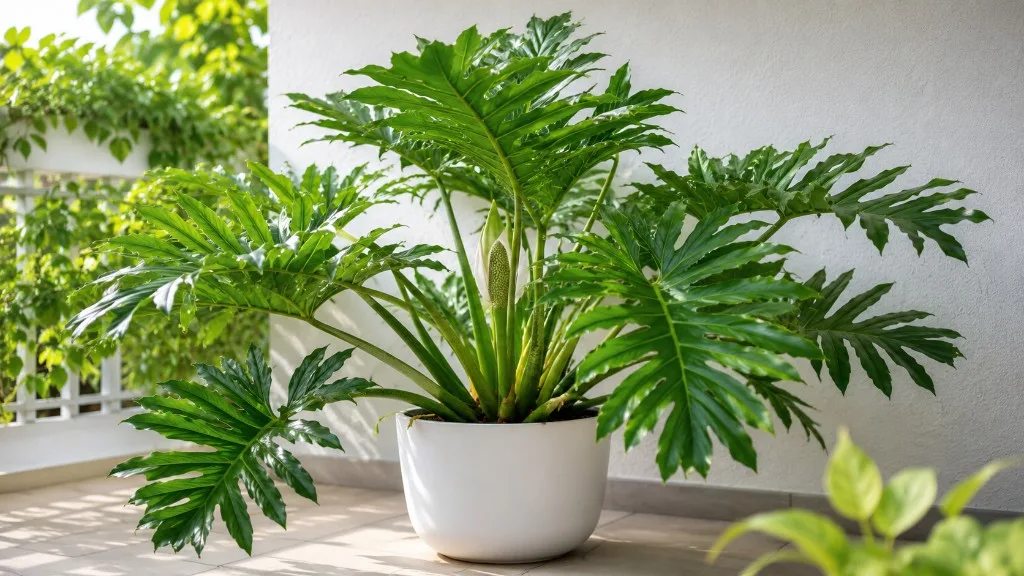
Tree philodendron is a statement plant with a practical catch: the leaves may look forgiving, but the root system still needs air. Give it filtered light, a pot that drains, and a watering rhythm based on how quickly the mix dries, and it can become a long-lived indoor specimen. Keep it in weak light or a waterlogged pot, and its size makes the decline harder to hide.
The plant is sold under several names, including lacy tree philodendron, split-leaf philodendron, horsehead philodendron, and Philodendron selloum. The accepted scientific name is Thaumatophyllum bipinnatifidum, a species in the arum family, Araceae; NCBI lists Philodendron bipinnatifidum as its basionym, which explains why both names remain common in plant shops and care references. (NCBI Taxonomy)
This is a self-heading plant, not a small trailing philodendron. Leaves rise from a central crown, and older plants can develop a thick, trunk-like base. If you are choosing one for a room, plan for the eventual width and leaf spread before you plan the décor around its current nursery pot.
What Tree Philodendron Is (and Why the Names Vary)
Tree philodendron is an evergreen tropical to subtropical foliage plant native to parts of South America. Its deeply lobed leaves emerge on long petioles from a central crown, creating the “tree” silhouette even when the plant is still young. A mature outdoor specimen can become roughly 10 to 15 feet tall and wide in a suitable climate, while an indoor container plant is usually smaller but can still outgrow a corner quickly. (Missouri Botanical Garden)
The name change matters mostly when you shop or research. Search for all three of Thaumatophyllum bipinnatifidum, Philodendron bipinnatifidum, and Philodendron selloum when comparing labels, but do not assume that a care instruction for a vining heartleaf philodendron applies perfectly to this self-heading species. Its large crown, broad pot, and substantial leaf mass change how quickly it dries and how much floor space it needs.
Choose the Right Home: Indoor Container or Outdoor Bed
In a frost-free or nearly frost-free climate, tree philodendron can be grown outdoors in a moist, fertile, well-drained soil and part shade. Missouri Botanical Garden lists it for USDA Zones 9 to 11, but zone labels are not a promise that every garden in a zone is equally suitable: cold pockets, wind, exposure, and winter wetness matter. Treat the plant as an outdoor perennial only where freezing weather is not a recurring threat. (Missouri Botanical Garden)
For colder regions, grow it in a container and move it indoors before cold nights arrive. A summer holiday outdoors can work, but the change must be gradual. Move it first into bright shade, increase outdoor light over a week or two, and reverse the process before bringing it back inside; a sudden jump from filtered indoor light to hot sun can scorch leaves even when the plant is otherwise healthy.
Before buying, measure the place where the plant will live in five years, not just the shelf where it fits today. The pot must be heavy or wide enough to resist tipping, and there must be room to reach the back of the crown for watering, rotating, and pest checks. A plant that is technically healthy but blocks a walkway or presses against a cold window is in the wrong spot.
Light: Bright, Filtered Light With Protection From Midday Sun
Give tree philodendron bright, indirect light or dappled outdoor shade. Indoors, a few feet from an east window or near a bright south or west window filtered by a sheer curtain usually works better than a dim corner. Outdoor plants prefer morning sun or shifting shade; strong, uninterrupted afternoon sun can scorch the broad leaves. (Missouri Botanical Garden)
Use the plant’s growth as a light meter. Long gaps between leaves, a crown that leans hard toward one direction, and smaller new leaves suggest that light is too weak. Pale, bleached patches or crisp tan areas on the window-facing side suggest the opposite problem: the plant was moved into intense light too quickly or is receiving hot direct sun.
Rotate the pot a quarter turn every week or two if you want more even growth. Do not rotate a plant into a dramatically brighter window and call that the same adjustment; light direction and intensity can change enough to cause sunburn. Increase light in steps, especially after an outdoor summer.
Soil and Pot: Give the Roots Air as Well as Moisture
The best tree philodendron soil does two jobs at once. It holds enough water for the large leaf canopy, yet it leaves air spaces around the roots after the excess drains. A dense mix that stays wet for days can cause the plant to wilt from root damage even though the soil feels moist.
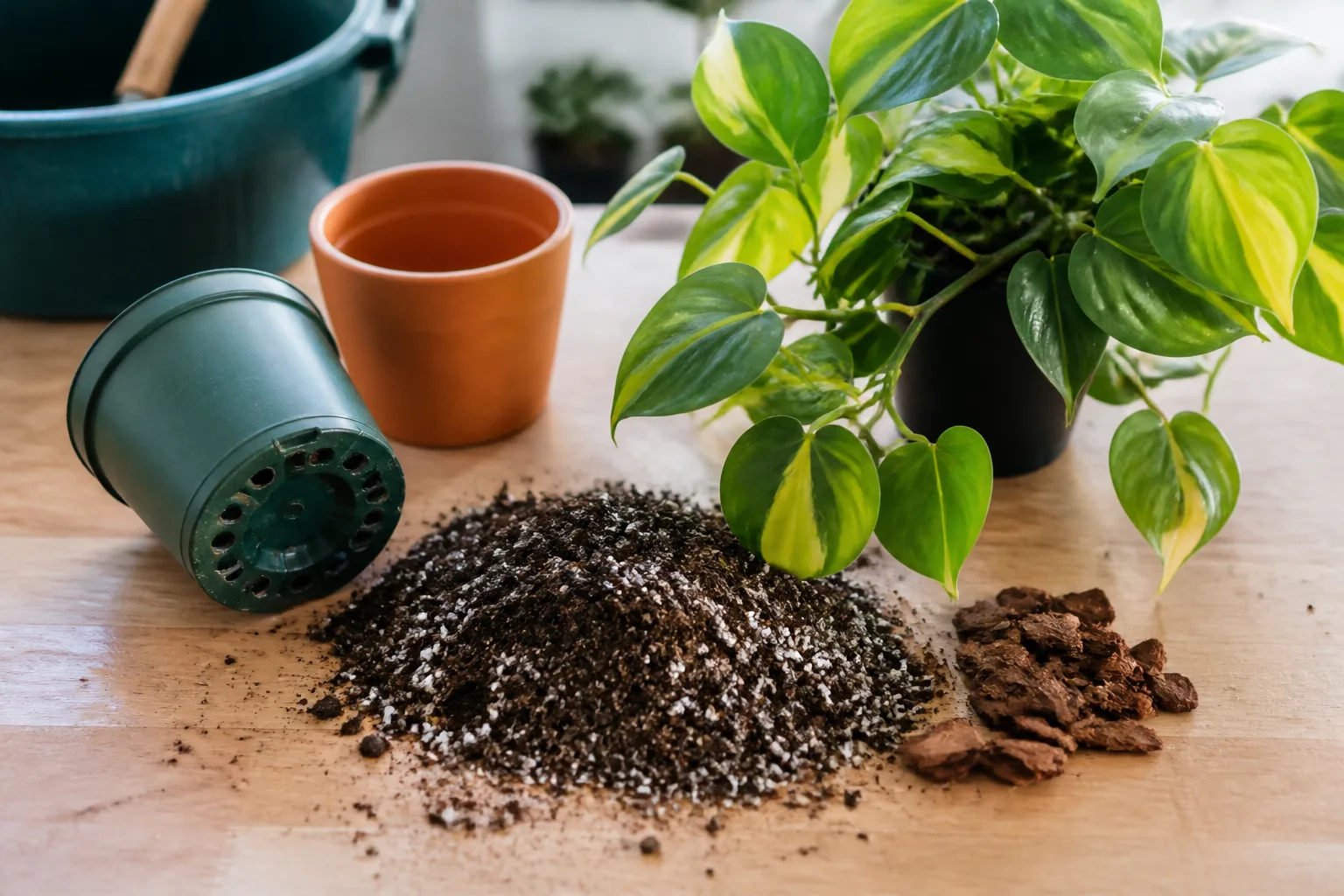
Build a Mix That Drains Without Becoming Dust-Dry
Start with a quality indoor potting mix, then add chunky material such as orchid bark and perlite. Coconut coir can replace some peat if you prefer it. The goal is a loose, springy mix that does not collapse into a muddy block after repeated watering; the exact recipe matters less than the finished structure.
If water runs straight through a very dry pot, do not immediately conclude that the mix is too well-drained. Extremely dry mix can shrink from the sides of the container and repel water. Apply water slowly in two or three passes until the root ball is evenly moistened, then let the pot drain fully. If water still bypasses the root ball, refresh the mix rather than watering more often.
GardenersPath recommends a light, fertile mix built from potting soil, peat or coconut coir, and perlite, along with a watering method that lets the top two inches dry before the next thorough soak. (GardenersPath)
Choose a Stable Container With Real Drainage
Use a container with several drainage holes and a saucer that can be emptied. A decorative cachepot is fine as an outer cover, but never leave the growing pot sitting in runoff. The bottom of the root ball should not remain in standing water between waterings.
Do not jump to a very large pot to postpone repotting. A pot only one or two inches wider than the current root ball is usually easier to manage because it gives roots room without surrounding them with a large reservoir of unused wet mix. GardenersPath also recommends sizing up gradually and choosing a container that can be moved while the plant is still manageable. (GardenersPath)
Watering: Use Soil Readiness, Not a Calendar
Water when the top two inches of mix are dry, then soak the soil thoroughly until water exits the drainage holes. Empty the saucer after the pot finishes draining. This is a starting rule, not a weekly contract: a plant in bright light and warm summer air may dry faster than one in a cool, dim room or a large plastic pot.
Check before every major watering by pushing a finger into the mix, using a wooden skewer, or learning the weight of the pot when it is ready and when it is saturated. The top may feel dry while the center remains wet, especially in a deep container. If the pot is still heavy and the mix is cool and damp below the surface, wait and check again.
The most useful pattern is dry slightly, then water deeply. Do not give small sips every day; that wets only the surface and can leave the center permanently damp. Do not let the entire root ball turn bone-dry repeatedly either, because a large leaf canopy can lose water faster than damaged roots can replace it. In winter, reduce frequency as light and growth slow, but keep checking the soil rather than switching to a fixed monthly schedule.
The plant’s watering needs change after every major move. A brighter window, a new pot, a different potting mix, a heater, or a summer outdoors can change drying time. Relearn the pot instead of copying the schedule that worked last season.
Temperature, Humidity, and Airflow
Keep tree philodendron warm and away from cold drafts, heating vents, and air-conditioning blasts. Missouri Botanical Garden notes that indoor plants prefer daytime temperatures above 70°F in summer and above 60°F in winter, and that the plant is intolerant of drought. (Missouri Botanical Garden)
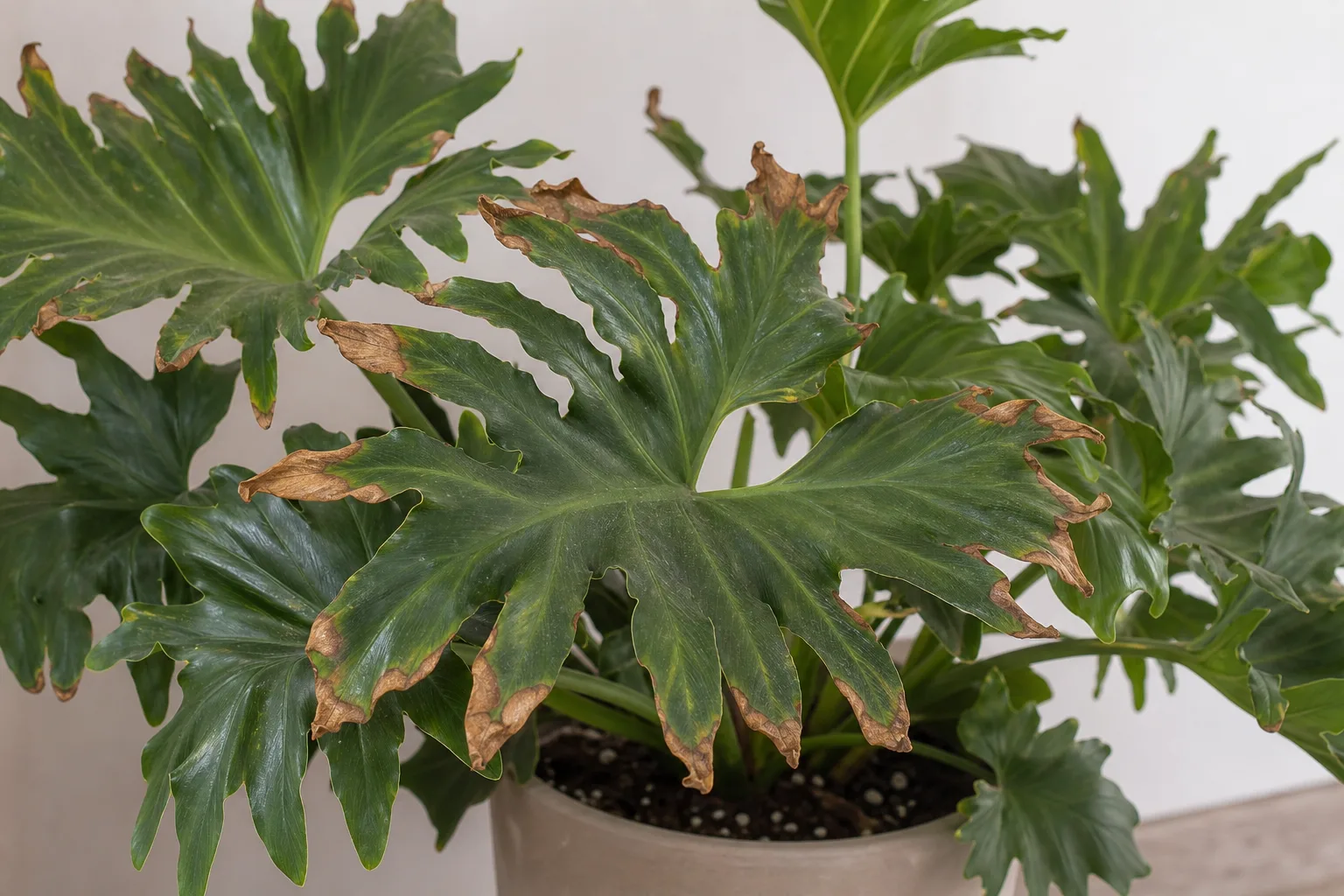
Average household humidity is often workable if the plant is not beside a heat source, but dry indoor air can show up as crispy edges, curled lobes, or recurring spider mites. Measure humidity near the leaves with a hygrometer before buying equipment. A humidifier helps a genuinely dry room; grouping plants can modestly improve the local microclimate. Misting is temporary and is not a substitute for watering the roots.
Humidity without airflow is not an upgrade. Leave space between the leaves and nearby walls, keep foliage from pressing against cold glass, and avoid crowding several wet plants together. If the room feels stagnant, fix air movement and watering before pushing humidity higher.
Fertilizer: Feed Active Growth, Not a Stressed Plant
Feed during active spring and summer growth with a balanced liquid fertilizer diluted to half the label rate, about once a month. Water the plant first if the mix is dry, then apply the diluted fertilizer to already-moistened roots. A slow-release product can work, but follow its label rather than adding liquid feed on top of it.
Do not fertilize a newly purchased plant during its adjustment period, a freshly repotted plant with damaged roots, or a plant with soggy soil and yellowing leaves. Fertilizer cannot repair root rot, weak light, or a compacted mix. Stop or sharply reduce feeding when growth slows in fall and winter.
If a white crust forms on the soil or pot rim, flush the mix with several slow rounds of plain water and let it drain completely, provided the pot drains freely. If the crust returns, reassess fertilizer strength, water quality, and the condition of the potting mix before feeding again.
Pruning and Leaf Cleaning for Shape and Function
Prune to remove damaged leaves, control a crowded canopy, or improve access to the crown—not to turn a tree philodendron into a small tabletop plant. Use clean, sharp shears and cut a leaf stalk near its base once the leaf is mostly damaged. Removing one old leaf will not make the plant branch like a shrub; its architecture comes from the central crown.
If the plant has a long exposed trunk or an awkward lean, decide whether you can live with its mature form before cutting heavily. Large cuts create wounds and remove photosynthetic area. A better first move is often brighter filtered light, a stable pot, and a quarter-turn routine.
Dust the broad leaves with a damp, soft cloth or rinse them gently with lukewarm water. Clean leaves are easier to inspect and less likely to hide scale, mealybugs, or spider mites. Avoid oily leaf-shine products, which can interfere with the leaf surface and make later pest inspection harder.
Repotting Without Creating a Bigger Water Problem
Repot in spring or early active growth when roots are circling the container, emerging from drainage holes, or drying the pot unusually fast. Also repot when the mix has collapsed, smells sour, or stays wet far longer than the plant’s light and temperature would suggest. A plant that is simply tall is not automatically root-bound.
Slide the root ball out and inspect it before choosing the next pot. Firm pale or tan roots and a root ball that holds together are usually signs that you can size up modestly. Black, soft, hollow, or foul-smelling roots indicate a root problem; moving that plant into an even larger wet pot makes the problem harder to solve.
Set the crown at the same depth it was growing before. Do not bury the trunk-like base to stabilize a leaning plant. Backfill with fresh mix, water once to settle the roots, let excess drain, and keep the repotted plant in the same general light while it recovers. Avoid changing light, pot size, fertilizer, and watering method all at once; too many variables make the next symptom impossible to interpret.
Propagation: Stem Sections and Basal Offsets
The easiest tree philodendron propagation method is often division of a rooted offset at the base, if the parent plant produces one. Separate the offset with a clean knife only when it has its own roots, then pot it in a small container with a well-drained mix. An unrooted piece of crown is much more vulnerable to rot than a division with an established root system.
Stem propagation is possible when you have a healthy section with at least one viable node. Make a clean cut, keep leaves above the water or propagation mix, and give the cutting warm conditions and bright indirect light. Change water regularly if you use water propagation, and pot the cutting only after roots are substantial enough to support the foliage. Gardenia describes both water and soil methods and emphasizes keeping the node in contact with the rooting medium while leaves stay out of it. (Gardenia)
Do not expect a single leaf without a node to create a new tree philodendron. Do not take a large cutting from a stressed, pest-ridden, or recently repotted parent just because the plant looks big enough to spare it. Stabilize the parent first, then propagate during active growth when warmth and light can support new roots.
Pests and Diseases: Inspect the Crown and Leaf Undersides
Inspect new leaves, petioles, the crown, and the undersides of older leaves every week or two. Look for cottony clusters from mealybugs, hard bumps from scale, sticky residue from sap-feeders, fine webbing from spider mites, and tiny flies around consistently wet mix. Missouri Botanical Garden lists aphids, spider mites, mealybugs, scale, leaf spots, and root rot among the problems to watch. (Missouri Botanical Garden)
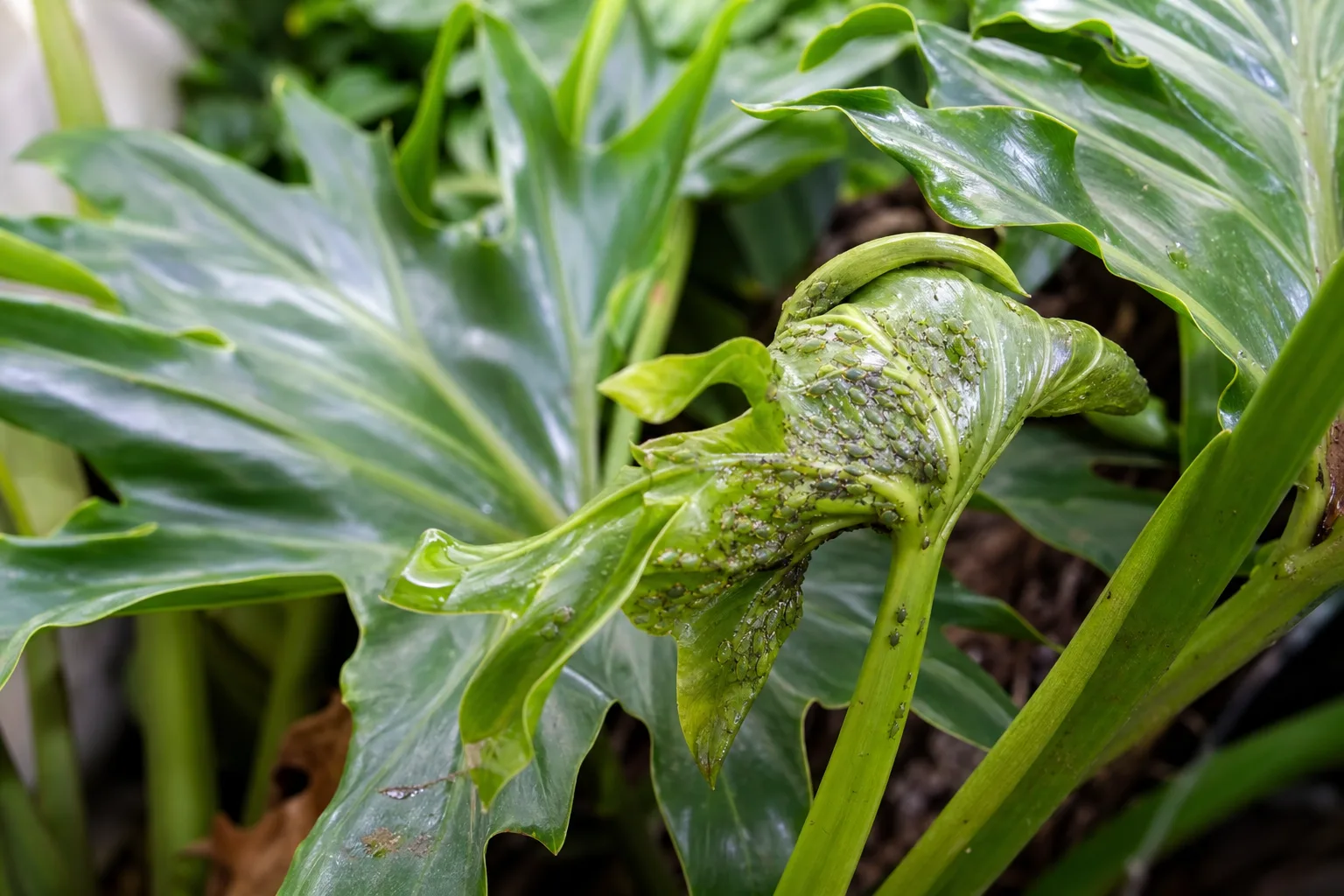
Isolate a plant with active pests before treating nearby plants. Rinse accessible foliage, wipe visible insects, and repeat inspections because one treatment rarely removes eggs or newly hatched pests. Use insecticidal soap or another labeled treatment only according to its label, and test a small area first; large leaves can scorch when products are applied in strong light or heat.
The prevention that matters most is boring: quarantine new plants, keep leaves clean enough to inspect, give the crown space, and avoid a permanently wet pot. GardenersPath similarly identifies mealybugs, scale, spider mites, bacterial leaf spot, and root rot as common indoor threats and emphasizes leaf cleaning, air circulation, and avoiding saturated soil. (GardenersPath)
Root Rot Triage: Confirm Before You Cut
Root rot is more likely when the plant is wilted while the soil is still wet, lower leaves are yellowing in a pattern, the stem or crown feels soft, or the root ball smells sour. Confirm it by sliding the plant out and checking the roots. Healthy roots are firm; rotting roots are often brown to black, mushy, hollow, or easy to pull apart.
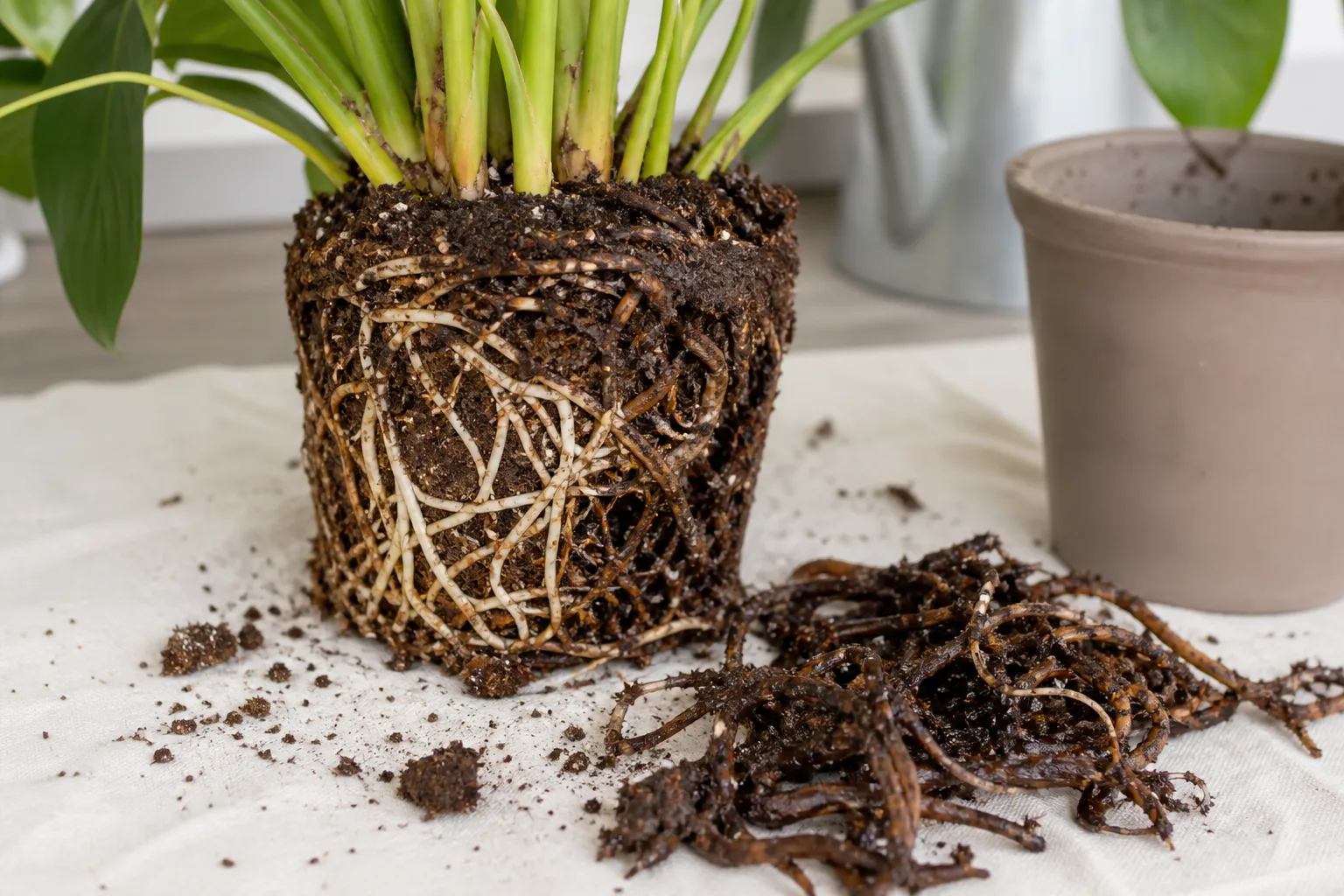
If rot is present, stop watering, remove the affected mix, and trim only dead roots with sterilized shears. Repot the remaining healthy roots in a clean, appropriately sized container with fresh, airy mix and drainage holes. If very little healthy root or crown tissue remains, propagation from a sound node or rooted offset may be more realistic than trying to support a full canopy.
Do not bury a wet, damaged crown, leave the plant in a full saucer, or compensate for root loss with fertilizer. Recovery is a process of reducing demand: bright but gentle light, stable warmth, good airflow, and careful watering only after the new root environment begins to dry.
Common Problems: Yellow Leaves, Brown Tips, and Leggy Growth
Yellow leaves: One old lower leaf can yellow naturally, but repeated yellowing usually deserves a root-zone check. If the mix is wet, inspect drainage and roots before adding fertilizer. If the mix is bone-dry and the pot is unusually light, underwatering or damaged roots may be limiting uptake. Pests, low light, cold stress, and sudden changes can also contribute, so use the pattern rather than diagnosing from color alone.
Brown tips or crispy edges: Check humidity, drafts, direct sun, watering consistency, and salt buildup in that order. Dry air can make large leaf edges crisp, but the same symptom can follow a root problem or repeated severe drying. Trim only the dead tissue for appearance; the cut edge will not turn green again. A brown edge is a clue, not a reason to place the plant in a constantly wet pot.
Leggy growth or leaning: Move the plant toward brighter filtered light gradually, rotate it, and make sure the pot is stable. A self-heading plant can lean as it reaches for the window, but a stake will not solve chronically weak light. If the leaves are small and new growth is sparse, improve light before increasing fertilizer.
Leaves dropping after a move: Check for cold drafts, temperature swings, root disturbance, and a sharp light change. Avoid responding with extra water unless the soil is actually dry. A recently moved plant needs stable conditions more than a new treatment every few days.
Is a Tree Philodendron a Monstera?
No. They are different genera, although both are tropical members of the arum family and can have dramatically divided foliage. Tree philodendron leaves usually form deep lobes from the outer edge toward the midrib and emerge from a central crown; Monstera deliciosa is a vining plant whose mature leaves develop internal holes, or fenestrations, as well as splits.
The confusion is understandable because “split-leaf philodendron” has been used as a common name for more than one plant. Identify the growth habit before copying care advice: a self-heading tree philodendron needs room for a broad crown, while a Monstera is usually managed with a support and a climbing direction. The leaf shape, petioles, and central growth point are more useful than the label on a decorative pot.
Toxicity and Safe Placement Around Pets and Children
Tree philodendron is toxic to cats and dogs if ingested. ASPCA identifies calcium oxalate crystals as the toxic principle and lists oral irritation, intense burning, drooling, vomiting, and difficulty swallowing among possible clinical signs. (ASPCA: Tree Philodendron)
People can also be injured by chewing the plant or getting sap on skin or eyes. The National Capital Poison Center explains that needle-like calcium oxalate structures can cause immediate pain, swelling, and irritation; it recommends rinsing the mouth after ingestion, washing skin with soap and water, irrigating eyes with water, and contacting Poison Control or emergency services for severe symptoms such as excessive drooling, major swelling, difficulty swallowing, or trouble breathing. (Poison Control)
Treat placement as part of tree philodendron care. Use a tall, stable stand or a room pets and young children cannot access, keep fallen leaves out of reach, and wear gloves if the sap irritates your skin. If an animal may have chewed the plant, contact a veterinarian or the ASPCA Animal Poison Control Center promptly rather than waiting to see whether symptoms develop.
Conclusion
Tree philodendron becomes much easier when you stop treating it like a generic philodendron. Plan for a large self-heading crown, give it bright filtered light, use a loose mix in a draining and stable pot, and water when the root zone—not the calendar—says it is ready.
The most useful maintenance habit is a short inspection: feel the soil, lift the pot, look under the leaves, check the crown, and empty the saucer. That routine catches the problems that matter most—soggy roots, pests, weak light, dry air, and cold drafts—before the plant’s impressive foliage hides the damage. Grow it outdoors only where the climate supports it, move containers gradually, propagate from rooted offsets or viable nodes, and keep the plant out of reach of pets and children.



