Tomato Plant No Fruit? 5 Fixes for More Tomatoes
Tomato plant all leaves and no fruit? Use this five-step diagnosis to fix heat, light, watering, fertilizer, and pollination without guessing.
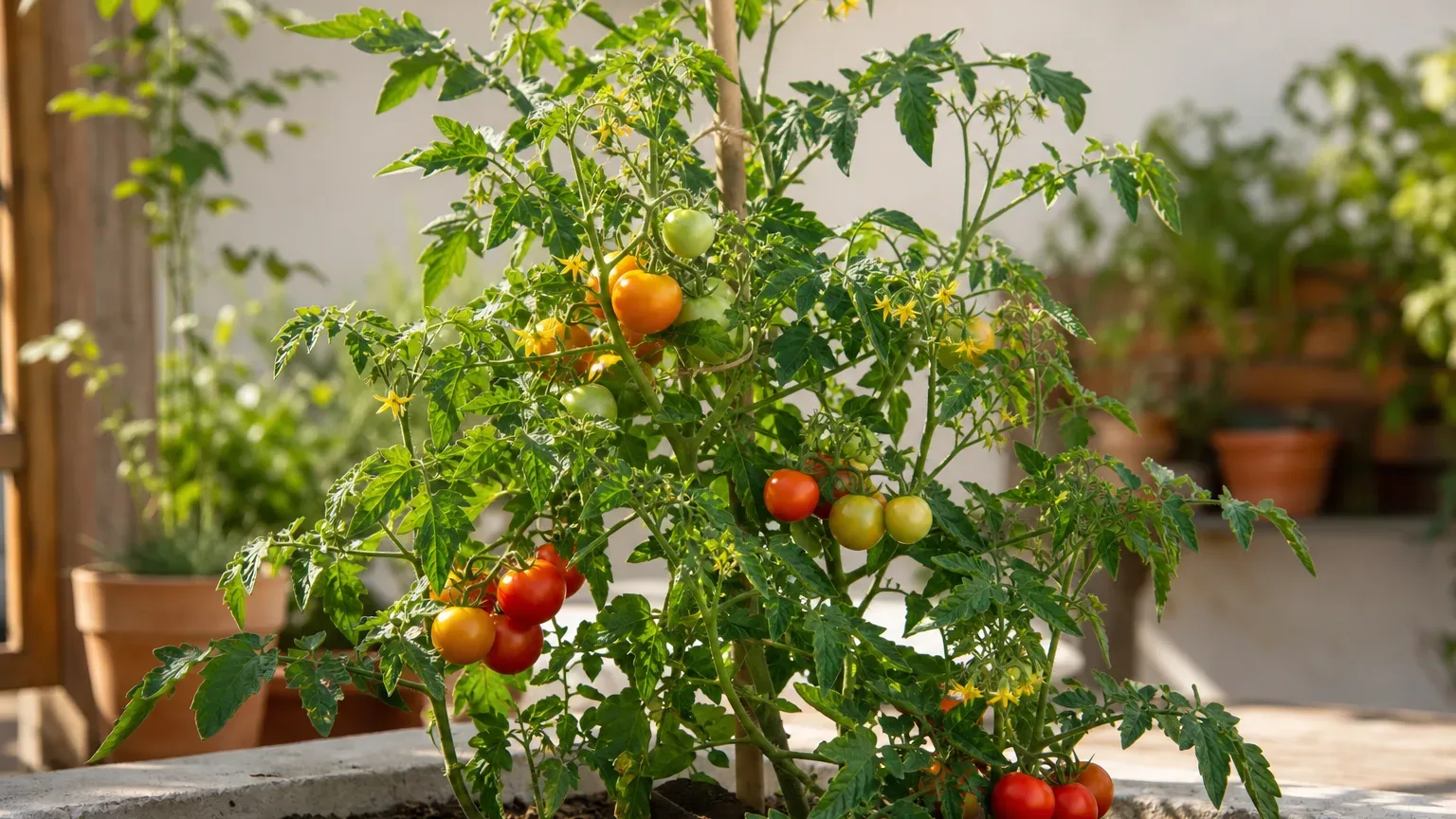
A tomato plant can look exceptionally healthy and still produce nothing edible. The key is to determine whether it is not making flowers, making flowers that drop before fruit set, or setting tiny fruit that disappears because the plant is under stress.
Start with the flowers. If there are no yellow blossoms anywhere on the plant, inspect light, temperature, water, and fertilizer first. If there are many blossoms on the vine but no pea-sized tomatoes, focus on pollen movement, heat, humidity, and moisture swings. Those are different problems, and treating both with more fertilizer usually makes the leafy growth worse.
The five fixes below are ordered so you can correct the most common blockers without guessing. A lush plant with flexible green stems and healthy leaves is often worth saving; a plant with persistent wilt, collapsing stems, or widespread disease needs a different decision.
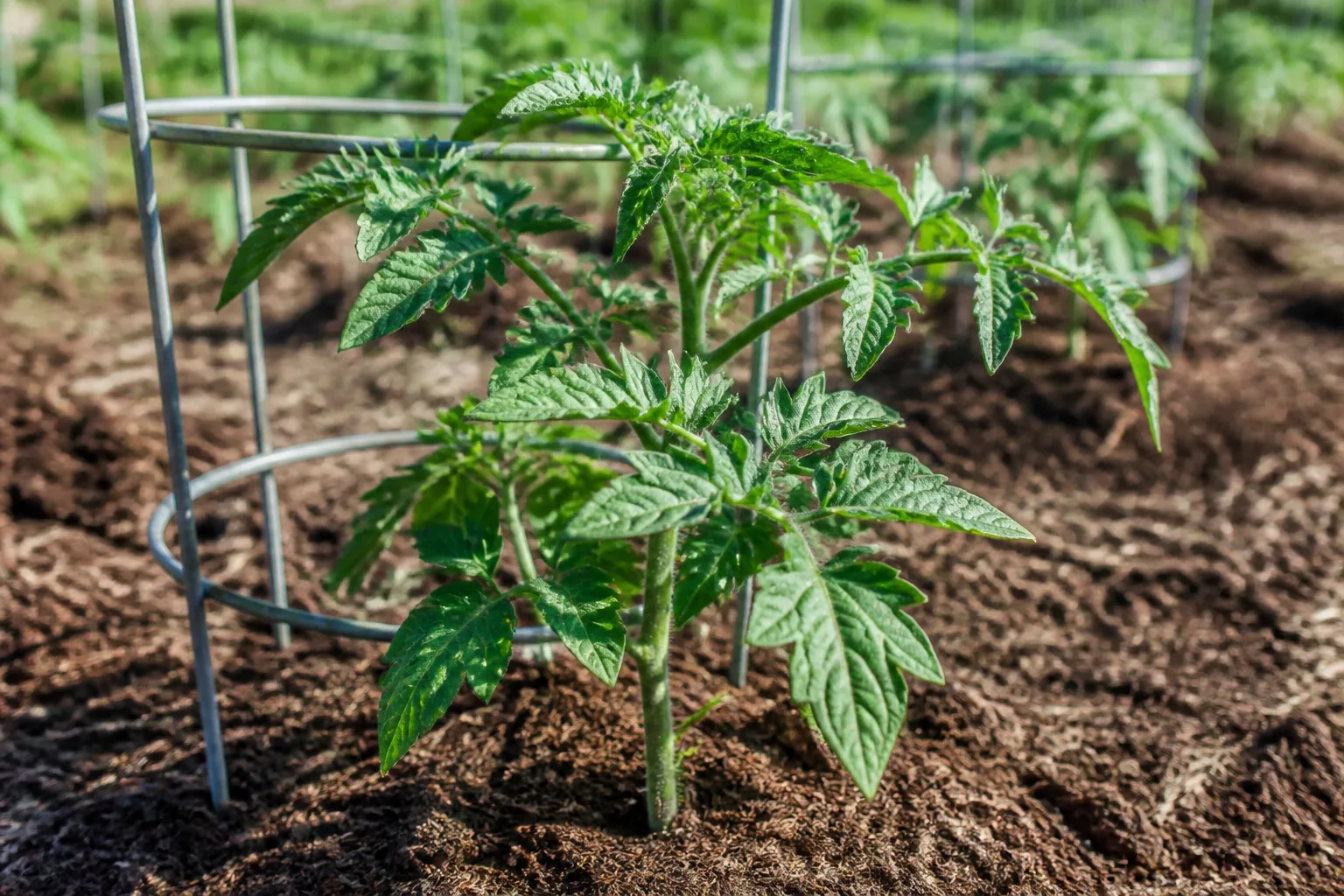
What the leaves-and-no-fruit pattern tells you
Tomatoes have perfect flowers, meaning each blossom contains both the pollen-producing stamens and the female stigma and ovary. That makes the plant largely self-pollinating, but self-pollinating does not mean every flower automatically becomes a tomato. Pollen still has to be mature and move from the anthers to the stigma while the flower is receptive. University of Missouri Extension explains the flower structure, self-pollination, and the role of vibration in tomato fruit set.
No flowers versus flowers that fall
A plant with no flowers is usually still stuck in vegetative growth or is being held back by a basic condition: too little direct light, cold nights, excessive heat, dry roots, waterlogged roots, or a nutrient imbalance. A plant with flowers that fall cleanly from the stem has reached the reproductive stage, but pollination or flower development has failed. Hot nights, high humidity, drought, and low pollen viability are common reasons.
Look closely at the plant before changing anything. Dark-green leaves, rapid side-shoot growth, and very long stems point toward excess nitrogen or low light. Flowers that turn brown and fall during a heat wave point toward temperature stress. Flowers that remain open for days in a still greenhouse or enclosed patio point toward poor vibration or airflow. Yellowing leaves, mushy soil, or a stem lesion move disease and root problems higher on the list.
1. Stabilize temperature before chasing fertilizer
Temperature is the least controllable cause, but it is the first one to check because no fertilizer can make pollen viable during a severe heat spell. Tomatoes can grow vigorously in weather that is too hot for reliable fruit set, which is why the plant may look lush while its flowers fail.
As a practical warning range, fruit set becomes less reliable when days stay above about 85–90°F or nights stay above about 70–75°F. Cool nights below roughly 55°F can also interfere with pollen and pollen-tube growth. The exact limits vary with cultivar, humidity, duration, and whether the plant is in a greenhouse or outdoors. A University of Delaware crop update reports that sustained 95°F days and 80°F nights reduce pollen production and viability, while University of Missouri guidance describes problems above 85°F by day, above 70°F at night, and below 55°F at night. (Delaware’s tomato pollination update and Missouri’s fruit-set explanation are useful references.)
How to tell weather is blocking fruit set
Weather is the leading suspect when the plant was flowering normally, then stopped setting fruit immediately after a heat wave or cold snap. It is also likely when the flowers are present but shrivel and fall, the foliage remains mostly green, and new flowers fail during the same period. Check night temperatures, not only the afternoon high; warm nights can be especially disruptive because the flower has less opportunity to recover.
During hot weather, water the root zone before the plant reaches severe wilt, apply a 2- to 3-inch layer of suitable organic mulch without touching the stem, and use temporary shade cloth if the plant is in a container or an exposed bed. Choose a light shade that still allows good daylight; dense shade can trade heat stress for weak, leggy growth. In a greenhouse, open vents and doors when safe and improve airflow. During a cold spell, protect the plant with frost fabric and remove it when temperatures rise.
Do not remove every flower during a heat wave or keep adding bloom fertilizer. The productive move is to keep the plant alive and evenly watered until the weather returns to a fruit-setting range. New flowers produced after the stress passes may set normally.
2. Give the plant enough direct light
Tomatoes need strong light to make the carbohydrates that support flowers and fruit. Aim for at least 6–8 hours of direct sun, with more often helpful in mild climates. University of Georgia’s homegrown tomato guidance recommends a sunny location with about 6–8 hours of sunlight, and its home-garden advice emphasizes choosing the brightest site available.
Low-light tomatoes often grow tall and soft, with long gaps between leaves and a thin canopy that leans toward the brightest direction. They may produce a few small flowers, but the plant has less energy to maintain them. If a container has been sitting under a roof edge, beside a tall wall, or behind a hedge, move it gradually into stronger sun over several days so tender leaves do not scorch.
Outdoor plants are harder to relocate once established. First identify the source of shade: a tree that leafed out, a neighboring crop, a fence, or a seasonal change in the sun’s angle. Remove only safe, nonstructural shade. Do not strip healthy tomato leaves to expose fruit; the leaves power the plant and help protect developing tomatoes from sunscald.
Extreme heat creates an important exception. In a hot climate, a plant may need morning sun plus protection from the harshest afternoon exposure during a heat wave. That is a short-term heat-management decision, not permission to grow tomatoes permanently in deep shade.
3. Water the root zone deeply and consistently
Flowering and fruit set are demanding stages. A plant that repeatedly dries out cannot reliably move water and nutrients to new flowers; a plant kept in saturated soil can lose functioning roots and show the same wilt and yellowing symptoms. The target is evenly moist, well-drained soil, not a fixed calendar that ignores your soil, rain, container size, and weather.
As a starting point, established garden tomatoes often need about 1–2 inches of water per week, including rainfall, with more frequent attention during hot, dry weather and less in cool or rainy conditions. UGA Cooperative Extension recommends thorough watering once or twice per week rather than many light sprinklings. Its watering guidance also supports drip irrigation or soaker hoses that keep foliage dry.
Water slowly at the base until moisture reaches several inches into the root zone. In a bed, check with a trowel or moisture probe a few inches away from the stem; the surface can look damp while the deeper roots are dry, or the top can look dry while the soil below remains wet. Mulch helps reduce evaporation and moderates soil temperature, but it cannot compensate for compacted or poorly drained soil.
Change the routine for containers and compacted beds
Container tomatoes usually dry faster than in-ground plants because the root volume is small and the sides of the pot heat up. Check containers more often, but water only when the mix needs it, and confirm that the drainage holes are open. A container that is constantly wet, smells sour, or has roots circling in dense mix needs a root-zone correction rather than another dose of fertilizer.
In compacted beds, water may run sideways or sit on top instead of reaching roots. Loosen only the surface areas you can work without tearing through major roots, improve the bed between seasons with organic matter, and keep mulch away from the stem base. If water pools after irrigation, solve drainage before increasing the watering volume.
Keep foliage as dry as practical, especially late in the day. Base watering does not guarantee fruit set by itself, but it reduces one source of stress and helps keep leaf diseases from removing the leaves the plant needs for fruit production. UGA’s guidance on tomato watering and moisture stress explains why consistent root-zone moisture matters for both plant health and developing fruit.
4. Stop feeding leaves and test the soil
The classic “all leaves, no tomatoes” plant is often overfed with nitrogen, especially after repeated applications of lawn fertilizer, manure, high-nitrogen liquid feed, or a strong general-purpose fertilizer. Nitrogen is necessary for healthy foliage, but excess nitrogen can keep the plant investing in shoots instead of flowers.
Pause feeding for now if the plant is dark green, growing rapidly, and producing few or no flowers. Do not try to correct the problem by dumping phosphorus, potassium, Epsom salt, bone meal, or calcium around the roots. A nutrient added to a soil that already contains enough can create a second imbalance, and phosphorus availability also depends on soil chemistry and pH.
Use a soil test for an in-ground bed, or follow the growing-medium and fertilizer directions for a container mix. UGA’s tomato publication warns that applying soluble fertilizer too often can create excess nitrogen and vigorous shoot growth with few blooms or fruit. The RHS also notes that tomatoes respond to the balance of light, temperature, water, and nutrients, and that excess potassium-rich feeding can create other problems.
Recognize excess nitrogen
Nitrogen excess is more convincing when several clues appear together: unusually dark green leaves, soft fast growth, many suckers, long internodes, a history of frequent feeding, and no obvious heat, water, or light problem. If the plant is pale, stunted, or losing older leaves, do not assume the answer is “more phosphorus”; the plant may have a root, pH, disease, or general fertility problem.
The safest correction is to stop the high-nitrogen input, water normally rather than trying to flood the bed, and wait for the plant to use some of the available nitrogen. If a soil test shows a real deficiency, use a complete tomato fertilizer at the labeled rate and timing. A fertilizer with a little more potassium than nitrogen can fit fruiting plants, but the label’s numbers are not a diagnosis. Healthy soil and correct application matter more than a bag promising “more blooms.”
5. Help tomato flowers release their pollen
Tomato flowers are self-fertile, so you do not need two tomato plants for one to set fruit. They still benefit from movement: wind, a vibrating stem, or a buzzing bee can help pollen fall from the anthers onto the stigma. Savvy Gardening describes this as buzz pollination, while Missouri Extension explains that airflow or mechanical vibration transfers pollen inside the flower.
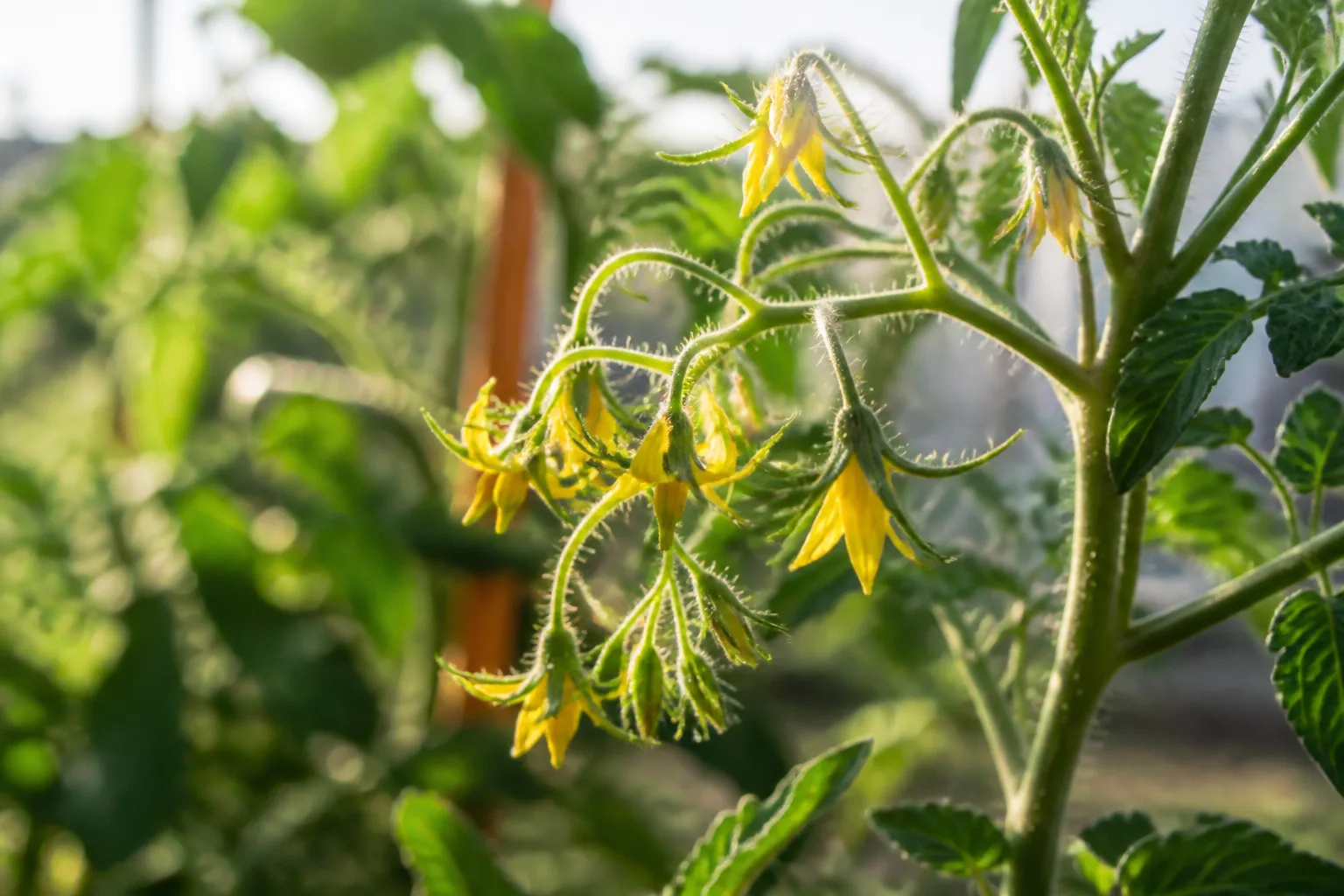
Pollination can fail when flowers are exposed to extreme heat, high humidity, very dry air, or still air in a sheltered greenhouse. Before hand-pollinating, fix the larger stress if you can. A vibrating flower in nonviable pollen will not become a tomato simply because it was tapped.
Hand-pollinate gently when conditions are calm
On a dry morning or late morning when flowers are open, gently tap the support stake or flick the flower truss so the blossoms vibrate. You can also touch the back of an open flower with a clean fingertip or use a small electric toothbrush against the support—not jammed into the flower. Repeat every day or two while flowers are open, then watch for the flower base to remain attached and begin swelling.
Hand pollination is most useful for greenhouse tomatoes, balcony plants sheltered from wind, or a garden with few active pollinators. It is not a cure for a plant with no flowers, a root system in saturated soil, or a week of 100°F weather. Avoid spraying insecticide on open flowers, and do not buy or release pollinators as a quick fix without understanding the care, legal, and ecological responsibilities involved.
Keep a stressed plant productive while you wait
Support the vines with a cage, trellis, or stake so leaves can stay off the soil and the plant does not spend energy flopping across a hot bed. Remove only dead, diseased, or badly damaged leaves. Selective pruning can improve airflow, but stripping a healthy tomato bare can reduce photosynthesis and expose fruit to sunscald.
Be especially cautious with determinate tomatoes. They have a more compact growth habit and a concentrated crop, so heavy pruning can remove productive branches. Indeterminate varieties keep extending and flowering along the vine, but they still need support and enough leaf area to fill fruit. If a lower cluster already holds a heavy crop, reduce stress elsewhere rather than expecting every later flower to set at the same rate.
Match the variety to your growing season
Variety choice cannot fix poor care, but it can make the difference between a short heat window that produces fruit and a season in which every flower drops. In hot climates, look for locally recommended cultivars described as heat-tolerant or reliable in your region. Small-fruited and early varieties often have a better chance of setting and ripening during a short favorable period than very large beefsteaks, though performance still depends on the specific cultivar and seed source.
Read the label for days to maturity, determinate or indeterminate habit, and disease-resistance codes. Treat “heat tolerant” as a comparative advantage, not immunity. The best choice is the one that reaches flowering before your worst heat, has enough time to ripen before frost or seasonal decline, and matches the space and support you can provide.
Use this 10-minute diagnosis sequence
If the plant is all leaves and no fruit, take a photo and inspect it in this order:
- Count the flowers. No flowers means start with light, temperature, water, and fertilizer. Flowers that drop means check heat, night temperatures, humidity, and pollination.
- Check the last seven days of weather. Note unusually hot days, warm nights, cold nights, strong wind, and heavy rain.
- Feel the soil several inches down. If it is dry, water deeply. If it is soggy, stop watering and inspect drainage and roots before feeding.
- Look at the light pattern. Count direct-sun hours where the leaves actually sit, not the hours the garden receives sun on the other side of a wall.
- Review fertilizer history. If you fed weekly or used a high-nitrogen product, pause and arrange a soil test rather than adding another nutrient.
- Inspect stems and lower leaves. Healthy green stems and a few blemishes suggest a care issue; collapsing stems, dark lesions, widespread leaf drop, or persistent wilt raise the urgency of disease or root diagnosis.
Know when disease or root failure changes the plan
A leafy plant can be salvageable, but persistent wilt after the soil is adequately moist is not normal heat stress by default. Brown, brittle stems; dark cankers near the soil line; rapidly spreading leaf spots; a foul or mushy root system; and widespread yellowing followed by leaf drop are signs to stop focusing on pollination alone.
Remove severely diseased material from the garden, avoid moving wet foliage between plants, and use your local extension diagnostic service when the pattern is unclear. Do not treat a bacterial or fungal problem with random fertilizer. Likewise, do not keep a plant with a failing root system simply because it is green at the top; a replacement plant may produce more fruit than a month spent trying to revive damaged roots.
What not to do when tomatoes are not fruiting
Do not fertilize every time you see a new leaf. Do not apply phosphorus or calcium without a reason from a soil test or a diagnosed deficiency. Do not water shallowly every day and assume the roots are hydrated, and do not flood a dry bed so aggressively that roots sit in airless mud.
Do not prune healthy leaves just to make the plant look less leafy. Do not move a shaded container straight into all-day blazing sun. Do not expect hand-pollination to overcome heat-damaged pollen, and do not spray insecticides onto open blossoms when the real problem is a weather window.
Finally, do not judge the plant by one missed week. Tomato fruit set is seasonal. A plant that remains green, rooted, and supported can resume flowering after temperatures moderate; a plant that is losing its canopy or showing stem and root failure is on a different trajectory.
How long recovery should take
There is no universal countdown because the plant first has to make a new flower and then successfully set it. After correcting watering or stopping excess fertilizer, look for stronger new growth and fresh flowers over the next couple of weeks. After a heat wave, the useful recovery signal is a new flower truss that stays attached as nighttime temperatures improve.
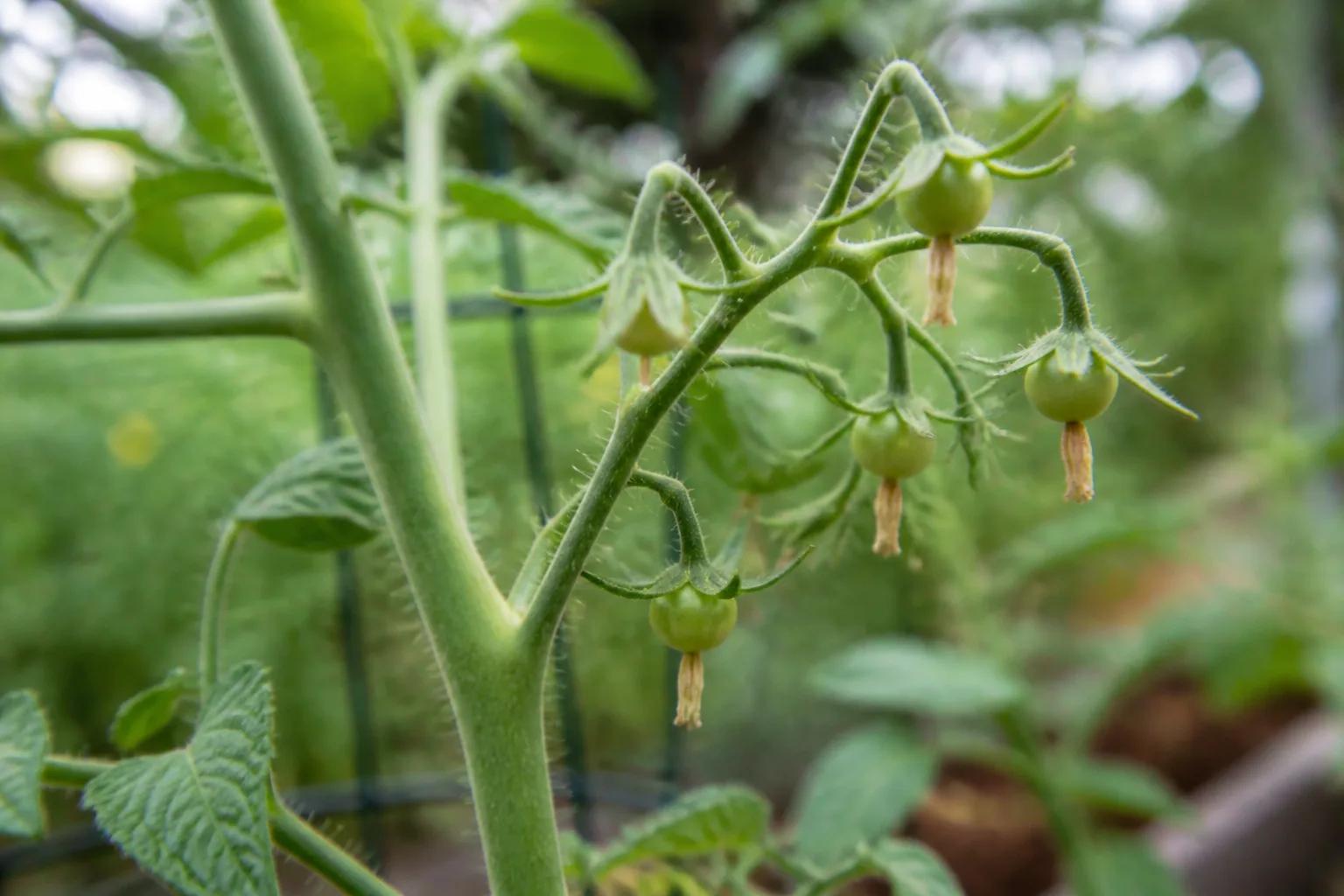
Once a flower is pollinated, the small ovary at its base should remain attached and begin swelling instead of drying and dropping. That observation is more useful than counting leaves. If several rounds of flowers fail after the weather improves and soil moisture, light, and nutrition are reasonable, return to the diagnosis sequence and move disease, root problems, cultivar mismatch, or excessive shade higher on the list.
Conclusion
A tomato plant with lots of leaves is not automatically a lost cause. Start by deciding whether it has no flowers or flowers that are dropping, then correct the most likely blocker: extreme temperature, inadequate direct light, inconsistent root-zone moisture, excess nitrogen, or poor pollen movement.
Keep the response measured. Deeply water dry soil, improve drainage in wet soil, pause unneeded fertilizer, protect flowers from weather extremes, and use gentle vibration when a sheltered plant needs help. If the stems stay green and the roots are sound, cooler weather and steadier care may bring a new round of fruit; if the plant is collapsing, diseased, or root-damaged, replacing it is often the more productive choice.



