How to Get Rid of Scale on Plants Safely
Learn how to get rid of scale on plants: confirm live insects, isolate, remove, time crawler treatments, protect pollinators, and prevent a rebound.
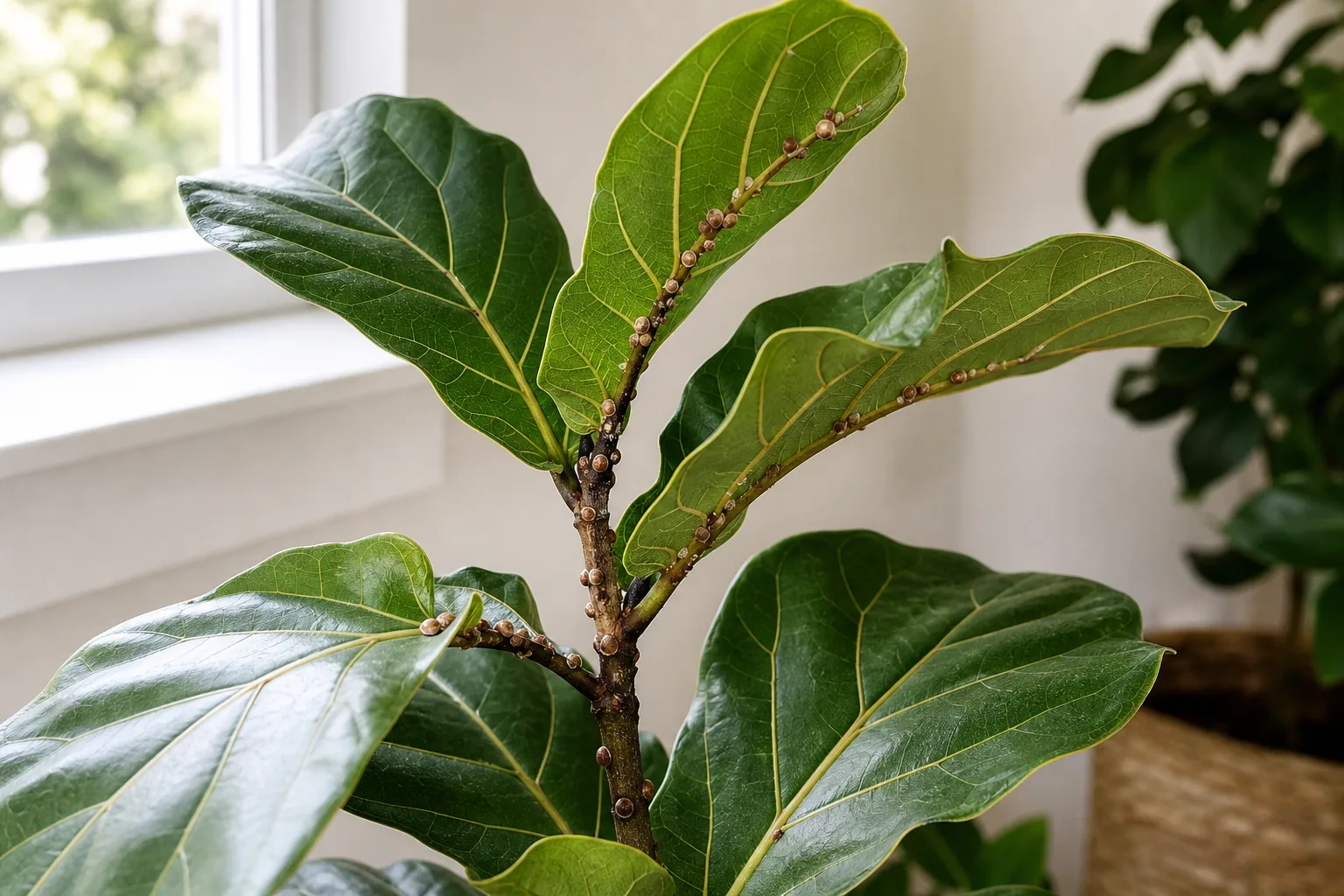
Scale is easiest to beat when you stop treating the visible bump as the whole problem. Those bumps are usually the protected feeding stage; the vulnerable stage is the tiny crawler that moves before settling. A practical plan is: isolate the plant, confirm that the bumps are live scale, remove what you can, choose a labeled treatment that fits the plant and setting, repeat it, and judge success by new evidence rather than by whether old shells have fallen off.
The distinction matters because scale on a potted orchid is not the same job as scale on a mature citrus tree. Indoors, you have no rain or natural predators to help and must manage spray exposure. Outdoors, you need to preserve parasitoid wasps and lady beetles, avoid spraying flowers, and time treatment to the local crawler window. The steps below cover both situations without pretending that one homemade mixture fixes every infestation.
Scale Insects: What You’re Actually Looking At
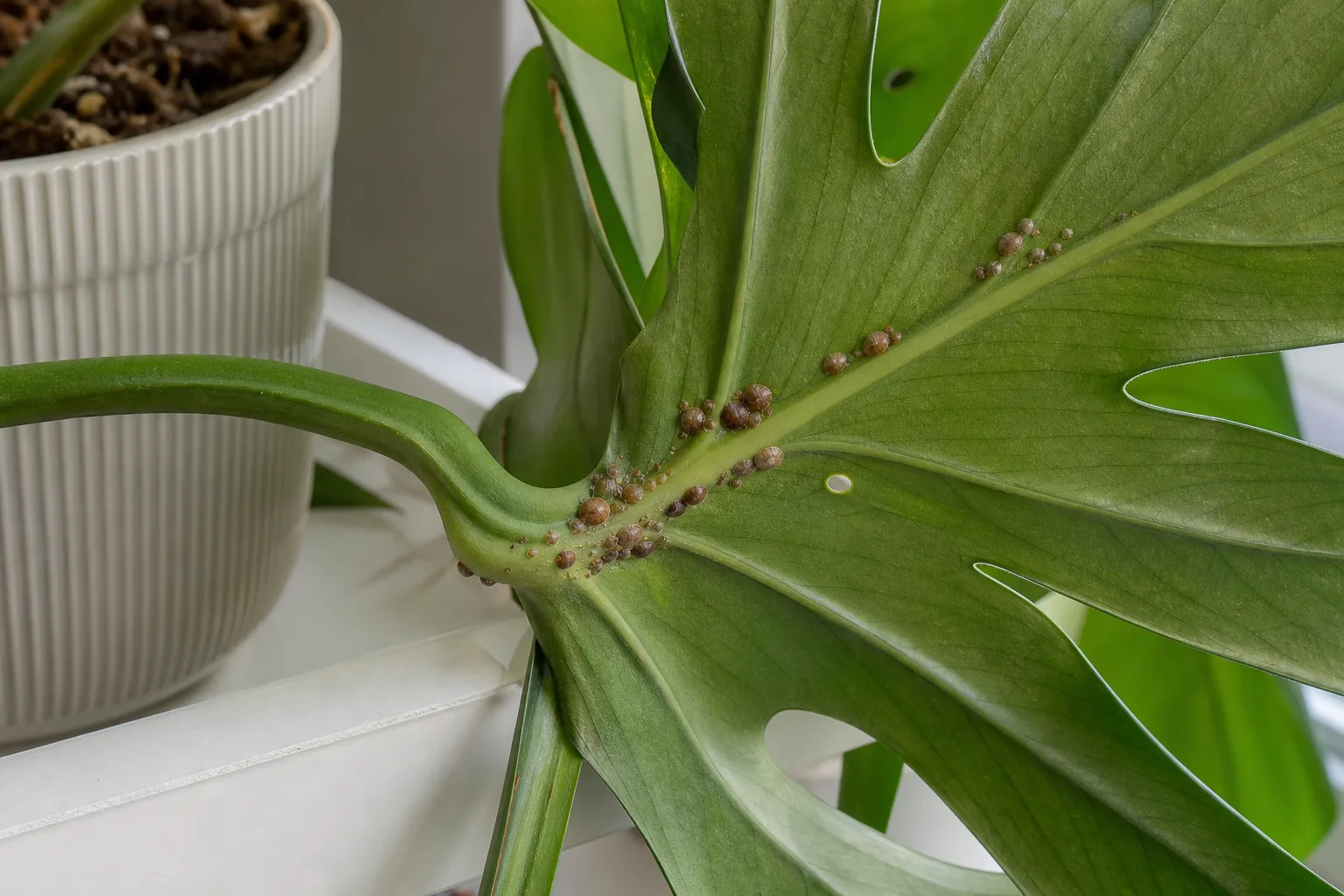
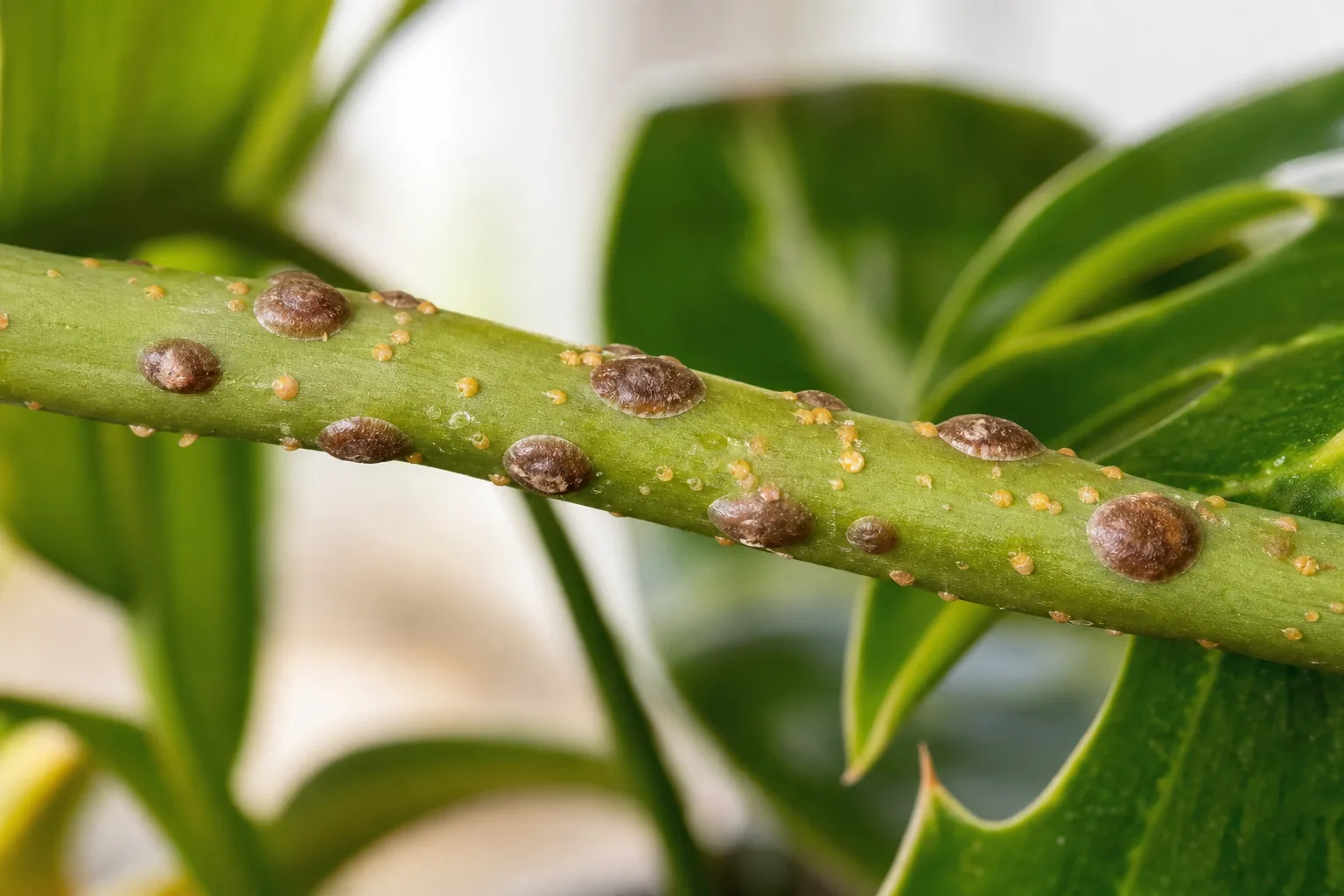
Scale insects are sap-feeding insects that attach to leaves, midribs, stems, twigs, branches, or bark. Adults often look like brown, tan, gray, white, or amber bumps rather than insects because their bodies are hidden beneath a waxy covering. They spend most of their lives in one place, while newly hatched nymphs—called crawlers—have legs and move short distances before settling.
The Garden Design guide to identifying and controlling scale notes that scale can be round, elongated, irregular, or bark-colored, which explains why a quick glance is unreliable. Look at the plant with side lighting and a hand lens if possible. Clusters along veins, leaf axils, stem joints, and rough bark deserve closer inspection, especially when the plant is losing vigor for no obvious watering reason.
Soft Scale vs Armored Scale
The first useful split is between soft scale and armored scale. Soft scales have a waxy covering that is part of the insect’s body. They usually feed from the plant’s phloem and excrete honeydew, a sugary waste that makes leaves, pots, windowsills, or patio furniture sticky. Honeydew can support black sooty mold and attract ants.
Armored scales have a separate, shield-like cover over the body. They typically feed from plant cells rather than drawing directly from the phloem, so they do not produce honeydew. They are often flatter and better camouflaged, and their feeding can create yellow or brown halos, premature leaf drop, twig dieback, or dead branches. NC State Extension’s scale guidance explains why this distinction changes management: an insecticide that works on soft scale is not automatically a good answer for armored scale.
| Clue | Soft scale | Armored scale |
|---|---|---|
| Shape | Rounded or dome-shaped; often larger | Flat, circular, oval, or oystershell-like |
| Cover | Waxy layer attached to the body | Separate shield over the insect |
| Honeydew | Usually present | Usually absent |
| Common clues | Sticky leaves, ants, sooty mold | Leaf spotting, thinning, dieback |
| Treatment emphasis | Remove adults, target crawlers, use label-directed oil or systemic options when justified | Target crawlers, consider horticultural oil, and identify the host and scale species |
Scale vs Mealybugs, Aphids, and Plant Bumps
Mealybugs are close relatives, but their white, segmented bodies and cottony wax remain visibly insect-like. Aphids are soft-bodied and mobile, often clustered on tender tips and new growth. A scale bump is usually firm, flat or domed, and immobile once established. If you see fine webbing without stickiness, investigate spider mites instead; if you see only a smooth scar or a stable bud-like growth, it may not be an insect at all.
Do not diagnose from color alone. A white scale can resemble fungus, a brown scale can resemble bark, and sooty mold can look like a leaf disease. The next step is a live/dead check, not a stronger spray.
Check Whether the Scale Is Alive
Dead scale covers often remain attached for weeks or months. That is why a treated plant can still look infested even when the population is falling. Scrape one or two suspicious bumps gently with a fingernail, the edge of a plastic card, or a soft toothbrush. A live scale is likely to leave a moist yellow, orange, or greenish smear when crushed on white paper; a dead one is dry, brittle, or hollow.
Use this test sparingly on delicate bark and never gouge the stem. If the cover lifts and you find a soft body beneath it, the insect was alive. If the plant has honeydew, fresh sooty mold, or ants returning to the same spot, assume live honeydew-producing pests remain even if many shells look dry.
For outdoor plants, place a strip of double-sided sticky tape around a suspect twig or shake a branch over white paper. Crawlers look like moving dust, not miniature versions of the adult. Purdue Extension’s scale factsheet describes crawlers as the mobile stage that spreads by walking or wind, so finding them tells you more about treatment timing than counting old shells.
Start With Isolation and a Whole-Plant Inspection
Move an infested houseplant away from its neighbors immediately. A gap of a few feet is useful, but a separate room is better when the infestation is active, ants are present, or the plant will be handled repeatedly. Crawlers can move short distances, ride on clothing or tools, and transfer when leaves touch.
Before cleaning, photograph the plant and inspect every surface: leaf undersides, midribs, petioles, leaf axils, stem joints, the trunk base, and the pot rim. Check nearby plants even if they look healthy. Mark the date and note whether you found soft scale clues, armored scale clues, or an uncertain look-alike. That simple record prevents you from declaring victory because you remembered only the most visible leaf.
For outdoor plants, inspect neighboring shrubs and the plant’s canopy before pruning. A patch on one low twig may be local; scale scattered through the canopy may require crawler monitoring or professional identification. Do not move cuttings, tools, or potted plants from the affected area to a clean bed until they have been cleaned.
Choose the Treatment by Infestation Size and Plant Setting
Use the least complicated method that can reach the pest. A few scale insects on a valuable houseplant call for precise removal. A heavily infested branch on a fast-growing shrub may be better removed. A large tree with widespread armored scale needs timing, coverage, and sometimes an extension recommendation rather than a kitchen recipe.
Light Houseplant Infestation: Manual Removal
For a small colony, place the plant in a bright, washable work area and remove each visible scale with a cotton swab or soft toothbrush. A cotton swab lightly moistened with 70% or lower isopropyl alcohol can help with direct contact, but it is not a license to drench the plant. Test one inconspicuous leaf or stem first and wait at least a day for spotting or scorch before continuing.
Wipe the tool between passes and drop removed insects into a sealed bag or a container of soapy water. Follow the stem all the way to its base; stopping after the upper leaves look clean is a common reason a plant seems to “get scale again.” Wash sturdy foliage with lukewarm water afterward, protecting the potting mix from being flooded.
Outdoor Twig or Branch Infestation: Prune
Pruning is often the cleanest answer when scale is concentrated on a few flexible twigs or branch tips. Use sharp, clean pruners and cut into visibly healthy tissue below the colony, while preserving the plant’s natural shape. Do not remove a major limb from a tree merely because you see a few bumps; identify the species or ask an arborist or local extension office when structural cuts are involved.
Seal pruned material in a bag and put it in the trash or the approved yard-waste stream for your area. Do not compost scale-covered cuttings in a home pile that will be used around plants. Cleaning the cuttings out of the garden removes eggs, crawlers, and adult females before they can repopulate the remaining canopy.
Use Water, Alcohol, Soap, and Oil Correctly
Each tool has a narrow job. Water dislodges exposed crawlers and washes honeydew. Alcohol is a spot treatment for accessible insects. Insecticidal soap works only when it wets a susceptible insect. Horticultural oil can coat some settled stages as well as crawlers, but plant sensitivity, temperature, moisture stress, and label directions determine whether it is appropriate.
When Rubbing Alcohol Is Useful
Alcohol is most useful on a small, indoor infestation where you can touch every insect. It can kill a scale by direct contact, but it does not reach insects hidden under bark crevices or shield covers that you never wet. It also evaporates quickly, so a whole-plant “spray and forget” approach is unreliable and may damage foliage.
Use a swab rather than a spray bottle, keep the liquid off soil and furniture, and spot-test fuzzy, waxy, thin, or newly unfurled leaves. Never mix alcohol with bleach, cleaners, or other pesticides. If you need repeated whole-plant coverage, choose a commercial product labeled for that plant and use rather than improvising a stronger alcohol mixture.
Why Insecticidal Soap Needs Repeat Coverage
Commercial insecticidal soap is a contact product. It can kill exposed crawlers and soft-bodied insects when the spray thoroughly wets them, but it has little residual action after drying and does not reliably penetrate a mature armored shield. Spray the leaf undersides, petioles, stem joints, and sheltered canopy—not just the top surfaces where the plant looks dirty.
Use a product labeled for the crop or ornamental and follow its dilution, interval, and re-entry directions. Household dish detergent is not a dependable substitute: detergents can strip the leaf surface and cause injury, especially when used repeatedly or in heat. Treat a small test area first, keep the plant hydrated but not waterlogged, and avoid spraying in hot sun or onto drought-stressed foliage.
Horticultural Oil and Neem Have Different Jobs
Horticultural oil works primarily by coating and suffocating insects it reaches. It can be useful against crawlers and some settled scale, but only with complete coverage and a formulation labeled for the plant and setting. Outdoor oil is commonly used during dormancy or a delayed dormant period on suitable woody plants; growing-season use requires closer attention to temperature, tender growth, drought stress, and oil-sensitive species.
Neem products are not all interchangeable. Some contain clarified hydrophobic neem oil, while others contain azadirachtin, an insect-growth-regulating compound. Read the active ingredient and use directions instead of assuming that “natural” means risk-free. The Melinda Myers guidance on scale on indoor citrus emphasizes scraping first, choosing an indoor-labeled oil, protecting nearby furnishings, and following the label even for organic products.
Never combine oil and soap unless the product label specifically allows it. Do not spray oil on flowers that bees are visiting, and do not use an outdoor pesticide indoors simply because the active ingredient sounds familiar. If the label does not list your plant, site, and pest, choose another method or ask a local professional.
Time Treatment Around the Crawler Stage
The crawler stage is the control window because the young insects are mobile and have not yet built their full protective covering. The timing is not one universal calendar date. It varies by species, host plant, climate, and whether the scale produces one or several generations.
Start scouting before the expected window. Look for moving crawlers on white paper, use sticky tape on a suspect branch, or follow a local extension forecast for the identified scale. Outdoor treatments applied too early may miss the hatch; applied too late, they may mostly contact protected adults. Indoors, warm conditions can allow generations to overlap, so repeated inspection matters more than a seasonal date.
Plan for more than one application when using a contact treatment. The interval must come from the label, the plant’s tolerance, and the pest’s life cycle; do not compress applications because a few old bumps remain. Reinspect before each treatment and stop escalating if live counts are falling and new growth is clean.
Outdoor Scale Control: Protect the Whole Garden
Start outdoors with plant stress and natural enemies. Scale populations often build on plants already stressed by drought, root problems, physical injury, poor planting, or temperature extremes. Water deeply when the soil is dry, correct drainage problems, avoid unnecessary high-nitrogen feeding, and do not prune a plant into additional stress during heat or drought.
Look for evidence that predators are already working. Circular exit holes in scale covers can indicate parasitoid wasps; chewed or opened covers can indicate predation. UGA Cooperative Extension’s scale guidance recommends scouting, cultural control, pruning of concentrated infestations, and careful use of reduced-risk materials while recognizing that crawler timing differs among species.
If treatment is justified, use pruning, a properly labeled horticultural oil, insecticidal soap, or another product recommended for the exact pest and plant. Avoid broad-spectrum sprays during bloom and never spray when bees or other pollinators are actively foraging. Systemic insecticides may be used in some landscapes, but they can affect pollinators and may perform differently depending on whether the scale feeds on leaves, twigs, or vascular tissue. Identify the pest and consult the label or a local extension specialist before choosing one.
Ants deserve attention when soft scale is present. They harvest honeydew and may protect the scale colony from natural enemies. Remove branches touching fences or buildings, clean sticky residue from hard surfaces, and use a properly placed ant-management method only where it cannot expose children, pets, or beneficial insects. Killing ants without stopping the honeydew source does not solve the scale problem.
Indoor Scale Control: A Repeatable Four-Week Plan
Houseplant scale is a persistence problem, not a single-afternoon cleaning job. A simple cycle keeps the work bounded:
- Day 0: Isolate the plant, inspect the collection, remove visible scale, prune disposable heavily infested tissue, and wipe or rinse the foliage.
- Days 1–3: Recheck axils, stems, leaf undersides, and pot rims. Record live insects rather than counting dry shells.
- Week 1: Apply the chosen, plant-labeled contact treatment if live insects remain. Cover the places you inspected, not only the leaves that face you.
- Weeks 2 and 3: Reinspect and repeat only at the label interval. Clean tools, wash hands, and keep the plant isolated.
- Week 4: Compare new growth, stickiness, live counts, and nearby plants with your Day 0 notes. Continue isolation until the plant passes repeated inspections.
This is a monitoring framework, not a promise that every infestation ends in four weeks. Armored scale on a woody plant, scale hidden in a crown, or a plant with overlapping generations may need longer. If the plant is in a closed room, ventilate during and after treatment, keep children and pets away from wet foliage, and store concentrates securely.
Clean Honeydew and Sooty Mold After Killing Scale
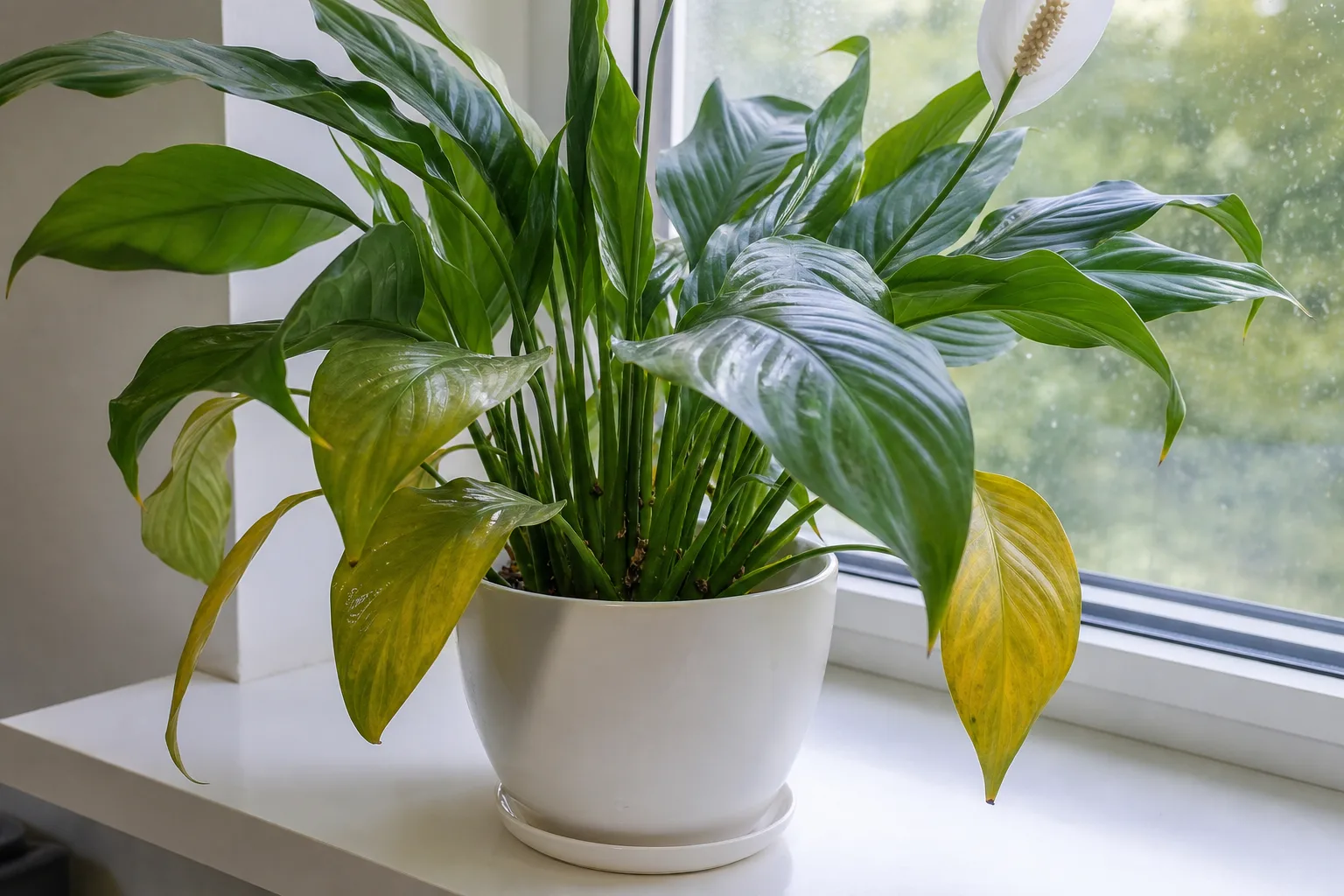
Sooty mold is usually growing on honeydew, not invading healthy leaf tissue as a primary disease. It may remain after the scale is dead because the black film is still physically stuck to the leaf. Wipe sturdy leaves with a soft damp cloth or rinse them gently, taking care not to saturate the potting mix.
If a freshly cleaned leaf becomes sticky again, look for live soft scale, aphids, mealybugs, or whiteflies. If the film stops returning but old leaves remain stained, the treatment may be working. New growth, stopped honeydew production, and a falling live-insect count are better success signals than a perfectly clean old leaf.
Do not use a fungicide as your first response to sooty mold when the cause is honeydew. Remove the sap-feeding source, then clean what remains. The University of Wisconsin’s scale overview also stresses that dead scales do not necessarily fall away, so inspect and crush a sample instead of judging by appearance alone.
Prevent Scale From Returning
Prevention begins with a better arrival routine. Inspect new plants under bright light before they join a collection, including the undersides of leaves and the stem base. Keep newcomers separate for several weeks and inspect them repeatedly; a plant can look clean while eggs or crawlers are hidden in joints.
Outdoors, choose plants suited to the site and protect them from chronic drought, waterlogged roots, physical damage, and excessive nitrogen. During routine watering, turn over leaves and scan the newest stems of plants that have had scale before. A five-minute check catches a colony while swabbing or pruning is still realistic.
Clean pruners after working on an infested plant, wash reusable cloths, and do not share untreated cuttings. Keep foliage from touching an infested neighbor, and clean honeydew from surfaces so ants have less reason to patrol the canopy. Where local conditions support them, preserve flowering habitat and avoid unnecessary broad-spectrum insecticides so natural enemies can do part of the work.
The goal is not a sterile garden with zero insects. A few stable scale insects on a vigorous outdoor plant may be tolerable when predators are present and the plant shows no damage. Treat when the population is increasing, the plant is losing vigor, honeydew is creating a nuisance, or the pest is spreading to valuable plants.
When to Discard a Plant or Call for Help
Discarding is reasonable when a small, inexpensive houseplant is covered on nearly every stem and leaf, when repeated correctly labeled treatments do not reduce live insects, or when keeping it isolated would put a valuable collection at risk. Seal the plant and potting material before disposal; do not place infested material in a compost pile you rely on for future potting or garden use.
Try to save a cherished plant when it has healthy roots, a few clean growing points, and an infestation you can physically reach. Propagation can preserve clean tissue, but take cuttings only after inspecting them closely and keep them quarantined. Do not take cuttings from visibly infested sections and assume they are clean.
Ask a local extension office, certified arborist, or qualified nursery professional for help when scale is widespread on a mature tree, branches are dying, the pest identity is unclear, or you are considering a systemic insecticide. Large-canopy coverage, flowering timing, local pesticide rules, and structural pruning are not good places to guess.
Conclusion
To get rid of scale on plants, begin with evidence: confirm the bumps are insects, determine whether they are alive, and separate soft scale clues from armored scale clues. Isolate houseplants, remove light infestations by hand, prune concentrated outdoor colonies, and choose only a treatment labeled for the plant, site, and pest.
The part most people skip is follow-up. Scale survives when a treatment misses crawlers, hidden stems, or a neighboring plant, and dead shells can make a successful treatment look unsuccessful. Keep scouting, repeat contact treatments only as directed, protect natural enemies outdoors, and judge recovery by stopped honeydew, fewer live insects, and clean new growth.