Four O'Clock Plant: Care & Growing Guide
Grow four o'clock plants with practical guidance on light, soil, watering, seeds, tubers, containers, pruning, blooms, safety, and winter storage.
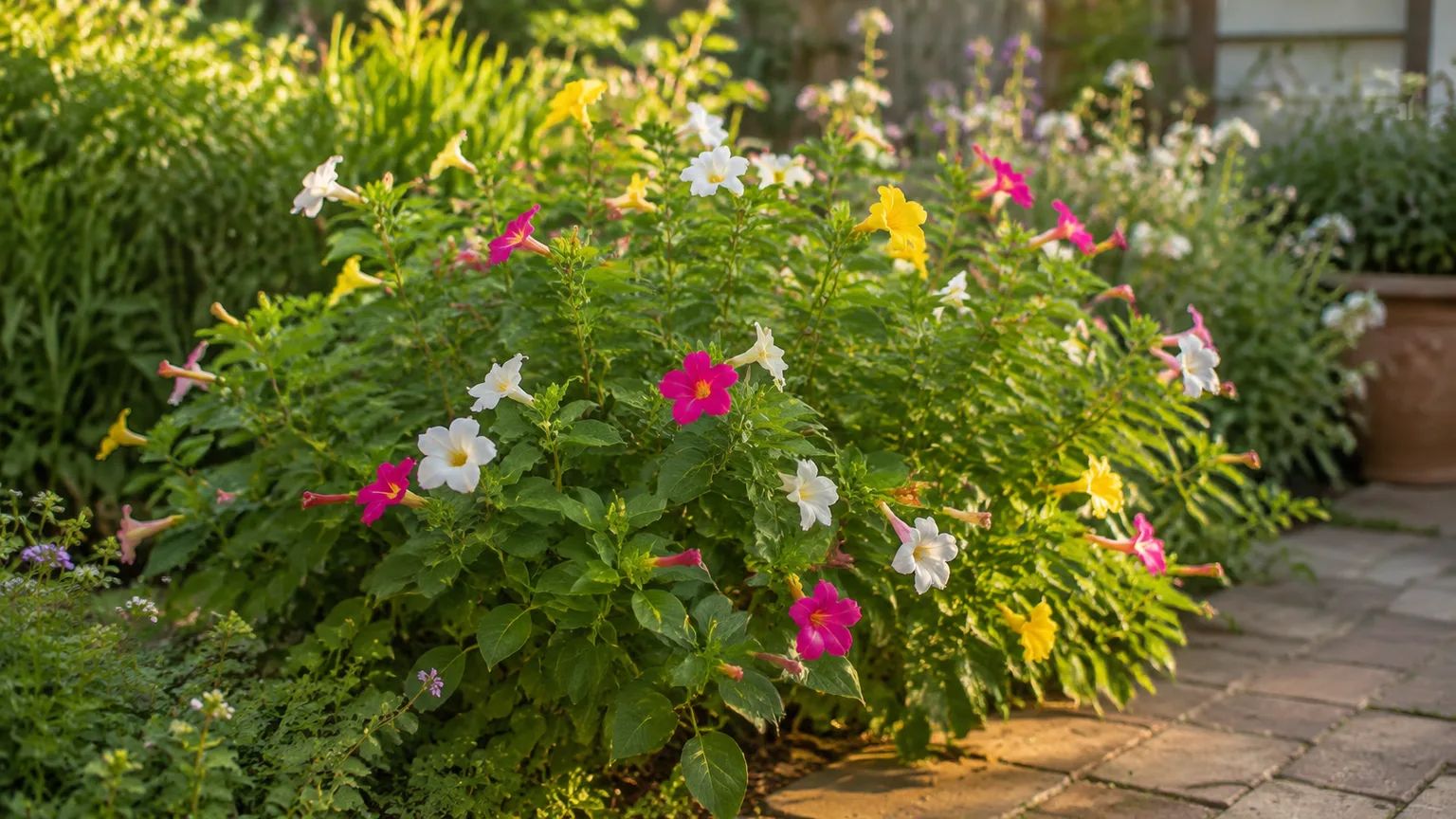
Four o’clocks (Mirabilis jalapa), also called Marvel of Peru or garden jalap, are warm-season plants with a built-in evening schedule. Their trumpet-shaped flowers open late in the day, release fragrance through the night, and fade by morning. The plant is especially rewarding beside a patio or path where you are outside after work, but it needs more space and more warmth than its old-fashioned appearance suggests.
The most useful way to grow it is to plan around three facts: it is frost-tender, it makes a substantial storage root in climates where it can persist, and its stems can sprawl or break. Give it sun, moderate and consistent moisture, room to branch, and a plan for the first frost. The result is a long summer-to-fall show rather than a plant that quietly disappears in the back of a border.
Is a Four O’Clock Plant Right for Your Garden?
Choose four o’clocks if you want late-day flowers, fragrance, and a fast-filling plant for a sunny border or large pot. They can reach roughly 2 to 3 feet in height and width, and their branching habit is more relaxed than upright. That makes them good for softening a fence, edging a patio, or filling a gap, but a poor choice for a narrow formal bed where every stem must stay vertical.
In USDA Zones 9 to 11, M. jalapa can behave as a tender perennial, dying back after frost and returning from its storage root. In cooler regions, treat it as an annual unless you dig and store the root or bring a container indoors. The distinction matters: a plant that is “late” in a short summer may simply need an earlier start, while one exposed to a hard freeze is not likely to recover above ground. Wisconsin Extension describes it as a tender perennial commonly grown as an annual in temperate climates, while Utah State Extension distinguishes introduced M. jalapa from native four-o’clock species and notes its preference for consistent moisture.
Four O’Clock Plant Profile: What to Expect
The plant belongs to the Nyctaginaceae family and has opposite, smooth-edged, oval to egg-shaped leaves on many-branched green stems. Flowers are usually pink, red, magenta, yellow, white, or combinations of those colors; a single plant can produce more than one shade, and some flowers are streaked or marbled. The flower is trumpet-like and about 2 inches long, but botanically the showy colored structure is the calyx rather than a separate set of petals. Wisconsin Horticulture’s profile documents the species’ flower form, colors, evening opening, and seed production.
The clock is a useful expectation, not a guarantee to the minute. Flowers commonly open in late afternoon or evening, earlier on a rainy or heavily overcast day, and later during intense heat. Sphinx moths and other night-flying pollinators are important visitors; hummingbirds and butterflies may also use the flowers. A practical implication follows: the plant belongs where you can see and smell it at the end of the day, not where its morning foliage is the only part you notice.
Choose the Site Before You Plant
Light and placement
Start with the sunniest realistic location. Six or more hours of direct sun is a strong baseline for compact growth and abundant flowering. Four o’clocks tolerate some partial shade, but too little light usually means longer, weaker stems and fewer flowers. In a very hot climate, bright morning sun with some late-afternoon relief can work if the soil does not dry rapidly; in a shorter or cooler season, full sun is the safer choice.
Plant near a patio, walkway, or frequently used sitting area so the late flowers and fragrance earn their space. Leave an access lane around the plant for watering and cutting back. Avoid a spot that funnels strong wind through the stems: Wisconsin Extension notes that the weak, brittle stems can break and flop, especially as the plant becomes large.
Soil, drainage, and spacing
Use soil that holds some moisture but still drains freely. A humus-rich loam is ideal, but a four o’clock does not require perfect soil; improving compacted ground with finished compost and opening a planting area wider than the root ball is usually more useful than chasing a precise pH. The exception is a site that stays wet after rain. Do not “fix” that with a small pocket of loose soil in heavy clay, because the amended hole can collect water like a bowl.
Test drainage by filling the planting hole with water, letting it drain, and filling it again. If the second fill remains for many hours, plant in a raised area or choose a container rather than keeping a moisture-loving, frost-tender root in stagnant soil. Space plants about 12 to 24 inches apart depending on cultivar and whether you want a loose mass or an airy row; allow closer to 3 feet of total width for a full plant. Mulch the root zone after planting, but keep mulch away from the stems.
Start Four O’Clocks From Seed
Seed is the most economical way to grow several plants, and it lets you enjoy the surprising range of flower colors. It also gives you the least predictable result if you collected seed from a mixed-color planting: seedlings may not match the parent exactly. Buy named seed when a specific color or pattern matters, and collect only mature, dry seed from a plant you are prepared to grow again.
Direct sowing outdoors
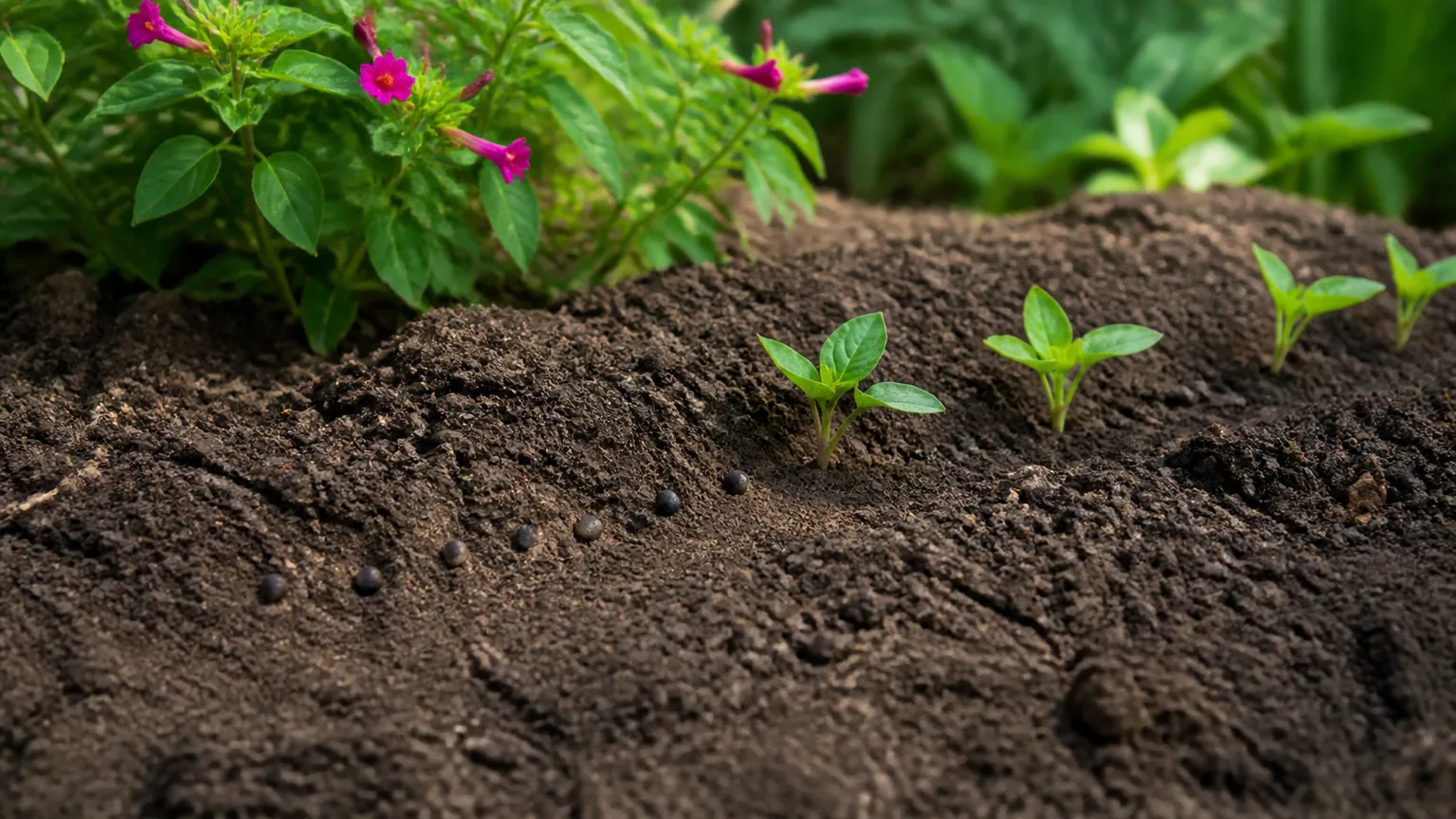
Wait until the danger of frost has passed and the soil is warming, roughly when you would plant tomatoes in your area. Soak the hard-coated seeds overnight, then sow them about 1/4 inch deep in prepared soil. Wisconsin Extension reports germination in about 5 to 7 days at 68 to 70°F, but outdoor emergence depends on soil warmth, moisture, and weather rather than the calendar alone.
Keep the seedbed evenly moist while seedlings emerge. “Evenly moist” means the upper layer does not turn dusty and hydrophobic, not that the row is saturated. Once seedlings are easy to handle, thin or transplant them so each plant has room to branch. Crowding can look productive at first, but it creates weak stems, poorer airflow, and competition for water later in summer.
Starting seeds indoors
For a short growing season, start seeds indoors six to eight weeks before the expected last frost. Use a clean seed-starting mix, cover the seeds only about 1/4 inch, and provide bright light as soon as shoots appear. Warmth matters more than fertilizer at this stage; soggy mix and dim light produce more problems than a seedling that is a little hungry.
Move plants outdoors only after frost danger has passed. Harden them off over roughly a week by increasing exposure to outdoor light and wind gradually. Set them out when the seedlings are sturdy and the root ball holds together. If indoor plants become tall and thin, move the light closer or add a gentle fan; do not bury a long stem deeply as you might with a tomato, because four-o’clock stems are brittle and the plant’s storage root is the part meant to persist.
Plant Tubers, Storage Roots, and Nursery Transplants
A saved root gives you a head start and often a larger plant sooner than seed. In warm regions, the root remains underground through winter. In cold regions, lift it after the foliage has been damaged by frost but before the ground freezes hard. Cut the top growth back, lift carefully, shake off loose soil, and let the surface dry before storing it in a cool, dark, frost-free place. Gardenia recommends a dry winter mulch in regions where roots remain in the ground but winter wet is a concern; its Mirabilis jalapa growing profile also describes digging and storing the roots like dahlias.
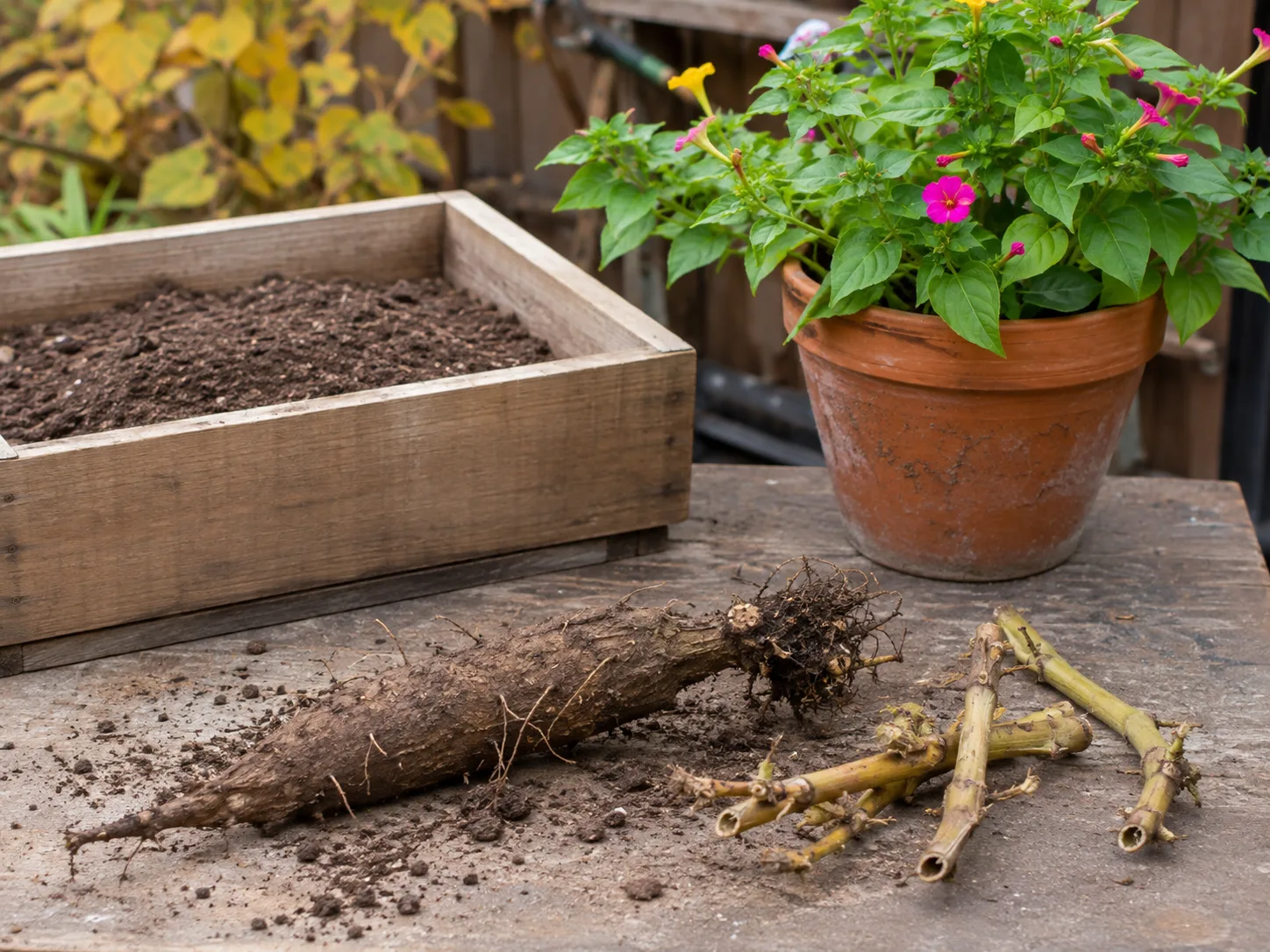
Store roots dry rather than sealed in wet compost. A breathable box with barely damp-free packing material is safer than a plastic bag that traps condensation. Check once or twice during winter. Discard a root that is soft, leaking, or strongly foul-smelling; do not plant questionable tissue beside healthy stock. In spring, wait until the soil is warm and frost is no longer a realistic threat, then plant the crown or upper root area shallowly enough that new shoots can reach the surface. Avoid repeatedly disturbing a root that has not started growing.
For a nursery transplant, water the pot first, slide the root ball out without tearing it, and plant at the same depth it was growing. Water deeply once, then let the surface begin to dry before watering again. A transplant may pause briefly after moving outdoors, but new leaves and firm stems are better recovery signs than flower count during the first week.
Water and Feed for Growth Without Flop
Water by weather and root-zone feel
Four o’clocks prefer consistent moisture, particularly while establishing and during hot weather, but their roots still need oxygen. Check the soil several inches down with a finger or hand trowel. If the upper 1 to 2 inches are dry and the deeper root zone is only slightly moist, water slowly at the base until the soil is wet through. If the soil is cool and wet below the surface, wait; adding more water will not correct heat stress or improve flowering.
Plants in containers dry faster because the root volume is smaller and warmer. Water thoroughly when the mix is drying, allow excess to drain, and empty any saucer that stays full. Increase checks during heat, wind, and active flowering rather than following a fixed eight-day schedule. Mulch in the ground reduces evaporation, but it cannot compensate for a poorly drained bed.
Fertilize for flowers, not just foliage
Begin with reasonably fertile soil and a modest spring feeding. If growth is pale or weak after the plant is established, use a balanced fertilizer according to the product label and water it in. Rich soil may need little more than that. Monthly feeding is not automatically better: excess nitrogen can produce a leafy, floppy plant with fewer flowers and more watering demand.
Base any correction on a soil test when poor growth persists. Do not add phosphorus simply because a plant is not flowering; low light, cold nights, drought, root damage, crowding, or the flowers opening after you stop looking are all more plausible possibilities in many gardens.
Grow Four O’Clocks in Containers
Containers are useful when your native soil drains badly or when you need to move the plant before winter. Choose a broad, heavy pot with drainage holes and enough volume for a mature 2- to 3-foot plant. A small nursery pot may support a young transplant, but it will dry and tip once the stems branch. A barrel-sized container is more stable than a narrow, tall pot.
Use a quality potting mix that drains while holding moderate moisture; do not fill the container with dense garden soil. Position it in full sun, water when the mix begins to dry, and rotate it occasionally if growth leans toward the light. Grouping the container near a wall can reduce wind, but do not place it where reflected heat turns the potting mix into a hot, dry pocket.
The container also changes winter decisions. In a cold climate, let the plant enter dormancy, cut it back, and move the pot to a cool, dark, frost-free place only after the mix has drained and the top growth has died back. A potted root is more exposed to cold than one insulated by garden soil, so a container left outdoors may freeze even when an in-ground root would survive.
Prune, Support, and Manage the Evening Display
Pinch the growing tip of a young plant once it has several sets of leaves. This encourages branching and can reduce the single-stem, top-heavy look. If an established plant becomes ragged after dry weather or loses stems to wind, cut it back by about one-third after correcting watering. Remove broken stems cleanly rather than leaving torn tissue that catches water.
Use a discreet ring or short stakes early if the site is windy. Supporting a large plant after it has sprawled is harder and more conspicuous. Do not tie every stem tightly; loose support lets the plant keep its natural shape and reduces rubbing damage.
Deadheading is optional. Four o’clock flowers are produced in large numbers, and removing every spent bloom is tedious. If you want to prevent seed, remove faded flowers and developing dark fruits before they mature. If you want volunteers or seed for next year, leave a few fruits to ripen, then collect them carefully and label the packet with the year and flower color.
Overwinter and Propagate Four O’Clocks
Cuttings, tubers, and next-season choices
Seed is usually the simplest propagation method, while saved roots are the fastest route to a large early plant. Cuttings can work when taken from healthy, nonflowering growth, but they need more attention to moisture and rooting than seed. Take a 3- to 6-inch piece below a leaf node, remove the lower leaves, and place it in a small pot of moist, well-drained medium. Keep it in bright indirect light until new growth suggests roots have formed, then harden it off before moving it outside.
Root division is another option when a mature clump has multiple growing points. Divide only a healthy, actively growing rootstock with a clean tool, and make sure each piece has a viable crown or bud. Because the roots are substantial and the stems are brittle, division is best done deliberately in spring rather than rushed during autumn cleanup. A respected practical account from Hartley Botanic Magazine emphasizes the advantage of overwintering an established root for earlier, longer flowering, but a first-year plant from seed remains a perfectly good choice where the season is long.
Troubleshoot Foliage, Flowers, and Stems
Start with the root zone and the light before reaching for a spray. Curling leaves with sticky residue or clusters of small insects suggest aphids; rinse them from the plant with a firm stream of water and reassess before using any product. Keep the foliage dry overnight when possible, remove badly affected leaves, and improve airflow if rust or leaf spots recur. Do not compost diseased material if the problem is spreading through the bed.
For a plant that is not blooming, use this order: confirm it receives enough direct sun, check for drought or constantly wet soil, look for excessive nitrogen, and then check the clock. On very hot afternoons, flowers may open later than expected, so inspect the plant after sunset. A newly transplanted or heavily pruned plant may also need time to rebuild flowering shoots. If it is tall and leafy with no buds, light and nitrogen are more likely than a missing “bloom booster.”
For flopping, thin crowding, add early support, and check whether the plant is reaching for shade. For yellow leaves, distinguish one or two old leaves from a whole plant turning pale. Generalized yellowing with wet soil points toward root stress; yellowing with bone-dry soil points toward water stress. Correct the condition gradually rather than alternating a severe drought with a flood.
Handle Seeds and Plants Safely
Treat all parts of Mirabilis jalapa as poisonous if ingested, especially the seeds and roots. Utah State University Extension states that all parts of Marvel of Peru are poisonous, and Wisconsin Extension also warns that roots and seeds are toxic and that contact dermatitis is possible in susceptible people. Keep seed packets, fallen fruits, and lifted roots away from children and pets; wear gloves when handling roots if your skin reacts easily, and wash hands before touching food.
The plant’s ability to drop many seeds is both a feature and a management issue. If you garden where it is known to naturalize, remove unwanted seedlings while they are small and do not allow mature fruits to fall in paths, play areas, or compost. Records from the USGS Plants of Louisiana database show the introduced plant cultivated and occasionally escaping in that region, which is a reminder to check local guidance rather than assuming every climate treats it the same way.
Conclusion
Grow four o’clocks in a warm, bright site with room for a 2- to 3-foot plant, soil that stays moderately moist but drains, and enough support to handle brittle branching stems. Start seeds after frost, start them indoors when the season is short, or plant a saved storage root once the ground warms. Water by checking the soil and weather, feed modestly, and judge flowering after the evening bloom window rather than only at midday.
At the end of the season, decide what matters most: leave a well-behaved plant to reseed, collect a small number of mature seeds, or lift the root for an earlier display next year. With that simple seasonal plan—and careful handling of the poisonous seeds and roots—Mirabilis jalapa can turn an ordinary patio edge into a fragrant evening garden.