How to Get Rid of Silverfish for Good
Learn how to get rid of silverfish with a moisture-first plan: identify the pest, use traps, protect paper, handle diatomaceous earth safely, and seal entry points.
Silverfish are easy to dismiss as a one-off nuisance because they disappear so quickly. But repeated sightings usually point to a combination of moisture, food, shelter, and a route through a crack or wall void—not a problem that a single spray can solve.
The practical fix is a sequence: confirm the insect, monitor the room, repair or reduce moisture, remove easy food and hiding places, seal the route, and use a labeled treatment only when the evidence justifies it. That order is safer, more informative, and more likely to stop silverfish from returning than spraying first.
The short answer: fix moisture before reaching for spray
To get rid of silverfish, start by finding the damp or humid condition that supports them. Use sticky traps to learn where activity is concentrated, protect paper and dry food, vacuum edges and storage areas, repair leaks or condensation, and seal cracks after the area is dry. Chemical control is a later step for persistent or heavy activity—not a replacement for moisture control.
The most useful first decision is not “Which product kills silverfish?” It is “What evidence do I have, and what condition is keeping them here?” Use this quick triage:
| What you notice | First move | Why it matters |
|---|---|---|
| One insect in a dry room and no damage | Photograph or trap it; inspect nearby edges | A stray insect does not justify treating the whole home |
| Repeated catches in a bathroom, basement, or laundry room | Check leaks, condensation, ventilation, and humidity | Water is often the condition that makes control fail |
| Scales, cast skins, or fresh damage around books and boxes | Isolate the storage and move it into a dry, inspectable area | You need to protect the material while locating the harborages |
| Activity beside a baseboard, cabinet, or pipe opening | Monitor both sides of the gap; repair moisture, then seal | The visible insect may be traveling from a hidden void |
| No decline after two or three weeks of repairs and monitoring | Look for an untreated area or arrange an inspection | Persistent activity usually means the source remains active |
Confirm silverfish before you treat the room
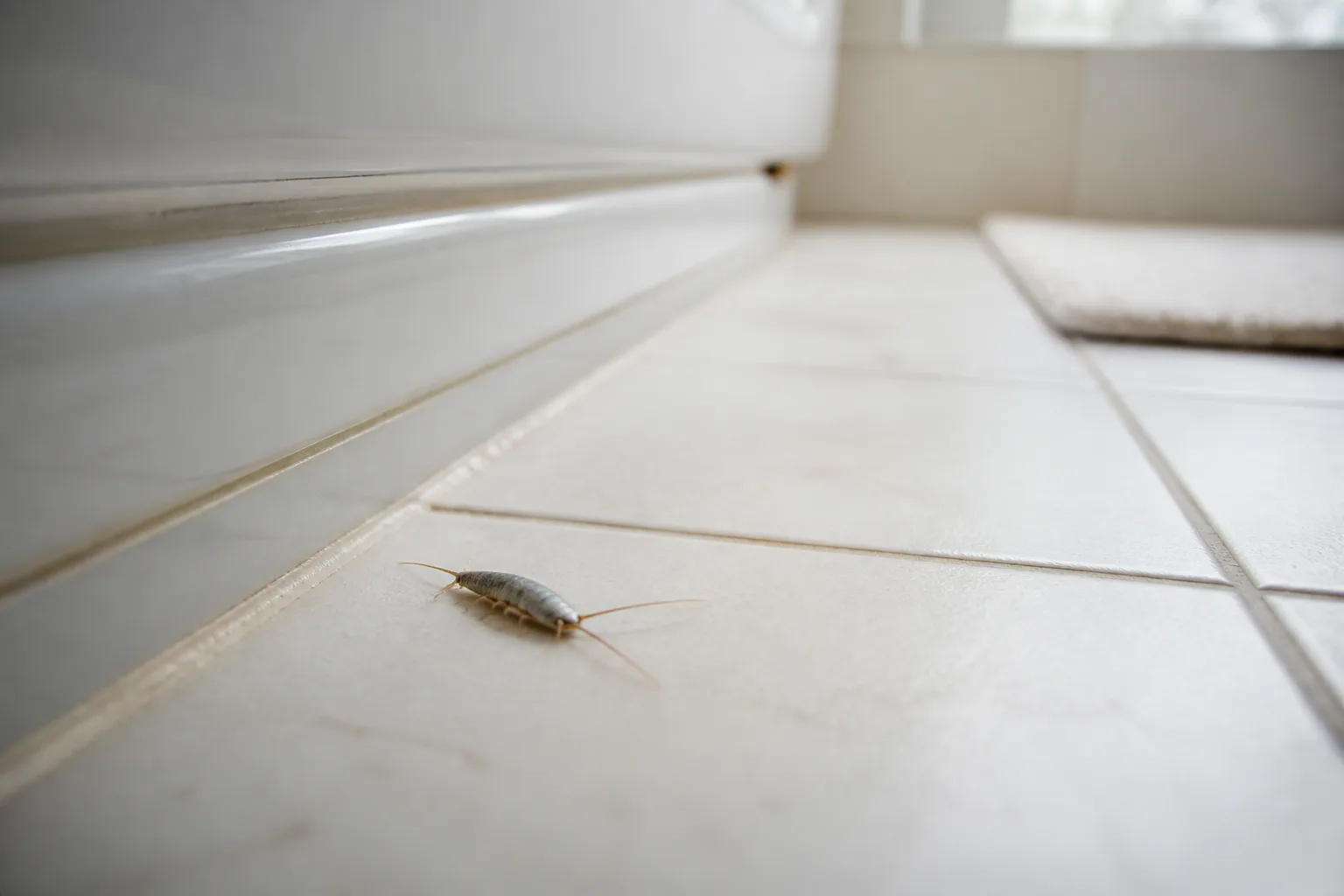
The common silverfish, Lepisma saccharina, is a small, wingless insect with a flattened, tapered body, two long antennae, and three tail-like filaments. Adults are usually shiny silver or pearly gray and about one-half inch long, although size varies. They move quickly, are mostly active at night, and can vanish into a narrow crack before you get a good look.
Penn State Extension describes silverfish and firebrats as nuisance bristletails that can damage cereals, books, papers, wallpaper, and other starchy materials. UC Integrated Pest Management adds a useful diagnostic clue: these insects have weak jaws, so they scrape paper surfaces and leave irregular grazing, scales, or fecal debris rather than clean, powerful bites.
Silverfish vs. firebrats and look-alikes
Firebrats are close relatives, but they are typically mottled gray or brown and prefer very hot sites such as furnaces, ovens, fireplaces, hot-water pipes, and attics. Silverfish are more often silver or pearl gray and associated with cooler, damp spaces such as basements, bathrooms, laundry rooms, closets, and book storage. Utah State University Extension summarizes the visual difference and recommends looking for moisture, paper, and warmth when identifying the likely harborage.
Booklice, carpet beetle larvae, cockroach nymphs, and even shed material from other pests can be mistaken for silverfish damage. If the insect is crushed, blurry, or seen only once, place a sticky monitor nearby or save a clear photograph before choosing a pesticide. Identification changes where you inspect and prevents you from adding chemical exposure to a problem you have not confirmed.
Signs of a real infestation instead of one stray insect
One silverfish in a sink or bathtub may have fallen in and become trapped. More persuasive evidence is a pattern: repeated nighttime sightings in the same room, catches on multiple nights, pale scales or cast skins beneath stored items, or irregular scraping on paper, book bindings, wallpaper, or starched fabric.
The location also matters. A silverfish in an otherwise dry upstairs room may be an accidental traveler; several near a damp basement wall, bathroom cabinet, laundry pipe, or crowded bookcase are more likely to reflect a nearby harborage. The goal is not to panic over one insect—it is to notice when the evidence is telling you to inspect deeper.
Use a 24-hour response sequence
When you see a silverfish, take a short evidence-gathering pass before moving furniture or spraying. The order below helps you avoid two common mistakes: sealing a wet cavity and treating a whole room without knowing where activity is occurring.
- Confirm the insect. Take a photo, save the specimen, or compare the body shape with an Extension identification guide.
- Place monitors. Put sticky traps along the nearest baseboard, beside stored paper, under the sink, and near the room’s most sheltered edge. Date them.
- Trace water. Look for dripping plumbing, condensation, damp cardboard, peeling paint, a musty cabinet, or a bathroom that stays wet long after use.
- Remove easy shelter. Lift cardboard off concrete, consolidate paper, vacuum dust from edges, and create a small inspection gap behind storage.
- Repair, then seal. Fix the moisture source first; once the area is dry, close the crack, pipe penetration, door gap, or trim opening that the monitors implicate.
This is an integrated pest management approach: begin with the lowest-risk change that addresses the pest’s conditions, then escalate if the evidence says it is necessary. Penn State Extension says complete control is difficult and works best when sanitation, dehumidification, habitat modification, and any needed insecticide are combined rather than used alone.
Start monitoring at edges and corners
Silverfish travel along protected edges while they forage, so a trap in the middle of a bright room is a poor diagnostic. Use commercial sticky traps labeled for crawling insects, or the small glass-jar style described by UC IPM: a textured outer surface helps the insect climb in, while the smooth inside makes escape difficult.
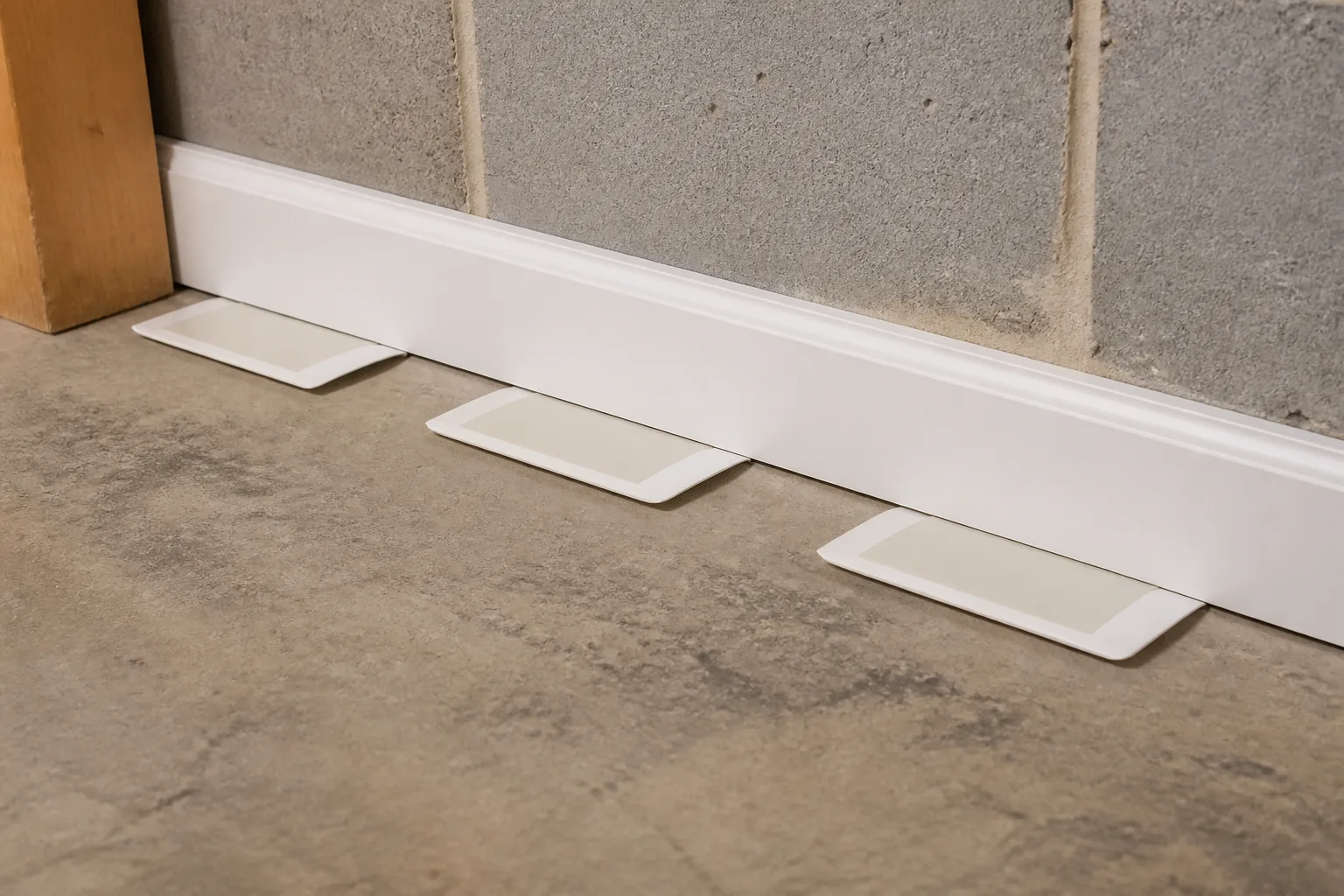
Keep monitors where children and pets cannot reach them, and record the room, exact placement, date, and number of catches. A trap is not proof that you have found the nest; silverfish can travel while searching for food. It is a map that tells you which edge, storage zone, or utility area deserves the next inspection.
Find and fix the moisture source
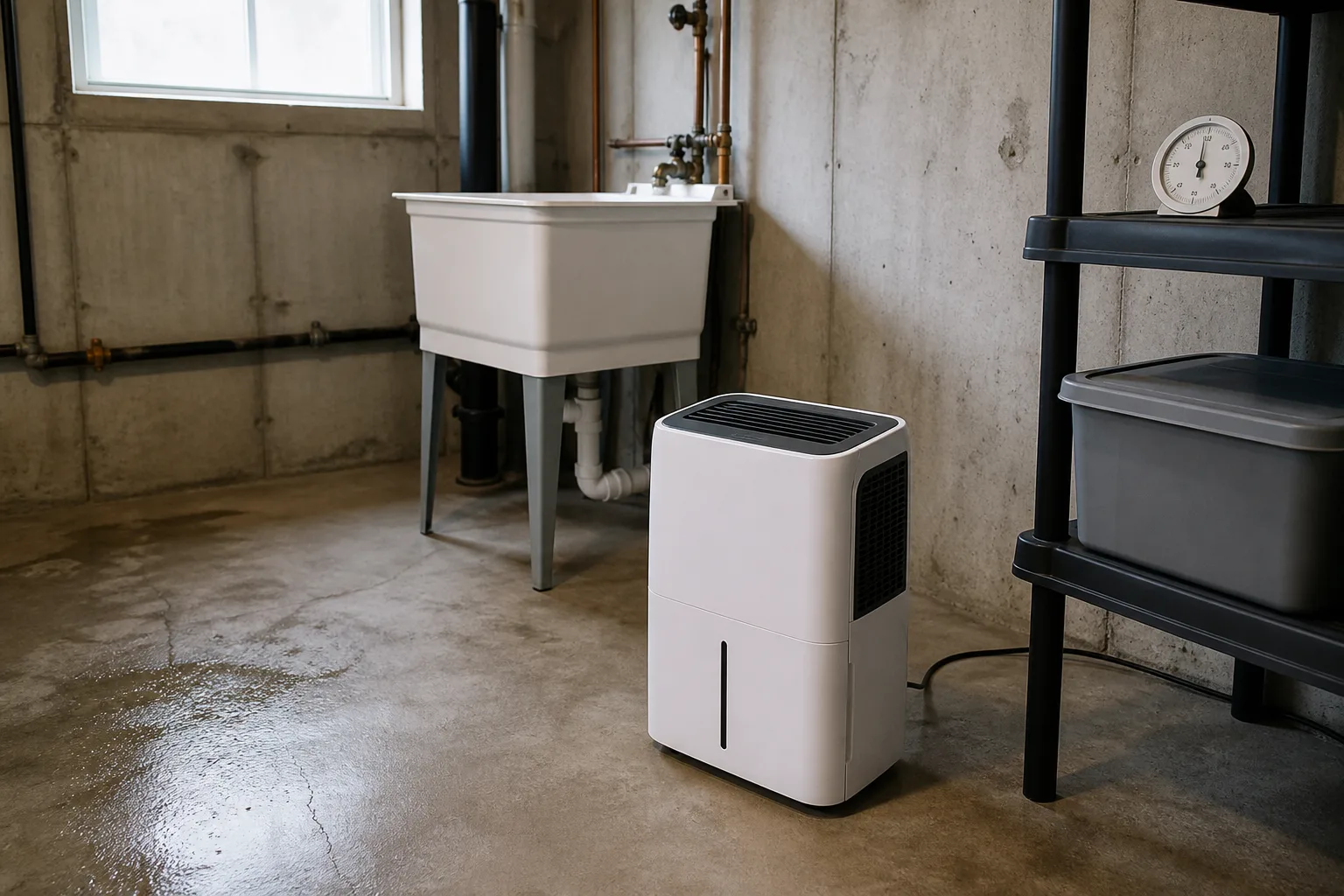
Check the simple causes first: a slow leak beneath a sink, a damp basement corner, a sweating pipe, a wet laundry-room floor, a bathroom fan that vents poorly, or cardboard that is holding moisture against a wall. A hygrometer can help you compare rooms, but a number is not a substitute for finding water that is entering or condensing.
Better Homes & Gardens uses below 60% relative humidity as a practical benchmark for making a home less favorable to silverfish. Treat that as a useful starting point, not a universal cure: a room can read acceptably for part of the day and still have a wet wall, plumbing leak, or sealed-up cavity that keeps the immediate hiding place humid.
Use a dehumidifier in a closed basement, garage, attic, or storage room when ventilation alone is not enough, and empty or drain it safely. Outside, check gutters, downspouts, foundation grading, and stacked materials that keep water against the building. If the wall, ceiling, or floor is visibly wet, soft, stained, or moldy, address the building repair rather than trying to dry the symptom indefinitely.
Remove food, shelter, and damp storage
Silverfish feed on more than books. UC IPM lists dry foods such as cereal, flour, pasta, and pet food, along with paper sizing, glue, book bindings, clothing starch, dust, debris, dead insects, and some fungi. That explains why a tidy bathroom can still support silverfish if a wall void is damp, and why a clean basement can still have activity around boxes and old papers.

Store dry foods, pet treats, and opened powders in tight-lidded containers. Move magazines, newspapers, books, and cardboard away from cold exterior walls and damp floors; for long-term storage, use clean sealable plastic containers only after the contents are completely dry. Leave enough space to inspect around the containers instead of packing them tightly into a dark corner.
Vacuum along baseboards, under shelving, around bookcases, beneath appliances, and behind furniture that has not moved for months. Dispose of the vacuum contents in a sealed bag if you are cleaning a concentrated area. Targeted decluttering is enough for a small problem—you do not need to empty a whole home because of one sighting.
Handle valuable paper as a material-preservation problem as well as a pest problem. Do not spray a book, photograph, document, or finished piece of furniture just because you find scales nearby; liquid, oil, and dust can cause more lasting damage than a few grazing marks. Isolate the item in a clean, dry container, keep it away from the suspected room, and consult a conservator or pest professional if the damage is extensive.
Storage changes also need a recheck. A plastic bin protects dry contents, but it can trap moisture if a damp blanket, box, or stack of papers goes inside. Let items dry completely, wipe the outside of containers, keep them off concrete, and leave a visible inspection path around the bin so a new leak or condensation problem is not hidden for months.
Choose traps that help you locate activity
Sticky traps are valuable because they both reduce a few roaming insects and show whether activity is shrinking. They are especially useful when silverfish are nocturnal or the suspected source is inside a wall, under a cabinet, or behind storage where you cannot inspect directly.
Avoid using a wet newspaper as a lure in a damp room. It may collect insects, but it also adds a new source of moisture and makes it harder to tell whether the room is improving. A commercial sticky monitor or a smooth-sided jar trap gives you evidence without deliberately increasing humidity.
Where to place and how to read traps
Place monitors at the intersection of the clues: along the wall near the sighting, beside a bookcase, under a sink, near a laundry-room pipe, at the basement perimeter, and beside the door or utility opening that might connect to another space. Do not scatter dozens randomly; a small, dated grid is easier to interpret.
Count catches every few days and note whether they are concentrated in one zone. If the catches move after you dry or declutter a room, follow the new edge rather than assuming the first trap was wrong. If catches stop while new paper damage appears, inspect the storage more closely and consider whether another pest is involved.
A trap that stays empty can still be useful when it is part of a wider pattern. Compare it with the other monitors, check whether it has been covered by dust or moved out of the travel edge, and look for fresh scales or damage. Do not use an empty trap as permission to skip a leak inspection; silverfish may be staying in a protected void rather than crossing the spot you chose.
For a larger home, label rooms instead of relying on memory. “Basement north wall” or “bathroom under-sink cabinet” tells you much more than “downstairs,” and it lets you compare the result of a repair with the result of a storage change. This simple log also gives a pest professional a useful starting map if DIY control stalls.
Seal routes only after the area is dry
Silverfish have flattened bodies and can use gaps under baseboards, behind door and window trim, around vents, and where plumbing or electrical conduits cross walls and floors. Seal those openings with a material appropriate to the gap: caulk for small stationary joints, spackle for interior surface cracks, expandable foam for suitable larger voids, and a door sweep or weather seal where light or air enters below a door.
Do not caulk over an active leak, wet drywall, condensation, or a musty cavity and call the job finished. Sealing a damp space can preserve the conditions you are trying to remove and can hide building damage. Dry and repair first, then close the route while keeping access to any inspection point that may need follow-up.
If traps catch silverfish on both sides of a shared wall, inspect the adjoining bathroom, kitchen, utility chase, or basement rather than sealing only the room where you saw the insect. In apartments and multi-unit buildings, a shared moisture or plumbing route may require the property manager or building professional.
What to know about diatomaceous earth
Diatomaceous earth, or DE, is a desiccant dust. In a dry, thin deposit that a labeled product allows for the site, it can damage an insect’s protective outer layer and contribute to dehydration. Penn State Extension and UC IPM both emphasize the same limitation: desiccant dusts work only while they remain dry, and wet deposits can cake and become much less useful.
When a dry, labeled dust can help
DE makes the most sense as a targeted supplement after the moisture problem is under control. A crack behind a baseboard, a dry wall void, or another inaccessible harborage may be a better target than an open floor, shelf, or room where people and pets will disturb the dust.
Use only a product with a current label that permits the pest, the location, and the application method. “Natural,” “food grade,” or “non-toxic” on a package does not remove the need to read the label or control airborne dust. Do not put DE on books, clothing, food-contact surfaces, or open floors simply because it is easy to sprinkle.
Safer handling and important limits
Treat DE as a pesticide, not as harmless flour. Gardening Know How notes that dust can irritate the nose and mouth during application and distinguishes household or garden-grade material from pool-filter products, which are processed differently. Follow the product label, avoid creating a cloud, keep people and pets out of the application area, and ventilate as directed.
Never assume a thick white line works better than a barely visible deposit. Thick layers can be disturbed, tracked, or avoided by insects. If the crack is damp, fix the moisture rather than repeatedly reapplying dust; if the label does not cover indoor use or the specific site, do not improvise.
Skip low-confidence repellents and foggers
Cedar blocks, essential-oil sprays, bay leaves, and other scented remedies may make a storage area smell different, but they are not a dependable answer to a silverfish population living in a damp wall void. At most, a scent can be an optional storage preference after you have corrected moisture and protected the material; it should not replace monitoring, repairs, or sealing.
Foggers are a poor shortcut for this pest. UC IPM does not recommend them for silverfish and firebrat infestations, and a fogger cannot reliably reach the narrow, protected cracks where silverfish spend the day. It also adds exposure and cleanup to a treatment that leaves the underlying water and shelter problem untouched.
Know when a labeled insecticide or professional is warranted
An occasional silverfish or a light infestation usually does not require insecticide. If traps show repeated activity after you have removed moisture, food, and shelter, a product labeled for silverfish or firebrats may be appropriate in the specific crack, crevice, or void listed on that label. Follow every instruction for ventilation, protective equipment, children, pets, food, drains, and re-entry.
Do not copy an active ingredient or application rate from an old article, a forum, or a product used outdoors. Labels and registrations change, and a product that is legal or suitable in one place may not be labeled for indoor use in another. UC IPM specifically cautions that many products have not been adequately tested for this use and that label limits control where dusts and sprays may be applied.
Call a licensed pest professional when paper damage is expanding, sightings continue after two or three weeks of moisture repair and monitoring, the suspected source is inside an inaccessible wall or ceiling, or you cannot confidently identify the insect. Ask for an inspection-led plan that identifies moisture and harborages as well as the treatment itself; a perimeter spray without diagnosis is not a lasting fix.
Track the trend for two to three weeks
Do not judge the plan by the first night. Silverfish can remain in protected locations after a room becomes drier, and a trap may catch stragglers while the population is declining. The useful measures are fewer catches, no fresh damage, and no new damp or sheltered area replacing the old one.
Keep a simple log with the room, trap location, catch count, moisture observation, and repair made. Recheck the original leak or condensation point, move a monitor toward the newest activity, and inspect both sides of a shared wall or utility chase if catches remain concentrated. If there is no downward trend after roughly two or three weeks, assume there is a second source or untreated harborage and escalate the inspection rather than automatically buying a stronger spray.
For the separate question of how silverfish enter through gaps, stored items, and plumbing routes, see our guide to how silverfish get inside your home. Use the two guides together: this page focuses on stopping an active problem, while the related guide helps trace the route before you close it.
Conclusion: make the room unlivable, not just sprayed
Silverfish control becomes much more manageable when you stop treating the insect as the whole problem. Confirm what you saw, monitor the edges, dry the source, remove easy food and shelter, protect paper, seal routes after repairs, and reserve labeled dusts, sprays, or professional treatment for evidence-based situations.
That sequence will not make every silverfish disappear overnight, but it gives you something better than a promise: a way to tell whether the home is becoming less suitable, where the remaining activity is coming from, and what to do next if it is not.