How to Get Rid of Spiders: 5 Fast, Safe Fixes
Learn how to get rid of spiders fast with low-contact cleanup, web removal, entry-point repairs, lighting changes, and safer pesticide decisions.
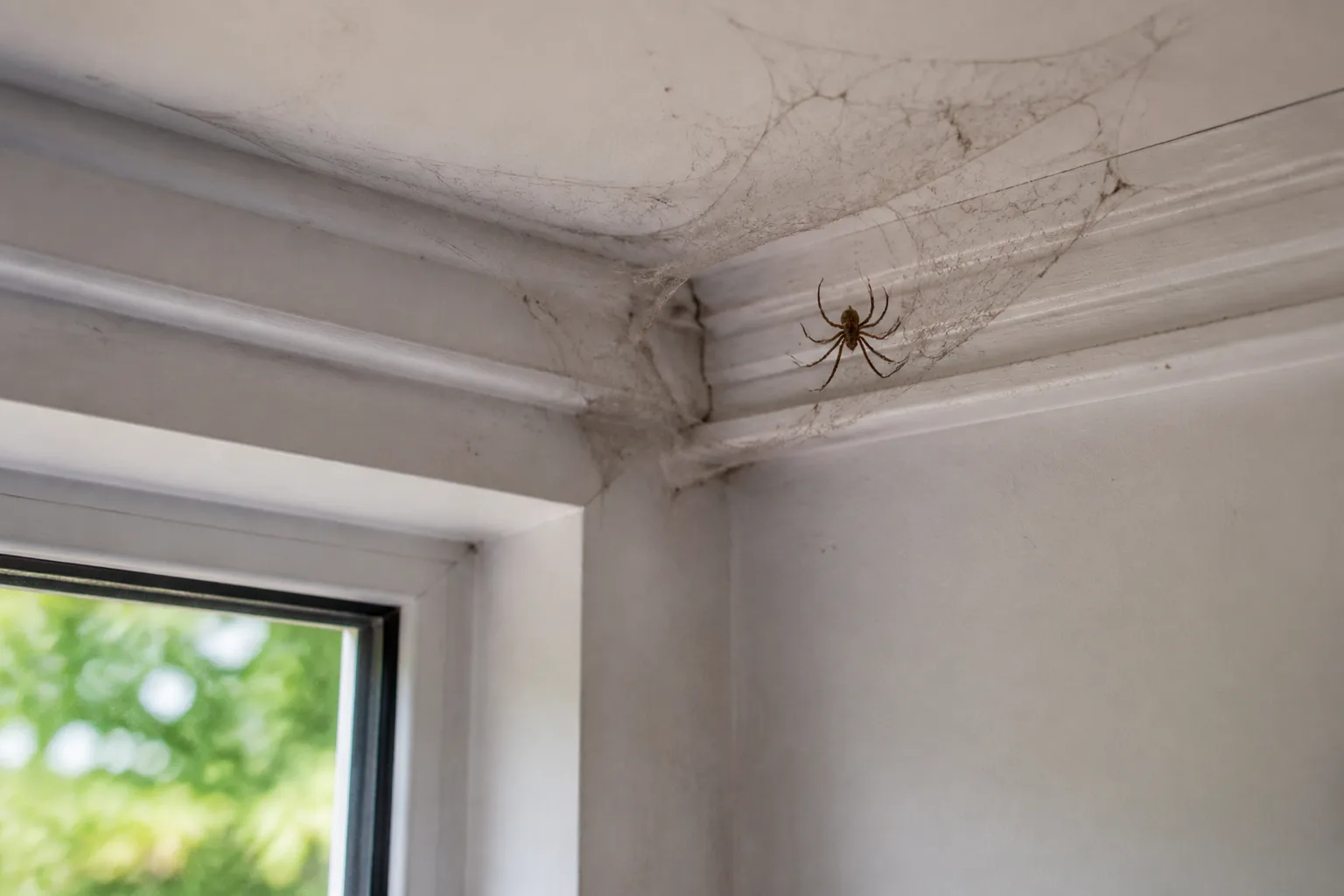
The fastest way to get rid of spiders is to handle the visible one safely, remove its web and egg sacs, then fix the condition that keeps attracting more. In most homes, that means a short vacuuming and decluttering pass followed by repairs to screens, door sweeps, cracks, lighting, or moisture sources—not a room-by-room fog of pesticide.
The goal is not to make your property biologically empty. Spiders eat flies, moths, gnats, mosquitoes, and other insects, and many outdoor species are useful predators. The goal is to keep webs and wandering spiders out of bedrooms, play areas, entryways, and other places where you do not want surprise contact, while leaving harmless garden activity where it causes no problem.
The fastest safe plan starts with identification
Before you reach into a dark corner, decide what kind of problem you actually have. A single spider near a window is a removal job; fresh webs appearing in the same corners every day are a habitat-and-entry problem; repeated egg sacs in several rooms deserve a more careful inspection.
First decide whether it is a one-off or a pattern
Count locations rather than individual spiders. Note whether the activity is limited to a basement, garage, porch, bathroom, or window, and look for a matching source nearby: flying insects at a lamp, moisture around a drain, clutter under stored items, or a gap beneath a door.
A useful rule is one spider, one safe removal; repeated spiders, inspect the room; repeated spiders plus egg sacs, inspect the structure and consider professional help. This prevents a common mistake: treating every sighting as proof of a large infestation when the actual cause is one open screen, one bright light, or one undisturbed storage corner.
The location also tells you how cautious to be. A spider crossing an open, bright wall is usually less concerning than one hidden under a woodpile, inside a rarely opened box, or behind stored shoes. Local species vary, and the Oregon Department of Agriculture notes that spider bites are uncommon and that identification should be based on the animal, not on a description of a bite (Oregon Department of Agriculture).
Web-builder or hunting spider?
Web architecture is more useful than color alone. A messy cobweb in a ceiling corner points toward a house spider; a long-legged tangle in a basement suggests a cellar spider; a flat sheet with a funnel-like retreat may be a grass or funnel weaver; a round wheel-shaped web is more likely an orb-weaver; and a fast spider with no web may be a wolf or jumping spider.
That distinction changes the fix. Web builders stay where the web catches prey, so removing silk and the anchor point matters. Hunting spiders wander in search of food or shelter, so sealing gaps and reducing indoor insects matter more than brushing one web from the ceiling.
Most spiders are not looking for people. UC Integrated Pest Management explains that many bite incidents happen when a spider is squeezed, trapped in clothing or bedding, or disturbed in a protected place, and recommends focusing control on webs and hiding places rather than automatically using pesticides (UC Integrated Pest Management). Treat an unknown spider as something to avoid touching, not something that needs a dramatic reaction.
Remove the spider and web without creating a second problem
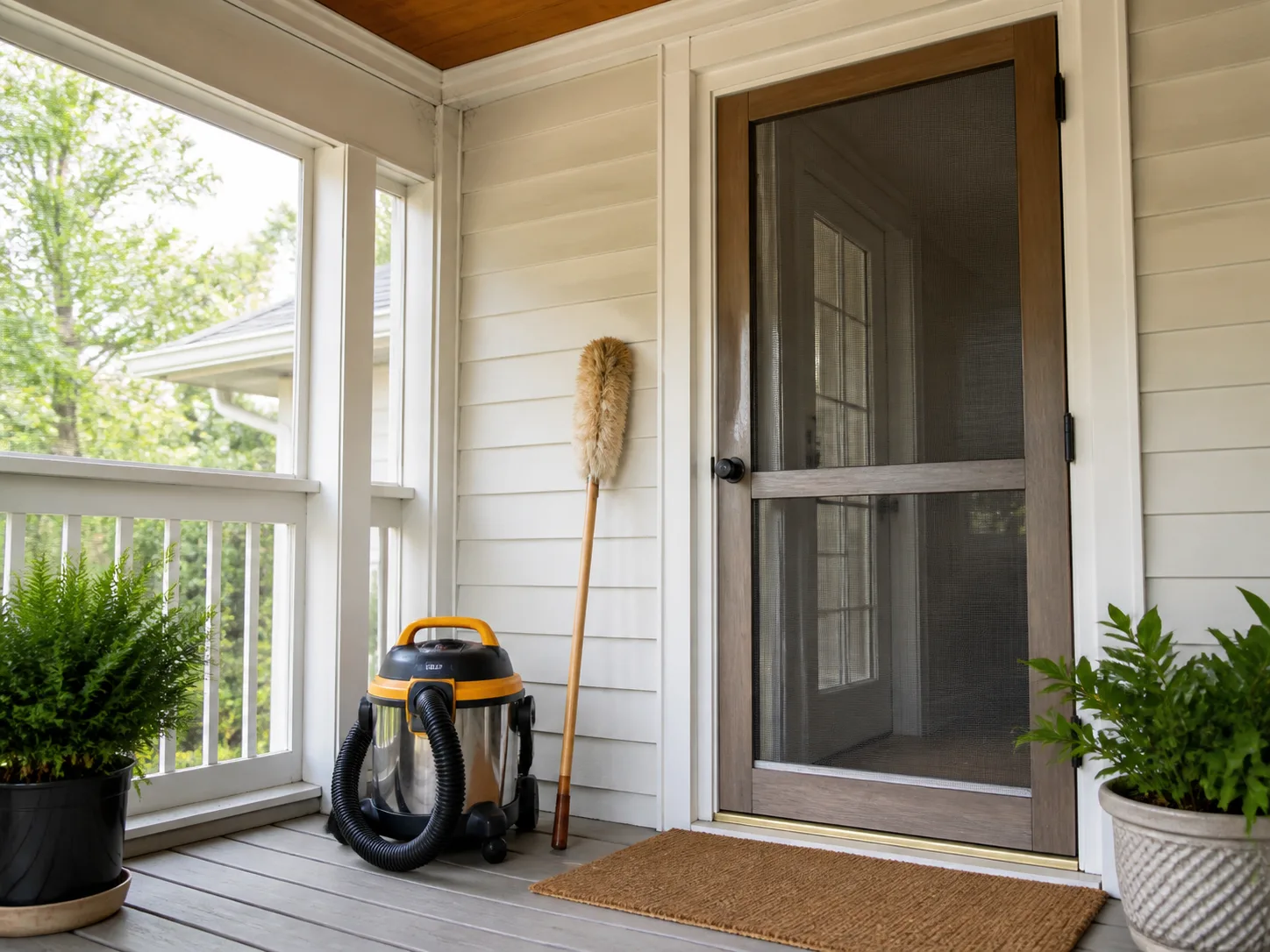
Your first cleanup should be low-contact and grounded. Gather a vacuum with a wand or hose extension, a soft duster, a flashlight, gloves, closed-toe shoes, and a sealable bag or container; work in daylight when possible and keep children and pets out of the area until you are finished.
Vacuum first; relocate only when safe
For a spider or web in a reachable indoor corner, use the vacuum wand instead of your hand. Move from the outside of the web toward its anchor, then vacuum the surrounding corner, baseboard, window track, and nearby ceiling line so you remove loose silk and insects that may be hiding there.
UC IPM specifically lists regular sweeping and vacuuming as an effective way to remove spiders and webs. It also notes that a spider vacuumed through a hose generally does not survive the tumbling action, which is why this method is more dependable than vacuuming a web and leaving the canister full inside the house (UC Integrated Pest Management). Empty a bagless canister outdoors into a closed trash bag, or replace and seal a vacuum bag.
If you prefer to release a harmless spider, put a clear cup or container over it, slide stiff paper underneath, and carry it outside to a sheltered location away from doors. Use that method only when the spider is clearly accessible and you can keep your hands away from it. Do not attempt a cup-and-card rescue from a high ceiling, behind stacked boxes, or near a spider you cannot reasonably identify.
Do not climb on a chair, dismantle a light fixture, or reach behind an appliance for one spider. A fall, an electrical contact, or a surprise bite is a poor trade for removing a nuisance animal. A professional is the better tool for high, enclosed, or structurally inaccessible spaces.
Check for egg sacs and stale webs
An adult spider is only one part of the problem. Look for pale, round, papery sacs in corners, behind stored items, beneath furniture, around window frames, and near the web’s anchor; use the vacuum extension or a long-handled duster rather than reaching into a nest with gloved fingers.
Old webs and active webs do not look identical. Dusty, sagging silk is often abandoned, while a cleaner, better-maintained web is more likely to be in use. Either can be removed if it is in a high-traffic area, but a fresh web tells you where the spider is finding a stable anchor and a reliable supply of prey.
After vacuuming, wipe the ledge or corner and check again in 24 to 48 hours. If the same spot is rebuilt, do not just repeat the removal forever; move to the five fixes below and look for a light, gap, damp area, or cluttered retreat that is making the spot profitable.
1. Cut the food-and-shelter loop indoors
Spiders stay where the house supplies two things: places to hide or build a web, and insects to eat. Dusting a visible cobweb helps, but reducing the insect traffic and clearing protected corners gives the cleanup a chance to last.
Start with quiet edges rather than the middle of the room. Vacuum behind and beneath furniture, clean window tracks, dust ceiling corners, check the space under basement stairs, and move stored boxes far enough from walls that you can inspect behind them. Use lidded plastic bins for long-term storage when cardboard boxes repeatedly become webbed.
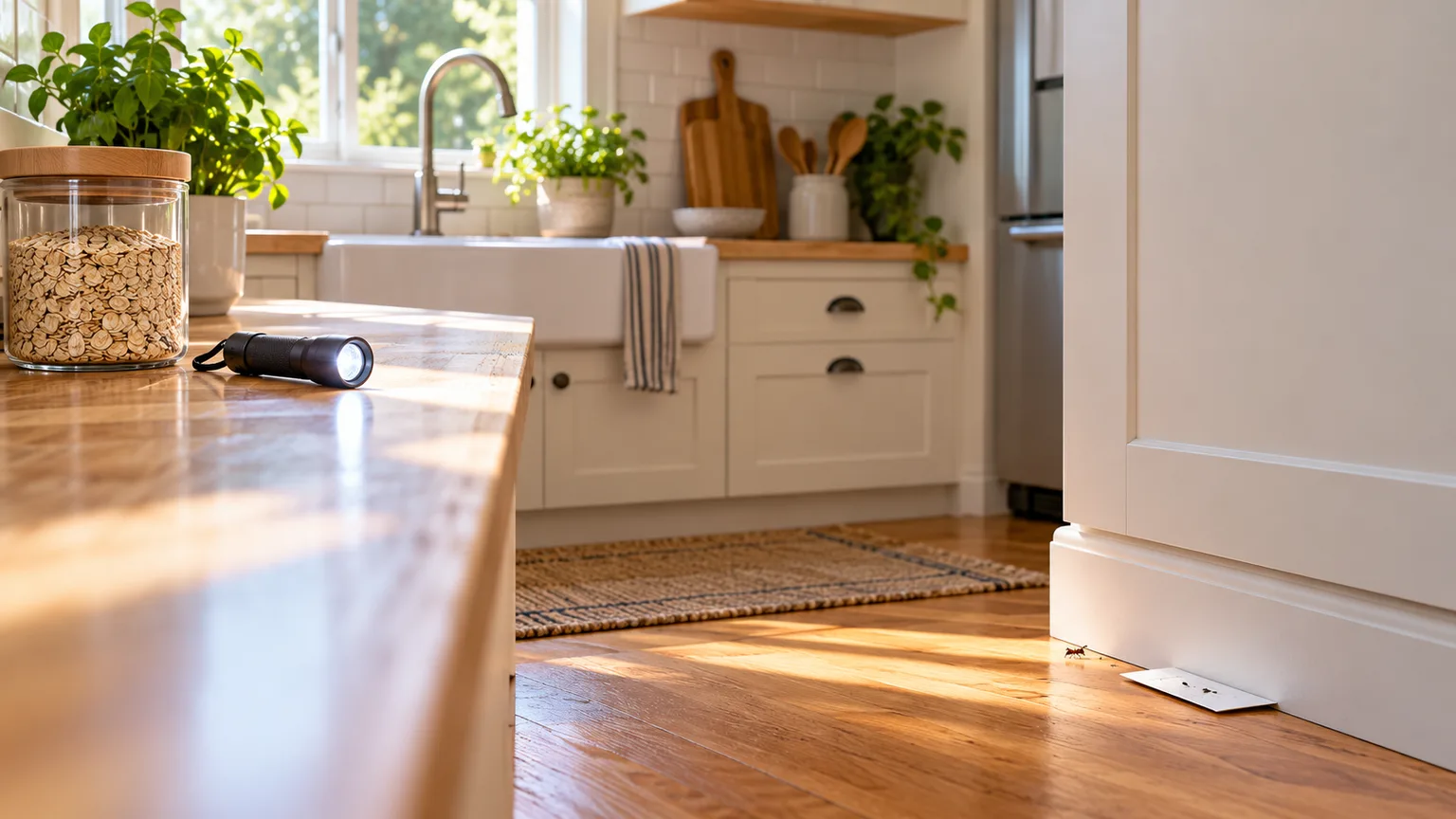
Clean crumbs, pet food spills, recycling residue, and sticky drink splashes because they can support flies, ants, roaches, or other prey. Repair dripping faucets and pipes, improve ventilation in damp rooms, and use a dehumidifier in a persistently damp basement when appropriate. Moisture does not attract every spider, but it can support the insects and shelter conditions that make a room worth exploring.
Where to look room by room
In a basement or crawl space, inspect window wells, pipe penetrations, floor drains, stored boxes, and the wall-to-floor joint. In an attic, check the access hatch, soffit or vent edges, roof penetrations, and undisturbed insulation boundaries. In a garage or shed, inspect firewood, folded tarps, cardboard, gardening gloves, and equipment that has not moved for months.
In living areas, look behind curtains, under low furniture, around windows, and near exterior doors. Houseplants can bring in an occasional hitchhiker, especially when they spend part of the year outdoors, so inspect pots and saucers before moving them inside. Do not drench a plant or the room with a spider spray simply because one spider appeared near a pot.
2. Seal entry points and repair screens
Removal becomes much more effective when the next spider cannot use the same route. Spiders can enter through cracks and openings, and good screening also keeps out the insects they hunt; UC IPM recommends sealing foundation cracks, gaps around windows and doors, and damaged screens as basic prevention (UC Integrated Pest Management).
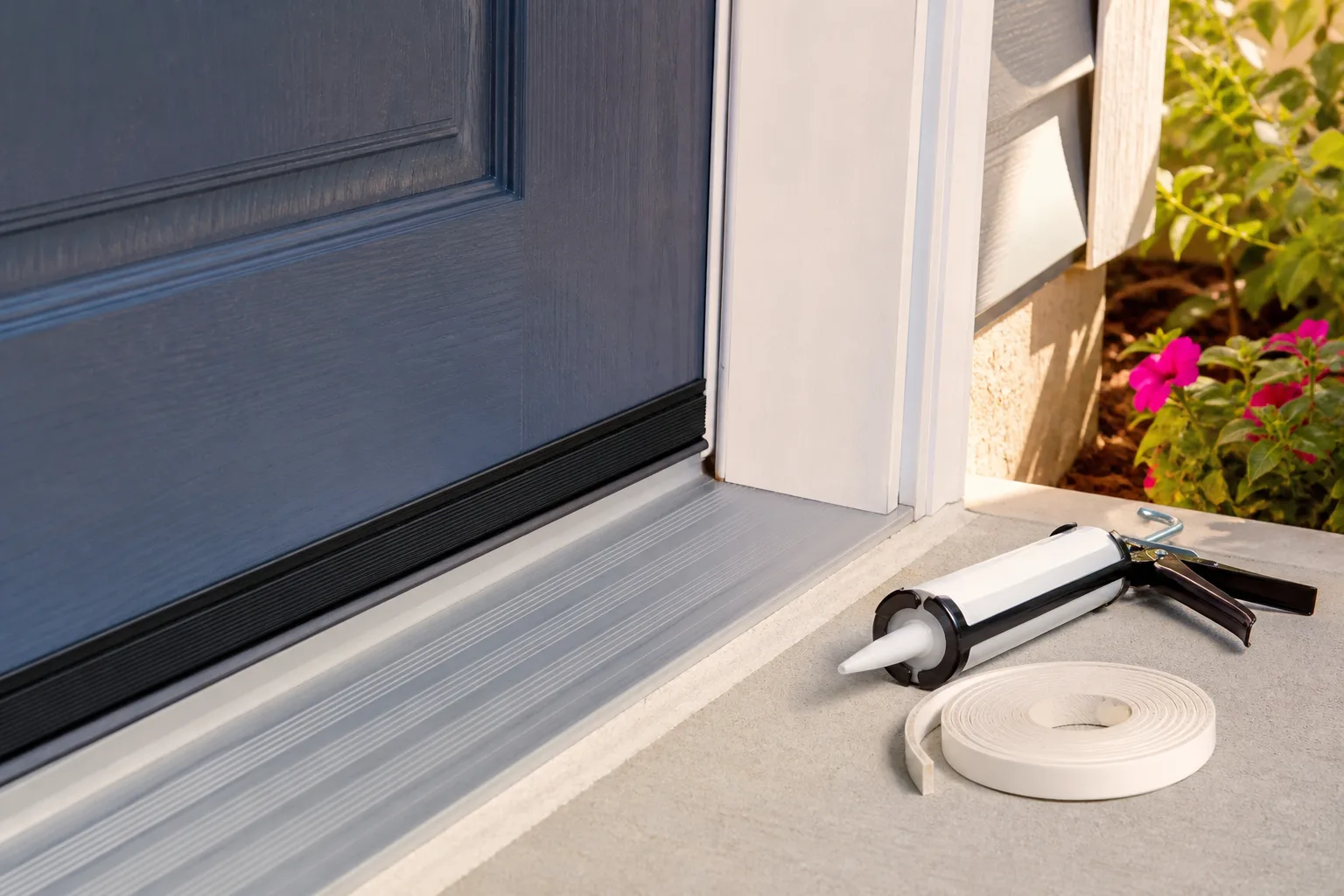
The five gaps worth checking first
- Exterior door bottoms: Close the door and look for daylight under it. Replace worn weatherstripping or install a properly fitted door sweep.
- Frame corners: Inspect where trim meets siding, brick, or the threshold. Re-caulk only joints designed to be sealed and use an exterior-rated product on a clean, dry surface.
- Window screens and tracks: Repair tears, tighten loose screens, and clear debris that prevents a window from closing fully.
- Utility and pipe openings: Check where cables, hoses, pipes, and vents pass through walls. Do not block required ventilation, drainage, or weep holes.
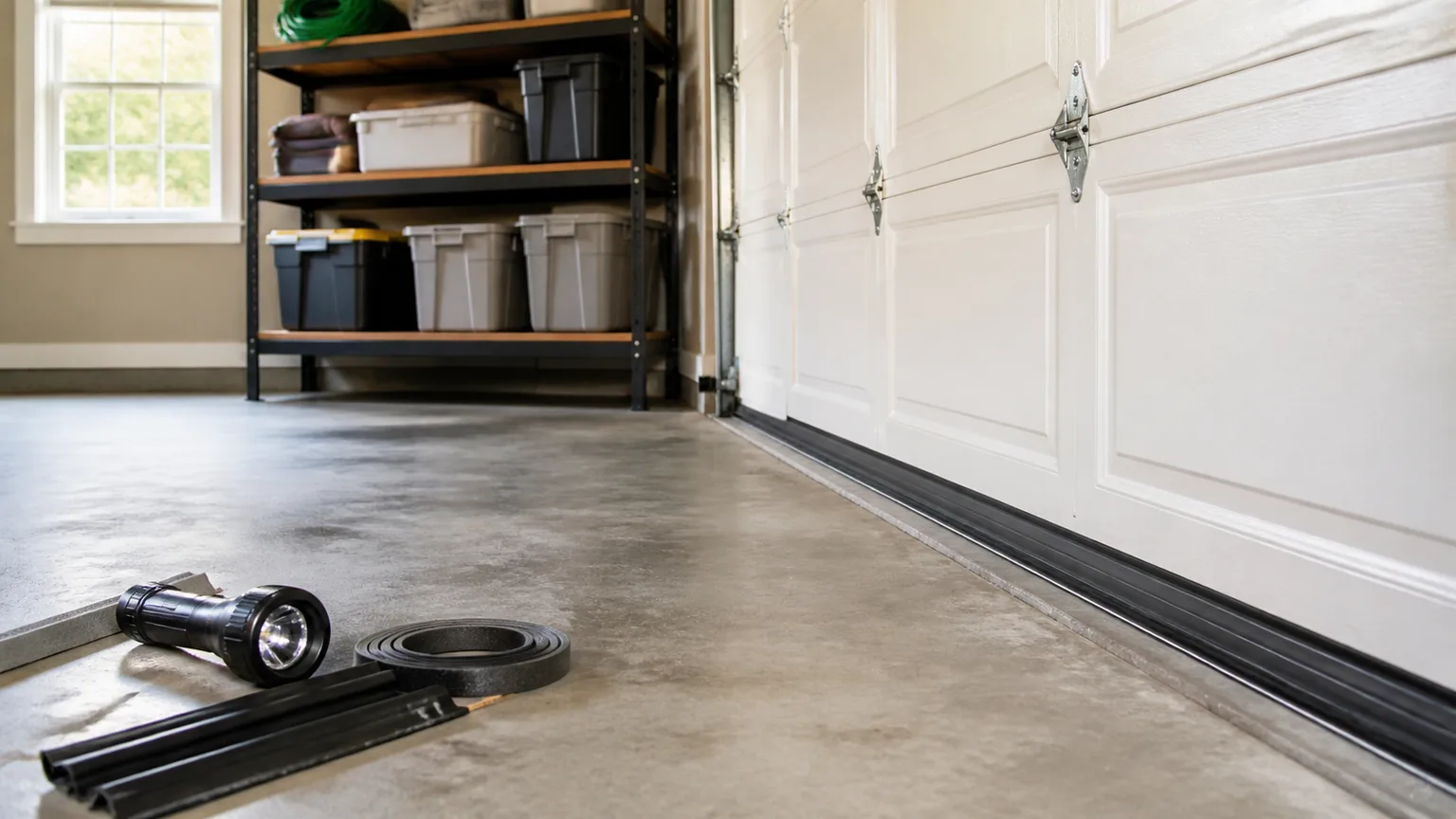
- Pet doors and garage transitions: Look at the brush seal, side gaps, and the joint between the garage door and slab. These are easy routes for wandering spiders and their prey.
Do the inspection from both sides. Turn off indoor lights at night and stand outside the closed door; a thin bright line can reveal an opening that is difficult to see during the day. This simple test will not find every route, but it helps you fix the most obvious ones first.
Avoid sealing everything with expanding foam before understanding the structure. Blocking a vent or drainage path can trap moisture and cause a building problem. If a gap is near wiring, a roof assembly, a foundation crack, or a shared wall, use an appropriate repair or ask a qualified building professional.
3. Make porch and outdoor lighting less attractive
Outdoor lights usually affect spiders indirectly. The bulb draws flying insects, and a spider builds a web nearby because the insects arrive predictably. A web beside a porch lantern is not evidence that the spider loves the light; it may simply be hunting beside a dependable food source.
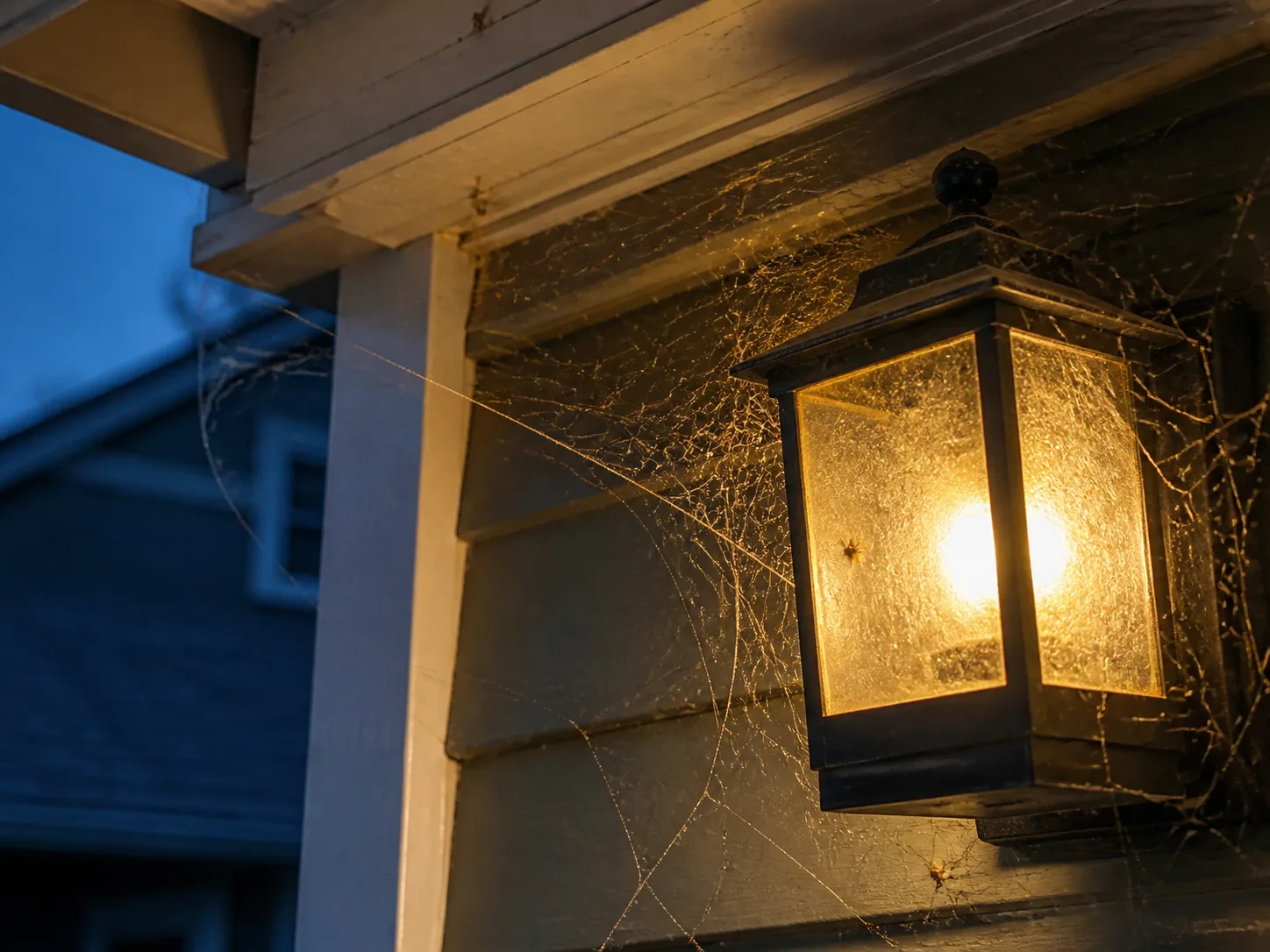
Turn off decorative lights when the porch is not in use. For a necessary entry light, try a timer or motion sensor, keep the fixture aimed downward, and compare a warm-colored bulb with the bright cool-white bulb you were using. The best choice depends on the fixture and local insects, so treat the change as a small experiment: compare new webs and insect activity for a week rather than assuming a bulb label guarantees a result.
Do not move a light closer to the doorway just to brighten the entrance. That can pull insects and webs toward the threshold. Keep any electrical work within local safety requirements, and never spray oils, water, or household cleaner into a powered fixture.
If lighting is not the main cause, the web pattern will tell you. Webs that appear mainly near the lamp point to prey concentration; webs under the eave but away from the lamp point to shelter and anchor points; spiders crossing the floor with little webbing point you back toward gaps, clutter, and indoor insects.
4. Reduce outdoor harborage without stripping the garden
The perimeter of the house should be easier to inspect than the rest of the yard. Remove leaf piles, discarded cardboard, dense debris, unused containers, and firewood stacked against the foundation. Trim vegetation that touches siding, screens, or the roofline, and correct puddles, clogged gutters, leaking spigots, or overwatered corners that support insect activity.
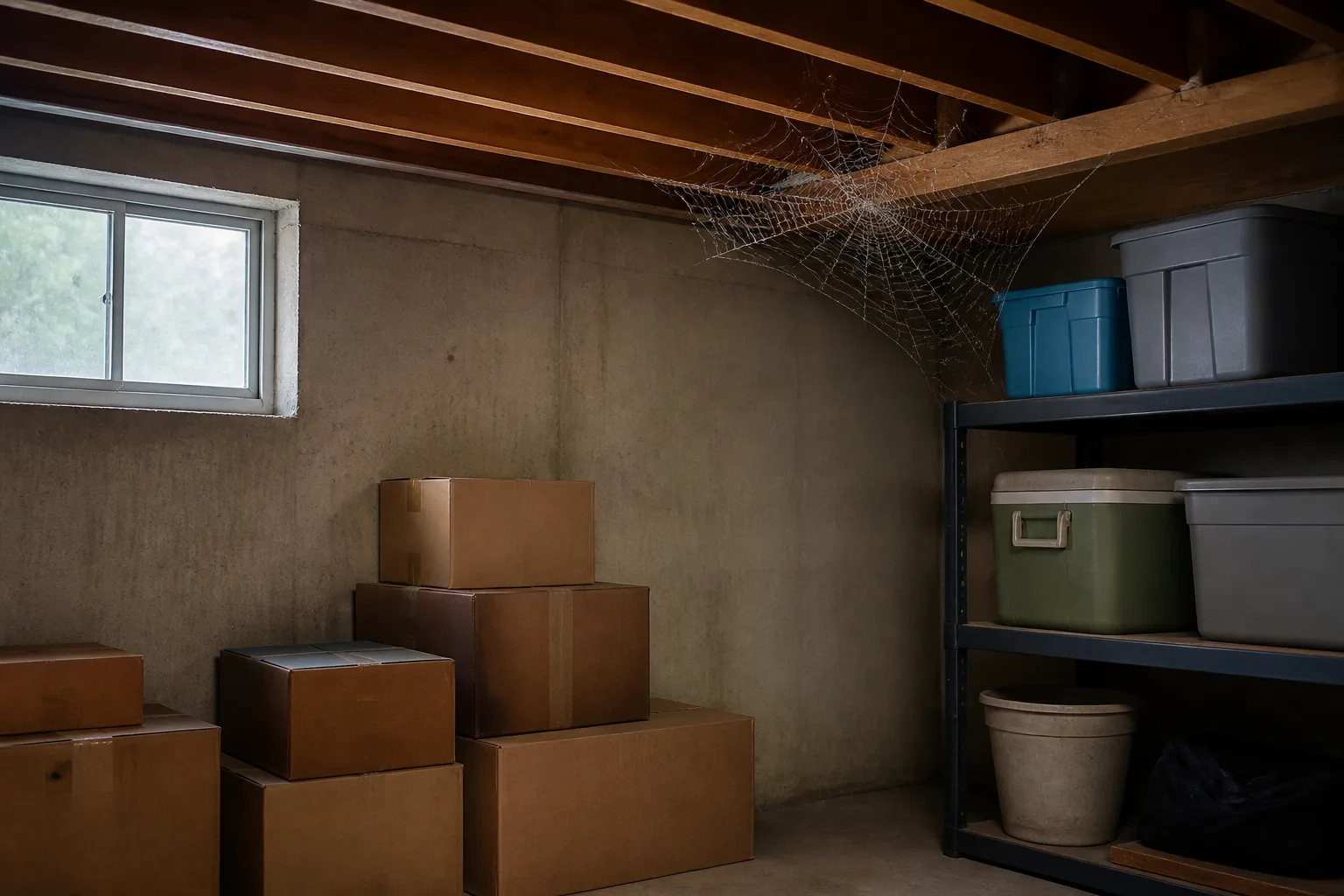
The aim is not to remove every leaf or insect from the property. Fine Gardening describes garden spiders as valuable predators and recommends preserving some habitat and using fewer broad insecticides, while Epic Gardening notes that web builders and hunting spiders often consume pest insects but can also catch beneficial insects (Fine Gardening; Epic Gardening). Keep that useful activity in beds, shrubs, and less-used edges, then make the strip immediately around doors and windows clean, open, and low-clutter.
Keep beneficial spiders away from doorways
Move stacked pots and furniture far enough from the entrance that you can sweep behind them. Store shoes, gloves, toys, and outdoor fabrics in closed containers, and shake out items that have sat outside or in a dark shed before bringing them indoors. Wear gloves and closed shoes when moving firewood, stones, landscape fabric, or long-undisturbed boxes; the risk is surprise contact, not that every spider is aggressive.
If an orb-weaver builds a large web in a garden corner where nobody walks, leaving it alone may reduce flies without creating a household nuisance. If the same web blocks a doorway, relocate or remove the web with a long-handled tool and move the nearby anchor point—such as a branch, trellis, or stored object—rather than relying on repeated swatting.
5. Use pesticides only when the situation justifies them
For ordinary indoor sightings, vacuuming, exclusion, and housekeeping are usually the better first line. UC IPM warns that outdoor insecticides generally do not provide long-term spider control and that spraying is temporary unless paired with housekeeping and habitat changes (UC Integrated Pest Management). Broad spraying can also remove harmless predators while leaving the insects and entry points that caused the pattern.
Why sprays often disappoint
A contact spray works only where it reaches the spider. It does not seal a screen, remove a hidden egg sac, dry a leak, or stop moths from circling a lamp. Strong-smelling home remedies such as peppermint oil, vinegar, citrus, or cinnamon may make a surface smell different for a short time, but they are not a substitute for inspection and their performance is inconsistent.
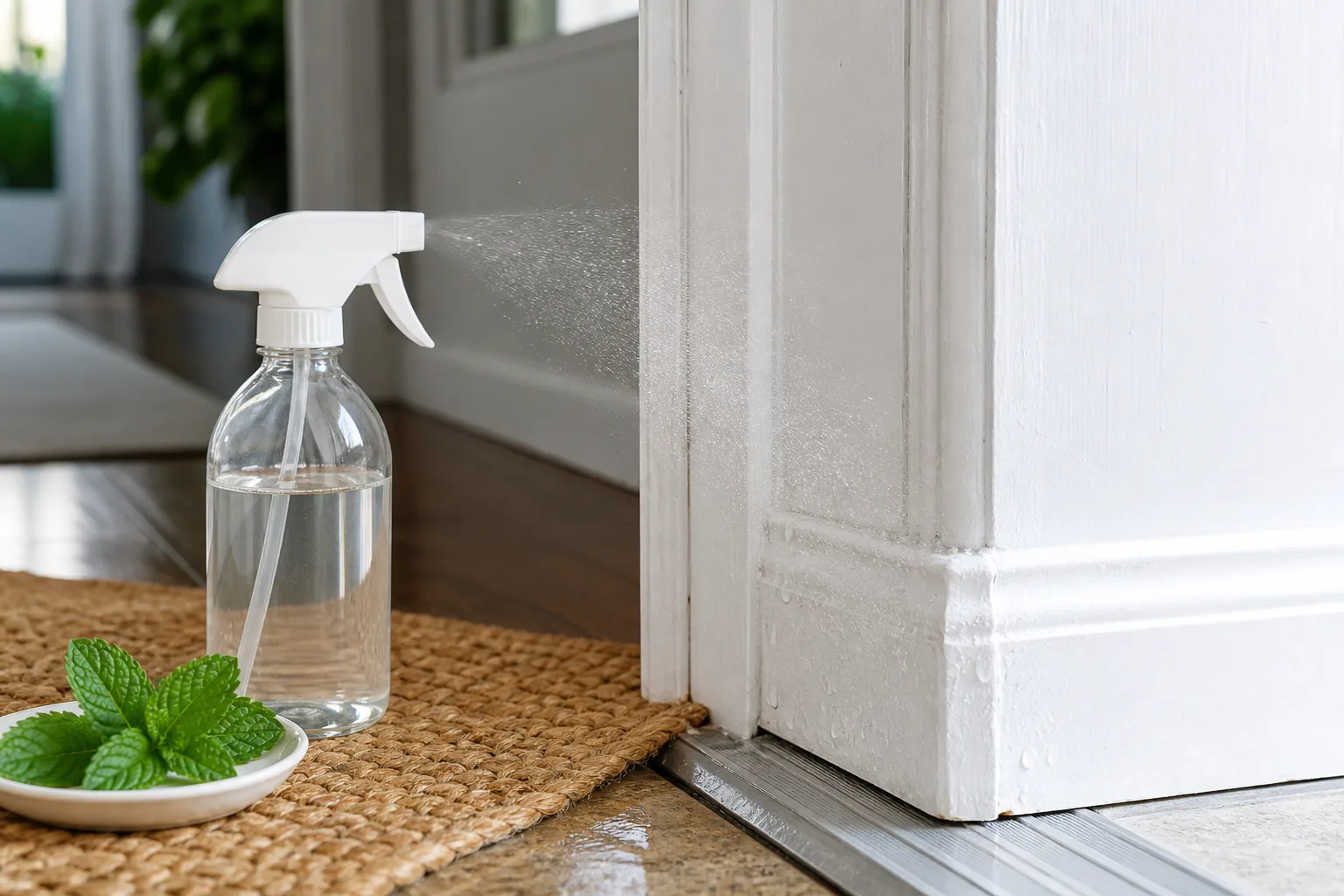
If you decide a pesticide is warranted, read the entire label before buying or applying it. The label should cover the exact spider or site, tell you the application method and dilution, and specify ventilation, re-entry, food-surface, child, pet, and pollinator precautions. Do not spray a light fixture, a food-preparation surface, a flowering plant, a mattress, or a pet area unless the label specifically allows that use.
Sticky traps can provide noninsecticidal monitoring or removal in quiet locations, but place them where children and pets cannot reach them. They are useful for showing whether activity continues along a wall or behind storage; they are not a complete solution when a structural gap or prey source remains.
Do not use mothballs as an open-air spider repellent. They are pesticides intended for labeled uses, and putting them around porches, sheds, gardens, or rooms creates an exposure risk without fixing the conditions that brought the spider there. For a widespread problem, a licensed professional can inspect, identify, and target inaccessible areas more safely than repeated DIY spraying.
Build a weekly monitoring routine
Once the first cleanup and repairs are complete, use a short routine instead of waiting for webs to become conspicuous. During peak activity, walk the perimeter and high-traffic rooms once or twice a week in daylight; in quiet seasons, monthly checks may be enough.
- Scan before disturbing anything. Check lights, eaves, door frames, screens, window tracks, corners, stored items, and planters.
- Remove what you can reach safely. Vacuum or brush away webs and egg sacs from the ground; do not climb unstable furniture.
- Look at the prey. Moths near a lamp, flies near trash, mosquitoes near standing water, and beetles in dense vegetation each point to a different correction.
- Reset the boundary. Sweep debris, move clutter away from walls, keep screens clear, and trim growth touching the house.
- Review the trend. Fewer new webs mean the plan is working. No change after repeated checks means it is time to inspect hidden gaps, persistent moisture, or an insect problem.
The routine is intentionally small. A dramatic one-time cleaning can make a home look better for a day, but a repeatable check catches a new web before it becomes an established retreat and shows you whether the cause—not just the symptom—has changed.
When a professional or doctor should be involved
Ask a licensed pest professional for an inspection when spiders appear in several rooms, egg sacs keep returning indoors, activity is concentrated in wall voids or inaccessible attic spaces, or the problem continues after you have cleaned, reduced clutter, sealed obvious gaps, and monitored the result. Ask what species or group they suspect, what prey source they found, where treatment would be placed, and what prevention steps are part of the plan.
Professional help is also sensible when a porch, roofline, ladder, crawl space, or storage area cannot be cleaned safely. If you suspect a black widow or brown recluse in an undisturbed area, keep people and pets away and do not handle it for a better photograph. The CDC identifies black widows and brown recluses among the venomous spiders of concern in the United States and advises reducing debris and taking precautions around stored materials (CDC).
Most spider bites are minor, and many skin problems blamed on spiders have another cause. If someone is bitten, wash the area with soap and water and apply a cool cloth or wrapped ice pack; MedlinePlus recommends medical evaluation for severe or worsening symptoms, and urgent care is appropriate for trouble breathing, spreading pain, severe muscle cramps, marked swelling, or other systemic symptoms (MedlinePlus). Do not try to remove venom, and do not handle a spider to prove what caused an injury.
Conclusion
To get rid of spiders fast, start with the visible problem but do not stop there. Vacuum or safely relocate the spider, remove its web and egg sacs, then break the food-and-shelter loop by cleaning quiet spaces, repairing screens and door gaps, changing unnecessary outdoor lighting, and clearing clutter or moisture beside the house.
That sequence makes the home less useful to spiders without turning the wider garden into a pesticide zone. If activity spreads across rooms, egg sacs continue to appear, or a spider may be medically important, stop handling it and bring in a licensed pest professional; if anyone is bitten and symptoms are severe or worsening, seek medical care.