How to Get Rid of Ticks in Your House Safely
Learn how to get rid of ticks in your house: remove one safely, inspect pets and laundry, spot brown dog tick infestations, and prevent repeat sightings.
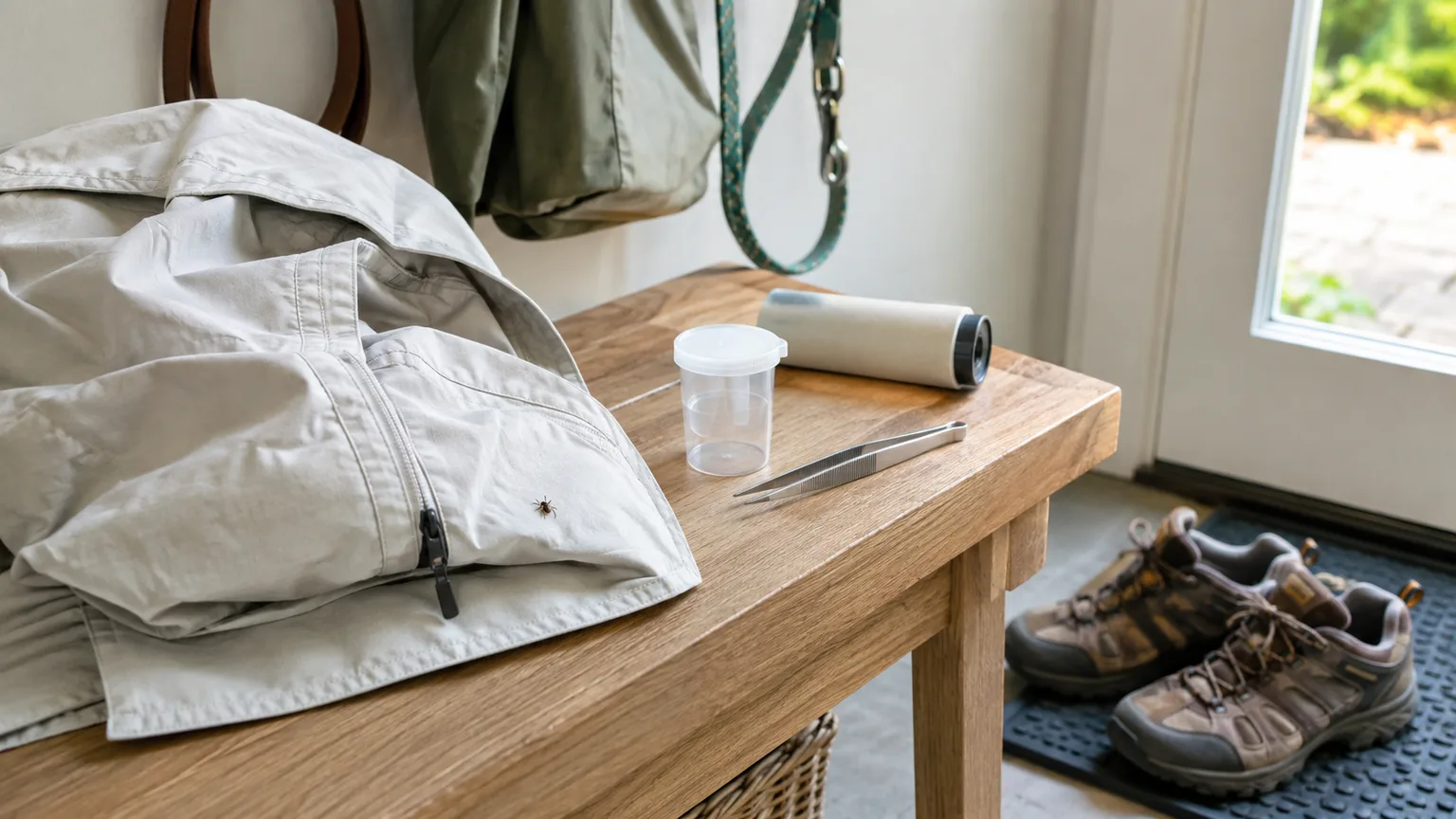
If you found a tick on the floor, pick it up carefully, check every person and pet who was outside, and heat-treat dry outdoor clothing before you start deep-cleaning the house. One loose tick usually arrived as a hitchhiker; repeated sightings, tiny tick clusters, or ticks concentrated around a dog’s bedding are a different problem and may point to an indoor brown dog tick infestation.
The right response depends on where the tick is and whether it is attached. The CDC recommends prompt tweezer removal for a tick on skin, high-heat drying for dry clothing, a shower and body check after outdoor exposure, and label-directed pesticide use rather than improvised indoor spraying. This guide puts those actions in order, then shows how to protect pets, clean without spreading the problem, and reduce the route from yard to house.
The fastest safe response when you find a tick indoors
Start with the smallest useful response. Do not fog the house, spray every baseboard, or scatter household ingredients because you saw one tick; first determine whether it is loose, attached to a person, or attached to a pet.
The CDC’s current tick-prevention guidance notes that ticks can ride indoors on clothing, gear, and pets, and that many people encounter ticks in their own yard. That makes the entry routine more important than a dramatic one-time “natural” treatment.
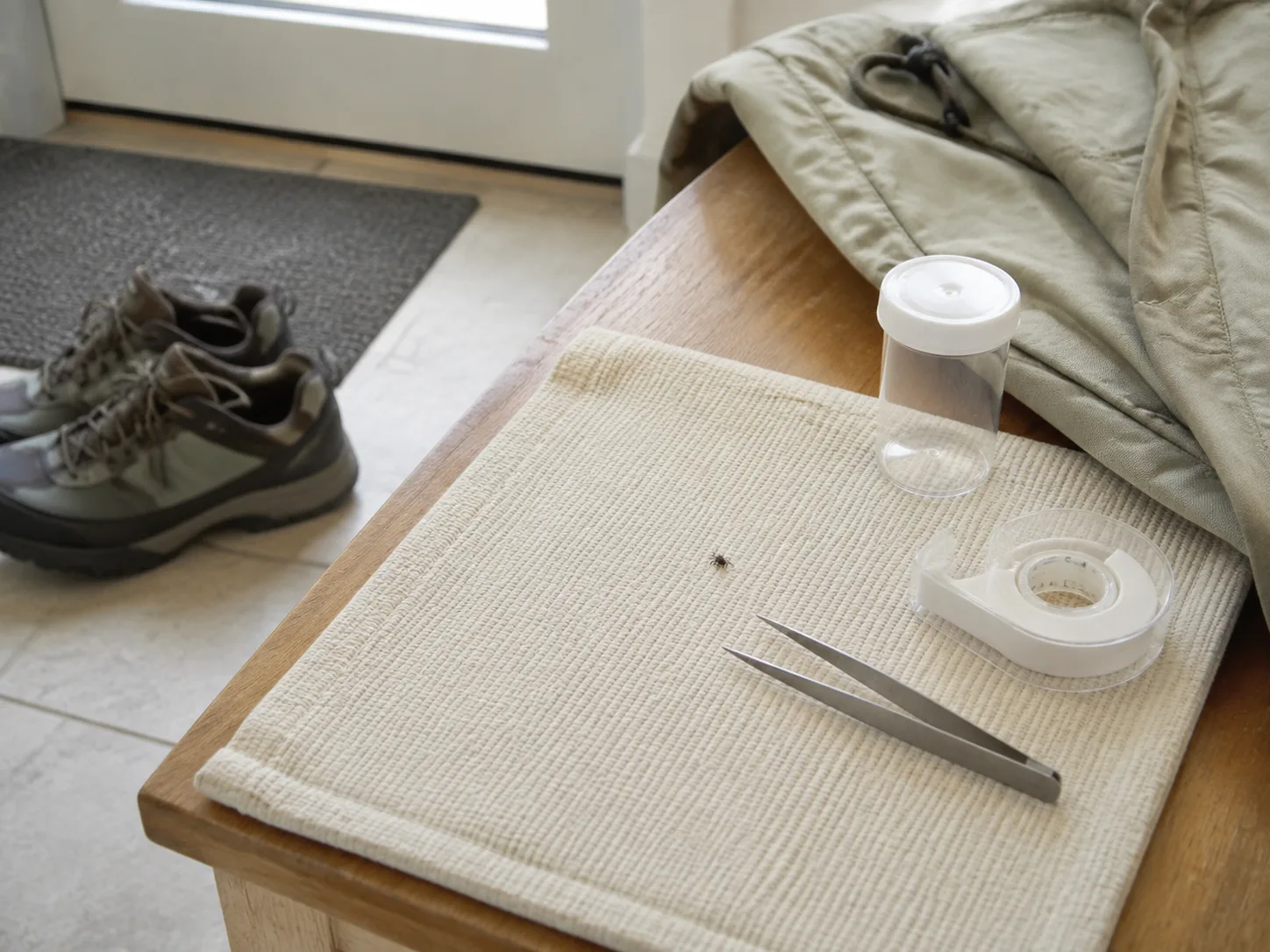
If the tick is attached to skin
Remove it as soon as possible with clean, fine-tipped tweezers. Grip the tick as close to the skin as you can, pull upward with slow, even pressure, and avoid twisting, jerking, or squeezing the swollen body. The CDC tick-removal instructions say that ordinary tweezers can work if fine-tipped tweezers are not available.
After removal, clean the bite area and your hands with soap and water, rubbing alcohol, or hand sanitizer. Put the live tick in a sealed container, wrap it tightly in tape, flush it, or place it in alcohol; do not crush it between your fingers.
Do not coat an attached tick with petroleum jelly, nail polish, oil, or heat. Those methods delay removal and may irritate the tick rather than making the process safer. If mouthparts remain and you cannot easily grasp them with tweezers, leave them alone and let the skin heal while you monitor the area.
If a child cannot stay still, the tick is in the eye or ear canal, or you cannot remove it without tearing the skin, call a healthcare provider for help—but do not wait to remove an ordinary attached tick simply because a clinic is not immediately available.
If the tick is loose on a floor, wall, or fabric
Use clear tape, a tissue, or disposable gloves to lift the tick without crushing it. Seal it in a small container or tape it to a piece of paper if you may need an identification photo; a phone picture beside a ruler is often more useful than a smudged specimen.
Then work outward from the discovery point. Check cuffs, socks, shoes, coats, backpacks, pet bedding, and the person or animal who most recently came inside. A loose tick on a bathroom floor after a hike is usually a missed hitchhiker, not proof that eggs are hidden in the room.
If the clothing is dry, put it straight into a dryer on high heat for at least 10 minutes before washing. The CDC says damp clothing may need additional time, and if the item must be washed first, hot water is recommended because cold and medium-temperature water may not kill ticks. Do not carry a possibly tick-bearing jacket through every room just to reach the washer.
For the next two hours, shower if you can and do a full-body check with a hand mirror. Showering soon after outdoor exposure may wash off unattached ticks and gives you a reliable opportunity to check the scalp, ears, waist, underarms, bellybutton, groin, and backs of the knees.
Decide whether you have a stray tick or an infestation
The word “infestation” changes the response, so do not use it for every isolated sighting. Species, life stage, location, and repetition matter more than the emotional shock of finding one tick.
Clues that a tick came in on clothing, gear, or a pet
A single adult tick found soon after gardening, hiking, mowing, camping, or walking a dog is most consistent with a recent introduction. The same is true when you find it on an outer layer, boot, backpack, or pet shortly after returning indoors, and no additional ticks appear after a careful check.
Ticks do not fly or jump. They wait on vegetation and grasp a passing host, a behavior the CDC explains in its tick overview. A tick can therefore travel from a brushy edge to your sock, then from your sock to a rug or floor, without the house itself being a breeding site.
Keep a simple log for two weeks: date, room, whether the tick was attached, who or what had been outdoors, and whether it looked like a tiny six-legged larva, an eight-legged nymph, or a larger adult. You do not need to become an entomologist; the pattern will tell you whether to escalate.
Clues that brown dog ticks may be established indoors
Brown dog ticks are the indoor exception worth taking seriously. The University of Rhode Island’s TickEncounter profile explains that this species can complete its entire life cycle indoors and that control usually involves treating pets, the house, the yard, and sanitation together. Penn State Extension’s brown-dog-tick overview likewise notes that brown dog ticks live where dogs congregate and can be a concern indoors and outdoors.
Look for a pattern rather than one dramatic specimen: repeated ticks over several days, different sizes or life stages, ticks near a dog bed or kennel, adults on walls or ledges, or sightings that continue even when no one has recently been in tall grass. Brown dog ticks may hide in cracks, crevices, around kennels, behind furniture, and near sleeping areas while searching for a canine host.
If you are seeing many very small ticks, do not assume they are dust or harmless “seed ticks.” Photograph them and ask a local extension office, pest professional, or veterinarian for identification. Misidentifying fleas, bed bugs, carpet beetle larvae, or mites can send you toward the wrong treatment and make a real problem last longer.
Find the source: pets, people, gear, and sleeping areas
When ticks recur, your first job is source control. Cleaning the room without treating the animal or removing the outdoor trigger is like mopping under a leaking pipe.
Inspect dogs and cats without creating a second problem
Check dogs after every trip through tall grass, brush, leaf litter, or a wooded edge, even if the trip was only in your own yard. Use your fingertips and a bright light to feel through the coat, then inspect the ears, eyelids, collar area, between toes, groin, armpits, and around the tail. A fine-toothed comb can help with a long coat, but it does not replace a hands-on check.
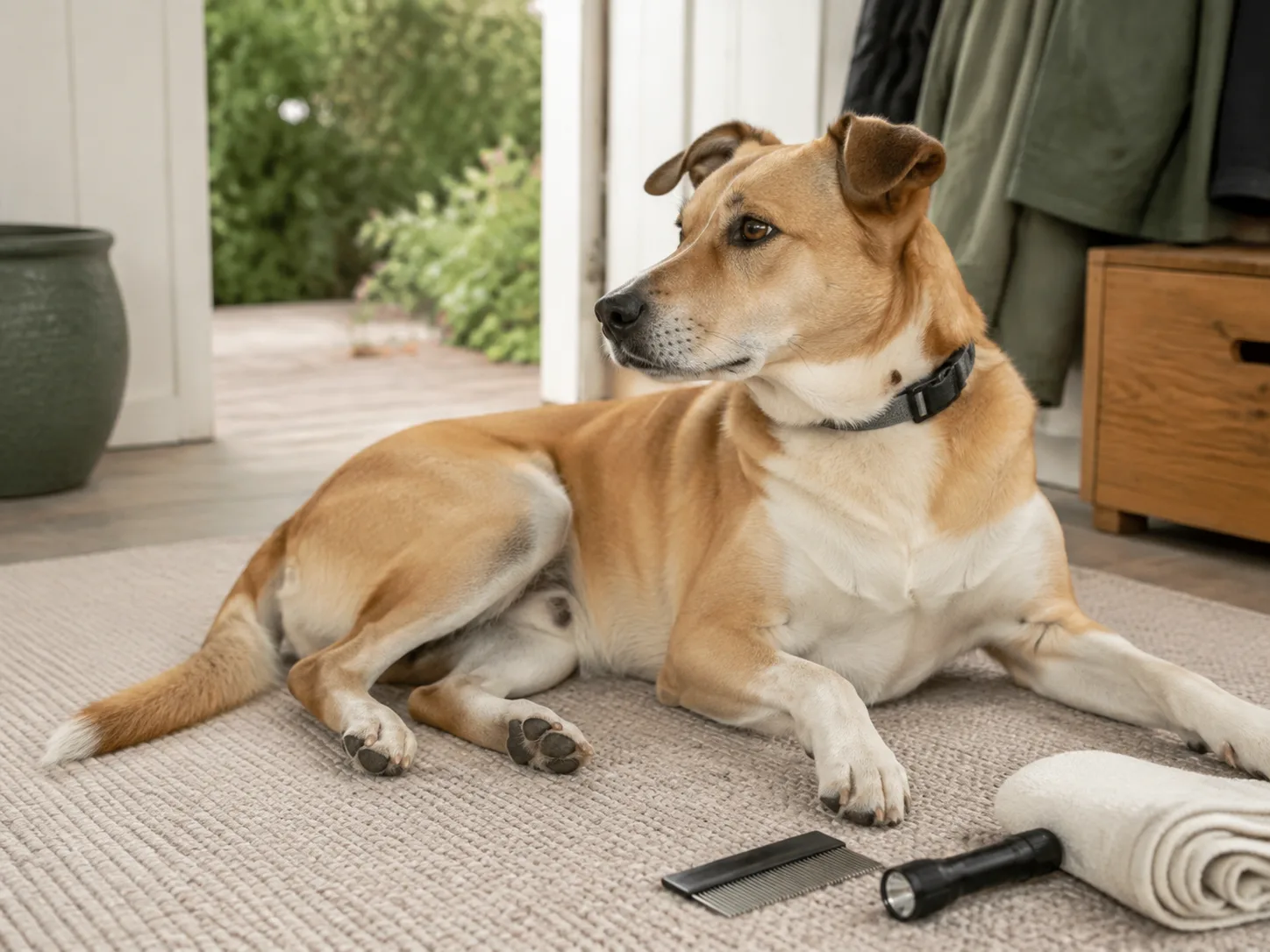
Ask your veterinarian about a tick preventative that fits the animal’s species, age, weight, health history, and exposure. Products differ: some repel or prevent attachment, while others kill a tick after it attaches, and the Cornell University College of Veterinary Medicine guide explains why timing and regular use matter.
Never transfer a dog tick product to a cat. Permethrin, common in some dog spot-on products, can be highly toxic to cats. International Cat Care’s permethrin-poisoning guidance warns that a cat can be poisoned by direct application or by contact with a recently treated dog; if that exposure happened, contact a veterinarian immediately rather than waiting for symptoms.
Treating the pet does not instantly remove ticks already hiding in the home. It stops the host from continually feeding the indoor population, which is why recurring brown dog tick control must pair veterinary care with house sanitation and, when needed, professional treatment.
Treat bedding, laundry, backpacks, and outdoor clothing
Gather washable pet bedding, blankets used outdoors, dog coats, camping clothes, and fabric gear into sealed bags until you can process them. Keep the bags away from bedrooms and upholstered furniture; do not pile them in a damp laundry hamper where a tick has a more favorable microclimate.
For dry, dryer-safe items, use high heat first, following the CDC’s after-outdoor-exposure instructions. Ten minutes is the minimum cited for dry clothing, but thick, damp, or tightly packed loads may need longer. The goal is heat reaching the fabric, so empty pockets, separate heavy layers, and do not overfill the drum.
Wash and dry items according to their care labels after the heat step. For gear that cannot go in a dryer, inspect seams, straps, folds, and soles outdoors or over a hard floor, then clean it according to the manufacturer’s instructions. A lint roller is useful for a visual sweep of clothing, but it is a backup—not a substitute for heat, washing, or a body check.
Clean the rooms where ticks are most likely to persist
If you have one loose tick and no repeat sightings, normal cleaning plus laundry and pet checks is usually enough. If ticks keep appearing, focus sanitation where a host rests rather than bleaching the entire house: pet bedding, rugs, carpet edges, baseboards, cracks, kennel areas, under furniture, and the entryway.
Vacuum with a purpose and dispose of the contents
Vacuum slowly along carpet margins, under furniture, around pet beds, under cushions, and at wall-floor junctions. Use the crevice tool on cracks and ledges, and move the dog bed so you clean the floor beneath it. Vacuuming is central to brown dog tick sanitation because it removes mobile ticks, shed skins, eggs, and debris from hiding places, but it is not a stand-alone cure when a dog continues to host ticks.
Afterward, seal the bag or empty the canister into a bag outdoors, close it, and place it in an outside bin. If your vacuum has a washable filter, follow the manufacturer’s directions; do not rinse a disposable filter indoors. Mark the cleaning date so you can repeat it on a schedule recommended by a licensed professional if the sightings continue.
Do not create a damp indoor environment while cleaning. Steam or wet shampoo may be appropriate for ordinary carpet care, but it does not replace dry heat for clothing or species-specific pest control, and damp bedding left in a pile gives hidden ticks more time to survive.
What to skip: salt, bleach, essential oils, and loose dusts
Salt, boric acid, bleach, dish detergent, rubbing alcohol, and essential-oil sprays are often presented as a universal tick solution. They are not interchangeable, and “natural” does not mean safe to inhale, apply to skin, spread on carpet, or expose to a cat or dog.
Do not spray bleach, rubbing alcohol, vinegar, or an essential-oil mixture around baseboards or pet beds. Bleach and alcohol can damage finishes and irritate lungs; concentrated oils can irritate skin and may be toxic to pets; and none gives you a reliable, label-backed plan for a breeding infestation. A live tick you place into alcohol is a disposal step, not a reason to mist alcohol across a room.
Diatomaceous earth and other dusts also deserve caution. Fine particles can irritate eyes and lungs, and a thin layer placed where pets or children contact it creates a different exposure problem. If a registered product is appropriate, use only one whose label includes the pest, site, and application directions you need; follow the label exactly and ask a licensed professional when the label does not clearly cover indoor tick control.
Garden writers sometimes suggest fragrant plants or herbs such as lavender, rosemary, mint, and chrysanthemums as part of a tick-aware landscape. Gardening Know How’s practical landscape guidance and Mother Earth Gardener’s prevention overview are useful reminders that yard design and personal protection work together, but a scented plant cannot replace pet treatment, laundry heat, or a professional indoor plan.
Make the route from yard to house harder
The most effective “natural” indoor tick strategy is to reduce the number of ticks that reach the threshold. You are not trying to sterilize the ecosystem; you are making the edge drier, more visible, and less attractive to the animals and vegetation that move ticks toward the house.
Build a drier, cleaner perimeter
Start where the lawn meets brush, woods, a stone wall, dense shrubs, or a leaf pile. Remove leaf litter and brush near the house, keep grass mowed, stack firewood neatly off the ground, and clear old furniture, trash, and unused materials where rodents or other hosts can shelter.
If your yard borders woods, consider a clearly maintained strip of wood chips or gravel about three feet wide between the lawn and wooded edge. The CDC’s tick-safe landscaping recommendations include this barrier, along with keeping decks, patios, and play equipment away from the highest-pressure edge when possible.

The barrier is a boundary, not a force field. It works best when it stays wide, dry, and free of grass and leaf litter; a strip that decomposes into a damp organic bed or becomes bridged by weeds loses the decision-making value of the edge. Mow the lawn, prune vegetation that touches the house, and keep pet runs and dog beds away from the brush line when you can.
Reduce host traffic as well. Deer fencing is the most direct way to keep deer out, while moving brush piles and woodpiles away from the foundation reduces shelter for rodents. No planting scheme can guarantee a tick-free yard, and even an attractive bed of aromatic herbs should be treated as a gardening choice, not as a substitute for checking your body and pets.
Protect people before gardening, hiking, or mowing
Wear light-colored long pants, long sleeves, closed shoes, and socks you can pull over the pant cuffs when you will be in brush or tall grass. Light fabric makes crawling ticks easier to see; tucking clothing closes some of the routes a tick uses to reach skin.
For exposed skin, use an EPA-registered repellent that lists ticks on the label. The CDC identifies DEET, picaridin, IR3535, oil of lemon eucalyptus, para-menthane-diol, and 2-undecanone among active ingredients used in registered repellents, but the product label controls age limits, application sites, reapplication timing, and other precautions. Oil of lemon eucalyptus and para-menthane-diol should not be used on children under 3 years old.

For clothing and gear, 0.5% permethrin-treated products can provide protection through several washings when used exactly as directed. Clothing treatment is different from applying permethrin to skin; never improvise a concentration or use a clothing product as a body spray.
When you come inside, make the entry routine automatic: shoes stay by the door, outer layers go straight to inspection or the dryer, pets get a quick hands-on check, and people shower and inspect vulnerable body areas. The routine takes less time than chasing a recurring indoor problem.
Know when a professional treatment is warranted
Call a licensed pest professional when sightings continue after you have treated the likely host and tightened the entry routine, when you see multiple life stages, or when ticks are turning up in several rooms. Escalate quickly if you live with a dog that has a heavy tick burden, if a kennel or animal area is involved, or if anyone in the household is immunocompromised and needs a more controlled response.
Brown dog tick infestations are persistent because the tick can feed and reproduce around a canine host while hiding in places a casual vacuum misses. The University of Rhode Island notes that eradication may require treating pets, the house, the yard, and sanitation over several treatments and sometimes several months. That timeline is a reason to start early, not a reason to saturate the house with unlabelled chemicals.
Ask the professional what species they suspect, which rooms and outdoor edges they will inspect, what product or method is proposed, how pets and children should be protected, and what follow-up visits are included. A good plan identifies the host and hiding places, gives you preparation and re-entry instructions, and explains what sightings are expected between treatments.
Avoid any service or online recipe that promises one spray will eliminate every tick without checking the pet, structure, yard, and local label requirements. The CDC cautions that outdoor pesticides can reduce ticks in treated areas but should not be your only strategy for reducing infection risk; prevention and prompt checks still matter.
Watch for bites and illness after a tick encounter
Finding a tick indoors does not diagnose an illness, and not every tick carries the same pathogen. It does mean you should take attached ticks seriously, remove them promptly, and pay attention to how you feel over the following days and weeks.
The CDC’s after-a-tick-bite guidance advises medical follow-up if you develop a rash or fever within several weeks, and recommends telling the clinician when and where the bite occurred. Other concerning symptoms can include chills, headache, fatigue, muscle aches, joint pain, or unusual weakness; do not wait for a classic bull’s-eye pattern before asking for medical advice.
Do not delay care while waiting for a commercial tick test. The CDC says tick-test results should not be used to make treatment decisions because a positive tick result does not prove transmission and a negative result can create false reassurance. Keep notes about the bite and, if you safely retained the tick, bring a photo or specimen to a clinician or extension office without treating it as a diagnosis.
Pets also need follow-up if they become unusually tired, feverish, lame, pale, or off their food after tick exposure. Your veterinarian can decide whether testing or treatment is appropriate; do not give a human medicine or double a pet preventative because you found a tick.
Conclusion
To get rid of ticks in your house, match the response to the evidence. Remove an attached tick promptly, contain a loose tick, heat-treat dry clothing, inspect people and pets, and shower after outdoor exposure. Then watch the pattern: one tick after a brushy walk is usually a hitchhiker, while repeated ticks, multiple sizes, or sightings around a dog’s sleeping area justify brown dog tick investigation.
The long-term fix is layered. Keep pet prevention current with veterinary guidance, vacuum the places a host rests, skip unsafe household-ingredient recipes, maintain a clean and dry yard perimeter, and call a licensed professional when sightings persist. That sequence protects your household without turning one alarming discovery into an unnecessary chemical cleanup.



