How Often to Water a Snake Plant: Seasonal Guide
Learn how often to water a snake plant by checking soil, light, pot, and season—with clear steps for avoiding underwatering and root rot.
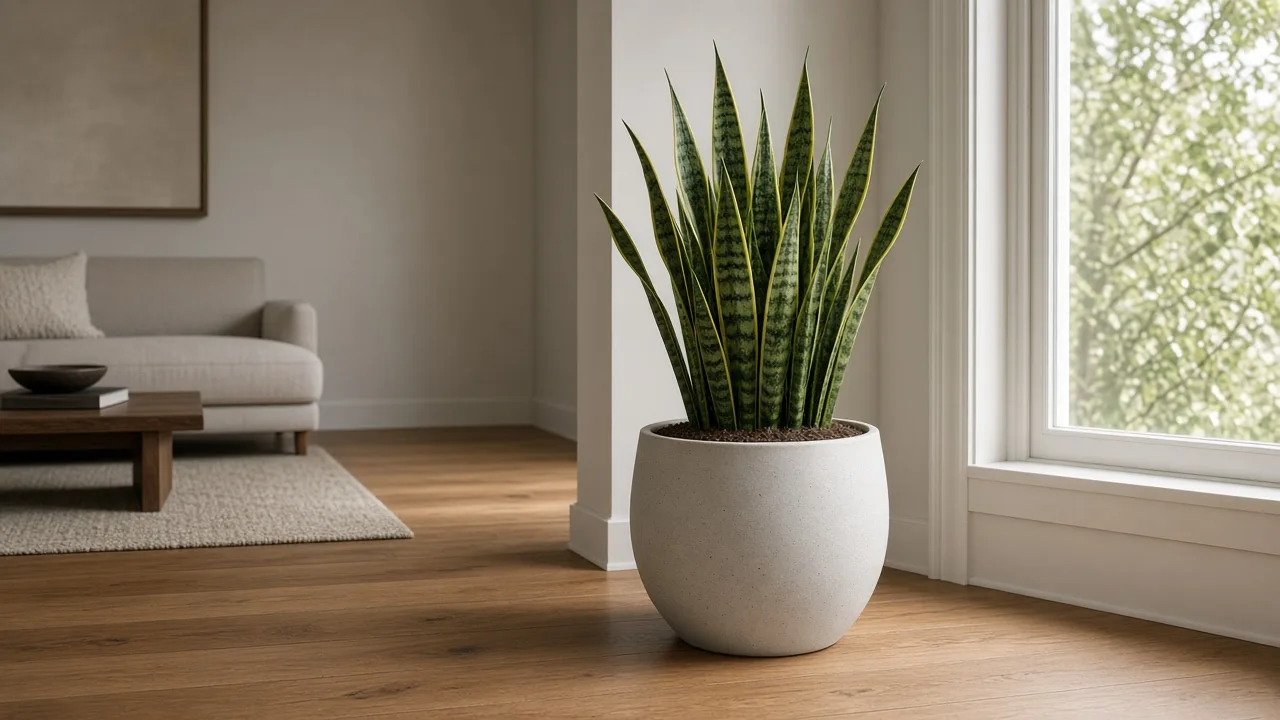
The best answer to “how often should I water a snake plant?” is not a fixed number of days. Check the potting mix, then water thoroughly when the upper root zone is dry. Many indoor plants need checking every 10 to 14 days in brighter, warmer months and less often in winter; a low-light plant may go several weeks, while a small plant beside a bright window may dry sooner.
Snake plants (Dracaena trifasciata, formerly Sansevieria trifasciata) store water in their thick leaves and tolerate dry conditions. They are much less forgiving of roots that stay wet, so the goal is a full drink followed by a useful dry-down—not frequent sips and not permanent drought. The North Carolina State Extension plant profile likewise emphasizes well-drained soil, careful watering, and allowing the soil to dry between waterings.
The short answer: water by soil, not by calendar
Push a finger about 2 inches into the potting mix, or as far as practical in a small pot. If that zone feels dry and the pot has drainage, water slowly until excess flows from the holes. If it is still cool or damp, wait and check again in a few days. The calendar is useful for remembering to check; it is not a reason to water a plant that is still wet.
A useful starting interval without treating it as a rule
Use these as check-in windows, not automatic appointments:
- Bright light and active growth: inspect about once a week; watering often lands around every 7 to 14 days.
- Average indoor light: inspect every 10 to 14 days; watering may land around every 2 to 3 weeks.
- Low light, cool rooms, or winter: inspect every 2 to 3 weeks; watering may be monthly or even every 4 to 8 weeks.
- Hot, dry outdoor conditions: inspect more often, sometimes weekly, but only water when the mix has dried enough and rain has not already done the job.
These ranges are intentionally broad. A small pot with gritty soil can dry in days while a large plastic pot with dense mix stays wet for a month. NC State Extension’s conservative baseline is to let soil dry between spring and autumn waterings and water every one to two months in winter; warmer, brighter homes need more frequent checks.
A two-minute moisture check before every watering
The most reliable routine is a quick check that combines the soil, the container, and the plant. Do it before you carry the watering can over, because a thirsty-looking plant can still have wet roots after overwatering.
Start with the mix. Insert a finger near the edge of the pot, avoiding the crowded center of the rosette, and feel down toward the root zone. A light, dry surface does not automatically mean the pot is ready; the top inch can dry while the lower mix stays damp. For a larger container, check in two or three spots because roots and water do not always distribute evenly.
Finger test and pot-weight clues
Lift the pot immediately after a thorough watering, then lift it again when you think it is dry. Over time, the difference becomes a useful personal reference. A pot that feels dramatically lighter, has mix pulling slightly from the sides, and feels dry below the surface is usually ready for water.
Leaves can support the diagnosis but should not lead it. Mild puckering or a less-firm feel can accompany drought stress, while a collapsing base or soft leaf may point to prolonged wetness. Brown tips can result from drought, salts, dry air, or direct sun, so do not respond to one brown tip by adding water on a schedule.
A moisture meter can help you compare one pot with another, especially if you cannot reach deeply into a dense planting. Use it near the root zone and test more than one spot. Treat the reading as a trend, not a verdict: coarse bark, stones, roots, mineral buildup, and a poorly calibrated probe can make a cheap meter look more precise than it is.
If the meter says “moist” but the plant is in a sealed decorative pot, trust the drainage problem you can see. If it says “dry” while the soil is visibly wet, clean the probe and repeat the test; finger feel, pot weight, and drainage behavior may be more useful.
How to water a snake plant correctly
When the mix has dried to the right depth, move the plant to a sink, tub, shower, or protected outdoor spot. Water at the soil surface, not into the leaf crown, and apply enough to wet the whole root ball. A thorough watering encourages all of the roots to participate; a few tablespoons on the surface can leave the lower or inner mix dry.
Top-water until runoff
Pour slowly around the pot in a circle. Pause when water first reaches the bottom, then let the container drain. If water rushes straight through a gap while the top remains dry, the mix may be hydrophobic or badly compacted; do not assume that fast runoff proves the root ball is hydrated.
Return the plant to its saucer only after the flow slows. Empty the saucer or cachepot rather than letting the pot sit in water. UConn Extension’s watering guidance explains that saturated container media displaces oxygen around roots; standing water can lead to root injury even when the foliage looks thirsty.
Bottom-water a severely dry root ball
Bottom watering is useful when dry mix has shrunk from the pot wall and top water is racing around the root ball. Set the nursery pot, with drainage holes, in a shallow basin of room-temperature water for about 20 to 30 minutes. Remove it when the surface becomes slightly moist, let it drain fully, and put it back in an empty saucer.
This is a recovery method, not a reason to keep a snake plant permanently connected to a water reservoir. If you bottom-water every time without occasional flushing from above, salts can accumulate and the top layer may remain unevenly hydrated. The Virginia Cooperative Extension guide to container-houseplant watering also stresses thoroughly wetting the root zone and monitoring rather than following a rigid schedule.
Adjust the interval for light, heat, and humidity
Light is one of the biggest schedule changes. A snake plant can survive far from a window, but it will generally use water more slowly there than in bright filtered light. Before increasing water, ask whether the plant is actually getting more light or whether a symptom is coming from a root problem.
Bright light and warm rooms
A plant in a bright window, under a grow light, or on a warm balcony may dry more quickly. Check it weekly during the growing season, especially after a sudden move into stronger light. Increase watering only after the soil confirms that the faster drying is real; watering on the first hot day can leave a still-wet center saturated.
Air movement and heat matter too. Move a plant away from radiator or vent blasts when possible, then reassess the mix rather than compensating with daily water.
Low light, winter, and air-conditioning
Low light slows growth and usually lengthens the interval. Winter can be especially deceptive: a heated room may have dry air but weak light, so the leaves feel dry while the soil remains wet. Check the pot instead of assuming that dry air means the roots need more water.
In a warm, bright home, a snake plant may still need water during winter. In a cool room near a window, it may go a month or longer. NC State Extension notes that snake plants tolerate low humidity and cool temperatures around 50°F, but cold, wet mix is still a poor combination.
Pot, soil, and plant size change the schedule
The container is part of the watering system. A terracotta pot loses moisture through its porous sides and can dry faster than plastic. A nursery pot with several open drainage holes gives excess water a route out; a decorative cachepot without a hole holds water invisibly and turns a careful drink into a soggy root zone.
Use a loose, well-draining mix that supports the roots but does not stay dense and airless. A cactus or succulent mix can be a useful starting point, but the best mix is not the one that drains instantly—it is the one that becomes evenly moist, then dries at a reasonable pace. BHG’s snake plant watering guide highlights the combined effects of pot size, soil, light, and plant size rather than assigning one universal interval.
Pot size creates two opposite problems. A root-bound plant in a small pot can dry quickly because little mix remains to hold water. An oversized pot can stay wet for too long because the root ball cannot use the extra volume. Do not jump to a much larger pot simply because the plant is tall; choose the next size that gives the roots only a modest amount of new mix.
Signs of underwatering—and what to do next
Underwatering usually comes with a dry root zone. The pot may feel light, the mix may pull from the wall, and the leaves can look puckered, curled, or less rigid. Brown, crispy tips may develop, but tip damage is permanent; the plant can grow new healthy tissue without turning the old brown tissue green again.
Water deeply once the diagnosis is clear, then wait before watering again. If water runs through immediately, rehydrate the mix gradually from below or use several slow top-water passes. Do not compensate with daily sips. Give the roots one complete drink, then adjust the next check based on how long the pot takes to dry.
Gardening Know How’s snake plant watering guide also recommends checking down to the second knuckle and watching for a light pot or soil pulling from the edge. Those clues become more useful when you compare them with the plant’s light, pot, and soil rather than treating any one symptom as definitive.
Signs of overwatering—and why yellow leaves mislead
Overwatering is less about one large drink and more about watering again before the root zone has had time to dry. Warning signs include mix that stays wet for many days, a sour smell, yellowing that spreads, a soft leaf base, mushy stems, or leaves that collapse while the soil is still saturated. A yellow lower leaf alone can also be age, light stress, or nutrition, so check the mix before blaming water.
If the soil is wet, stop watering and improve drainage. Remove the inner pot from any cachepot, confirm that the holes are open, and let the plant dry in bright, indirect light with normal airflow. Do not place it in harsh sun to “bake out” the pot; that can add leaf scorch without fixing damaged roots.
When to inspect roots
Unpot the plant when the base is soft, the smell is sour, the mix remains wet unusually long, or the plant is declining despite wet soil. Healthy roots are generally firm; rotted roots are often brown or black, soft, and easy to pull apart. Remove only tissue that is clearly dead, clean the container, and repot into fresh, airy mix in a pot with drainage.
After repotting, do not water automatically if the new mix is already lightly moist. A plant with extensive root loss may need less water than before because it has fewer roots to use it.
Outdoor snake plants and rainfall
Snake plants can live outdoors year-round only where temperatures and winter conditions suit them. In a warm, frost-free climate, a container in bright shade or gentle morning sun may grow faster and dry faster than the same plant indoors. Check the weather and the pot; rain counts as watering only if it actually reaches the soil and drains through.
Move or shelter a potted plant during prolonged rain. A saucer left full outdoors can keep the root zone saturated even when the pot itself has holes. In climates with wet seasons, a covered patio or indoor position may be safer than trying to maintain a calendar schedule between storms.
Do you need special water or misting?
Room-temperature water is a sensible default. Most snake plants do not need distilled water, but persistent brown tips, white mineral crust, or a home water softener using sodium can justify testing a different source. UConn Extension notes that water chemistry and softened-water salts can injure some houseplants; avoid changing water sources and fertilizer at the same time so you can tell what helped.
Misting is not a substitute for watering and is rarely necessary for this drought-tolerant plant. NC State Extension lists snake plant as tolerant of low humidity. If the leaves are dusty, wipe them gently with a clean, damp cloth; do not leave water pooled in the central crown.
Keep snake plants away from pets and children who may chew them. The ASPCA’s plant safety listing identifies snake plant as toxic to dogs and cats because of saponins, with nausea, vomiting, and diarrhea among the listed signs. Watering technique cannot make an accessible plant safe to chew.
A practical seasonal schedule
Use this simple loop throughout the year:
- Check on a routine: weekly in bright, warm conditions; every two to three weeks in dimmer or cooler conditions.
- Test the root zone: feel about 2 inches down or use pot weight as a second clue.
- Water completely: soak the mix until runoff appears, or bottom-water briefly if the mix has become hydrophobic.
- Drain completely: empty the saucer or cachepot soon after watering.
- Record the interval: note the date and how many days it took to dry. Your home’s pattern is more useful than a generic calendar.
- Change one variable: if the plant stays wet, improve drainage or light; if it dries in days, examine the pot, mix, heat, and light before simply adding more water.
In spring and summer, the next watering may come every week or two in a bright room. In autumn and winter, it may be monthly or every four to eight weeks, especially in low light. The right time is the point when the plant has used the available moisture—not the date printed on your reminder.
Conclusion
Water a snake plant when the potting mix is dry through the upper root zone, then water deeply enough to wet the full root ball and let every drop of excess drain away. Start with a weekly or fortnightly check in bright growing conditions and a two- to four-week check in dimmer or cooler conditions; in winter, the interval can stretch to a month or more.
Light, pot material, soil, plant size, heat, humidity, and rain all change the timing. If the soil stays wet, solve the drainage problem before adding water. If the soil is truly dry, rehydrate it thoroughly instead of sprinkling a little every day. That soil-first habit gives a snake plant the dry-down it needs without leaving it thirsty.



