How to Grow & Care for Resurrection Plant
Learn how to grow Selaginella lepidophylla, set up a gravel tray, revive a dried plant, and avoid the overwatering mistakes that kill resurrection plants indoors.
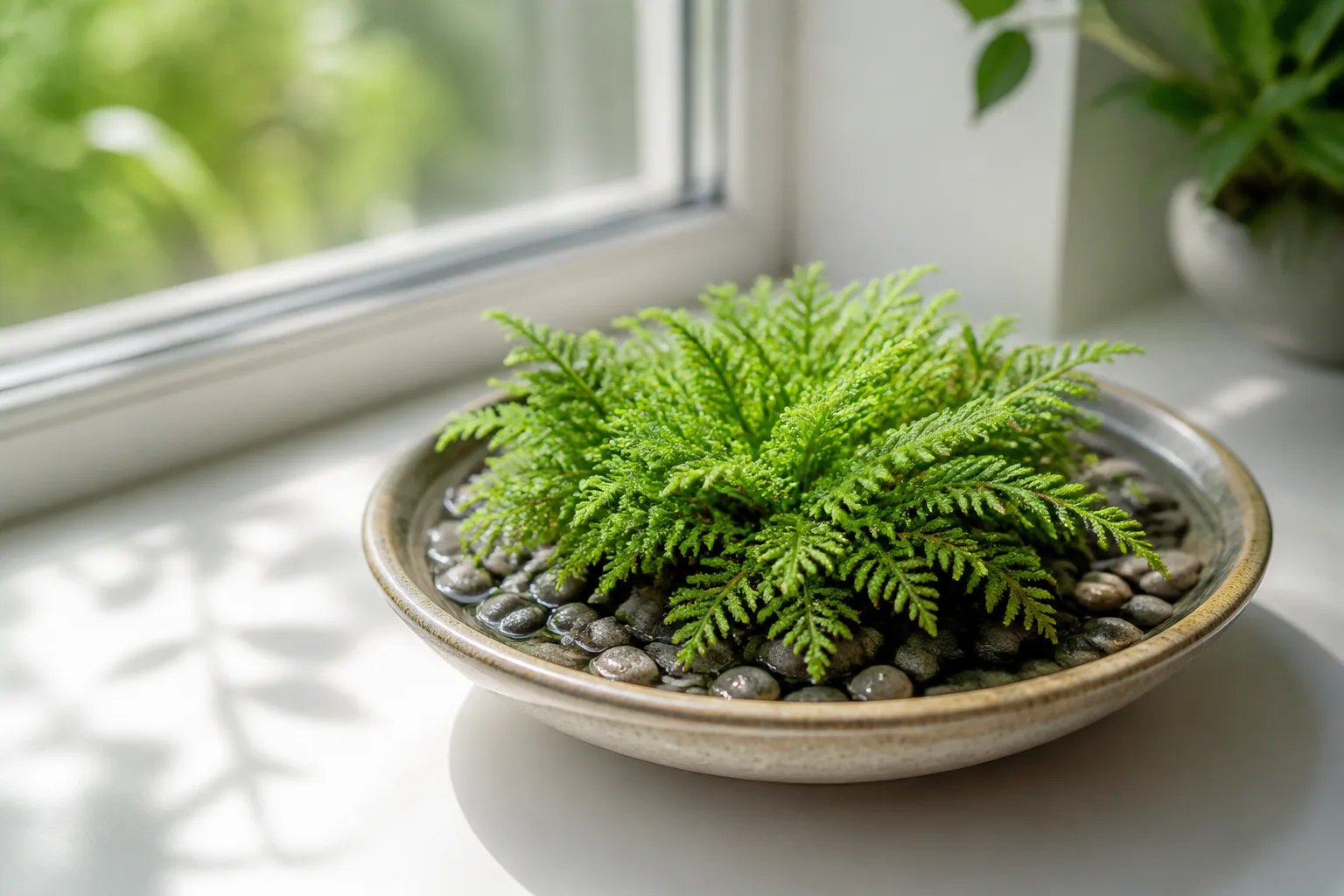
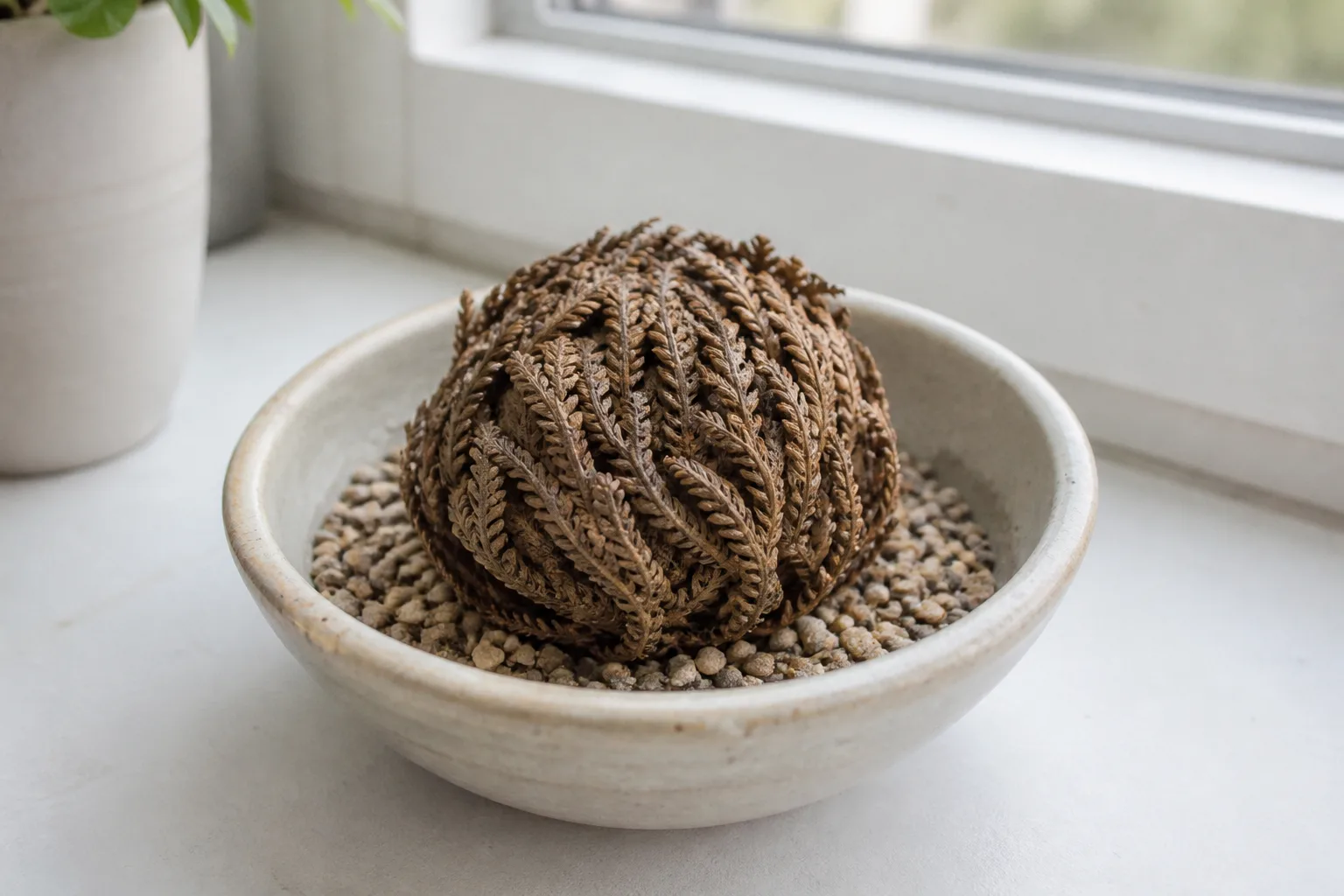
A dried brown ball sits in a shallow dish. You add water, walk away, and within hours the stems begin to uncurl into a soft green mat that looks nothing like the souvenir you bought. That performance is why Selaginella lepidophylla sells so well — and why so many copies end up rotting on a windowsill two months later. The resurrection plant is not hard, but it is not a normal tropical houseplant either. It evolved for desert dry-downs, not for life in a permanently full bowl.
This guide covers identification, the gravel-and-water setup that works indoors, a weekly wet-dry rhythm that keeps the plant green without drowning it, and the troubleshooting steps to use when fronds stay brown, turn black, or refuse to open at all.
What Is a Resurrection Plant?
In houseplant shops, “resurrection plant” almost always means Selaginella lepidophylla, a spike moss in the family Selaginellaceae. It is a small, fern-like lycophyte — closer to club mosses than to true ferns or flowering plants. Flora of North America describes it as forming a rosette of prostrate branches that lie flat when moist and curl inward into a ball when dry, with rhizophores (root-like structures) on the underside of the stems near the base of the rosette (eFloras).
Selaginella lepidophylla basics
Wild plants grow on dry rocky slopes and limestone talus in New Mexico, Texas, and Mexico between roughly 900 and 2,000 meters elevation (eFloras). USDA PLANTS lists the species as native and assigns the symbol SELE2 (USDA PLANTS). Indoors, a hydrated rosette typically spreads 4–6 inches wide and stays under a few inches tall — compact enough for a desk, windowsill, or terrarium accent.
Most plants are sold dry and dormant, often bare-root in a paper sleeve. That is normal. Do not assume a brown, curled plant is dead until you have given it a proper soak and waited at least 24–48 hours in warm, bright conditions.
False rose of Jericho vs true rose of Jericho
Two unrelated plants share the “rose of Jericho” name, and the mix-up causes more care mistakes than any single watering tip.
| Feature | False rose of Jericho (Selaginella lepidophylla) | True rose of Jericho (Anastatica hierochuntica) |
|---|---|---|
| Plant group | Spike moss (Selaginellaceae) | Flowering plant (Brassicaceae) |
| Native range | Chihuahuan Desert, U.S. and Mexico | Western Asia, Middle East, Sahara margins |
| Indoor display | Often grown green on gravel | Usually sold as a dried tumbleweed ball |
| Revival | Uncurls and photosynthesizes again | Opens in moisture; different biology |
| Reproduction | Spores; no flowers or seeds | Seeds after flowering |
Britannica distinguishes the false rose of Jericho as the green, fernlike S. lepidophylla that can revive even if roots are disrupted, while the true species is the gray mustard-family tumbleweed (Britannica). If your label says “resurrection plant” or “dinosaur plant,” you almost certainly have S. lepidophylla.
Resurrection plant vs resurrection fern
Resurrection fern (Pleopeltis polypodioides) is a true fern that also revives after drying, but it is a different species with a different growth habit — often seen clinging to tree bark in the humid southeastern United States. Selaginella lepidophylla is a desert rosette spike moss. Care, display, and watering logic do not transfer between the two.
How the “Resurrection” Actually Works
Desiccation tolerance is the whole story. When water is scarce, S. lepidophylla curls its stems inward, slows metabolism to a near standstill, and protects tissues with compatible solutes such as trehalose that limit salt and mechanical damage during drying (Wikipedia summary of desiccation research; primary mechanism described in Scientific Reports). In habitat, plants may retain only a few percent of their moisture and survive extended drought; eFloras notes they can uncurl and resume growth even after years dry (eFloras).
That superpower has a cost indoors. Repeated rapid wet-dry cycling — soaking today, bone dry tomorrow, soaking again — can reduce the plant’s ability to recover over time. In the wild, drought unfolds slowly. At home, the goal is to mimic the useful parts of that cycle (a real dry-down between drinks) without turning revival into a daily magic trick.
Quick Care Reference
| Care factor | Reliable starting point |
|---|---|
| Light | Bright indirect; east or west window; avoid hot midday sun |
| Display | Shallow bowl or tray with gravel; plant rests on stones |
| Water | Hydrate until green, then drain; at least one dry rest day weekly |
| Dry-down | Let fully curl brown every 2–3 weeks if keeping it green long-term |
| Temperature | Roughly 65–85°F (18–29°C); avoid drafts and heat blasts |
| Humidity | Average room air is fine when using a gravel tray |
| Soil | Optional; fast-draining mix if potted |
| Fertilizer | Highly diluted, at most twice yearly in spring and midsummer |
| Propagation | Division of stem sections in spring or late fall |
Light Requirements
Selaginella lepidophylla wants bright, indirect light — the kind you get from an east-facing window or a west-facing window with sheer curtain. It can tolerate more intensity than many tropical foliage plants because of its desert ancestry, but scorching direct sun through south glass in summer can bleach or crisp thin stems, especially right after a revival when tissues are full of water.
If the rosette stays pale, sparse, or slow to open after soaking, move it closer to the light source before you assume the plant is dead. If fronds bleach or feel papery on the sunward side, pull it back or filter the window. A few feet under a full-spectrum grow light also works when a window is too dim.
The Gravel-and-Water Setup Most Growers Use
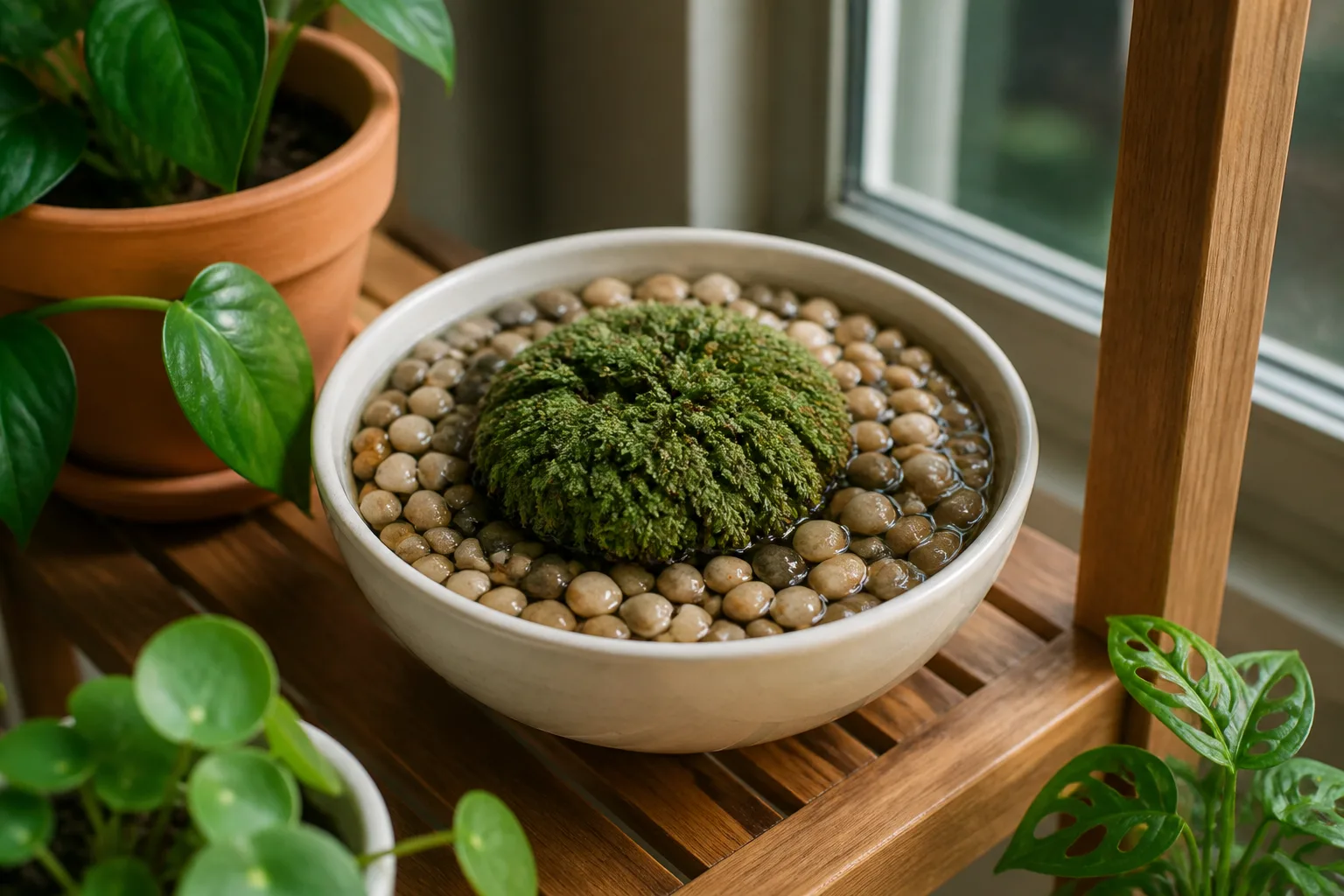
Most resurrection plants are grown without a traditional potting mix. A shallow dish of gravel or pebbles gives the rosette a stable seat and lets you control moisture at the base without submerging the plant.
Choosing a bowl, tray, or pot
Pick a watertight container wider than the dried ball — a cereal bowl, saucer, or bonsai tray all work. Wash gravel before use to remove dust. Spread an even layer deep enough that the plant sits level without tipping. The same waterline rules that apply to DIY pebble trays for tropical houseplants apply here in reverse: the plant rests on top of the stones; it is not submerged like an aquatic specimen.
Water quality and depth
Resurrection plants are sensitive to chlorine and salts. Rainwater, distilled water, or tap water left out overnight are safer choices than fresh, cold tap water straight from the faucet. Pour water until it reaches just above the pebbles — enough that capillary moisture reaches the base of the rosette, not enough to float the plant.
Never leave the ball sitting in deep standing water for days. Constant submersion invites black rot, sour smell, and mold on stems. If you enjoy the visual of a full bowl, treat that as a short revival soak, then pour off excess and return the plant to a shallow, barely wet gravel seat.
Watering Rhythm: Hydrate, Rest, and Dry Out
Think in three modes, not one “moist always” rule:
1. Active green phase. After revival, keep gravel lightly damp so the rosette stays open and green. Touch the stones — they should feel moist, not flooded.
2. Weekly rest day. Give the plant at least one day per week with no added water and let the dish dry on the surface. This mimics the dry pulse it expects and prevents the sour, anaerobic conditions that cause rot.
3. Full dry-down every 2–3 weeks. Even if you want a permanently green display, let the plant curl completely brown and dry for several days before the next soak. That full dormancy reset reduces stress and matches how the species survives in habitat. Many owners prefer to let it go brown on purpose — the revival is the point.
How long revival takes
Place a dry plant on moist gravel in a bright room at warm temperatures. Most rosettes begin uncurling within 3–4 hours; full green expansion often takes 12–48 hours, depending on how long it was dry, water quality, and light. Change the water if it smells off, but do not assume failure at hour six — give it a full day before you troubleshoot.
If you are storing the plant dormant long-term, keep it dry, cool, and out of crushing weight — a shoebox on a shelf is enough. Revival after months or years of storage is normal for healthy stock.
Growing in Soil Instead of Gravel
Soil is optional. Some growers move a revived plant into a shallow pot of well-drained mix — equal parts potting soil, perlite, and sand is a workable starting point — because it can look fuller and stay upright longer. Use a pot with drainage holes and water the mix lightly, then let the surface dry before the next drink. The same rot rules apply: a soggy crown kills faster than drought.
Because rhizophores are limited to the base of the rosette, repotting is rarely urgent. There is no large root ball to bound. Repot only if you want a different display or if salt buildup in old mix is obvious.
Temperature, Humidity, and Airflow
Room temperatures between 65 and 85°F (18–29°C) suit most homes. Avoid placing the dish directly over a radiator, on a sun-baked sill in winter, or in a cold draft from an AC vent. Sudden temperature swings can push a borderline plant into dormancy.
Average indoor humidity is usually adequate when you are using a gravel tray. If the plant curls while the stones are still wet, low humidity may be a factor — misting with distilled water can help short-term, but fixing light and the wet-dry cycle matters more than chasing 60% RH. For broader context on trays and humidity limits, see pebble trays for plants.
Fertilizing (Lightly, If at All)
S. lepidophylla is not a heavy feeder. If you fertilize at all, use a balanced water-soluble houseplant fertilizer diluted to one-tenth normal strength, once in early spring and once in midsummer. Skip fertilizer on a dormant brown plant; revive first, wait until green, then feed lightly if you wish. Over-fertilizing on wet gravel causes salt burn on delicate stems.
Pruning and Grooming
Pruning is cosmetic. Snip dead stems that stay black after a proper revival with clean scissors. Do not cut a healthy brown dormant ball apart trying to “refresh” it — soak first, then remove only tissue that stays mushy or smells sour after 48 hours of correct care.
Propagation by Division
Resurrection plants reproduce by spores, not seeds or flowers, but home propagation is usually done by division:
- In early spring or late fall, start with a healthy plant — dormant is fine.
- Cut or gently pull apart a section of stem 2–3 inches long that includes several branch tips.
- Lay the section on moist gravel or loose, well-drained mix.
- Keep humidity moderate and light bright; new green growth often appears within days.
- Move the division to the same gravel-and-water rhythm as the parent.
Label divisions if you run multiple bowls; dried balls all look identical.
Overwintering and Long-Term Storage
Plants kept outdoors in summer — uncommon, but possible in warm zones — should come inside before nights drop below about 65°F (18°C) if you want them active. For storage, let the plant dry completely, place it in a cool, dry, dark box where nothing will crush it, and ignore it until spring. Indoor plants grown year-round need no special winter protocol beyond backing off any fertilizer and respecting the dry rest days when heating dries the air.
Pests and Diseases
Despite the tough reputation, S. lepidophylla can host aphids, especially on soft new growth after revival. Rinse them off with lukewarm water or wipe with diluted insecticidal soap, then let the plant dry on schedule. Powdery mildew and leaf spot appear when air is stagnant and stems stay wet too long — improve airflow, shorten soak time, and remove affected fronds.
Troubleshooting Common Problems
Black, mushy fronds (rot)
Symptoms: Blackened stems, sour smell, slime at the base. Cause: Too much standing water, too few dry days, or soaking the whole ball instead of moistening gravel. Fix: Pour off all water, let the plant dry completely on a paper towel for 2–3 days, trim mushy tissue, and restart on barely moist gravel with weekly dry rest. Severe crown rot may not be recoverable.
Brown curled ball (dormancy vs death)
Brown and dry is usually dormancy, not failure. Soak on gravel and wait 24 hours. Death is more likely when the ball stays brown after correct revival attempts, feels permanently brittle with no green at stem tips, or smells sour before you add water. Retail plants that were stored badly or soaked continuously for months may not recover — that is a stock problem, not a watering-calendar problem on your end.
Plant won’t turn green
Work through this order: (1) Water quality — switch to distilled or rainwater. (2) Depth — water should wet gravel, not submerge the plant. (3) Light — move to brighter indirect light. (4) Temperature — warm room, not a cold sill. (5) Time — allow 48 hours. If all five are correct and the plant stays brown, it may be dead or exhausted from too many forced revivals.
Conclusion
Resurrection plant care comes down to respecting desiccation instead of fighting it. Identify Selaginella lepidophylla, give it bright indirect light, seat it on gravel with shallow moisture, build in dry rest days, and let it curl brown on a regular schedule if you want it to last. The drama of watching a dried ball turn green is real; the failure mode is almost always too much water for too long. Master the wet-dry rhythm and this spike moss becomes one of the lowest-maintenance curiosities on a windowsill — not because it needs nothing, but because what it needs is different from almost everything else in your plant collection.