Fiddlehead Fern Care: Grow Ostrich Ferns at Home
Grow ostrich ferns in cool, moist shade, then learn how to identify, harvest, clean, and cook fiddleheads safely without weakening the crown.
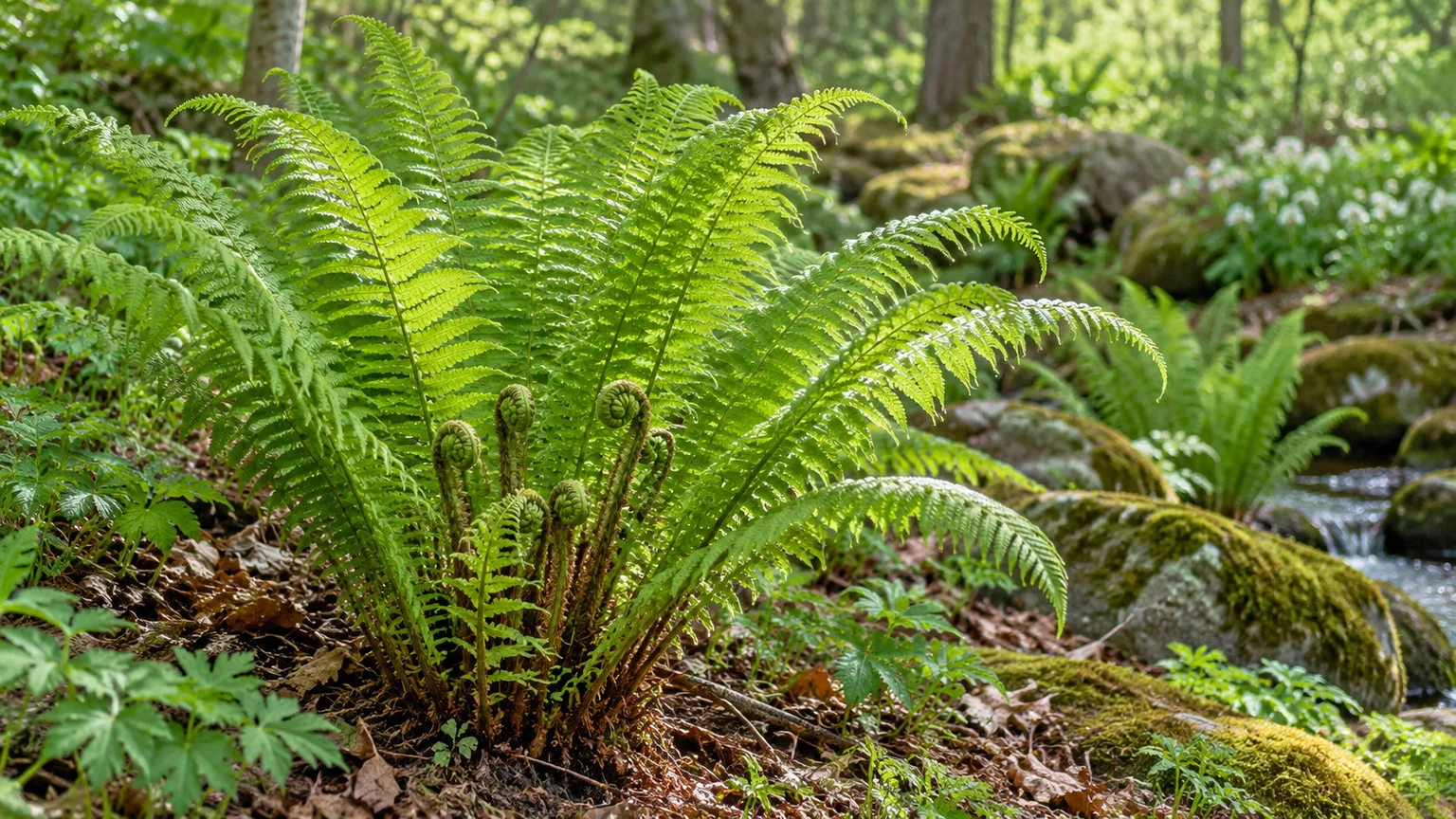
Ostrich fern (Matteuccia struthiopteris) is a hardy, spreading fern that can turn a cool, damp patch of shade into a lush perennial bed. Its young spring shoots, called fiddleheads or croziers, are also eaten in some regions. Growing them at home is straightforward if you match the plant to its woodland-like conditions: filtered light, organically rich soil, steady moisture, and room for underground runners.
The edible harvest calls for more care than the ornamental planting. Only ostrich-fern fiddleheads are commonly recommended as food, and not every coiled fern shoot is safe to eat. First identify the plant with multiple reliable features, then harvest sparingly from established crowns and follow current extension food-safety directions. If you cannot confirm the species, enjoy the fern as an ornamental and do not eat the shoots.
Is Ostrich Fern the Right Plant for a Fiddlehead Patch?
Choose ostrich fern if your garden has a cool, shaded area that stays moist without becoming a stagnant bog. It is a good fit for a woodland edge, the north or east side of a building, a rain-garden margin, or a naturally damp bed with humus-rich soil. It is a poor fit for a hot, exposed border, dry shade beneath thirsty trees, or a small bed where spreading would be a problem.
The plant is deciduous. In spring, fiddleheads unfurl into tall, plume-like green fronds; later, shorter, firmer fertile fronds may appear near the center and hold spores. The leafy fronds die back in fall. The RHS plant profile describes mature plants reaching about 1 to 1.5 meters tall and spreading through stolons, while NC State Extension gives a similar large-fern profile. Size varies with conditions, but this is not a compact border fern.
Think of fiddleheads as a small seasonal bonus rather than a dependable vegetable bed from the first year. A young division needs its fronds to establish a crown and build reserves. If edible harvest is the main goal, plant several vigorous crowns in a contained patch and wait until they are well established before picking.
Identify the Fern Before You Plant or Eat It
The edible fiddlehead commonly gathered in northeastern North America is the young coiled frond of ostrich fern. Other ferns also produce curled spring growth, so “fiddlehead” describes a shape, not a guarantee of edibility. Buy a correctly labeled plant from a reputable nursery, keep its label, and learn what the mature fronds and spring shoots look like before considering a harvest.
Taxonomy can add confusion: some plant databases list this species as Onoclea struthiopteris or show the familiar Matteuccia struthiopteris as a previous name. Those names refer to the ostrich fern discussed here; they do not make unrelated ferns interchangeable. The NC State Extension profile records the naming history.
The Three Clues That Matter
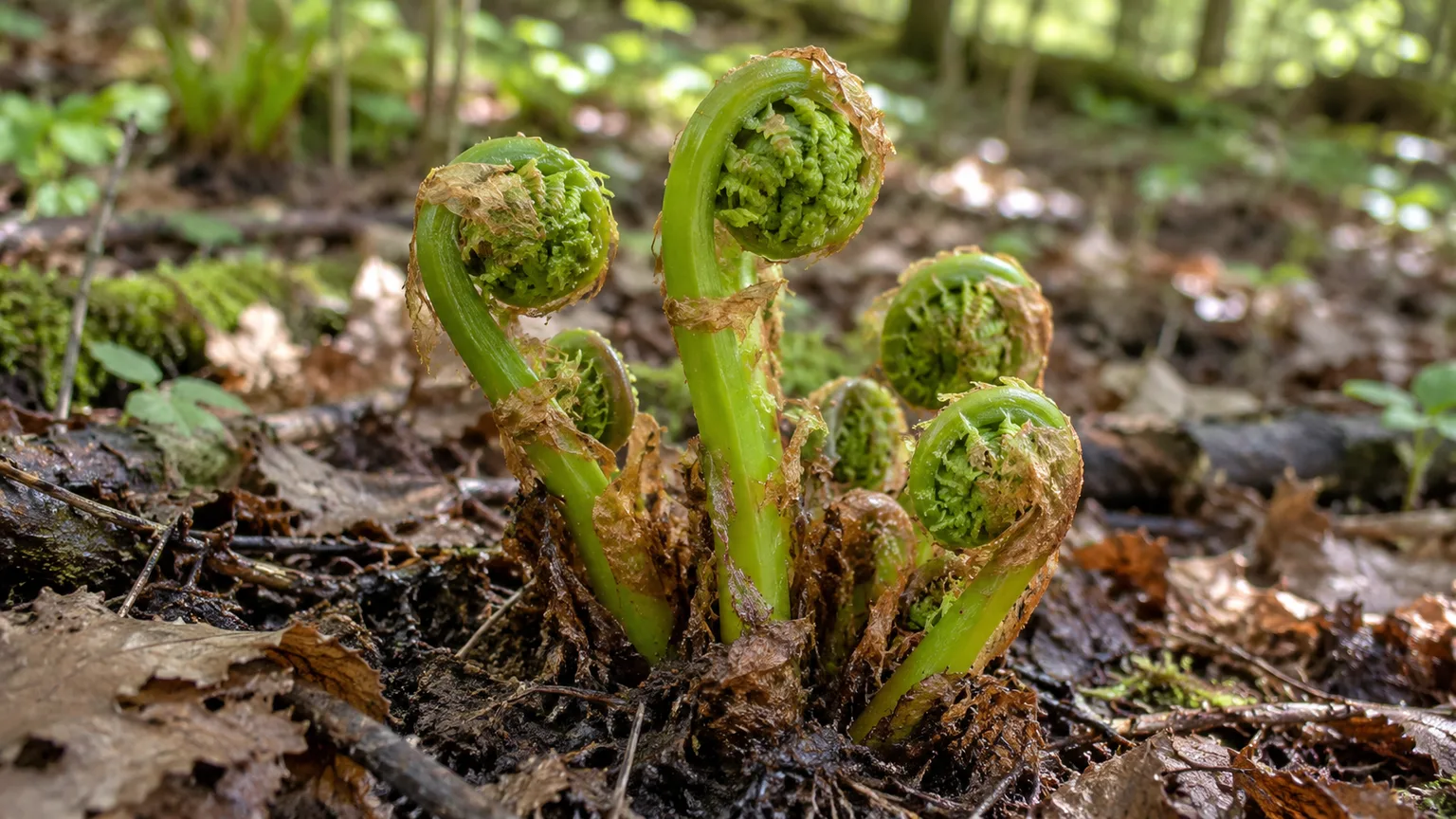
University of Maine Cooperative Extension identifies three useful features of ostrich-fern fiddleheads: a deep U-shaped groove on the inside of the smooth stem, thin brown papery scales on the young coil, and a distinctive grooved fertile frond when one is present. The scales fall away as the shoot elongates, and not every crown produces fertile fronds. Use the complete pattern, not one clue alone. The University of Maine identification bulletin includes photographs and a fuller description.
Bracken fern fiddleheads, for example, are fuzzy and lack the papery covering and inner groove described for ostrich fern. That comparison is not a license to identify every other fern by elimination. If the plant’s identity is uncertain, do not harvest it for food. A local extension office, experienced botanist, or dependable field guide can help confirm a planting; a photograph on its own may not show enough detail.
Choose a Cool, Moist Site
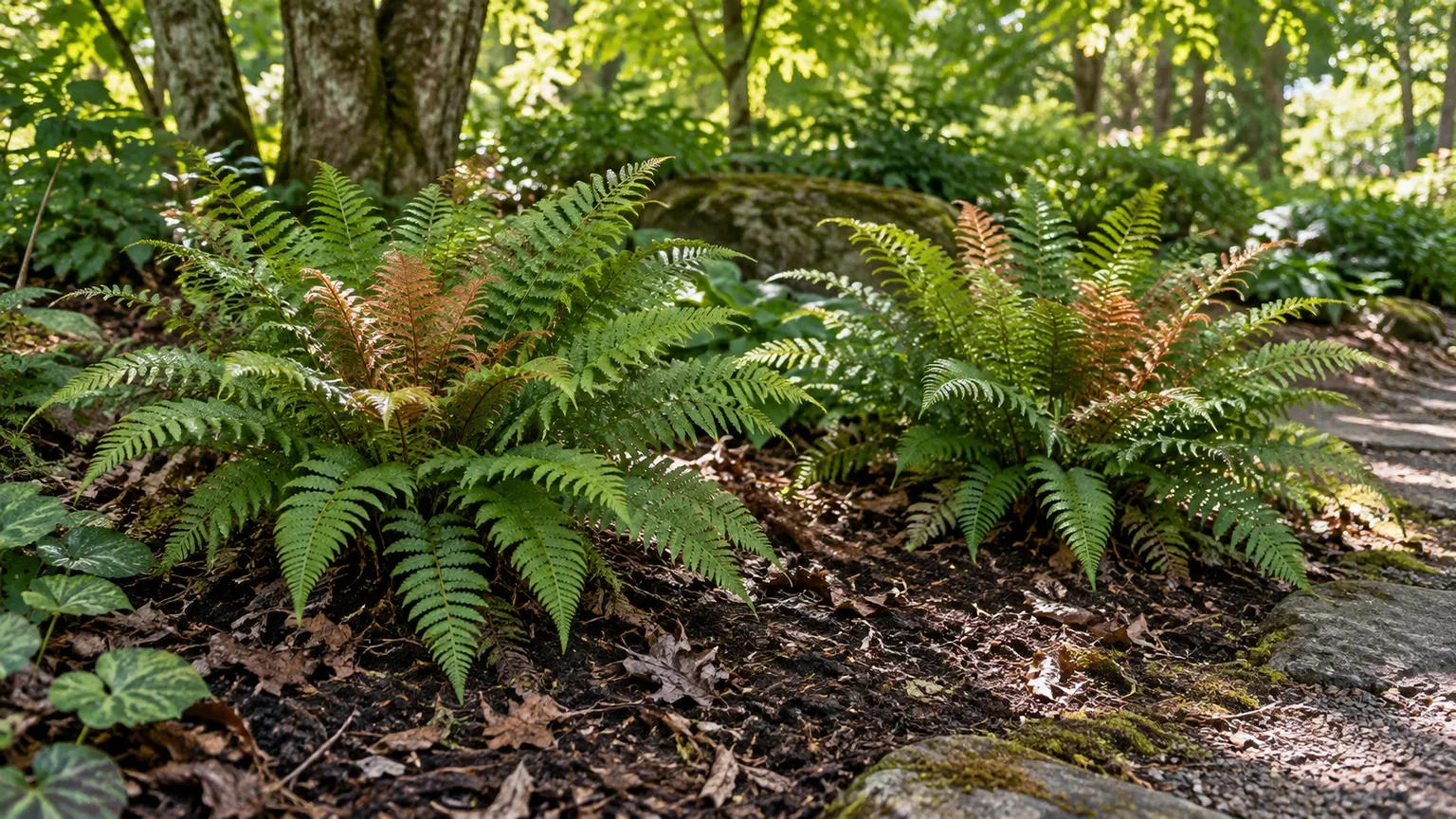
Ostrich fern grows best in partial to full shade. Dappled light or gentle morning sun can work if the soil remains cool and moist; strong afternoon sun and hot reflected heat increase water stress and can scorch fronds. In a warmer climate, give it the coolest shaded site available and watch the soil through summer. Shade cannot compensate for roots that repeatedly dry out.
Test the Soil Before Planting
Aim for soil with plenty of organic matter that holds moisture but still drains. Ostrich ferns occur in wet, shaded habitats and tolerate moist conditions, but a planting hole that remains flooded for long periods can deprive roots of oxygen. The RHS lists moist but well-drained soil; NC State Extension notes the species’ preference for constant moisture and adaptation to rich soil. These details fit together: keep the root zone evenly damp, not permanently waterlogged.
Before planting, check the site after rain and again during a dry spell. If water pools for days, choose a slightly raised area or improve drainage across the bed. If the soil dries rapidly under tree roots, add finished compost and leaf mold, mulch after planting, and be prepared to water during dry weather. Organic matter improves moisture retention, but it cannot overcome severe root competition or a badly chosen location.
Plant Crowns for a Future Harvest
Plant nursery-grown crowns in spring once the soil is workable, or in early fall where the weather leaves time for roots to settle before winter. Spring is often the simplest choice for new gardeners because the plant has a full growing season to establish. Avoid planting into heat, drought, or saturated ground. Water the plant in its pot before setting it out so the root ball is evenly moist.
Dig a hole as deep as the root ball and wider than the roots. Set the crown at the same level it grew in the pot; burying the crown can encourage decay, while leaving roots exposed makes them dry quickly. Backfill with the native soil mixed with mature compost if the bed is poor, press gently, and water slowly to settle soil around the roots. Spread a few inches of leaf mold or shredded leaf mulch over the root zone, keeping it away from the crown itself.
Space Plants With Their Runners in Mind
Allow about 2 to 3 feet between crowns if you want a bed to fill in, and more space if you want individual clumps or a path between plants. This is a practical starting point, not a promise that the patch will stop at that width: ostrich fern spreads by rhizomes and can send up new crowns beyond the original planting. The RHS describes colonies formed by stolons, and NC State Extension notes that underground runners can become weedy.
Make the boundary part of the plan. A broad bed with a mowable edge is easy to monitor; a narrow border beside delicate perennials may not be. If you need a fixed footprint, install a suitable root barrier or grow the fern in a large container. Do not plant it where a spreading colony could enter a natural area or another property.
Give the Bed Time to Establish
Let a new planting settle before you harvest. During the first year, focus on root growth and healthy fronds; do not strip fiddleheads from small crowns. In the next season, inspect each crown rather than treating the entire bed as one crop. A crown producing only one or two shoots may be newly established or weak. University of Maine Cooperative Extension recommends harvesting only healthy crowns with at least four fiddleheads.
A productive patch depends on the fronds left behind. Those fronds photosynthesize through the growing season and help the crown store energy for future growth. A bed with lush summer foliage may look less tidy than one cut back early, but removing green fronds reduces the plant’s opportunity to replenish itself. Clear dead material once it has died back; preserve healthy growth while it is still functioning.
Do not try to speed production with heavy fertilizer or constant picking. First correct shade, moisture, drainage, and competition. If those conditions are right, crowns can expand gradually by rhizomes. The garden will usually reward patience more reliably than intensive feeding.
Water, Mulch, and Feed for Reliable Fronds
Check moisture below the surface instead of watering by a rigid calendar. During active growth, keep the root zone from drying out; water deeply when the soil beneath the mulch begins to dry. Sandy soil and containers may need checks more often than a bed with deep loam. A drip line or soaker hose can deliver water at the soil surface without repeatedly wetting dense foliage.
Refresh leaf mulch as it breaks down, but do not pile it against the crown. Mulch moderates soil temperature, slows evaporation, and adds organic matter over time. Pull back a thick, matted layer if it prevents new fiddleheads from emerging or keeps the crown constantly soggy.
Fertile woodland soil rarely needs a high dose of fertilizer. Add a thin layer of finished compost or leaf mold in spring if the bed is depleted, then observe the plant’s growth. If you choose a fertilizer, use a product labeled for the site and any edible crop, and follow its label rather than increasing the dose to force bigger shoots. Epic Gardening’s ostrich-fern growing guide also emphasizes moisture, mulch, and managing rhizome spread; extension sources should guide food-safety decisions.
For an organic-style bed, rely on compost, leaf mulch, hand weeding, and a suitable site before reaching for pest products. “Organic” gardening practices do not make an unapproved product safe for an edible crop. If pest treatment is ever necessary, verify the label permits use on the crop and follow all directions, including harvest intervals.
Care Through the Year
Ostrich fern’s seasonal cycle is useful for planning: the edible stage is brief, the leafy stage is the time to build plant strength, and winter is generally a quiet period.
Spring and Summer
In spring, remove only dead debris that blocks new growth and check the bed regularly as fiddleheads emerge. If harvesting, identify the crown first and follow the conservative limits below. Once fronds expand, keep soil evenly moist during dry spells and pull weeds before they compete with the young patch.
Through summer, let the green fronds grow. Check for drought stress in hot weather, especially along exposed bed edges, and inspect the colony boundary for new runners. If the fern is planted under a tree, remember that rainfall may not reach the soil evenly beneath the canopy.
Fall and Winter
As temperatures cool, the green fronds naturally yellow and die back. You can leave them to decompose as a light protective layer or remove them after they are fully dead if the bed needs tidying. Avoid cutting green fronds just because they look untidy late in the season. Keep mulch loose, and do not cover the crown with a dense wet pile.
Established plants are hardy in suitable climates, but a newly planted crown benefits from an even soil surface and mulch that does not smother it. In cold-winter regions, let the plant enter dormancy naturally. In mild or warm regions, summer heat and drying soil are often more challenging than winter cold; choose the coolest location and monitor moisture.
Harvest Without Weakening the Crown
Harvest only from an established, healthy crown that has at least four emerged fiddleheads. If a crown is small, newly planted, or producing only one or two shoots, leave all of them to become fronds. The University of Maine sustainable-harvest bulletin reports a four-year study: crowns whose fiddleheads were all removed year after year declined, while crowns harvested at half or not at all maintained production. The extension recommends taking no more than half of the emerged fiddleheads, without returning for a second harvest from that crown later in the season.
Use that ceiling as a maximum, not a target. Taking fewer—or skipping a year—helps protect crowns that are stressed by drought, transplanting, pests, or poor growth. Harvest from different vigorous crowns rather than repeatedly picking the same one. Leave the remaining fiddleheads to unfurl; their fronds help build the crown’s reserves for the next season.
The window is short and varies by local weather. In Maine, emergence ranges from late April in the south to mid- or late May in the north, but your garden’s timing will differ. Check the patch every few days once spring growth starts. Maine Extension describes harvesting while shoots are still curled and roughly 2 to 6 inches tall; for a home patch, use that as a local reference and follow your regional extension’s guidance.
Harvest into a clean container and use clean scissors or a knife, taking care not to nick nearby shoots or the crown. Before gathering from land you do not own, obtain the landowner’s permission. The same consideration matters even for a small amount; do not assume public or private land is open to picking.
Clean and Cook Fiddleheads Safely
Never eat raw or lightly cooked fiddleheads. Health agencies have investigated illness outbreaks associated with raw or undercooked fiddleheads, and the precise cause has not been established. University of Maine Cooperative Extension advises thorough cleaning and cooking: rinse under clean, cold potable water, soak and rinse again to remove papery scales and debris, then cook in a loose batch. Keep the harvest refrigerated until preparation.
UMaine’s Facts on Fiddleheads bulletin recommends boiling cleaned fiddleheads in water for 15 minutes or steaming them, covered, for 10 to 12 minutes. Do not substitute a quick sauté, stir-fry, or microwave step for the full boil or steam. If a recipe calls for sautéing, cook the fiddleheads thoroughly first, then finish them in the recipe. Because food-safety guidance can be updated and local practices vary, check current extension or public-health instructions where you live.
Use potable water, not untreated stream or river water, to clean the harvest. Discard shoots that are slimy, badly damaged, or have an unpleasant odor. Do not use cooking as a way to make an unidentified fern edible. Correct species identification comes first; thorough cooking comes after it.
For short-term storage, refrigerate fiddleheads promptly and use or preserve them within a week or less for best quality, as UMaine advises. Its bulletin does not recommend pressure canning because tested home-processing times have not been established. For freezing or preserving, follow a current tested extension recipe rather than improvising processing times.
Grow Ostrich Ferns in Containers
A large container can keep rhizomes from wandering and is useful where in-ground planting is impossible. Choose a wide, sturdy pot with drainage holes and enough room for a substantial crown. Fill it with a moisture-retentive potting mix amended with compost, but do not use a pot that holds water without draining. Set it in partial to full shade, protected from hot afternoon sun and drying wind.
Containers dry faster than garden beds, so check the mix more frequently, particularly during active growth and warm weather. Water thoroughly when the upper layer begins to dry, then let excess drain away. A saucer that keeps the pot standing in water can leave roots oxygen-starved; the goal is even moisture, not a permanently flooded root ball.
Container plants may produce a smaller harvest than established garden colonies. Do not harvest from a recently potted division, and be especially conservative if growth is sparse. Refresh or replace tired potting mix when dividing, and check the drainage holes periodically so rhizomes and roots do not clog them.
Divide a Patch and Contain Its Spread
Division is a practical way to expand a planting or move a crown that has outgrown its space. Work in cool weather, usually early spring before fronds fully unfurl or in early fall where conditions remain mild. Water the patch the day before, lift a section carefully with a spade, and separate a rooted division with a clean, sharp tool. Each piece needs healthy roots and a viable crown; tiny fragments without roots are poor planting material.
Replant at the original crown depth, water well, and keep the new division consistently moist while it recovers. Do not harvest from a division in its first season. The RHS notes the fern’s stoloniferous habit, and NC State Extension describes its underground runners; inspect beyond the original clump and remove unwanted young crowns while they are small.
To keep a bed contained, define the boundary before the colony fills in. Pull or dig new crowns beyond the edge, or use a root barrier designed for rhizomatous plants. Do not compost diseased material; healthy unwanted divisions can be replanted or shared if local rules allow.
Troubleshoot Slow Growth and Brown Fronds
If a new fern produces few fronds, check establishment and site conditions before adding fertilizer. A recently planted crown may need time to settle. A dry root ball, dense tree-root competition, too much sun, or waterlogged soil can also limit growth. Compare the soil moisture below the mulch with the plant’s symptoms and adjust one condition at a time.
Brown, crispy frond edges often indicate drying, heat, or too much direct sun. Water deeply if the root zone is dry, add a loose mulch layer, and consider moving a young plant to a cooler location. If fronds yellow and collapse in fall, that may be normal dormancy rather than a problem. Soft, dark tissue at the crown or persistent standing water suggests excess moisture and poor drainage; do not keep adding water to a plant in soggy soil.
If a patch spreads farther than expected, the cause is the fern’s normal rhizome growth. Remove outlying crowns while they are small and reinforce the bed edge. If fiddleheads are scarce, stop harvesting for a season and review shade, summer moisture, crown age, and whether previous picking removed too many shoots.
Conclusion
Ostrich ferns reward a cool, moist, shaded site with a vigorous seasonal display and, once established, a limited spring harvest. Start with a correctly labeled plant, give crowns time to grow, and plan for spreading rhizomes. At harvest, use multiple identification clues, take no more than half the shoots from a strong crown, and leave the rest to grow. Clean with potable water and cook thoroughly according to extension guidance. When identification or food-safety instructions are uncertain, skip the meal and keep the fern as a garden plant.