How to Grow and Care for Marigolds: Full Season Guide
Grow marigolds in beds or pots with clear timing, spacing, watering, and troubleshooting advice, plus ways to extend blooms, save seed, and plan for frost.
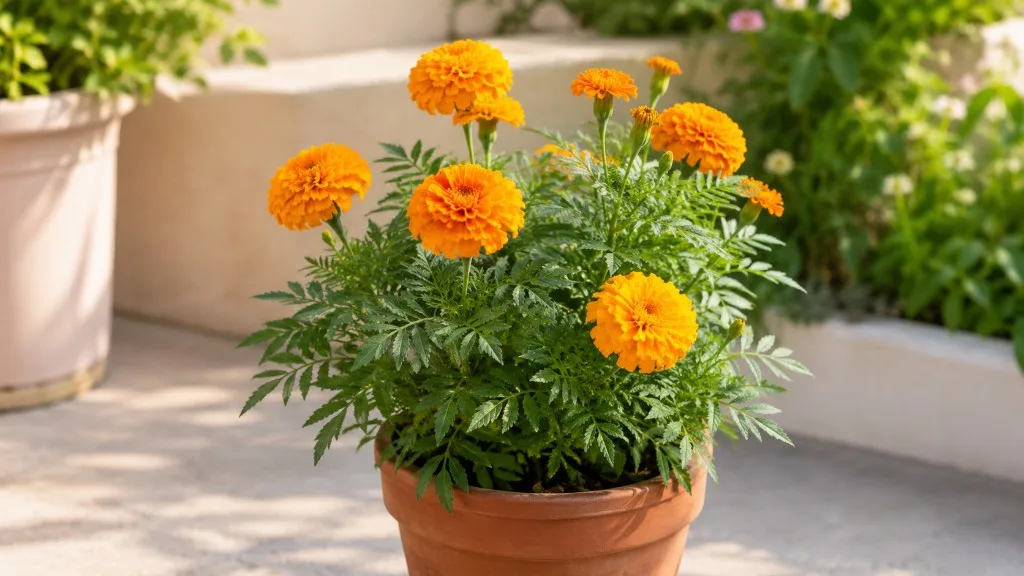
Quick growing answer: give them sun, warmth, and drainage
Plant marigolds outdoors after the last frost risk has passed and the soil has warmed. Give them a spot with about six or more hours of direct sun, soil that drains after rain, and enough room for the cultivar to reach its listed width. Keep newly planted seedlings evenly moist while roots establish; after that, water when the root zone begins to dry rather than on an automatic daily schedule.
Most garden marigolds are annuals in cultivation, so the aim is to start them at the right point in spring, keep them from becoming waterlogged or overfed, and remove spent flowers if you want a tidier, longer display. There is no need to fertilize every week or to treat marigolds as a general-purpose insect repellent. A well-chosen variety in a sunny, open site often needs less intervention than a plant pushed with excess water and nitrogen.
For a full season plan, decide first whether you want low edging, compact container color, or taller cut flowers. The size and growth rate differ among the main marigold groups, so choosing the right type makes later spacing, pinching, and support much easier.
Choose a marigold type that fits the space
The common name covers several Tagetes species and many cultivars. A plant sold as a marigold could be a short, spreading French type or a tall African type with large flower heads; the name alone does not tell you how much space to reserve. Read the cultivar tag for mature height, width, and days to bloom, then design around that information rather than assuming every marigold is a small bedding plant.
African, French, and signet marigolds at a glance
African marigolds (Tagetes erecta) usually grow taller and carry larger flower heads than the other common groups. Many are useful near the back of a border or in a cutting garden, although compact cultivars also exist. Tall forms benefit from a sheltered position and adequate spacing because heavy blooms and wind can make crowded stems lean.
French marigolds (T. patula) are generally compact, branching plants that suit edging, mixed annual beds, and containers. Their flower colors often combine yellow, orange, and mahogany tones.
Signet marigolds (T. tenuifolia) tend to be lower, with finely divided leaves and smaller, single flowers that create a lighter texture at a path edge or the front of a border. For French types, cultivar-specific guidance from Gardener’s Path is useful when comparing compact forms and setting a planting plan.
Wisconsin Extension summarizes the typical height differences among these groups in its marigold growing guide, while Penn State Extension notes that cultivar choice affects the practical planting plan.
These size ranges are guides, not guarantees. Breeding produces compact African marigolds and larger French cultivars, and growing conditions can change final height. If you need a specific look, choose by the cultivar’s label and flower form; our marigold type guide compares the available forms in more detail.
Time planting around frost and soil warmth
Marigolds are warm-season plants. Set out nursery transplants or direct-sow seed only when frost is no longer expected and the ground is warm enough for active growth.
Wisconsin Extension gives soil warmer than about 65°F as a useful direct-sowing threshold. That temperature is a practical cue rather than a universal date: soil warms at different rates in raised beds, heavy clay, containers, and coastal or mountain gardens.
In a short-season area, start seed indoors roughly six to eight weeks before the expected last frost, then harden seedlings outdoors gradually before planting. Give indoor seedlings strong light and avoid keeping the potting mix saturated.
A seedling raised in a dim, warm room can become stretched and fragile before it ever reaches the garden. Penn State Extension describes direct sowing and indoor starting as options, and its guidance notes that faster French and signet types can be sown later than slower, tall African types.
Start indoors when an earlier display matters
Starting indoors is useful when you want earlier flowers or have a short summer, but it is not mandatory. Marigold seed germinates readily in warm conditions, so direct sowing can be simpler in a long growing season. If you start early, resist moving seedlings outside just because a warm afternoon appears; a late cold night can set them back or kill them.
Harden plants over several days by giving them increasing time outdoors in a sheltered, partly shaded spot, then move them toward their final sun exposure. Water before transplanting if the root ball is dry, handle seedlings by the leaves or root ball rather than squeezing the stem, and water them in after planting. For a step-by-step seed plan, see how to plant marigold seeds.
Pick a sunny site and prepare the soil
Aim for at least six hours of direct light daily; closer to eight hours generally supports more compact growth and stronger flowering. Plants in shade may stretch toward the light, flop over, and produce fewer buds.
In very hot regions, marigolds still need sun, but afternoon shade can reduce stress if the site is exposed and the soil dries extremely fast. If bloom declines during a heat wave, first check water and root health rather than assuming shade is the only answer.
Choose soil that drains freely. Marigolds tolerate ordinary garden soil and do not need a rich, heavily amended bed.
Water sitting around the roots for long periods is a bigger risk than modestly lean soil. If the planting area is dense clay, improve the bed broadly with organic matter or choose a raised bed; do not simply fill an isolated planting hole with a light potting mix, which can create a water-holding pocket.
Wisconsin Extension reports a soil pH range around 6 to 7 for marigolds. Most gardeners do not need to test pH just to plant a few annuals, but a soil test is useful if plants repeatedly struggle or the bed has been amended heavily.
Avoid lime or sulfur based on guesswork. NC State Extension’s Tagetes plant profile likewise emphasizes sun and well-drained conditions.
Plant seeds and transplants with enough room
For direct sowing, wait until the soil is warm, loosen the top layer, and plant seed about a quarter inch deep, following the packet if it gives a different depth for that cultivar. Keep the seedbed lightly moist until seedlings emerge, not saturated. Once seedlings have several true leaves, thin them to the spacing on the packet; leaving every seedling in place makes a crowded patch that competes for light and dries unevenly.
When transplanting, space plants according to their mature width. Wisconsin Extension and Penn State give common examples around 8 to 10 inches for many French or signet types and about 12 inches for many African types, but individual cultivars may require more or less.
A compact edging variety can be planted closer than a tall, large-flowered type. Use the seed packet or nursery tag as the final spacing authority.
Set each transplant at the same depth it grew in its pot, firm the soil gently, and water around the root ball. Do not bury a healthy compact seedling deeply just to stabilize it. Taller cultivars can be planted a little deeper if their stems are sturdy and the planting guidance allows it, but staking or a more sheltered location is often the simpler answer if wind is a problem.
Water by checking the root zone
Water newly planted marigolds often enough to prevent the root ball from drying while roots spread into the surrounding soil. Once established, they can tolerate a short dry spell, but flowering usually suffers if they repeatedly wilt. Check the soil before watering: if the upper layer is dry and the soil near the roots is only faintly moist, water deeply; if it is still wet, wait.
A slow soak at the soil line encourages roots to grow downward and keeps foliage drier than frequent overhead sprinkling. In beds, the interval depends on rainfall, soil texture, wind, and temperature, so a weekly rule is only a starting point.
For established plants, Epic Gardening’s marigold guide suggests letting the top few inches of soil dry before watering again, a useful check that still needs adjustment for clay, rain, and heat. Containers are less forgiving because their limited mix heats and dries quickly; check them with a finger and water when the upper inch or two feels dry, allowing excess water to drain from the pot.
Do not let pots sit in a full saucer. Repeatedly wet soil can starve roots of oxygen and lead to yellowing, drooping, or root rot.
If you are unsure whether a plant is thirsty or overwatered, feel the mix and inspect drainage before adding more water. The symptom guide on marigold watering problems can help you distinguish a dry root ball from waterlogged soil.
Fertilize only when the soil needs it
Marigolds are not heavy feeders. If the bed has ordinary garden fertility and plants are growing and blooming well, skip routine fertilizer. Too much nitrogen often produces lush leaves at the expense of flowers, and fertilizer cannot compensate for shade, soggy roots, poor planting time, or a cultivar that is naturally slow to bloom.
If the soil is unusually poor or the plants show a consistent growth problem, use a soil test before adding nutrients. Work mature compost into a bed if it needs better structure, but remember that compost also adds nutrients.
If fertilizer is warranted, follow the label rate for the growing area and choose a balanced product rather than applying a large dose near stems. The NC State profile and Wisconsin Extension both describe marigolds as adaptable plants that generally need little supplemental feeding.
Do not fertilize a stressed, waterlogged plant as a quick fix. Correct the drainage or watering issue first, then reassess new growth. If an established plant has healthy foliage but few flowers, stop feeding and check its light and cultivar instead of switching to a stronger bloom formula.
Pinch and deadhead for the display you want
Pinching is optional. Removing the soft growing tip when a young plant has several sets of leaves encourages branching and can create a fuller mound with more flowering stems.
The tradeoff is timing: pinching delays the first flush, so skip it if the growing season is short or you want flowers as early as possible. Compact cultivars may branch well without pinching.
Deadheading serves a different purpose. Snip or pinch off a spent flower head once its petals fade if you want a tidier plant and continued bud production. Cut back to a leaf joint or a healthy side shoot rather than removing a long section of stem.
Leave a few flower heads if you want to collect seed or allow self-sowing. The guide to deadheading marigolds shows where to cut and how to tell a spent bloom from a fresh one.
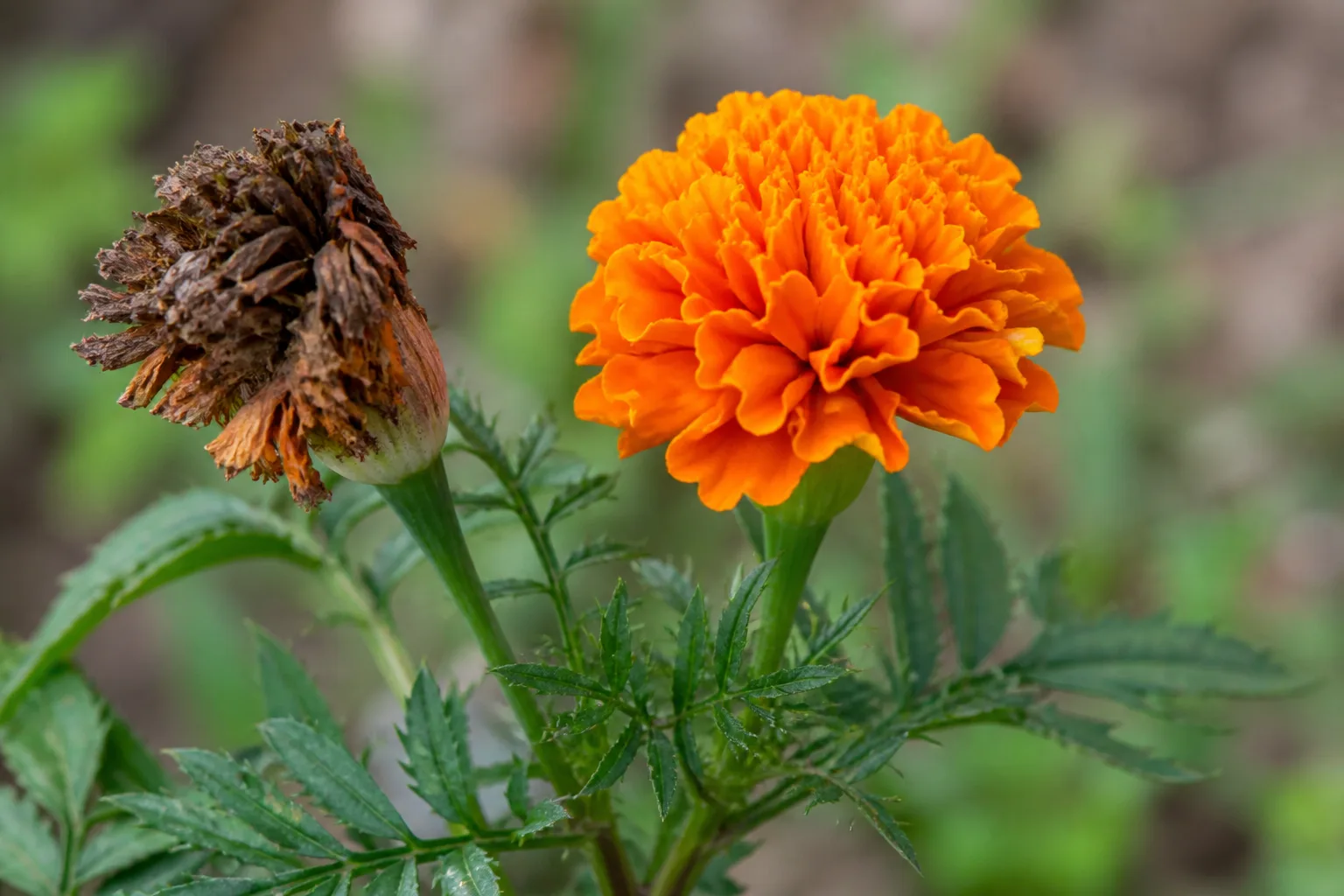
In a mixed bed, deadhead only as often as the appearance warrants. Some gardeners prefer a light weekly pass; others remove flowers only when most of a cluster has faded.
There is no need to strip every plant daily. If seed saving is part of your plan, mark a few healthy flowers and let those heads mature fully.
Keep plants productive through summer heat
A pause in flowering during the hottest weeks does not always mean something is wrong. High temperatures can shorten the life of individual blooms and slow the formation of new buds, especially when plants are also short of water. Keep the soil evenly moist but not soggy, clear away spent flowers, and avoid adding high-nitrogen fertilizer in an attempt to force a flush.
If stems become leggy or the middle of the plant looks tired, remove only the weakest or most stretched growth. A light trim can encourage fresh branching when there is enough warm season left, but a severe cut can set the display back and may not recover before frost.
Use plant condition, local temperatures, and the remaining season to decide how much to prune. Penn State Extension notes that French and signet types are useful for later sowing; that shorter turnaround can matter more than trying to revive an exhausted planting in late summer.
Airflow matters during humid weather. Keep the recommended spacing, remove badly damaged leaves, and water at the base when possible. If leaves show white powdery growth or spreading spots, avoid overhead irrigation and do not crowd replacement plants into the same damp pocket.
Grow compact marigolds in containers
Use a container with drainage holes and a fresh, well-draining potting mix. Match the pot to the cultivar: a small French or signet marigold fits a modest pot, while a tall African type needs a larger, heavier container to support its canopy. A group planting can be attractive, but overcrowding one pot creates competition and can make the mix dry unpredictably.
Containers heat and dry faster than garden beds, particularly on paving or against a south- or west-facing wall. Check the mix every day during hot, windy periods, but water only when it needs it.
Apply water until some drains from the bottom, then empty any saucer. A pot that dries in a few hours may be too small for the plant or exposed to excessive heat; moving it to a less reflective surface or using a larger container can improve consistency.
Do not add fertilizer every time you water unless the product label is specifically formulated for that routine. Begin with potting mix instructions and plant response.
If growth is pale or slow, verify sunlight, drainage, and root space before feeding. At season’s end, remove annual marigolds rather than trying to overwinter them as houseplants; they need outdoor light and are not reliably maintained as indoor foliage plants.
Troubleshoot foliage, buds, and missing flowers
Start with the whole growing situation before treating a single symptom. Is the plant getting enough direct light? Is the soil wet or dry several inches down?
Was it planted recently, and is it still establishing? Does the cultivar need more time? Those checks usually narrow the cause more effectively than adding fertilizer or spraying a product immediately.
Why a leafy marigold may not bloom
A leafy plant with few flowers often points to shade, excess nitrogen, or a naturally later-blooming cultivar. Move a container into stronger sun if possible; for a garden bed, reserve the sunniest location for the next planting.
Stop feeding unless a soil test shows a need, and allow a young plant time to mature. Severe heat can also pause bloom temporarily, with flowering improving when temperatures moderate.
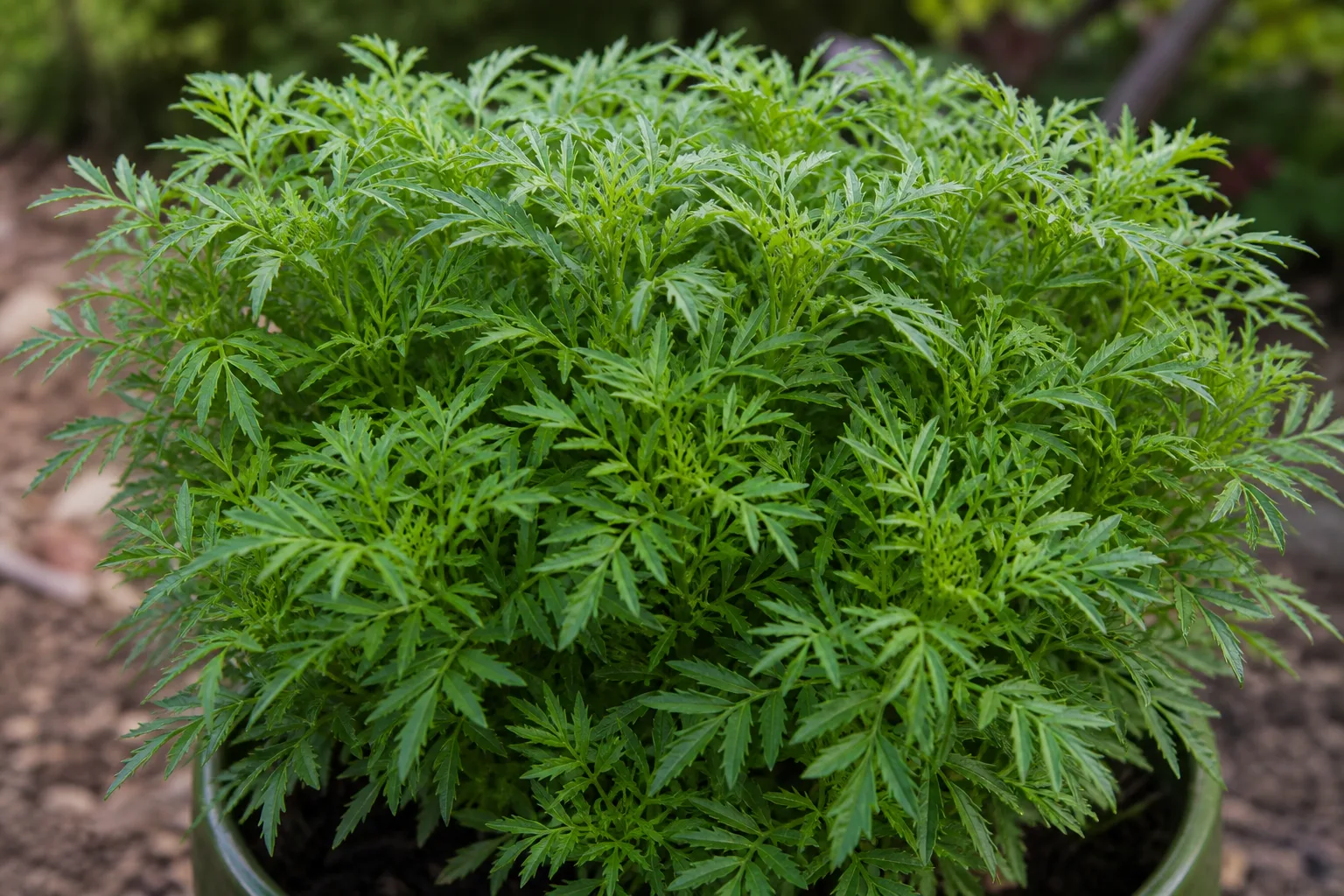
If buds form but fail to open, check for prolonged drought, waterlogged roots, or insect feeding on the buds. Drooping with wet soil suggests a root problem rather than a need for more watering.
If plants are unusually small, consider whether they were planted late, spaced too tightly, or had a difficult start indoors. A healthy, well-established plant is a better candidate for light pruning than a seedling already struggling to recover.
Manage pests and disease without overreacting
Marigolds have relatively few serious pest problems, but young seedlings can be chewed by slugs or snails, while aphids may gather on tender growth. Identify the pest before acting.
For a small aphid colony, a firm water spray can dislodge insects; repeat checks over several days and protect beneficial insects. For slugs, remove hiding debris and inspect at dusk rather than treating the entire bed without evidence.
Crowded plants, poor drainage, and persistently wet foliage make disease more likely. Powdery mildew can appear as white surface growth, while damping-off causes young seedlings to collapse near the soil line.
Improve spacing and airflow, water the soil rather than the foliage, and start seed in clean containers and fresh mix. A seedling that has collapsed from damping-off will not recover; discard it and correct the conditions before resowing.
Marigolds are often advertised as companion plants that keep insects away from nearby vegetables. Do not rely on a few marigolds as a broad insect barrier.
Extension sources describe a narrower possibility: certain marigold species used densely as a cover crop may reduce some root-knot nematodes in the treated soil, but that is not equivalent to interplanting a row beside tomatoes. Read more in our evidence-based guide to whether marigolds deter pests.
Save seeds or let a few plants self-sow
To save seed, leave a few healthy flower heads on the plant until the petals fade and the seed head dries. Harvest on a dry day, separate the long, dark seeds from the papery chaff, and let them dry fully before storing them in a labeled envelope in a cool, dry place.
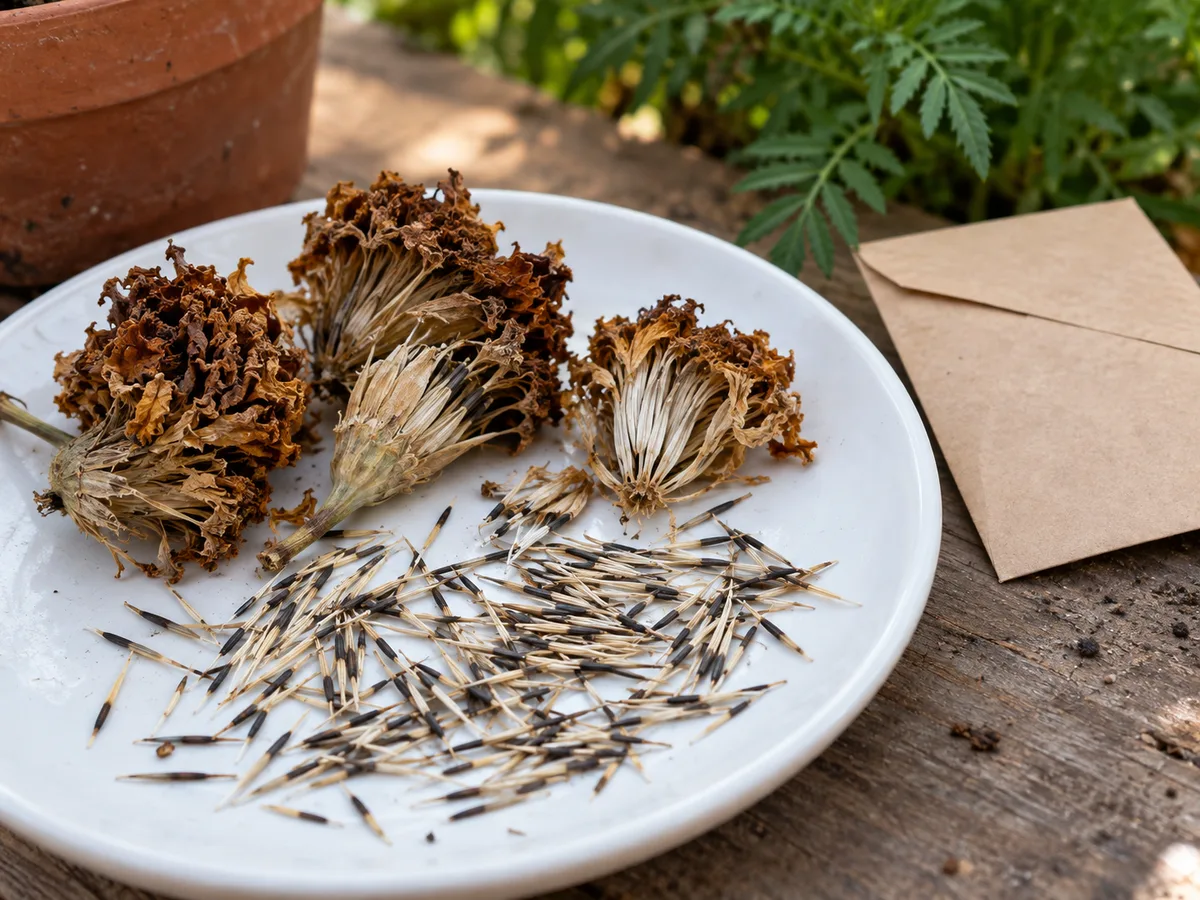
Our marigold seed-saving guide walks through the process in detail.
Open-pollinated varieties may produce seedlings that resemble the parent, but a saved seed from a hybrid may not grow true to type. Nearby marigolds can also cross-pollinate, so color and flower form may vary. If you want a uniform bed next year, buy fresh seed of a named cultivar; if you enjoy surprises, leave a few mature heads to drop seed where seedlings will have room.
Self-sown plants appear only when seed survives local weather and soil conditions. They are not a dependable substitute in every garden, and seedlings can emerge where you do not want them. Thin volunteers early, while their roots are small, and keep only the strongest plants in suitable light.
Use marigolds thoughtfully in mixed beds
Low French and signet types can edge a sunny path or fill spaces between taller summer annuals. Taller African cultivars make more sense toward the back of a bed or in a dedicated cutting row, where their flower heads are visible without shading smaller plants. Pair colors by the effect you want: yellow and orange create a warm block, while deep red or mahogany flowers contrast with blue or purple companions.
Treat marigolds as ornamental companions, not as a substitute for pest monitoring or crop rotation. Their roots and foliage do not guarantee protection for neighboring vegetables, and a dense planting can itself reduce airflow. Choose companions with compatible light and water needs, leave room to inspect leaves, and remove plants that are diseased rather than allowing them to crowd a healthy bed.
Finish the season when frost arrives
Most garden marigolds are grown as annuals and will die after a hard frost. Before then, decide whether you want to save seed, let a few plants self-sow, or remove the entire planting for compost or yard-waste disposal. If plants show serious disease, follow local guidance for disposal rather than adding affected material to a home compost pile that may not heat sufficiently.
In regions with a long, mild autumn, flowering can continue until cold weather arrives, but the plants are not reliably perennial. If you want the same color next year, collect seed from a stable open-pollinated cultivar or plan to sow or buy fresh plants in spring. For help deciding whether plants can return in your climate, see whether marigolds are perennials.
Conclusion
Growing marigolds well starts with matching the type to the space and waiting for frost risk to pass. Give plants warm, well-drained soil, plenty of sun, and spacing based on the cultivar’s mature width; water by checking the root zone and fertilize only when soil evidence calls for it.
Pinch young plants only when you can trade a slightly later first bloom for a fuller shape, and deadhead when you want to extend a neat display. If flowering slows, look first at light, heat, crowding, and water before reaching for fertilizer or pest treatments. With those decisions made early, marigolds can provide a long run of color from spring planting through the first frost.