How to Keep Your Christmas Tree Fresh All Season Long
Keep a real Christmas tree fresh with a clean trunk cut, the right stand, daily water checks, cooler placement, safe lights, and clear drying warning signs.
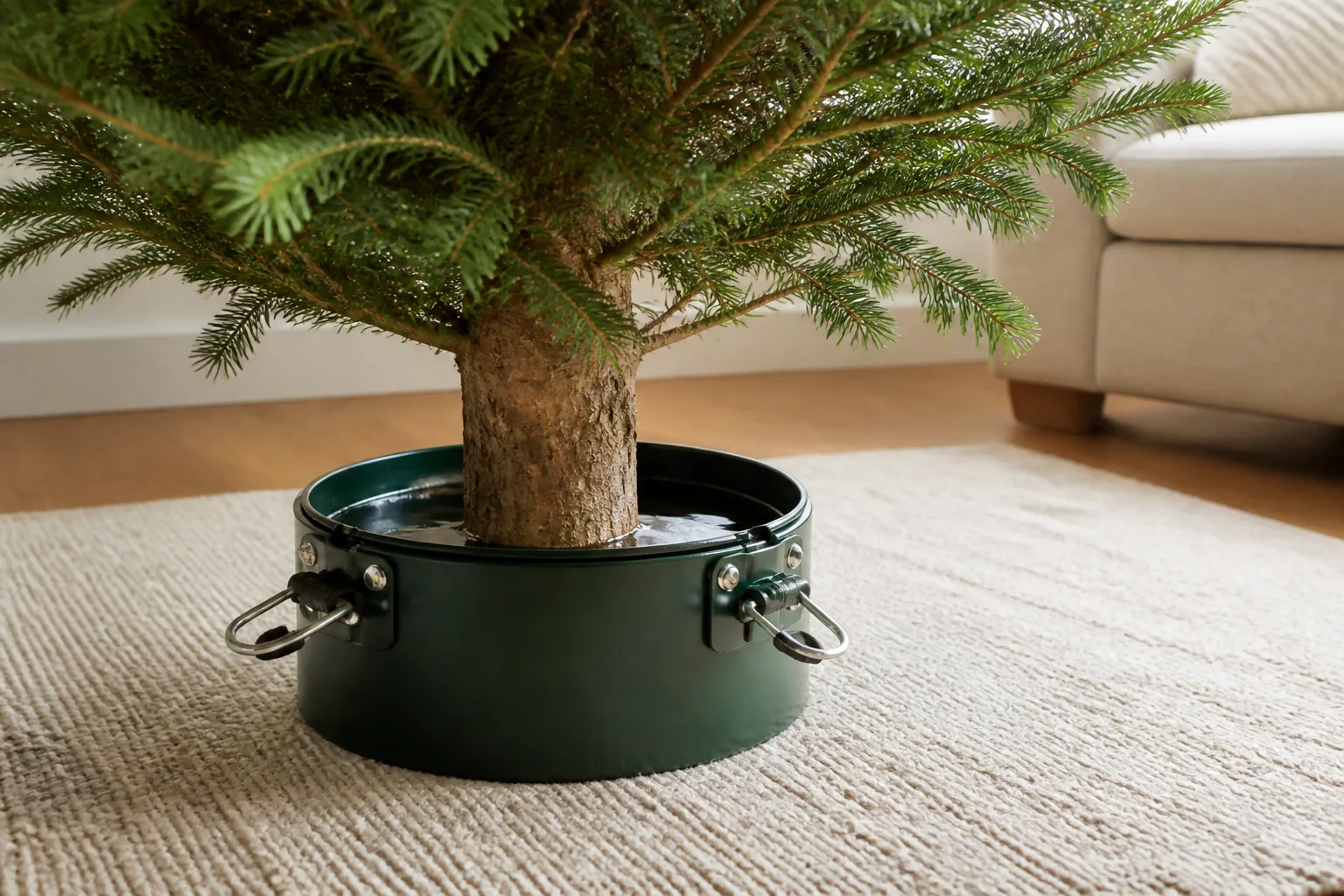
A real Christmas tree stays fresh when you protect the moisture it still contains and keep replacing the water it loses indoors. That means choosing a tree that is fresh at the lot, making a clean cut when needed, putting the trunk into a properly sized water-holding stand, checking the reservoir before it runs dry, and keeping the tree away from heat.
No routine can turn an old, dry tree into a freshly harvested one. The realistic goal is to slow moisture loss and avoid the one mistake that causes the fastest decline: allowing the cut end of the trunk to sit above the water line. With the right setup, many trees can look good through the holidays, but the exact display window depends on species, harvest date, handling, room conditions, and how early you decorate.
Why tree freshness comes down to water and temperature
A cut tree is still a living piece of plant tissue, but it no longer has roots to replace the water lost through its needles. The National Christmas Tree Association explains that more than half of a cut tree’s weight is water, which is why a dry room, a warm light string, or a stand that empties overnight can change its appearance quickly.
Water and temperature work together. A well-watered tree can tolerate the indoor season much better than a dry one, while a cooler room slows the rate at which the needles lose moisture. NC State Extension’s care guidance therefore puts regular watering and avoiding high temperatures at the center of the routine.
Think of the tree as having a daily moisture budget. A fresh trunk, a full reservoir, and a cool placement protect that budget; direct sun, a fireplace, a heating vent, and hours of hot lights spend it faster. You do not need to create a refrigerated room, but you do need to remove the biggest sources of drying.
Choose the freshest tree you can find
Care starts before the tree reaches your house. A tree that was cut recently, kept shaded, and watered or protected during storage has more moisture to spare than one that has spent weeks in sun, wind, or a warm retail lot. If you decorate very early, freshness at purchase matters even more because the tree will spend longer in heated indoor air.
Species also influence the margin for error. Firs such as Fraser and Douglas-fir, along with white and Scotch pines, are commonly valued for good needle retention when they are handled well. Colorado blue spruce can also hold needles, but Penn State Extension notes that it is especially unforgiving if it runs out of water even once. A species with good natural retention still needs a full stand, so choose the tree you like while matching it to your care habits and display timeline.
There is no truly no-drop real tree. A practical species comparison from Fantastic Gardeners makes the useful point that firs tend to retain needles better than many spruces, but the individual tree and its care still matter more than a variety label alone.
Test a pre-cut tree before you buy
Start with the needles. They should look green and lively for that species, feel flexible rather than brittle, and stay attached when you gently run a branch through your hand. A few old brown needles falling from the interior are normal; a shower of green outer needles is a warning that the tree has already lost too much moisture.
Give the tree a light shake if the seller permits it. NC State’s selection guide says a few old needles may drop, but green needles on the outer branches should remain attached. Compare trees of similar size by weight if you can: a heavier tree generally has more water left in it than an equivalent tree that feels unusually light.
Look at the retail conditions, not just the silhouette. Shade, protection from drying wind, water available to stored trees, and a fresh cut at the time of sale are all good signs. Ask when the tree arrived and when it was cut, but use the tree’s condition to verify the answer. A confident sales pitch cannot reverse dull foliage or brittle needles.
Get the tree from the lot into water without a gap
Once you have chosen a tree, plan the trip home and the setup as one continuous handoff. Keep the tree protected from unnecessary wind and sun during transport, and do not leave it in a hot vehicle while you run errands. If you cannot set it up immediately, the trunk should still have access to water in a cool, sheltered place.
The exact number of hours a tree can wait after cutting varies with temperature, humidity, species, and the tree’s earlier handling. The NCTA says many species can go six to eight hours after cutting and still take up water, while Penn State recommends recutting when more than 12 hours have passed. The practical rule is simple: if the tree has been dry overnight, if you do not know its history, or if it sat in warm conditions, recut it before display.
Store a tree that must wait
If you buy early, place the tree outdoors in a cool, shaded, protected spot or in an unheated garage. Avoid both freezing exposure and a warm enclosed room. Keep the trunk in a bucket of water if the tree has already been freshly cut, and make sure the bucket cannot tip as the tree rests against a wall or support.
Do not leave a netted tree baking in direct sun. Netting can make transport easier, but it does not correct a hot storage location. When you bring the tree inside, move it carefully, support the trunk, and have the stand filled before the final placement so the fresh cut is not left exposed while you rearrange furniture.
Make one clean, perpendicular fresh cut
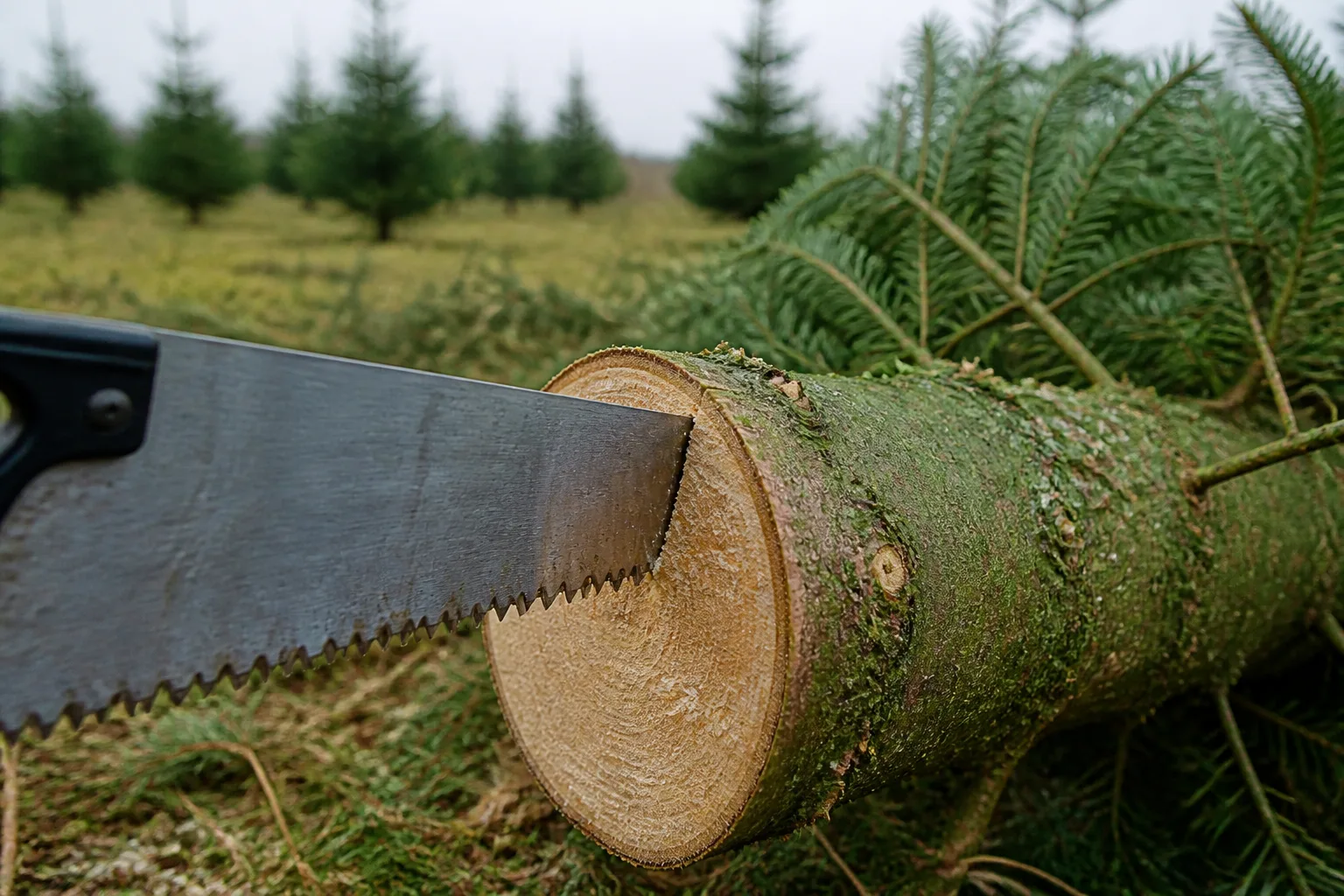
Use a sharp saw to remove a thin disk from the base of the trunk—about one-half inch is the common extension recommendation. Make the cut straight across, perpendicular to the trunk, rather than at an angle or in a V. A flat cut is easier to secure and leaves the tree with a broad, stable surface for water uptake.
Do not whittle the sides of the trunk to make it fit a stand. The outer wood is efficient at moving water, so shaving it away can work against the very goal of the recut. Choose a stand that fits the trunk instead, and do not drill holes into the base or rely on a hole-and-tube device to replace a conventional water reservoir.
The fresh cut is not a magic reset. It gives the trunk a clean surface, but it only helps if the tree enters water promptly. NC State’s maintaining-freshness guidance explains that resin, dirt, and air at the cut face can impede uptake, and that a tree stored dry for several days should receive another fresh cut before it goes into water.
Set up a stand that can keep up with the tree
Use a sturdy stand with a real water reservoir, not a decorative collar or a shallow dish that looks full while the trunk sits above it. The stand should support the height and weight of the tree, leave room for the trunk to stay centered, and hold enough water that a thirsty tree cannot empty it before the next check.
Fill the stand before you finish decorating. A tree that is easy to water while bare can become difficult to reach once a skirt, presents, and low branches surround the base. If you use a funnel or a stand-level indicator, test it before the tree is fully decorated so the routine does not depend on guesswork.
Use the trunk, not the stand, as your measuring guide
The common capacity rule is about one quart of water per inch of trunk diameter, and most full-size trees need a stand that can hold at least a gallon. This is a stand-capacity guideline, not a promise that every tree will drink exactly that amount each day. A thick-trunked tree may use a great deal of water during its first few days indoors, especially after a fresh cut.
Measure the trunk where it will sit in the stand, then check the stand’s usable capacity after the tree is installed. A stand can have a large advertised bowl but hold much less once the trunk and support hardware displace water. Penn State Extension’s research-based care list also cautions against trimming the trunk to fit the stand.
Never let the water line fall below the trunk
Check the reservoir at least once each day, and check it twice daily during the first 48 hours. A stand may still contain water even when the level has dropped below the cut surface, so look at the actual water line rather than assuming the bowl is doing its job.
If the cut end dries out, resin can seal the surface and the tree may stop taking up water. Refill with clean water as soon as you notice the drop; do not wait for the bowl to be empty. The best routine is to check at the same times you already have habits—after breakfast and before bed during the first few days, then at least once daily while the tree remains indoors.
Make daily care almost automatic
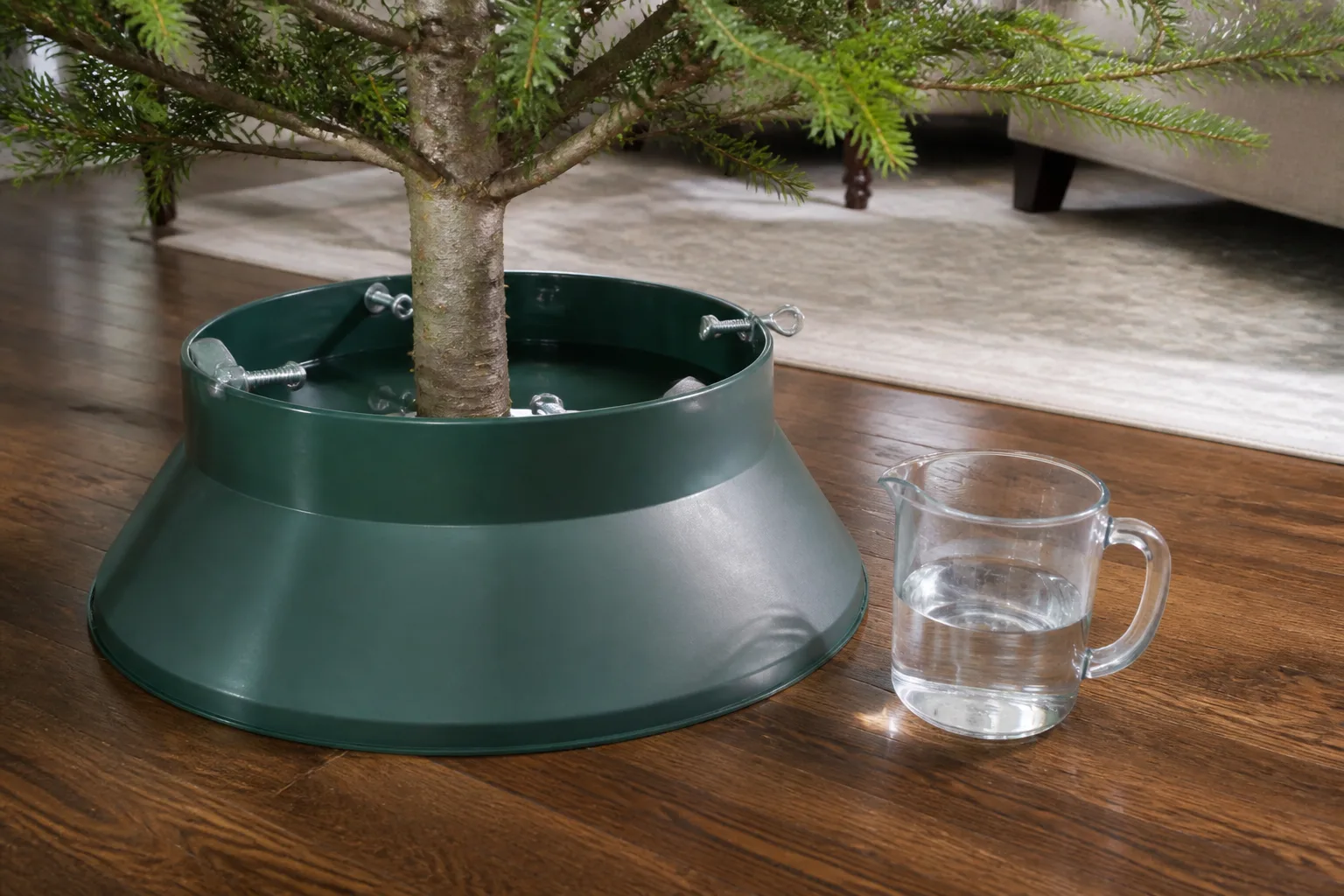
The most reliable tree-care plan is boring enough to repeat. Keep a pitcher or watering can near the tree, write a reminder on the household calendar, or use a stand with a visible level indicator. Treat the reservoir like a plant that cannot tell you when it is thirsty: inspect it before the tree shows damage.
Needle drop is a lagging signal. By the time the tree looks gray, brittle, or thin, it may have been losing water for days. A full reservoir protects the tree before symptoms appear; it is much more effective than trying to restore moisture after the needles have become dry.
Check early and often
During the first week, expect the tree to be more demanding than it will be later. A freshly cut tree may drink heavily at first, and the amount depends on trunk diameter, species, temperature, humidity, and prior storage. Do not copy a neighbor’s gallon-per-day number as your schedule; use the stand’s water level as the measurement that matters.
Inspect the needles and branch tips when you refill. Flexible green needles and a tree that continues to drink are reassuring. Browning, brittle branches, a sudden increase in shedding, or a reservoir that stays untouched for several days calls for closer diagnosis rather than an automatic dose of additive.
Misting the foliage is not a substitute for keeping the trunk submerged. A light mist may temporarily wet the surface, but it does not repair a dry cut end, and spraying a decorated tree creates unnecessary moisture around lights, ornaments, floors, and electronics. If the room is extremely dry, manage the room environment safely instead.
Plain water wins
Use clean tap water unless your local water is unsuitable for household use. Extension guidance from NC State and Penn State says additives such as sugar, aspirin, bleach, soft drinks, honey, floral preservatives, and homemade recipes are unnecessary, and some can worsen drying or reduce the amount of usable water in the stand.
The water temperature is not the important variable. There is no need to heat the water or buy a special “tree food”; filling the reservoir promptly and keeping the trunk submerged matters far more. A pet-safe label also does not make an additive necessary, so the simplest approach is plain water and a stand that pets and children cannot tip.
Place the tree to slow moisture loss
Choose the coolest practical location that still works for your room. That usually means away from fireplaces, wood stoves, radiators, baseboard heaters, forced-air vents, and strong afternoon sun. A window is not automatically a good location: winter sun through glass can heat the branches, and a nearby vent can blow dry air directly through the foliage.
Leave enough clearance to water the stand and inspect the trunk. A beautiful corner that forces you to crawl under a skirt every day is a poor care location because it makes missed checks more likely. Put the tree where the water reservoir is accessible and where a topple will not block an exit or land on a heater.
Manage heat, sun, airflow, and dry air
Lowering the room temperature slightly can slow drying, but you do not need to make the house uncomfortable. A stable, moderate room is better than cycling the thermostat aggressively or positioning the tree beside a cold draft. The goal is to avoid concentrated heat and rapid air movement, not to create a dramatic temperature shock.
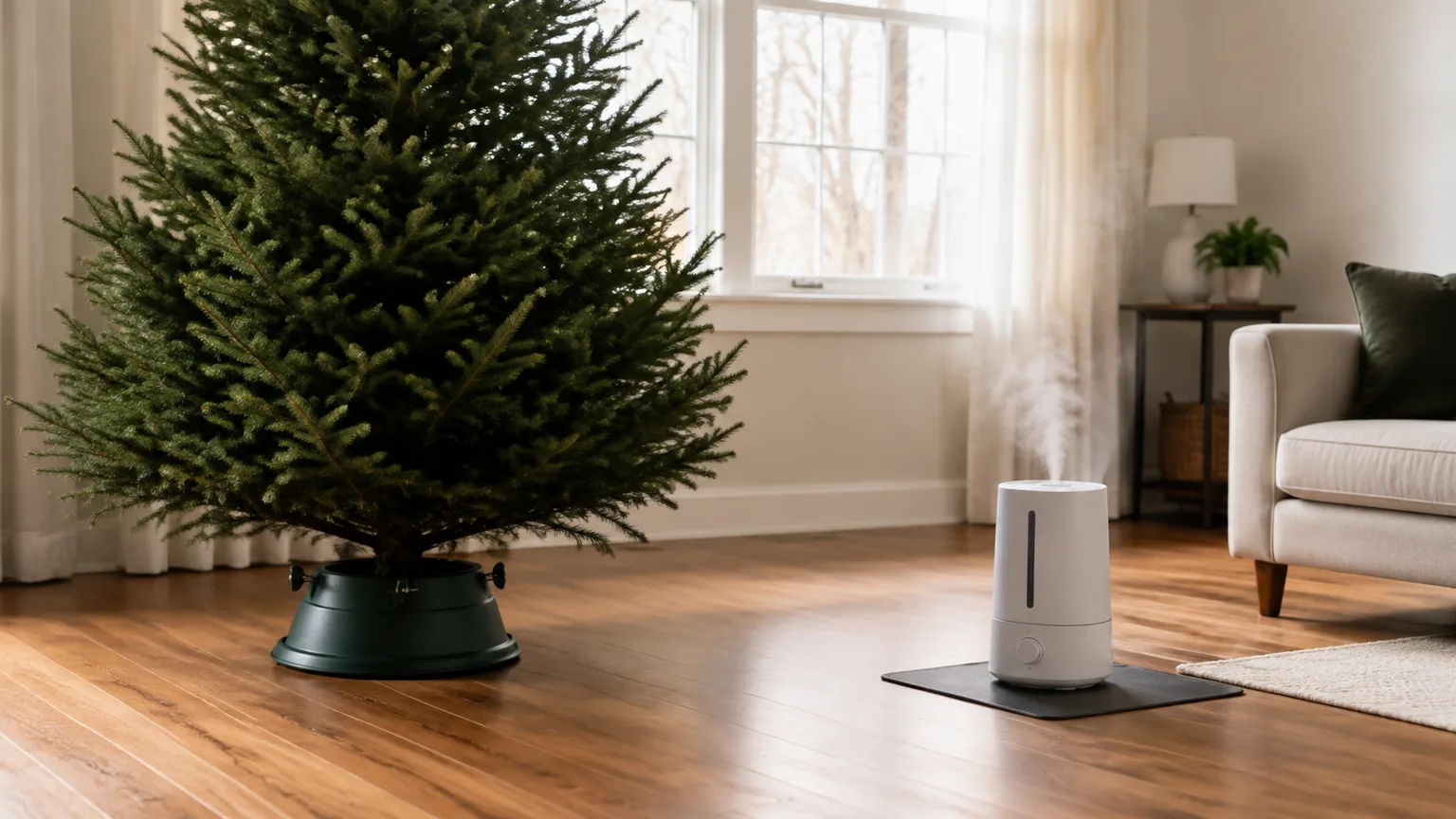
If your indoor air is very dry, a humidifier may help the room feel more comfortable and may reduce the drying load around the tree. Treat it as a supporting measure, not a replacement for stand water: keep the mist from wetting the branches, wall, floor, or electrical connections, and follow the appliance’s cleaning instructions. Arborist Now’s practical care guide also places hydration and heat control ahead of optional room tweaks.
Decorate and light with safety in mind
Choose decorations that fit the branches rather than forcing thin limbs to carry heavy ornaments. Handle the tree gently while decorating because a dry branch sheds more readily when it is bumped, but do not use ornaments to hide widespread browning or brittle foliage. A tree that is losing its structural freshness needs a safety decision, not better camouflage.
LED lights generally produce less heat than older incandescent strings, which makes them the better choice for a cut tree. Inspect every cord and socket before use, replace damaged strings, avoid overloaded circuits, and keep cords away from water. Turn lights off when you leave the house or go to bed; a timer is an easy way to make that automatic.
Keep the tree away from open flames and do not place it where a fallen branch could touch a heater. NC State Extension notes that a fresh, well-watered tree is far less likely to ignite than a dry tree, but a dry tree should be removed and its lights should not be turned on. Watering is the prevention step; flame-retardant sprays do not replace it.
Diagnose drying before you try to revive it
First identify whether the tree is thirsty, drying from heat, or already past the point where bringing it back indoors is wise. A warm room and a low reservoir can cause symptoms that look similar, but the correct response starts with water level, needle flexibility, and the tree’s recent history.
Run your fingers lightly over an outer branch. Healthy needles should have some flexibility and should not crumble or fall in large numbers. A few old interior needles are normal, while brittle green needles, dull color, widespread shedding, and branches that snap easily mean the tree has lost significant moisture.
If the stand ran dry
If you caught the problem early and the needles are still flexible, refill the stand immediately, move the tree away from heat, and watch whether the reservoir level begins to fall again. Do not add sugar, bleach, or a preservative to “shock” it back to life. Water uptake may resume, but there is no guaranteed rescue once the trunk has dried and sealed.
If the tree has been dry long enough for needles to become brittle or shed heavily, do not assume a new cut and a humidifier make it safe. Remove the lights, keep flames and heat away, and plan to take the tree outside for recycling. UF/IFAS Extension’s current care guidance lists brittle branches, heavy needle loss, and a tree that stops drinking as signs to consider removing it promptly.
Know when to remove the tree and recycle it
There is no universal calendar date that makes every real tree unsafe. A fresh, well-cared-for tree may remain attractive for several weeks, while a tree bought dry or displayed beside a heater may deteriorate much sooner. Let the tree’s condition and your ability to keep it watered guide the decision.
Take it down when the needles are dry and brittle, shedding is accelerating, the branches no longer bend, or the tree repeatedly fails to take up water. Remove it sooner if you will be away and cannot check the stand, if lights or cords show damage, or if the tree’s placement has become a fire or fall hazard.
After removal, use your community’s Christmas-tree pickup or drop-off program when available. Many programs chip trees into mulch. You can also use sound branches as an outdoor shelter feature where permitted, but never burn a whole Christmas tree in a fireplace or wood stove; its shape and resin can create an unsafe fire.
Conclusion
The best way to keep a Christmas tree fresh all season is to make water access continuous and drying conditions limited. Choose a fresh tree, recut the trunk when its history or dry storage calls for it, use a stand sized around the trunk, refill before the water line drops below the cut end, and keep the tree away from concentrated heat and direct sun.
Plain water and a repeatable check beat elaborate preservatives. If the needles become brittle, the tree stops drinking, or the lights and branches no longer feel safe, the caring choice is to remove and recycle it rather than trying to stretch the season by another day.