How to Keep a Christmas Tree Fresh With a Humidifier
Learn how to use a humidifier around a real Christmas tree, where to place it, what humidity to target, and why water and heat control still matter most.
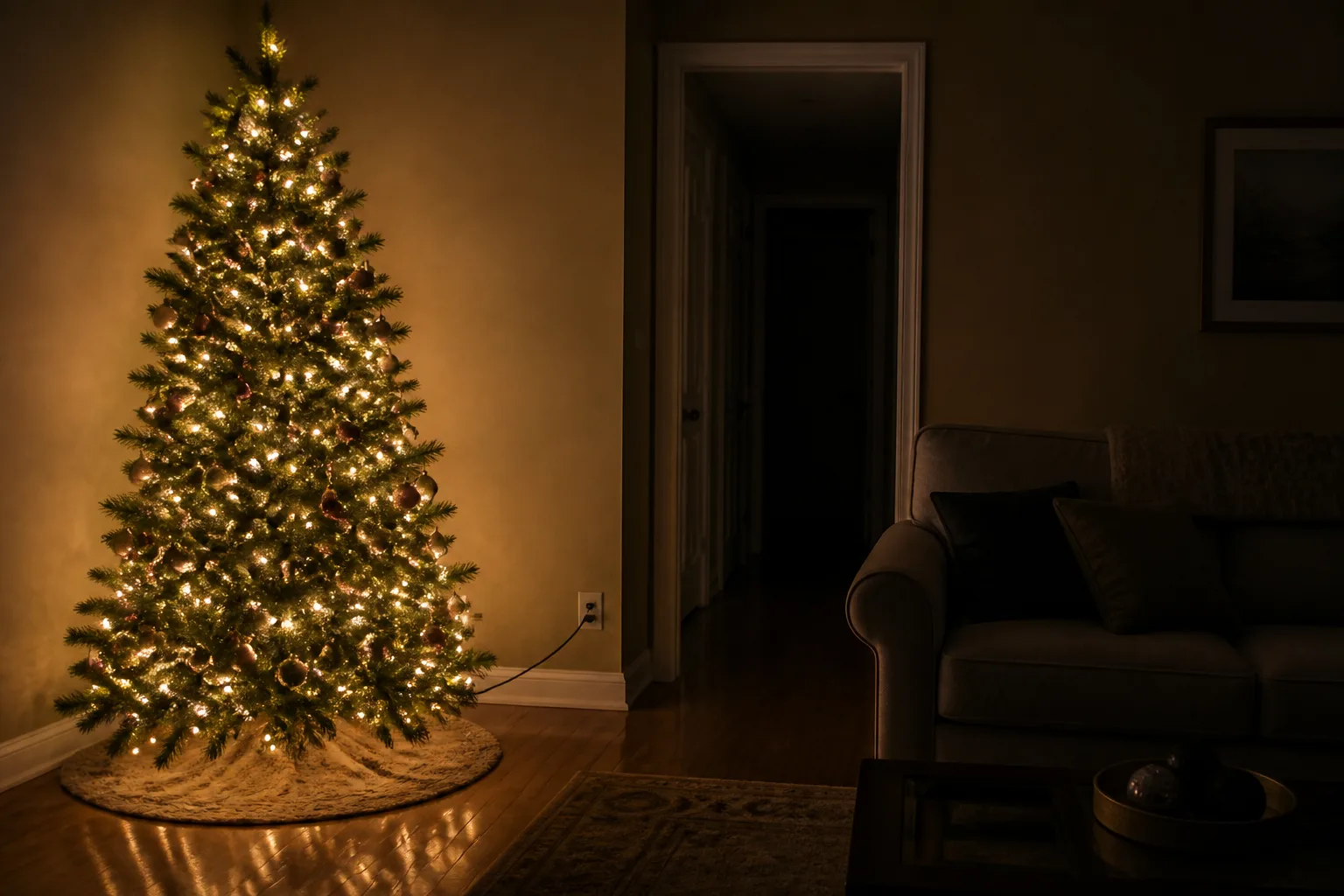
A humidifier can make a heated living room less drying for a real Christmas tree, but it is not a substitute for a full water stand. The tree stays fresh when three systems work together: the trunk keeps taking up plain water, the room does not strip moisture from the needles too quickly, and the tree stays away from heat and electrical hazards.
The useful version of the humidifier trick is therefore simple: measure the room, aim for moderate humidity, keep the mist off the branches and lights, and keep checking the stand. A humidifier can slow the dry-air part of the problem. It cannot reopen a sap-sealed trunk, refill an empty reservoir, or make brittle needles green again.
Quick answer: use humidity as support, not as the whole care plan
Yes, a humidifier can help a Christmas tree look and feel fresher in a dry, heated home. Run it only when the room needs more moisture, use a hygrometer to guide the setting, and place the unit several feet from the tree so the air is humidified without wetting the foliage, ornaments, floor, or electrical connections.
Treat the stand as the priority. Penn State Extension identifies maintaining high moisture in the tree through a water-holding stand and a water level above the cut end as the most important freshness practice. The U.S. Fire Administration also advises watering a Christmas tree every day and removing it once it becomes dry (Penn State Extension; U.S. Fire Administration).
What a humidifier can—and cannot—do for a cut tree
A cut tree loses moisture from its needles into the surrounding air. When winter heating leaves the room very dry, that loss can happen faster. Raising the room’s relative humidity to a moderate level reduces the dryness of the air around the tree, which can help slow moisture loss from the foliage.
That is different from watering the tree. A displayed tree is no longer connected to roots, so its main water supply is the cut stem sitting in the stand. The humidifier does not deliver water down the trunk, and mist settling on the needles is not the same as root or stem uptake. Think of the humidifier as reducing the room’s demand, while the stand supplies the tree’s water.
This distinction explains why a humidifier works well for one household and seems useless in another. If the room is already comfortable and the tree is drinking normally, more humidity may change little. If the room is at 20% relative humidity beside a radiator, a correctly placed humidifier may make the environment less punishing. In both cases, an empty stand can dry the tree quickly.
Start with a fresh tree and a water-holding stand
The best humidifier setting cannot compensate for a tree that arrived dry or was placed in a stand too small to stay full. Set up the water system before you bring the tree into its final decorated position.
Choose for freshness, not just shape
When comparing trees, look for exterior needles that are flexible and firmly attached. A few brown interior needles can be normal seasonal shedding, but dull color, wrinkled outer bark, and green needles that fall with a gentle touch point to excessive dryness. Gardeners’ World also recommends choosing a healthy-looking tree, checking its needle retention, and protecting the base during transport (Gardeners’ World).
Species changes the margin for error. Fraser firs, Douglas-firs, balsam firs, and many pines are known for good needle retention when properly hydrated. Colorado blue spruce can hold its needles well, but Penn State Extension warns that it should not run out of water even once because needle drop can accelerate after drying. Norway spruce is fragrant, but it is less forgiving about needle retention than many firs.
Make the right cut at the right moment
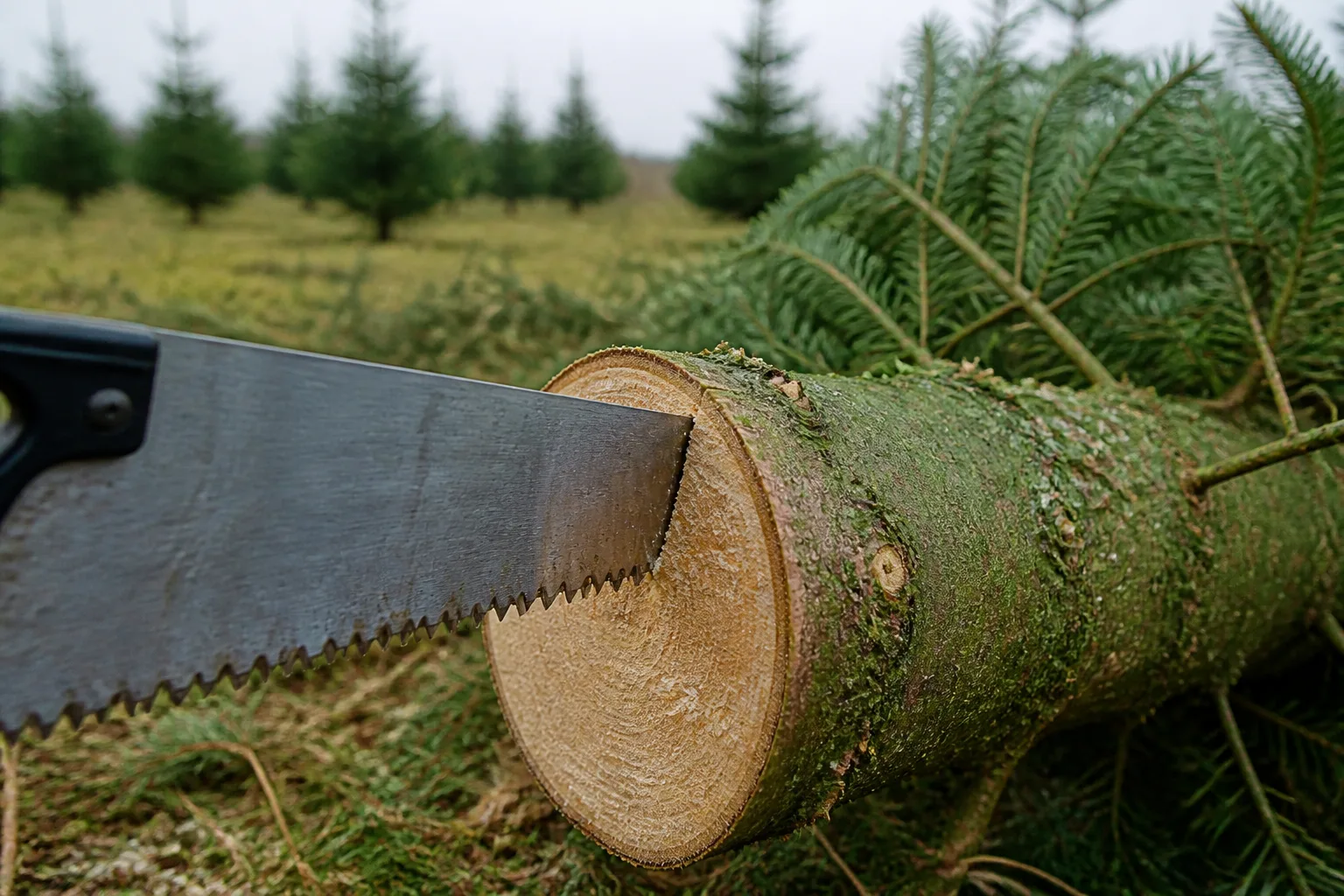
If the tree has been out of water for several hours, make a fresh, straight cut across the base just before placing it in the stand. A thin disk is enough; do not whittle the sides, cut a wedge, or angle the trunk. The outer wood is important for water uptake, and the tree must remain stable in the stand.
The National Christmas Tree Association explains that air entering the cut tissue after roughly three to six hours can reduce absorption, while Penn State Extension says a tree harvested within the past 12 hours may not need another cut. Those time windows are practical guidance, not a reason to delay watering. Once you make the cut, get the trunk into the stand promptly (National Christmas Tree Association).
Measure humidity before choosing a setting
Do not set the humidifier by how much mist you can see. Put an inexpensive hygrometer in the same general zone as the tree, away from the humidifier’s plume, a window, and a heat vent. The reading at the other side of the room is more useful than the number shown beside the nozzle.
Use 40% to 50% relative humidity as a sensible starting range in a typical heated home. Carrier’s indoor-humidity guidance places common home comfort and building-protection guidance around 30% to 50%; the narrower 40% to 50% starting range gives the tree some relief without turning the room into a visibly damp greenhouse (Carrier).
Adjust from what the room shows you. If the hygrometer stays below 35% despite regular operation, increase runtime gradually or use a larger unit. If windows bead with water, walls feel damp, or the tree’s branches are wet, reduce the setting and improve airflow. A room that is technically humid but has condensation on cold surfaces is not a better tree-care environment.
Set up the humidifier as a support tool
Put the hygrometer where the tree actually is
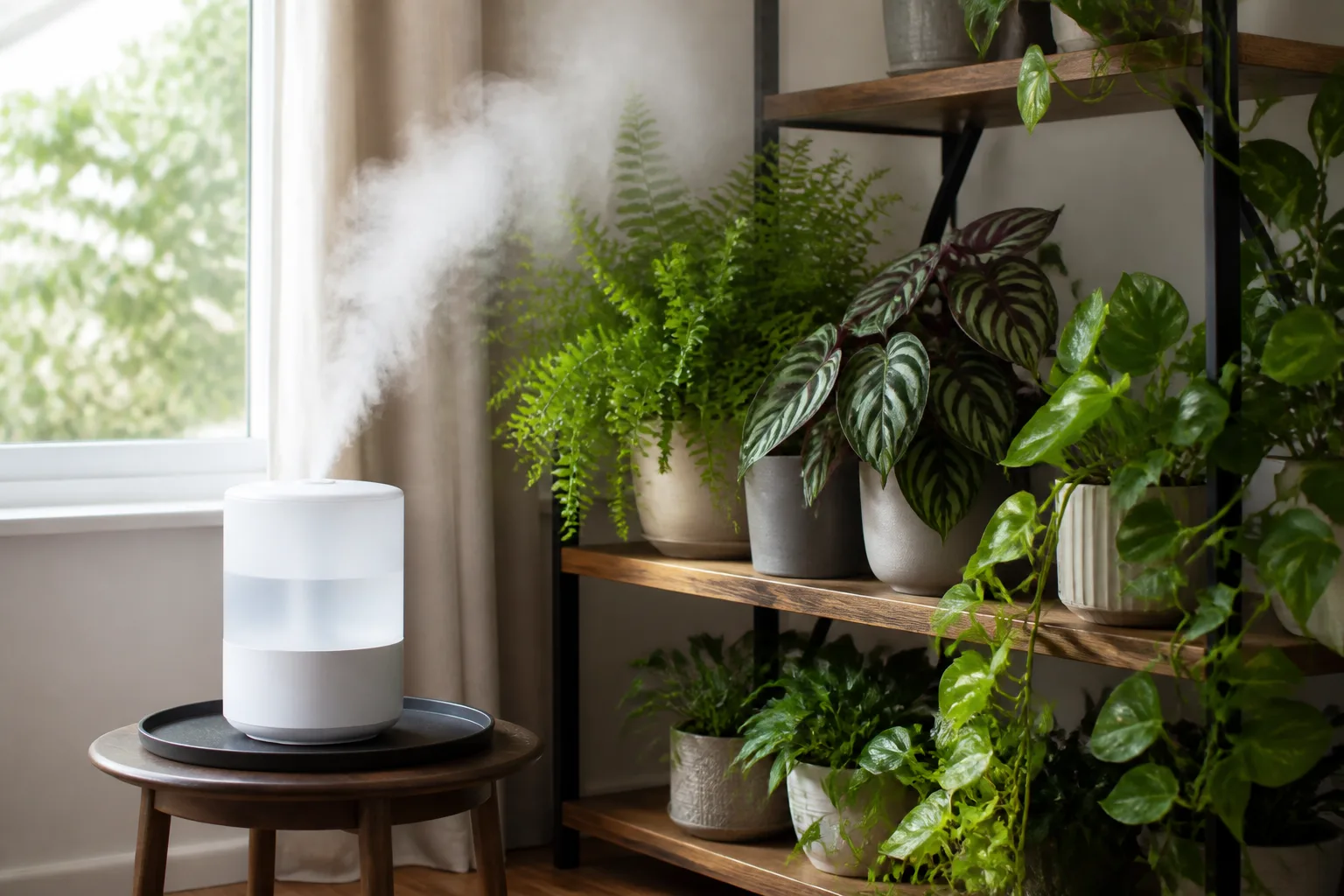
Place the humidifier on a level, water-resistant surface that can support its filled weight. Keep it where a child, pet, or passing foot cannot knock it over, and leave enough clearance around the air intake and outlet for the unit to work normally. A humidistat or auto mode is useful because it stops the machine from running continuously after the room reaches the target.
The tree does not need to sit beside the unit. Start with the humidifier several feet away, then compare the hygrometer reading near the tree with the reading elsewhere in the room. The right distance depends on the unit, room size, doors, ceiling height, and air movement. The measurement—not a fixed distance copied from another room—should decide whether you move it.
Keep mist, water, and electricity separate
Never aim a visible mist stream at the branches, ornaments, light sockets, plugs, or power strip. Wet foliage can drip onto decorations and flooring; mineral residue can build up on nearby surfaces; and extra moisture around electrical connections is an avoidable risk. Keep the tree skirt and stand dry outside the stand’s own reservoir, and route the humidifier cord away from walkways.
Clean the humidifier according to its manufacturer’s instructions and empty standing water when it will not be used. A dirty reservoir can spread odors and contaminants through the room, which defeats the purpose of adding clean moisture. If the unit needs frequent refilling, use a stable container and make refilling part of the same routine as checking the tree stand.
Pair humidity with the stand’s daily water routine
Use stand capacity, not tree height
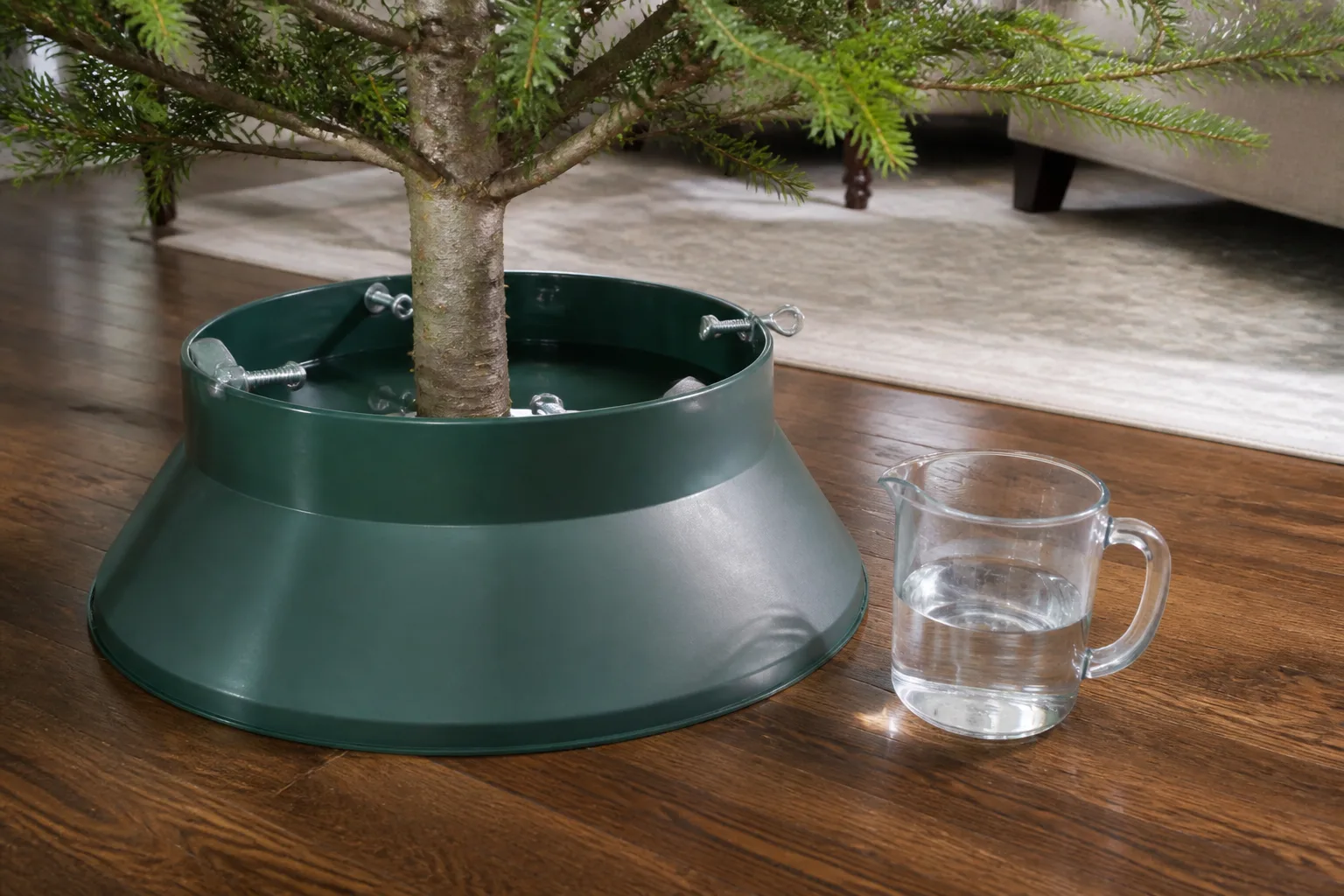
Tree height is a poor shortcut for water needs because trunk diameter, species, freshness, room temperature, and airflow all vary. A useful planning rule from Penn State Extension, the National Christmas Tree Association, and Durham County Extension Master Gardeners is up to one quart of water per inch of trunk diameter per day, especially during the first week.
Measure the trunk above the cut rather than guessing. A four-inch trunk may use about a gallon per day at peak uptake, so the stand needs enough capacity to keep the cut end submerged between checks. Fill it with the tree installed; a stand that holds a gallon when empty may hold less once the trunk displaces water.
Use plain, clean water. You do not need to make the stand acidic, sweet, antiseptic, or perfumed. Water-holding capacity and an always-submerged cut surface are more useful than a recipe.
Check more often during the first week
Check the stand every day, and check twice a day during the first several days if the tree is large, freshly cut, or in a warm room. Look at the water level at the trunk, not merely at whether there is still a puddle somewhere in the basin. Some stands can contain water while the cut end has already risen above it.
If the stand runs dry, refill it immediately and inspect the tree rather than assuming the humidifier will protect it. A tree can continue to look acceptable for a short time after uptake has been interrupted, while the needles are becoming harder to recover. If the tree still does not drink and the trunk has been dry for a while, a fresh cut may be needed; that is often difficult once the tree is decorated, which is why prevention matters.
Put the tree where the room is least drying
The humidifier is only one part of the room. Keep the tree away from fireplaces, radiators, space heaters, heat vents, and strong direct sunlight. The RHS specifically warns that fire and radiators cause excessive moisture loss and needle drop, while the U.S. Fire Administration recommends at least three feet from heat sources such as fireplaces, radiators, space heaters, candles, and heat vents (RHS).
Avoid a position directly in the path of a forced-air register or beside a frequently opened exterior door. A slightly cooler corner with steady, gentle airflow is usually a better choice than the warmest spot in the room. Leave enough clearance to refill the stand without moving the tree, and keep exits and walking routes clear.
If a window is your only option, reduce direct sun during the warmest part of the day with a curtain or blind, but do not seal the tree into a stagnant, damp pocket. The goal is stable conditions, not an airtight display case.
Use lights and decorations without adding heat
Choose lights in good condition and inspect wires, sockets, and plugs before they go on the tree. The U.S. Fire Administration says to discard light strands with frayed or pinched wires and follow the manufacturer’s limits for connecting strands. Turn the lights off when you leave or go to bed; Penn State Extension also notes that newer LED lights generate less heat than older lighting, although every strand still needs inspection.
Keep the humidifier, its cord, and its water reservoir outside the tree’s branch spread. Do not hide a power strip beneath a damp tree skirt or place a filled humidifier where a falling branch or ornament could hit it. If you use an auto-timer for lights, set a separate reminder to check the tree stand rather than assuming the timer handles tree care.
Know when species and timing change the plan
A very fresh tree cut locally has more stored moisture than a tree that was harvested weeks earlier and spent days in transit or on a warm lot. The earlier you decorate, the more important freshness, species, water capacity, and room temperature become. A humidifier can make a dry home less stressful, but it cannot turn a long-stored tree into a freshly harvested one.
Fir species are often chosen for needle retention, while spruces can demand closer attention to watering. That does not make one species universally best. Choose a tree that fits your room and your care routine, then compensate for its weaknesses with a fresh cut, a large enough stand, a cool placement, and daily checks.
Read the tree’s warning signs
Needles that feel flexible and remain attached are encouraging. Needles that snap, fall with a light touch, or carpet the floor when a branch is brushed indicate increasing dryness. A dull color, wrinkled outer twigs, a brittle fragrance, or a trunk that repeatedly sits above the waterline are reasons to act quickly.
First check the stand and the room temperature. If the cut end is submerged and the room is moderate, check the tree itself rather than chasing a higher humidifier setting. Humidity is not a rescue treatment for a tree that has already become dry and brittle.
Once needles break easily or fall in large numbers, remove the tree and its lights. The U.S. Fire Administration advises getting rid of a tree after the holidays or when it is dry. No humidifier setting is worth keeping a fire-prone tree indoors.
Skip the “tree food” and misting myths
Plain water is the better default. Penn State Extension and the National Christmas Tree Association advise against sugar, honey, molasses, soft drinks, bleach, aspirin, floral preservatives, and other kitchen or commercial concoctions. Some additives can reduce available water or encourage microbial growth, while none replaces a properly sized, full stand.
Skip hand-misting the tree as well. Spraying the needles may make them feel temporarily wet, but it can also put water on lights, ornaments, floors, and furniture. A controlled room humidifier paired with a hygrometer is easier to measure and safer to manage than repeatedly spraying a decorated tree.
Do not drill holes in the trunk, shave away the outer wood to fit a small stand, or add flame-retardant sprays as a substitute for watering. The care guidance from extension and tree organizations consistently points back to fresh stem tissue, plain water, distance from heat, and monitoring the tree’s condition.
A simple morning-and-evening routine
In the morning: check the stand at the trunk and top it up with plain water. Read the hygrometer near the tree. If humidity is below your target and there is no condensation, run the humidifier on a moderate setting with the mist directed into open room air.
In the evening: check the water again during the first week, inspect the lowest branches for brittleness, and turn off the tree lights before bed. Look for dampness around the humidifier, tree stand, and nearby cords. Empty or clean the humidifier as required rather than leaving old water to sit overnight for the next cycle.
Every few days: reassess the tree’s position. A vent that was harmless when the furnace was off may become the room’s strongest drying force during a cold night. If the hygrometer reaches the target but the tree is still drying, move it farther from heat and verify that the trunk has never been exposed above the waterline.
Conclusion: humidify the room, protect the trunk
A humidifier can help a real Christmas tree stay softer in a dry winter home, but its job is limited: it moderates the air around the needles. The tree’s foundation is still a fresh cut, a stable water-holding stand, plain water kept above the trunk base, and a location away from heat.
Start with a hygrometer reading, aim for about 40% to 50% relative humidity, and keep the mist several feet away from branches and electrical connections. Then let the daily stand check—not the visible plume from the humidifier—be the habit that carries the tree through the season.



