How to Keep Mosquitoes Away: 5 Practical Yard Methods
Keep mosquitoes away by removing breeding water, using patio airflow and EPA-registered repellents, and treating plants and traps as supporting tools.

Mosquito control works best as a sequence, not a single scented plant or gadget. Start by removing the small water sources where mosquitoes reproduce, then make the area where people sit harder to reach with airflow, screens, clothing, and an EPA-registered repellent. Add plants, traps, or labelled larval control only when they solve a specific remaining problem.
That order matters because a patio can be surrounded by beautiful lavender and still produce mosquitoes in a forgotten saucer, clogged gutter, or rain barrel. The CDC’s household mosquito-control guidance recommends emptying, scrubbing, turning over, covering, or throwing out water-holding items at least once a week. It also distinguishes source control from adult mosquito treatments, which is the difference between reducing the next generation and chasing the adults already flying.
Start with a 10-minute mosquito audit
Walk the property as if you were a raindrop. Look low and out of sight: under furniture, behind pots, inside toys, along the downspout, beneath tarps, in wheelbarrows, and in plant saucers. A container does not need to look dirty or large to matter; a thin layer of water protected from sun and wind can be enough for eggs and larvae.
Make two piles as you walk. The first is dump, scrub, or store: buckets, toys, saucers, unused planters, cans, tarps, and anything that can be emptied or brought under cover. The second is cover or manage: a rain barrel, ornamental pond, birdbath, or other feature that must stay. This simple split prevents the common mistake of treating every water feature with the same product.
If mosquitoes remain after the audit, check the surrounding properties and drainage. Rutgers’ Center for Vector Biology notes that one productive yard can make a neighborhood miserable, and a wetland or neglected neighboring property may continue supplying adults even after your own containers are clean. In that situation, source control is still worth doing, but expectations should shift from “eliminate mosquitoes” to “reduce breeding near the home and protect the people using the patio.”
1. Remove breeding water every week
Source reduction is the highest-return method because it interrupts mosquitoes before they become biting adults. The CDC recommends a weekly routine: empty and scrub items that hold water, turn them upside down, cover them tightly, or discard them. Scrubbing matters when eggs may be stuck above the current waterline rather than simply poured out.
What to drain, scrub, cover, or treat
Begin with the overlooked items that are close to the house and patio:
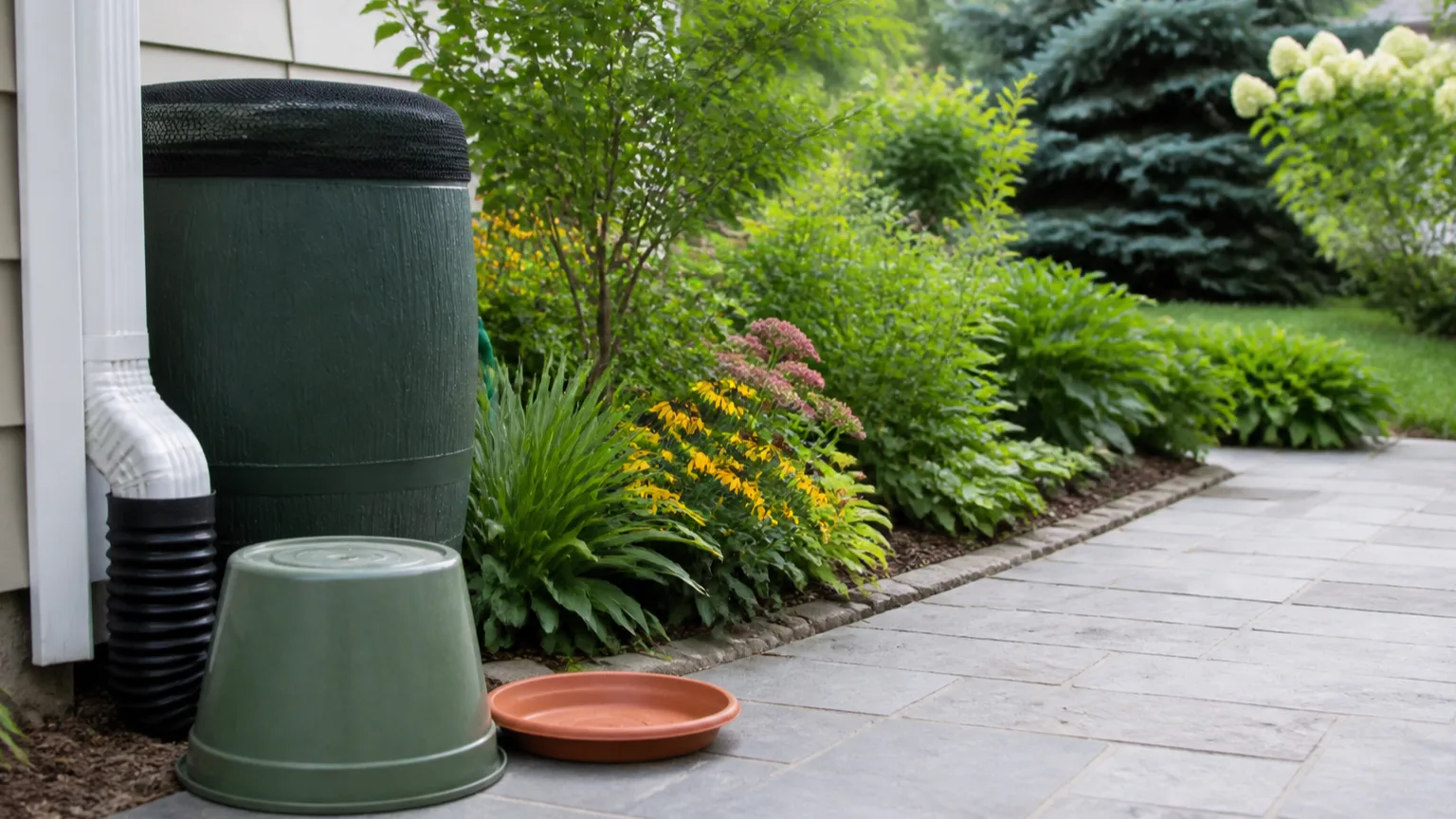
- Empty plant saucers, children’s toys, pet bowls, buckets, watering cans, and wheelbarrows. Store them under cover or upside down so rain cannot refill them.
- Clean gutters and check downspouts for slow drainage. A gutter that looks dry from the ground can still hold pockets of leaf sludge at a low point.
- Cover rain barrels and cisterns with a tight lid or mosquito-proof mesh. A loose lid is not enough if adults can reach the water through a gap.
- Refresh birdbaths frequently. If a birdbath cannot be emptied often, use only a product labelled for that use and follow the label rather than improvising with soap, oil, or essential oils.
- Empty water from pool covers, kiddie pools, grill covers, and outdoor furniture after rain. Turn small pools over when they are not in use.
- Fill or drain tree holes, ruts, and low spots where water persists. If the source is a drainage problem, changing the grade or adding a suitable drain is more durable than repeatedly treating the puddle.
The Philadelphia Horticultural Society’s backyard guidance makes the hidden-site problem concrete: water can collect in a curled leaf, forgotten bucket, or clogged gutter. Do not scatter coffee grounds into a pond, gutter, rain barrel, or drain as a substitute for emptying it. There is no dependable home recipe that turns every standing-water source into a safe mosquito-control treatment.
When water cannot be dumped
For a covered rain barrel, ornamental pond, or other non-drinking water that cannot be emptied, choose a larvicide labelled for that exact use. Bti products, often sold as mosquito dunks or bits, target mosquito larvae and are different from an adult spray. The CDC advises using larvicides only for water that cannot be covered or dumped and following the product label.
Read the label before adding anything to water used for irrigation, wildlife, livestock, fish, or drinking. A product suitable for a rain barrel may not be suitable for a pond with fish, and a treatment interval on one label should never be copied onto another product. If a persistent water body is large, connected to a drainage system, or near a public area, contact your local mosquito-control district or health department for guidance.
2. Make the seating zone harder to land in
You do not need to make the whole property inhospitable to mosquitoes to make dinner outdoors more comfortable. Concentrate effort on the human zone: the chairs, dining table, porch, hammock, or garden bench where people spend time. Move containers, trim dense growth that brushes against guests, and keep the seating area from becoming a cool, still pocket surrounded by wet foliage.
Use moving air where people sit
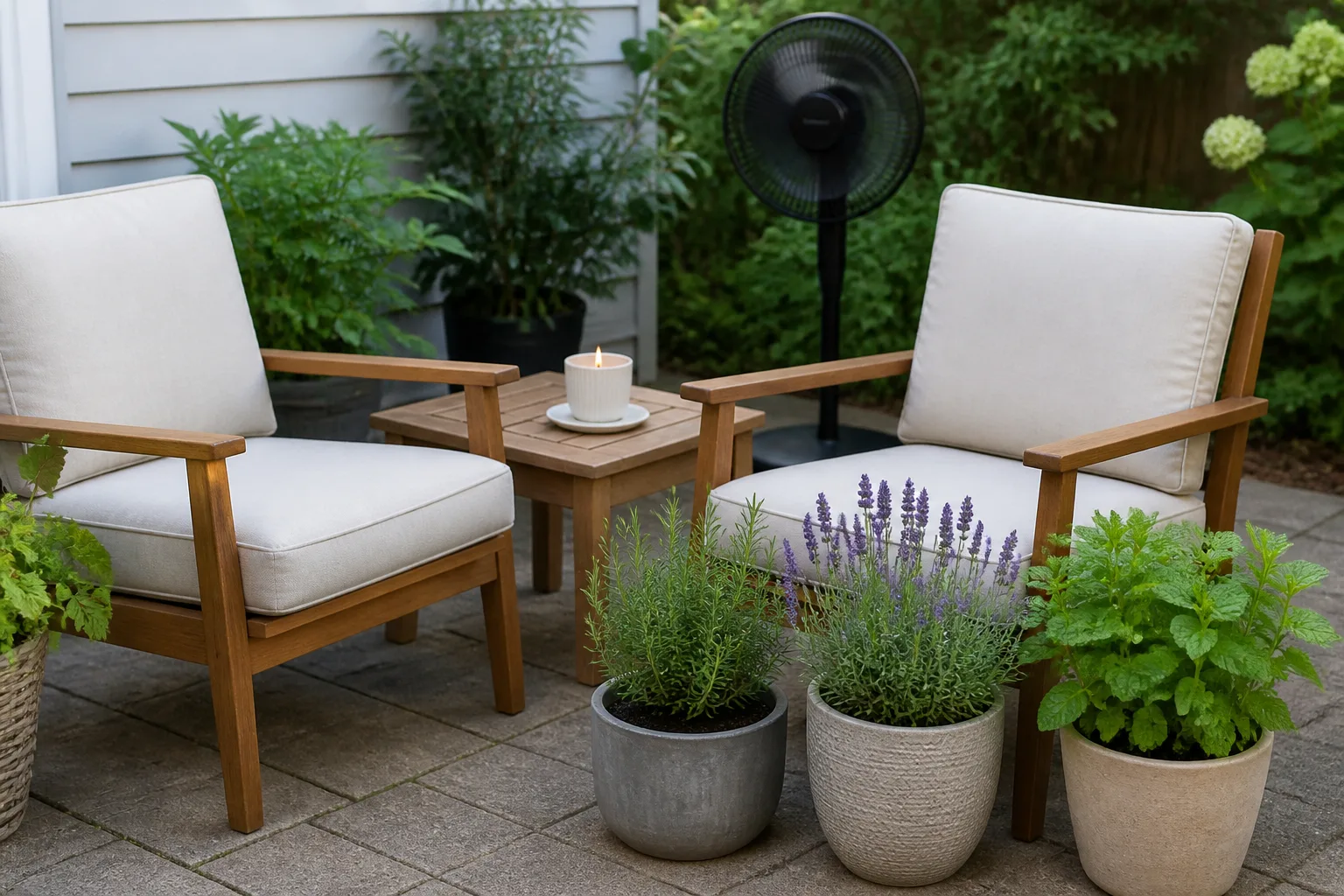
Mosquitoes are weak fliers compared with a steady breeze. A box or oscillating fan aimed across the seating area can make it harder for adults to approach, dilute the carbon dioxide plume that helps them find people, and improve comfort at the same time. The fan should move air across people—not blow from behind the chairs into the backs of your legs—and it needs a stable, dry, outdoor-rated setup with a protected cord.
Use the fan as a bite-reduction tool, not as proof that the yard is mosquito-free. A breeze helps the person sitting in its path; it does not drain a saucer, protect someone walking to the garden, or stop mosquitoes breeding under a deck. The Philadelphia Horticultural Society’s backyard guidance also recommends a fan alongside water removal, clothing, and personal repellent rather than treating it as a stand-alone cure.
Make screens and doors do their job
If mosquitoes are appearing indoors, start with exclusion. Repair holes in window and door screens, keep garage doors closed when possible, and avoid propping doors open during the evening. The CDC recommends screens and air conditioning where available, while also warning that indoor spray alone will not keep a home free of mosquitoes if water-holding containers and entry points remain.
On a screened porch, inspect the door sweep and the corners where mesh meets the frame. A gap at ankle height can matter more than a small tear at eye level because people often notice the former only after the room is full of mosquitoes. Keep vases, saucers, and other water-holding items indoors as carefully as the outdoor ones; mosquitoes can lay eggs inside if they get in.
3. Use EPA-registered repellents on skin
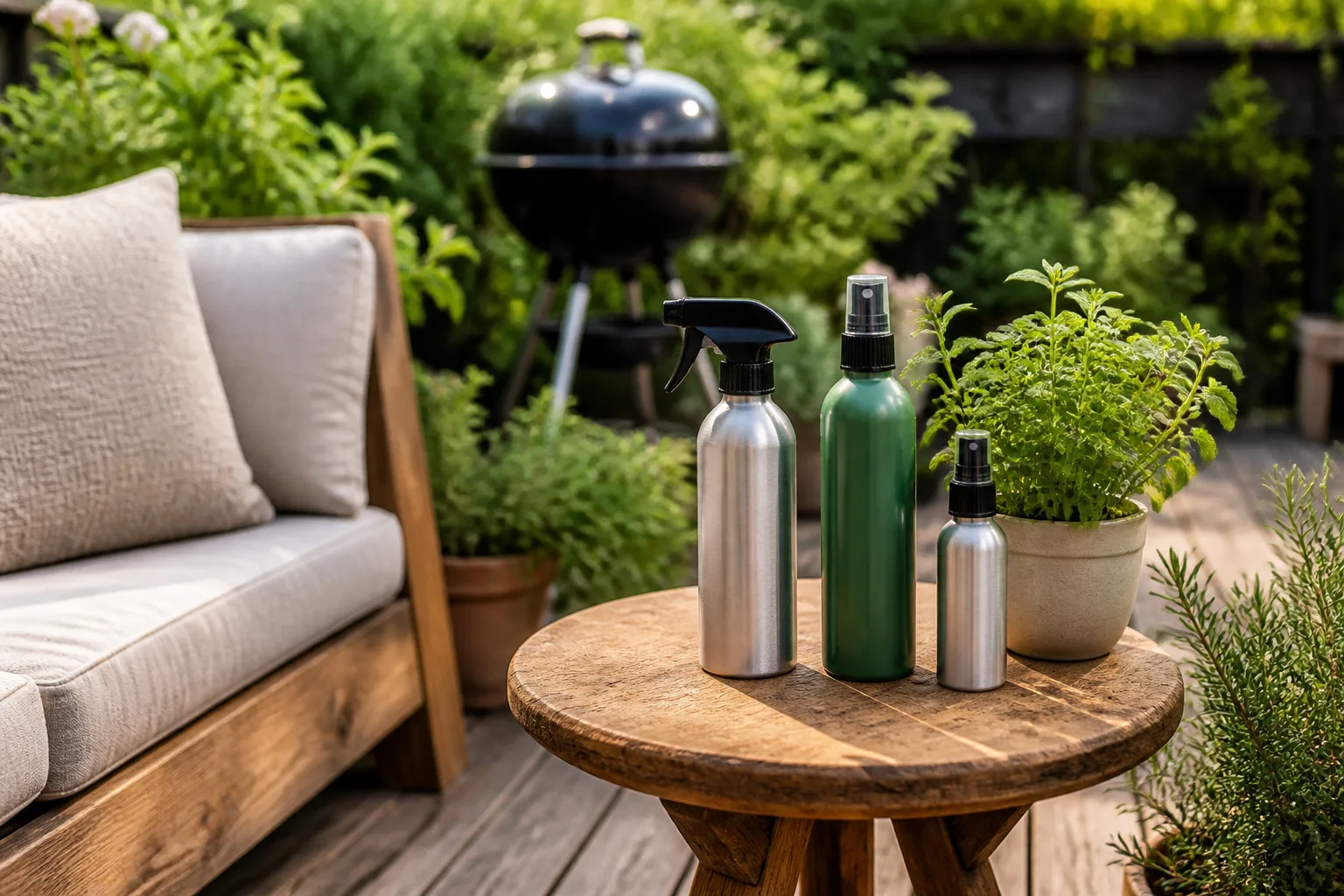
When you need reliable protection for gardening, walking, or sitting outside, use a repellent that has been evaluated for effectiveness rather than relying on a plant or untested essential-oil blend. The CDC’s bite-prevention guidance lists EPA-registered products with DEET, picaridin, IR3535, oil of lemon eucalyptus (OLE), para-menthane-diol (PMD), or 2-undecanone as options when used according to the label.
“Natural” and “chemical” are not useful safety categories by themselves. A formulated, registered repellent has directions and an EPA registration number; the CDC says the effectiveness of non-EPA-registered repellents is not known. A homemade mixture may smell appealing but has no dependable protection time or performance record against mosquitoes in your area.
Choose an active ingredient by the evening you need
For a short gardening task, choose an EPA-registered product whose label gives an appropriate protection time and application method. For a long evening, travel, or a location with disease advisories, choose based on the protection time and active ingredient you tolerate—not on a claim that one scent works for every person and every mosquito.
DEET and picaridin are familiar starting points, while IR3535, OLE/PMD, and 2-undecanone are also recognized options. The ingredient is only part of the decision: concentration, formulation, weather, sweating, rubbing, and whether you covered the skin all affect how long protection lasts. Reapply only as the label directs.
Do not use a patio spray, yard adulticide, or concentrated essential oil on your skin. Those are different product categories with different directions and exposure risks. If mosquitoes are severe enough that you are considering whole-yard spraying, compare the likely benefit with effects on non-target insects and ask a licensed local professional what the product is designed to control.
Follow the child, clothing, and sunscreen rules
Keep repellent off eyes, mouth, cuts, and irritated skin, and do not apply it under clothing. For children, an adult should put the product on their own hands before applying it to the child’s face; the CDC says not to use OLE or PMD products on children under 3. Always read the individual label because age limits and directions can differ by formulation.
If you use sunscreen, apply sunscreen first and repellent second. Wear loose-fitting long sleeves and pants when practical, and consider 0.5% permethrin-treated clothing or gear for repeated outdoor work. Permethrin belongs on clothing and gear according to the product directions, not directly on skin. Wash treated skin and clothing as the label directs when you come inside.
4. Treat plants as supporting players
Plants can be worthwhile when you want herbs, fragrance, flowers, or containers that make a patio pleasant. They are a poor substitute for a repellent because the leaves usually need to release volatile compounds close to the person being protected, and the amount released by an intact plant varies with heat, wind, bruising, and plant maturity.

Researchers at the Rutgers Center for Vector Biology explain the distinction well: some plant compounds repel mosquitoes after extraction, while whole plants may have measurable effects only in controlled conditions, large masses, or strategic placements. Their guidance describes evidence for plants such as lantana, marigolds, and certain basils while also emphasizing that open-landscape effectiveness is uncertain. Plant the ones you genuinely want to grow, then treat any mosquito benefit as a bonus.
Plants worth growing for scent and use
Place fragrant containers near—but not packed directly against—the seating area so they get the light and airflow they need. Good candidates include lemongrass, basil, rosemary, lavender, mint, catnip, and marigolds, with the right choice depending on your climate, sun, water, and whether pets or children can reach the plant.
Use containers for vigorous spreaders such as mint and lemon balm. Give rosemary, lavender, and lemongrass strong light and drainage rather than keeping them in a permanently wet pot. If a plant is in a saucer, empty the saucer after watering; a mosquito-control planting can accidentally create the breeding site you were trying to remove.
Some aromatic leaves release more scent when brushed or lightly bruised, but do not rub plant sap on skin or crush leaves into a homemade body repellent. A plant’s fragrance is not the same thing as a tested topical formulation. For a closer look at the evidence and limitations of scents, see the mosquito-smell guide.
Why citronella geranium is a weak shortcut
The “mosquito plant” label is often applied to scented geraniums, especially citronella geranium. The plant may smell citrusy, but the presence of a pot does not create the same protection as a product formulated with a tested repellent ingredient. As the Gardening Channel notes, citronella geranium has been reported ineffective for protecting against Aedes aegypti in the way many labels and garden lists imply.
Citronella grass is a different plant from citronella-scented geranium, and neither should be treated as a protective barrier by itself. Buy plants for their growing qualities and fragrance, not because a tag promises a mosquito-free patio. If you want a measurable reduction in bites, use a registered repellent, clothing, and moving air as the primary personal controls.
5. Choose traps and outdoor products carefully
Traps can catch adult mosquitoes, but capture numbers do not automatically mean fewer bites around people. Different models use light, airflow, attractants, or egg-laying cues, so compare the device’s stated target and independent evidence rather than relying on a broad coverage claim. Follow the manufacturer’s placement instructions, keep attractant traps away from the seating zone, and judge the result over several evenings instead of one hour.
Match trap type and placement to the problem
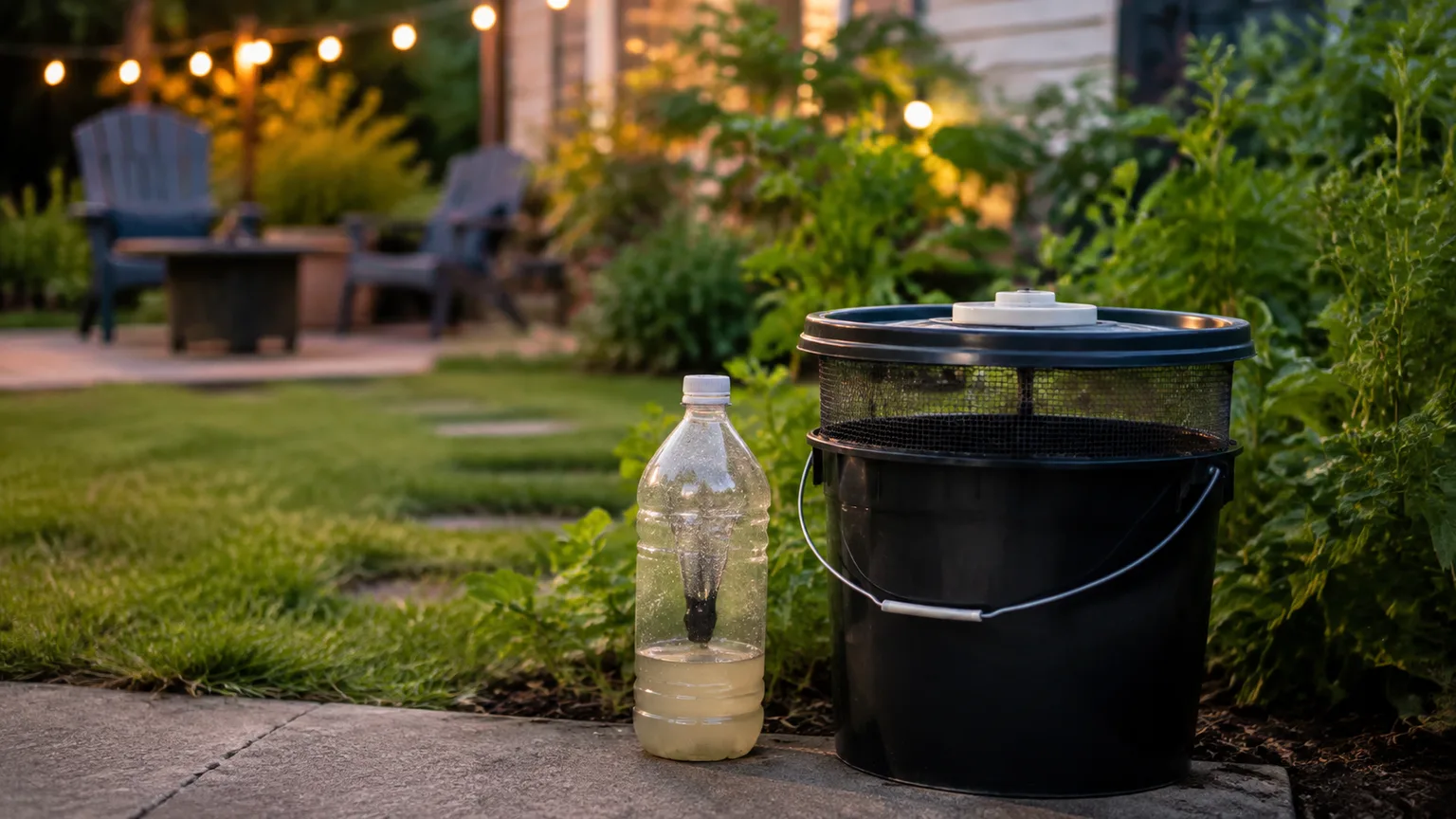
A standard light zapper is not a complete mosquito-control plan. Some traps use airflow or attractants to capture adults; oviposition traps imitate an egg-laying site and must be emptied or treated exactly as directed so larvae cannot emerge. Homemade bottle and bucket traps are inexpensive experiments, but their maintenance and effectiveness vary, and any trap that contains water must not become an unmanaged breeding container.
If you use a trap, place it where it will not compete with the seating zone, keep it out of children’s and pets’ reach, and clean it according to the directions. Do not place it beside a birdbath, pollinator planting, or light that attracts a broad mix of insects unless the product is designed for that setting. If a fan already gives the seating area relief, a trap may be more useful at the yard edge than directly under the table.
Outdoor adulticides are a different step again. They may provide quick knockdown but usually need reapplication, do not solve the breeding source, and can affect non-target insects. The CDC advises following the label for adulticides and contacting the National Pesticide Information Center for product questions. Never mix products, increase a dose, or spray a flowering plant, pond, food crop, or play area outside the label.
Why coffee grounds, candles, and DIY odors fail
Coffee grounds, vinegar, garlic, candles, and bowls of essential oils are attractive because they are cheap and easy to try. They do not solve the mosquito life cycle, and a strong smell in a small test container is not proof of protection across a windy yard. Even when a volatile compound affects mosquitoes in a laboratory or close-range test, the effect can disappear outdoors through dilution and changing wind.
Citronella candles may create a small scented zone under calm conditions, but their protection is inconsistent and their flame is a safety risk around dry plants, children, pets, and fabric. Never use essential oils as a skin repellent unless they are in a registered product labelled for that use. If a DIY remedy requires adding soap, oil, bleach, or vinegar to a pond or rain barrel, stop; the potential harm to water, wildlife, plants, or plumbing outweighs an unproven mosquito benefit.
Use this 30-minute reset before an outdoor evening
When guests are coming, use the following order instead of scattering five half-tested remedies around the yard:
- Walk the property for water. Dump and scrub saucers, toys, buckets, trays, and small pools. Empty water from covers and furniture. Cover rain barrels and check the gutter nearest the patio.
- Clear the human zone. Move chairs away from dense, damp foliage, trim anything brushing against legs, and remove clutter behind the seating area.
- Set the airflow. Put a box or oscillating fan where it blows across people. Test the cord, keep the base stable, and protect the connection from rain.
- Check exclusion. Close doors, repair an obvious screen gap, and keep indoor vases or saucers from holding old water.
- Protect skin and clothing. Apply the EPA-registered repellent that fits the people and activity, then add long sleeves, pants, or treated gear when practical.
- Use plants and traps as supporting layers. Move a useful fragrant container near the seating area, but do not block airflow. Put a trap away from guests and keep it maintained.
Repeat the water audit weekly during mosquito season and after heavy rain. If the patio improves for a night but the problem returns after every storm, focus on the source rather than buying a stronger scent or another trap.
Know when to call local mosquito control
Contact your local mosquito-control district or health department when you have a large, persistent water body, a neglected public or neighboring site, repeated flooding, or a sudden increase in mosquitoes during a disease advisory. The CDC notes that local programs track mosquito numbers and types and may coordinate larval or adult control. They can also tell you which products and reporting channels apply in your area.
Hire a licensed pest professional when you need a labelled treatment plan for a difficult property, cannot safely reach a roof or drainage system, or have tried source control without improvement. Ask what habitat they found, which product category they plan to use, what areas will be treated, how long people and pets must stay away, and how the plan protects pollinators and water.
If anyone develops fever, severe headache, rash, confusion, muscle weakness, or other concerning symptoms after mosquito exposure, contact a healthcare professional and mention the exposure and location. Yard advice cannot diagnose a mosquito-borne illness, and a low-bite evening is not a guarantee that disease transmission is impossible.
Conclusion
The most effective way to keep mosquitoes away is layered and unglamorous: remove or cover water every week, keep the patio moving with a fan, close the routes into the house, protect skin with an EPA-registered repellent, and use plants or traps only for the smaller gaps those first measures leave behind.
Start with the saucers, gutters, toys, buckets, and rain barrels closest to where you sit. Then choose one personal protection step and one seating-zone improvement. That sequence reduces the next generation, makes tonight more comfortable, and keeps attractive but unreliable shortcuts from taking the place of controls that actually match how mosquitoes live.