How to Kill Weeds: 10 Methods for Lawns and Gardens
Learn 10 ways to kill weeds in lawns, beds, and driveway cracks. Match each treatment to the weed’s roots, location, and risk to nearby plants first.
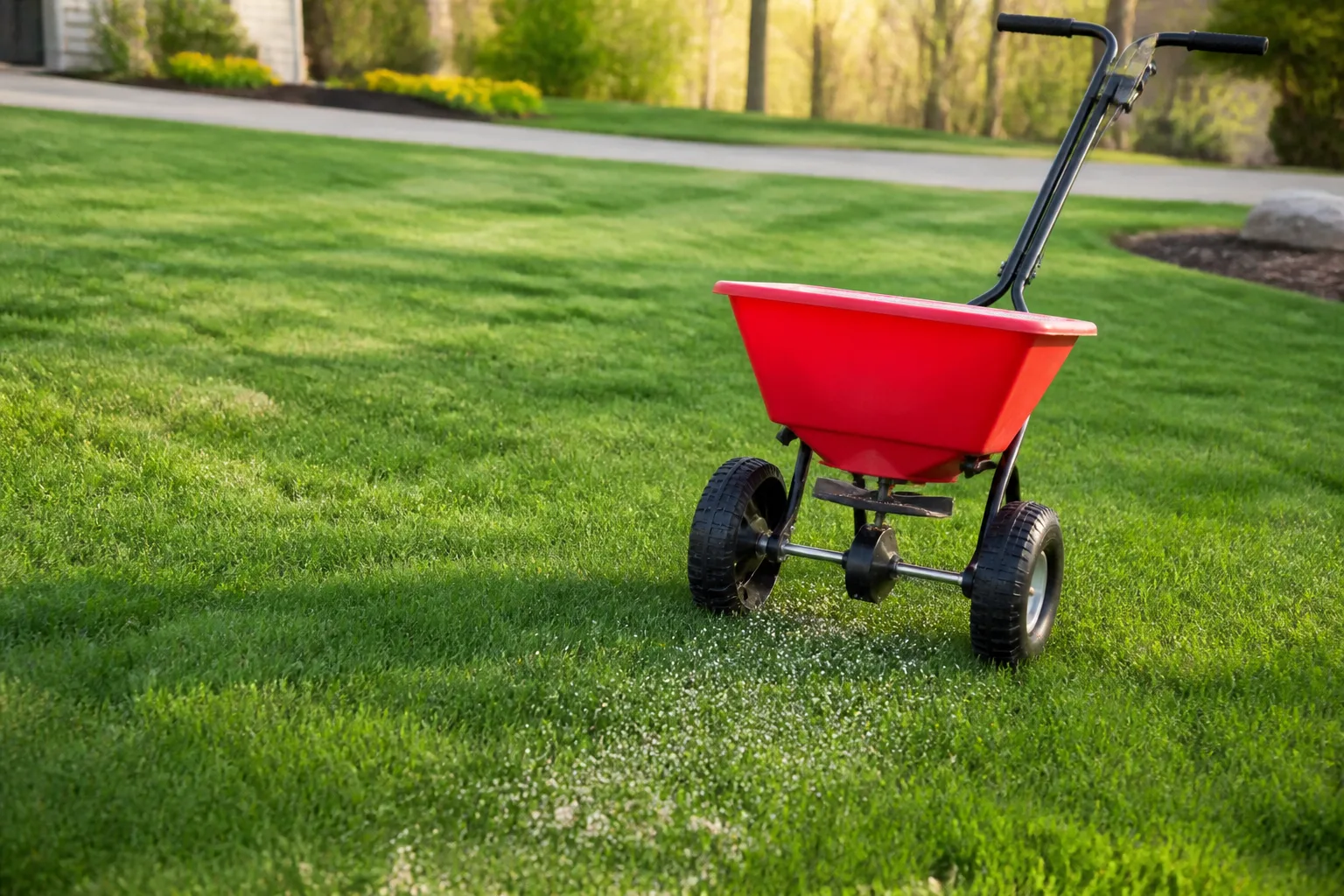
A weed in a flower bed, a weed in turf, and a weed in a driveway crack are three different problems. The right treatment depends on what the weed is, whether it can regrow from its roots, and what you need to protect around it. A broadleaf herbicide that leaves some grasses unharmed may still injure a sensitive grass type or nearby ornamentals; a nonselective product can kill anything its spray reaches.
Start by matching the treatment to the place:
| Where weeds are growing | Best first move | What to avoid |
|---|---|---|
| Open garden bed | Pull or hoe young weeds, then cover bare soil with mulch | Spraying close to desirable plants |
| Established lawn | Improve turf density; remove isolated weeds or use a product labeled for that grass | Vinegar, boiling water, or nonselective spray across the lawn |
| Driveway or patio cracks | Pull young weeds and clear the crack; use a carefully targeted treatment only if needed | Salt or spray that can run into beds, drains, or lawn |
| Large, unplanted patch | Smother or solarize; plan for surviving roots and follow-up | Expecting one short treatment to eliminate a perennial |
First decide where the weed is growing
In a lawn, the goal is not simply to kill the weed. It is to preserve the grass and close the open space that allowed the weed to establish. In a planted bed, the main risks are damaging nearby roots and leaving exposed soil for the next wave of seedlings. On a hard surface, protecting plants and directing any runoff away from drains and beds matters more than preserving the weed-free crack forever.
That distinction rules out many “one bottle for everything” solutions. Vinegar, boiling water, and nonselective herbicides can injure plants they contact, including grass. A selective lawn herbicide may spare the turf only if its label lists your grass type and target weed. If you cannot identify the grass or weed, begin with a hand tool and identify the plant before applying a product.
Also consider how many weeds you have. A handful of new seedlings can be pulled in minutes; a dense patch of perennial weeds may call for covering the area, carefully repeated removal, or a staged renovation. Treating the whole yard when the problem is limited to a few plants adds work and risk without solving the reason they appeared.
Identify the weed before choosing a treatment
Annual weeds live for one growing season and spread mainly by seed. Removing them before flowers mature is often enough to stop that plant from seeding, although seed already in the soil can germinate later. Perennial weeds survive for multiple years and may return from a taproot, creeping roots, rhizomes, or pieces left behind after cultivation. A quick surface burn can make a perennial look dead while its roots remain alive.
In lawns, identify whether the weed is a broadleaf plant or a grassy weed. A dandelion and crabgrass need different choices: many lawn products labeled for broadleaf weeds will not control grassy weeds, and a nonselective grass killer will also kill desirable turf. Look at leaf shape, growth habit, flowers, and the way the plant spreads before you pick a product. Better Homes & Gardens’ weed guide illustrates why those visible traits matter: weed types differ in life cycle, root behavior, and suitable controls (Better Homes & Gardens).
If the plant is unfamiliar, photograph it and ask a local Cooperative Extension office or a knowledgeable nursery for an identification. This is especially useful before treating a patch near edible crops, ornamental plants, or a lawn you want to keep. A plant you call a weed may be a wanted native seedling or a useful groundcover; make the keep-or-remove decision before reaching for a spray.
1. Pull small annual weeds by hand
Hand-pulling is the fastest, least complicated option for a small number of young annual weeds in a bed, vegetable garden, or lawn. The soil should be moist but not waterlogged: after rain or irrigation, loosen the soil around the stem and pull steadily near the base rather than snapping the top off. A hand fork helps lift seedlings without leaving most of the root behind.
Do not wait until a weed has flowered and dropped seed. Pulling then can remove the parent plant but still leave a fresh crop for later in the season. Shake loose soil back into the bed, then remove flowers and seed heads from the yard. The RHS recommends identifying weeds first, removing annuals before they set seed, and hoeing or hand-pulling according to their growth habit (Royal Horticultural Society).
A weekly five-minute pass is more manageable than a monthly battle. Walk the bed after rain, remove the small seedlings while their roots are shallow, and check again after watering or a storm. Hand-pulling is less effective when a creeping perennial has spread under shrubs or when stems break easily; use the root-removal approach below instead.
2. Dig out taproots and spreading roots
Dandelions, dock, bindweed, and other persistent weeds may resprout if you remove only the leaves or break off the upper root. For a taproot, use a narrow weeding knife or dandelion tool to loosen soil beside the root, then lift it from below. In a planted bed, a hand fork is often safer than a spade because it disturbs less soil and is less likely to chop the root into pieces.
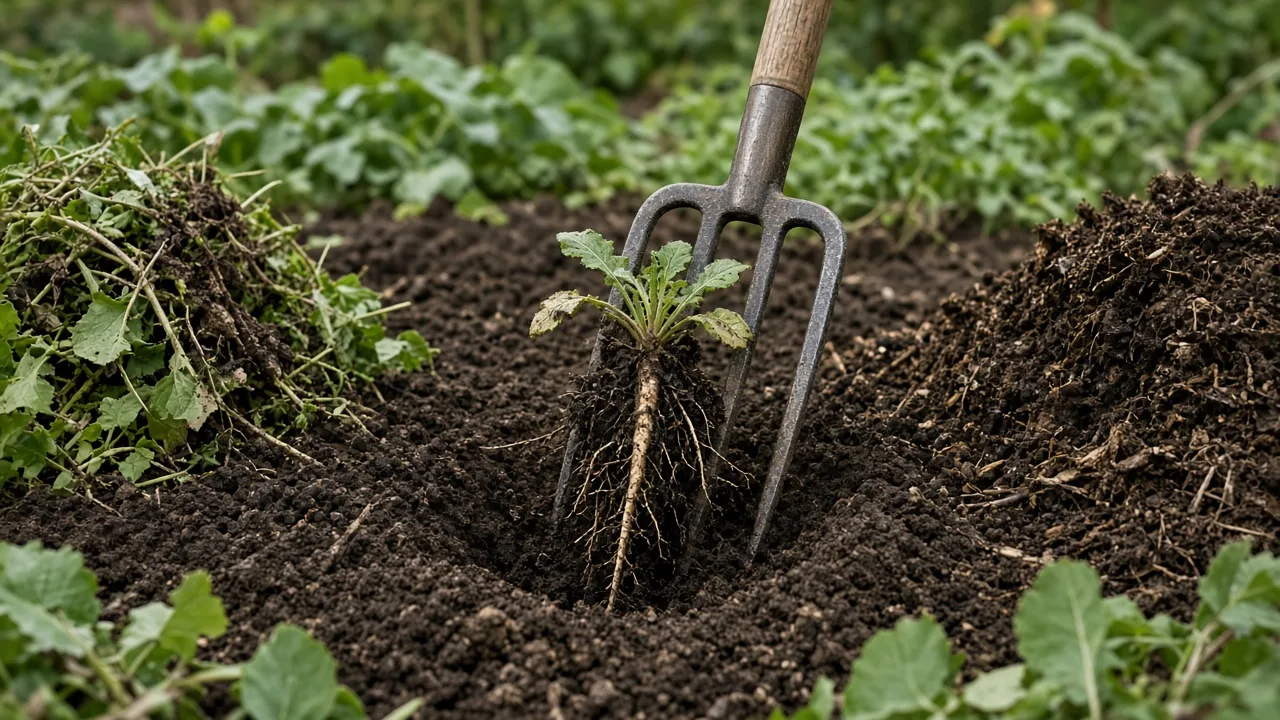
Creeping perennials need patience. Slide a fork beneath the root system and ease it upward, following the runners as far as practical. Avoid repeatedly chopping a patch with a spade or rototiller: some species regenerate from fragments, so chopping can distribute the problem. The RHS advises loosening persistent weeds with a fork and removing as much of the root as possible; where roots are intertwined with plants, repeated removal of shoots may gradually weaken the weed (RHS guidance on weeding a bed).
Put seed-bearing weeds in yard waste according to local guidance rather than assuming a cool home compost pile will destroy every seed or root. If you cannot safely remove a root without uprooting a treasured perennial, cut or pull the shoots whenever they reappear and keep the bed mulched. That repeated removal denies the weed leaves with which to replenish its underground reserves, though it may take a season or longer.
3. Hoe seedlings while they are tiny
A sharp hoe can clear many small annual weeds from an open vegetable bed or an unplanted row faster than hand-pulling. Work when the surface is dry and the seedlings are small. Skim the blade just below the soil surface to sever the stem from its roots; deep chopping only brings buried seeds closer to light and can disturb crop roots.
After hoeing, leave tiny seedlings on the surface only if the weather is dry enough for them to wilt. In damp conditions, gather them so they do not re-root. Keep the blade away from the stems and shallow roots of vegetables and ornamentals, and switch to hand tools close to established plants. The RHS describes shallow back-and-forth hoeing as a way to sever annual weed roots and notes that dry conditions help disturbed seedlings shrivel (Royal Horticultural Society).
Hoeing is a maintenance method, not a one-time cure. A few minutes every week or two can prevent small seedlings from becoming rooted weeds, but a hoe will not reliably remove established taproots or deep perennial roots. If the soil is wet and sticky, postpone the job; working wet soil can compact or smear it, and weeds pulled from wet ground may remain viable.
4. Cut or mow weeds before they set seed
If a large weed cannot be removed immediately, cut it before seed forms. In a lawn, mow at the recommended height for the grass species rather than scalping the turf to reach weeds. In an empty strip or rough edge, trim flowering weeds before their seed heads mature, then collect the clippings if they contain viable seed.
Cutting reduces seed production, but it is not equivalent to killing the plant. Annuals may die after repeated cutting, while established perennials can send up new shoots from roots. For those, cut or pull each flush as soon as it appears and combine that effort with digging, smothering, or a suitable labeled herbicide when the site and weed call for it. Do not mow invasive plants or poisonous weeds without checking how to handle and dispose of their cut material.
A strong lawn makes this method more effective because thick turf shades the soil and leaves fewer bare spots for seedlings. Colorado State University Extension recommends maintaining vigorous grass through appropriate seeding, mowing, watering, and fertilizing, and warns that mowing too short or watering shallowly can weaken turf and favor weeds (Colorado State University Extension).
5. Make lawn grass dense enough to crowd out weeds
For a lawn that keeps filling with weeds, treat the underlying turf problem as well as the visible plants. Thin grass often points to a mismatch in mowing height, watering, soil conditions, traffic, shade, or grass type. Correcting that mismatch will not kill every established perennial, but a vigorous lawn competes more effectively for light, water, and space and gives new weed seedlings fewer open places to grow.
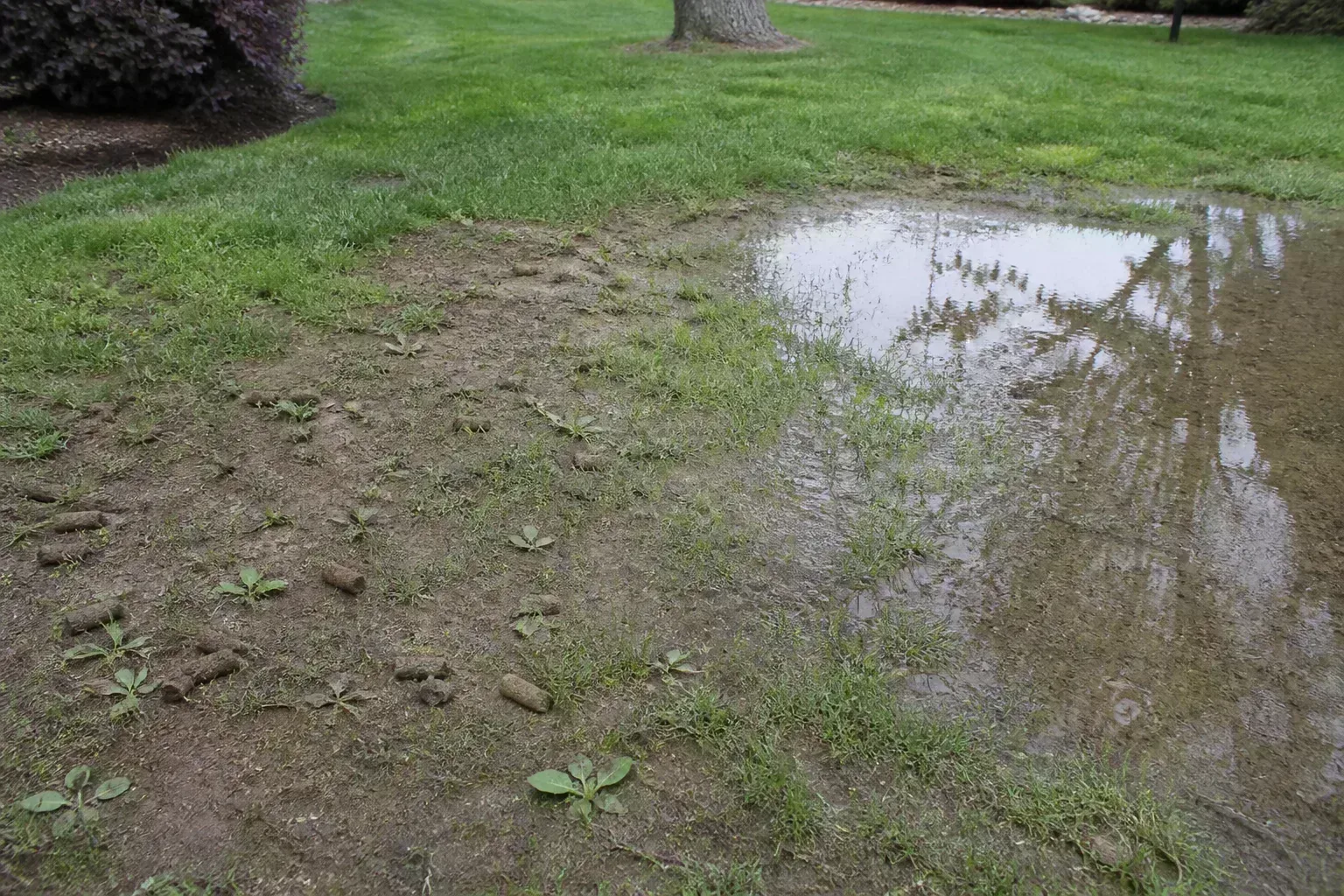
Mow at the height recommended for your grass and season; avoid removing more than one-third of the leaf blade at once. Water deeply enough to support the lawn rather than giving it frequent, shallow sprinkles, and use a soil test before adding lime or fertilizer. Fertilizer is not a weed killer: applying it when the lawn does not need it can feed unwanted growth or stress turf. UGA Extension describes cultural care, mechanical control, and herbicides as complementary parts of lawn weed management, not interchangeable fixes (UGA Cooperative Extension).
If weeds have left bare soil, remove or control them first, then overseed or repair the patch at a time suitable for the lawn species and local climate. Check the seed label and any herbicide label for reseeding restrictions; some weed preventers interfere with grass seed germination. Keep the repaired area evenly moist while seed establishes, then transition to deeper watering as recommended for your turf. A dense lawn is a prevention strategy that pays off over time.
6. Mulch garden beds to shade bare soil
Mulch suppresses new weed seedlings by blocking light at the soil surface and makes the few that do appear easier to pull. First remove the weeds already growing, especially seed heads and persistent roots; mulch laid over tall weeds can hide them without killing them. Spread a consistent layer of organic mulch over bare soil, keeping it away from the crowns and stems of desirable plants so they are not buried or held in constantly damp material.
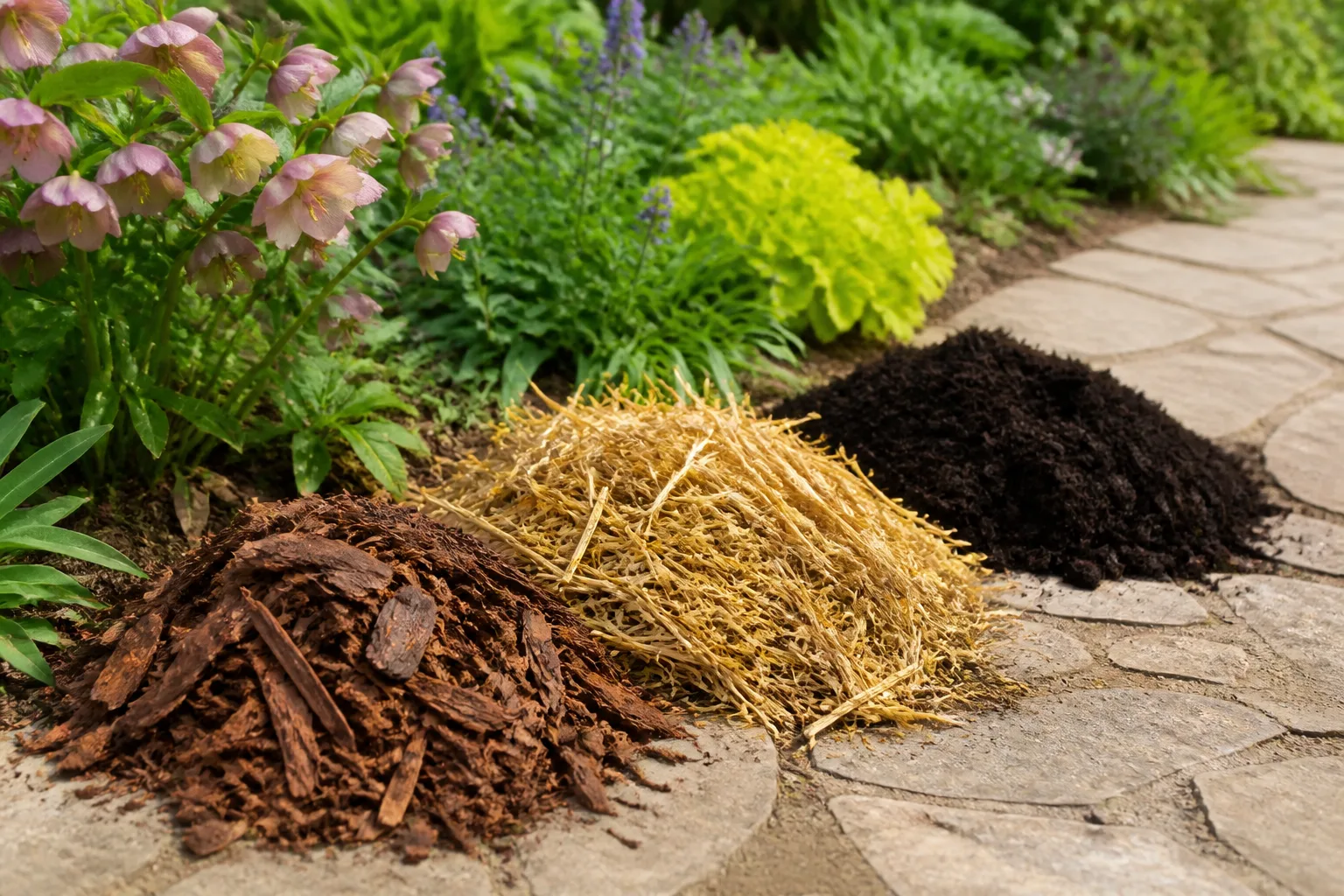
Refresh mulch as it thins, but do not pile new material onto a deep, compacted layer year after year. A 2- to 3-inch layer is a useful starting range for many beds, adjusted for the material and plantings; coarse mulch leaves bigger gaps than fine mulch, and shallow-rooted seedlings need a clear path through it. Dense planting also closes bare gaps once perennials or groundcovers establish. The RHS identifies mulching and dense planting as practical ways to limit opportunities for new weeds after a bed is cleared (RHS Advice).
Landscape fabric can make sense under a path or long-term gravel area, but it is not a set-and-forget solution for every bed. Soil and organic debris collect on top, seeds germinate in that layer, and roots can grow through seams or openings around plants. Before installing fabric, consider whether you will want to divide, transplant, or add plants later; a biodegradable mulch is often easier to maintain in a changing garden.
7. Smother a larger patch with a cover
For a bed you are renovating or a large patch of annual weeds, block light before planting. Cut or mow the vegetation, remove seed heads, and cover the area with overlapping cardboard or an opaque weed-control tarp. Weight the edges so light cannot enter; then check the perimeter and openings regularly. Cardboard can be topped with compost and mulch for a planting bed, while a reusable tarp is useful when the area will remain unplanted during treatment.
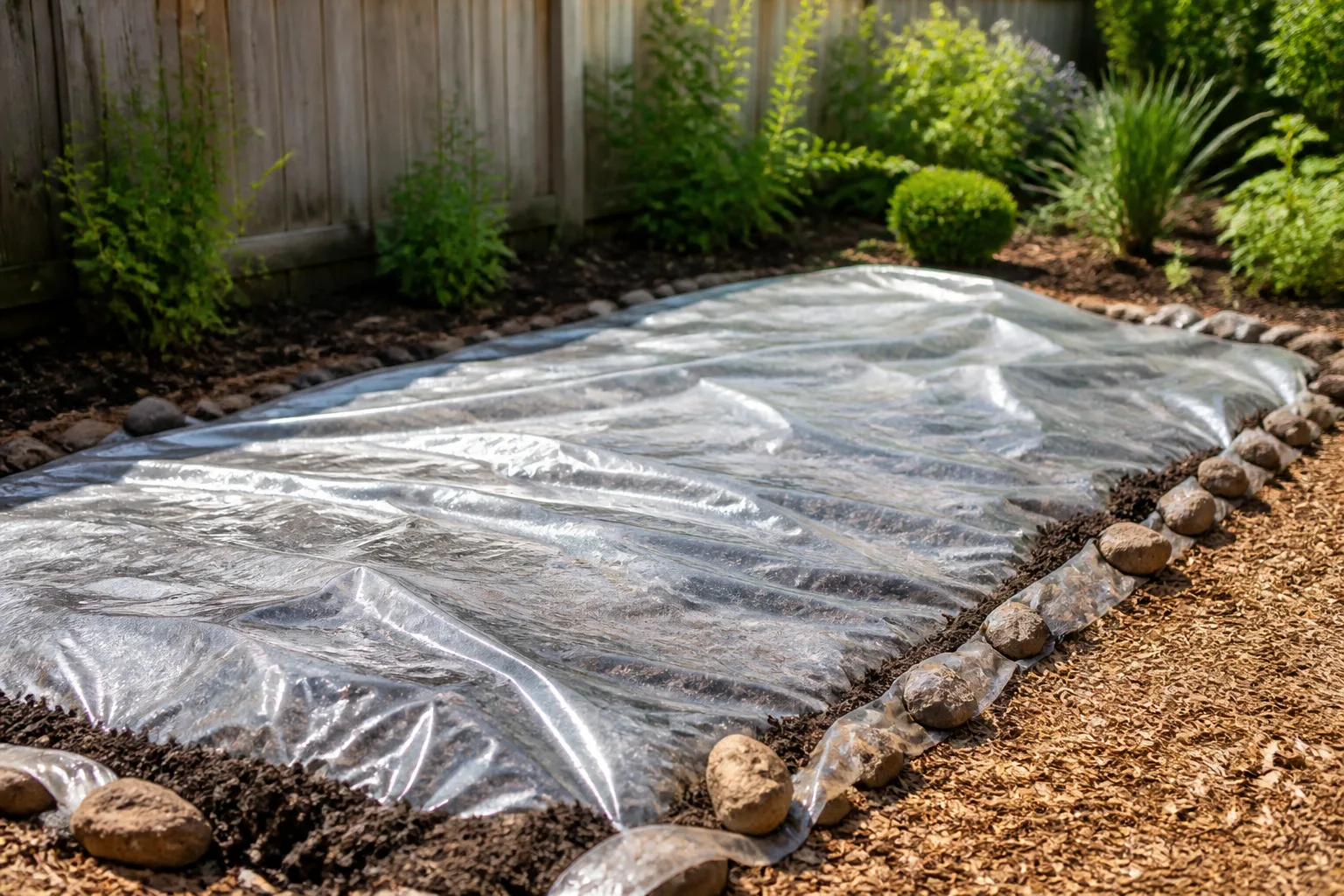
Smothering takes time, and the right duration depends on the weed, season, moisture, and cover. Annual seedlings usually succumb more readily than deep-rooted perennials. Bindweed, quackgrass, or other persistent plants may survive beneath the cover or creep out at the edges; remove new shoots as soon as they appear and continue follow-up after uncovering. If you plan to plant immediately afterward, make sure the cover has not left a mass of vigorous living roots in the soil.
Solarization is a related option for a sunny, bare area: moist soil is covered with clear plastic so solar heat builds beneath it. It works best where warm, sunny weather can heat the soil; cloudy or cool conditions make it less dependable. Both approaches sacrifice access to the area during treatment. They are more suitable for an empty bed or future planting zone than for a lawn or an actively growing border.
8. Use a pre-emergent at the right time
A pre-emergent herbicide is intended to stop susceptible weed seeds from establishing; it does not kill weeds that are already visible. The useful window is before the target weed germinates, so timing follows the weed’s life cycle and local conditions rather than a single calendar date for every yard. Apply only a product whose label lists the weed, surface, and use you need.
This method can be a poor fit if you plan to sow grass, vegetables, or flowers soon. A product that affects germinating weed seeds may also affect the seeds you want to grow, and the label may specify how long to wait before seeding. Pre-emergent treatments also do not control every species; a product for crabgrass will not automatically prevent broadleaf weeds. Colorado State University Extension distinguishes seed-prevention products from treatments for existing plants and emphasizes identifying the weed first (Colorado State University Extension).
Do not assume that a “weed and feed” product is the best choice just because it combines two jobs. Use it only if the lawn needs the fertilizer and the herbicide at the same time, the product is labeled for your grass, and the target weeds match. If your lawn is healthy and the weed problem is limited to a few spots, targeted removal can be more sensible than treating the entire area.
9. Choose a selective herbicide for lawn weeds
A selective herbicide is designed to control certain weeds while leaving specified turfgrass types unharmed when used as directed. It is not selective for every lawn: a product can injure a grass species that is not listed, and it may control broadleaf weeds but not grassy weeds. Read the front and back label for the active ingredient, target weed, turf species, application rate, weather restrictions, and any limits on mowing, watering, or reseeding.
Choose a product based on the weed you identified, not the picture on the bottle. If the weed is scattered, spot treatment reduces exposure to the rest of the lawn. Apply only under label conditions, use the protective equipment and re-entry instructions listed, and keep people and pets away for the period specified. Avoid drift onto garden beds, trees, and neighboring plants; a selective lawn product can still harm ornamentals.
Pre-emergent products prevent particular weeds from establishing, while post-emergent products treat weeds already growing. A lawn may need one, both at different times, or neither; the answer depends on the weed and the grass. UGA Extension cautions that herbicides control only certain species and should be used according to their labels, alongside good cultural practices (UGA Cooperative Extension). If you cannot match the label to your turf and weed, skip the application and ask Extension for help.
10. Spot-treat weeds in bare ground and cracks
A nonselective herbicide can be useful where no wanted plants are growing, such as an isolated patch before a new bed is planted or a weed in a hardscape joint. It can damage or kill any plant it contacts, so do not broadcast it across a lawn or spray it where wind can carry droplets into a border. For a few isolated weeds, a shielded nozzle or careful application with a small brush can reduce contact with nearby plants; the label must permit the use and application method.
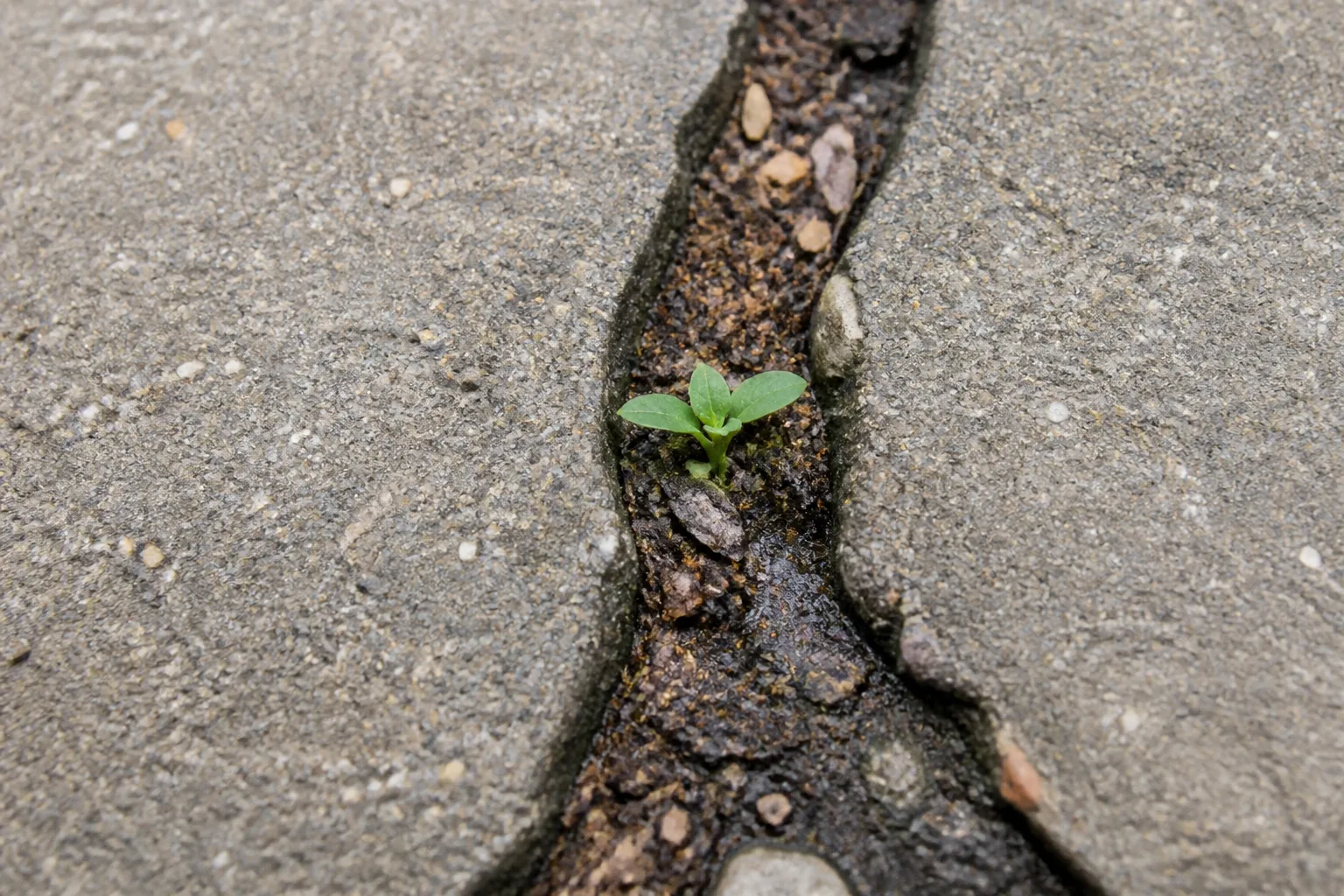
For driveway and patio cracks, first pull or scrape the weed and remove loose debris. Refill open joints with an appropriate paving material if the surface allows it; otherwise windblown soil and seeds will settle into the same gap again. If you choose a herbicide, confirm that the label allows use on the hard surface and prevent spray or runoff from reaching drains, lawns, or planting beds. A nonselective product is a poor choice beside a tree or shrub whose roots extend under the pavement.
For clearing ground that will become a garden, check the product label for planting intervals and restrictions. Some products leave residues or have waiting periods; others are intended for particular sites only. Never mix products or add dish soap, vinegar, or salt unless the product label explicitly directs it. A careful spot treatment can solve a localized problem, but it will not replace sealing the crack, covering the bed, or improving the lawn conditions that invite weeds.
Why vinegar, boiling water, and salt are not permanent fixes
Vinegar can injure green tissue it touches, but a leaf-level burn is not proof that a weed’s roots have died. Small annual seedlings in an isolated pavement crack are a more plausible target than a dandelion taproot or a creeping perennial in a garden bed. Household vinegar is not the same as a labeled herbicide; stronger horticultural products can be hazardous to skin and eyes. Avoid spraying any vinegar mixture near wanted plants, and do not treat “natural” as another word for selective or harmless.
Boiling water can kill small weeds it contacts, but it can also burn you, scald nearby plant roots, and damage grass or ornamentals. Pouring it into a crack may be a limited option when the weed is isolated and no wanted roots are nearby, but it is hard to target precisely and usually needs repeating. It does not stop seeds from landing in the crack later.
Skip salt as a weed treatment. It is not selective, can make soil difficult for desirable plants, and may travel with water beyond the spot you intended to treat. For repeated weeds in pavement, pulling, scraping, and repairing the joint is usually a more durable plan than adding a substance to the soil.
Why weeds keep returning—and how to prevent it
A weed can return because a perennial root survived, a broken root fragment resprouted, a seed head dropped before removal, or new seed arrived from nearby. Sometimes the first treatment did exactly what it could do: it killed the visible plant but did nothing to the seedbank or bare soil. That is why a follow-up check matters more than searching for one permanent weed killer.
After removal, close the open space. In beds, mulch or plant groundcover; in lawns, repair bare patches with grass suited to the site; in cracks, remove debris and maintain the joint. Keep an eye on the area over the next few weeks, especially after rain or irrigation. Remove seedlings while they are small and before they can set seed. For spreading perennial weeds, repeat removal of shoots or digging rather than expecting one pass to finish the job.
Keep a simple note of where the weed appeared, what it looked like, what you used, and whether it returned. If it regrows from a deep root, change from clipping leaves to removing the root or smothering the patch. If new seedlings appear after you clear the parent plant, focus on mulch, dense planting, or correctly timed pre-emergent treatment. Prevention works best when it addresses the way that particular weed spreads.
Common mistakes that cause more weed problems
The first mistake is treating the whole site before identifying the weed and the plants you want to keep. A weed killer may be effective against one species and useless against another; a selective product for one grass may injure another. Confirm both plant identities and the intended use on the product label before applying it.
The second is using a surface treatment on a deep-rooted perennial and stopping when its leaves turn brown. The plant can regrow from underground tissue, and a second pass may be necessary. Likewise, pulling weeds after they have released seed may clean up the bed but still leave new seedlings to manage. Build follow-up into the plan rather than judging success on the day of treatment.
Finally, avoid common shortcuts: mowing a lawn too short to expose weeds, cultivating wet soil, piling mulch against plant stems, using fabric without considering future planting, or applying chemicals on windy or otherwise restricted conditions. Do not pour salt, vinegar, or boiling water into a planted bed because an online recipe calls it natural. For herbicides, the label is the instruction set: follow it for site, target, amount, protective equipment, and re-entry. If anything is unclear, ask a local Extension office before treating.
Conclusion
The most reliable way to kill weeds is to match the method to the location and the weed’s life cycle. Pull or dig small weeds in beds, hoe seedlings before they root deeply, mulch bare soil, and use healthy turf practices to make a lawn less welcoming. For persistent weeds, plan on follow-up rather than assuming the first treatment reached every root or seed.
Use herbicides only when the label fits the weed, surface, and plants you want to keep. Save nonselective treatments for carefully controlled spots without desirable vegetation, and treat vinegar or boiling water as limited contact methods rather than permanent solutions. Once you remove a weed, close the opening with mulch, groundcover, repaired turf, or a maintained paving joint; that is what makes the next round smaller.