How to Rebloom a Poinsettia for Next Christmas
Learn how to rebloom a poinsettia with a month-by-month care plan, pruning advice, and an exact darkness schedule for holiday color.
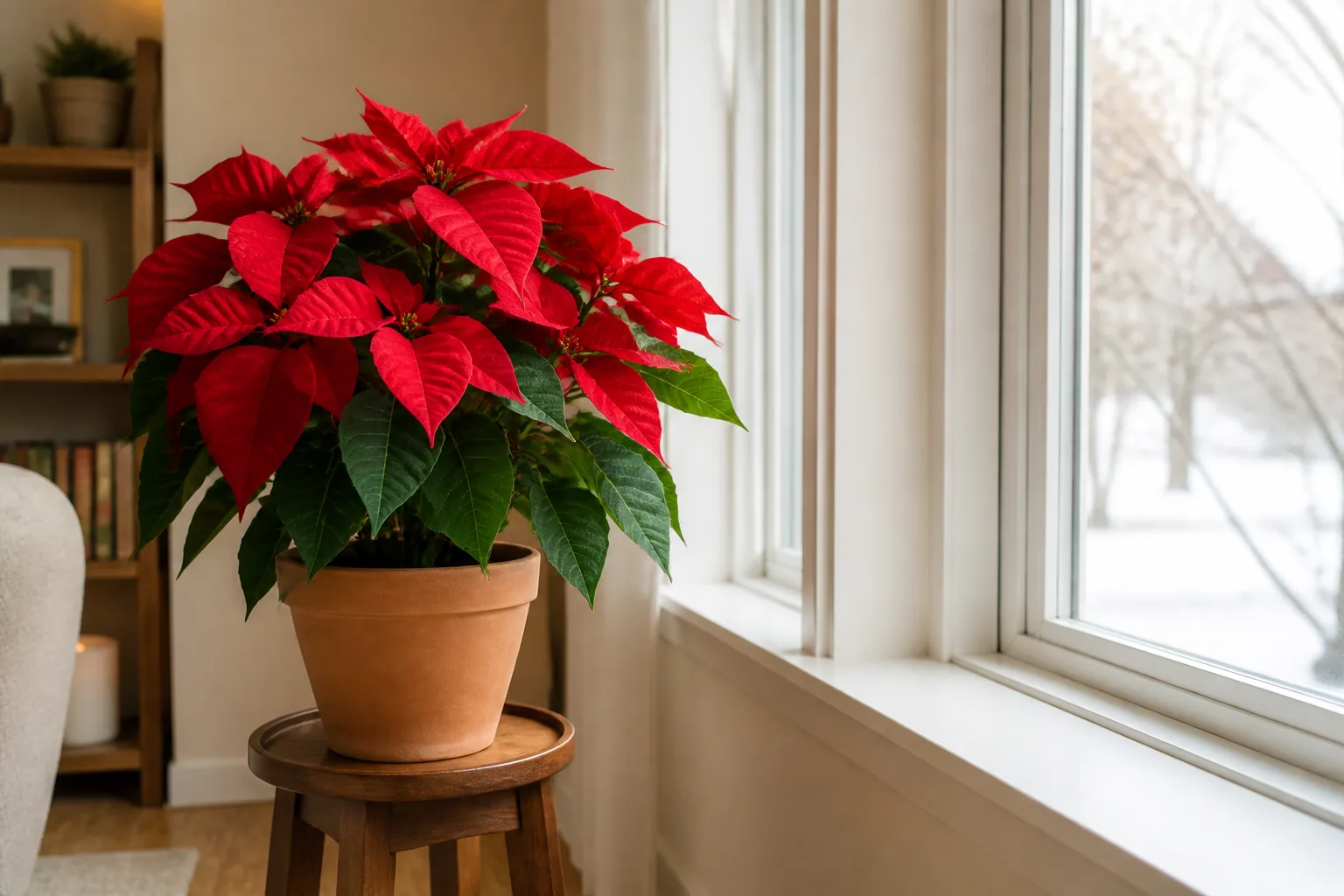
If your poinsettia has finished its holiday display, do not mistake fading red bracts for a dead plant. A poinsettia (Euphorbia pulcherrima) is a tender perennial shrub that can be kept as a green houseplant through spring and summer, then encouraged to color again with a carefully controlled autumn night. The project takes months of ordinary care and several weeks of very consistent darkness, but the schedule is manageable when you treat it like a calendar rather than a last-minute rescue.
The short answer is this: keep the plant growing after the holidays, prune it in spring, give it strong light and steady moisture through summer, and begin a daily long-night treatment in late September or early October. The exact darkness window varies by cultivar and growing conditions, so the safest approach is to start early, keep nights completely dark, and continue until the small central flowers are developing and the bracts are clearly changing color.
What “reblooming” actually means
The red, pink, white, peach, or marbled parts that make a poinsettia look festive are bracts, or modified leaves. The true flowers are the tiny yellow-green structures, called cyathia, clustered at the center of each colored group. When you bring the plant back into color, you are not making a green leaf turn into a different flower; you are triggering the plant’s natural reproductive display so new bracts develop around its flowers.
Poinsettias are short-day plants, which is a slightly misleading name. The important signal is a sufficiently long, uninterrupted night. Extension guidance agrees that autumn darkness initiates flowering, while temperature influences the speed and size of bract development. UF/IFAS explains that artificial light during the dark period can delay or interrupt flowering, and NC State lists a daily treatment of 16 hours of uninterrupted darkness and eight hours of bright light beginning in late September for holiday color (UF/IFAS Extension; NC State Extension Plant Toolbox).
Can your poinsettia rebloom at home?
Yes, if the plant still has living stems and a functioning root system. A poinsettia that lost leaves after a cold ride home, stayed waterlogged in foil, or dried until the roots died may not have enough stored energy to make a full display. A smaller second-year plant is still a success if it produces healthy new leaves and a few colored bracts; greenhouse-grown holiday plants are bred and shaped for a dense, timed display, so a home-grown plant may become taller and less symmetrical.
Start with a plant that is still healthy
Scratch a thin section of stem gently with a clean fingernail. Green tissue beneath the bark suggests that the stem is alive; dry, brittle brown wood all the way down is dead. Look for firm stems, viable buds at leaf nodes, and roots that smell earthy rather than sour. Remove only dead growth at first and wait for new buds before making a hard cut.
Set realistic expectations about color. The plant should repeat its genetic bract color, not change from red to white because of a different light treatment. Some cultivars color faster or more intensely than others, and a plant that was kept too dim or pruned too late may produce fewer bracts even when the darkness schedule is correct.
The year-round reblooming calendar
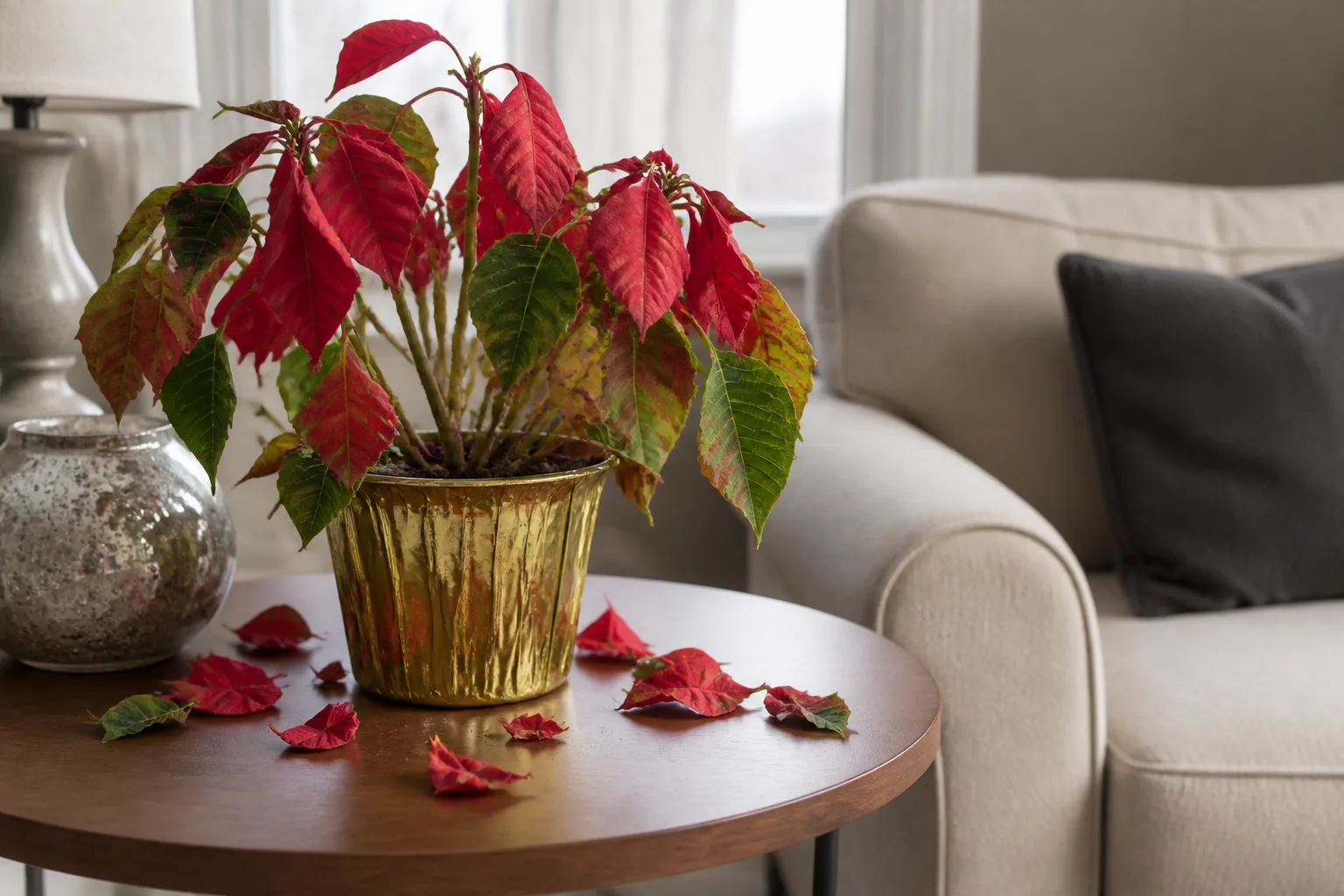
The dates below are a practical northern-hemisphere schedule for a plant that you want colorful around late December. Shift the outdoor steps for your local frost calendar, but keep the order: recover, grow, shape, transition, then trigger color.
January to March: let the display fade and rest
Keep a still-colorful plant in bright, indirect or filtered light, away from a cold windowpane, fireplace, heat vent, and frequently opened door. Water when the upper layer of mix feels dry, then let excess drain fully. Never leave the nursery pot standing in a cachepot or foil sleeve filled with water.
As bracts fade and leaves drop, reduce watering gradually rather than abandoning the plant. A cooler, bright room can slow the plant while it rests; Oklahoma State Extension recommends reducing watering after the display fades and holding the plant around 50–60°F if the remaining foliage is no longer attractive. Do not put it in a freezing garage or an unheated porch. Cold injury can kill stems before spring growth has a chance to return (Oklahoma State University Extension).
April to August: rebuild the plant
When you see new green growth, move back to regular watering and begin feeding according to a complete houseplant fertilizer label. Repot only if the root ball is crowded, the mix has collapsed, or the container lacks drainage. Choose a pot only one size larger and use a porous, well-drained mix; jumping into a very large pot leaves too much wet soil around a small root system. Gardening Know How likewise places repotting and the first shaping cut in spring, when the plant is ready to resume active growth (Gardening Know How).
Once frost danger has passed and nighttime temperatures stay above roughly 50–55°F, acclimate the plant to outdoor light over several days. Start in bright shade or gentle morning sun, then increase exposure. Strong midday sun, hot pavement, wind, and a sudden move from a dim room can scorch leaves even though a mature poinsettia can grow well outdoors in warm climates.
Keep the plant growing, not constantly wet. Check the mix with a finger and water thoroughly when it has begun to dry, allowing water to run from the drainage holes before emptying the saucer. Pinch growing tips during the active season to encourage several branches instead of one tall stem. Finish elective pinching by mid-to-late August; late cuts remove the new tips that need to carry the autumn display.
September to early December: prepare for color
Bring a container-grown poinsettia indoors before cool nights, cold rain, or frost. Inspect leaf undersides and stem joints for whiteflies, mealybugs, scale, and webbing, and isolate the plant if you find pests. Give it a bright daytime window, keep watering steady, and choose the darkness method before the first night so you do not miss days while improvising.
Start the long-night treatment in late September or around October 1 when you want color for Christmas. NC State Extension describes 14 hours of darkness followed by six to 10 hours of bright light and reports color in about six to eight weeks, with full bloom around 12 weeks; other extension schedules use 15–16 hours of darkness. The practical lesson is to provide a dependable long, uninterrupted night for at least eight weeks and start early enough that a slow cultivar has time to finish (NC State Cooperative Extension).
Keep a poinsettia healthy between holidays
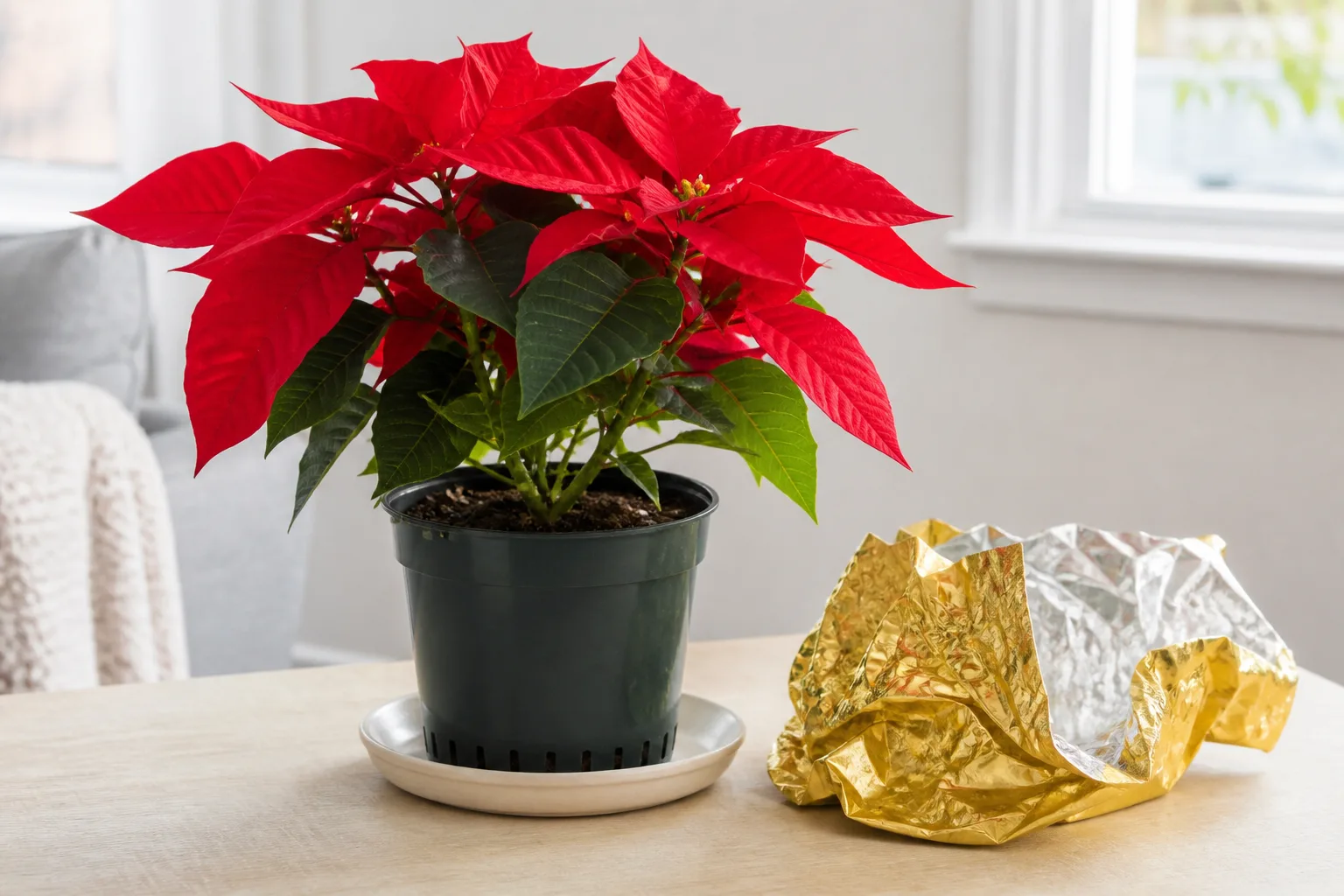
The darkness treatment cannot repair weak roots or a plant that spent summer in deep shade. The best rebloom insurance is boring consistency during the months when the plant is green.
Light, temperature, water, and drainage
Give the green plant several hours of strong, filtered light each day. A bright window is useful, but do not let leaves press against icy glass in winter. NC State describes a preferred growing temperature near 65–70°F, while Oklahoma State recommends 60–70°F for retaining bract color. Avoid dramatic swings rather than chasing one perfect number: drafts, heat ducts, fireplaces, and hot afternoon glass are more damaging than a modest day-to-night change.
Water by the mix, not by the calendar. When the surface has dried and the pot feels lighter, water slowly until a little drains from the bottom. If the mix is still wet, wait. Repeated small sips can leave the center of the root ball dry while keeping the surface invitingly damp; a thorough drink followed by drainage is easier to evaluate. Yellow leaves, a sour smell, and persistent wilting in wet soil point toward root trouble, not thirst.
Remove decorative foil or pierce it so the inner pot can drain freely. A cachepot is fine only when you empty it after watering. UF/IFAS likewise advises watering after the soil surface dries and removing excess water because poinsettias do not tolerate soggy soil (UF/IFAS Extension).
Fertilizer and repotting
Do not rush to fertilize a poinsettia that is still in its holiday display or visibly stressed. Feed when new spring growth is underway, then follow the label for a balanced houseplant fertilizer at the recommended dilution. More fertilizer does not make the bracts redder; it can produce soft, overly leafy growth or salt buildup in a small container.
Repot in spring only when the container is clearly too tight or the old mix drains poorly. A slightly snug pot is easier to manage than a large wet one. If several rooted plants were packed into one holiday container, separate them only when the root mass and stems can be handled without tearing them apart. Water the fresh mix once, let it drain, and do not add another major stress such as a hard pruning on the same day unless the original pot is failing.
Prune for compact, branched growth
When and where to cut
After the old display has faded and new spring growth is beginning, cut back long, bare stems to about 4–6 inches above the soil line, making each cut just above a healthy leaf node. Extension recommendations range from a 4–6-inch cutback to about 6–8 inches, so use the plant’s size as the tie-breaker: leave more stem on a small or weak plant and remove more old, leggy wood from a vigorous one (Oklahoma State University Extension; Birds & Blooms).
Use clean, sharp pruners and wear gloves. Poinsettia stems release milky sap that can irritate skin and eyes; wash any exposed skin and keep sap away from children and pets. The plant is not the highly poisonous holiday danger often claimed, but chewing foliage can still cause stomach upset, and individual people can react to the sap. NC State identifies both milky sap and contact dermatitis as concerns (NC State Extension Plant Toolbox).
Pinch new tips through summer when shoots are long and thin, leaving several leaves on each branch. Stop pinching by mid-August or follow the cutoff recommended for your region and cultivar. A late September haircut can remove the very growing points that would otherwise carry cyathia and colored bracts.
The darkness treatment, step by step
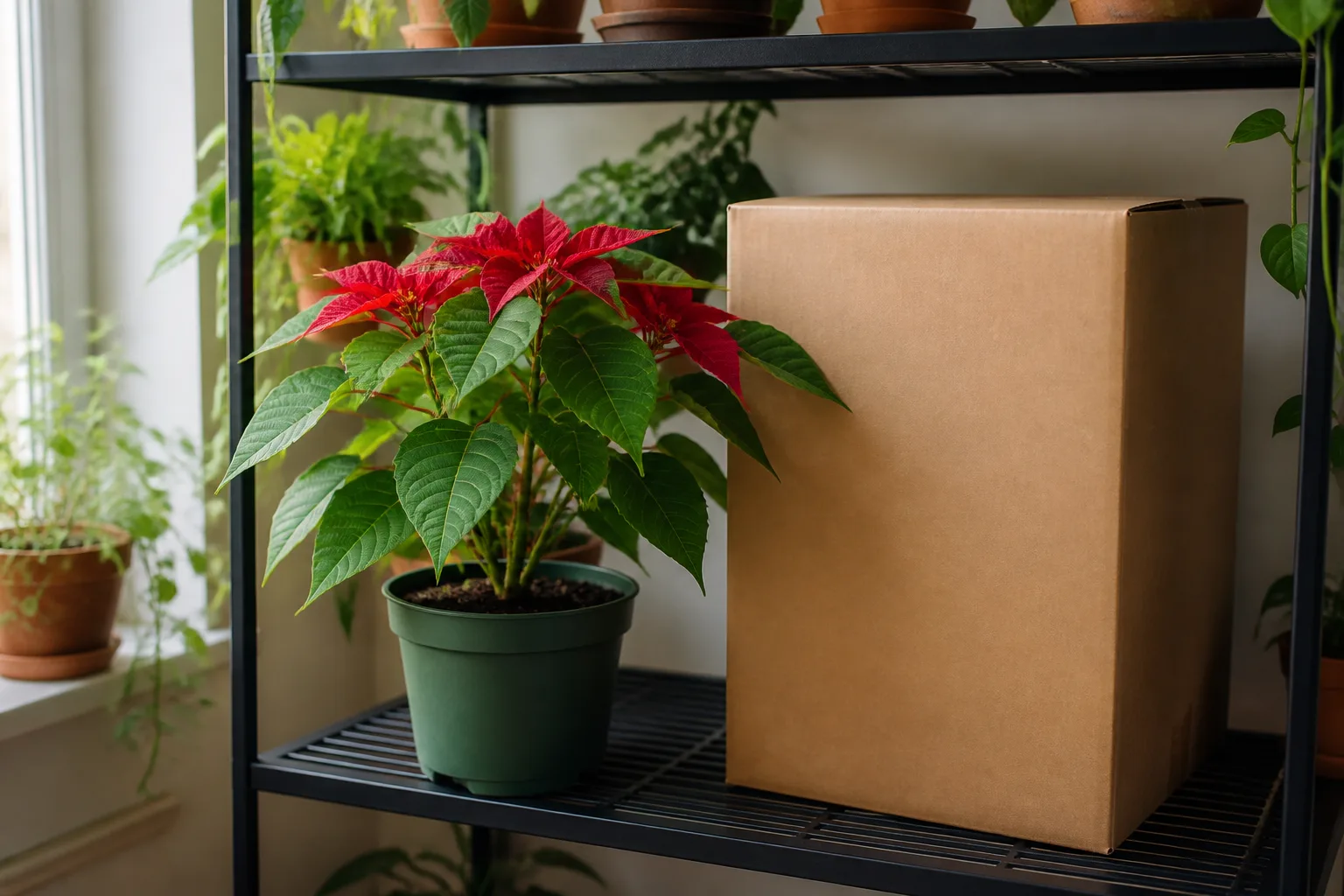
Choose a reliable setup and daily schedule
The simplest setup is a lightproof closet that will not be opened during the night. A roomy cardboard box also works when it covers the plant without bending leaves and has no gaps that let room light reach the canopy. Put the plant into darkness at the same time every evening and return it to a bright window at the same time every morning.
Aim for 14–16 continuous hours of darkness followed by about 8–10 hours of bright daytime light. For a 7 a.m. to 9 p.m. daytime window, the box or closet period runs from 9 p.m. to 7 a.m.; for a schedule that starts later, shift both times together. A timer reminder is more useful than a complicated grow-room setup.
Do not place the plant under a porch light, beside a bright hallway, near a window that receives headlights, or in a closet with an automatic light. Briefly opening the door to check it is enough to create a failed night. If you must inspect the plant, do it during the daytime light period and close the setup completely afterward.
Keep the plant watered during forcing. Check the mix in the morning or before covering it, then water only when it has begun to dry. Do not pour water into a covered box and do not let a dark, cool setup stay damp for days; low light plus wet roots is a fast route to leaf loss.
Know when to stop covering the plant
Continue the routine for at least eight weeks, watching the center of the bracts rather than waiting for a specific calendar date. Early signs include swelling or yellowing cyathia and the first tint appearing in the upper bracts. Oklahoma State advises continuing the light-free schedule until good bract color appears, often before Thanksgiving, while an Extension expert recommends staying under short-day conditions until pollen is visible on the first flower because immature bracts can green up again if long-day light returns too soon (Oklahoma State University Extension; Ask Extension).
Once color is established and the display is clearly forming, stop the artificial blackout and keep the plant in bright daytime light. Continue avoiding cold drafts and soggy soil. You are not trying to keep a poinsettia in a box through the holiday; you are supplying the autumn night signal long enough for flower development to become self-sustaining.
Troubleshoot a poinsettia that will not turn red
Light leaks, leaf drop, and green bracts
If the plant stays completely green after several weeks, first audit the night rather than adding fertilizer. Look for a hallway lamp, closet light, digital display, streetlight through a window, headlights, a box gap, or a family member opening the door. A failed night is not fixed by leaving the plant dark all day; return to a consistent day-and-night cycle and start the count again from the point when the setup became reliable.
If lower leaves drop but stems remain firm and new buds are visible, some loss may be a normal response to the change from a greenhouse-grown holiday plant to a home environment. If leaves drop rapidly with limp stems, cold exposure, severe dryness, or roots sitting in water is more likely. Move the plant to stable warmth, check the roots and mix, remove dead material, and correct drainage before resuming a forcing schedule.
If bracts color unevenly, check whether one side receives brighter daytime light or whether branches were shaded by a dense canopy. Rotate the pot during the daytime, not during the dark period. Uneven color can also reflect cultivar differences or late pruning; do not keep extending darkness indefinitely if the plant is otherwise healthy and the central flowers have developed.
Outdoor summer care and climate limits
In USDA Zones 9–11 or other frost-free climates, poinsettias can be grown outdoors as shrubs or large containers, but they still need well-drained soil and protection from artificial light at night. A streetlamp, security light, solar path light, or bright window can prevent the long natural night that triggers color. UF/IFAS notes that poinsettias can perform as landscape plants where prolonged freezes are uncommon, while NC State lists Zones 9–11 as their outdoor hardiness range (UF/IFAS Extension; NC State Extension Plant Toolbox).
In colder regions, keep the plant in a container so it can come indoors before nights fall below about 50°F. Harden it off when moving outside in spring, give it bright morning light or filtered sun, and shelter it from hot wind and reflective heat. Do not plant a treasured container specimen into the ground if your fall temperature arrives before you can safely dig and move it.
Conclusion
To rebloom a poinsettia, think in seasons. Let the holiday display finish, keep the roots draining, cut back and feed only when spring growth begins, shape the plant before late summer ends, and move it indoors before cold nights. Then give it a predictable period of 14–16 hours of total darkness every night for roughly eight to 12 weeks while maintaining bright daytime light.
The darkness step is the part that determines color, but the months before it determine whether the plant has enough healthy growth to make a good display. If you can protect the schedule from stray light and keep moisture steady, a once-a-year holiday poinsettia can become a repeatable living tradition instead of a one-season decoration.