How to Care for Basil in Winter So It Stays Alive
Learn when to move basil indoors, how much light and water it needs, and when cuttings or freezing are smarter than saving the whole plant.
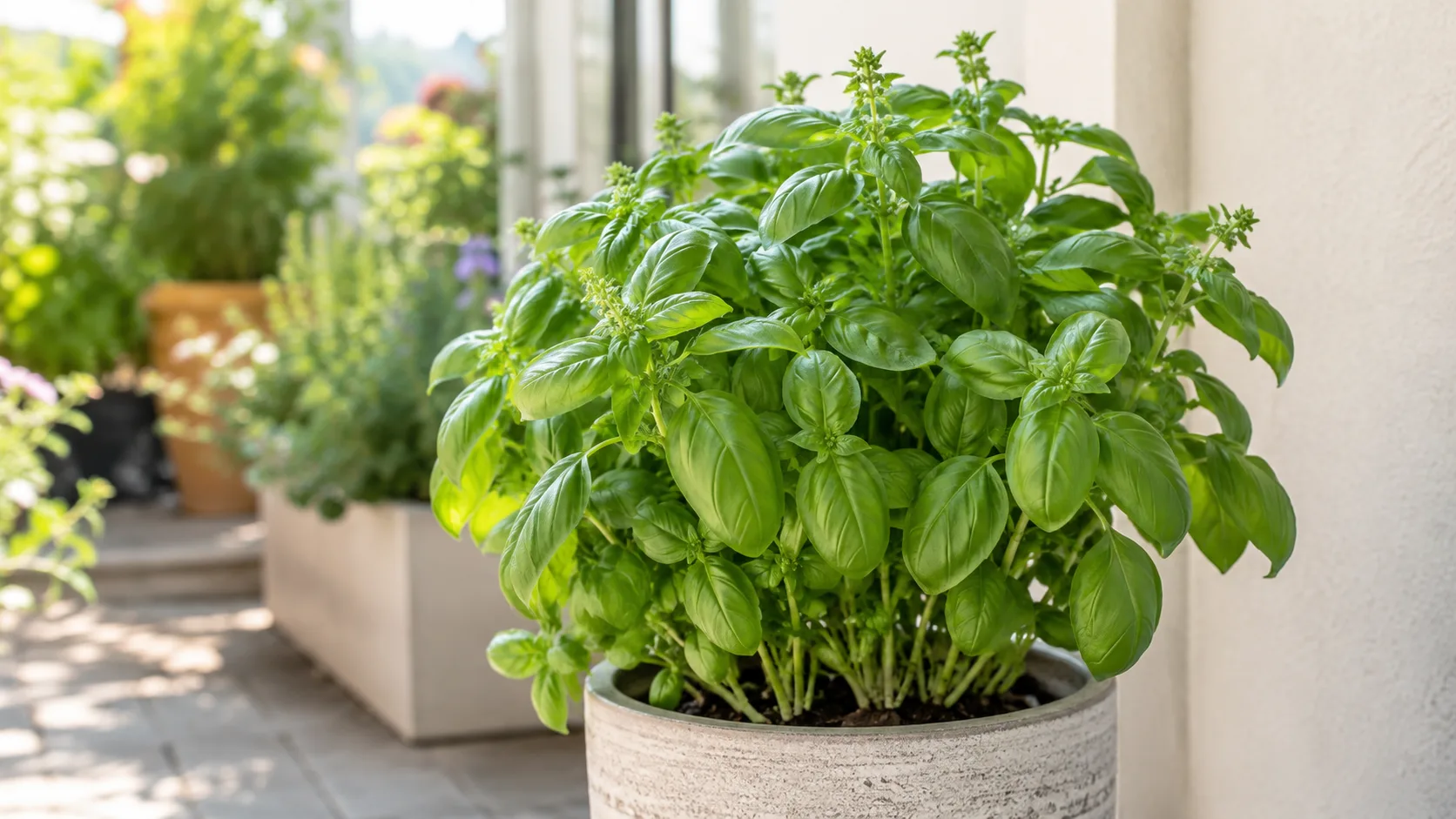
If your basil is still lush in late summer, winter can feel like a deadline. A single cold night can blacken the leaves, while a plant that makes it indoors may slowly stretch, wilt, attract pests, or rot in wet soil. The way to keep basil alive is to act before the cold injury starts and then give it the strongest light and most controlled watering you can provide.
You also do not have to save the entire plant to save the season. A healthy plant can move indoors, a few green stems can become cuttings, and a large harvest can be frozen or dried. The best winter plan depends on the plant’s condition, your indoor light, and whether your real goal is a living plant or fresh basil for cooking.
The short answer: protect basil before cold reaches the leaves
Basil is a tender, warm-season herb. It can grow indoors through winter, but it is not a cold-hardy perennial that will reliably sleep outside and return when spring arrives. Penn State Extension lists basil among herbs that can be grown indoors during winter and advises keeping it above 50°F; temperatures below that threshold are a warning to move it away from cold exposure, not a target for healthy growth. Penn State Extension’s indoor herb guidance also recommends daytime rooms around 65–70°F and nighttime temperatures around 55–60°F for indoor herbs.
Bring a container-grown plant inside before the forecast starts dipping toward 50°F at night. For basil planted in the ground, take a cutting or pot up a small, vigorous section before the first frost rather than waiting for the leaves to turn black. Frost cloth, a cloche, or a sheltered porch may buy a little time in a mild fall, but those are season-extension tactics—not a dependable winter home in a cold climate.
Once indoors, give basil at least six hours of strong direct light if possible. Water when the potting mix starts to dry near the surface, but do not keep the pot sitting in runoff. The winter failure pattern is usually a mismatch: too little light plus too much water, often combined with a cold window or a pest that came inside with the pot.
Does basil survive winter, or is it an annual?
In most gardens, basil is grown as an annual because the first hard frost ends the outdoor crop. NC State Extension’s winterizing guidance classifies Ocimum basilicum as a tender annual and notes that frost-sensitive herbs such as basil can be brought indoors, rooted from cuttings, or grown again the following season. That distinction matters: bringing a basil plant indoors can extend its productive life, but it does not turn every variety into a long-lived houseplant.
The plant may also change its behavior as the season progresses. Mature stems can become woody, flowering can take over, and low winter light can produce fewer and smaller leaves. Some specialty basils, including African blue basil, may behave more like long-lived plants in warm conditions, but a typical Genovese, Thai, or purple basil still needs warmth, light, and regular harvesting to stay useful.
Think of overwintering as a managed extension, not a promise of permanent survival. If the plant remains green and produces new leaves, keep it. If it is mostly black, infested, or too large for the light you have, take healthy cuttings and preserve the remaining leaves instead of spending the whole winter trying to rescue exhausted roots.
Choose the winter strategy that fits your plant
There are four workable outcomes: move the whole plant, root cuttings, save seed, or preserve the harvest. Choosing before you start prevents the common mistake of bringing every outdoor plant inside and then discovering you have more foliage than your windowsill can support.
| Your starting point | Best first choice | Why |
|---|---|---|
| Compact, healthy potted basil and a bright window or grow light | Move the whole plant | You keep an established root system and can harvest immediately. |
| Large, woody, flowering, or crowded basil | Take several cuttings | Small cuttings adapt faster and fit under limited indoor light. |
| Basil with pests, disease, or severe cold damage | Preserve clean leaves; discard or isolate the plant | Moving the problem indoors can spread it to other plants. |
| No useful indoor light or no need for a living plant | Freeze, dry, or make pesto | You preserve the harvest without forcing weak winter growth. |
Save a whole plant when it is healthy and compact
Choose the whole-plant route when stems are firm, leaves are mostly green, and the plant has enough healthy foliage to recover from potting and the indoor light change. A container that has lived outdoors is often easier to move than a large plant dug from the garden because its roots are already confined and less disturbed.
Do not judge only by height. A tall plant with green, actively growing tips may be worth taking cuttings from, while a shorter plant with black spots, sticky leaves, or a sour-smelling root zone may be a poor candidate. Inspect the underside of leaves and the stem joints before you decide.
Take cuttings when the parent plant is large or stressed
Cuttings are the insurance policy for basil. They use less space, make it easier to exclude soil pests, and let you start with young green growth instead of carrying an old plant through a difficult season. Take several cuttings because not every one will root or adapt at the same speed.
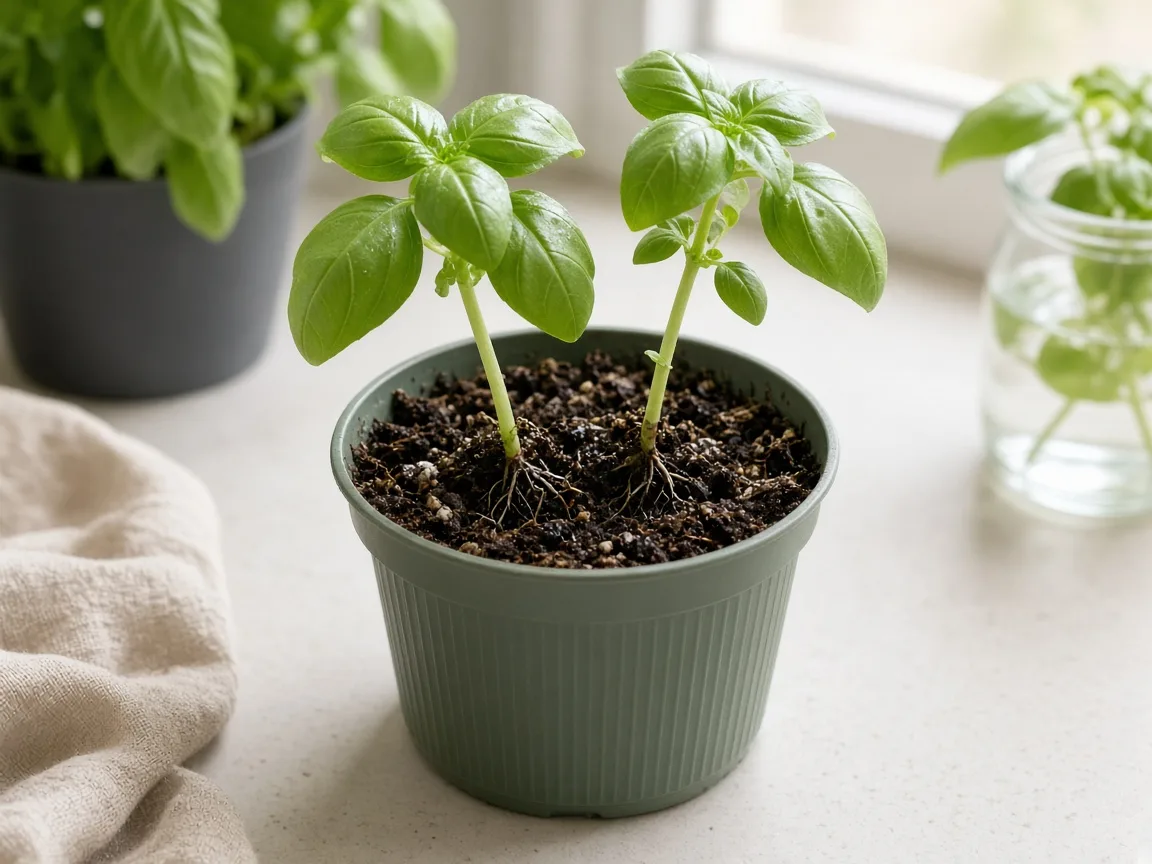
Choose nonflowering stem tips with several leaf pairs. Remove the lower leaves, place the bare nodes in clean water or a lightly moist propagation medium, and move the cuttings into potting mix once the roots are established enough to handle planting. Gardener’s Path’s winter basil guidance also treats cuttings as a practical way to keep a compact supply going when an older plant becomes difficult to manage. Keep the young plants in strong light and avoid turning a small rooted cutting into a large, constantly wet pot.
Preserve the harvest when indoor conditions are poor
If your winter windows are dim, your home is cold, or the plant already has a heavy pest load, preservation may give you more usable basil than overwintering. Freezing works especially well for leaves that will go into soup, sauce, pesto, or cooked dishes; thawed basil is usually soft rather than garnish-ready.
Drying is another option, but basil needs to dry quickly because its leaves can mold or discolor. NC State’s herb-preservation guidance recommends small, loose bundles or a well-ventilated drying surface, then storing brittle leaves in a tightly closed, light-resistant container. Harvesting and preserving a good crop is not giving up—it is choosing the method most likely to protect flavor.
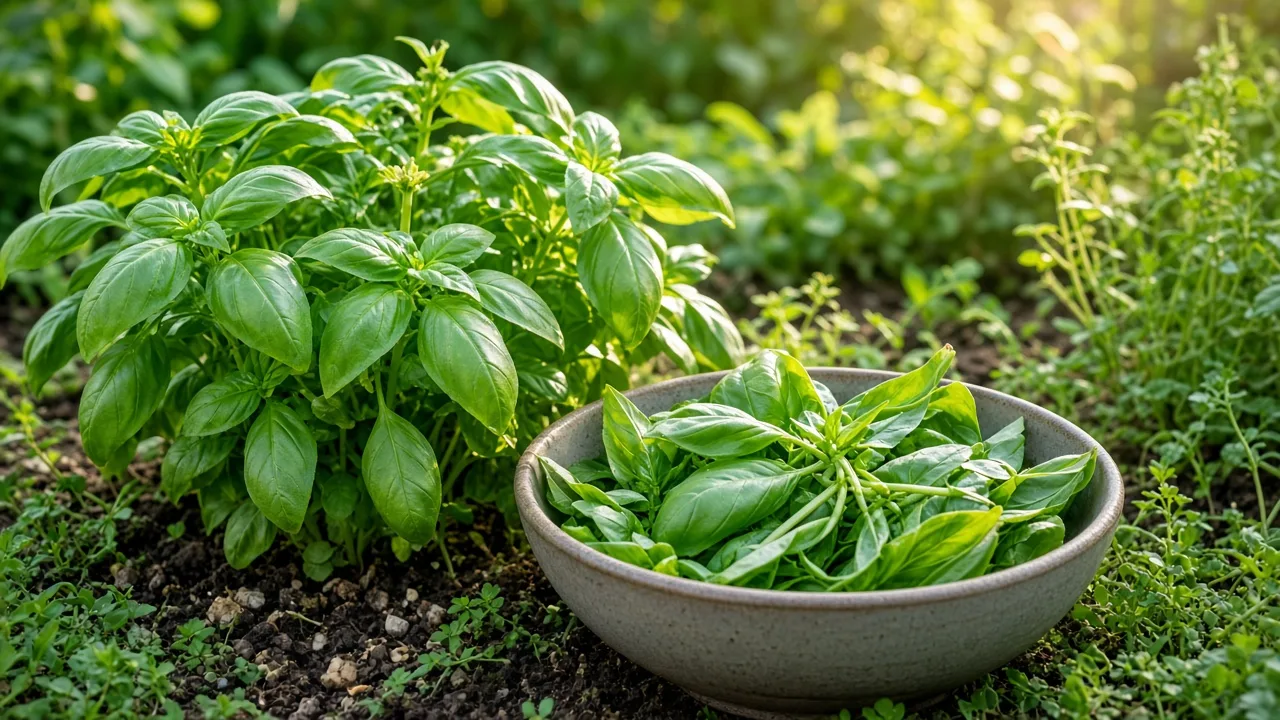
Move basil indoors before cold damage starts
The move is more successful when it happens while the plant is still healthy. Cold-stressed leaves do not become healthy again simply because the pot is carried inside, and damaged tissue can hide the pests or rot that make the indoor transition fail.
Inspect, clean, and pot the plant
Start with a close inspection in daylight. Look along the undersides of leaves, around new growth, and at stem joints for aphids, whiteflies, mites, webbing, sticky residue, or clusters of eggs. Check the soil surface for crawling insects and the roots for a sour smell or a permanently saturated mix.
For a garden plant, lift a manageable root ball with as much soil around the roots as practical. Use a clean container with a drainage hole and fresh, well-draining potting mix; do not use a huge pot just because the outdoor plant is large. A pot that is only modestly larger than the root ball dries more predictably indoors and reduces the chance that a small root system sits in wet soil for days.
Remove dead leaves and obvious flowers, but do not scalp a struggling plant during the move. A light cleanup is useful; severe late pruning can add another stress at the same time the roots are recovering. Water the newly potted plant thoroughly once, let excess drain, and empty the saucer before you place it indoors.
For edible herbs, use the least aggressive pest approach that solves the identified problem. Rinse foliage with a gentle stream of water, remove badly infested leaves, and isolate the plant from other houseplants while you monitor it. If you use a pesticide, confirm that it is labeled for the crop and pest, follow every label direction, and observe any harvest interval; a kitchen herb is not a good place for casual, unlabeled treatment.
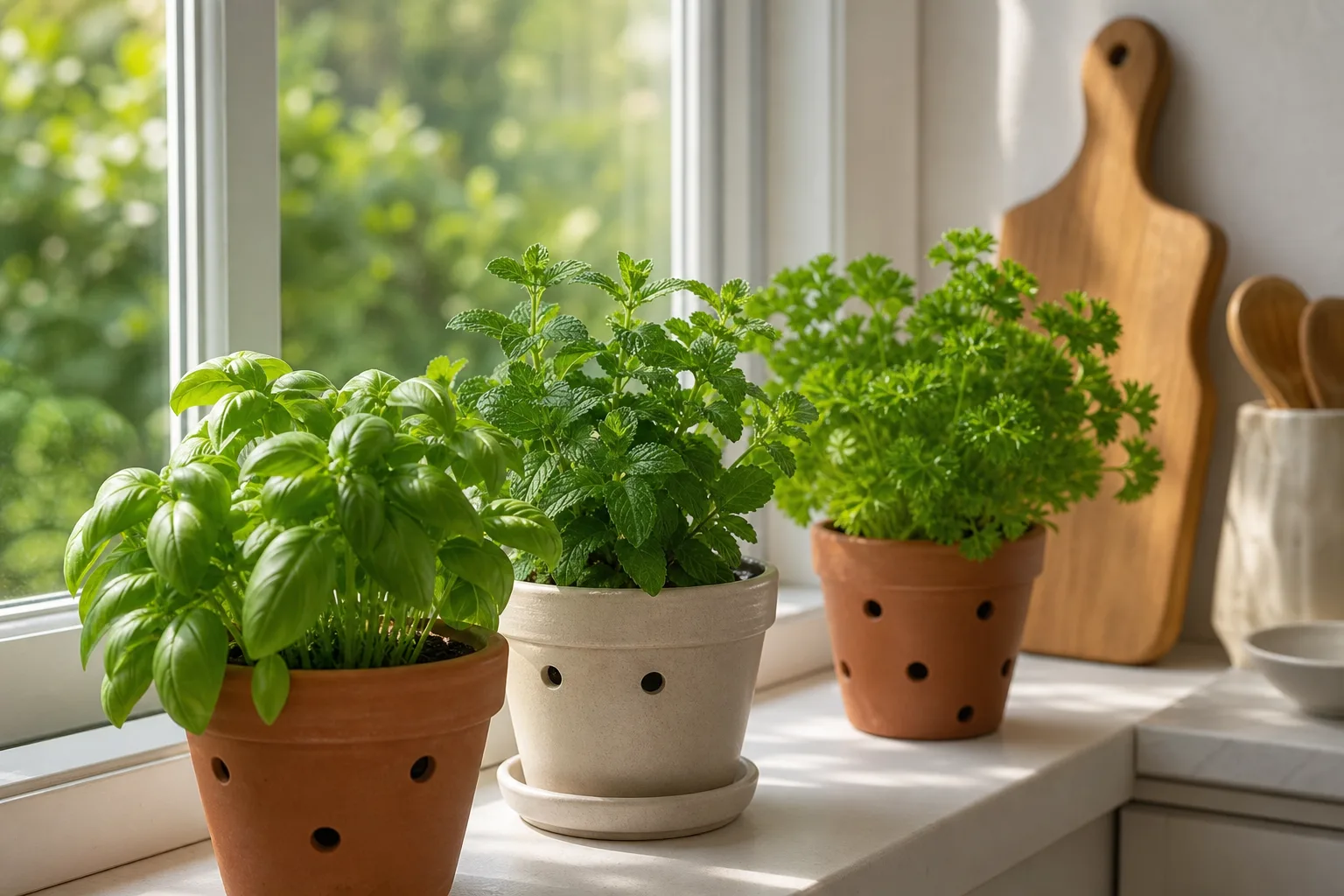
Acclimate it to indoor conditions
Outdoor sun, wind, and humidity are different from an indoor room. A basil plant can be moved directly inside before a cold snap, but a gradual transition is gentler when the weather allows: place it in bright shade or a sheltered spot for a few days, check for pests again, and then move it to the final indoor position before nighttime temperatures drop. GrowOrganic’s seasonal basil guidance likewise recommends a gradual transition and a careful pest check before indoor placement.
Expect some leaf loss after the move. The plant has to adjust to weaker light, still air, lower humidity, and a smaller root volume. A little yellowing or a pause in growth is not automatically fatal; widespread blackening, a collapsing stem, or wet soil that never dries points to a more serious problem.
Build an indoor basil setup around light
Light is the resource that determines whether winter basil remains compact and flavorful or becomes a pale, floppy plant. A south-facing window may work in a bright climate, but the glass, window direction, obstructions, and short winter days matter more than the label on the window.
Use a bright window or a grow light
Place basil as close to the brightest unobstructed window as the room allows while keeping its leaves away from cold glass and drafts. Rotate the pot every few days so one side does not stretch toward the window. Penn State Extension notes that herbs without their preferred light become thin and spindly, with smaller leaves and less aroma; those are useful warning signs to catch before the plant becomes difficult to recover.
If the plant is stretching, the leaves are far apart, or new growth is much smaller than the summer leaves, add a grow light rather than moving the pot into a darker room and watering more. A timer gives the plant a consistent schedule. Start with the light manufacturer’s recommended distance, keep the canopy within the effective range, and provide a daily dark period instead of leaving a lamp on around the clock.
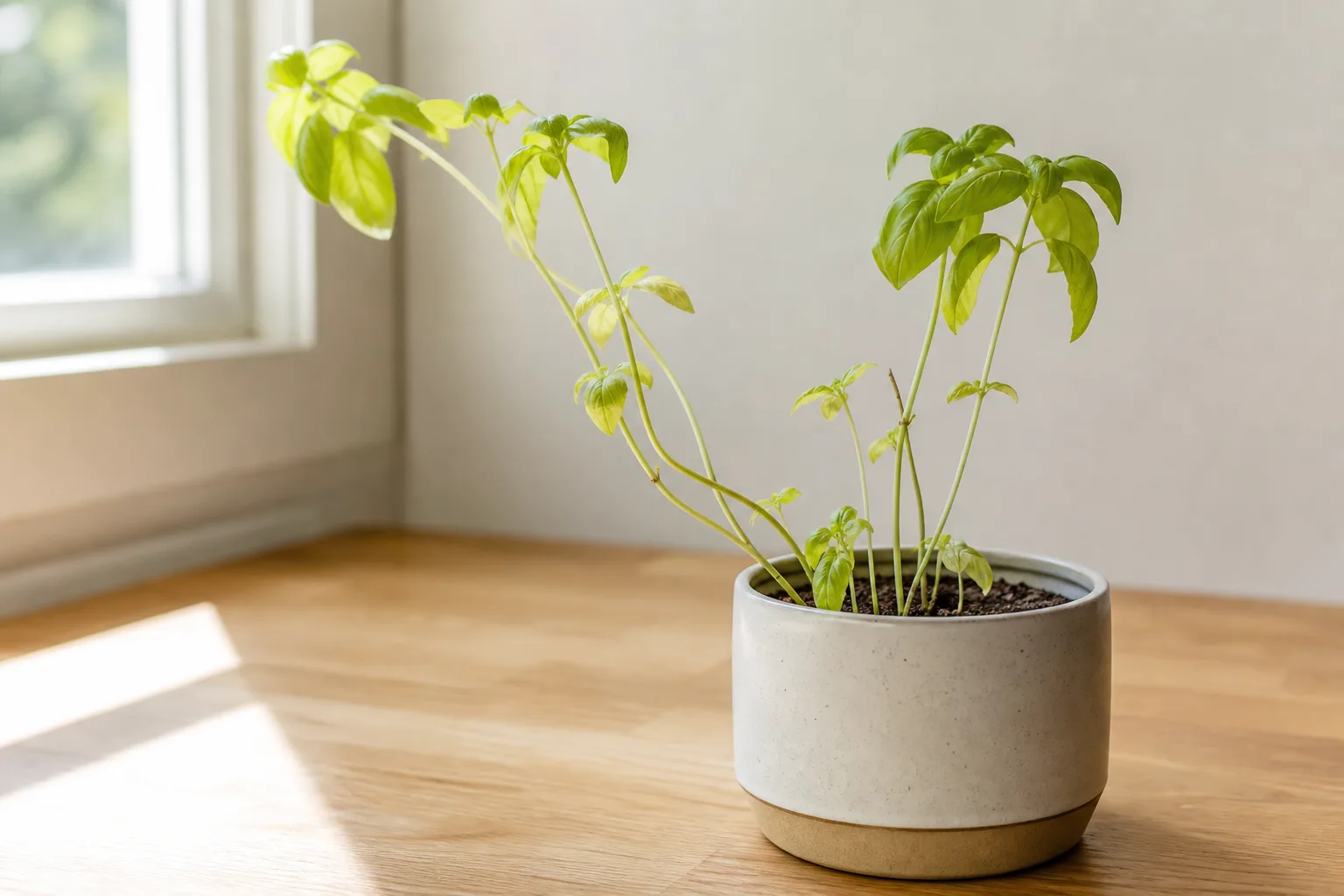
Do not use fertilizer to compensate for missing light. Nutrients can support growth only when the plant has enough light to use them; feeding a dim, slow-growing basil plant often creates soft, weak growth and salt buildup. Light first, then water, then consider a small amount of fertilizer only after the plant is actively growing.
Water winter basil by soil condition, not by calendar
Basil should not be allowed to become bone dry, but winter soil often stays wet much longer than summer soil. The right schedule changes with the amount of light, the pot size, the room temperature, and whether the plant is producing new leaves.
Press a finger into the top inch of mix and lift the pot before watering. If the surface is beginning to dry and the pot feels lighter, water slowly until a little drains from the bottom. If the mix is still wet, the plant is cool, or the pot feels heavy, wait and check again rather than adding a small splash every day.
Always empty the saucer. A drainage hole protects the roots only if excess water has somewhere to go. Penn State Extension specifically advises that basil’s mix should not dry out completely, while also recommending containers and mixes that drain well; that is the useful balance indoors—moist roots with air around them, not a saturated root ball.
Wilt is not a watering diagnosis by itself. Check the soil first, then look at light and temperature. A plant in cold, waterlogged soil may droop even though it has too much water; a plant in a bright, warm room can wilt because its small pot dried quickly.
Keep temperature, humidity, and airflow steady
Put basil in a warm, stable room, not directly above a radiator, beside a heating vent, or against a cold pane. Penn State Extension gives a useful indoor range of roughly 65–70°F during the day and 55–60°F at night, while warning that basil cannot survive temperatures lower than 50°F. The exact number inside your home matters less than avoiding repeated cold shocks and hot, drying blasts.
Dry winter air can make leaves lose water quickly, but humidity is not a substitute for light or good roots. Grouping plants, using a humidifier, or placing the pot near—not in—a humidity tray can help a very dry room. If you use a pebble tray, keep the pot above the water line and ensure the tray does not turn the drainage hole into a standing-water reservoir.
Air movement also matters. A small fan on a low setting, aimed past the plants rather than directly at them, helps reduce stagnant, humid pockets. Leave space between basil and other houseplants so leaves dry after watering and a pest outbreak is easier to spot.
Harvest and prune without exhausting the plant
Harvesting is part of winter care, not just a reward at the end. Pinch or cut just above a pair of leaves so the plant can branch, and remove flower buds if you want more tender leaves. Make several light harvests rather than stripping every stem at once, especially after the move when the plant is rebuilding its root-to-shoot balance.
If the basil is tall and woody, take cuttings from the freshest green tips and prune the parent plant only enough to fit the available light. A dramatic cutback can expose old stems that do not have the energy to push new growth indoors. NC State Extension’s winterizing guidance cautions against late severe pruning because tender regrowth is more vulnerable to cold; the same logic supports a measured cleanup before the move.
Flowering does not mean the plant is instantly useless. Let a section flower if you want seed, but expect leaf production and flavor to change as the plant concentrates on reproduction. If the goal is fresh leaves, remove flower spikes early and harvest the usable foliage; if the goal is next year’s crop, leave a healthy flower stalk to mature and collect dry seed heads before they shatter.
Troubleshoot the winter problems that look alike
Winter basil problems overlap, so treat the evidence rather than the most familiar symptom. Start with four checks in order: overnight temperature, usable light, soil moisture and drainage, then pests. Correcting the wrong one—especially watering a dim plant more often—can accelerate the decline.
Leggy, pale growth usually means usable light is too low
Long gaps between leaves, thin stems, pale foliage, and a plant leaning hard toward the window usually mean it is not receiving enough light at the canopy. Move the light closer in a controlled way or add a grow light, rotate the pot, and wait for new growth before judging the change. Old stretched stems will not shrink, but new leaves can emerge closer together.
If the leaves are green but growth has slowed, do not assume the plant needs fertilizer. Winter basil may simply be using less energy because the days are shorter. Fertilize only after you see steady new growth, and use a restrained dose according to the product label.
Black leaves, droop, and pests need different responses
Black, water-soaked leaves after a cold night point to cold injury. Remove collapsed tissue, keep the remaining plant warm and bright, and assess the stems: firm green stems may still produce new leaves, while black or mushy stems are unlikely to recover. Do not put a frost-damaged plant straight into a humid, crowded plant corner where rot can spread unnoticed.
Droop with dry soil calls for a thorough watering and drainage check; droop with wet soil calls for patience, airflow, and a root inspection rather than more water. Yellow leaves can follow normal transition stress, but persistent yellowing alongside wet soil often signals overwatering or root damage.
Small flying insects around the soil suggest fungus gnats, while clusters on new growth or insects that scatter from the leaves suggest aphids or whiteflies. Isolate the plant, remove heavily affected leaves, use yellow sticky traps for flying adults, and keep checking the undersides of leaves. Penn State Extension favors cultural and mechanical controls for herbs and advises caution with products on plants harvested for food, so identify the pest and follow the label before using any treatment.
Conclusion: give basil a chance, then save what you can
The most reliable way to care for basil in winter is to make the decision early. Move a healthy plant indoors before cold nights, give it strong light, keep the soil moist but well drained, and protect it from drafts and pests. If the whole plant is too large, too old, or too infested, take clean cuttings instead; if the room cannot provide enough light, freeze or dry the harvest while it is still fresh.
When spring brings warmer nights, do not rush the plant back outdoors. Set it outside in bright shade for a few days, increase its light gradually, and bring it in if a cold night returns. Whether you end winter with a vigorous basil plant, a tray of rooted cuttings, a packet of seed, or jars and freezer cubes of leaves, the goal is the same: avoid letting one cold night decide the entire harvest.