How to Prevent Termites at Home: 7 Steps
How to prevent termites: separate wood from soil, control moisture, manage mulch, store firewood safely, and know when a professional inspection is needed.
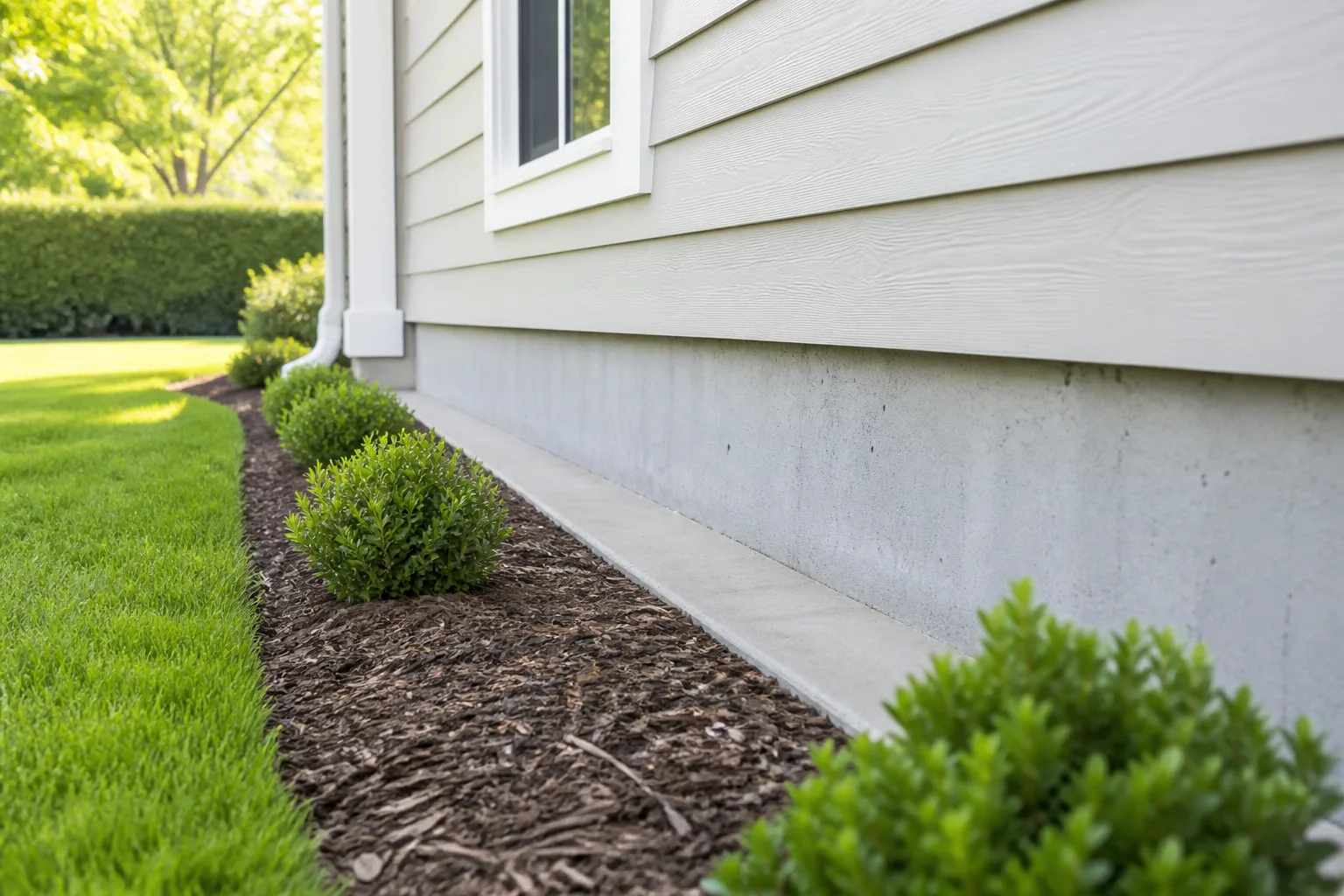
Termite prevention is mostly a matter of removing the easy routes: damp wood against the house, soil or mulch hiding the foundation, standing water, and clutter that makes inspection impossible. The goal is not to make a home chemically untouchable. It is to make the structure harder to reach, less comfortable to colonize, and easier to check before damage becomes expensive.
The highest-risk combination is cellulose, moisture, and concealment. Subterranean termites usually start in soil and may use mud shelter tubes to cross masonry; they can also exploit cracks, expansion joints, and utility openings in slab-built homes. Purdue Extension explains that breaking the wood-to-soil connection is the basic principle of structural termite control, but a homeowner still needs to deal with leaks, drainage, and hidden pathways. (Purdue Extension)
Start With the Termite Risk Test
Walk the outside of the house and ask three questions at every wall: Can termites reach wood from here? Can this spot stay damp? Can I see the foundation well enough to notice a new tube? If the answer is yes to two or three, fix that area first. A beautiful bed with thick mulch may be healthy for plants while still hiding the lower siding, a deck ledger, or a foundation crack.
Termite risk is also regional and construction-dependent. Subterranean termites are associated with soil and moisture, while drywood termites live in the wood they infest; dampwood termites favor persistently wet wood. A Southern Living overview of termite biology also notes that Formosan termites, a subterranean type found especially in parts of the Southeast, can form large colonies and may build aerial nests around roof or chimney leaks. (Southern Living)
That distinction changes the inspection. A slab home needs attention around joints, plumbing, sewer penetrations, porches, patios, and any wood that sits close to the finished grade. A crawl-space home needs attention below the floor, where a damp sill plate or blocked vent can remain out of sight. A coastal or warm, humid region may justify a professional schedule even when the exterior looks tidy.
1. Keep Wood and Soil Apart
Wood that touches soil gives termites food, moisture, shelter, and a concealed entrance in one place. Remove or raise wooden steps, edging, trellises, fence parts, scrap lumber, cardboard, and old landscape timbers that rest against the foundation. Inspect where porch posts, deck supports, siding, door frames, and window trim approach the ground.
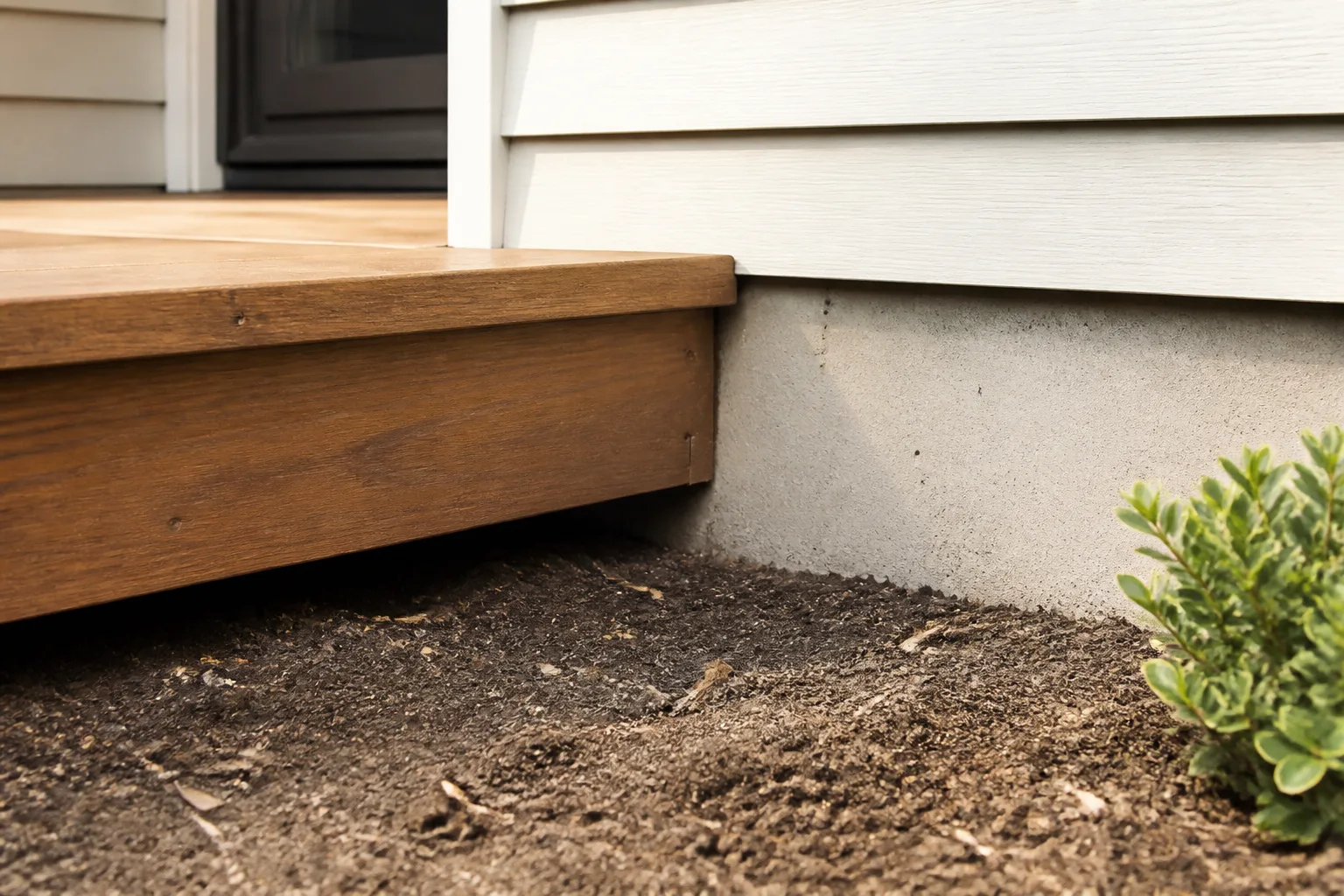
As a practical target, keep siding and other structural wood visibly above grade; Southern Living cites a six-inch clearance for wood siding. Do not solve a low-clearance problem by simply piling soil or mulch higher. That hides the inspection line and can turn a manageable gap into a covered route.
The same principle applies to pressure-treated lumber. Treatment can improve durability for its labeled use, but it is not a reason to leave lumber buried, wet, or inaccessible. Use lumber rated for its actual location, keep cut ends and joints exposed for inspection, and correct the drainage or grade that keeps the assembly wet.
If a deck, stair, or porch cannot be rebuilt immediately, make the interim condition visible and dry. Pull back surrounding soil, remove plant debris, check for a tube at each support, and schedule a professional evaluation if the wood is soft or the clearance is impossible to maintain.
2. Make Mulch a Garden Layer, Not a Foundation Bridge
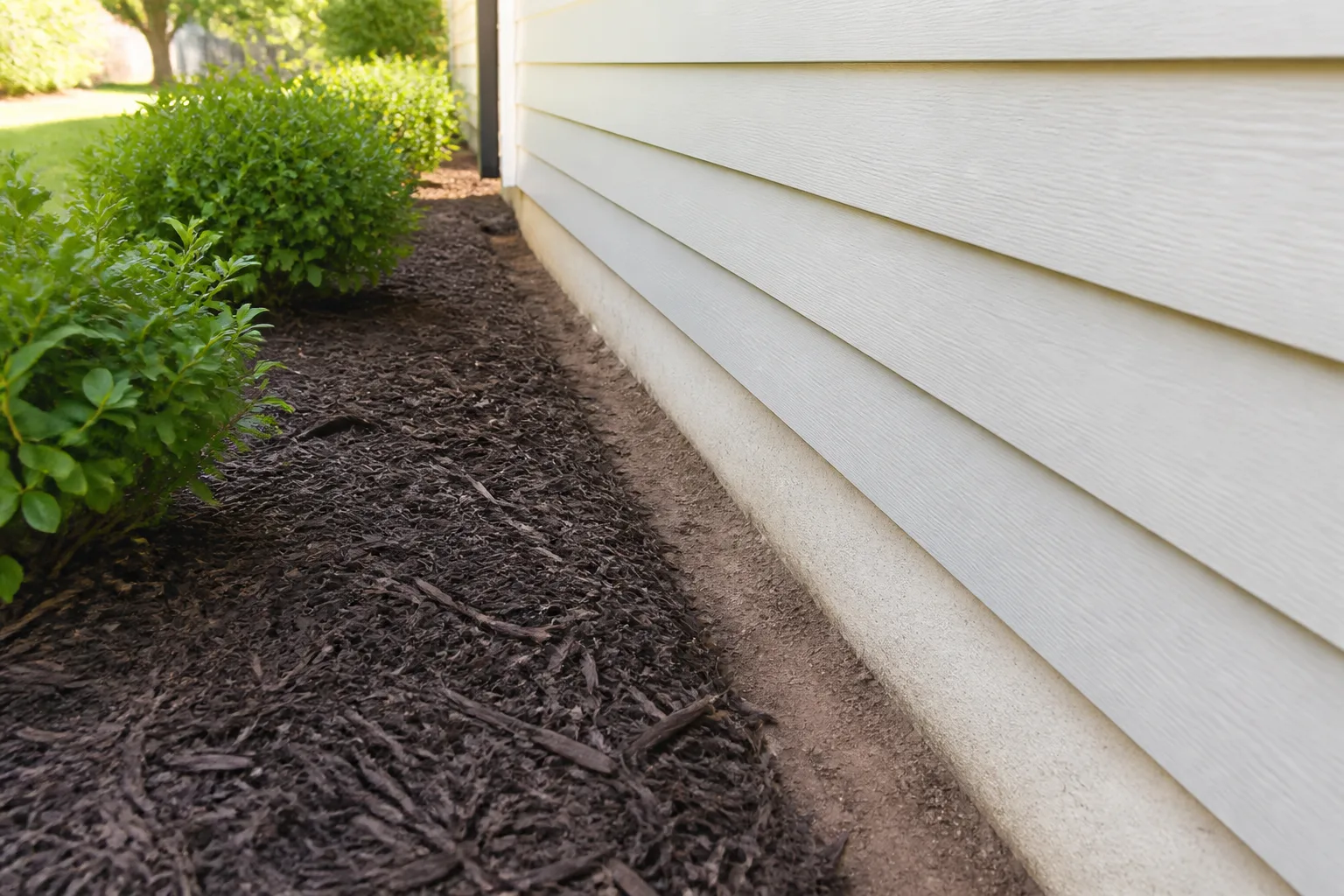
Mulch is useful: it moderates soil temperature, reduces erosion, suppresses weeds, and conserves water. The problem is not that every wood chip pile summons termites. The problem is that thick organic mulch beside a wall can retain moisture, cover the foundation, and provide a sheltered path over a treatment zone.
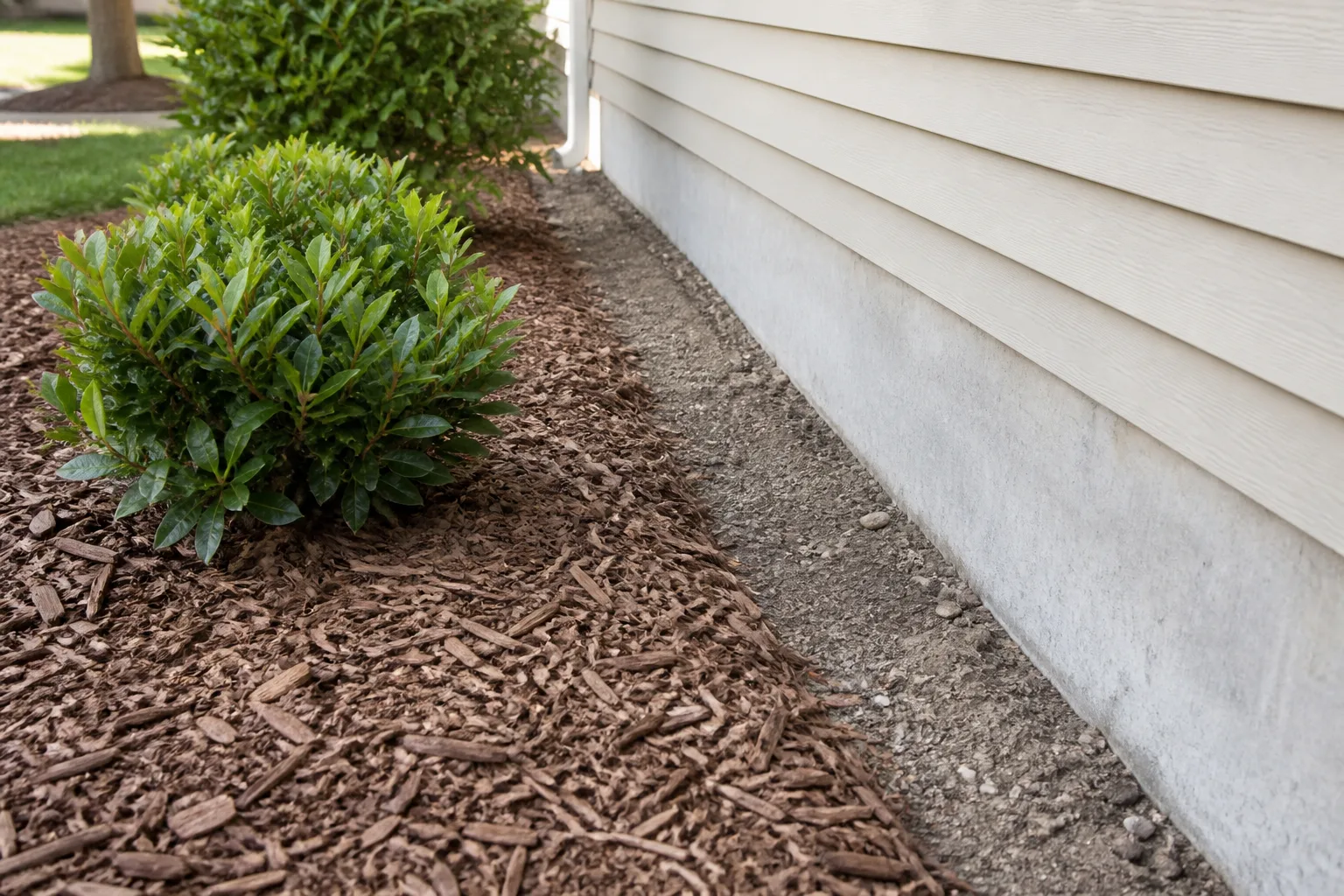
Keep mulch six to twelve inches away from building walls, using the wider gap when it gives you a clearer inspection strip. Clemson Extension specifically warns that subterranean termites nest in soil and that mulch should be held away from walls so it cannot bridge treated soil. (Clemson Extension)
Do not replace a foundation gap with a mulch volcano around shrubs. Spread mulch in a level layer over the root zone, keep it away from plant stems and trunks, and slope the bed so rain does not collect against the house. Gardening Know How notes that mulch can retain moisture and that wood mulches near a home should be set back from the foundation; its broader garden guidance also supports using the right depth for the material rather than building an unnecessarily thick layer. (Gardening Know How)
Mineral mulch may make the inspection strip easier to maintain, but it is not a termite barrier. Gravel can still hide a tube, retain heat, or make it difficult to see the lower wall if it is spread too high. Choose the material for the plant bed, then preserve the wall clearance and keep the foundation visible.
3. Send Water Away From the House
Moisture control is one of the most valuable termite-prevention projects because it protects the building even when termites never arrive. Clean gutters, repair leaks, extend downspouts, and make sure discharge does not leave a wet strip beside the foundation. Look below hose bibs, outdoor faucets, air-conditioning condensate lines, roof valleys, and plumbing walls for staining, algae, soft soil, or decaying wood.
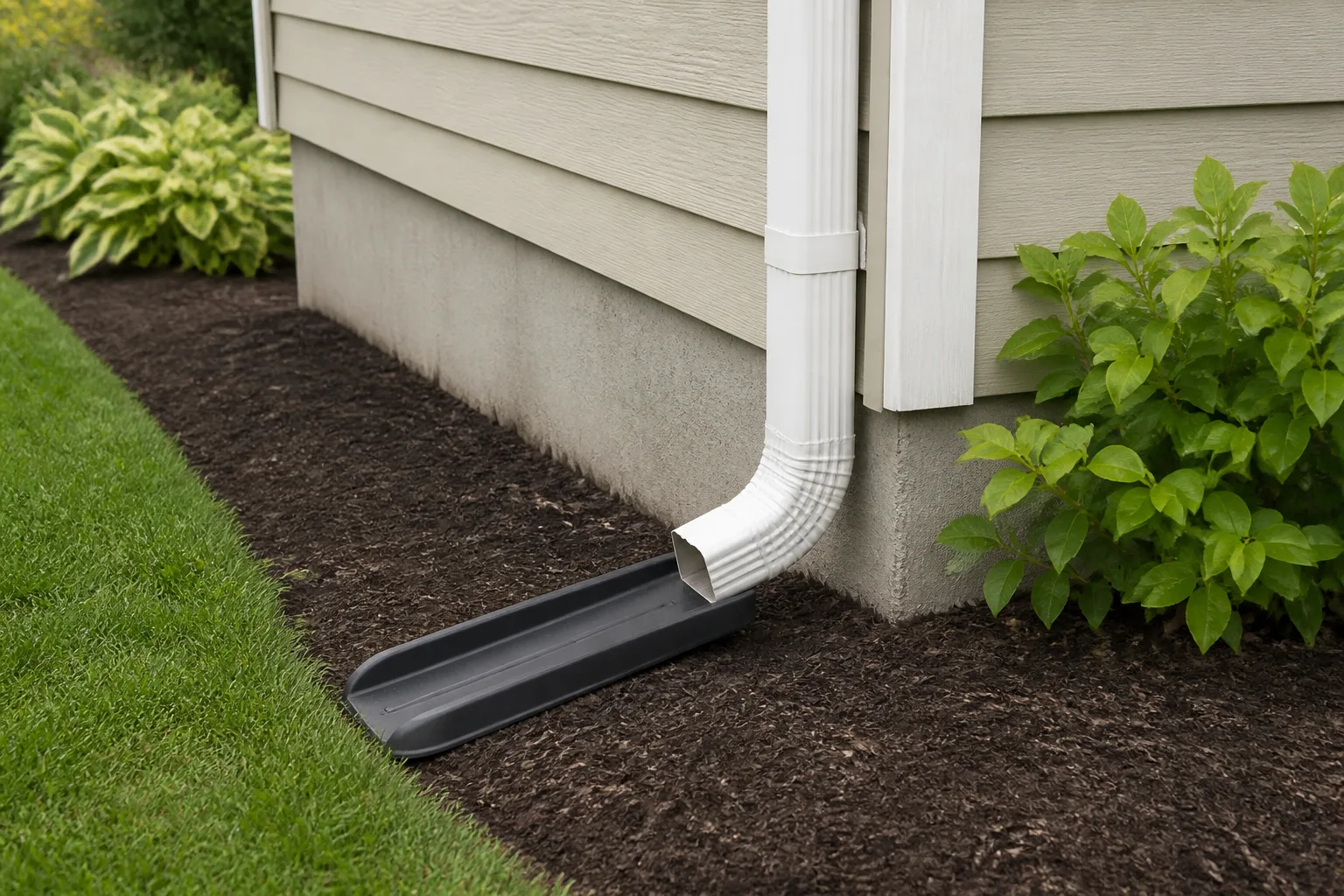
The finished grade should move surface water away from the building rather than forming a shallow basin along the wall. Do not bury a drainage problem under fresh soil or decorative stone. If water keeps pooling after a storm, take photographs, note where it travels, and have the grading, drain, or foundation condition assessed.
The important sequence is stop the water, dry the material, then repair or replace damaged wood. Painting over a damp sill or sealing a wet crawl-space wall can trap moisture and make the concealed condition harder to find. A termite treatment cannot compensate for a roof leak that keeps feeding the same vulnerable area.
Fix Irrigation and Condensation Too
Adjust sprinklers so their spray pattern does not hit siding, decks, window wells, or foundation walls. Drip emitters should not run directly beside the house unless the system is designed for that location and drainage is good. After changing a zone, run it briefly and walk the perimeter to see where water actually lands.
Air-conditioning condensate deserves the same attention as a leaking faucet. A blocked or poorly routed line can keep soil or wood wet for long periods without producing an obvious indoor drip. In cold climates, check that melting snow and ice do not repeatedly soak the same wall or porch edge.
4. Dry Out Crawl Spaces and Basements
A crawl space should not be treated as a storage room or a forgotten gap beneath the house. Remove cardboard, firewood, construction scraps, leaves, and insulation that has become wet. Check the sill plate, floor joist ends, support posts, plumbing penetrations, and the soil surface for dampness, mud tubes, staining, or a musty smell.
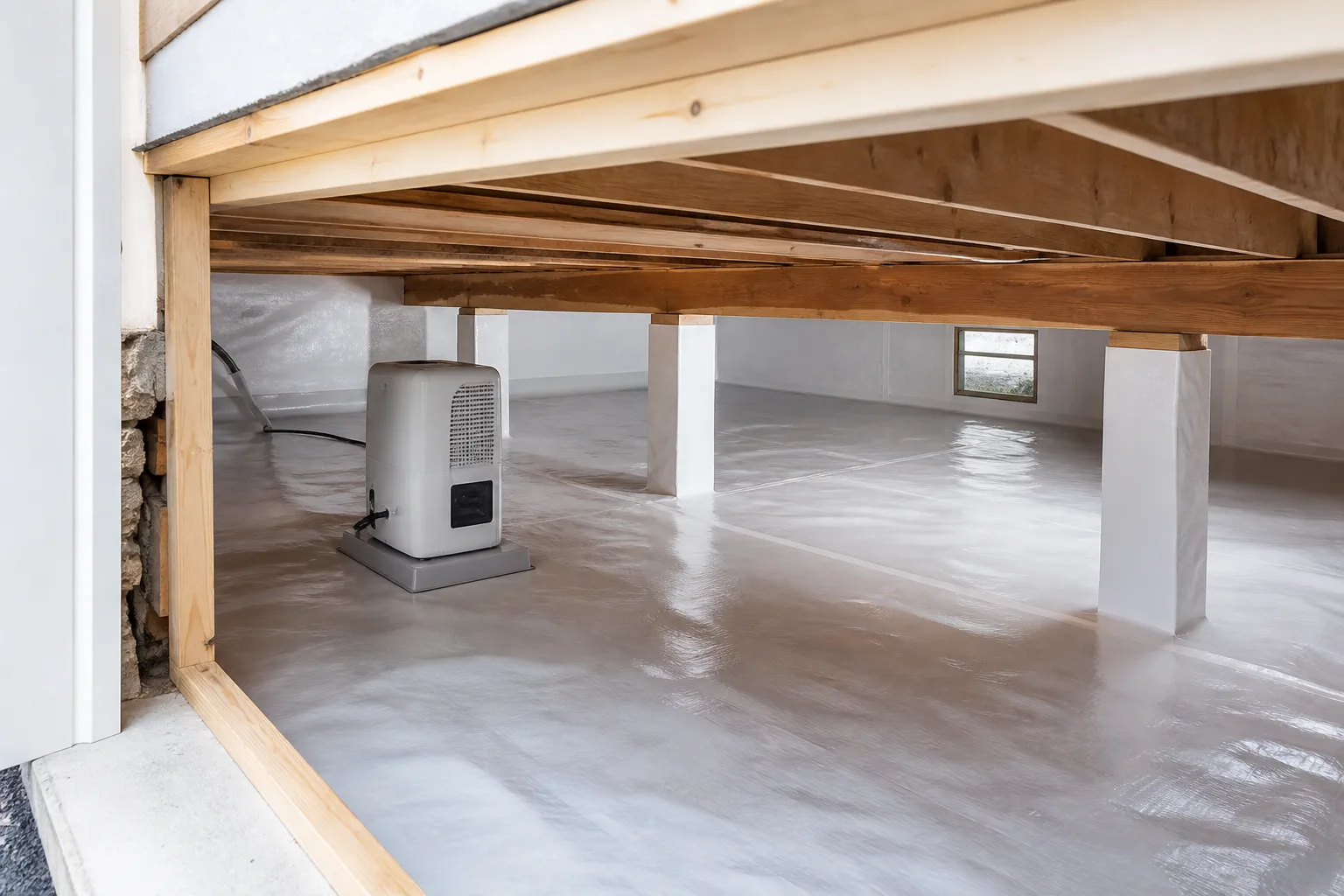
Where appropriate for the building design and local code, a ground vapor barrier can reduce moisture moving up from soil. It must be installed as part of a sound moisture-control plan, not thrown over an active leak. Foundation vents also need to remain clear, but adding or closing vents is not a universal fix; crawl-space design, climate, and whether the space is vented or conditioned all matter.
If the basement or crawl space stays damp, address the source before reaching for a pesticide. A dehumidifier can manage indoor humidity while a leak, grading defect, plumbing failure, or missing drainage is repaired, but it does not replace that repair. Keep access panels clear so the space can be checked again.
Do Not Vent Moisture Into the Crawl Space
Dryer vents should discharge outdoors, never into a crawl space, attic, garage, or enclosed porch. Warm exhaust adds humidity, and lint adds organic debris that can accumulate near wood. Southern Living includes checking the dryer vent among its termite-prevention recommendations because a hidden, damp exhaust route can create exactly the kind of conditions a homeowner may miss. (Southern Living)
Seal gaps around pipes, cables, vents, and utility lines where doing so will not interfere with drainage or required ventilation. Do not seal a deliberate weep hole, foundation drain, or code-required opening just because it looks like a crack. When a gap is large, wet, or connected to a slab or wall cavity, have the appropriate building professional or pest professional evaluate it.
5. Store Firewood and Yard Debris Off the House
Firewood belongs in a rack that allows air to move beneath and around the stack, not against siding, on a porch, under a deck, or inside a crawl space. Keep it off the soil and as far from the house as your property allows. A commonly cited rule of thumb is about 20 feet, but the more important behaviors are distance, elevation, dryness, and regular inspection.
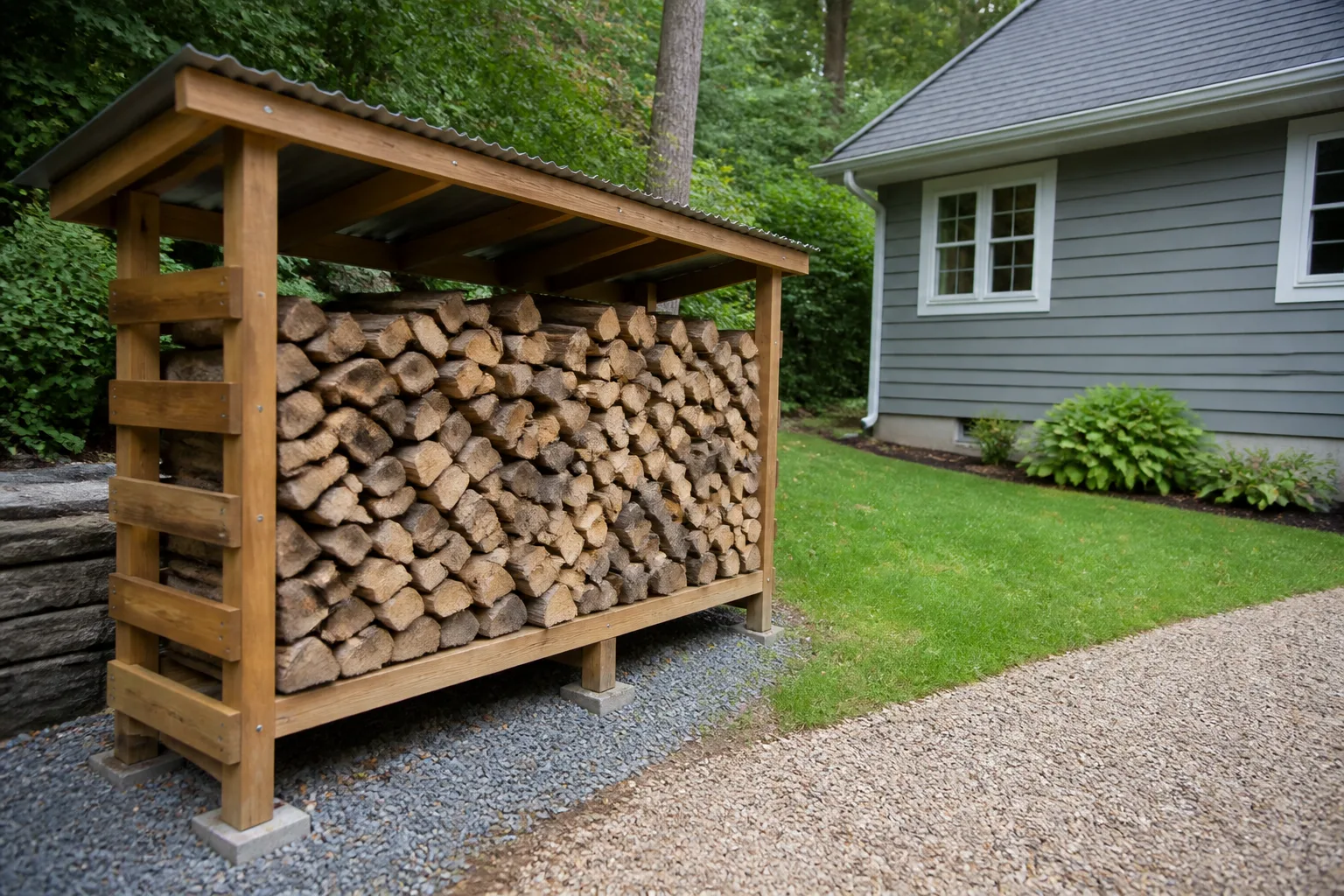
Never bring a new load of firewood indoors simply because it looks clean. Shake out loose bark, remove obviously infested pieces, and burn local wood promptly where permitted. Do not store stumps, branches, cardboard, old pallets, or discarded roots in the same damp corner as the foundation.
Wood debris in the yard is not proof that the home is infested. Termites naturally recycle dead wood outdoors, and an isolated stump may be separate from the structure. The prevention move is to remove or relocate the material, then inspect the house where the debris had been hiding the grade line.
6. Remove Access Lanes From Vegetation and Utilities
Trim branches, vines, and dense groundcover so they do not touch siding, roof edges, vents, or the underside of a deck. Vegetation can create a bridge, hold moisture against the wall, and make a yearly inspection too frustrating to complete. Keep plants healthy by giving them an adequate bed, but leave a deliberate service strip beside the house.
Pay attention to utility penetrations and attached structures. A pipe sleeve, conduit, hose reel, lattice panel, raised planter, or patio slab can create a covered transition from soil to the building. Do not remove or alter a structural component casually; instead, clear the surrounding soil and plants, photograph the connection, and ask a qualified professional how it should be protected.
Tree limbs deserve a second look after storms. Even if a branch does not touch the house, fallen wood, wet leaves, and broken stumps can conceal the foundation until the next cleanup. Pruning and debris removal are low-cost ways to improve both termite visibility and general building maintenance.
Moisture-damaged wood also matters for carpenter ants, which excavate nesting galleries rather than eating wood. University of Georgia Cooperative Extension recommends eliminating excess moisture, replacing water-damaged wood, keeping gutters working, and trimming limbs away from structures as part of prevention for that different but easily confused wood-damaging pest. (University of Georgia Cooperative Extension)
7. Inspect the House on a Schedule
Prevention fails when the first six steps cannot be seen. Set a recurring reminder for a perimeter walk in spring and after heavy rain, plumbing repairs, roof work, landscaping changes, or a new swarm. If your home is in a high-pressure termite region, has a crawl space, has had a prior infestation, or is covered by a service agreement, an annual professional inspection may be a sensible baseline.
The first inspection is visual and non-destructive. Do not start by drilling walls, pulling up flooring, or spraying every insect you see. Photograph evidence, note the location, and preserve a specimen or shed wings when possible so the person identifying it can distinguish termites from ants.
What to Look For Inside
Start at the place where insects, wings, frass, bubbling paint, or a hollow sound appeared. Check window and door frames, baseboards, floor-wall joints, ceiling edges, plumbing cabinets, bathrooms, kitchens, fireplaces, and areas below roof or pipe leaks. A few outdoor insects at an open window are less informative than insects emerging from one wall, ceiling seam, or trim joint.
Look for mud-filled cracks, shelter tubes, softened wood, blistered finishes, and equal-length shed wings. Kansas State University Extension describes termites as having straight antennae, a broad waist, and four wings of similar length; ants have elbowed antennae, a pinched waist, and unequal wing pairs. (Kansas State University Extension)
The safest way to check a suspected area is to compare multiple clues. A soft patch can come from rot, a pile of coarse shavings can come from carpenter ants, and a few winged insects can simply have flown indoors. If damage is in finished wood or near wiring and plumbing, stop at photography and call for an inspection rather than probing blindly.
What to Look For Outside
Use a flashlight to examine the foundation, piers, slab edges, porch steps, deck supports, sill areas, and places where pipes enter the building. Look behind—not through—plants and mulch, and inspect the underside of exposed structures when it is safe. A thin, broken tube is still worth documenting; do not assume that a dry or damaged tube proves the colony has gone.
Subterranean termite workers may remain hidden while swarmers appear seasonally. K-State notes that the swarming adults themselves are not the stage that eats the structure, but swarmers or their shed wings can alert you to activity in or near a home. Vacuuming visible insects may clean the room, yet it does not answer where the colony is.
When a Termite Sign Means Call a Pro
Call a licensed pest-management professional when you find a shelter tube connected to the building, termites emerging indoors, repeated indoor swarmers, soft or hollow structural wood, mud-filled joints, or damage in a crawl space, slab edge, wall void, attic, or other inaccessible area. Also call when the insect cannot be identified confidently but the evidence is accumulating. A professional inspection should explain where activity was found, which conditions support it, what areas were inaccessible, and how success will be checked.
Do not let a salesperson turn one outdoor termite in a stump into a whole-house treatment without evidence. At the same time, do not dismiss an indoor swarm because the insects stopped flying. A careful inspection is the middle path between panic and false reassurance.
Purdue Extension advises comparing the work description, cost, and guarantee from more than one company when treatment is needed. Ask whether the proposal covers a soil barrier, baiting, or both; whether drilling or trenching is required; how patios, porches, garages, and plumbing penetrations will be handled; what follow-up visits include; and what the warranty excludes.
Liquid Treatments, Baits, and the DIY Boundary
Professional termite treatment is not the same as spraying a visible insect. Liquid termiticides are applied to soil or building entry points to create treated zones, and the label determines the product, concentration, placement, protective equipment, and restrictions. Slab homes may require drilling or other specialized access to address soil beneath concrete, while crawl-space homes may expose the route more clearly.
Bait systems use stations that termites find while foraging; the material is then shared within the colony. Their advantages can include less drilling and a point-source approach, but they require monitoring and are slower than a treatment designed to create an immediate treated zone. Purdue Extension describes baiting as potentially taking months to a year depending on conditions, while liquid treatment depends on correct coverage and label directions.
DIY products have a narrow role. A homeowner can remove debris, fix drainage, improve visibility, and preserve evidence, but should not trench, drill a slab, inject a wall, or mix a professional-use termiticide based on an online recipe. Read the label for every product, keep people and pets away as directed, and remember that a contact spray may kill visible insects without reaching the colony or protecting the building.
How to Compare a Treatment Plan
| Question | Why it matters |
|---|---|
| What evidence was found? | A tube, damaged wood, swarmer emergence point, or moisture source makes the recommendation testable. |
| Which termite type or route is suspected? | Soil-based termites, drywood termites, and dampwood conditions do not call for an identical plan. |
| What will be treated? | The proposal should name foundations, slabs, porches, garages, crawl spaces, utility penetrations, or bait stations—not just say “perimeter.” |
| How long until follow-up? | Baits need monitoring; liquid work needs inspection and confirmation that gaps were addressed. |
| What does the warranty cover? | Confirm retreatment terms, renewal costs, excluded areas, and whether moisture repairs are your responsibility. |
| What should you repair first? | A leak, grade defect, wood-to-soil contact, or blocked access can undermine any treatment plan. |
The best proposal is not automatically the cheapest or the most chemical-intensive. It is the one that connects evidence to a defined route, explains trade-offs, includes follow-up, and makes the home conditions less favorable for a return.
A 20-Minute Termite Prevention Routine
Once a month during the warm, wet part of the year—or after a major storm—walk the perimeter with a flashlight and phone. This short routine keeps small maintenance problems from disappearing behind mulch and vegetation.
- Check the clearance. Look for soil, mulch, leaves, vines, planters, or lumber touching the wall or hiding the lower siding.
- Check the water path. Confirm that gutters are clear, downspouts discharge away, irrigation is not spraying the wall, and no faucet or condensate line is soaking the ground.
- Check the wood. Look at steps, porch posts, deck edges, firewood, stumps, and exposed sill areas for dampness, mud, soft spots, or new debris.
- Check the openings. Scan slab joints, pipe penetrations, vents, crawl-space doors, and foundation transitions without blocking required drainage or ventilation.
- Check the evidence. Photograph anything new, keep a specimen if safe, and compare the location at the next visit.
Fix ordinary maintenance problems promptly. Escalate shelter tubes, repeated swarmers, soft structural wood, or signs inside the house to a professional inspection, because cleaning up the visible clue does not remove the hidden route.
Conclusion
The most dependable termite prevention plan is a sequence: keep structural wood above soil, hold mulch away from the wall, move water away, dry crawl spaces, store firewood off the house, clear bridges and hiding places, and inspect often enough to notice change. None of those steps guarantees that termites will never cross the property, but together they remove the conditions that make an unnoticed entry easy.
If you find mud tubes, indoor swarmers, shed wings, or soft wood, preserve the evidence and get a qualified inspection. Let the evidence, the construction of the house, the local termite species, and the treatment label—not a quick spray or a dramatic sales pitch—determine what happens next.