How to Propagate Dieffenbachia: 3 Easy Methods
Make new dieffenbachia plants with three practical methods. Find the right node, choose water or soil, protect against sap, and troubleshoot slow cuttings.
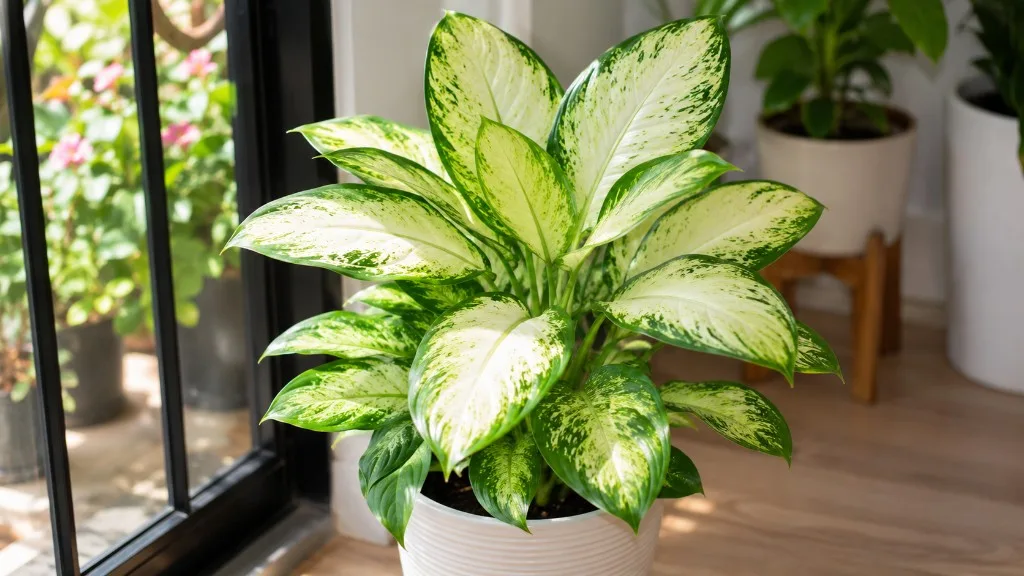
Dieffenbachia, also called dumb cane, can be propagated by dividing a plant that already has separate rooted stems, rooting its leafy top, or turning a bare cane into several stem cuttings. The right choice depends on what your plant actually has: division needs roots on each piece, while a cutting needs a stem node or bud that can make new growth. A detached leaf by itself is not a reliable way to make another Dieffenbachia.
For most people, the leafy tip is the simplest first cutting; use water if you want to watch roots develop, or an airy propagation mix if you would rather avoid moving water-grown roots into soil. A mature plant with several independently rooted stems may be divided instead. Whatever method you choose, handle the plant carefully: Dieffenbachia sap can irritate skin and is harmful if chewed.
Choose Your Method in a Minute
Look at the base and stem before reaching for shears. If the pot contains more than one rooted cane or a rooted shoot at the base, division can give you an established plant immediately. If it is one tall cane with a leafy crown, take a tip cutting to make a compact new plant and leave the lower stump to resprout.
| Method | Choose it when | What the new plant needs |
|---|---|---|
| Divide rooted stems | Several stems can be separated with roots attached | An intact root system and a pot close to the root ball’s size |
| Root a tip cutting | You want a leafy plant from the top of a tall or leggy cane | A healthy crown with stem nodes, rooted in water or airy mix |
| Root cane sections | You want several starts from a bare or pruned stem | Each segment needs at least one viable node or lateral bud |
NC State Extension lists Dieffenbachia among plants propagated by division or stem and root cuttings. Penn State Extension names dumb cane as a plant that responds well to stem cuttings, including short cane sections. Those methods are related, but they are not interchangeable: a stem section has to contain a node, and a division has to carry roots.
Get Ready: Timing, Tools, and Safety
Propagation is easiest when the parent plant is hydrated, actively growing, and free of obvious pests or rot. Spring or early summer usually gives an indoor Dieffenbachia more warmth and light for recovery, but a stable warm room can support rooting at other times too. If the plant is already declining, fix the underlying watering, light, or pest problem before taking multiple cuttings; stressed tissue has less margin for another setback.
Gather a sharp pair of pruning shears or a clean knife, gloves, a clean pot or jar, and either fresh water or a light propagation medium. A small pot with drainage is safer than a large decorative pot because excess mix around a small cutting stays wet longer. Penn State Extension recommends clean tools and propagation media; disinfect the blade between plants and let it dry before cutting.
Protect Yourself From Dieffenbachia Sap
Wear gloves and long sleeves, keep your hands away from your eyes and mouth, and work where children and pets cannot reach the plant or discarded pieces. The University of Connecticut Home Garden Education Center warns that the plant’s needle-like raphides can cause painful irritation, especially after tissue is damaged. The ASPCA lists Dieffenbachia as toxic to dogs and cats and describes oral irritation, drooling, vomiting, and difficulty swallowing among possible signs after chewing.
Keep a lined work surface nearby so cut stems and leaves do not end up on the floor. When you finish, put scraps directly into a closed waste bag, wash the blade and work surface, then wash your hands even if you wore gloves. If a person or pet may have chewed the plant, contact a local poison center, medical professional, or veterinarian for case-specific advice; do not rely on a gardening article to assess an exposure.
Method 1: Divide Rooted Stems
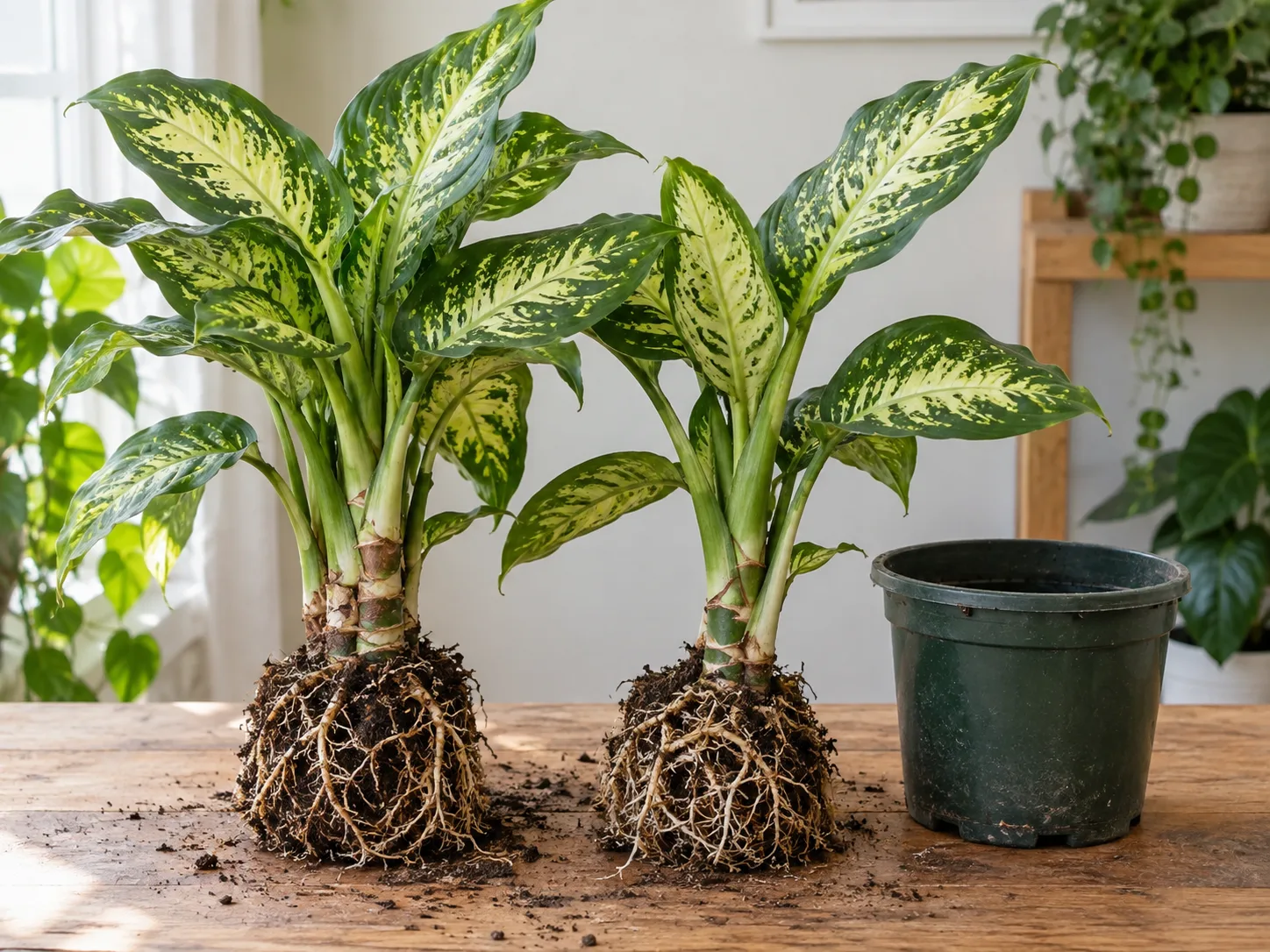
Division is the least demanding method when a pot holds two or more stems with their own roots. It does not mean cutting a single cane in half and expecting both pieces to become rooted plants. If the root ball reveals one stem and one shared root system, leave it intact and choose a tip or cane cutting instead.
How to Divide a Dieffenbachia
Water the parent plant the day before if its mix is dry, so the root ball is easier to handle without crumbling. Slide the plant out of its pot, loosen enough mix to see where stems meet the roots, and gently tease apart only the stems that already have a meaningful set of roots. If a few roots are tangled, use a clean blade to separate them rather than pulling hard on the canes.
Set each rooted section at its former soil line in a clean pot with drainage. Choose a container just large enough to hold its roots, fill around them with fresh, airy houseplant mix, and water once to settle the medium; pour off water left in the saucer. Keep the division in bright indirect light while it adjusts, and wait for the upper mix to begin drying before watering again. A short pause in leaf growth after root disturbance is common; repeated unpotting to check for new roots causes more stress than it solves.
This method works best during repotting or when the plant has naturally produced a multi-stem clump. The practical test is simple: can you point to roots that will remain with each separated stem? If not, do not force the division. Gardeners’ Path also describes separating Dieffenbachia stems while preserving their attached roots, a useful distinction for plants sold with several canes in one pot.
Method 2: Root a Tip Cutting
A tip cutting gives you the leafy top of a tall plant and leaves a shorter parent behind. Pick a firm, healthy crown with several leaves and a section of cane beneath it. Make a clean cut below a node, the slightly raised ring or leaf scar on the cane where a leaf or bud attaches. A useful cutting has at least one node on the portion you will root; retaining more than one gives the cutting another growth point.
Remove any lower leaf that would sit in water or under the propagation mix, but keep the healthy upper leaves. They help the cutting keep growing while it forms roots. Avoid taking a tiny piece with no stem tissue, and do not use a leaf-only cutting: a leaf may remain green for a while, but it does not contain the cane bud needed to form a new upright plant.
Choose Water or Potting Mix
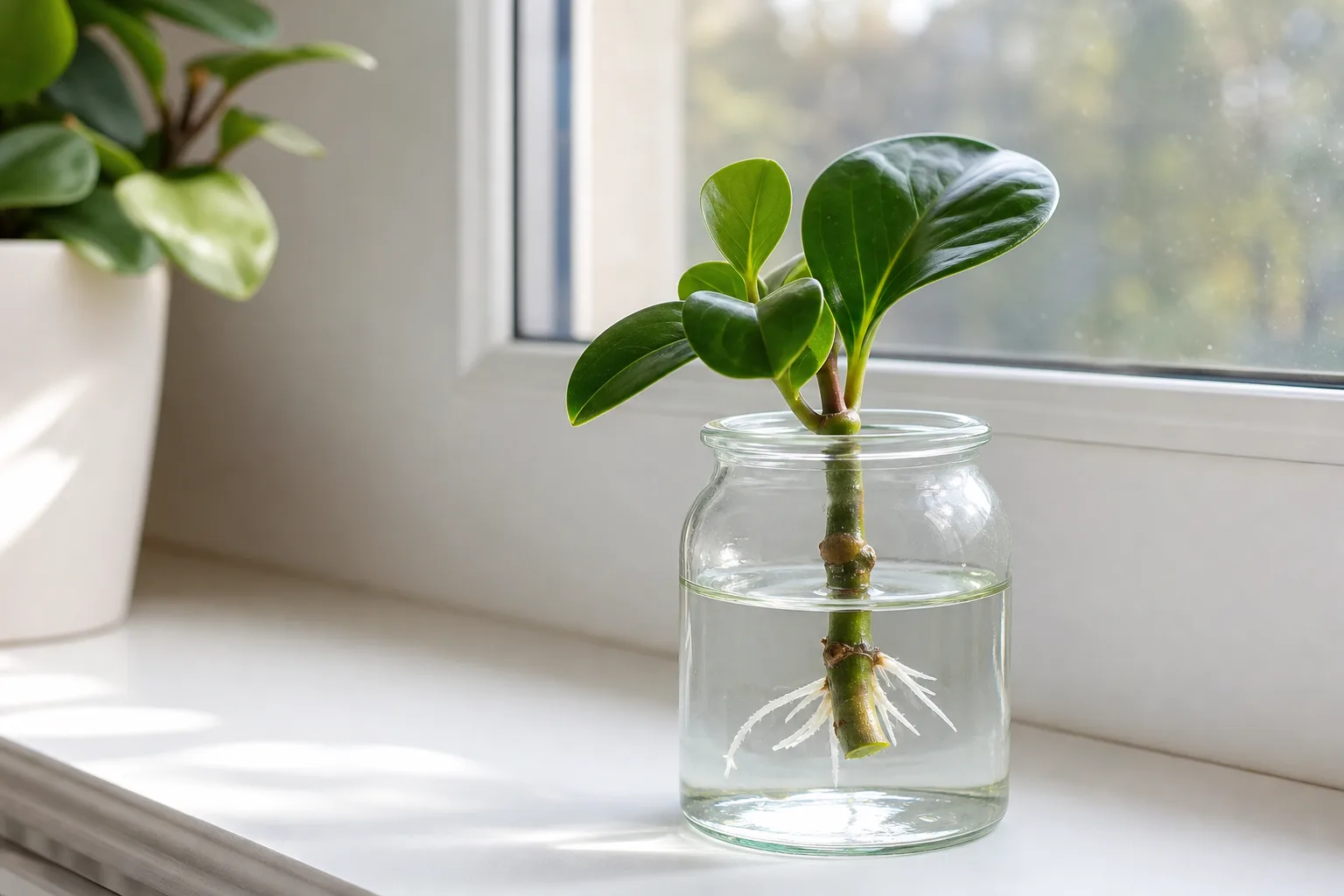
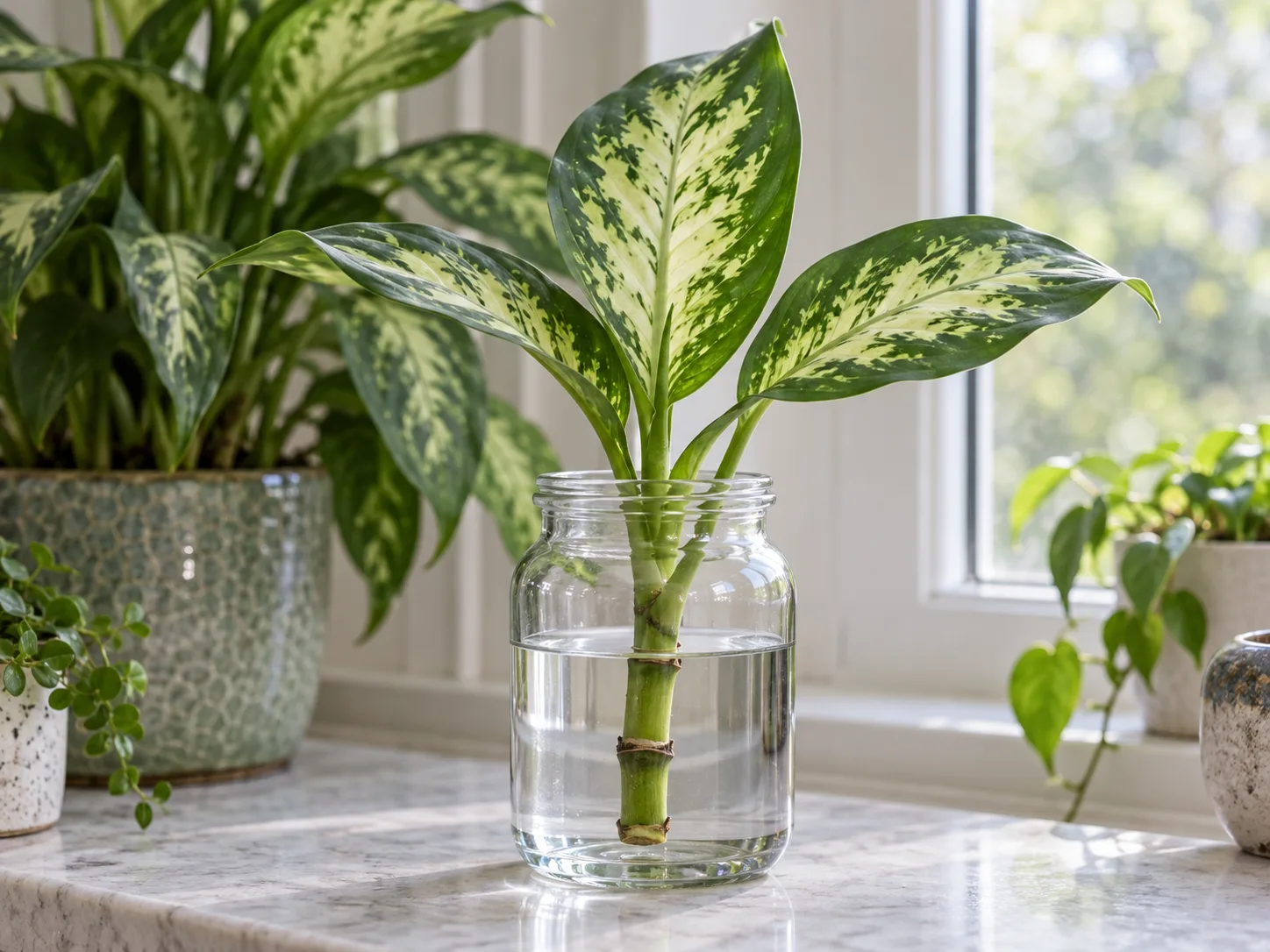
For water rooting, place the lower node in a clean jar and keep the leaves above the waterline. Set the jar in warm, bright indirect light, away from hot direct sun that can heat the glass. Refresh the water if it turns cloudy or develops an odor, and keep the node submerged as the level drops. Roots are easy to see this way, but water-grown roots must adjust when they meet potting mix.
For mix rooting, use fresh, airy propagation mix or a blend based on perlite or vermiculite rather than heavy garden soil. Moisten the mix first so it feels evenly damp, not saturated, then insert the stem deep enough to hold the node in contact with the medium. UConn notes that Dieffenbachia tip cuttings root faster than lower stem pieces. Penn State Extension describes water and porous media as options for houseplant cuttings; neither method removes the need for warmth, clean materials, and steady moisture.
Rooting hormone is optional. It may help some cuttings root more quickly, but a sound node and suitable conditions matter more than adding a product. Follow the label if you use one, and tap off excess powder rather than coating the cutting heavily.
Method 3: Make New Plants From Cane Sections
Bare cane sections are useful when a mature Dieffenbachia has a long, leafless stem or when you have pruned the top. Cut the bare stem into short sections, each with at least one visible node or lateral bud. Penn State Extension describes 2- to 3-inch stem sections with nodes for dumb cane; UConn likewise describes using short pieces of bare stem that retain a lateral bud.
Set Cane Cuttings Upright or Sideways
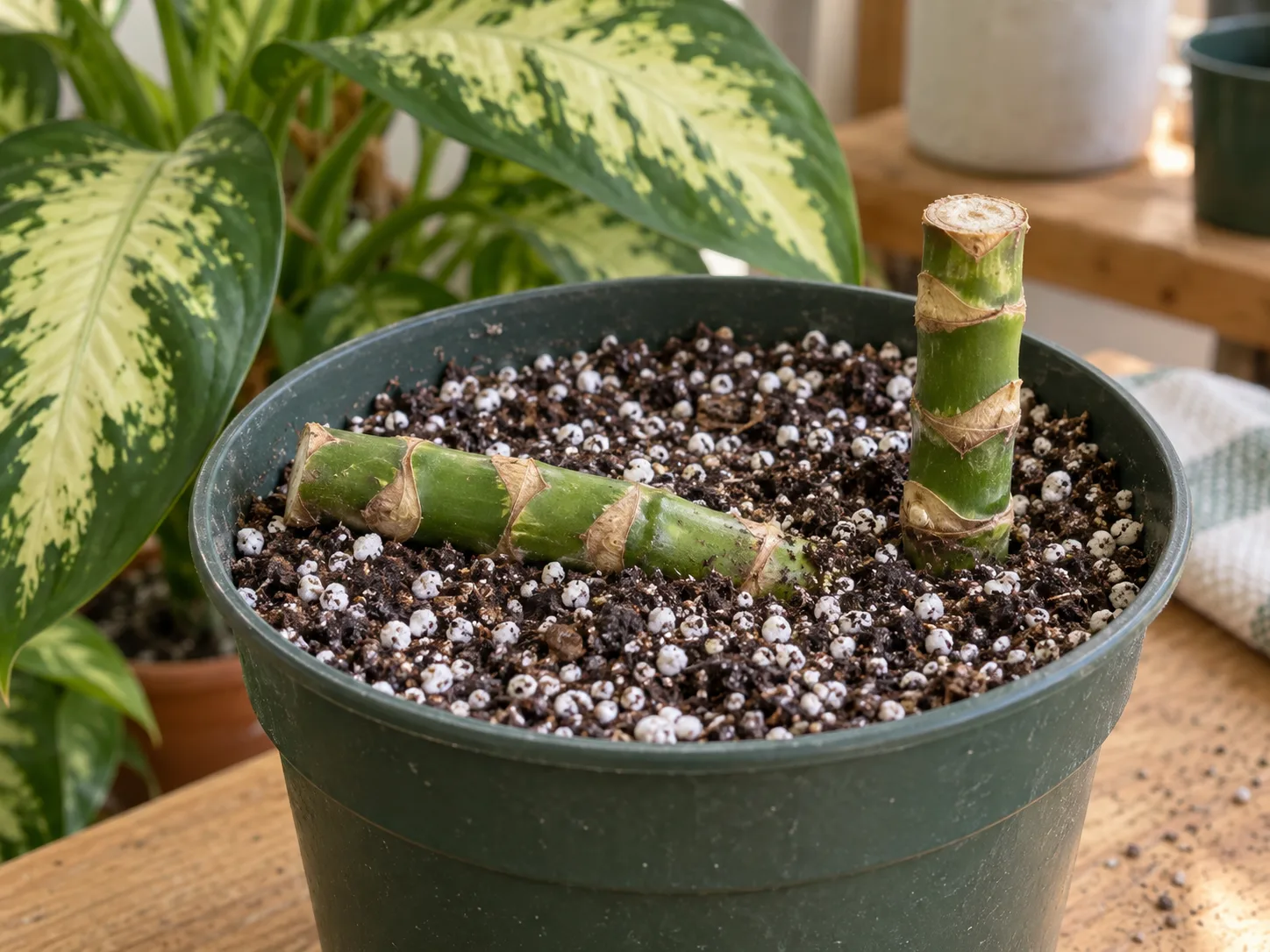
You can root a cane section upright with a node below the surface, or lay it horizontally and cover only part of the stem. Penn State Extension explains that buried nodes can form roots while exposed nodes can send up shoots. In either position, the node is the important feature; a smooth internode with no bud is not a dependable cutting.
Use a shallow tray or small pot with drainage and fresh, lightly moistened mix. If the cane piece is thick, press it only far enough into the medium to stay in place; burying a whole segment deeply makes it harder to keep air around the stem. For horizontal pieces, leave some of each cane visible and orient a visible bud toward the open air when you can identify its direction.
Do not keep cane cuttings submerged in a deep jar just because tip cuttings can root in water. For thick, leafless sections, a porous medium makes it easier to support the piece while keeping the node damp and oxygen available. UConn recommends briefly drying bare cane pieces before placing them in rooting medium; avoid leaving small cuttings exposed so long that they wrinkle or lose firmness.
Keep Cuttings Warm, Bright, and Evenly Moist
Set cuttings in bright indirect light rather than a dark corner or a sunny pane that overheats a jar or covered pot. Penn State Extension gives 75–80°F as a general rooting-media range for optimum propagation, while UConn lists 65–75°F for Dieffenbachia growth. You do not need to chase an exact reading, but a chilly windowsill or cold draft can slow rooting considerably.
Keep the propagation mix evenly moist, not waterlogged. Check it with a finger or lift the pot instead of watering by the calendar; small pots can dry quickly in a warm room, while a covered container may stay wet for days. A loose clear cover can slow moisture loss, but leave some ventilation and open it if heavy condensation persists or the cane begins to soften. High humidity helps prevent leafy tips from drying, but trapped stagnant air and saturated soil raise rot risk.
If you use water, keep leaves and petioles out of the jar and refresh cloudy water. If you use mix, make sure water can drain freely and never leave the pot sitting in its saucer. Stable conditions are more useful than repeated changes in light, location, or medium.
How Long Does Dieffenbachia Take to Root?
There is no single deadline. A leafy tip in warm conditions may show roots within a few weeks, while thick cane sections can take longer; Epic Gardening gives roughly four to eight weeks for cane cuttings in potting medium. Smaller pieces, low temperatures, low light, and a dormant parent can stretch that window. The first visible sign may be a root, a swelling bud, or a new leaf, and these do not always appear together.
Judge progress by the cutting’s condition, not the calendar alone. A firm, green stem with no sour smell can be left undisturbed while you keep its medium lightly moist. A soft, darkening base is a warning to inspect promptly. Do not tug every few days to see whether roots have formed; that breaks tiny new roots and can reset the cutting’s progress.
Pot Up Rooted Cuttings Without Setbacks
Move a water-rooted tip once it has several healthy roots long enough to handle and hold in mix; do not wait until they form a tangled mass in the jar. A cutting already rooted in propagation mix can stay in its small container until roots hold the medium together or growth resumes. Choose a pot with drainage that is only modestly wider than the root system, because extra wet soil around a small root ball dries slowly.
Use a loose, well-draining houseplant mix, set the cutting at the same depth it occupied while rooting, and water until excess drains. For the next couple of weeks, keep the mix lightly and consistently moist while the roots adapt, but allow the surface to begin drying between waterings. Keep the new plant in bright indirect light and avoid fertilizer until it shows active growth; fresh mix already provides a gentler start than a strong feed.
The parent plant also needs time after a major cut. Keep it in its usual bright indirect light, water according to how quickly its potting mix dries, and do not fertilize a leafless stump in an attempt to force buds. Healthy lower nodes can push new shoots, but a bare stem may take weeks to respond. For ongoing plant care, see our Dieffenbachia growing guide.
Troubleshoot Slow or Failing Cuttings
Before changing a method, identify what the cutting is telling you. A green, firm cane that has not grown yet is different from one that is turning mushy, and yellowing leaves on a newly separated division can reflect temporary root disturbance rather than an immediate need for more water.
The Cutting Is Soft or Black at the Base
Soft, dark tissue, a sour smell, or water that repeatedly turns cloudy points to rot. Remove the damaged portion with a clean blade, keep only firm tissue that still includes a node, and restart in fresh medium or a clean jar. Reduce saturation, improve drainage, and leave any cover ventilated. If the stem is soft all the way through or no viable node remains, discard it rather than trying to rescue rotted tissue.
It Stays Firm but Has No Roots or New Growth
Check first that the cutting includes a node or bud. Then review warmth and light: a firm cane in cool conditions may simply be slow, whereas strong direct sun can heat a jar and stress a leafy tip. Confirm that the medium is damp rather than dry or soupy, and give the cutting several undisturbed weeks before making another change. If the tip is shriveling, raise humidity modestly with a loose cover; if it is firm, avoid adding more water just because roots are not visible yet.
Mistakes That Reduce Success
The most common propagation failure is cutting a piece that cannot grow. A leaf without a cane node, or a smooth length of stem without a bud, may never produce a new plant. Before cutting, find a leaf scar or raised node on every piece you intend to root.
The next mistake is treating moisture as a substitute for drainage. Constantly wet mix deprives the stem of air and encourages decay, while a cutting left uncovered in dry moving air can shrivel before roots develop. Start with an evenly damp medium, then adjust based on how quickly the small container dries in your room.
Also avoid dividing stems that do not have roots to take with them, using dirty blades, setting the cutting in direct sun, or potting it into a container much larger than its roots. Rooting hormone cannot compensate for a missing node or rotting base. Keep the setup simple, clean, and stable so that a real problem is easier to spot.
What to Do With the Parent Plant
If you took a tip from a leggy Dieffenbachia, the remaining cane is not automatically finished. Keep it rooted in its pot and look for healthy nodes below the cut; new shoots may emerge from those points as conditions support growth. If the parent has several bare sections, you can turn some into cane cuttings, but leave enough healthy stem and foliage for the original plant to recover.
When a cut leaves the plant too tall or the crown is damaged, decide first whether you want one shorter mother plant, multiple cane starts, or both. Make only the cuts needed for that goal, because each cut exposes tissue and each new start needs warm light and moisture management. Remove any declining leaves with clean tools, but do not strip healthy foliage simply to make the plant look uniform while it is recovering.
Conclusion
Choose division when separate stems already carry roots, a tip cutting when you want a leafy compact plant, and cane sections when you want to use bare stem. In every case, keep a node with the piece you plan to root, use clean tools and airy conditions, and monitor firmness rather than watering on a fixed schedule. Wear gloves and keep pets and children away from sap and scraps; then give each cutting the time and steady warmth it needs to establish.