What Does Grafting Mean for Plants? A Clear Guide
What does grafting mean for plants? Learn how scion and rootstock join, what each contributes, which plants are grafted, and how to spot a healthy union.
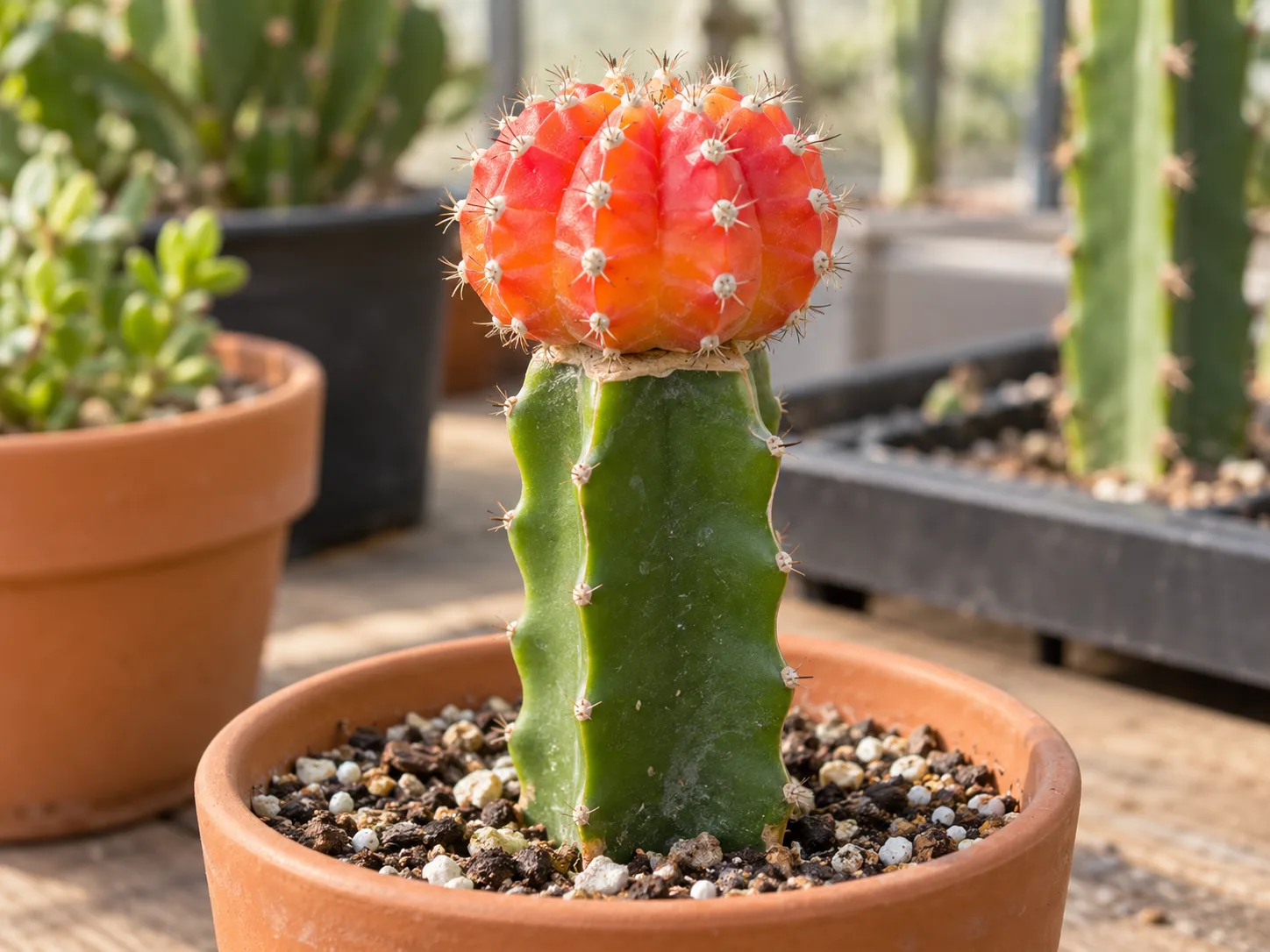
Plant grafting means joining a piece of one plant to the rooted lower portion of another so their tissues heal into a single growing plant. The upper piece, called the scion, supplies the chosen variety; the lower rootstock supplies the roots and can influence traits such as size, vigor, and adaptation to soil or pests. Grafting is a way to combine useful plant material, not a way to make a seed-grown hybrid.
That simple definition explains why a grafted apple, rose, or tomato can behave differently from a plant grown on its own roots. It also gives you a practical way to read the bulge or seam near a nursery plant’s base: that junction is where two compatible pieces were joined, and it may need attention as the plant grows.
The short answer: grafting joins plants, it does not crossbreed them
In a graft, the gardener places a stem, shoot, or bud from a desired plant against a cut on a compatible second plant. When the wound edges remain in close contact and heal, water and nutrients can move between the roots and top through new vascular tissue. The result is one functioning plant made from two genetically distinct parts.
This is different from cross-pollination. A seed develops after fertilization and inherits a new combination of genes from its parents; an ordinary graft does not mix the scion and rootstock genomes into a new variety. The fruiting branch remains the selected scion cultivar, although the rootstock and growing conditions can affect vigor, fruiting behavior, and sometimes fruit characteristics. A graft may produce multiple varieties on one tree if a grower intentionally attaches different scions, but each branch still comes from its own variety.
Grafting is also a form of asexual propagation: it lets growers reproduce a known cultivar without relying on seeds that may not come true to type. The method is valuable when a plant is difficult to root, when a chosen top needs stronger or more suitable roots, or when an established tree is being converted to a different variety.
What happens at a graft union
A graft begins with fresh cut surfaces. The thin vascular cambium—the growth layer beneath the bark—on the scion and rootstock must touch along at least one edge. Bark-to-bark contact alone is not enough; the cambium is the living tissue that can divide and form the bridge needed for a lasting union. Penn State Extension’s bench-grafting instructions emphasize matching stem diameters where possible and aligning cambium when the pieces differ in size.
After the pieces are secured, cells around the wound produce callus tissue that helps bridge the gap. Over time, the joined area develops new conductive tissues so water and minerals can travel upward and sugars can move through the plant. This takes time; a scion that is still green or has pushed a few buds is encouraging, but it does not prove that the union is strong enough to withstand wind, handling, or the weight of a crop.
The wrap or grafting compound serves a practical purpose: it keeps the pieces from shifting and limits drying while the wound is healing. It cannot rescue incompatible material or poor contact. A visible seam that stays dry, cracks, or grows lopsided may point to a problem, so keep the graft supported and judge it over a full growing season rather than by the first flush of leaves.
Scion and rootstock do different jobs
A grafted plant is easiest to understand if you think of it as a partnership with a boundary. Each half keeps its own identity, yet the success of the whole plant depends on a working connection between them. Nurseries label the named variety and rootstock separately when that information is important to a buyer.
What the scion contributes
The scion is a short piece of stem or a single bud from the variety the grower wants above the union. It determines the cultivar identity of the new shoots and, on fruit trees, the primary variety of the fruit. If you want a particular apple cultivar, the scion must come from that cultivar; grafting a random branch onto a suitable rootstock does not change the branch’s name or replace its genetics.
Scion wood is usually selected from healthy, appropriately mature growth. For dormant bench grafting, Penn State Extension describes using dormant scion wood collected in winter and keeping it cool and moist until grafting. The exact storage and collection schedule depends on crop and method, so use crop-specific guidance rather than assuming every species follows the apple schedule.
A scion can also be a bud rather than a multi-bud shoot. That is the material used in budding, a grafting method that inserts one bud into the rootstock. A single bud can reproduce a chosen cultivar while using less scion material, which is useful in nursery production and many fruit-tree systems.
What the rootstock can change
The rootstock provides the root system and often part of the lower trunk. Rootstocks are selected for a combination of traits, not merely because they are sturdy. Depending on the crop and named rootstock, they may change mature size, vigor, anchorage, tolerance of soil conditions, resistance to a particular pest or disease, winter response, and the timing of fruit production.
For example, dwarfing apple rootstocks can make a tree easier to fit into a small garden and harvest, but a smaller tree may need permanent support and careful watering. In grapes, Oklahoma State University Extension explains how rootstock choice can be matched to site limitations and pest pressures, including phylloxera. The same guidance warns that a rootstock’s advantages depend on local conditions and how it interacts with the scion cultivar.
The label matters. “Dwarf,” “disease-resistant,” or “cold-hardy” is not a complete guarantee: those descriptions refer to specific traits and combinations, not immunity or universal performance. Ask which exact rootstock is used, what conditions it is intended for, and whether the nursery’s recommendations fit your soil, climate, available space, and support plan.
Why growers graft plants
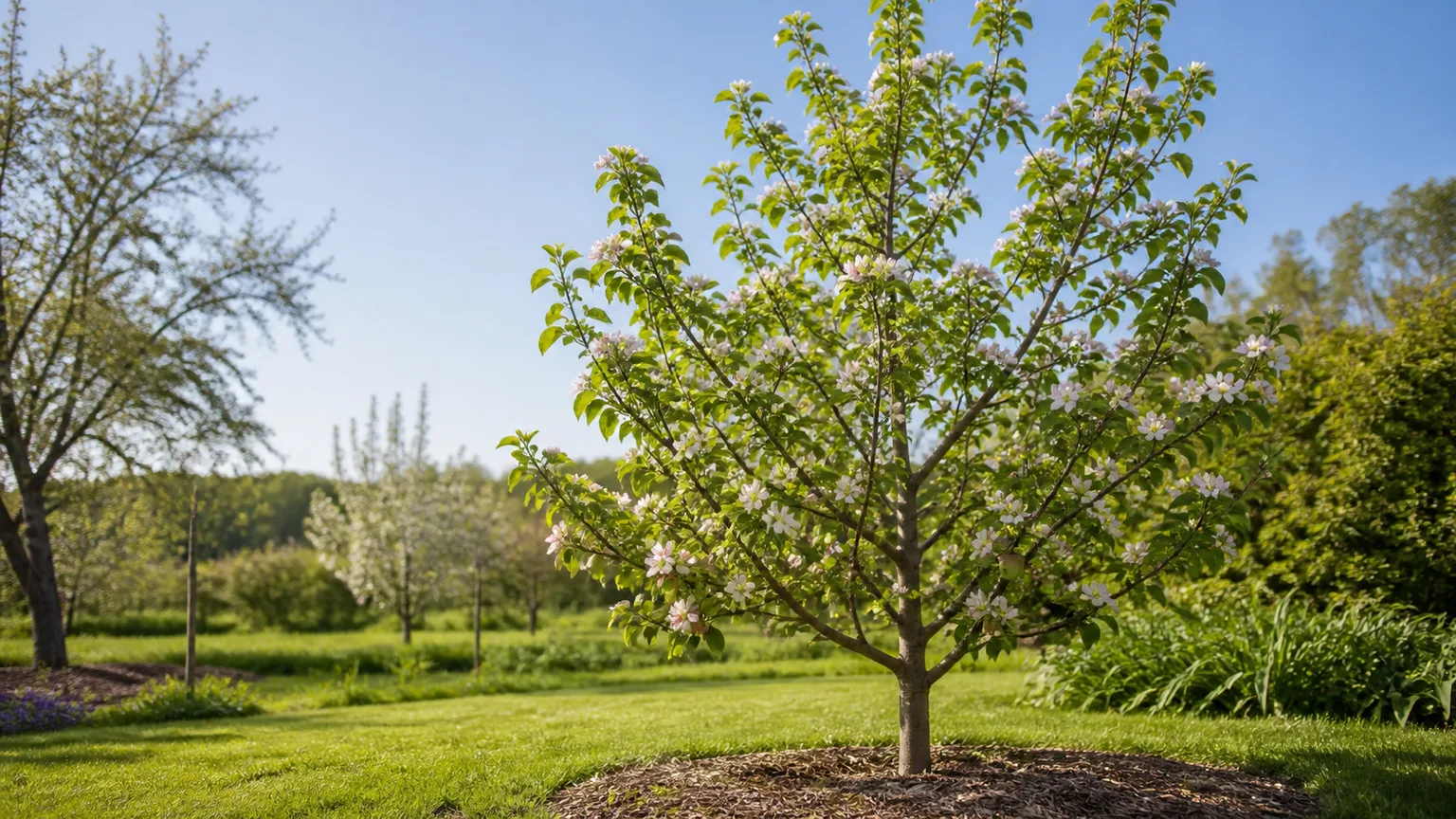
The first common reason is true-to-type propagation. Many named fruit varieties do not reproduce reliably from seed; a seedling may produce fruit that differs from the parent and can take years to evaluate. Grafting lets a nursery reproduce the desired variety on selected roots, preserving the scion while using the rootstock to meet production or site goals.
The second reason is control over the plant’s architecture and performance. A dwarf or semi-dwarf rootstock can keep a fruit tree more manageable than a full-size tree, while other rootstocks may help a crop cope with a specific soil or pest constraint. These are choices to weigh, not automatic improvements: the “best” rootstock depends on location, cultivar, soil drainage, support, and what the grower wants from the plant.
Grafting can also repair or repurpose an established plant. In topworking, a grower removes part of a mature tree and grafts a different variety onto its framework. Penn State Extension’s bark-grafting guidance describes converting orchard trees to a new variety. A backyard gardener may use the same general idea to add a compatible variety or replace an unproductive top, although large trees and valuable specimens call for experienced help.
Finally, grafting can place several compatible varieties on one tree. Each scion occupies its own branch, so the result is a collection of varieties rather than a genetic blend. Multi-graft trees can save space, but they require pruning that prevents one vigorous branch from shading or overpowering the others.
Grafting versus seeds, cuttings, and budding
These propagation methods solve different problems. Choose based on the result you need, how difficult the plant is to root, and whether you need to preserve a named cultivar.
| Method | What you start with | What the new plant inherits | Often useful when |
|---|---|---|---|
| Seed | A fertilized seed | A new genetic combination; it may differ from the parent | You want genetic variation or the species grows reliably from seed |
| Cutting | A stem, leaf, or root section | A clone of the plant the cutting came from | The species roots reliably and you want the same plant on its own roots |
| Grafting | A scion or bud joined to a rootstock | Scion identity above the union and rootstock traits below it | You want a named cultivar on selected roots or need to change an established top |
| Budding | One bud joined to a rootstock | The variety represented by that bud above the union | One bud is enough and the crop’s bark and season suit the method |
Budding is not a separate alternative to grafting in the biological sense; it is a grafting technique. The distinction is the size of the material being attached: budding uses one bud, while other grafts use a piece of stem with several buds. Seed propagation and cuttings do not create a scion-rootstock union.
A useful rule: if you want an exact named variety and a cutting roots well, propagation from a cutting may be simpler. If the plant needs a specific root system, does not root dependably, or is sold on a selected rootstock for a defined purpose, grafting may be the better route. If you want a genetically different seedling, use seed and accept that its eventual traits may not match the parent.
How to judge graft compatibility before trying
A graft succeeds only when the two plant parts can form and maintain a functional union. Relatedness offers a first clue: grafts between close relatives are generally more promising than combinations across distant plant groups. But “same family” or even “same genus” does not certify that a particular scion and rootstock will be compatible. Compatibility can depend on species, cultivar, rootstock selection, technique, and growing conditions.
Look for a proven pairing for the exact crop. Check a university extension publication, a reputable nursery’s crop-specific chart, or a grower guide with a record of the combination. Do not assume two trees can share a graft simply because both are called stone fruit, citrus, or maples. The practical horticulture source Grow Organic likewise advises verifying the particular material rather than inferring compatibility from superficial similarity.
Compatibility problems can be immediate or delayed. A graft may fail to unite at all, or it may grow for a time and later show a weak, swollen, cracked, or declining junction. The nursery Blockhill’s rootstock compatibility guide notes that failure can take years to become visible. That is why successful growth in the first weeks is not enough to validate an experimental pairing for a permanent tree.
If you are trying an unfamiliar combination, graft only a small amount of material and keep a backup plant. For a long-lived fruit tree, home landscape specimen, or valuable cultivar, use a documented combination instead of relying on trial and error. A bridge graft or interstem may solve some specific compatibility problems in professional practice, but it is not a universal workaround and should be selected for the crop, not improvised.
Plants commonly grafted in gardens and farms
Many familiar woody fruit crops are propagated by grafting or budding, including apples, pears, cherries, peaches, plums, citrus, and grapes. The combination can preserve the cultivar while using roots selected for a particular size, soil, climate, or pest challenge. The exact method and rootstock depend on the crop; do not assume that instructions for apples transfer cleanly to citrus or stone fruit.
Grafting is also used for ornamentals. Some roses are sold grafted, and many named Japanese maple cultivars are propagated by grafting because seed-grown offspring may not retain the exact cultivar characteristics. Grafted moon cacti provide a very visible example: the colorful top and green base are separate plants joined at a conspicuous union. These examples differ in purpose and care, but the same basic terms apply.
Commercial vegetable growers graft crops such as tomatoes and cucurbits to pair a fruiting variety with roots selected for vigor or resistance to certain soil-borne problems. Home gardeners may see grafted vegetable starts at nurseries, particularly where disease pressure or a short season makes the rootstock benefit worthwhile. A grafted vegetable is not automatically more productive in every garden; price, available space, variety, and local growing conditions still matter.
Some plants do not make practical grafting candidates with ordinary garden methods. A conventional graft depends on tissues that can reconnect across the wound, and not every plant or pairing does that reliably. For a plant that roots readily from cuttings or grows true from seed, grafting may add skill and time without solving a real problem.
Which grafting method fits the job?
The right method depends on the crop, stem diameters, bark condition, and season. Treat a method chart as a starting point, then follow instructions written for the species and local growing stage. All grafting methods share one core requirement: secure cambium contact and a protected union.
Whip-and-tongue for similar-diameter stems
A whip-and-tongue, or splice, graft joins a scion and rootstock of roughly similar diameter. Each receives a long sloping cut; a second cut creates a small “tongue” so the pieces interlock. The extra contact and mechanical fit can help hold the two surfaces together while they heal, but the cuts must be smooth and the cambium edges must line up.
This is commonly used for dormant bench grafting of young fruit trees. Penn State Extension’s demonstration recommends scion and stock of similar thickness where possible and keeping the wrapped union from drying or moving. If their diameters differ, align the cambium on at least one side rather than centering the scion and leaving both sides mismatched.
This technique asks for control of a sharp knife. A gardener who cannot make a clean, repeatable cut should start with a grafting workshop or buy a grafted tree rather than practicing on a prized branch. Poor cuts waste scion wood and expose both plants to a larger wound without increasing the chance of success.
Cleft and bark grafts for topworking
A cleft graft is often used when the rootstock or branch is thicker than the scion. The stock is split and one or more wedge-shaped scions are placed near its edge, where their cambium can meet the stock’s cambium. The method is useful for changing a tree top, but the large wound must be sealed and protected; it is not simply a smaller version of a splice graft.
A bark graft also attaches smaller scions to a larger branch or trunk, but it relies on the bark loosening from the wood. Penn State’s bark-grafting instructions time the work for spring, when the bark slips as growth begins. That cue is more dependable than copying a calendar date from another region.
These topworking methods can shorten the wait for a new variety compared with planting a whole replacement tree, but they do not make the existing root system young again. The tree still needs sound structure and healthy roots, and new scion growth may need temporary support. If a mature limb is diseased, badly damaged, or unsafe, have an arborist assess it before grafting.
Budding when one bud is enough
Budding attaches a single bud rather than a section of shoot. In T-budding, a T-shaped opening is made in the bark and a bud shield is slipped underneath; in chip budding, a small chip of bark and wood is removed and replaced with a matching bud-bearing piece. The method is widely used in nursery production and fruit-tree propagation because one shoot can supply many buds.
Budding usually requires the right bark and growth conditions: the rootstock must be at a stage when the bark can be lifted cleanly for T-budding, or a chip-budding technique suited to the species and season must be chosen. It is not automatically easier just because the cut is small; the bud must be fresh, correctly oriented, and held in contact with the cambium.
For a home gardener, budding is useful when there is limited scion material or when propagating a crop using a documented nursery method. If you are new to grafting, learn on a spare rootstock and follow crop-specific timing. A single dry or bruised bud is easy to lose, so have more than one healthy bud available if the method allows.
When grafting is done: match method to growth stage
There is no one grafting month for all plants. Bench grafting of many fruit trees is done while the rootstock and stored scion wood are dormant, then the graft is kept cool and protected while the union begins to form. Penn State’s bench-grafting transcript describes that dormant stage for its fruit-tree method, whereas bark grafting is performed in spring when the rootstock bark begins to slip.
Budding can be timed differently from dormant scion grafting because it depends on fresh buds and active bark or cambium. Local weather matters too: extreme heat can dry exposed material, while freezing conditions can injure a new union. Use bud and bark condition as cues, and consult an extension guide for the species and method rather than using a date that may fit a different growing region.
Collect only healthy, correctly identified scion material from a plant you are allowed to propagate. Keep dormant scions labeled and protected from drying, heat, and premature bud break. Penn State notes that storing apple scions alongside ethylene-producing fruit can cause buds to abort, a reminder that scion storage is part of the grafting job—not an afterthought.
What to look for on a nursery plant
A grafted plant often has a visible change in stem diameter, a slight bend, a healed ridge, or a scar near the base or where a branch joins a trunk. The union can be subtle on older plants, and some grafts sit close to the soil line, so appearance alone is not always conclusive. The plant tag or nursery record is the best way to confirm the rootstock and scion names.
When choosing a fruit tree, ask for the named cultivar and rootstock, mature size, support needs, and any soil or climate limits. A dwarf tree, for example, may need a stake or trellis for life; buying by fruit name alone can leave you surprised by its eventual size or anchorage. If the nursery cannot identify the rootstock, you may still choose the plant, but you should not assume a specific dwarfing or resistance trait.
Inspect the union for a continuous, healed connection rather than a deep crack, loose bark, pronounced dead area, or soft, wet tissue. A small swelling is not by itself proof of failure; trees naturally thicken at different rates above and below the junction. Avoid plants with obvious cankers, extensive dieback, or broken unions, and keep the label so you can later distinguish the intended variety from a rootstock shoot.
Aftercare: protect the union and direct growth
A newly grafted plant needs stable contact while the union heals. Keep the wrap or grafting compound in place for the period recommended for that method, then check that it is not cutting into expanding bark. Some products stretch or biodegrade; others need removal. Do not leave a tight non-stretch tie indefinitely, and do not tug on the scion to test whether it has attached.
Maintain even moisture appropriate for the species and site, but do not saturate the root zone. Protect the graft from wind, animals, accidental knocks, and heavy fruit. A fast-growing scion can act like a lever on a small union, so stake or tie the new shoot loosely to a support when exposure makes breakage likely. Remove blossoms or fruit on a very young graft if they compete with the growth needed to build a sound framework.
Keep the label and date near the plant. As buds open, confirm that the shoots are growing from above the union and that the junction is not drying or splitting. The Grow Organic grafting guide recommends stable cambium contact, protection from drying, and aftercare that includes managing rootstock growth and avoiding a top-heavy new shoot. These practical details are simple, but they are what protect a successful cut from being undone by movement or neglect.
Rootstock shoots, failures, and common mistakes
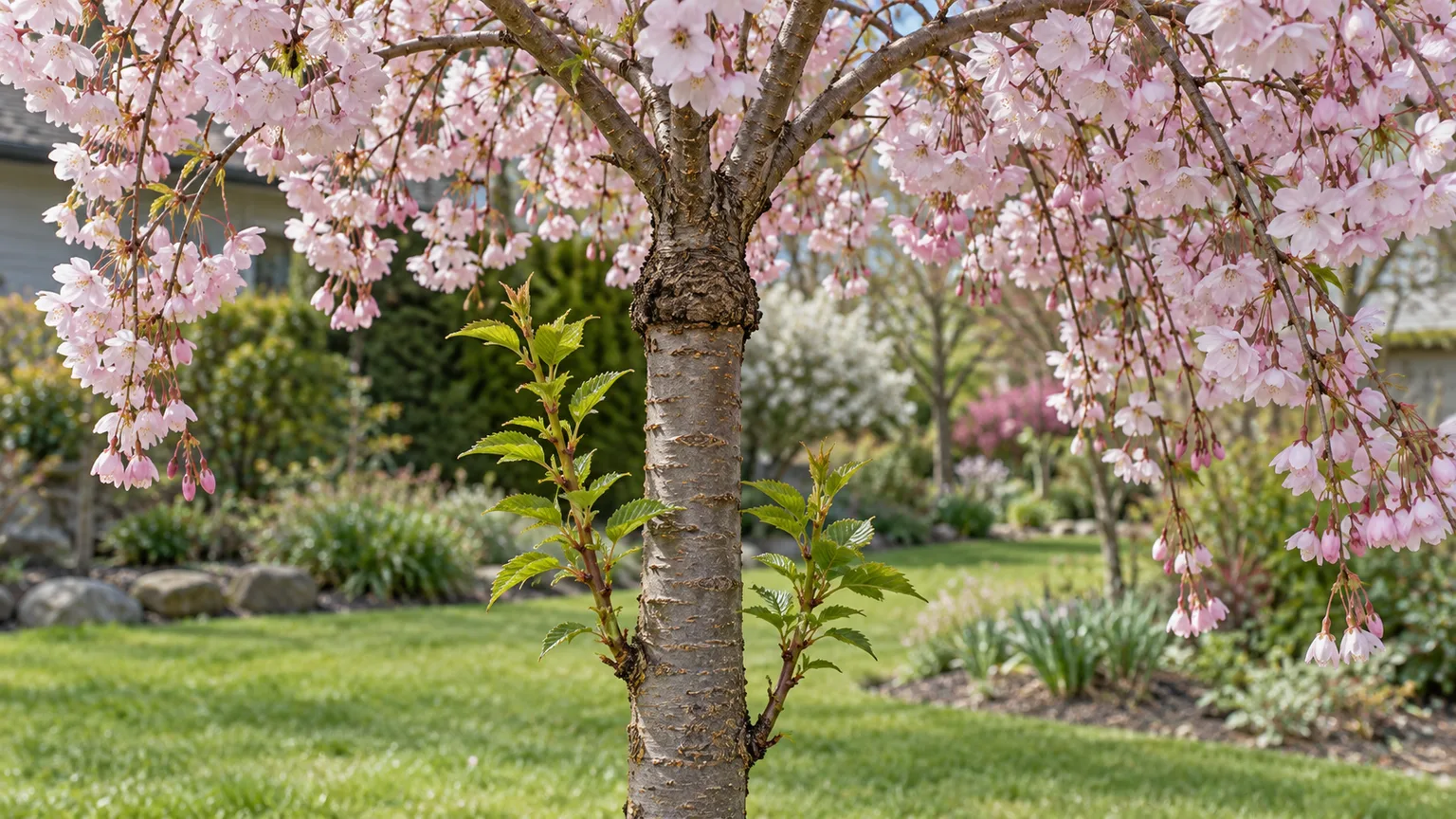
Shoots that emerge from below the graft belong to the rootstock. They may grow faster than the desired scion, especially after damage or pruning, and can eventually dominate the plant. Remove them at their point of origin while they are small; clipping them above ground repeatedly can leave a stub that resprouts. Do not remove normal shoots from above the union unless you are shaping the plant.
If the top dies but the rootstock survives, new growth from the roots or lower trunk will usually be the rootstock, not the named variety that was grafted on it. Oklahoma State Extension explains this distinction for grapevines: regrowth from a grafted root system can return as the rootstock rather than the scion cultivar. Identify where the new shoot begins before deciding whether it is a useful replacement.
Common failure causes include an incompatible pairing, cambium layers that missed each other, scion wood that dried, a loose union that moved, a wrap that constricted the stem, or frost and disease damage. A weak union may also look successful early and fail later. If a graft has dried and died, cut it back only when appropriate for the plant and method; avoid repeatedly reopening a wound in the hope that it will heal. For a valuable tree, extension staff or an experienced fruit grower can help diagnose whether the issue is technique, disease, or delayed incompatibility.
When a grafted plant may not be the right choice
Grafting is useful when its specific advantage solves a problem you have. It is not a quality upgrade by definition. An own-root plant can be a better fit if the species roots easily, you want every shoot to match the cultivar, or cold damage might kill the top and leave an undesirable rootstock to regrow. Oklahoma State Extension describes this trade-off in grapes: a grafted vine may help address site or pest limits, while an own-root vine can be simpler to renew after freeze injury in the region discussed.
Buy an established grafted plant when you want a named fruit cultivar, a reliable selected rootstock, or a tree that is already trained to a useful size. Try grafting when you have a clear goal, compatible material, the right season, and patience for the union to establish. For a small garden, a well-chosen nursery tree is often more predictable than an experimental graft that may take several seasons to reveal a compatibility problem.
If your goal is simply to make another plant like the one you own, check whether cuttings, layering, division, or seed propagation is easier and appropriate. The best propagation method is the one that reliably produces the plant you want with manageable effort—not the most technical method available.
Conclusion
Grafting joins a scion from the variety you want to a compatible rootstock chosen for its roots and other useful traits. The pieces keep their own genetic identities, but a healed union lets them function together; that is why a rootstock can alter a tree’s size or resilience without turning its scion into a different named cultivar.
For a buyer, the key questions are which scion and rootstock are joined, what the rootstock is expected to do, and whether the combination suits the site. For a home grafter, success depends on documented compatibility, accurate cambium contact, a protected union, correct seasonal timing, and aftercare that removes rootstock shoots before they take over. Once you can read those two parts separately, grafting stops being a mysterious bulge on a stem and becomes a practical way to understand how the plant was made—and what it needs next.