How to Protect Roses From Frost and Freezes
Protect roses from frost and freezes with a rose-type decision guide, late-fall watering rules, breathable covers, and spring recovery steps.

The right way to protect a rose depends on what kind of cold is coming and what part of the plant is vulnerable. A hardy shrub rose in a sheltered bed may need only normal mulch, while a grafted hybrid tea in an exposed site may need a mound over its graft union and a breathable wind barrier. Treating both plants the same can waste time or create a damp, unstable cover that causes more trouble than the cold.
There is also a useful distinction between a frost and a winter freeze. A single light frost can blacken open flowers without seriously harming an established rose. Repeated hard freezes, drying wind, and freeze-thaw swings are more likely to injure the crown, graft union, roots, or long canes. This guide helps you choose the least complicated protection that fits your rose, climate, and site.
The Winter Damage That Matters Most
Rose winter damage is not just a matter of the lowest temperature on the forecast. Cold can injure the plant directly, but rapid warming after a freeze, strong wind, saturated soil, and a root system above ground can all change the outcome. The Royal Horticultural Society explains that repeated freezing and thawing or very rapid thawing can be especially damaging, while cold wind increases moisture loss from exposed plant tissue (RHS frost-damage guidance).
For a grafted rose, the graft union or bud union is the critical point where the flowering variety joins the rootstock. If that union is killed, the canes you bought may die even when the roots survive. The crown and lower canes deserve priority because they are the plant’s recovery base; wrapping every upper branch is secondary unless the rose is a climber, tree rose, or unusually exposed plant.
Open blooms and tender late-season growth are the first parts to show frost injury. They may turn dark, limp, or black after one cold night, but damaged petals do not automatically mean the bush is dead. Winter protection is mainly about keeping the plant dormant, hydrated, anchored, and insulated rather than trying to make an outdoor rose feel warm.
Decide Whether Your Rose Needs Protection
Start with the rose’s identity and the site, not the calendar. The Penn State Extension guide on wintering roses emphasizes that hardiness, health, exposure, and whether the plant is grafted or own-root all influence how much protection is useful (Penn State Extension’s rose-winter guidance).
A practical first decision is:
- Hardy, established shrub or own-root rose in a sheltered in-ground bed: usually protect the crown with ordinary mulch and add more only if the forecast, exposure, or cultivar history warrants it.
- Hybrid tea, floribunda, grandiflora, tender English rose, or newly planted grafted rose in a cold or windy site: plan for a crown or graft-union mound after dormancy, with a cage or breathable cover if wind and repeated freezes are expected.
- Climbing or tree rose: assess the canes and graft union separately. These forms may need a special structure even when a low shrub rose nearby does not.
- Container rose: assume the roots need extra help. Above-ground potting mix is much more exposed to freezing than soil around an in-ground root system.
Use Four Risk Factors Before You Cover
1. Cultivar hardiness. A rose bred for your climate is a different winter project from a rose that is marginally hardy in your area. Check the plant tag, nursery record, or cultivar name when possible. A hardiness zone is a useful starting point, not a guarantee: it describes average cold conditions, while one exposed garden can be colder and windier than another garden in the same zone.
2. Graft location. A low graft union near the soil line is relatively easy to mound. A tree rose has a union high on the stem and needs a cage, wrapping, or a carefully planned lay-down method. Own-root roses can still experience cane dieback, but their roots may send up new canes when the variety is hardy enough for the site.
3. Exposure. Wind across an open yard, trellis, or raised bed can dry canes and loosen a plant at the crown. A rose against a house, wall, hedge, or other permeable windbreak may come through the same temperature with less injury. Avoid creating a solid barrier that funnels gusts around its ends; a slightly permeable screen is more useful than a rigid wall that causes turbulence.
4. Root-zone temperature. In-ground roots have the thermal mass of surrounding soil. Container roots do not. A pot on a patio, balcony, or deck may need insulation even when an in-ground rose a few feet away needs very little.
Match the Method to the Rose Type
Think in levels rather than an all-or-nothing rule. Level one is no special cover: keep the bed well-drained, mulch lightly, and let a hardy rose enter dormancy. Level two is overnight frost protection: use a sheet, frost cloth, or light blanket over a frame when a late-season frost threatens flowers or tender growth, then remove it in the morning. Level three is full winter insulation: mound the graft union or crown, tie or cage canes, and add a breathable wind barrier for a tender or exposed rose.
The right level can change from year to year. A newly planted rose, a rose recovering from disease, or a rose that produced soft late growth after excess nitrogen deserves more caution than a well-established plant that has survived several winters in the same spot. If you are unsure, protect the crown first and avoid sealing the entire bush in an airtight shell.
Frost Protection Is Not the Same as Winter Protection
For a single overnight frost while the rose is still actively growing, the goal is to keep cold air and ice crystals from settling directly on the foliage, buds, and flowers. Drape breathable fabric over stakes or a wire frame so it reaches close to the ground, and anchor the edges so wind cannot lift it. Fabric works best when it holds some of the soil’s stored heat around the plant rather than lying flat on wet flowers.
Remove a temporary frost cover after the sun is up and the frost has melted. Leaving a sheet or blanket in place through a warm, bright day can trap moisture and heat, bend canes, and encourage premature growth. Savvy Gardening’s practical frost-cover guidance likewise recommends supporting fabric above foliage, avoiding direct contact with plastic, and removing temporary covers when the frost event has passed (Savvy Gardening’s frost-cover guide).
For a hard freeze or a season of winter weather, do not rely on a bedsheet alone. The plant may need its crown or graft union insulated with soil, its pot protected, and its canes shielded from drying wind. A winter cover should be breathable, stable in wind, and easy to inspect. It is meant to moderate temperature swings and desiccation, not to keep the rose warm enough to grow.
Prepare Roses Before the Ground Freezes
Do the preparation in stages. Finish routine health cleanup while you can still work comfortably, then wait for the rose to become dormant before building a long-term mound or dismantling a climbing rose from its support. Penn State Extension recommends completing winter insulation after several killing freezes so the plant has entered dormancy and the soil remains consistently cold rather than cycling between warm and cold under an early cover.
Water Deeply at the Right Time
Water the soil thoroughly in late fall if the root zone is dry, ideally after the first frost but before the ground freezes. Watering the soil, not the canes or leaves, sends the plant into winter with available moisture. Do not turn this into a rigid weekly schedule: a rain-soaked bed does not need another soaking, and poorly drained soil can be more dangerous than slightly dry soil.
Container roses need a similar check before they are sheltered. Water the root ball if it is dry, allow excess water to drain completely, and do not leave the pot standing in a saucer of ice-cold water. Through winter, check occasionally during thaws; the soil should not become bone dry, but frequent watering in cold, inactive soil increases the chance of root problems.
Clean Up, Stop Feeding, and Delay Major Pruning
Remove fallen leaves, spent flowers, and diseased debris from beneath the plant, especially if black spot or another foliar disease was present. Dispose of clearly diseased material according to local guidance rather than using it in home compost. Cleaning reduces the amount of infected debris that remains around the crown through a wet winter.
Avoid nitrogen-rich fertilizer late in the season. It encourages soft, sappy growth that is more vulnerable to a sudden freeze; the RHS includes avoiding late nitrogen as a basic winter-damage prevention measure (RHS winter-damage guidance). Stop routine deadheading early enough for the rose to slow down naturally if that matches your cultivar and local practice, but do not force dormancy with a severe cutback.
Do remove dead, broken, or diseased wood with clean, sharp pruners. Hold off on major shaping unless a local rose-growing schedule calls for it. BBC Gardeners’ World Magazine places the main pruning window for most roses near late winter to early spring as new growth begins, with different timing for ramblers and other groups (BBC Gardeners’ World rose-pruning guidance). For winter protection, loosely tie long canes that whip in wind instead of cutting every rose down to the same height.
Protect a Grafted Rose With a Soil Mound
When the rose is dormant and the ground is workable, mound about 12 inches of clean, well-draining soil or finished compost over the crown and graft union if the plant needs full winter protection. The exact amount depends on the rose’s hardiness and climate; the measurement is a useful starting point, not a reason to bury a hardy shrub unnecessarily.
Bring soil from another part of the garden or use a suitable clean mix rather than scraping away the rose’s surrounding root zone. Shape the mound so water can shed rather than pool against the canes. If the canes are tall enough to move in the wind, tie them loosely with soft material before mounding, leaving enough space for air movement and avoiding a tight bundle that stays wet.
Once the mound has settled or frozen, add a loose layer of tree leaves, bark, or straw if additional insulation is needed. Use the organic material to hold the soil mound in place and buffer temperature swings, not as the only protection around a tender graft union. Wet, compacted mulch packed directly against stems can stay cold and airless; keep the crown covered but allow the upper canes to breathe.
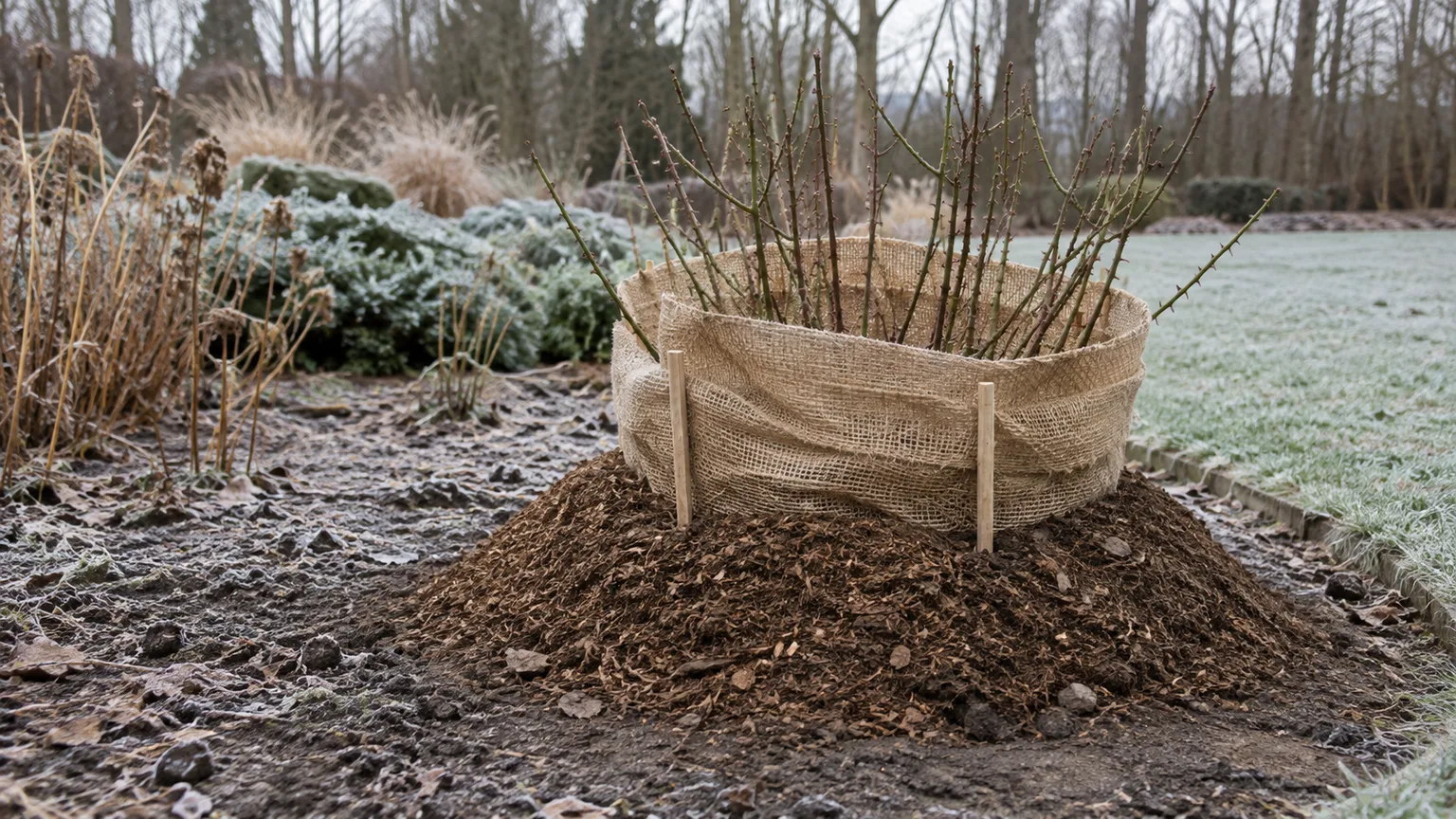
This method is especially useful for a grafted rose whose union sits close to the ground. It is less suitable for a tree rose unless you build a separate cage around the high graft or lay the plant down safely. Never bend stiff canes or disturb a large root ball just because a one-night frost is forecast.
Cover Roses for Wind and Repeated Freezes
Use a cover when the major risk is exposed cane tissue, wind, repeated freeze-thaw cycles, or a rose that is only marginally hardy in your garden. Build a simple cage from stakes and wire fencing, then wrap the outside with burlap or another breathable fabric. The fabric should block wind and hold loose insulation, but it should not be tied airtight around the plant.
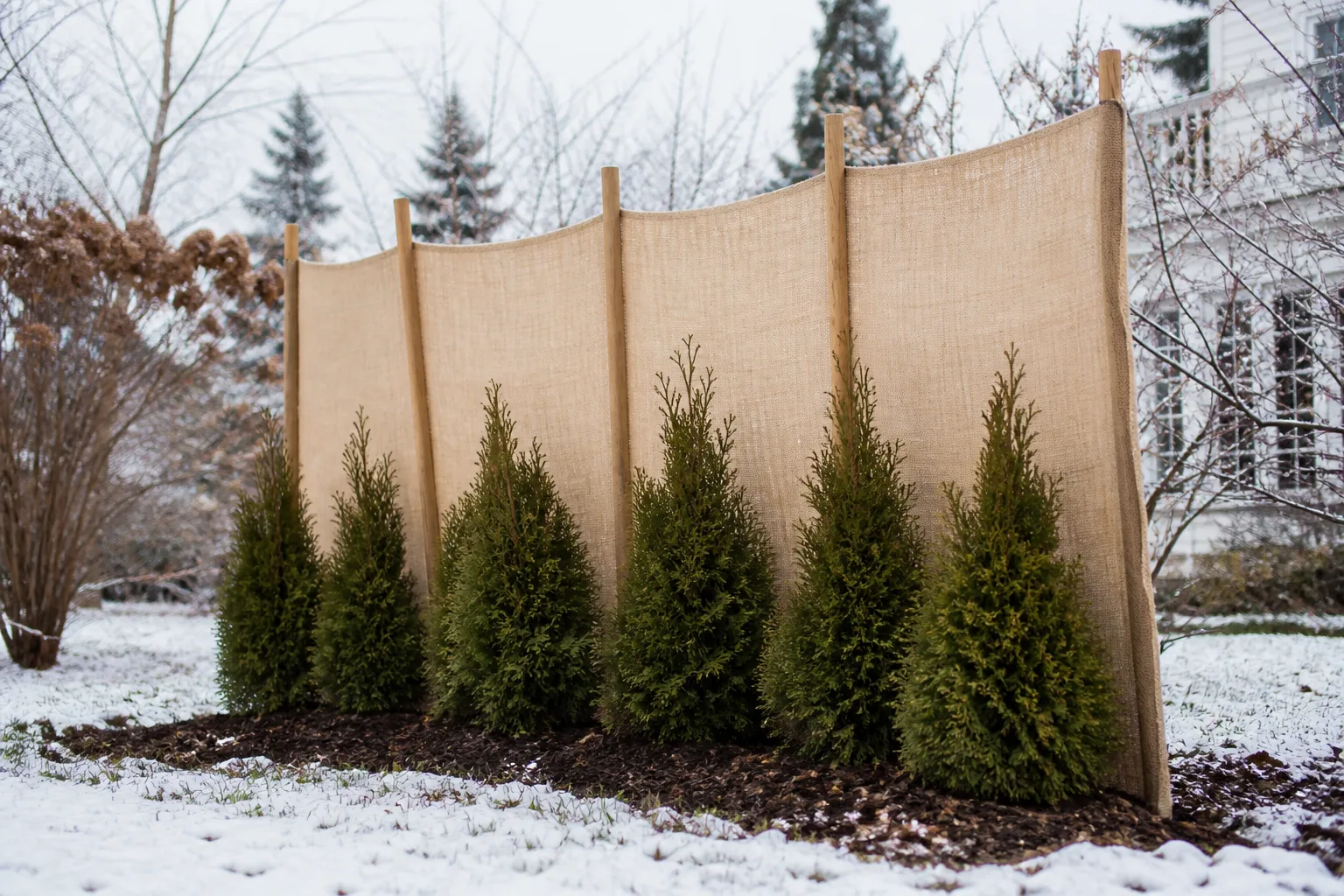
The cover works best when it reaches near the ground and is anchored against winter wind. Leave some air space between fabric and canes, inspect after storms, and remove heavy snow that threatens to bend the structure or break branches. A burlap screen can also protect a rose growing on the windward side of a bed without wrapping the entire plant; use the smallest structure that solves the exposure problem.
Use Burlap, Frost Cloth, or a Rose Cone Correctly
Burlap is useful as a windbreak or cage covering because air can move through it. It is not a magic heat source and may not be enough by itself for a tender rose in a severe climate. Pair it with a crown mound or loose insulation when the graft union is the vulnerable point.
Horticultural frost cloth is a good choice for a forecast frost because it is designed to cover plants and can be reused. Support it above the foliage, anchor the edges, and follow the product’s guidance for how long it can remain in place. A light sheet can work for one night in a pinch, but it should not be allowed to sag onto thorny, wet canes.
Rose cones can be convenient for compact bushes, but fit matters. A cone that presses into the soil, holds water against the plant, or has no ventilation can create a damp pocket. Use a cone only after the rose is dormant, secure it so wind cannot lift it, and vent or remove it during an extended warm spell. Do not put a sealed plastic bag over a rose.
Plastic sheeting is the most common shortcut that causes trouble. If plastic is used as a rigid roof over a frame, it must stay off the foliage and have ventilation; it is not a substitute for breathable fabric wrapped tightly around canes. A cover that warms the plant in the day and freezes it at night can worsen the very temperature swings you were trying to prevent.
Winterize Climbing, Tree, and Container Roses
Special forms need special priorities. A climbing rose may have valuable canes above the graft, a tree rose has a graft high off the ground, and a container rose has roots surrounded by a small volume of exposed potting mix. Treating each like a low bush can leave the most vulnerable part uncovered.
For a tree rose, build a sturdy frame around the stem and graft, fill the cage with loose leaves or straw, and wrap the outside with burlap. In climates where the trunk can be safely lowered, some gardeners lay the rose down and cover it, but this is a structural operation: loosen the root ball only if the plant and site can tolerate it, secure the canes, and avoid tearing roots or crushing the graft.
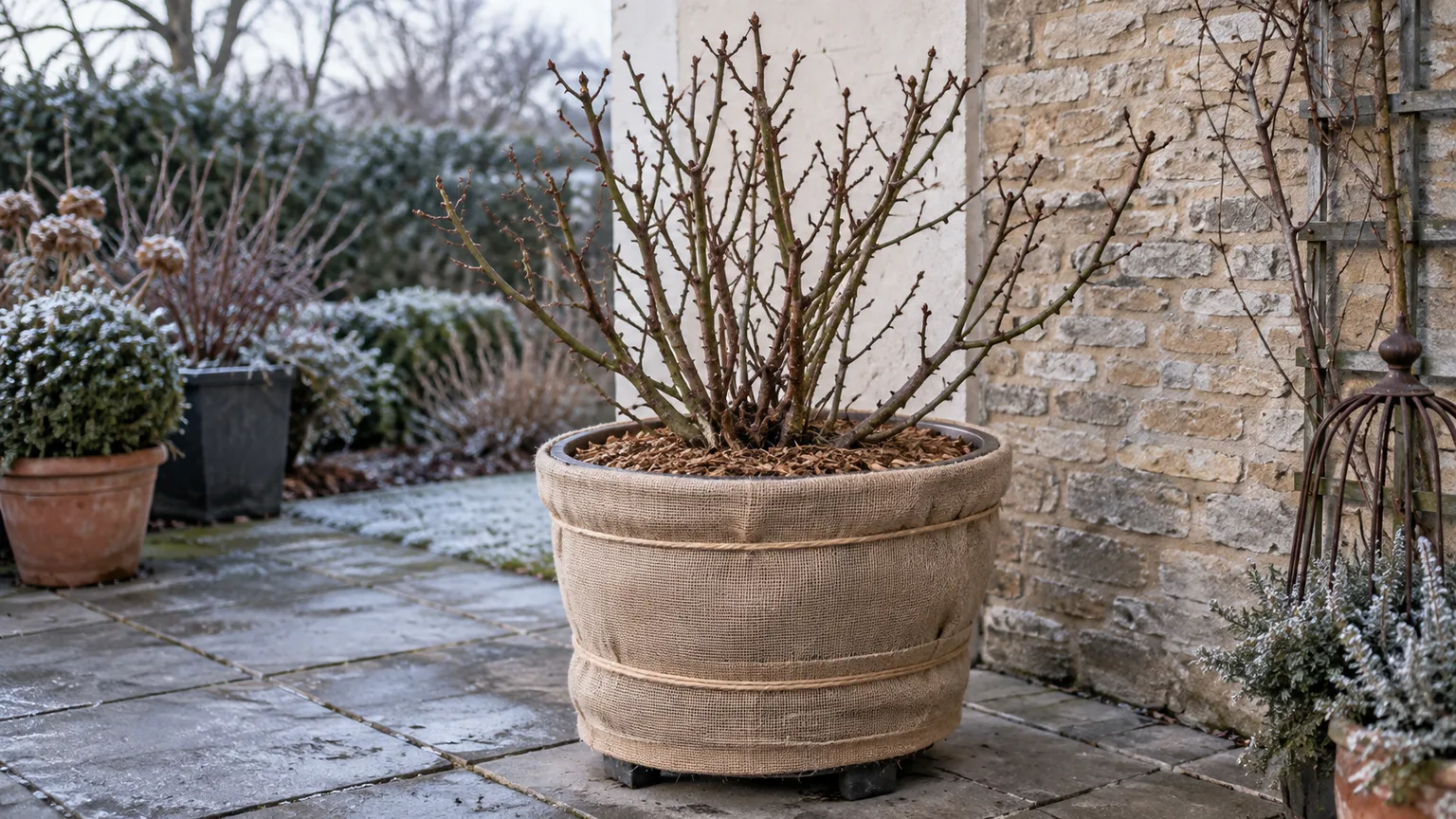
For a container rose, move the pot into an unheated garage or shed if the rose can remain dormant there and the space stays cold but protected. If it must stay outdoors, place it in a sheltered location, group it with other containers, wrap the pot—not just the canes—with insulation, and mound loose material over the plant’s base. A small pot can sometimes be plunged into the ground before the soil freezes, with the rim at or just above soil level.
Use the Minnesota Tip Method for Climbers
The Minnesota tip method is a high-protection option for flexible climbing roses in very cold, exposed regions. Wait until the rose is dormant, remove or loosen the canes from their support, dig a shallow trench beside the plant, gently bend the canes into it, secure them, and cover them with soil. Add a loose insulating layer after the mound freezes if local conditions call for it.
Do not force this method on old, thick, brittle canes. If the rose cannot be bent without cracking, protect it in place with tied canes, a wire cage, straw or leaves, and a breathable burlap wrap. The Penn State guidance describes both approaches for climbers and stresses that exposure and the difference between the rose’s hardiness and the garden’s conditions determine how much protection is warranted.
Avoid Common Winter-Protection Mistakes
Covering too early. A cover placed while the rose is warm and growing can hold moisture, shelter pests, and delay dormancy. Wait for the plant and weather to signal that long-term protection is appropriate; use a temporary cover only for a specific frost event.
Pruning every rose hard in fall. A short, uniform bush may be easy to cover, but many shrub, climbing, and rambling roses have different flowering and structural habits. Remove damaged wood and tie wind-whipped canes, then save major shaping for the correct late-winter or spring window.
Using mulch alone over a vulnerable graft. Leaves and straw can shift, mat, or blow away. Start with a stable mound over the graft union when that point needs insulation, then add loose mulch for extra buffering.
Wrapping plastic against foliage. Plastic can collect condensation and transfer cold directly to the plant where it touches. Use breathable fabric or a ventilated frame instead; if rigid plastic is part of a shelter, keep it off the rose and allow air to move.
Watering by habit after the soil freezes. Dormant roots still need moisture before the ground locks up, but a frozen or waterlogged bed should not be repeatedly soaked. Check the soil and forecast first.
Ignoring wind. A rose may tolerate the temperature but suffer from canes rubbing, breaking, or drying in a steady winter wind. Anchor covers, tie canes loosely, and use a permeable windbreak rather than a solid panel that creates turbulence.
Leaving protection on during a warm spell. Check the forecast and the plant. Open, vent, or temporarily remove a cover if the interior warms, then replace it before the next hard freeze. The goal is stable dormancy, not early spring growth.
What to Do After Frost or Freeze Damage
Do not rush to cut a rose down the morning after a freeze. Frost may have killed flowers and soft tips while leaving the crown and older canes alive, and some woody damage becomes clearer only after the weather settles. Keep the plant protected from additional cold, but do not add water or fertilizer as a panic response.
Once the forecast shows that the damaging cold has passed, remove blackened flowers and obviously dead tips back to healthy tissue or a live bud. Make clean cuts and watch for fresh growth lower on the cane. If a cane remains brown, shriveled, or cracked, remove it later when you can see how far the dieback extends rather than cutting deeply into every branch immediately.
The RHS notes that frost damage can take months to become obvious in woody plants and that many plants recover from dormant buds below the damaged tissue. A rose that looks rough in late winter may still produce new shoots in spring. Give the crown time, improve shelter for the next winter, and replace the plant only after the normal spring growth window has passed and the roots or graft are clearly dead.
Remove Protection in Spring
Uncover gradually when the rose is still dormant or just beginning to wake and the forecast no longer shows a return to severe winter cold. Start on a mild, cloudy day if possible. Remove the burlap or cage first, then reduce the mound in stages so a sudden exposure to bright sun, wind, and freezing nights does not shock the newly exposed crown.
Keep a light frost cloth ready after the main winter cover comes off. New shoots and opening buds can be more vulnerable than fully hardened winter wood, so a late spring frost may still justify an overnight cover. Do not leave a heavy winter mound indefinitely once the soil is warming and the rose is actively growing; gradually move the material away from the canes and keep the graft union at its normal planting depth.
Delay major spring pruning until you can identify live and dead wood. Then prune according to the rose group and the growth you want, cleaning tools between plants if disease was present. A slow start is not proof of failure: compare the plant with the weather, scratch only small test areas if needed, and wait for a consistent warm-up before making a final diagnosis.
Conclusion
Protect roses from frost and freezes by matching the response to the actual risk. Use a breathable overnight cover for a light frost, but use a soil mound over the graft union or crown for a tender rose facing repeated winter freezes. Add a cage or burlap when wind threatens the canes, protect container roots separately, and use the Minnesota tip method only for flexible climbers in climates that justify the work.
The most reliable preparation is quiet and timely: keep the rose healthy, water the soil before it freezes if it is dry, stop late nitrogen, remove diseased debris, tie rather than over-prune, and wait for dormancy before building long-term protection. In spring, uncover in stages and give damaged canes time to reveal what is still alive. A rose does not need the biggest cover; it needs the right protection over the right part at the right time.