How to Prune Raspberry Bushes Like a Pro
Learn how to prune raspberry bushes by type, season, and harvest goal. Follow clear steps for summer-bearing, fall-bearing, black, and purple raspberries.
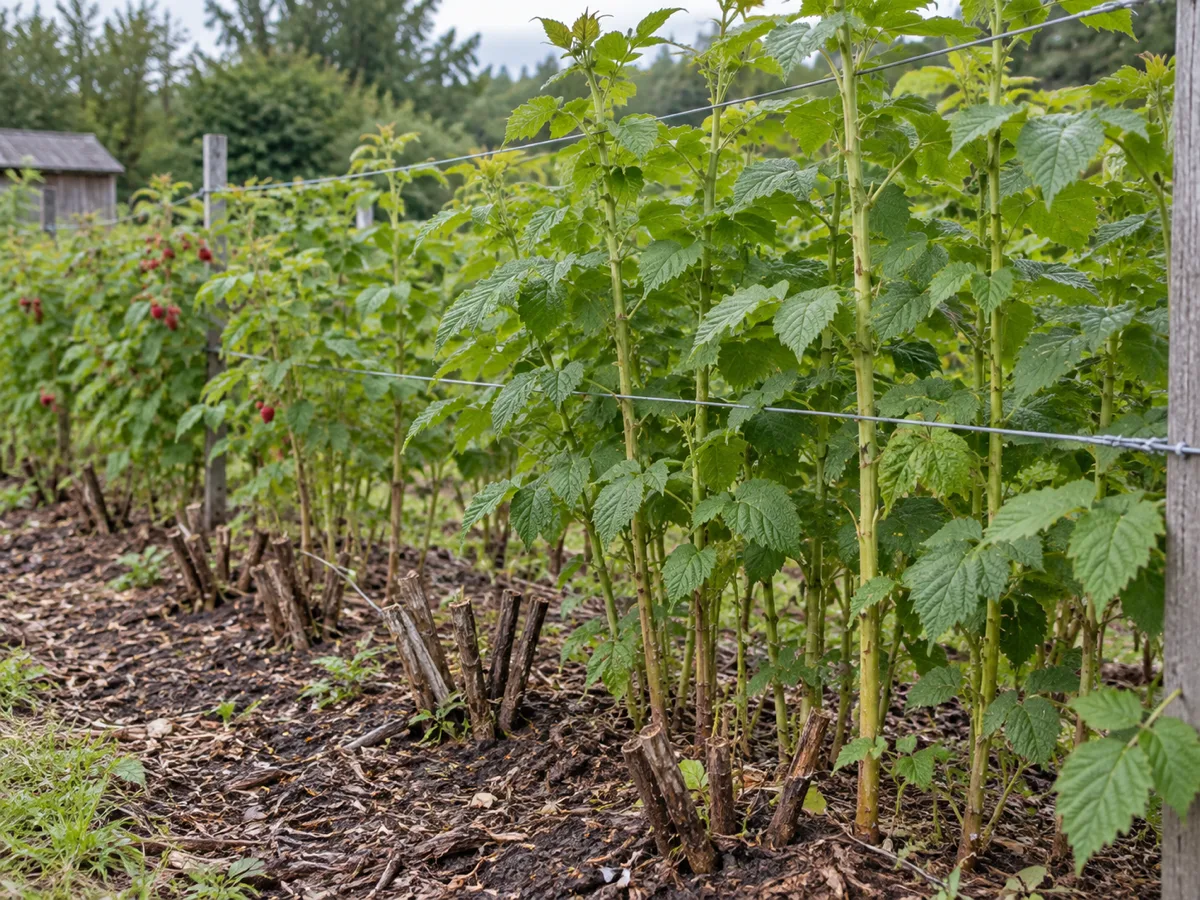
Raspberry pruning is not a matter of shortening every cane to the same height. The right cut depends on when that cane will fruit. Summer-bearing raspberries fruit on second-year canes, while fall-bearing or everbearing types can fruit on first-year canes; confuse the two and you can remove the next crop before it starts.
The dependable sequence is simple: identify the variety or cane cycle, decide whether you want one crop or two, remove the canes that have finished, and thin what remains so light and air reach the fruiting wood. University of Minnesota Extension and Oklahoma State University Extension both describe raspberries as perennial root systems that send up canes with a roughly two-year fruiting cycle, which is the reason pruning is a yearly sorting job rather than a one-time haircut (University of Minnesota Extension; Oklahoma State University Extension).
First identify the cane type before cutting
Start by checking the plant tag, cultivar name, or the nursery’s description. Look for terms such as summer-bearing, June-bearing, floricane-fruiting, fall-bearing, autumn-bearing, or primocane-fruiting. “Everbearing” is still used widely in home gardening, but “primocane-fruiting” is often clearer because it describes the cane that carries the first crop.
If the label is gone, use the harvest history. A patch that produced its main crop in early or midsummer and then grew fresh green canes afterward is usually summer-bearing. A patch that produced berries on the tips of new canes in late summer or fall is likely primocane-fruiting. Color does not solve the question: red and yellow raspberries can be either type, so do not choose a pruning method by berry color alone.
Primocanes vs. floricanes: the quick visual test
Primocanes are first-year growth. They are often green to reddish, smoother, and more flexible, with no old berry clusters attached. They spend the first season building leaves, height, and flower buds for the following year on summer-bearing varieties.
Floricanes are second-year canes. They are usually woodier and gray-brown, may have peeling bark, and often show old fruiting laterals, dried flower stems, or brown berry caps. Once a floricane has fruited, it will not produce another worthwhile crop; remove it at the base rather than leaving a short stump.
This test is a guide, not a substitute for a cultivar label. A stressed plant may have unusually thin canes, and a mild winter can leave old canes looking greener than expected. If you cannot tell, postpone the largest cuts until you can match the cane to the patch’s fruiting history.
Choose the pruning plan that matches your harvest goal
There are three useful plans for a home raspberry row. For summer-bearing raspberries, remove spent floricanes after the summer harvest and preserve the new primocanes for next year. For fall-bearing raspberries, cut every cane to the ground during dormancy if you want one concentrated late-summer or fall crop. For a two-crop harvest from fall-bearing types, keep selected canes through winter and accept more complicated pruning and usually smaller or less concentrated crops.
The single-crop fall plan is usually the most forgiving. A clean row of new canes is easier to thin, tie, harvest, and inspect for disease. The two-crop plan makes sense when extending the picking season matters more than simplicity, when you have a vigorous cultivar, or when you are willing to mark and manage different cane ages. Do not keep every cane just because a second crop sounds attractive; an overcrowded row can produce two disappointing crops.
Gather tools and sanitize before you start
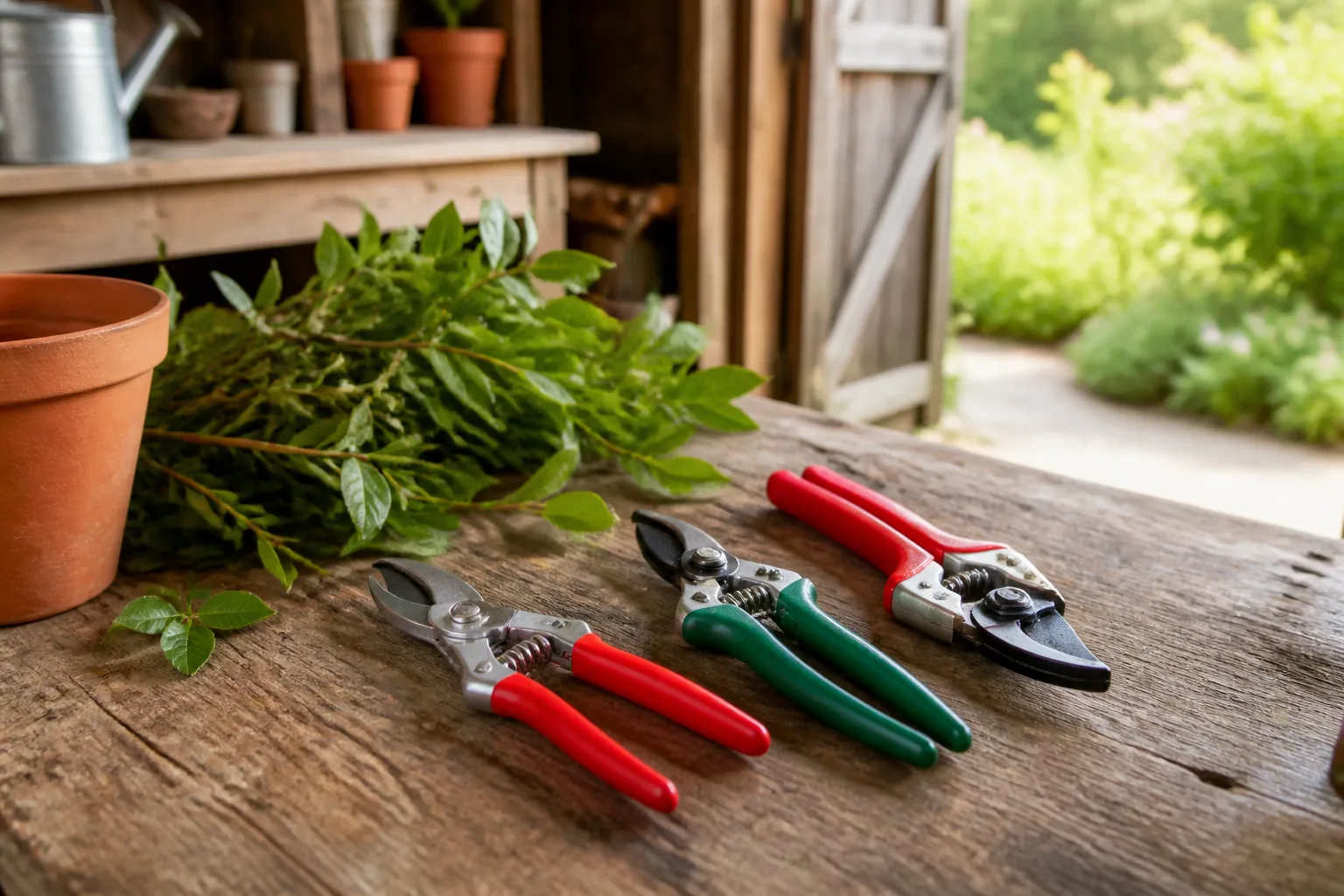
For most raspberry canes, use sharp bypass pruners. Long-handled loppers help with thick, awkward stems near the ground, but they are not necessary for every cut. Wear thorn-resistant gloves, long sleeves, and eye protection if the row is dense or you are reaching into an arching black raspberry plant.
Start with clean blades. Wipe soil and sap from the pruners, then disinfect them before you begin and again when moving from a visibly diseased plant or section to healthy tissue. Clean cuts close more neatly than crushed cuts, and tool hygiene reduces the chance of carrying a problem down the row. The goal is not to sterilize a backyard forever; it is to avoid dragging contaminated plant residue from one cane to the next.
Plan where the cut material will go before you start. Healthy, dry canes can be chipped or composted if your compost system reaches suitable temperatures and your local guidance permits it. Canes with obvious cane disease, insect galls, or suspicious lesions should leave the patch and should not be returned to garden compost; Oklahoma State University Extension specifically recommends disposing of diseased plant portions rather than spreading them back into the growing area (Oklahoma State University Extension).
Prune summer-bearing raspberries after harvest
Summer-bearing raspberries carry their main crop on floricanes, the canes that grew the previous year. The best time to remove those spent canes is immediately after harvest, while you can still identify the stems that carried fruit. Cut each fruited floricane at ground level and remove it from the row so it cannot collapse into the new growth.
Next, remove canes that are dead, broken, weak, diseased, or badly damaged by winter. Do not remove every green cane: the healthy primocanes are the wood that will carry next summer’s berries. Choose the strongest, reasonably upright canes and keep them distributed through the row instead of allowing a dense bundle to develop around one crown.
If you missed the post-harvest cleanup, dormant-season pruning is still useful. Work in late winter or early spring before vigorous new growth begins, when the old gray canes are easy to distinguish. The calendar should follow your local dormancy and weather, not a fixed month printed for another climate.
Thin the next crop’s primocanes in late winter
After removing spent floricanes, thin the remaining one-year-old canes. A practical home-garden starting point is to leave sturdy canes about 6 inches apart in a hedgerow, or roughly 8 to 12 healthy canes per plant when plants are managed as individual hills. The best number depends on cultivar vigor, row width, trellis strength, and how much light reaches the planting.
Cut the weakest stems at the base first. Then remove canes that cross, rub, lean far outside the support, or crowd the center of the row. Keep enough canes to fill the trellis without creating a green wall. Better spacing often improves berry quality and harvest speed more than keeping one extra thin cane.
Finally, inspect the tips for winter injury. If the upper portion is dead or split, cut back to firm, living tissue just above a healthy bud. Do not shorten every healthy cane automatically; summer-bearing raspberry tips already carry much of the fruiting potential for the coming crop.
Prune fall-bearing raspberries for one large crop
Fall-bearing raspberries can fruit on first-year canes, which makes the one-crop method pleasantly direct. After the plants finish their late-summer or fall harvest, or during the dormant season before spring growth, cut all canes to the ground. Remove the cut stems from the row, then thin the new shoots as they emerge.
This method trades an earlier summer crop for one later crop. It is often the best choice for a small garden because every cane follows the same age pattern. It also reduces the number of overwintered canes that can harbor pests or disease and makes spring training easier.
Do not apply the ground-level rule to a summer-bearing patch. Cutting all of those canes down removes the stems that would have produced the following summer’s fruit. The word “everbearing” on a plant tag is also not enough information by itself; confirm whether the cultivar is intended for one primocane crop or a managed two-crop system.
Keep a two-crop plan only when the trade-off is worth it
To take a summer crop and a fall crop from a primocane-fruiting raspberry, do not mow the whole patch. After the fall harvest, remove only the upper portions that carried the fall fruit, leaving the lower part of selected canes to overwinter. In late winter, keep a limited number of the strongest canes, space them so they can dry after rain, and shorten them to fit the trellis and the section that can still fruit.
After the summer crop, remove those older floricanes promptly. The plant will then rely on new primocanes for the fall harvest. This plan requires careful cane identification and can deliver two smaller windows of fruit rather than one heavy crop. If you find yourself guessing which cane is which, return to the single-crop method next season and label the row while it is fruiting.
Give black and purple raspberries a different summer trim
Black and purple raspberries have an arching growth habit and need a different training rhythm from upright red or yellow varieties. Their first-year primocanes are often tipped during the growing season, once they reach the height you want, to encourage side branches that will carry fruit the following year.
For a home planting, remove roughly 3 to 4 inches from a vigorous primocane when it reaches about 2 to 3 feet, following the cultivar’s growth habit and the height of your support. That early-summer tip redirects growth into laterals rather than allowing one cane to become a long, difficult-to-harvest whip. In winter, remove weak or damaged canes, retain a small group of strong canes, and shorten the side branches so they are easy to tie and pick.
Avoid forcing red-raspberry numbers or spacing rules onto blackcaps. The plants often produce fruit on short laterals along arching canes, so the useful question is whether the support can hold a well-spaced framework, not whether every cane is the same height. Melissa K. Norris also distinguishes summer tipping and dormant lateral pruning for black and purple raspberries in her practical pruning guide (Melissa K. Norris).
Remove suckers without stripping the row
Raspberries spread by shoots that emerge from the crown and, in many plantings, by roots that travel beyond the intended hedgerow. A sucker outside the row is not automatically bad, but a steady stream of distant shoots can turn a manageable patch into a thorny thicket and steal attention from the fruiting canes.
Walk the edge of the row during the growing season and remove shoots that appear well outside the planned width. Pulling or cutting a small shoot while the soil is moist is easier than chopping a woody runner months later. For a shoot attached to the parent plant, cut it cleanly rather than yanking and tearing the crown. A sharp spade can sever a spreading root shoot at the edge of the row.
Do not remove every new shoot from the base. Those are often the next year’s primocanes, especially in a summer-bearing planting. Set a row boundary, retain strong canes inside it, and remove growth beyond that boundary. This keeps the plant productive without fighting its natural habit.
Use spacing and trellis support to make pruning work
Pruning cannot compensate for a row that has no structure. Trellis wires or sturdy stakes keep fruiting canes upright, separate old and new growth, and make it possible to see the base of each cane. They also reduce the chance that a laden cane will bend into wet soil or shade the rest of the row.
Train the canes to the support after thinning, not before. Tie them loosely with soft material, leaving room for stem expansion and wind movement. Keep fruiting laterals where you can reach them from both sides if possible. A narrow, orderly hedgerow is easier to harvest and less likely to stay damp inside after rain.
Spacing is a management choice, not a magic number. Six-inch spacing is a useful starting point for a vigorous home row, but thin more aggressively if foliage stays wet, the row is shaded, or harvest is difficult. Retain more canes only when the cultivar, soil, light, and support can carry them without crowding.
Remove weak, damaged, or diseased canes
Dead and broken canes are easy decisions: cut them at the base and remove them. Diseased canes deserve more care. Look for sunken or dark lesions, cracked bark, insect galls, unusual dieback, or a cane that is declining while neighboring canes look healthy. The symptom may have more than one cause, so do not diagnose a specific disease from a single dark spot alone.
When a cane is clearly affected, cut below the damaged section into firm tissue or remove the whole cane if the problem extends down its length. Disinfect the blade afterward. Rake out old fruit, fallen leaves, and cut debris from the row, especially when the patch has a history of cane disease. Avoid tossing suspect material into a cool backyard compost pile where it may survive and return to the berry bed.
Do not compensate for disease by shearing every cane at the same height. That creates many blunt wounds and may remove healthy fruiting wood. Remove the source of the problem, improve air movement, and correct crowding first; seek local extension diagnosis when symptoms spread quickly or return despite sanitation.
Know when to tip raspberry canes
Tipping means shortening the end of a cane, and it is not a universal raspberry-pruning step. On standard summer-bearing red or yellow raspberries, leave healthy tips alone unless they are dead, winter-damaged, or extending beyond the support. Removing a sound tip can discard buds that would have produced fruit.
On black and purple raspberries, early-summer tipping is often intentional because it encourages fruiting laterals. On fall-bearing raspberries managed for one crop, cutting canes to the ground in dormancy is a different operation entirely, not a tip. If you are pursuing two crops, shorten the overwintered canes only according to the portion that already fruited and the structure you are keeping.
The rule to remember is tip for a reason: correct damage, fit the trellis, or encourage lateral branching on black or purple types. Do not shorten an entire row simply because the canes look tall.
Renovate an overgrown raspberry patch in stages
An overgrown patch is usually a mixture of cane ages, dead wood, suckers, and crowded new growth. Start by removing the obvious spent floricanes, dead stems, broken stems, and anything outside the row. Then thin the remaining healthy canes gradually until you can see the support and reach the base.
If the patch is too tangled to identify safely, renovate half of the row this season and the other half after you observe how it fruits. This may reduce the harvest temporarily, but it is safer than cutting every cane and discovering later that the planting was summer-bearing. For a fall-bearing patch you intentionally want to manage as one crop, a full ground-level cut during dormancy is the exception.
Once the row is open, install or repair the trellis, mark the variety and harvest type, and keep a simple note of when each section fruits. That small record is more useful than trying to remember cane age from bark color alone next year.
Clean up after pruning and reset the row
Collect cut canes immediately rather than leaving them beneath the plants. A rake can remove old berries, leaves, and broken pieces that hide new shoots and keep the base damp. Move diseased material away from the patch and keep the soil surface as open as your climate and mulch plan allow.
After pruning, check that the row is not drought-stressed, but do not treat pruning as a signal to flood or heavily fertilize. Restore a sensible mulch layer if the roots are exposed, tie the retained canes to their support, and watch new shoots for signs of crowding. Pruning creates the framework; steady water, light, and nutrition determine how well that framework fills with fruit.
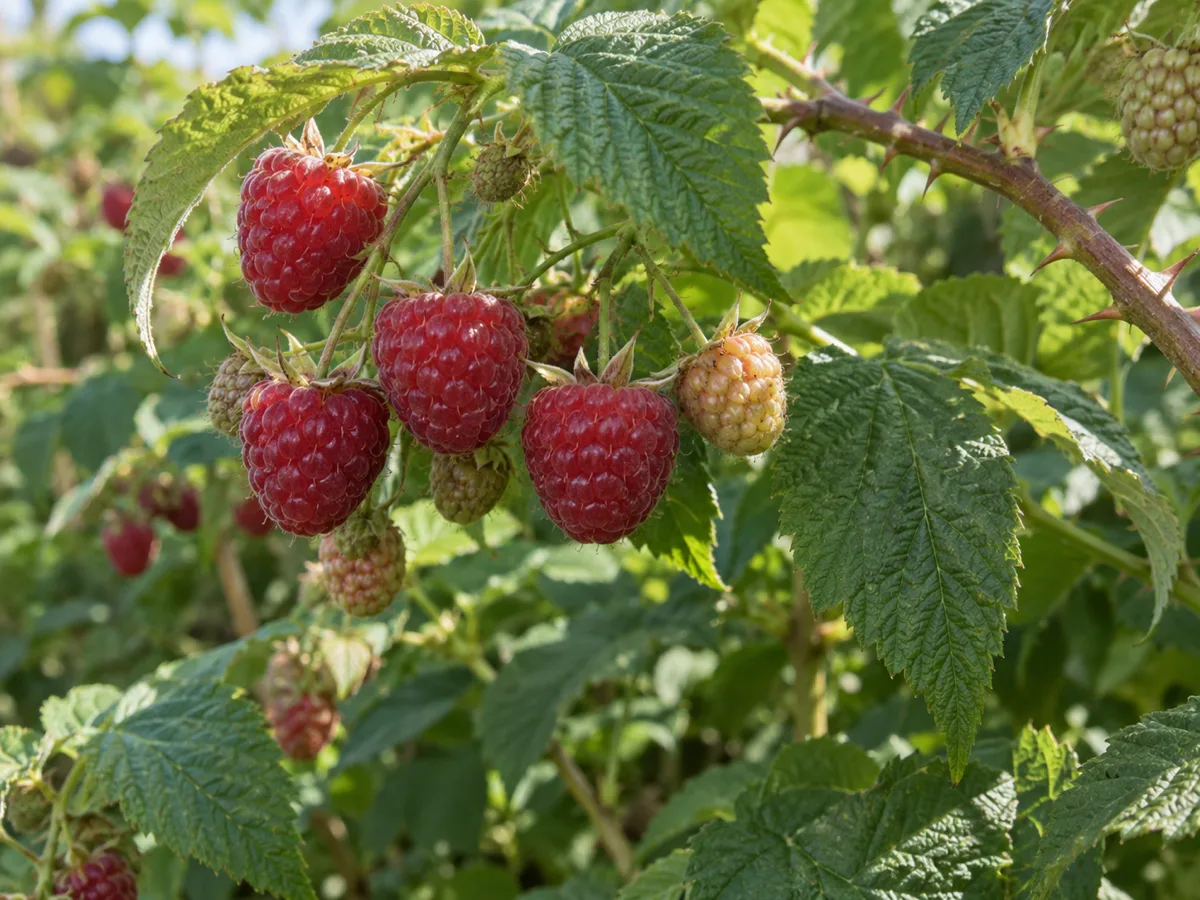
Keep the harvest timing in your notes. When the last summer berries are picked, mark the spent canes before they blend into the new growth. When a fall crop finishes, decide immediately whether next year’s goal is one crop or two, because that choice determines whether the entire row or only the fruited portions should be removed.
Avoid the pruning mistakes that cost fruit
The most expensive mistake is cutting the wrong cane age. Removing green primocanes from a summer-bearing variety removes next year’s crop; leaving every old floricane in place creates shade, crowding, and wasted energy. If the type is unknown, identify it from harvest history before making a large cut.
Another common mistake is using one calendar date for every climate. Prune after harvest when you can see which canes fruited, and do the main dormant cleanup before new growth gets difficult to sort. A late cut is usually better than a confident cut made at the wrong time.
Leaving stubs, using dull tools, and dropping diseased canes under the row all make future problems more likely. So does keeping more canes than the trellis and light level can support. When in doubt, prioritize a smaller number of healthy, well-spaced canes over a crowded promise of more fruit.
Conclusion
To prune raspberry bushes like a pro, start with the cane cycle, not the shears. Summer-bearing raspberries need spent floricanes removed after harvest while healthy primocanes are saved for next year; fall-bearing raspberries can be cut to the ground for one simple crop or managed selectively for two harvests. Black and purple raspberries need summer tipping and a more deliberate lateral framework.
Use sharp, clean tools, cut diseased material out of the patch, remove suckers only beyond the row boundary, and thin until light and air can move through the canes. If the planting is already tangled, renovate in stages and record when it fruits. That approach protects the next crop while turning pruning from guesswork into a repeatable seasonal routine.