How to Protect Plants From Frost This Winter
Learn when to cover plants, which materials work, how to protect container roots, and what to do after frost damages leaves or stems.
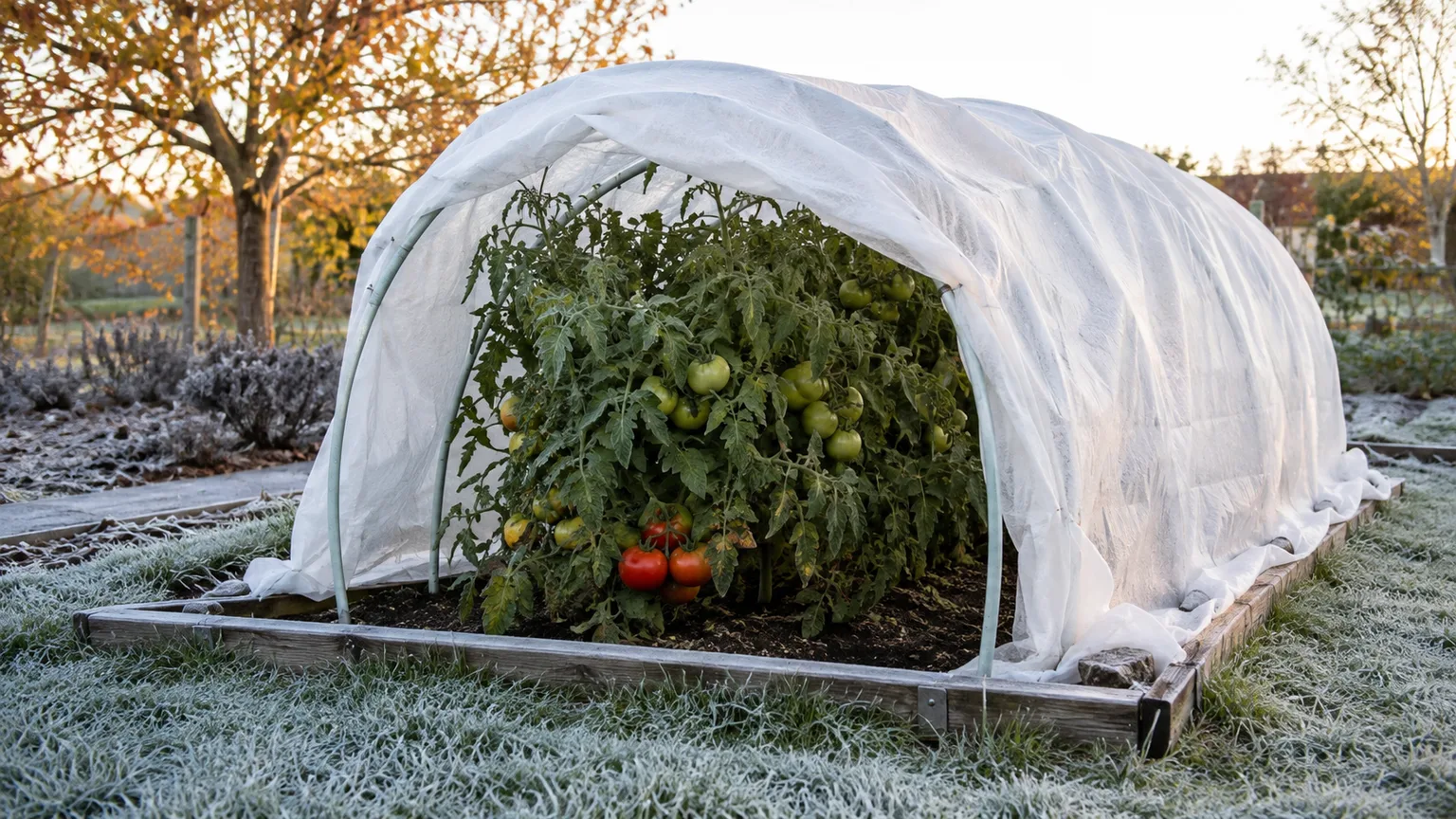
The best frost protection is not one clever trick. It is a short sequence: identify the plants that are actually vulnerable, read the forecast as a range rather than a single number, move what you can, cover what you cannot, and remove the protection before the next sunny day overheats it.
Start with the plants most likely to be lost: tender annuals, warm-season vegetables, tropical ornamentals, recently transplanted seedlings, and anything growing in a pot. A healthy shrub or cool-season crop may need no cover at all for a light frost. Covering everything can create extra work, trapped moisture, and overheated plants without improving the result.
Frost and Freeze Are Different Problems
Gardeners often use frost, freeze, and hard freeze interchangeably, but the distinction changes the plan. Frost can form when air temperatures are in the mid-30s Fahrenheit, especially on clear, calm nights when plant surfaces lose heat quickly. A freeze means temperatures fall below 32°F (0°C), and a hard freeze means the cold lasts long enough, or drops low enough, to damage a much larger share of the garden.
For a practical trigger, cover tender plants when the forecast is headed toward 36°F to 32°F, and be more cautious in exposed or low-lying parts of the yard. Better Homes & Gardens recommends covering tender plants in that range and notes that low spots can run colder than the official forecast. Its guide to protecting plants from frost is useful confirmation that you do not need to wait for an official 32°F reading before acting.
What Cold Does Inside Plant Tissue
Ice crystals are the real problem. When water inside or around plant cells freezes, membranes can rupture and the tissue may collapse as it thaws. The visible result can be a limp leaf, a blackened stem tip, a water-soaked patch, or a flower that turns translucent and papery the next day.
Damage is not always all-or-nothing. A light frost may kill the exposed top of a tomato or basil plant while the lower stem remains alive. A hardy perennial may lose new spring foliage but recover from dormant buds. A tropical plant in a small pot, however, can suffer root and stem damage after only a short exposure near freezing. The plant’s species, age, health, exposure, and the number of cold hours matter as much as the lowest temperature.
Why Clear Skies, Wind, and Low Spots Change the Risk
The temperature displayed by a weather app is measured at a standard height, not at every leaf in your garden. Cold air settles into hollows, frost collects on open lawn, and a plant beside a wall may stay slightly warmer than one in the center of an exposed bed. A clear, calm night encourages heat to radiate away from soil and leaves; wind can strip away the relatively warmer air around foliage and make a cover harder to keep in place.
Walk your yard in daylight and mark the cold pockets before winter. Place tender containers near a wall, fence, or sheltered patio when a light frost is forecast, but do not press foliage against cold masonry or block needed light for days. A better microclimate reduces how much emergency protection you need, but it does not turn a frost-tender plant into a hardy one.
Decide Which Plants Need Protection First
Think in priority groups instead of treating every plant equally. Put your limited covers and time where one cold night would cause the most meaningful loss.
Move Containers and Tropical Plants
Moving a pot is usually the strongest and simplest intervention. A garage, enclosed porch, shed, greenhouse, or bright indoor room can protect a tender plant more reliably than a sheet over the top. For a light frost, an unheated garage may be adequate; for temperatures near or below freezing for several hours, choose an insulated space that stays above the plant’s minimum safe temperature.
Bring in plants such as hibiscus, coleus, bougainvillea, mandevilla, angel’s trumpet, citrus, succulents that are not cold-hardy, and warm-season herbs. Check leaves, stems, and the soil surface for insects before moving them indoors. If the plant is large, moving it against a protected wall or into a covered entry may be the best available compromise, but insulate the pot as well as the canopy.
Do not move a newly relocated plant straight from outdoor sun into a dark closet for the entire winter. Temporary frost shelter is different from long-term indoor care. Once the cold event passes, return it to bright light and inspect for pests or waterlogged soil before bringing it back inside again.
Cover Tender Annuals and Vegetables
Cover tomatoes, peppers, beans, basil, cucumbers, squash, melons, eggplant, tender annual flowers, and young transplants first. Their soft, warm-season growth can be injured by a brief frost even when the root system survives. Plants with flowers or ripening fruit deserve attention too because a single cold night can end the harvest or ruin the next flush of blooms.
Cool-season crops are a different case. Kale, spinach, parsley, broccoli, cabbage, carrots, beets, peas, radishes, and similar crops commonly tolerate light frost, although seedlings and recently transplanted starts are less resilient. Some can remain uncovered on a mild night, while a breathable cover can extend the harvest when a freeze is expected. Use the plant label, local extension advice, and your own garden’s exposure instead of assuming every green leaf has the same tolerance.
The Night-Before Frost Checklist
Set up protection in the afternoon, while there is still light and the soil is workable. Waiting until the temperature has already fallen makes it harder to anchor covers, find every container, or see whether fabric is pressing on tender stems.
Water if the Root Zone Is Dry
Moist soil stores and releases more heat than dry, dusty soil, so water the root zone if it is genuinely dry before a mild frost. Water slowly enough to wet the soil rather than splashing foliage, and finish before temperatures drop. A well-watered bed can moderate a small temperature dip, especially when paired with a cover.
This is not a license to saturate a cold, poorly drained bed. Waterlogged roots have less oxygen and may be more vulnerable to rot, and extra water will not save a plant from a long hard freeze. If the soil is already moist, skip the extra irrigation and spend that time moving containers or improving the cover setup. The goal is a hydrated root zone, not standing water.
Cover Before Temperatures Drop
Put fabric, cloches, and row covers in place before sunset or before the coldest part of the night. The cover works by slowing heat loss from the soil and trapping a layer of air around the plant; it does not generate warmth. That means the material must reach close to the ground, and its edges must be secured against wind.
Leave room around the canopy when possible. A cover that rests tightly on wet leaves may create cold contact points, while a low tunnel with hoops keeps fabric off the plant and protects a larger volume of air. Remove or vent protection the next morning when temperatures rise. Gardenary’s frost-protection guide also emphasizes the practical details that are easy to miss: anchor edges, move containers, water dry soil before sunset, and set a reminder to uncover plants mid-morning.
Keep an emergency kit together: frost cloth or row-cover fabric, old sheets, hoops or stakes, clips, bricks or smooth rocks, twine, and a few clean containers that can act as cloches. Preparation matters because a good cover stored in a shed is more useful than a perfect product you cannot find after dark.
Pick the Cover Method That Fits the Plant
Match the protection to the plant’s size and the cold’s severity. A single seedling needs a different tool from a 20-foot row or a potted shrub that cannot be moved.
Frost Cloth, Sheets, and Blankets
Commercial frost cloth is lightweight, breathable, and easy to reuse. Drape it loosely over the plant, extend it down to the soil on every side, and anchor the perimeter. The fabric should create a sheltered pocket rather than a tight wrap. If a branch pushes through the material, the exposed tip can still freeze even while the rest of the plant is protected.
Old cotton sheets, towels, and light blankets can work for a one-night emergency. Choose clean, dry fabric and use stakes, a tomato cage, or hoops to support heavy materials above the foliage. Secure the edges with bricks or rocks rather than tying a knot around a fragile stem. Wet blankets become heavy, so check them after rain and remove them as soon as the cold event ends.
Plastic is useful as an outer rain shield only when it is held above the plant or above a fabric layer. Do not let plastic touch leaves or stems. Plastic touching foliage can conduct cold directly to the tissue and trap condensation; it also heats rapidly once the sun returns. If plastic is your only emergency material, build a simple frame with stakes or hoops and open or remove it in the morning.
Cloches for Individual Plants
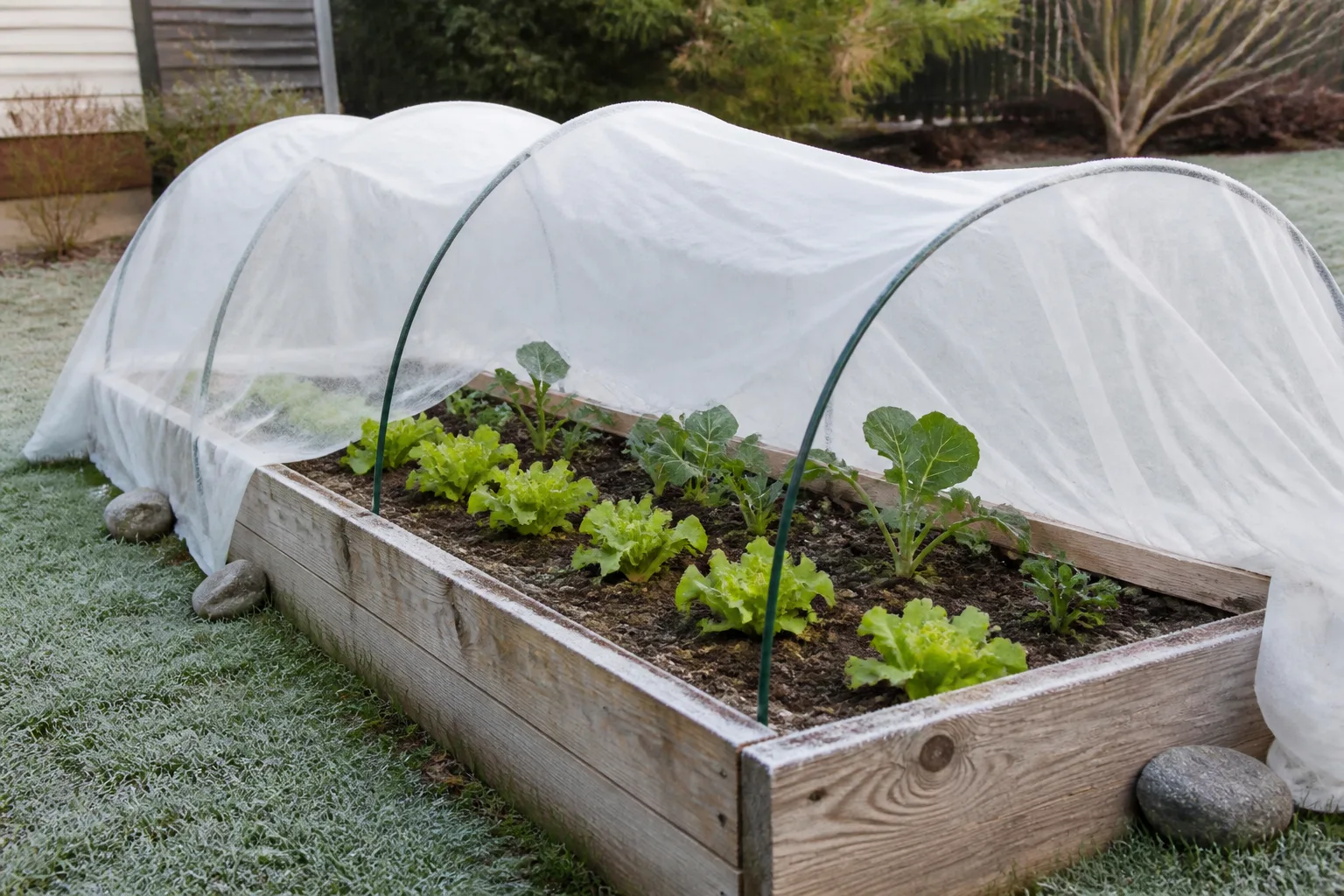
A cloche is a small cover for one plant. Glass bells, clear nursery domes, and clean plastic milk jugs can protect a seedling or small herb without covering an entire bed. Cut the bottom from a large jug, push the lower edge slightly into the soil, and secure the handle or side so wind cannot roll it away.
Close the cloche for the coldest part of the night, then vent it when sunlight returns. A sealed clear container can become surprisingly hot even on a cool day. Make sure the cloche is large enough that the plant does not press against its sides, and do not use a container that held chemicals or residue unsafe for a food garden.
Row Covers and Low Tunnels
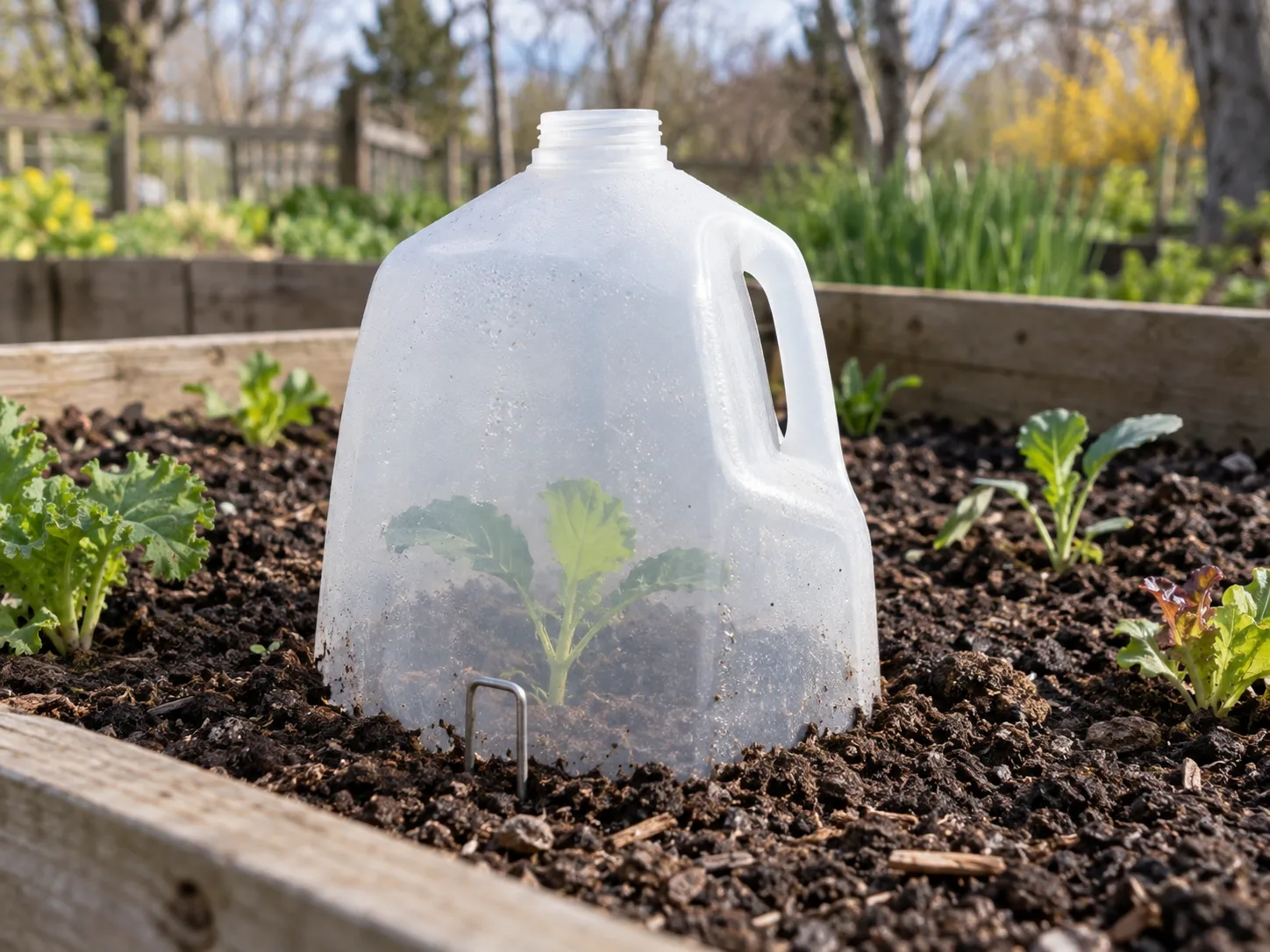
For several plants in a line, use hoops to form a low tunnel and drape fabric over the frame. Row covers spread the work across a bed, leave headroom for foliage, and can be left in place longer than a heavy blanket when the fabric is breathable. The University of New Hampshire Extension’s row-cover guidance is a useful reference for choosing a supported cover rather than laying material directly across a long row.
Anchor both sides continuously. A few rocks at the corners will not stop wind from lifting the center, and an open gap at ground level lets the warm pocket escape. Use clips or clothespins where the fabric meets the hoops, then inspect the tunnel after a windy night. For a short light frost, one layer may be enough; for a more serious freeze, add a second layer or an outer blanket while keeping the inner fabric off the foliage.
Low tunnels protect leaves but do not guarantee that the soil will stay above freezing all night. They are best for extending the life of tender crops through short cold events. A prolonged hard freeze calls for moving containers, harvesting mature produce, or accepting that some warm-season annuals have reached the end of their season.
Protect Roots, Pots, and Larger Structures
Foliage is easy to notice, but roots are often the part that decides whether a plant returns. In the ground, the surrounding soil provides much more thermal mass than a small exposed pot. Containers therefore need attention even when the top of the plant looks safely covered.
Mulch the Root Zone Correctly
Mulch can slow temperature swings around in-ground roots. Apply a loose layer of shredded leaves, straw, compost, or bark around the root zone, especially over shallow-rooted perennials and newly planted shrubs. Keep the mulch a few inches away from crowns and woody stems so moisture does not remain against tissue that should stay dry and airy.
Do not bury fragile seedlings under a thick cold-weather blanket of mulch. Small plants can be crushed, smothered, or delayed when the mulch stays wet. Use mulch as root insulation and soil stabilization, not as a substitute for covering tender foliage. Remove or pull it back when the weather moderates if the plant needs light and air to resume growth.
Wrap or Relocate Containers
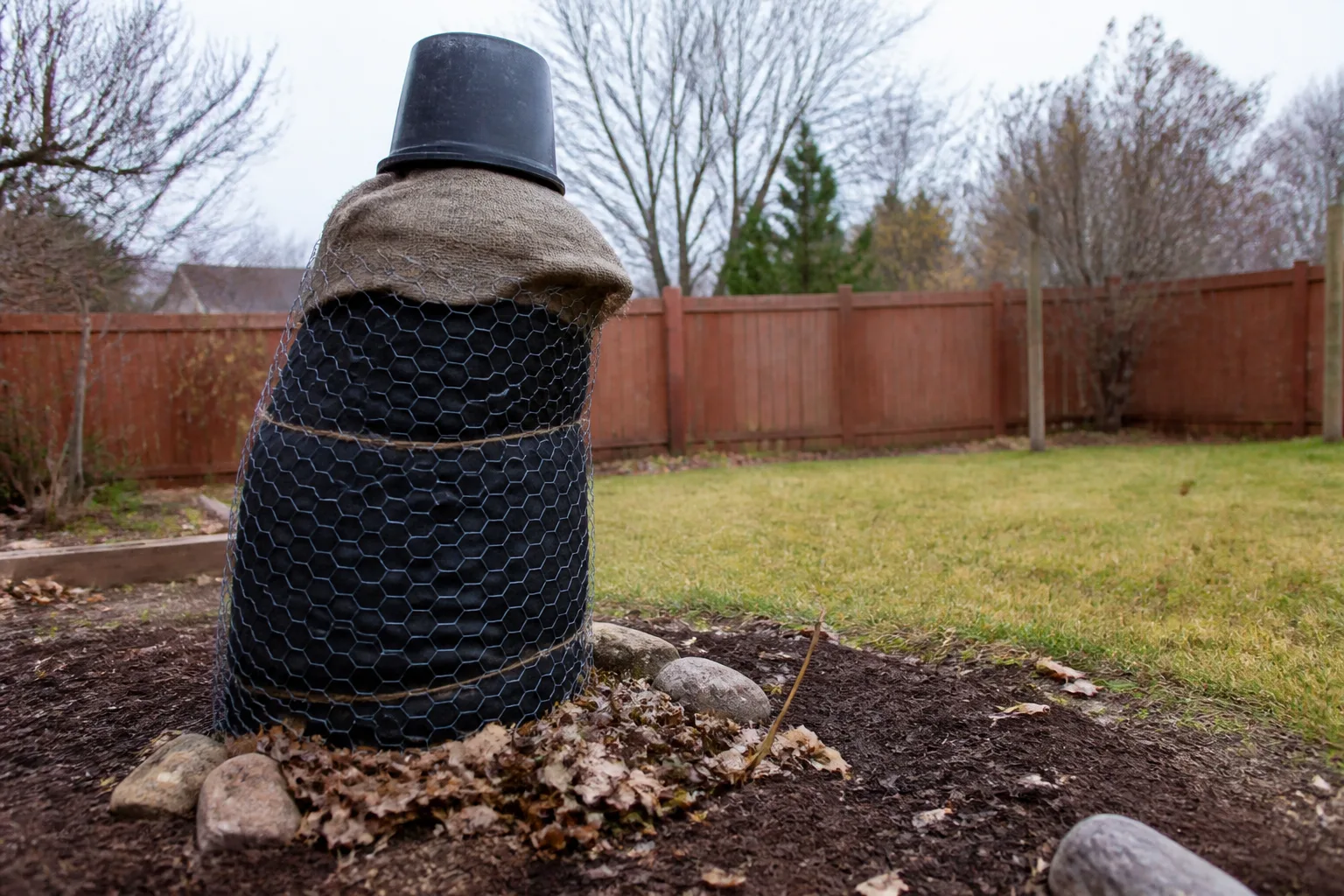
Move small pots first. Grouping containers against a sheltered wall can reduce exposure, but leave enough space for airflow and make sure the location does not become a wind tunnel. Elevate pots off freezing concrete when possible, and wrap the container—not the foliage—with burlap, a frost blanket, cardboard, or another breathable insulating layer.
For a large pot that cannot move, create a cylinder around the container with wire or stakes and fill the gap with dry leaves or straw. Keep the insulating material outside the pot and away from wet foliage. Secure the wrap so it cannot blow into the canopy, and remember that this protects roots more than leaves. The top still needs a separate cover when the plant is frost-sensitive.
Cold Frames, Greenhouses, and Heat Banks
A cold frame or greenhouse creates a protected microclimate, but it is not automatically frost-free. Clear walls can warm quickly in the daytime and lose heat at night. Vent on sunny days, close before evening, and monitor the actual temperature inside rather than assuming the structure will protect every plant.
Heat banks such as dark water containers, stones, or masonry can absorb daytime warmth and release some of it after sunset. They are a supporting measure, not a replacement for an insulated structure or a safe indoor location. Keep water containers stable and out of pathways, and do not use candles, combustion heaters, or improvised electrical heat around fabric and dry plant material. Fire and carbon-monoxide risk is never a reasonable trade for saving a few annuals.
After Frost: Inspect, Wait, and Prune Carefully
The morning after a frost, resist the urge to cut every black leaf away. Frozen tissue can look worse immediately after thawing than it will several days later, and dead foliage can temporarily shade living buds below it. Remove covers once temperatures rise, but leave damaged leaves and stems in place while you determine where living tissue ends.
Check the plant from the growing tip toward the base. Soft, translucent, collapsed tissue is dead; a firm stem with green tissue beneath the surface may still push new growth. Scrape a tiny section of stem only when needed to check for green tissue, and sterilize pruners before moving between plants. Once the danger of another freeze has passed and the damage line is clear, cut back to a healthy bud or firm branch rather than making a series of small cuts through dead tissue.
Do not fertilize a badly damaged plant immediately. It cannot turn fertilizer into instant replacement leaves, and tender new growth may be more vulnerable to another cold night. Keep the root zone evenly—not constantly—moist, restore appropriate light, and watch for new buds over the next few weeks. If the top is dead but the crown or roots remain firm, the plant may recover slowly. If roots are black and mushy or the entire stem has collapsed, take healthy cuttings when possible and treat the plant as a loss rather than repeatedly watering it.
Conclusion
Protecting plants from frost is mostly a matter of timing and triage. Move the plants that can move, cover tender growth with breathable material that reaches the ground, water only when the root zone is dry, insulate exposed pots, and remove or vent protection after the coldest hours pass.
The forecast is only one input. Plant hardiness, container size, wind, sky conditions, the number of cold hours, and your garden’s low spots determine how much protection is justified. A light frost can often be managed with a sheet or cloche; a prolonged freeze may require shelter, harvest, or accepting the end of a warm-season crop. That honest distinction helps you spend effort where it can actually save the plant.



