How to Stake Tomatoes: Stakes, Cages, and Florida Weave
Learn how to stake tomatoes with stakes, cages, or a Florida weave. Choose by plant habit, set supports early, and tie stems loosely as they grow.
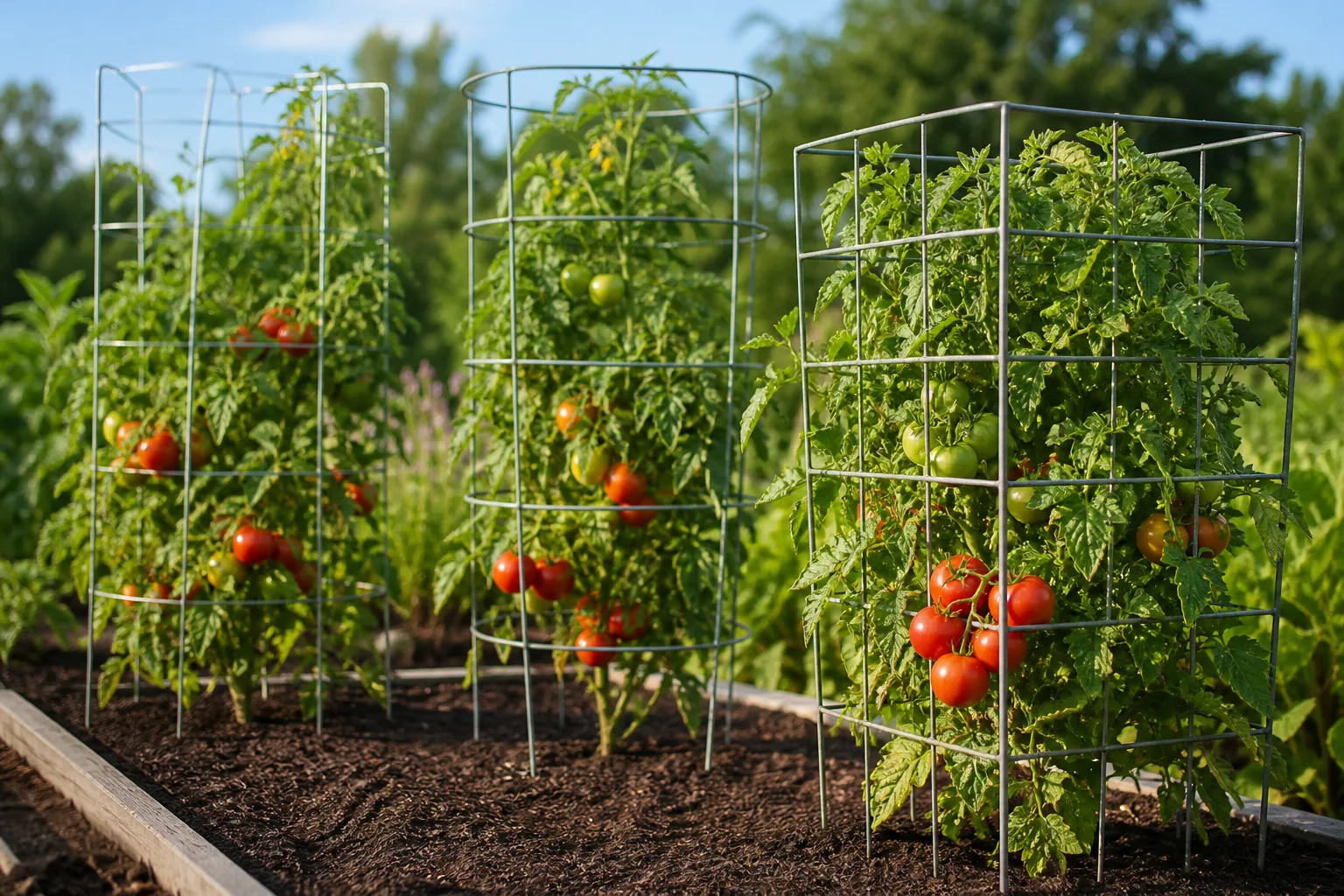
To stake a tomato, set a sturdy support beside the plant while it is young, then guide the main stem upward with loose ties as it grows. The best setup depends on the variety’s growth habit and how much pruning and repeat tying you want to do: an individual stake gives close control, a cage holds several branches, and a Florida weave supports a row with shared posts and twine.
Tomatoes do not cling to a support on their own. Their stems keep extending and their side branches can spread outward under the weight of foliage and fruit, so a support is only effective if you train the plant onto it and check it during the season. The aim is to keep the plant stable and accessible, not to force every branch into a narrow shape.
| Support | Works well for | Ongoing work | Main limitation |
|---|---|---|---|
| One stake | A compact plant or an indeterminate tomato trained to one or two leaders | Add loose ties as the stem grows; pruning may be part of the plan | One stake can be overwhelmed by a broad, multi-stem plant |
| Cage | Determinate and multi-stem plants | Guide branches through openings and anchor the cage | A short, light cage may tip or be outgrown |
| Florida weave | Several tomatoes planted in a row | Add and tighten twine layers as the row grows | Requires sturdy end posts and repeated weaving |
Choose Support by Growth Habit and Garden Layout
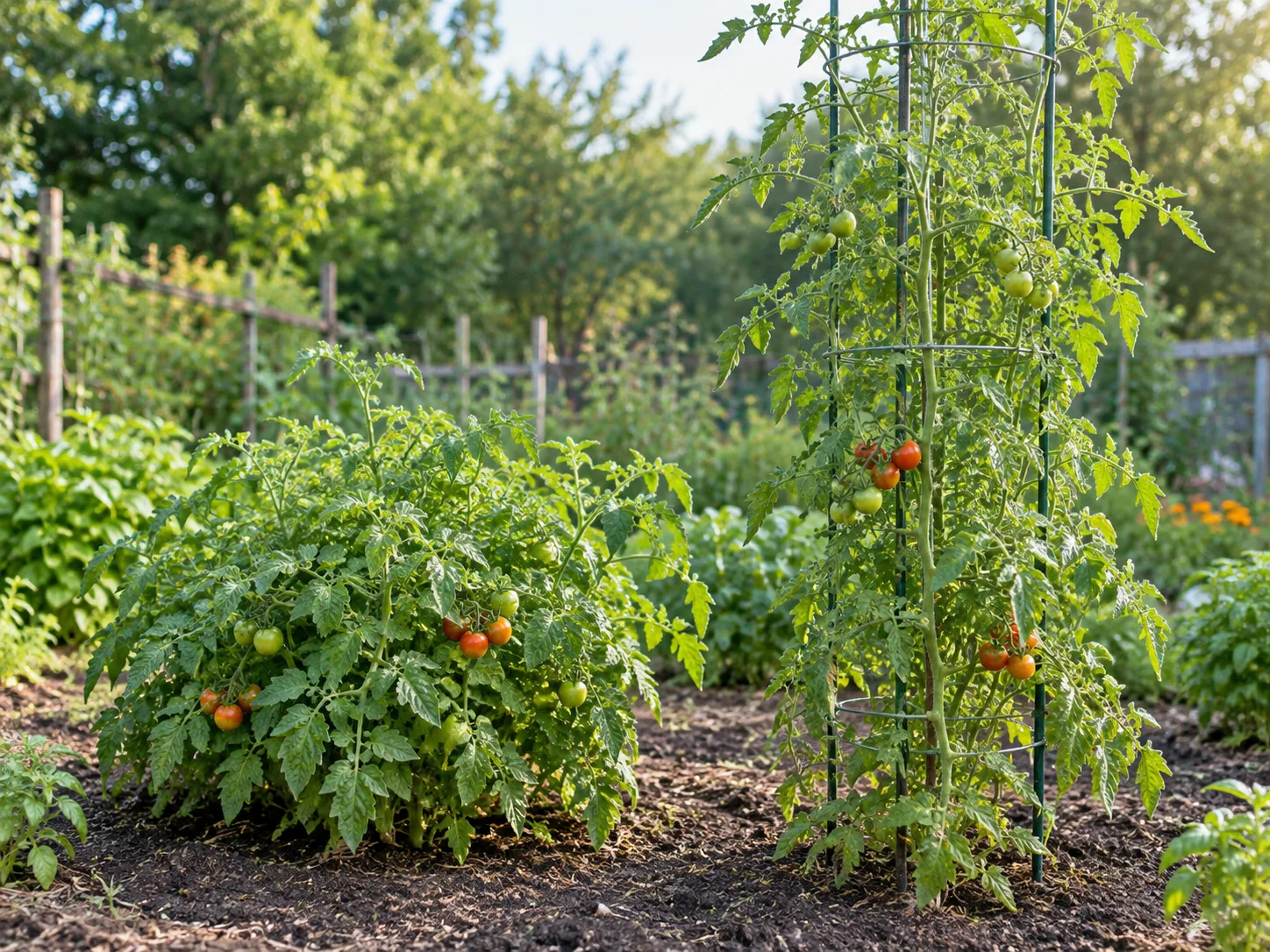
Start with the variety label, not the fruit size or a guess based on how the seedling looks. Determinate plants stop extending after a certain point and set much of their crop over a relatively concentrated period, while indeterminate plants continue making new leaves, flowers, and fruit as long as growing conditions allow. Both benefit from support, but a vigorous indeterminate variety can quickly outgrow a small cage or short stake.
Your layout matters just as much. A single plant in a large pot is easy to guide to one stake, while a row of six plants may take less time to support with a Florida weave than with six separate cages. In a windy yard, the stability of the post and cage anchors becomes as important as the height of the support.
Staking, Caging, or Florida Weave?
Choose a single stake when you have one plant, limited bed width, or a variety you plan to train on a small number of stems. It keeps growth narrow and fruit easy to reach, but it needs regular tying; staking is not a set-it-and-forget-it method.
A cage suits gardeners who would rather guide several branches than prune the plant into one leader. It generally needs less frequent tying, although the cage must be tall and strong enough for the mature plant. For multiple plants in a row, the Florida weave shares the support between plants, reducing the number of individual structures at the cost of more maintenance as the plants grow.
| Choose this system when… | Consider… |
|---|---|
| You want a narrow plant and can tie it every week or two | One stake; train one or two main stems |
| You want a broader plant with less pruning | A sturdy cage with openings large enough for hands |
| You have a row of plants and can add twine layers | A Florida weave with braced end posts |
These systems are not a strict ranking. Fine Gardening outlines cages, individual stakes, the Florida weave, and welded agricultural panels as useful options, while noting that larger indeterminate plants can outgrow smaller cages. Match the structure to the plant’s expected size and to the amount of work you can keep up with.
Determinate vs. Indeterminate Tomatoes
Determinate tomatoes are often described as bush types because they finish growing at a more predictable size. Their compact habit can fit a cage, tripod, or short individual support, but stems may still bend under fruit or sprawl over the bed if left unsupported. The label is a better guide than a rule based on whether the tomato is a cherry, paste, or slicer variety; each fruit type can include cultivars with different habits.
Indeterminate tomatoes keep growing from the main tip and can become tall, wide, and heavy. Plan for a taller support with strong anchoring, or use a row system designed for repeated layers of twine. Durham County Extension Agent Ashley Troth notes that some indeterminate plants can exceed 10 feet in favorable conditions, so the stake or cage should be selected for the cultivar rather than the seedling’s current height.
There is no need to prune every tomato simply because you are staking it. A cage or weave can carry multiple stems, while a single stake is easiest to manage when you deliberately train fewer leaders. Keeping those choices separate helps avoid removing productive growth that your chosen support could have held.
Install Support Before Roots Spread
The simplest time to install a stake, cage, or row post is during transplanting. At that point the support can be positioned without pushing through an established root system, and the plant can be guided in the right direction from the start. If you are using a cage, place it before the tomato becomes wide enough that its branches snag as the cage is lowered over it.
Waiting is not a reason to abandon support, but it does change the job. Roots spread beyond the stem, and a stake driven blindly beside a large plant can cut them; avoid forcing a post through resistance or making a sudden bend in the vine. If a plant is already established, set the support carefully outside the crown and secure the plant gradually, or add a side support that does not require lifting the whole vine.
Gather Stakes, Fasteners, and Tools
Use a stake that is rigid enough to resist the weight of a mature plant and wind. Wood and metal T-posts both work; wooden stakes are simple to cut and handle, while metal posts can last longer and are useful at the ends of a Florida weave. For a single plant, choose a stake roughly 1 to 2 inches wide so it will not flex easily, and avoid splintered wood or metal edges that can abrade stems.
For ties, keep the material soft and wide enough to spread pressure: cloth strips, reusable plant tape, soft garden ties, or a flexible twine tied with slack. Durham County’s extension guidance and Epic Gardening both warn against tight or rigid ties because stems thicken and move in wind. Thin wire, fishing line, and zip ties are poor choices around a living stem because they can cut into it before you notice.
You will also need a mallet or hammer for ground stakes, pruners if you are intentionally training a limited number of stems, and gloves if the support has rough edges. Do not bring pruning shears to the bed with the assumption that every side shoot must go; first decide how many stems your support can hold and whether the variety is determinate.
Set Each Stake or Post Deeply
Height must account for the portion buried in the soil. As a practical starting point, a determinate tomato may do well with a 5- to 6-foot stake, while a tall indeterminate plant may need a 6- to 8-foot stake or a taller structure; bury about 8 to 12 inches in firm ground, then adjust for the variety, soil, and wind exposure. These are planning ranges, not a promise that one stake will hold every cultivar.
Place an individual stake a few inches from the seedling at planting so it can support the stem without sitting directly against it. In a row, set the end posts first and brace them against pull from the twine; intermediate posts can be spaced about every 4 to 5 feet, with closer spacing or stronger posts if the soil is loose, the row is exposed, or the plants are especially vigorous. Fine Gardening’s overview of tomato support methods describes using strong end posts and additional stakes along the row for a Florida weave.
Push the stake in firmly and test it before tying on a large plant. A support that rocks freely in the bed will loosen further after rain and wind; deepen it or brace it now rather than tightening ties around the plant to compensate. In a raised bed, make sure the post is anchored through the bed soil and not merely held by a shallow top layer.
Tie Tomato Stems Without Constricting Them
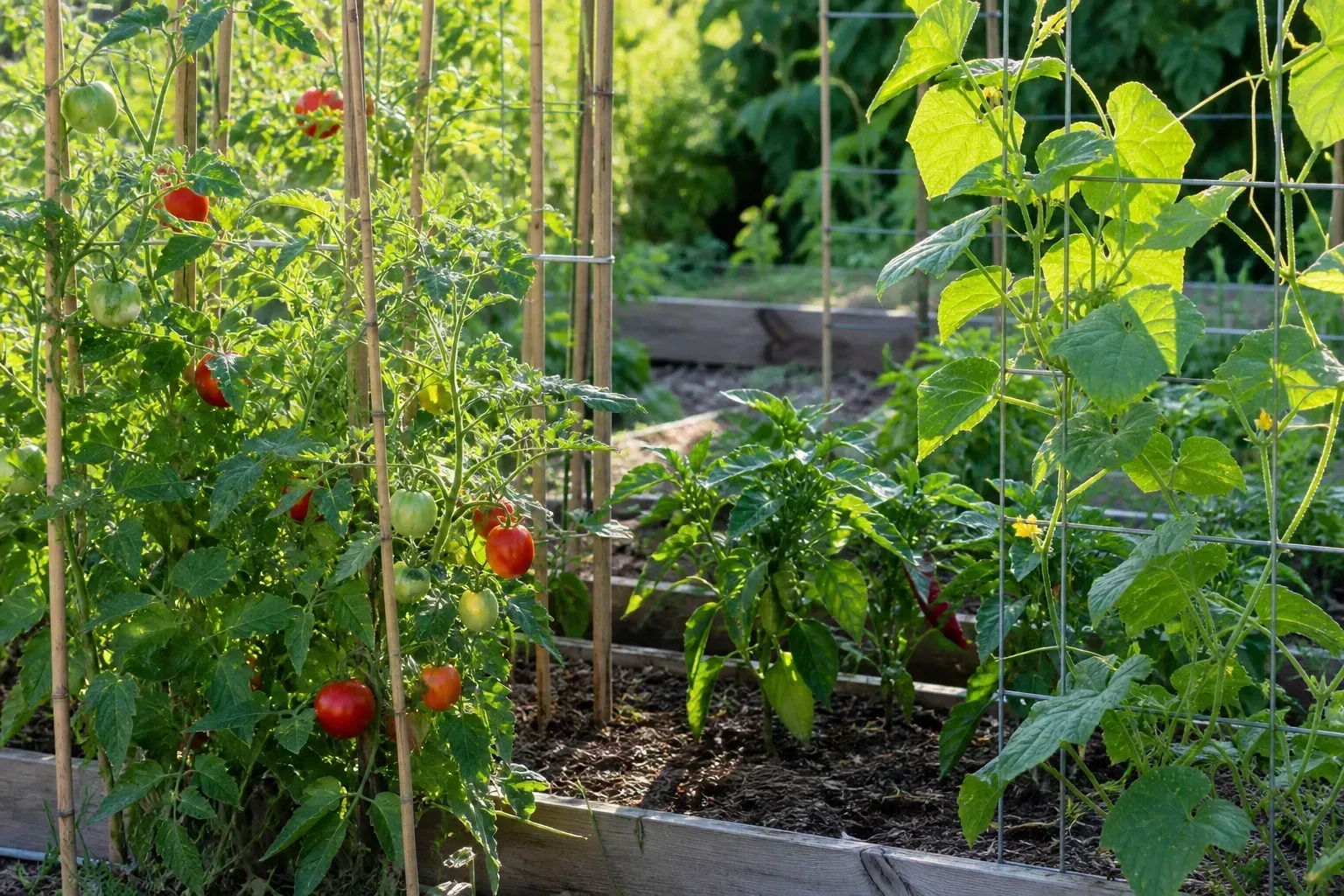
Tomatoes do not have tendrils, so the gardener has to guide each stem to its support. A loose figure-eight tie works well: pass the tie around the stake, cross it once, then loop the other side around the stem so there is a small cushion of space between stem and support. That crossing keeps the stem from rubbing directly against the stake while still holding it in place.
Attach ties to the main stem, not to a leaf stalk, flower truss, or the narrow branch holding a cluster of fruit. Leave enough slack for the stem to thicken and flex a little. As a starting point, check for a new tie every 6 to 10 inches of upward growth; the exact spacing matters less than catching the plant before it leans away or a fruit-heavy section hangs unsupported.
Inspect ties at least weekly during fast growth and after a windy or rainy spell. A tie that was loose when the plant was small can become a tight band later, so loosen, move, or replace it when it presses into the stem. The University of Tennessee Extension demonstration on PBS shows why repeat support matters: the weave is extended as plants grow, rather than relying on a single tie at the beginning of the season.
Train a Plant on One Stake
Single-stake training works best when you want a compact, easy-to-inspect plant and are willing to return to it as it grows. Set the stake at transplanting, then use a soft tie to secure the main stem before the first heavy fruit load develops. Guide the stem upright by degrees; if it has already leaned, support the base and tie it in stages instead of pulling it sharply against the post.
Tie the plant to the stake at intervals as new growth appears, and add a separate soft tie for a branch that is carrying a heavy fruit cluster. Keep the fruit cluster itself outside the tie. If the stem has room to sway slightly, it will be less likely to rub against a hard edge every time the wind moves the plant.
Tie the Main Stem as It Grows
Start the first tie low enough to prevent the young stem from flopping, but not so low that the knot crosses the soil line or traps damp debris. As the plant grows, add ties on the main stem before the unsupported length bows under its own foliage. Rotate around the plant as you work so ties do not bunch up on one side or pull the whole stem toward the stake.
Do not try to attach every leaf and side branch to the stake. That creates a crowded bundle, increases rubbing, and makes inspection harder. The main stem should carry the plant’s height; add support to an individual branch only when it is sprawling into a path or carrying enough fruit to sag.
Prune Only to Match the Support
Pruning changes the plant’s structure; it is not the same task as staking. If you want an indeterminate tomato on one stake, you can train it to one main leader by removing selected suckers, the new shoots that grow in the angle between a leaf and the main stem. A two-leader plant needs a second tie line or a wider support, and its branches should not be squeezed together.
For a determinate tomato or a multi-stem plant in a cage, aggressive sucker removal may reduce the amount of productive growth you keep. The Durham County Extension Master Gardener guide describes removing only a few low shoots for the Florida weave while allowing much of the plant to grow within the support. That is a useful distinction: remove a shoot because it conflicts with the structure or touches the soil, not because every sucker is automatically harmful.
If a lower leaf or branch rests on soil, remove it with clean pruners rather than burying it in the support. Keep the canopy open enough to reach fruit and inspect leaves, but avoid stripping away large amounts of healthy foliage at once. Leaves shade fruit and help the plant produce energy, so a bare stem is not the goal.
Build a Florida Weave for a Row
The Florida weave, also called a basket weave, is a shared support system for tomatoes planted in a line. Twine runs along both sides of the plants, alternating around the posts so the row sits between parallel strands; each added layer catches new growth as the plants gain height. It uses fewer posts than a separate stake for every plant, but it takes regular attention to keep the row supported.
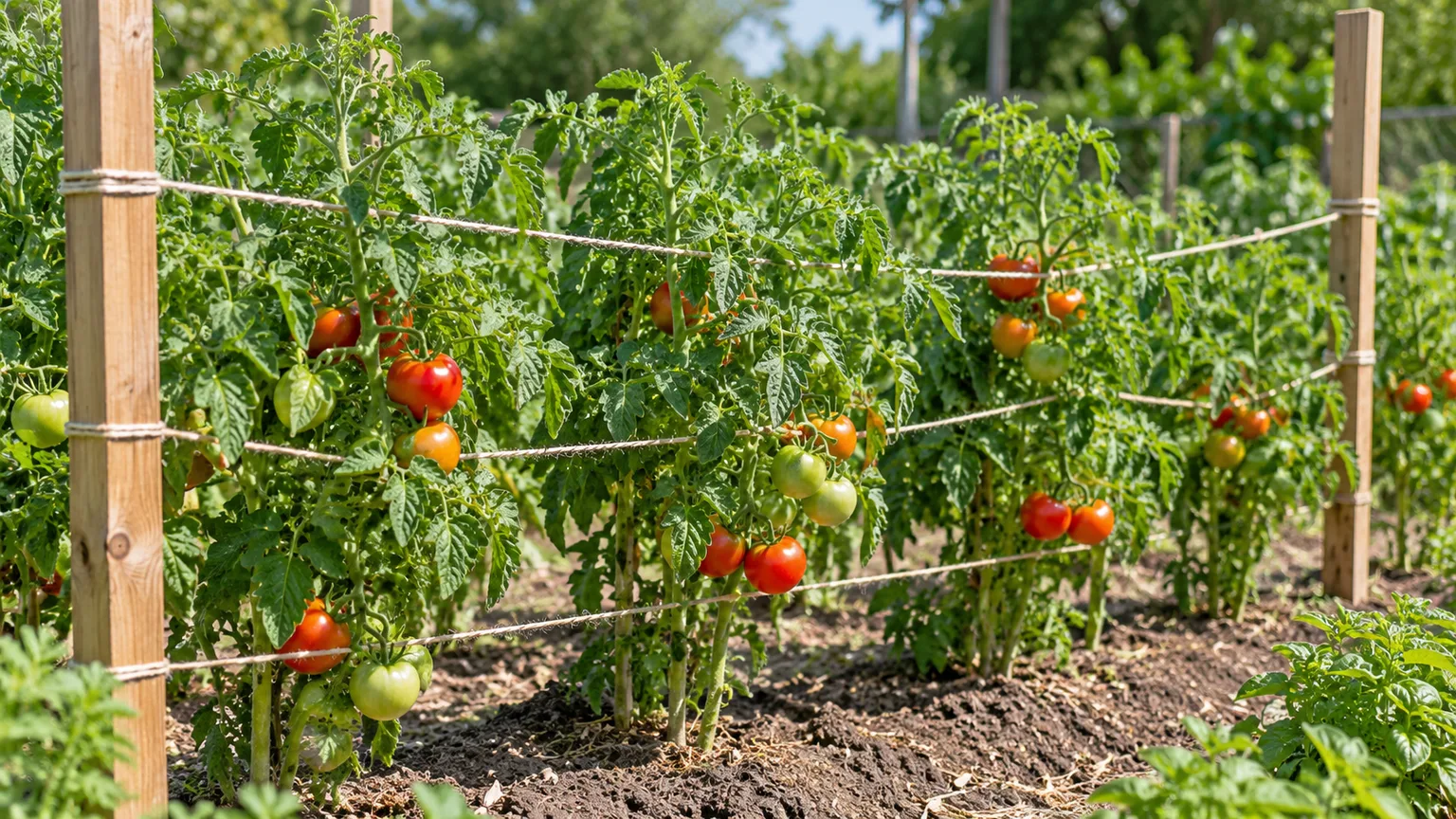
At transplanting, set sturdy posts at both ends of the row and add intermediate stakes every 4 to 5 feet as a starting point. For stronger or taller plants, narrow that spacing or use heavier posts; the row’s tension pulls on the end posts, so do not use a thin stake at the end just because it works between plants. Carol Collins’s Fine Gardening overview and UT Extension’s demonstration with Natalie Bumgarner both present the weave as a way to support multiple plants along a row.
Add the First String and Repeat the Weave
Wait until the plants are established enough to be guided, but do not wait until they sprawl across the path. Tie twine firmly to the first post at about 6 to 10 inches above the soil, then pass it along the row so it goes in front of one plant and behind the next. Wrap the twine around each post as you go; this helps keep tension in separate spans instead of letting the entire line slide down.
At the far post, loop the twine securely, then return along the opposite side of the plants so each plant is gently held between two lines. Do not crush the stems together or pull the twine so tight that it bows the posts inward. The goal is a supportive basket with some breathing room, not a rigid clamp.
As the row grows, add another pair of strands every 6 to 8 inches of vertical growth, or sooner if a plant starts leaning out of the weave. The UT Extension demonstration shows the twine being added in successive layers; in a fast-growing period, that can mean checking the row every week. For indeterminate tomatoes, make sure the posts are tall enough for the season’s growth, because a Florida weave cannot support growth that has already outgrown its frame.
The method is easiest when the plants are arranged in one accessible row, with room to walk and harvest along it. If plants are packed into a double row, make sure the inner stems will not become inaccessible once they fill out. For a large crop, plan the row width and post locations before planting rather than trying to push posts through a dense canopy in midsummer.
Use a Cage for a Multi-Stem Plant
A cage lets several stems grow outward while keeping the plant’s branches and fruit from sprawling onto the ground. It can suit a determinate variety or a gardener who wants less pruning and less individual tying. Put the cage in place while the plant is small, center the plant, and press the legs deeply enough that the cage does not wobble when you nudge it.
Size and strength matter more than the cage’s color or shape. Short, lightweight cone cages may work for compact plants, but a large indeterminate tomato can push past them, lean the cage, or load the top with branches that have no support. Choose a cage that reaches close to the plant’s expected height and has openings wide enough for your hands to reach inside and pick fruit.
As branches lengthen, guide them through an opening while they are still flexible; do not force a thick branch through a tight square of wire. If the cage leaves a long stem outside, secure that stem loosely to the cage with a soft tie rather than bending it around the frame. Epic Gardening’s tomato trellis guide notes that many small retail cages are not tall or sturdy enough for vigorous indeterminate plants, so inspect the support early and reinforce it before the cage starts to tip.
A cage does not automatically improve airflow. A dense plant inside a narrow cage can become harder to inspect and harvest, particularly when multiple branches cross in the center. Give plants enough space, keep access openings clear, and remove only damaged or soil-touching growth unless you have chosen a specific pruning plan.
Stake Tomatoes in Containers
For a container tomato, the support must stay stable with the pot, not just with the loose surface around it. Insert a stake into the potting mix at transplanting and push it toward the bottom without puncturing the container. A small cage can work for a compact determinate variety, while a tall indeterminate tomato needs a heavier, wider support that will not become a lever against a light pot.
Wind can tip both the support and the container, especially on a balcony or roof. Use a stable pot with enough weight and footprint for the mature plant, position it where the support is sheltered without blocking the sunlight the tomato needs, and anchor the cage or trellis to the pot rim if the design allows. Do not rely on a stake planted outside the pot; it may hold the plant upright while the root ball and container still shift.
A single-stake container plant is easiest to manage when it is trained to one or two leaders. If you want a broader plant with minimal pruning, choose a pot large enough for a stable cage and keep the branches from reaching into neighboring pots or walkways. Check the ties more often in containers because plants may dry and grow quickly in warm weather, but water according to the potting mix’s moisture and the plant’s needs, not simply because you have staked it.
Maintain Supports and Repair Problems
Staking is seasonal maintenance. As the plant gains height and fruit, the load on the support changes, and rain or wind can loosen posts that seemed firm at planting. A quick walk through the bed once a week lets you notice a loose tie, a sagging branch, or an end post pulling inward before it becomes a broken stem.
Keep fruit clusters reachable and avoid weaving branches so tightly that you cannot check for pests or harvest ripe tomatoes. If leaves stay wet or crowded despite the support, the answer may be more spacing or selective removal of damaged lower foliage rather than adding a tighter tie. Support helps with structure and access; it does not make a tomato immune to fungal disease, pests, or fruit rot.
Check Ties, Posts, and Fruit-Heavy Branches
Start each inspection at the soil line and work upward. Press each post gently to see whether it has loosened, check that cage legs still sit in the ground, and look for ties that have become tight as stems thicken. Replace frayed twine and move any tie that rubs or pinches the stem.
Next, look at branch angles and fruit clusters. A main stem can be secure while a side branch droops under a cluster of large tomatoes; add a soft sling or tie beneath the branch, leaving the fruit itself free. Remove twine that traps leaves or blocks a harvesting opening, and keep the growing tip within reach of the support.
For a Florida weave, check that the lines still hold the row between them and that the end posts remain upright. If the row is sagging, add a strand and tighten it slightly around the posts rather than pulling hard on the plant stems. During rapid growth, repeat this check weekly; later in the season, keep checking after storms and when fruit begins to weigh down the branches.
Correct a Leaning or Damaged Plant
If a plant leans, do not yank it straight by the top. First loosen the tie that is pulling it at an awkward angle, add a second stake on the side it is leaning toward, and secure the stem at several points with soft ties. If the stem is already woody or bent sharply, leave the curve and support the upper growth where it sits instead of forcing a clean vertical line.
When a post rocks, remove the tension from the plant, deepen the post or add a brace, then re-tie the stem loosely. For a cage that is tipping, add a stake on the exposed side and attach the cage to it; pushing a wobbly cage down through a mass of branches can break the plant. Make repairs from the outside where possible.
If a stem has split but remains partly attached, support it so the split is not bearing the plant’s weight and check it over the next several days. A fully severed top may not recover; keep the healthy lower growth supported and allow it to continue if the plant is otherwise sound. Prevention is easier: install the structure early, use soft ties, and add support before the vine is loaded with fruit.
Conclusion
The right way to stake a tomato is the one that suits its mature growth habit and the amount of follow-up work you can maintain. Use a single stake for a deliberately narrow plant, a sturdy cage for a multi-stem tomato, or a Florida weave when you are supporting a row with shared posts and twine.
Install support while the plant is young, anchor it for the soil and wind in your garden, and tie stems with enough slack to keep them from being pinched as they grow. Then check the system regularly, add support to fruit-heavy branches, and prune only when pruning fits the variety and training plan.