Hummingbird Sage Care: How to Grow Salvia spathacea
Grow hummingbird sage with a site-first plan for light, drainage, watering, pruning, propagation, and common problems in different climates through the seasons.
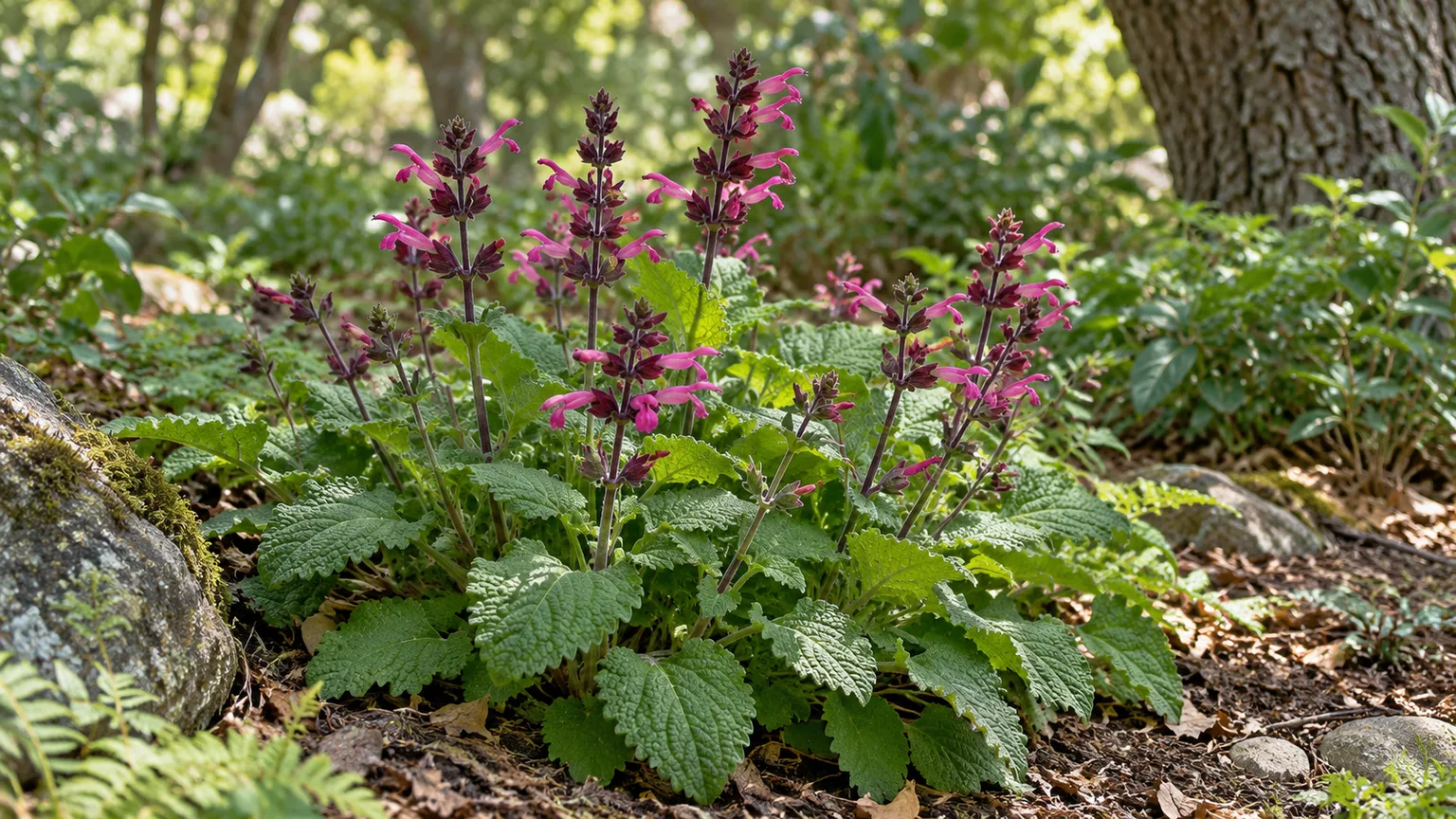
Hummingbird sage (Salvia spathacea) is a California native perennial for gardeners who want flowers in a bright, dry, partly shaded spot. It spreads by underground rhizomes, so one plant can gradually form a fragrant groundcover rather than staying a tidy little mound. The key to success is to copy its seasonal rhythm: establish roots while conditions are mild, then avoid keeping the crown wet through summer or winter.
This is not the gray-leaved culinary sage used in the kitchen. Hummingbird sage has broad, wrinkled green leaves, softly hairy stems, and upright rose to magenta flower spikes with dark bracts. It is also called pitcher sage; its tubular flowers offer nectar that attracts hummingbirds. UCI’s Natural History of Orange County records the species as a rhizomatous perennial with aromatic foliage and abundant nectar, while Ohlone College describes it as a chaparral and woodland plant with rose-colored blooms. UCI Natural History of Orange County and Ohlone College document the plant’s local character.
What Makes Hummingbird Sage Different From Other Salvias?
Many garden salvias come from sunny, open habitats and prefer strong sun with sharp drainage. Hummingbird sage is more useful in the understory: it tolerates partial shade and can perform well under an open tree canopy, where reflected light reaches the leaves but the afternoon sun is softened. That adaptation is why it can succeed in dry shade, a difficult combination where the soil dries because of nearby tree roots even though direct sunlight is limited.
The plant’s shape also changes how you should plan for it. Its leaves form a low clump, but rhizomes slowly extend the colony outward; flowering stems rise above the foliage in late winter or spring. Mature plants commonly occupy several feet of width, although age, irrigation, soil, and climate change how quickly they fill that space. The Ruth Bancroft Garden describes its own plants spreading to roughly four feet across, with spikes rising above the foliage. Ruth Bancroft Garden’s plant observations are a useful reminder to leave room for a spreading perennial instead of packing it between small neighbors.
Look for the species name, Salvia spathacea, when buying. A nursery plant labeled only “hummingbird sage” can be confused with other salvias or with unrelated shrubs sold as hummingbird bush. The true sage is a low, spreading perennial with large, textured leaves and magenta tubular flowers; it is not a woody, upright shrub.
Choose the Right Site Before Planting
Pick a site by checking two things separately: how much light reaches the leaves, and how long the root zone stays wet after rain. Hummingbird sage can tolerate more sun than its dry-shade reputation suggests, but in a hot inland garden the same direct afternoon exposure that is comfortable on the coast can scorch foliage or shorten the display. In contrast, shade beneath a thirsty mature tree may be dry enough to stress a newly planted root ball even after surrounding soil looks moist.
Before planting, observe the bed on a clear day and after a soaking rain. Note whether it gets gentle morning sun, filtered light, or harsh afternoon sun, then dig a small test hole and see whether water drains away or remains pooled. An open oak canopy, north- or east-facing slope, or bright woodland edge often gives a useful balance of light, airflow, and drainage.
Light: Bright Shade Is a Dependable Starting Point
Bright shade or dappled light is the safest starting point in warm-summer areas. Coastal gardens can often give the plant more sun, while inland gardeners should favor morning light and protection from intense late-day exposure. Gardenia describes the species as adaptable from full sun to partial shade, while emphasizing its value in dry shade; the Ruth Bancroft Garden likewise reports success in both a sunny site and dry shade. These observations show flexibility, not a promise that every sunny garden will suit it. Gardenia’s growing profile and the garden’s own California planting notes support that distinction.
Deep, dim shade is less reliable. If the site receives little reflected or filtered light, plants may spread leaves without producing many sturdy flower spikes. If stems lean toward a narrow shaft of sunlight or bloom sparsely year after year, move the plant toward a brighter edge rather than trying to correct the problem with fertilizer.
Soil and Drainage: Prioritize Dry Roots in Winter
Use naturally draining soil if possible. Loam and sandy loam are straightforward, but a clay garden is not an automatic disqualification if water does not stand at the crown. The main warning sign is prolonged winter saturation: cool, wet soil deprives roots of air and invites decline even when the plant handles dry summers well. If the bed stays boggy, choose a different species or plant on a broad, modest mound rather than burying the problem under a handful of amendments.
Do not dig a small pocket of rich potting mix into heavy clay and assume the drainage is fixed. A sharply different pocket can collect water like a basin. Improve a broad area or raise the planting surface, keep the crown level with or slightly above surrounding soil, and avoid compacting the bed as you work. Mature tree roots may make deep soil improvement impractical; in that case, plant small nursery starts into existing soil and water their root balls carefully as they establish.
Plant Hummingbird Sage Step by Step
Plant in fall, when the soil is still warm and seasonal rain is approaching, or in spring after the worst cold has passed. Fall planting gives roots time to spread before a dry summer, but spring is a sensible choice where winters are persistently wet or freezing. The Ruth Bancroft Garden’s horticulturist describes the plant thriving in a Northern California garden with rainfall patterns that range widely; use local timing rather than a national calendar for your own bed.
Set the nursery plant where it will have several feet to spread. If you want a continuous groundcover, start young plants roughly 2 to 3 feet apart and let the rhizomes knit the gaps over time; for separate clumps, leave more room. Spacing varies with starting pot size and how quickly you want coverage, so do not compress mature plants solely to create an instant carpet.
Water the pot before planting. Dig a hole as deep as the root ball and about twice as wide, loosen circling roots gently, and set the crown at soil level. Backfill with the native soil you removed, firm lightly, water slowly until the root ball and surrounding soil are evenly moist, then apply a thin layer of mulch while leaving an open ring around the crown. The Plant Material nursery profile also describes the plant’s rhizomatous spread and late-winter-to-summer flower display in Southern California; treat its local schedule as a regional example rather than a universal date.
Water by Establishment Stage, Not a Fixed Calendar
New plantings need regular attention until their roots move beyond the nursery root ball. For the first growing season, check the soil a finger’s depth or two below the surface every few days in warm weather; water deeply when that root zone is drying, then allow air back into the soil before watering again. The exact interval can shift from several days in heat or sandy soil to much longer in cool weather, clay, or a shaded bed that holds moisture.
Once established, hummingbird sage needs far less supplemental water. In a Mediterranean climate, winter rain may do most of the work and a deep summer soak during an unusually long hot spell may be enough. A plant under a thirsty oak can need more during establishment, while one in heavy soil needs less frequent water and better drainage, not repeated shallow sprinkling. The Ruth Bancroft Garden reports that its established plants can grow without supplemental irrigation, while occasional late-spring or summer water can extend their growing season. That is a local garden observation, not a mandatory schedule for every landscape.
Use the leaves as a prompt to investigate, not as a watering timer. A plant that droops during a hot afternoon but recovers by morning may be experiencing temporary heat stress; a plant that stays limp in wet soil may have compromised roots. Check moisture below the surface before adding water, especially during winter or after rain.
Fertilizer, Mulch, and Container Growing
Routine fertilizer is rarely useful for an established plant in ordinary garden soil. Excess nitrogen can encourage lush, floppy growth and more leaf growth at the expense of a balanced flower display. UC IPM’s general advice for sages emphasizes good soil and drainage; it does not call for heavy feeding. If growth is weak, look first for excess shade, root competition, soggy soil, drought during establishment, or a plant that has not had time to settle in.
A thin layer of leaf mold or compost can help a very poor bed, but keep it away from the crown. Use mulch to moderate soil temperature and reduce evaporation, not to make the site permanently damp. Under a tree, avoid a deep pile against the sage’s base and do not bury surface leaves that the plant needs for healthy airflow.
You can grow a young plant in a large, well-drained container, but it is not the easiest way to enjoy its natural habit. Rhizomes want horizontal room, and container soil dries faster than a shaded garden bed. Choose a broad pot with drainage holes, a free-draining mix, and a spot with bright filtered light; check moisture during establishment and avoid leaving the pot in a saucer of water. Plan to divide, up-pot, or move it into the ground as the colony expands rather than expecting it to remain a compact houseplant.
Prune and Deadhead Without Losing Next Year’s Display
You do not need to shear hummingbird sage into a ball. After the flowers fade, cut spent stalks down toward the leafy clump if you want a tidier look or want to reduce seed formation. Deadheading is optional: leaving a few stalks lets seed develop, while removing them may encourage a cleaner second flush in some gardens. Do not expect repeated flowering just because every old spike is cut; rebloom depends on climate, plant vigor, and moisture.
In late winter or early spring, remove leaves that are clearly damaged or smothering fresh growth, but keep healthy basal foliage. Avoid a hard cutback just before flowering if you value the current season’s spikes. UC IPM notes that pruning salvias before bloom can delay flowering; its advice covers the genus broadly, so use it as a caution rather than a precise species calendar. UC IPM’s Salvia guidance also stresses light pruning during the growing season.
If the clump has expanded too far, edge the colony rather than cutting the whole plant to the ground. In cool weather, use a spade to sever unwanted outer rhizomes, lift those pieces if you want to replant them, and leave the established center intact. Regular edging is less disruptive than waiting until a neighboring plant has been overrun.
Bloom Season and How to Encourage Flowers
Hummingbird sage usually flowers from late winter or spring into early summer, with timing shifting according to local weather and exposure. In the Ruth Bancroft Garden’s Northern California climate, its flowering period usually ends during the first half of June. Some other California sites report a March-through-June display, but the same calendar should not be applied to a colder inland garden or a warm coastal microclimate without adjustment. Ruth Bancroft Garden documents its own bloom season and the distinctive whorled flower spikes.
The flower spikes rise above the leaves in tiers, with rose-pink to magenta tubular flowers and dark bracts. The foliage can stay attractive when the flowers are gone, so judge the plant across the whole year instead of treating a short bloom window as the only measure of success. Its nectar-rich flowers are visited by hummingbirds; UC IPM notes that salvias more broadly also attract bees and butterflies.
For a stronger display, begin with the conditions that make sturdy growth possible: enough bright light, well-drained roots, and steady moisture while a new plant establishes. Avoid heavy fertilizer, which can push leaves and stems rather than flowers. If an established plant has healthy foliage but few spikes, first ask whether the spot is too dim or the plant is crowded; a small improvement in light and spacing is more likely to help than feeding it.
Propagation: Divide Rhizomes or Grow From Seed?
Choose a method based on your goal. Division is the practical option when an established patch has grown large and you want another plant with the same traits; seed is useful when you want several plants and can wait for seedlings to mature. Hummingbird sage grows from rhizomes, but the plant’s natural spreading habit does not mean every small root fragment will establish. Take divisions only from a healthy, well-rooted patch and keep them from drying out during replanting.
Divide a Mature Patch for a True-to-Type Plant
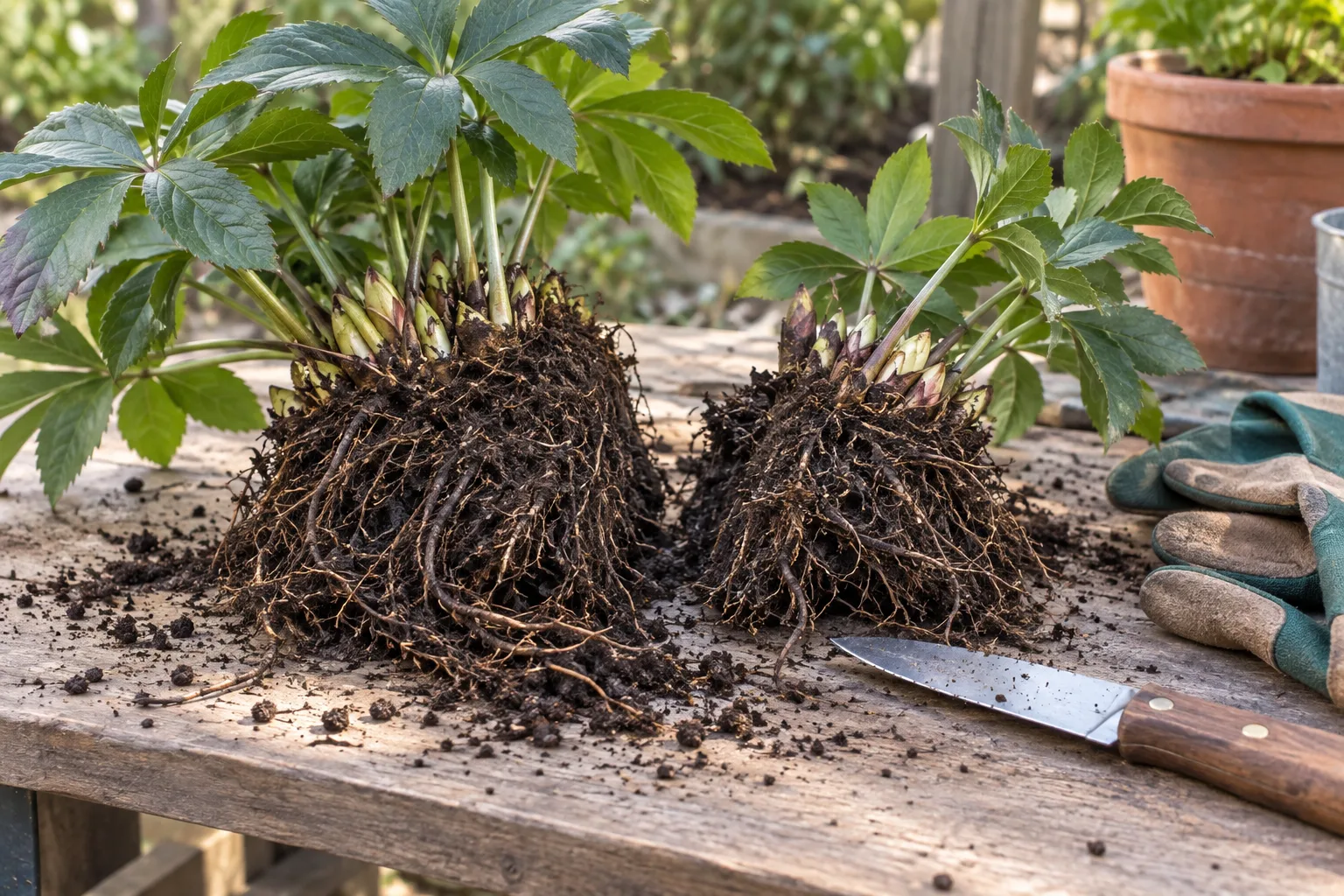
Divide during cool weather, preferably when the soil is workable and the plant is not coping with summer heat. Water the patch the day before if the soil is dry, then dig around an outer section rather than excavating the entire colony. Choose a piece with both roots and visible shoots or buds; a bare rhizome with no growing point has a poorer chance of making a complete plant.
Lift the selected section with as much soil and fine root as you can preserve. Separate it with a sharp, clean spade or knife into divisions that each carry a healthy shoot cluster and several inches of rhizome and roots. Replant at the same depth in prepared, draining soil, water to settle the soil around the roots, and keep it lightly moist while it re-establishes. Do not keep the planting saturated; a division has fewer roots to absorb excess moisture and is vulnerable to rot.
The best time to transplant a rhizome is not necessarily the day you want to control spread. If the parent patch is drought-stressed, in flower, or declining from poor drainage, correct that issue first. The Ruth Bancroft Garden describes a mature rhizomatous clump, while Gardenia lists both seed and small rhizome divisions as propagation routes. Those sources support the options, but a gentle lift and a visible growing point are practical safeguards for home gardeners.
Sow Seed When You Want Several New Plants
Seed takes more patience and will not guarantee a plant identical to its parent. Let a few flower spikes mature and dry, or buy seed from a reputable native-plant supplier; collect only where you have permission and never take seed from wild populations. Sow in a clean, free-draining seed-starting mix, cover lightly, and keep the medium evenly moist rather than waterlogged. Put the tray in bright light and protect seedlings from extremes while they develop.
Do not assume seed will germinate on a fixed timetable. Freshness, storage, temperature, and seed quality all matter. Once seedlings have several true leaves and can be handled, pot them individually; acclimate them gradually before setting them outside. A young seedling needs more frequent watering than an established garden patch, and it should not be placed under a tree where dense surface roots will immediately compete for moisture.
Give Rhizomes Room and Design for Dry Shade
Use hummingbird sage where a spreading mat is an asset: under open-canopy trees, along a shaded path, on a bank that needs a living cover, or at the front of a low-water border. It can soften the ground beneath trees where lawn performs poorly, but it is not a no-maintenance replacement for every tree-root zone. Dense shade, compacted soil, and repeated foot traffic will still limit its performance.
Think of the plant as a slow-moving colony, not a small specimen that will remain exactly where it was planted. Leave several feet of open ground or use an edging line if it must stay inside a defined bed. Check the outer edge once or twice a year and lift stray rhizomes while they are easy to reach. If you want a formal, tightly clipped border, select a less spreading perennial instead.
This is also a regionally native plant, not a universal answer for any shaded garden. It is best suited to conditions similar to California’s coastal scrub, chaparral, and woodland margins. Gardeners outside that climate should ask a local native-plant society or extension office whether the species tolerates their summer humidity, winter wet, and cold. A plant that grows well in a mild, dry-summer coastal garden may struggle through sticky heat or a cold, waterlogged winter elsewhere.
Choose Companions With Similar Light and Water Needs
Place neighbors according to water needs, not just flower color. Near the sage, choose other plants that can manage bright shade and a relatively dry summer once established. In California, a native-plant nursery or local native-plant society can suggest a region-appropriate palette; nearby woodland perennials and shade-tolerant native grasses may work where their soil and moisture preferences overlap.
Avoid planting thirsty, moisture-loving perennials directly into the same irrigation zone if they need regular summer water. Their watering schedule can keep the sage’s crown wet and undermine its dry-season rhythm. Likewise, do not plant a young clump right against a tree trunk or into the densest band of feeder roots; the tree may take most of the available water before the new sage can establish.
For a wildlife garden, combine the spring flowers with other nectar plants that bloom at different times, so hummingbirds have a sequence of food sources rather than one short flush. Hummingbird sage is one part of that planting, not a complete habitat by itself. Keep pesticides away from flowering plants whenever possible and leave some nearby shelter and perching space for wildlife.
Troubleshoot Brown Leaves, Mildew, and Sparse Flowers
When leaves brown, check soil moisture and exposure before pruning or treating. Crispy edges on a plant in strong afternoon sun point toward heat stress or drought; yellowing, soft stems, and a dark or sour-smelling crown in wet ground point toward root stress. If the root zone is dry, water slowly and reassess after a day or two. If it stays wet, pause irrigation and improve drainage; more water will worsen that problem.
Powdery mildew may appear as a pale coating when foliage stays crowded and air movement is poor, particularly in a humid site. Remove badly affected leaves, thin only what is needed for airflow, and water at soil level rather than repeatedly wetting foliage late in the day. A light coating is not automatically a reason to reach for a spray. UC IPM lists powdery mildew, aphids, and thrips among issues that can affect salvias; diagnose the actual pest or disease first and follow local extension or product-label guidance if treatment becomes necessary. UC IPM’s Salvia page links to identification and management information.
Sparse flowers can have several causes. Deep shade, a recently transplanted or young plant, heavy feeding, drought during establishment, and crowding all can reduce the number or strength of spikes. Correct one likely condition at a time and give the plant a full growing cycle to respond. If it remains leafy but flowerless for several seasons, move a division to a brighter, better-drained position rather than repeatedly changing fertilizer or pruning.
Follow a Seasonal Care Rhythm
In fall, plant or divide while the weather is cool and the soil can support new roots. If rain is beginning, do not continue summer irrigation out of habit; inspect the bed after a dry spell and water only if the root zone is dry. In places with cold, wet winters, keep mulch light and the crown open to air.
In late winter and spring, watch for new basal leaves and flower stalks. Remove clearly dead foliage, but do not cut healthy rosettes just to make the bed look bare. During bloom, leave the flower spikes for hummingbirds as long as they remain attractive, then deadhead or trim them once they brown if you prefer a neat look.
In summer, the plant may slow down or look less lush in a dry climate; some seasonal decline is not proof that it needs constant water. Give a deep drink only when an established plant shows persistent stress and the soil is dry below the surface. In hotter regions, shade during the worst afternoon heat is more useful than forcing rapid growth with extra fertilizer.
Conclusion
Hummingbird sage is easiest to grow when you match the site to the plant’s California rhythm: bright shade or gentle sun, soil that drains, and patient watering while roots establish. Once mature, it can handle a dry summer with little help, but it should not sit in saturated winter soil or be crowded into a tiny space.
Give the rhizomes room, prune only when there is a reason, and choose seed or division according to whether you want a batch of new plants or a dependable clone. With those few decisions right, Salvia spathacea brings fragrant foliage, a generous groundcover habit, and spring flowers that make a shaded garden useful to both people and pollinators.



