How to Use Gypsum in Gardening: A Soil-Test-First Guide
Learn when gypsum can improve garden soil, why it rarely fixes ordinary clay, how to test for sodium, and how to follow a soil-based application rate.
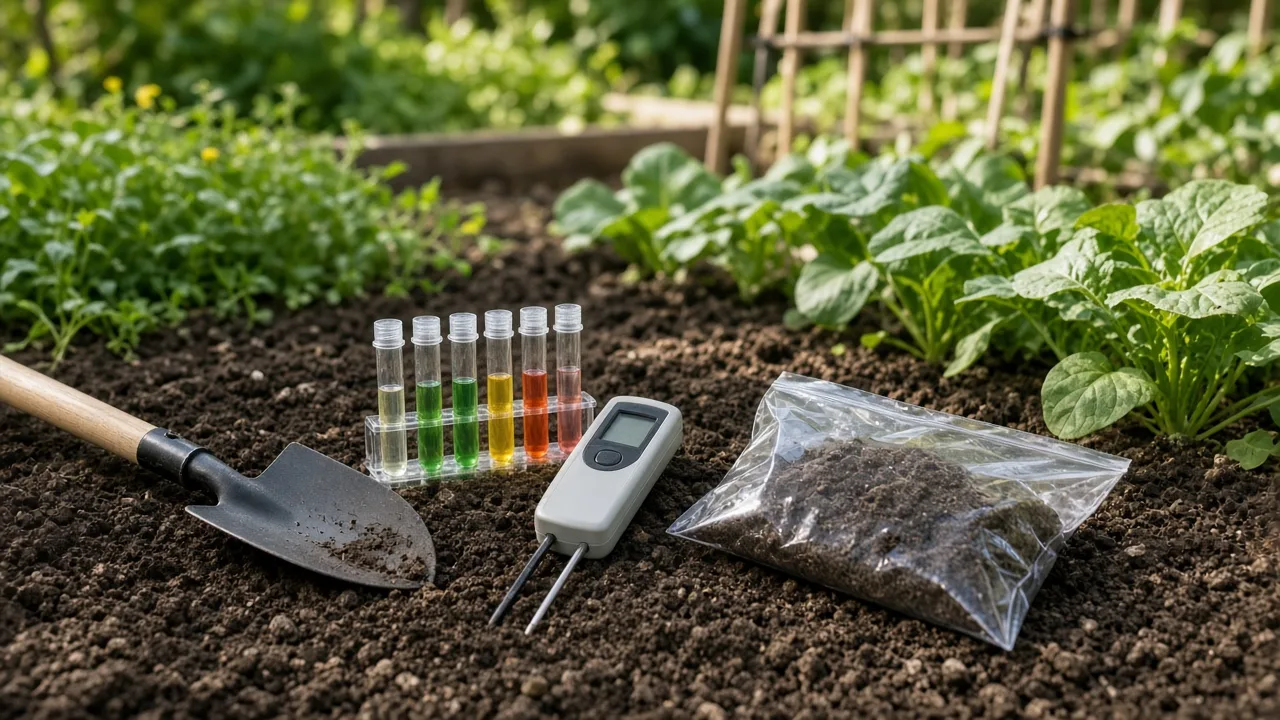
Gypsum has a specific soil-chemistry job; it is not a general-purpose clay breaker or fertilizer. Use it when a soil analysis shows a sodium-related problem or a calcium need that gypsum can address, then follow the laboratory’s rate and drainage instructions. If your bed is simply heavy, sticky clay, start with better diagnosis and long-term soil care instead of scattering gypsum and hoping the texture changes.
The short answer: test for sodium before you spread it
The most reliable answer to “Should I use gypsum in my garden?” is: only when a soil test or local extension recommendation identifies a problem gypsum is suited to solve. The mineral is calcium sulfate dihydrate. In certain sodium-affected soils, its calcium can help clay particles form stable aggregates, but that chemistry does not mean every clay soil benefits.
Iowa State University Extension and Outreach describes gypsum chiefly as an amendment for sodic soils, a condition found especially in arid parts of the western United States (Iowa State University Extension’s gypsum guidance). That is a narrower use than the common advice to apply gypsum whenever a garden is hard to dig or drains slowly.
Start by deciding what you are observing. A crusted surface, water that ponds, a bed that cracks as it dries, and a plant with poor growth can have different causes; none proves that sodium is high. A soil test with the right sodium and salinity measures can help distinguish a chemical problem from a physical one and keep you from adding calcium and sulfate your garden did not need.
What gypsum does—and what it does not do
Gypsum supplies calcium and sulfate. It is not a complete fertilizer: it does not supply nitrogen, phosphorus, or potassium in the amounts plants need for general growth, and it does not add organic matter. It also does not function as garden lime, which is used to raise the pH of acidic soil when a soil test calls for it.
Calcium can help sodic soil aggregate
Sodic soil contains enough exchangeable sodium to interfere with soil structure. Sodium on clay surfaces encourages particles to disperse rather than bind into stable aggregates; the result can be a sealed or crusted surface, poor water entry, and restricted air movement. Soluble calcium from gypsum can displace some of that sodium from exchange sites. Water then has to carry the displaced sodium down and out of the root zone.
That final step matters. Gypsum does not make sodium disappear, and it cannot correct a drainage bottleneck by itself. If water cannot move through and away from the treated soil, applying calcium may leave salts in place rather than solve the underlying problem. Where salinity and sodicity occur together, the treatment sequence should be based on a soil laboratory or extension recommendation.
A field study by researchers at India’s ICAR-Central Soil Salinity Research Institute illustrates why a calculated requirement matters: the researchers characterized a strongly sodic field and reported a gypsum requirement before comparing treatments. Their results involved a rice–wheat system and measured combinations of gypsum and compost, so the rates should not be transferred to a backyard bed; the useful lesson is that gypsum needs are tied to the soil’s measured condition (ICAR’s field study on amendments in sodic soil).
Clay texture is not the same as compaction
A clay soil contains a high proportion of very small mineral particles. That texture is largely inherent; a gardener usually improves its structure and surface condition rather than changing it into loam. Clay can hold water and nutrients well, but its behavior depends on how particles are aggregated, how much organic matter is present, the soil’s moisture when it is worked, and whether equipment or foot traffic has compacted it.
This distinction changes the remedy. A clay bed that has been walked on while wet may be compacted even when sodium is not a concern. A low spot may stay wet because of grading or a dense subsoil layer. Gypsum is not a shortcut for either one. Fine Gardening’s guidance on clay soils emphasizes building organic matter over time and protecting structure rather than expecting a one-time amendment to change the soil’s basic texture (Fine Gardening’s guide to improving clay soils).
When gypsum is worth considering
Gypsum is a reasonable candidate when a test identifies sodicity, sodium-related dispersion, or a specific calcium requirement and the site has enough drainage for salts to move out. It may also be recommended for some salt-affected soils, but “salty” is not a complete diagnosis: high soluble salts and high exchangeable sodium are related but different conditions.
A coastal location alone does not establish that a garden needs gypsum. Sea spray can injure foliage without creating sodic soil, while salty irrigation water or poor drainage can create root-zone salt problems inland. Test the affected bed, and, if you irrigate with well or reclaimed water, ask whether the water itself should be analyzed.
A lab confirms sodicity or sodium-related dispersion
Consider gypsum when the soil report or a qualified local recommendation identifies elevated sodium relative to the soil’s capacity to hold it, and it names gypsum or another calcium amendment as an appropriate treatment. Depending on the laboratory, useful measures may include exchangeable sodium percentage (ESP), sodium adsorption ratio (SAR), electrical conductivity (EC), calcium, and a calculated gypsum requirement. Not every basic home-garden test includes those measures.
The conditions around the bed matter as much as the number. The sodium must be leached below the rooting area, which requires water that is suitable for leaching and an outlet for drainage. If the soil stays saturated, sits above a hard layer, or has a shallow water table, ask an extension soil specialist to identify the limiting factor before applying gypsum.
A targeted calcium need is documented
A test may show that calcium is low or that a particular crop or bed has a documented calcium-related soil issue. Gypsum can supply calcium without acting as a liming material, which may be useful when raising pH is not desired. A soil analysis is still important because calcium levels, pH, and other nutrients interact; a yellow leaf, blossom-end rot, or slow growth by itself does not prove that gypsum is the right correction.
Use a plant-specific diagnosis where the symptom points to a different cause. For example, blossom-end rot in tomatoes is often associated with inconsistent water movement to developing fruit, even when calcium is present in the soil. Correct irrigation and root stress first, and use gypsum only if soil or plant analysis supports a calcium amendment.
When gypsum is the wrong fix
A product label may describe gypsum as a soil conditioner, but the label does not diagnose your garden. Applying it without knowing the soil condition can add material without changing the problem, and repeated use can add more calcium and sulfate without a demonstrated benefit. Gardening Know How likewise advises home gardeners to rely on soil analysis and generally favors organic matter for ordinary garden tilth over routine gypsum applications (Gardening Know How’s overview of garden gypsum).
Clay alone is not enough evidence
A sticky handful or slow-draining bed may tell you that soil has a lot of clay or poor structure; it does not tell you that it is sodic. A simple jar test or squeeze test can help describe texture, but it cannot reliably measure exchangeable sodium, electrical conductivity, calcium need, or a gypsum rate. Do not use a visual cue or homemade test as a substitute for lab results when choosing a chemical amendment.
For a healthy garden with ordinary clay, compost and other suitable organic matter are usually a more useful investment. They add carbon and support aggregation as they decompose; a single gypsum application does not add this organic material. Fine Gardening describes soil improvement as a long-term process, with repeated compost and other organic inputs, reduced disturbance, and attention to the soil’s natural structure.
pH, hardpan, traffic compaction, and containers need other fixes
Gypsum is not the right material for raising soil pH. If a soil test calls for correcting acidic soil, follow its lime recommendation and rate; if pH is already appropriate, adding lime simply because a plant struggles may create a new nutrient-availability problem. Gypsum and lime are not interchangeable, even though both contain calcium.
If water remains in one place after rain, look for a drainage or grading issue before buying a soil amendment. A compacted layer below the bed, a downspout, a paved surface, or a high water table can all slow drainage. A raised bed or a professionally designed drainage fix may be more effective than trying to alter a deep layer with surface-applied gypsum.
In lawns, compacted traffic zones call for traffic management and, where suitable for the grass and season, core aeration. In vegetable beds, keep regular foot traffic out of planting rows and avoid digging or tilling when clay is wet enough to smear. Container mixes are engineered blends, not field soil; do not add garden gypsum to a pot unless an analysis and qualified recommendation call for it.
Test the soil and check drainage
Before applying gypsum, take a representative sample from the area you intend to treat. Follow the chosen laboratory’s sampling directions: sample one uniform bed or lawn section at a time, avoid unusual spots such as a compost pile or fertilizer spill, and use clean tools and a clean container. If the soil differs across the yard, send separate samples rather than mixing unlike areas into one result.
Think about the water source and how water leaves the site. Note whether the bed receives well water, reclaimed water, road runoff, winter de-icing salts, or frequent salty spray, and whether rainwater drains away or remains perched. If a soil report finds salinity or sodicity, the irrigation water may be part of the cause; gypsum cannot prevent a continuing salt input from recreating the problem.
What to request from the lab
A routine garden panel may include pH and nutrients but omit a sodicity diagnosis. Before paying for a test, call the lab or your county extension office and explain the symptoms and your concern about gypsum. Ask whether the lab can report salinity or EC, sodium, SAR or ESP, calcium, and a gypsum requirement for your soil type and intended rooting depth.
If only one part of the yard has crusting or poor infiltration, submit a sample from that area and, when practical, a comparison sample from a nearby healthy bed with similar use. The contrast can help an adviser separate a localized sodium or drainage problem from a site-wide clay texture. Keep the irrigation source and any recent fertilizer or de-icer use with the sample notes, because those details help interpret the numbers.
Use the report’s recommendation rather than a number copied from a lawn forum, bag, or different region. A gypsum rate depends on the measured sodium condition, soil depth, texture and amendment quality; the amount for a commercial field is not automatically suitable for a raised bed. If the report says gypsum is not needed, treat that as useful information and direct your effort toward the physical cause.
How much gypsum should you use?
There is no dependable universal rate for every garden, square foot, or lawn. Use the rate supplied by a soil laboratory or local extension recommendation for the affected area, and follow the product label. If the test does not establish a need or does not give enough information to calculate a rate, do not guess; ask the lab or extension office what additional measurement is required.
Calculate the treated area precisely so you do not apply a bed-wide rate to only one corner or treat the entire yard when the problem is localized. Keep the recommendation’s units and depth with the product label. If the result gives a rate per unit area, convert the garden dimensions to the same unit and multiply once; do not apply an extra dose to “make sure” it works. For example, a rectangular bed’s area is its length multiplied by its width; a 4-by-8-foot bed is 32 square feet. That arithmetic only scales a lab’s rate to the bed—it does not supply the missing rate or turn a general package rate into a diagnosis.
Write down the test date, product name, amount applied, treated dimensions, and any water or incorporation instructions. A simple record makes a later retest useful: you and the lab can compare the same area and see whether the treatment changed the measured condition, rather than relying on memory of how the soil felt after one rain.
Agricultural studies often describe gypsum requirement in relation to soil properties and a target depth. The ICAR field study is a useful example of that measurement-based approach, not a homeowner recipe. Home soil texture, irrigation water, drainage, climate, crop roots, and product purity differ, so transferring its field quantities—or an internet rate from another region—can produce a poor result.
Avoid automatic annual applications. Soil chemistry does not reset on a calendar, and gypsum is not a fertilizer that every plant needs each season. Re-test at the interval recommended by the laboratory, especially if you have corrected an identified sodium problem or changed irrigation water.
How to apply gypsum in a garden bed
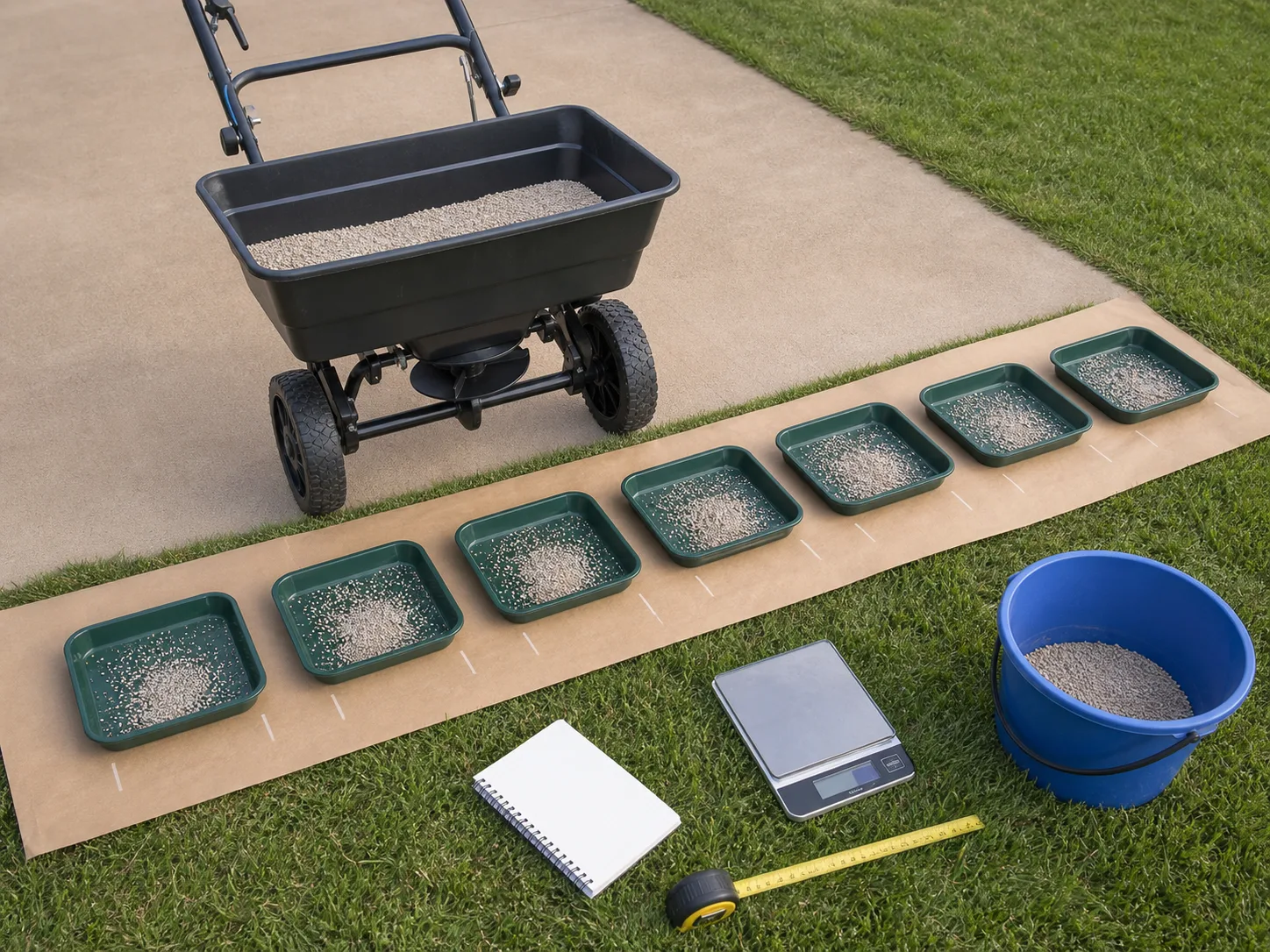
Apply gypsum only after the report identifies a need and provides a plan. Choose a horticultural or agricultural gypsum product labeled for soil use; do not substitute an unknown construction byproduct or assume that every product has the same particle size or purity. If the product label includes protective, storage, or watering instructions, follow them.
Work from a test-based recommendation
- Mark the treated area. Separate the affected bed from neighboring soil with different test results. Record its length and width so you can calculate the amount from the stated rate.
- Confirm the rate and depth. Check that the laboratory recommendation applies to a garden or landscape and the rooting depth you intend to treat. If it is written for cropland, livestock areas, or a different soil, ask for a home-garden interpretation.
- Measure the product. Weigh or measure the amount the recommendation calls for. Do not use the bag’s general coverage estimate in place of a soil-specific recommendation.
- Distribute it evenly. Spread the measured product across the target area rather than concentrating it at stems or in planting holes. For a large lawn or bed, a spreader can improve consistency; calibrate it with the product and target area before covering the full site.
- Incorporate or water only as directed. Some recommendations call for incorporation to a specified depth; others rely on water to move dissolved calcium through the soil. Do not till deeply or irrigate heavily by default, especially if the bed is wet, slopes toward a drain, or has no safe drainage outlet.
Apply in the right conditions and recheck
Soil should be workable, not saturated. If a shovel smears the surface into a slick ribbon or the area is waterlogged, wait; walking and working wet clay can add compaction that no amendment will undo. Apply when you can follow the recommendation’s incorporation and irrigation directions without sending sediment or salty runoff into a storm drain or waterway.
After treatment, watch for the change the test was meant to address: improved infiltration, less surface crusting, or better tilth. Those observations are helpful but do not prove that sodium has been removed, and a single storm can make a poorly drained area look temporarily different. Retest on the schedule the lab gives you before repeating gypsum.
If you do not see improvement, pause rather than increasing the dose. Check whether the original diagnosis was correct, whether water could leach sodium out, whether the water source continues to add salts, and whether a physical barrier is still limiting drainage. An extension soil specialist can interpret the result with site details you cannot get from appearance alone.
Better fixes for ordinary heavy clay
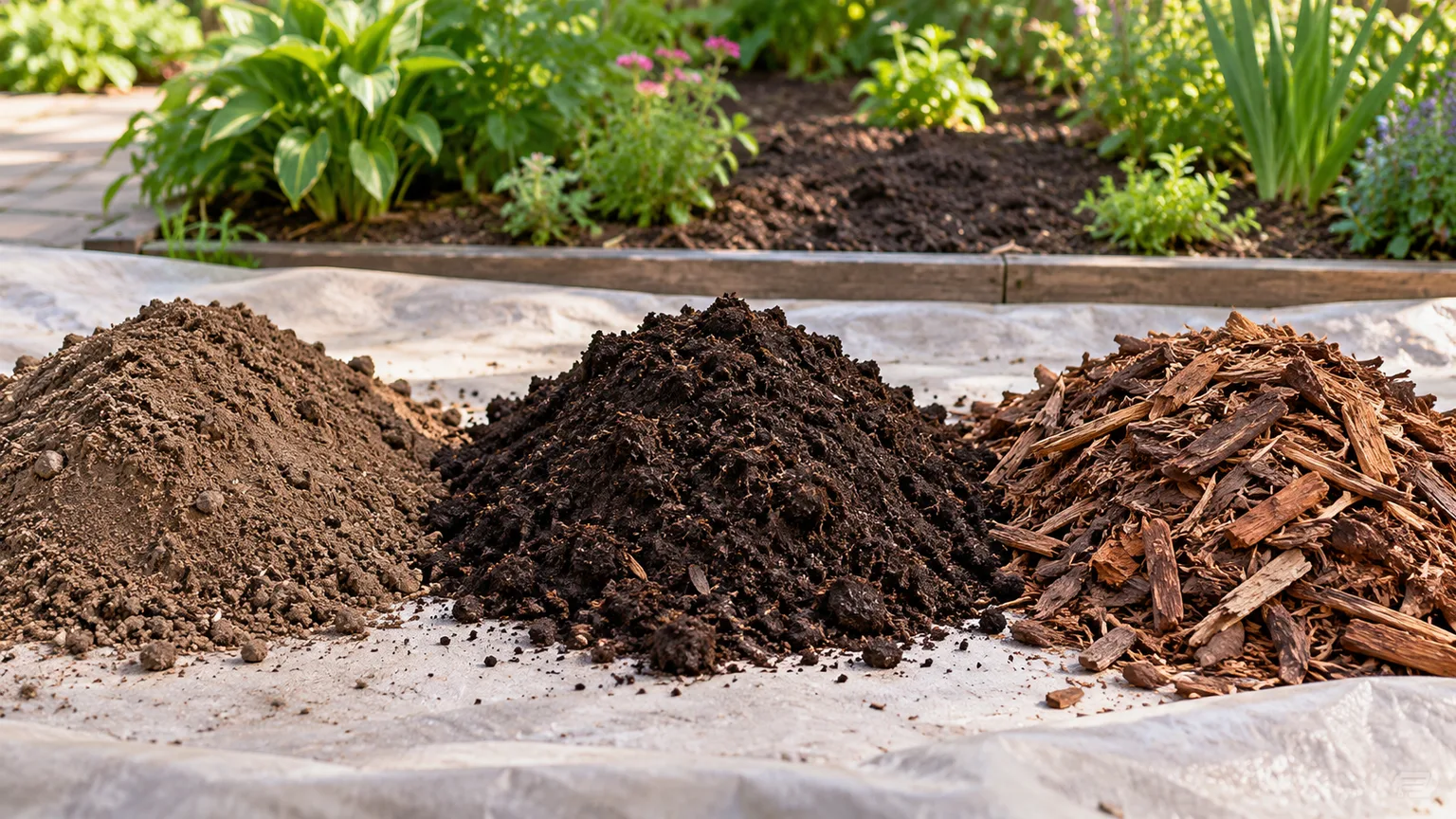
For the common situation of heavy but nonsodic garden clay, focus on structure and management. Fine Gardening’s long-term approach—adding compost and other organic matter while minimizing unnecessary disturbance—addresses the soil-building work gypsum does not do. BBC Gardeners’ World also describes well-rotted organic matter as a standard way to improve garden soil structure (BBC Gardeners’ World on improving soil).
Use mature compost or leaf mold in a steady, moderate program rather than trying to remake the entire bed in one digging session. A surface mulch gradually contributes organic matter as it breaks down, while a modest compost topdressing can improve the planting zone over time. Do not bury thick layers of fresh or undecomposed material against plant crowns, and do not repeatedly churn wet clay; both practices can create new problems even when the amendment is organic.
Match the fix to the actual limitation:
| What you observe | Better first move | Is gypsum the default? |
|---|---|---|
| Sticky clay, but no sodium result | Build organic matter; keep traffic off the bed; work only when crumbly | No |
| Crusting or poor infiltration plus a sodicity result | Ask the lab for a gypsum rate and leaching plan | It may be appropriate |
| Low pH on a soil test | Follow the test’s lime recommendation | No |
| Water pools in a low spot or above a dense layer | Correct grading or drainage; consider a raised bed | No |
| Lawn soil compressed by repeated foot traffic | Reduce traffic and assess core aeration for the grass and season | Not without a soil-test reason |
| Salty irrigation water or coastal spray | Test soil and water; reduce the salt input and protect plants | Only if the diagnosis supports it |
If a bed remains waterlogged despite better surface structure, do not keep layering amendments without checking below the planting zone. Raised beds, paths that direct water safely, or a drainage plan can make a difficult site usable while preserving the soil beneath it. Where the clay itself is not harming the plants you want to grow, selecting plants that tolerate the local soil can be less disruptive than treating the whole yard.
Conclusion
Use gypsum in gardening only when a soil test or qualified local recommendation shows a sodium-related soil problem or a calcium need that gypsum can address. The soil also needs a route for water to carry displaced sodium away; without drainage, spreading more product is not a solution.
For ordinary heavy clay, do not start with gypsum. Keep the soil test-based, build organic matter gradually, avoid working wet ground, and correct drainage or traffic compaction directly. A measured diagnosis, a site-specific rate, and a retest are what turn gypsum from a guess into a useful soil amendment.



