Landscaping Around Trees: 15 Ideas for Any Home Garden
Find landscaping around trees ideas that protect roots, handle shade and drought, and add color with mulch, bulbs, groundcovers, paths, and containers.
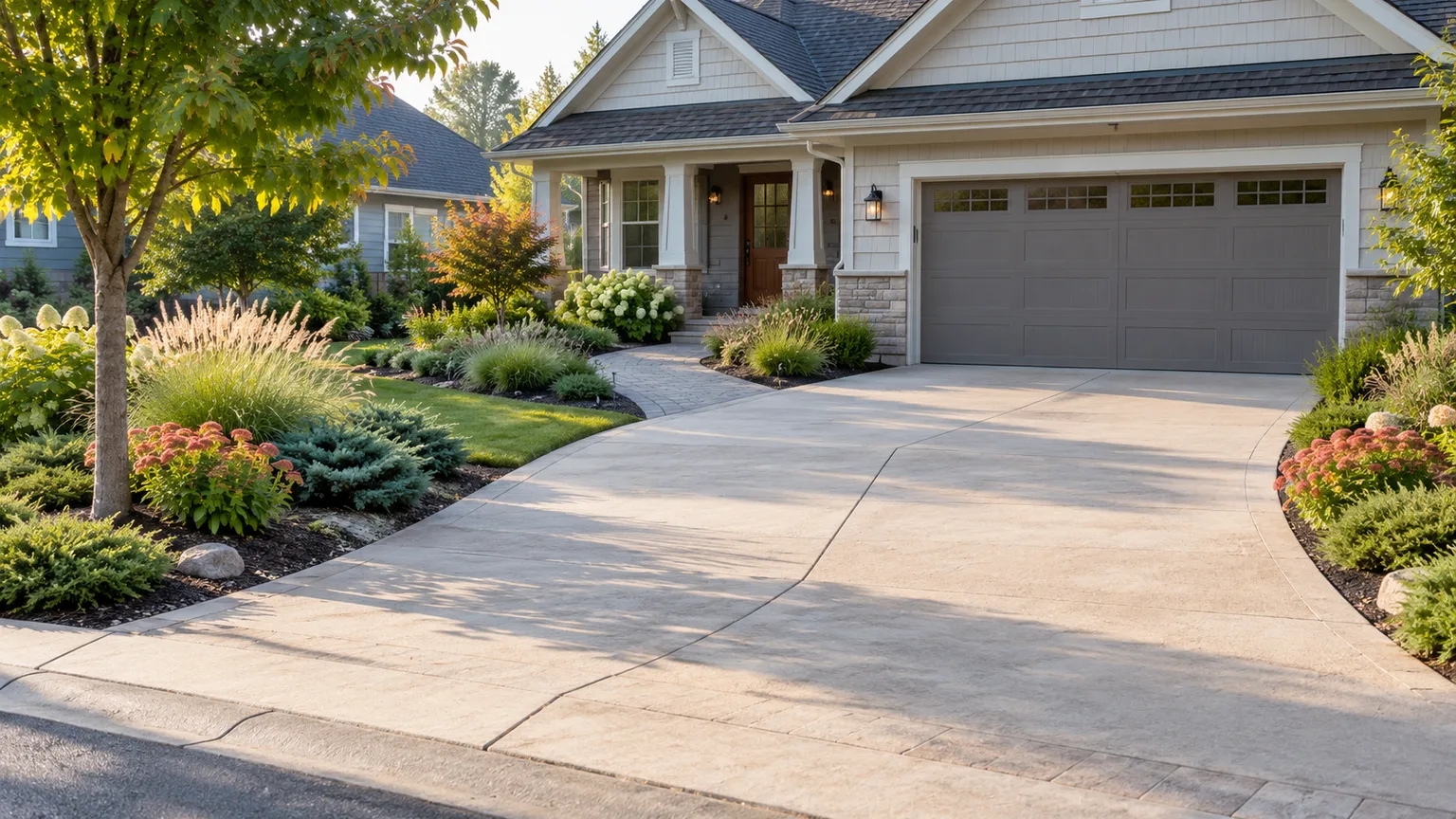
The ground beneath a mature tree can look neglected even when the rest of the yard is carefully planted. Turf thins in shade, surface roots make mowing awkward, and the tree canopy can leave the soil drier than you expect. The best fix is usually a design that works with those conditions instead of forcing grass, deep soil, or thirsty flowers into a difficult spot.
A landscape around a tree can be as simple as a broad mulch bed or as finished as a woodland garden with a path and layered foliage. Before choosing a look, locate the root flare, notice where rain reaches the ground, and watch the site through a full day. Those three observations help you choose a style that will look intentional and let the tree keep the conditions it needs.
15 landscaping styles to borrow from
1. A wide, simple mulch apron
A broad mulch apron is the easiest way to replace struggling lawn around a tree. It creates a clean visual boundary, keeps mowers and string trimmers away from the trunk, and reduces the grass competition and repeated foot traffic that make a narrow tree ring hard to maintain. An irregular edge that follows the canopy usually looks more natural than a small perfect circle.
Use coarse organic mulch such as wood chips or shredded bark, spread evenly rather than piled against the trunk. Penn State Extension recommends a 2- to 4-inch layer for many landscape trees, with less for fine-textured mulch or poorly drained soil; the root flare must remain visible. Its mulching guide explains why a donut-shaped layer protects the root zone better than a mound touching the bark. Leave the center open around the trunk, and widen the bed as the tree grows if you have room.
2. A crisp circular edge
A circular bed gives a front yard a formal, finished look, especially around a specimen tree standing alone in lawn. The edge can be a narrow line cut into the turf, a low metal strip, or a single course of stone set at grade. A restrained border lets the trunk and canopy stay visually dominant instead of turning the planting ring into a miniature retaining wall.
Keep the edging shallow and avoid trenching through roots to make a perfect circle. A tree’s roots do not follow a tidy bed outline, and a hard edge that forces deep excavation can injure them. If the circle has to shift around roots or the tree is offset in the lawn, an oval or broken arc will look more intentional than forcing symmetry at the cost of the root zone.
3. An asymmetric island bed
An island bed that bulges toward a walkway, porch, or driveway can tie the tree into the rest of the landscape. This works well when the tree sits off-center or when a straight-edged lawn makes a small ring look like an afterthought. Repeat a few plants and materials already used elsewhere in the yard so the bed feels connected rather than like a separate theme.
Draw the outline before removing turf. A broad, shallow shape usually reads better and is easier to mow around than a narrow ribbon of mulch. Use a hand trowel to lift turf near the trunk and surface roots; stop where a substantial root blocks the design rather than cutting it to preserve a curve. In a hot or dry region, keep part of the bed as mulch instead of filling every open patch with plants that need frequent watering.
4. A woodland groundcover ring
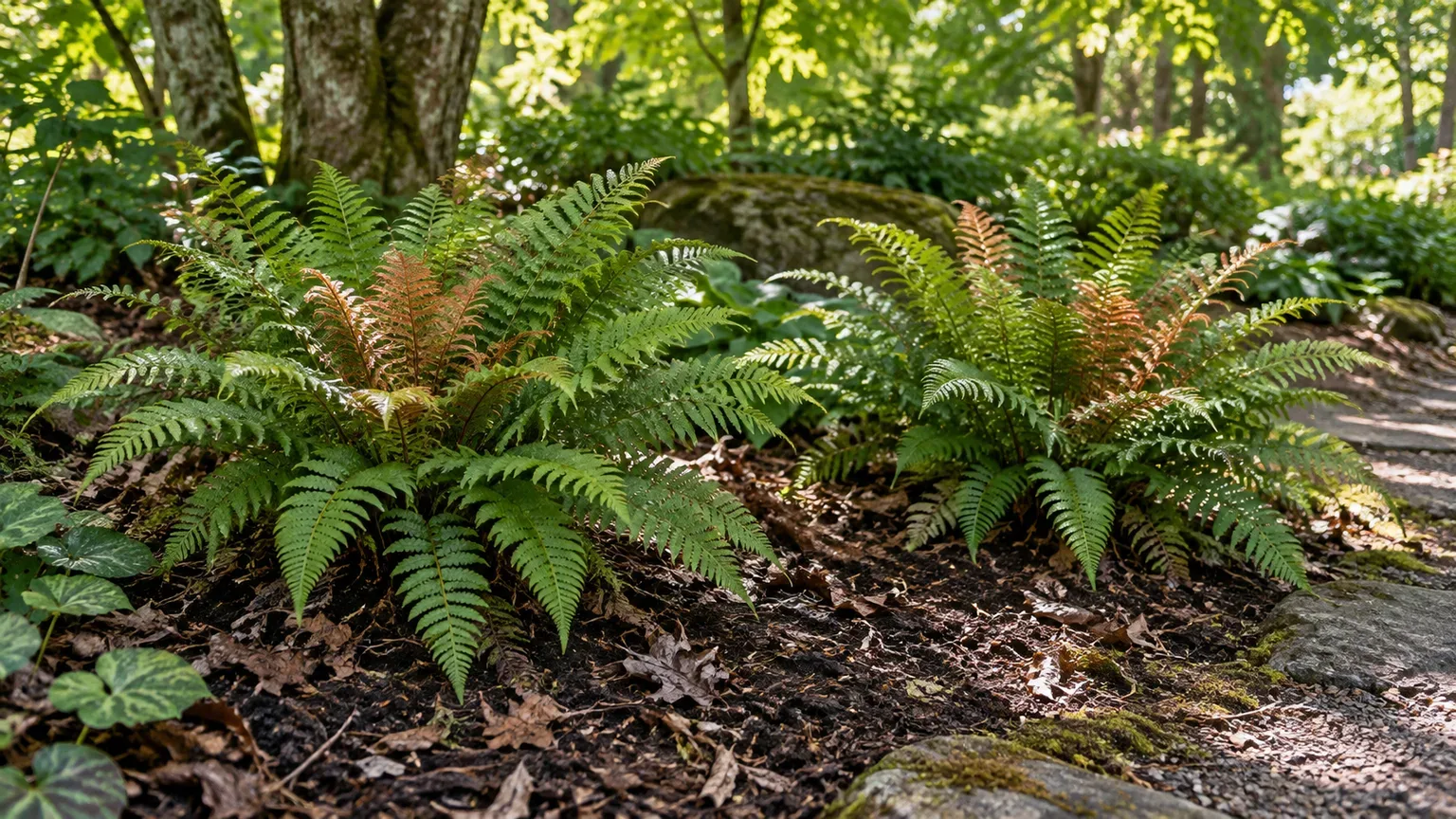
A woodland-style planting softens a tree’s base with low, repeating layers rather than a ring of isolated specimens. Native ferns, foamflower, wild ginger, sedges, or other locally suitable woodland plants can make the ground feel like a natural extension of the canopy. A restrained palette repeated in drifts looks calmer and is easier to weed than a different plant in every gap.
The design is most successful under a deciduous tree where spring light reaches the ground before the canopy fills in. Under dense evergreen branches or a particularly dry canopy, plant cover may stay sparse; a mulched woodland floor can still look finished. Penn State Extension cautions that planting under trees means working around roots, not adding a deep layer of soil over them, and recommends starting away from the trunk with small plants and small planting holes. See its underplanting guidance before digging.
5. A spring-bulb carpet
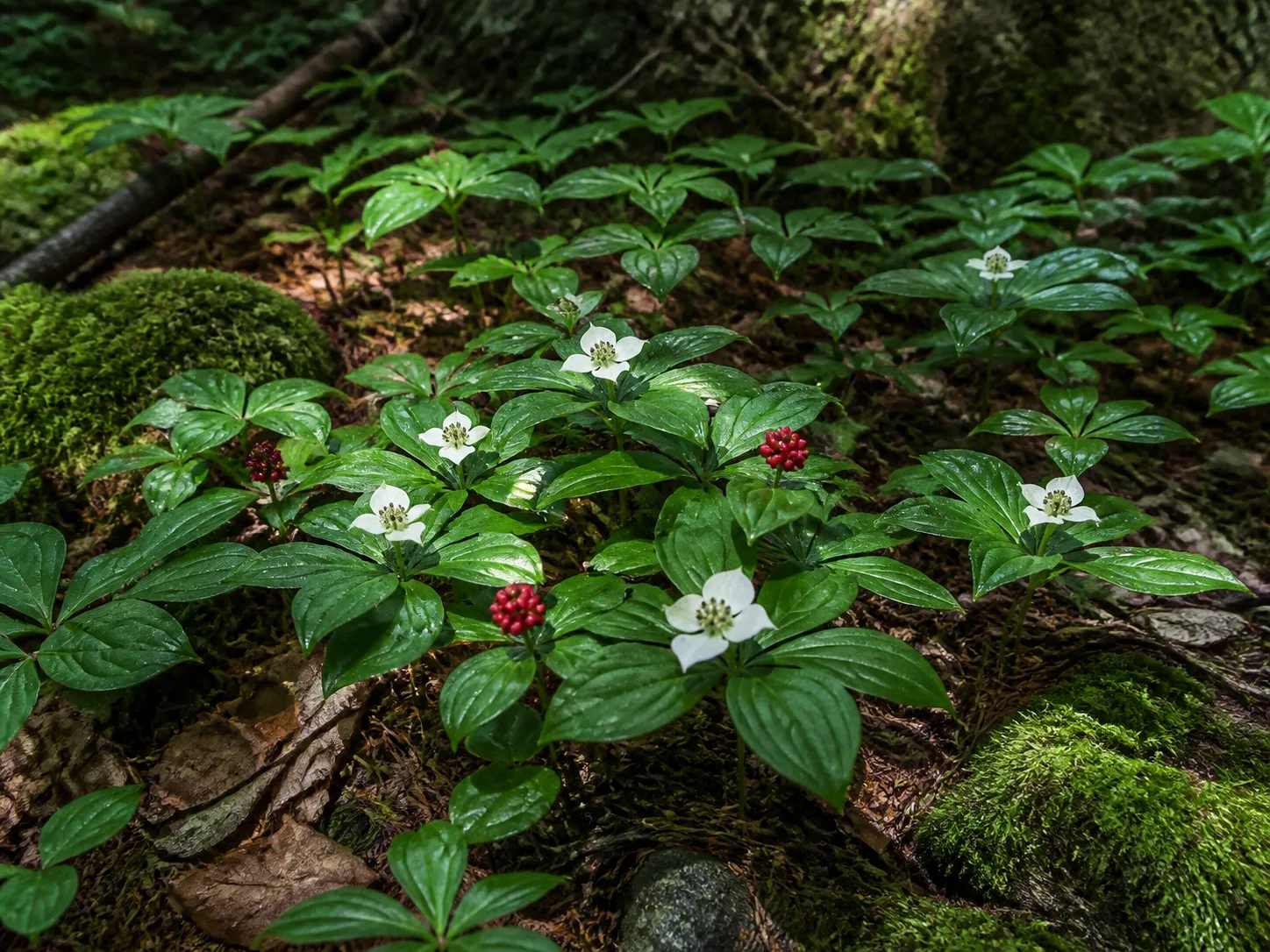
Spring bulbs and woodland ephemerals offer a vivid seasonal display before a deciduous tree leafs out. Snowdrops, crocus, bluebells, or regionally appropriate native spring flowers can brighten the site, then fade back as summer shade deepens. Plant them in loose clusters instead of evenly spaced dots; natural groupings make the ground look more like a garden and less like a polka-dot lawn.
Choose species suited to your region and avoid bulbs known to spread aggressively where you live. Planting among established roots takes patience: use a narrow bulb planter or hand tool, move a few inches when you meet a root, and do not chop through roots to keep rows straight. The look is especially useful where you want spring color but prefer mulch or foliage for the rest of the year.
6. A foliage-first shade border
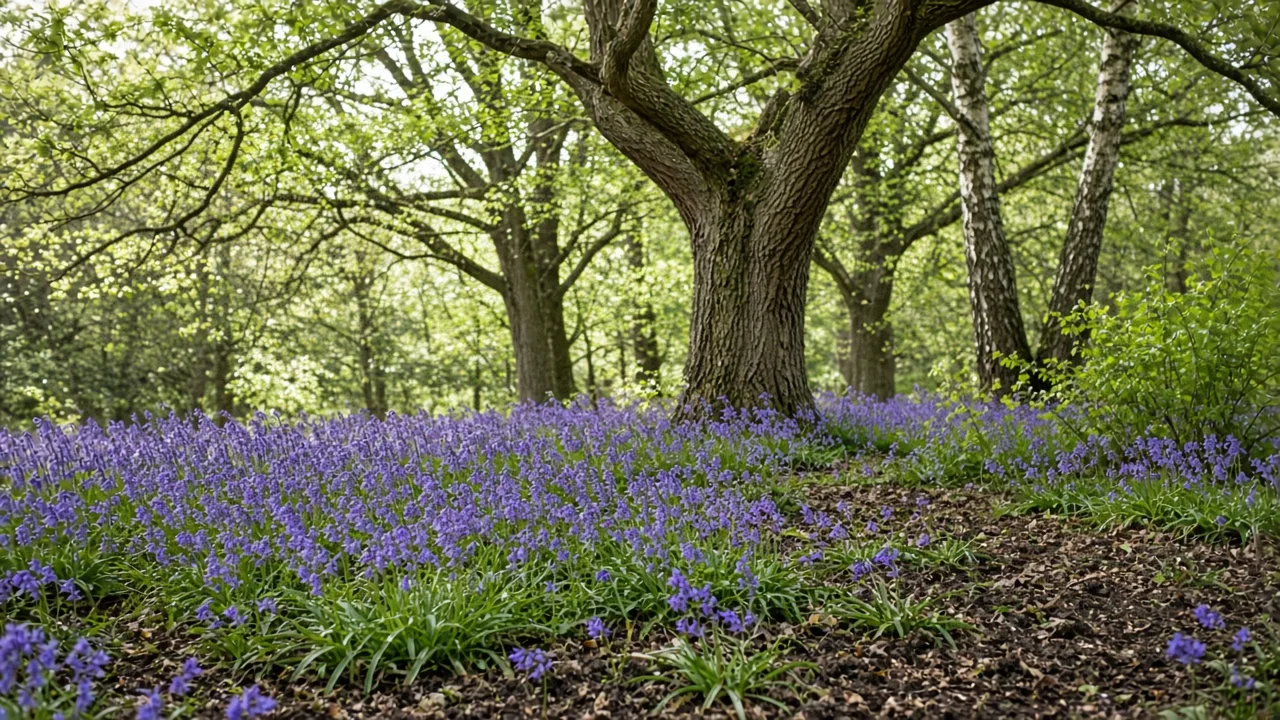
In deep shade, foliage often gives a more dependable display than flowers. Combine broad leaves, fine fern fronds, and a few brighter or patterned plants for contrast that lasts beyond a short bloom season. Hostas, coral bells, dry-tolerant ferns, and Japanese forest grass are familiar examples, but use varieties suited to your winter temperatures, summer humidity, and local pest pressure.
Keep the palette tight: two or three leaf shapes and a limited color range can make a small under-tree bed feel designed. A patch of gold or silver foliage can lift a dim corner, while dark green plants help a bright trunk or pale stone stand out. This approach is better for a site where flowers disappoint, but it still needs establishment watering and occasional cleanup of fallen leaves. The Royal Horticultural Society’s advice for shade and plants under trees distinguishes light shade from dry, heavy shade and offers plant choices for different conditions.
7. A low groundcover mosaic
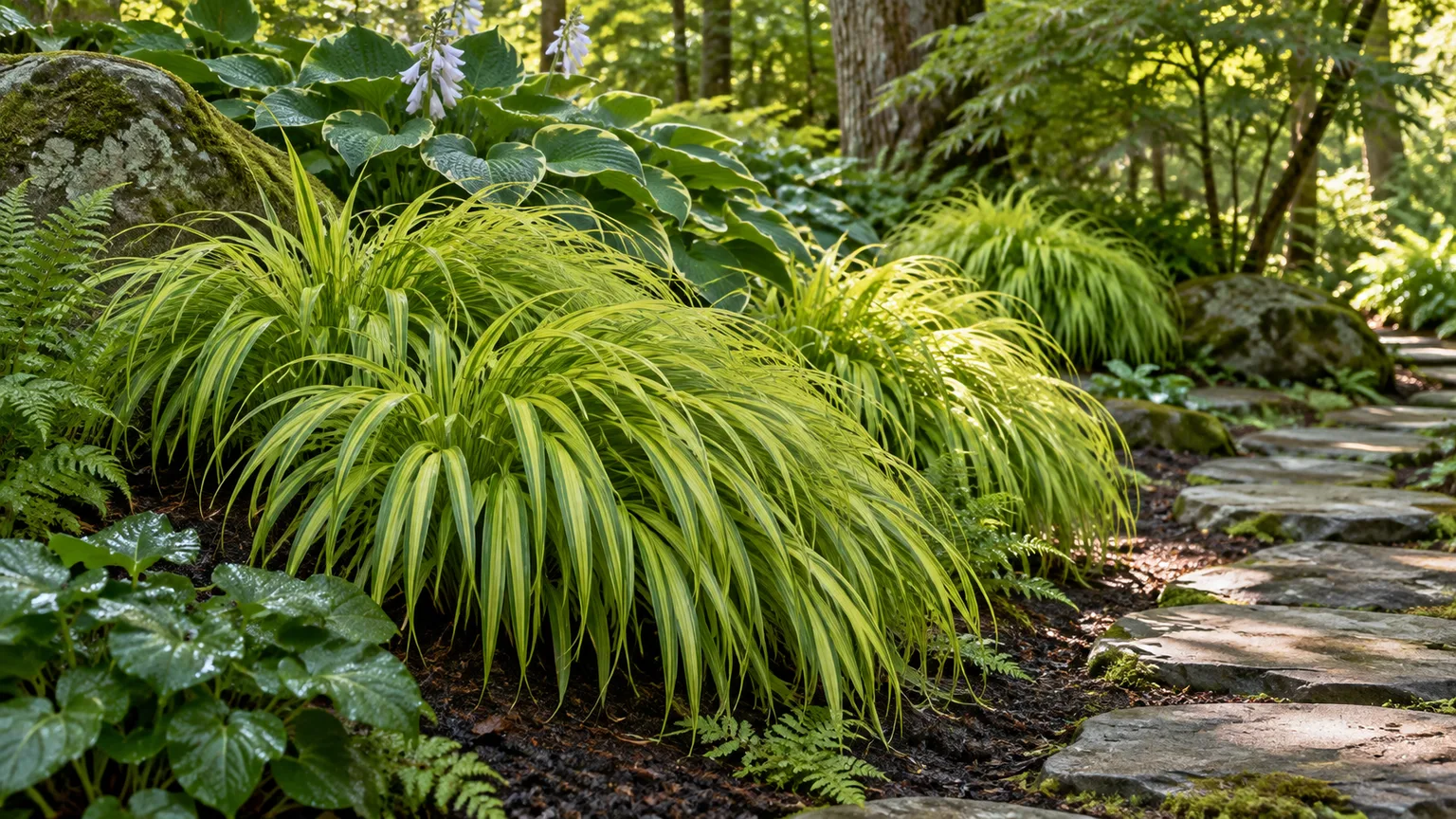
A living carpet can replace part of the lawn while keeping the tree’s root zone visually soft. Use one main groundcover and add a few islands of contrasting foliage or stone, rather than mixing several vigorous spreaders. This gives the bed a clear pattern and leaves access for watering, weeding, or checking the trunk.
Groundcovers differ in how quickly and widely they spread. Before planting ajuga, periwinkle, creeping Jenny, or any other runner, check whether it is considered invasive in your state or region and whether it will escape into woodland or neighboring beds. For a more ecological planting, choose a native groundcover recommended for your local soil and moisture. Do not expect a dense green carpet beneath every tree: poor light, dry roots, and fallen leaves can make a loose planting or mulch more realistic.
8. A sedge or ornamental-grass skirt
A band of sedges or shade-tolerant ornamental grasses adds movement and texture around a tree without relying on flowers. Small clumps can mark the edge of a bed, repeat along a walk, or form a broad understory that looks tidy through much of the year. Fine foliage contrasts well with the heavier leaves of shrubs and hostas.
Match the species to actual moisture, not just the word “shade” on a plant label. Some sedges tolerate dry woodland soils; others prefer consistently moist ground, and a tree may pull water from the area faster than rainfall replenishes it. Keep plantings low enough that they do not hide the root flare or crowd the trunk, and leave room for a mower or footpath at the bed edge. In regions where native sedges are available, they can give the design a strong local character.
9. A layered shrub-and-perennial understory
A larger yard may have room for a small shrub layer beneath or just beyond the tree canopy. Position shrubs toward the outer edge, then use perennials and groundcovers closer in, where tree roots and shade make digging more difficult. The resulting layers give the bed height and depth without trying to plant a shrub against the trunk.
This arrangement is usually more successful under a high, open canopy than beneath low evergreen branches. Select shrubs for mature size and for the soil pH and moisture they will actually get; an evergreen rhododendron that needs acidic, evenly moist soil is not a universal solution for a dry maple root zone. The RHS and local extension plant lists can help narrow candidates, but use local hardiness and invasive-plant guidance before buying. Plan spacing for mature width so future pruning is not required just to keep the tree and understory from colliding.
10. A natural stone and dry-shade garden
A few flat stones or boulders can make an exposed-root area look deliberate and give the bed a quiet woodland or Japanese-inspired character. Keep stones at the surface, place them where they do not rest on large roots, and use small pockets of dry-shade plants around them. A small number of carefully placed stones reads better than a thick blanket of gravel.
Rock is a design material, not a substitute for healthy soil. Unlike organic mulch, stone does not add organic matter as it breaks down, and installation can compact soil or require root-damaging excavation. Avoid covering the root flare or burying surface roots beneath a raised layer of rock. In hot climates, dark stone can also become an uncomfortable focal point near patios; try a limited accent first and check how it looks at midday before spreading it across a large bed.
11. A seasonal annual color band
If you want summer color with a flexible planting plan, add a few shallow pockets of annuals along the outside edge of the tree bed. Impatiens or begonias may suit a lightly shaded, watered border; brighter edges can support other regionally appropriate bedding plants. Repeat a single color or use two complementary shades so the ring looks cohesive instead of crowded.
Annuals require replanting, regular watering, and more disturbance than a settled perennial bed. Keep them away from the trunk and do not amend the whole root zone with a deep layer of potting mix. If the tree canopy intercepts rain, check containers and small plants during hot spells; shade does not guarantee moist soil. This style is best for a modest bed where you can reach plants without walking over major roots or compacting the soil.
12. A bench-side garden retreat
A simple bench near a tree turns a shaded corner into a place to sit, but the seating area should not compress the soil right against the trunk. Place the bench on an existing patio, firm path, or small area outside the most sensitive roots, then make the approach comfortable with stepping stones and low planting. The tree provides the overhead architecture; the bed can stay loose and uncomplicated.
Avoid anchoring a bench, swing, or lighting to the tree itself. Do not dig deep post holes or pour a footing near major roots just to center the seat under the canopy. If you have no existing hard surface, a movable bench lets you test the location and shift it if the ground stays muddy or the tree’s roots become exposed. Use shade-tolerant, low-maintenance foliage near the seat rather than fragrant or flowering plants that need frequent deadheading at a difficult-to-reach spot.
13. A stepping-stone path through shade
A narrow path can make the area around a tree feel like a garden room and keep people from cutting across planted soil. Set stepping stones through open gaps, curve the route around the trunk, and use mulch or low groundcover between stones. A loose route that skirts major roots will be easier to install and more comfortable to walk than a rigid path laid on a perfect axis.
Avoid deep excavation and heavy compaction around mature roots. A surface-laid stone or a path over existing grade is generally less disruptive than a deeply dug base, but it is not automatically harmless; large roots may lift paving or make it uneven over time. For a tree that anchors the yard or stands close to a house, ask a certified arborist or qualified landscape professional to assess the route before construction. A path made from fewer, wider stones often looks calmer and requires less maintenance than tightly fitted pavers.
14. A permeable patio or deck that frames the trunk
A deck or patio can create an inviting outdoor room while letting a mature tree remain the focal point. The design should give the trunk generous clearance, allow for future growth, and avoid fastening anything to the bark. Openings between deck boards or a designed gap around the trunk can help preserve access to the soil surface, but neither detail protects roots from construction traffic, posts, or excavation by itself.
Start with an arborist or landscape professional who can map likely root conflicts and recommend a structure that avoids major roots. Permeable pavers also need a base; installation can involve excavation and compaction, so “permeable” does not mean “safe to lay over any root.” In many yards, the better compromise is a small patio outside the tree’s main root area with a view toward the canopy, rather than hardscape wrapped tightly around the trunk.
15. A container ring for movable color
Containers give you a composed look when roots make in-ground planting risky or the site is too dry for the plants you want. Group pots of different heights and sizes near the outer edge of the canopy, leaving the trunk and root flare open. A single repeating pot material can make annuals, ferns, or small shrubs feel like one arrangement even when the plants change seasonally.
Containers are easy to reposition, but they dry faster than garden soil and may need more frequent watering. Keep saucers from trapping water against the tree, and do not stack heavy pots on exposed roots. This is a useful style for renters, newly built yards with compacted soil, or gardeners who want bright seasonal color without digging. It works especially well beside an existing patio or path rather than in the tree’s most sensitive root zone.
Protect the tree before landscaping
Start by finding the root flare, the point where the trunk widens into the first major roots. Keep it visible and leave a small open collar around the trunk; neither edging, mulch, soil, nor plants should be pressed against the bark. A circular bed can be attractive, but the center should not become a volcano of soil and mulch. Penn State Extension explains that excess mulch can trap moisture at the trunk, interfere with oxygen exchange, and contribute to decay.
Work with the soil level already there. Do not build a raised bed or add a deep layer of soil to cover exposed roots: extra fill can reduce oxygen movement through the soil and keep the trunk too wet. If the surface roots bother you visually, echo their curves with a mulch edge or plant around them instead of burying or cutting them. For a planting zone, Penn State recommends starting about a foot from the trunk, removing turf with a hand trowel, and using small plants and small holes. If you uncover a root about two inches across or larger, refill the hole and move the plant.
Water new underplantings deeply and consistently while they establish, then adjust to rainfall and the tree’s needs. A tree canopy can intercept rain, so the soil below may be dry even after a shower. Avoid routine fertilizing unless a soil test or qualified professional identifies a need; the goal is to establish plants that suit the site, not to push the whole root zone into fast growth. Keep construction materials, vehicles, and repeated foot traffic away from the tree during work.
Match a style to your tree and site
Notice the site at different times of day and after rain. Deciduous trees may allow spring sun before leaf-out, while evergreens create year-round shade; an open canopy produces dappled light, and a dense canopy can create very dry conditions. The RHS notes that planting under trees is often limited by both light and moisture, and that even shade-tolerant plants may struggle in deep, dry shade. A quick moisture check a few inches below the surface is more useful than choosing a plant from a “shade” label alone.
Then choose the design based on how the space is used. For low maintenance, start with a wide organic mulch bed. For seasonal color, combine spring bulbs with a simple summer foliage layer. If people need to cross the area, route a path around the trunk and keep the main bed free of traffic. A design magazine’s shade-garden examples show how paths, foliage texture, curved edges, and grouped planting can make shade feel intentional; around an established tree, adapt those ideas without copying any detail that requires deep digging.
Before buying plants, check mature size, hardiness, water needs, soil preferences, and whether a species is invasive where you live. Local native-plant societies and cooperative extensions can suggest species that handle your region’s dry shade and support local wildlife. Buy small plugs or divisions when possible, plant only where a hand tool fits easily, and treat each large root as a design boundary. If the tree is declining, has a buried root flare, or would need grading, trenching, or major hardscape nearby, get an arborist’s advice before changing the site.
Conclusion
The most successful landscaping around trees looks finished without hiding how the tree grows. Choose a wide mulch bed, a woodland planting, spring bulbs, a restrained foliage palette, or a path and seating area that respects the roots you have. Keep the root flare visible, avoid deep soil and mulch piles, and let actual shade and moisture decide which plants belong. A design that works with the tree’s site will be easier to maintain and more likely to look good as the canopy changes.



