How to Grow and Care for Jack-in-the-Pulpit Plants
Learn how to grow jack-in-the-pulpit in a moist woodland shade garden, from corm planting and summer dormancy to seed, division, and safe berry handling.
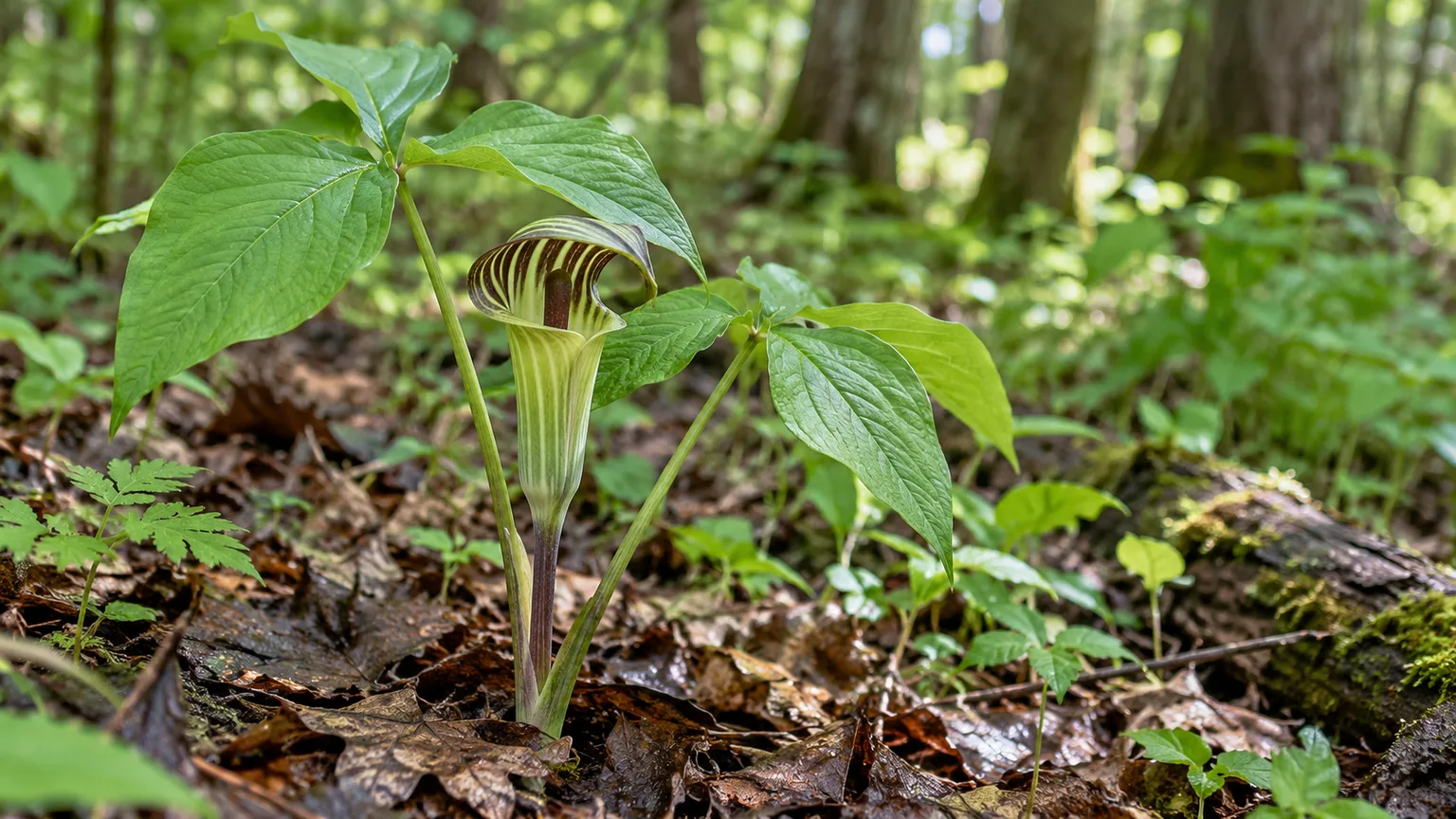
Jack-in-the-pulpit (Arisaema triphyllum) succeeds when its site feels like a cool, moist woodland floor: shaded, rich in leaf mold, and damp without staying stagnant. It is a spring ephemeral, so its leaves and hooded flower appear for a short season and the plant naturally retreats underground as summer advances. The important first decision is therefore not how often to fertilize, but whether your garden can keep a dormant corm alive through the dry part of the year.
This eastern North American native is a rewarding choice for a woodland or rain-fed shade bed, but it is not a universal “shade plant.” It struggles in dry root competition, hot afternoon sun, and compacted soil that stays airless after rain. Give it a compatible spot, mark where it is planted, and expect a slow, seasonal plant rather than a continuously leafy border filler.
At a glance: the conditions that matter most
Use these ranges as a starting point, then adapt to your local climate and the size of the nursery stock. NC State Extension lists the plant for USDA Zones 4a through 9b and describes it as a woodland wildflower for fertile, medium-to-wet soil in part to full shade. The key combination is persistent moisture during active growth plus enough drainage that a corm is not sitting in stagnant water.
| Growing factor | Best starting point | What to avoid |
|---|---|---|
| Light | Part shade to full shade; dappled light is ideal | Hot afternoon sun and exposed western sites |
| Soil | Humus-rich, moisture-retentive soil with a loose structure | Compacted clay that stays saturated or dry, root-filled shade |
| Water | Even moisture during establishment and spring growth | Letting the root zone dry for weeks, or keeping it flooded |
| Planting stock | Nursery-propagated corm or potted plant | Wild-collected plants and unlabelled corms with unknown handling |
| Seasonal habit | Spring leaves and flower, then summer dormancy | Treating normal dieback as a need to dig or fertilize |
| Safety | Handle thoughtfully; never eat any part | Accessible berries or plant pieces where children or pets chew |
If your site is shaded but bone-dry under mature tree roots, choose a plant adapted to dry shade instead. If the soil is moist but drains after heavy rain, jack-in-the-pulpit is a much better match than it would be in a permanently waterlogged pocket. This simple distinction prevents the two most common care mistakes: trying to force a dry site with frequent shallow watering, or assuming a bog plant wants an anaerobic mud hole.
Recognize the plant and its growing cycle
The “pulpit” is the hooded spathe, a modified leaf that curves around the central spadix. The tiny flowers sit low on the spadix, largely hidden by the spathe, so the striped hood is the feature most people notice. Two broad compound leaves usually frame the flower, each divided into three leaflets; the overall plant often reaches about 1 to 2 feet, though a mature specimen may grow taller in a favorable site.
The green aboveground growth is only the seasonal part of the plant. After flowering, the foliage yellows and disappears; the corm remains underground and sends up new growth the following spring. NC State Extension notes that plants in a colony can go dormant by midsummer, while mature flowering plants that set fruit may leave a conspicuous cluster of red berries as the spathe fades. Don’t count on berries from every plant or every year.
Flowering also depends on plant maturity. NC State Extension describes a sex change with age: young flowering plants are male, while older plants may develop female flowers and then fruit if pollinated. That biology helps explain why one plant can bloom without producing berries and why an expanding patch may show different stages at once. NC State Extension’s species profile covers the plant’s growth habit, propagation, wildlife value, and seasonal traits.
Choose a site in the right shade
Part shade to full shade is a safe target, especially where deciduous trees provide spring light before the canopy fills in. Dappled light or a few hours of gentle morning sun can work, but prolonged summer sun heats the soil and scorches tender leaves. A spot under open tree canopy, on the north or east side of a building, or near a woodland edge is usually easier to manage than a bright, exposed bed.
Shade alone is not enough. Tree roots can intercept rainfall before it reaches a small perennial, making a dark bed surprisingly dry; a low depression can have the opposite problem and stay saturated. Check the ground a day after a soaking rain and again after a rain-free week, rather than judging it by how cool the air feels. A compatible site remains slightly damp below the surface but does not smell sour or hold standing water for days.
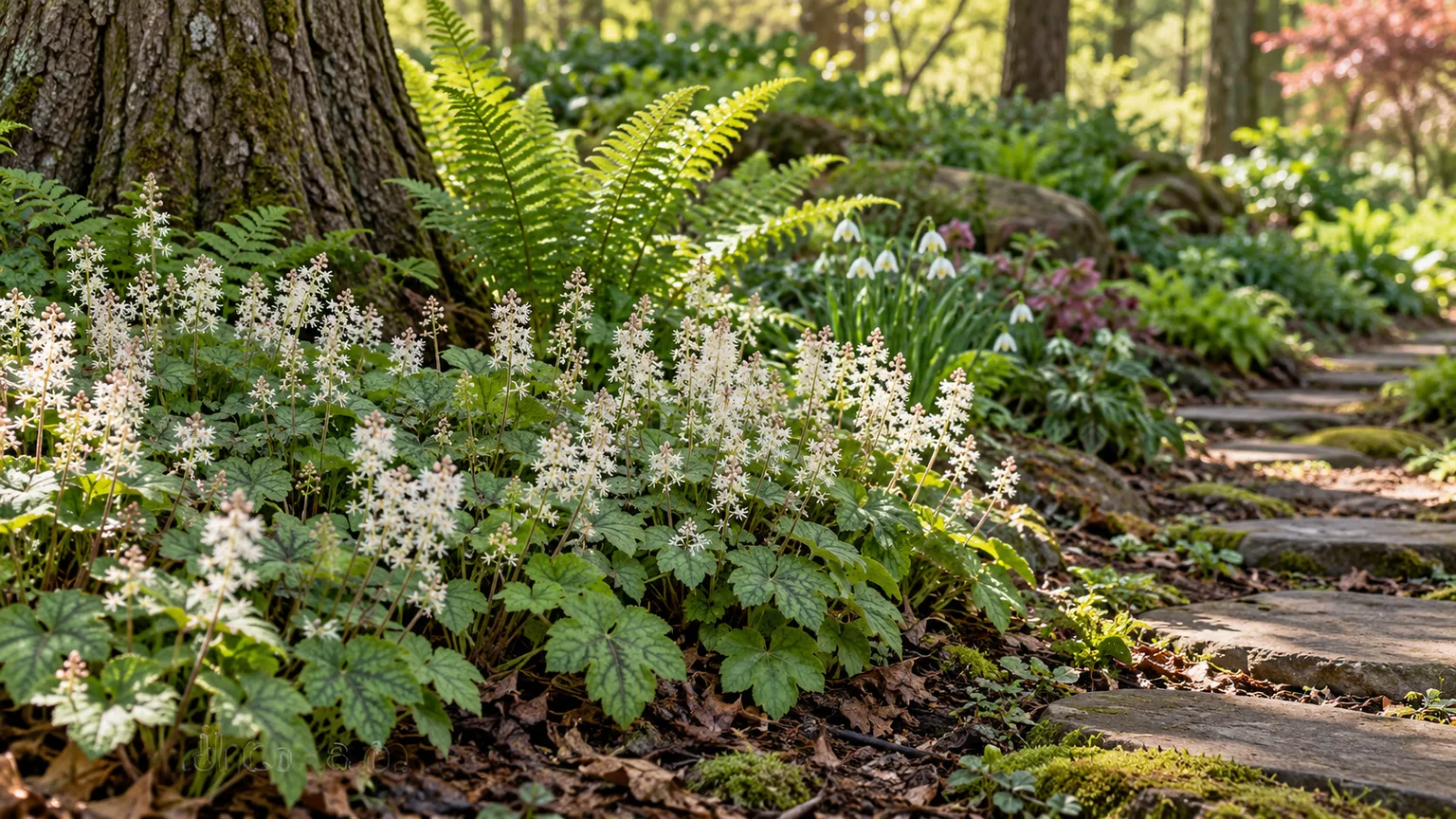
If the only available location dries quickly, improve moisture retention over a broad area with leaf mold or finished compost and plan to water through establishment. Do not pile rich material into a tiny pocket surrounded by dry, compacted soil; roots will still encounter the original conditions, and the pocket may settle or hold water unevenly. When neither shade nor moisture can be made reliable, choose another woodland perennial that matches the site.
Build the soil: moist, humus-rich, but not swampy
Jack-in-the-pulpit prefers soil that holds moisture and oxygen at the same time. A dark, crumbly loam with decaying leaves is close to its natural woodland setting. Mix finished compost or leaf mold into the planting area if the soil is poor, but do not try to fix heavy clay by adding only a little sand; that can leave an even denser mixture. Improve the bed structure more broadly or select a raised woodland bed with reliable moisture.
Fine Gardening describes the species as suited to moist but well-drained, humus-rich soil, with a neutral-to-acidic preference. The native habitat is more useful than chasing an exact pH: if the site has healthy woodland perennials, organic matter, and moderate drainage, you are likely close enough. Avoid adding lime or an acidifying fertilizer without a soil test, because a plant that grows in woodland ground does not automatically need a dramatic pH adjustment.
The word “bog onion” can mislead gardeners into planting in saturated soil. The species tolerates wet conditions, but a corm still needs air around it; in a heavy clay basin that stays waterlogged, rot risk rises. If water stands after ordinary rain, plant on a slightly raised mound or in another site rather than burying the corm deeper and hoping it will adapt.
Water for establishment and summer drought
Water a newly planted corm or nursery plant deeply after planting, then keep the surrounding soil evenly moist while roots establish. Check beneath the mulch with a finger or narrow trowel: if the top inch is dry and the layer below is only faintly cool, water slowly enough to wet the root zone. If it is still damp, wait. A deep soak followed by a check is more useful than frequent surface sprinkling, which can leave the corm dry while encouraging shallow roots.
Once established in suitable woodland soil, rain may provide most of the water. During a prolonged summer drought, however, the corm can be stressed even after the leaves have disappeared, especially beneath thirsty trees or a roof overhang. Give the bed a slow, occasional soak if the soil is dry several inches down; do not keep it wet on a calendar if the ground is already moist. Moisture needs follow the soil and weather, not the name “bog onion.”
Plant corms or nursery-grown plants
Buy nursery-propagated stock from a native-plant grower. Do not dig wild plants or corms from a forest: removing a woodland perennial damages a natural population, and a wild plant may have an established root system that is difficult to transplant. A potted plant is the simplest option because you can see the foliage and set the root mass at its existing level; dormant corms are often sold for autumn or early-spring planting.
For a dormant corm, choose a cool, moist site with no standing water and loosen the soil before planting. Fine Gardening’s plant profile lists a wide 2-to-10-inch planting-depth range for tubers, so follow the seller’s label for the actual corm rather than treating one depth as universal. For average nursery stock with no label, about 4 to 6 inches is a practical starting range; set the bud or growing point upward when it is visible, backfill without compacting the soil hard, water once, and mark the spot.
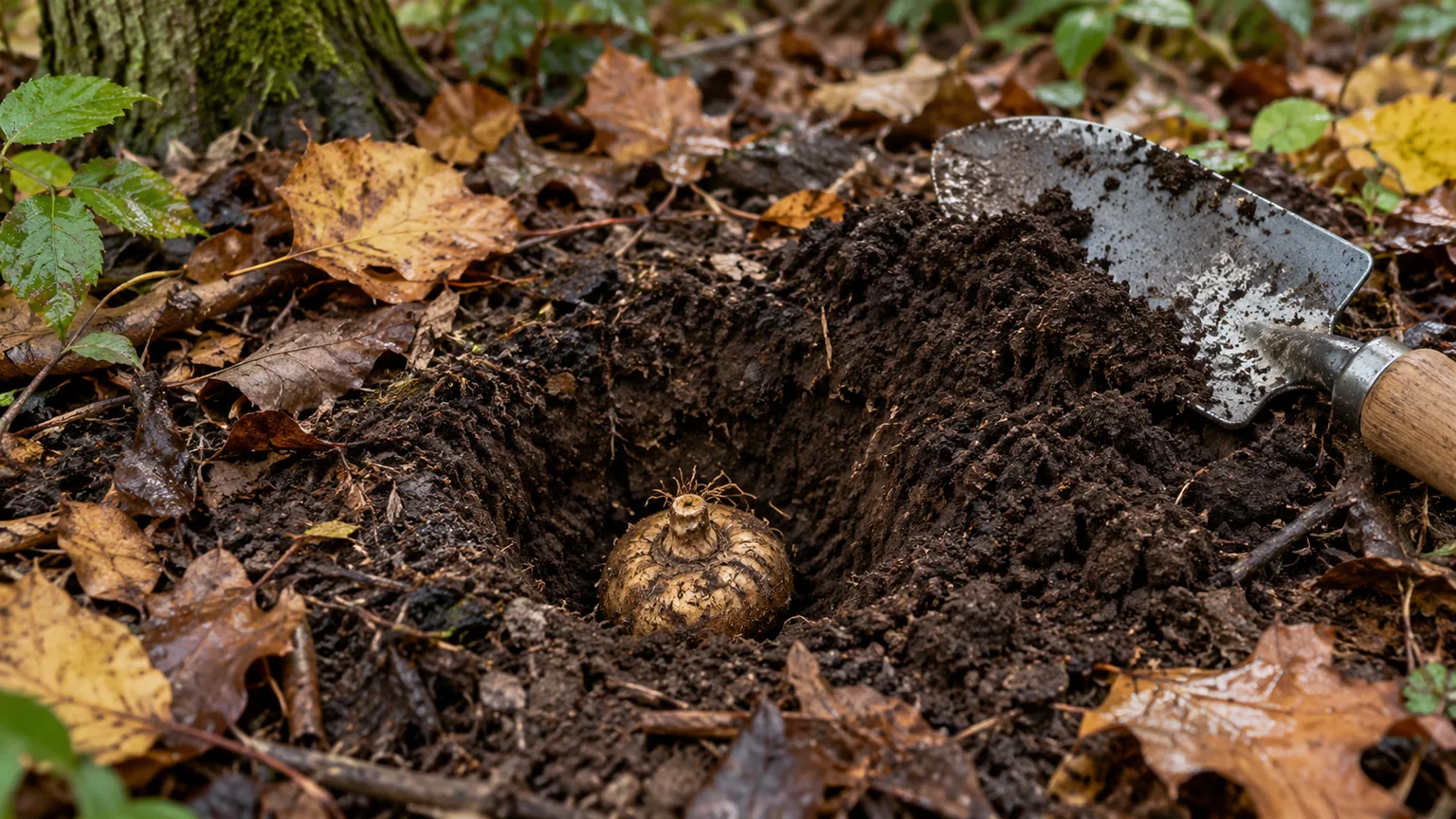
The BBC Gardeners’ World Magazine Arisaema container instructions concern a different species, A. speciosum, but the useful general lesson is to protect the emerging shoot and keep the root zone from drying during active growth. For A. triphyllum, use a deep pot only if you can maintain even moisture and drainage; an unheated container dries and freezes faster than garden soil. A nursery plant should sit at the same depth it was growing in its pot, with loose soil around the root ball and a thin layer of leaf mulch on top.
Care through spring, dormancy, and winter
In early spring, let shoots emerge without pulling away the leaf layer or turning the soil around the marked planting spot. The hooded flower and leaves are tender, and late frost can damage new growth even when the underground corm survives. If a cold snap is forecast after emergence, a loose overnight cover can help; remove it during the day so the plant is not trapped in heat or excess moisture.
As the flower fades, do not cut healthy leaves simply because they look untidy. The leaves replenish the corm for the next season, and any berries develop as the spathe withers. Later, when foliage yellows and collapses naturally, leave it in place to break down or add a light layer of shredded leaves. If the plant is in a formal border, mark its location before the leaves vanish so that summer weeding and fall planting do not disturb it.
Winter care is mostly about avoiding unnecessary cleanup. NC State Extension recommends leaving heavy leafy cover in place, and Fine Gardening likewise advises a winter mulch. Natural tree leaves are useful if they are not matted into a wet blanket; a thin layer of shredded leaves is safer in a compact garden bed. Do not dig up a healthy dormant corm for winter storage in its hardiness range; digging increases the chance of damage and drying.
Do you need fertilizer?
Usually, no. A woodland perennial in humus-rich soil can use the gradual nutrient release from decaying leaves and compost without a routine dose of synthetic fertilizer. NC State Extension notes that the species grows in fertile organic soil and can be propagated from seed or division; it does not prescribe a regular fertilizer schedule.
If foliage stays weak after you have confirmed suitable light and moisture, check soil structure and root competition before reaching for a product. A thin topdressing of finished compost in fall is a restrained way to add organic matter. Avoid strong or repeated high-nitrogen feeding: lush leaf growth will not correct dry soil, and excess nutrients can wash away from a wet bed.
Propagating Jack-in-the-Pulpit
There are two practical routes: let a mature planting self-sow, or divide a clump once it has formed offsets. Seed gives you more plants from a small amount of material but takes years to reach flowering size. Division is faster, but only when there are separate cormlets or a large enough clump to lift without sacrificing the parent plant.
Do not divide a single small plant simply because you want more. Wait until it has grown into a colony, then work when the foliage is dying back or the plant is dormant and you can identify its location. Wear gloves for digging and wash tools afterward; the plant is poisonous if eaten, so keep corms and berries away from children and pets.
Grow from seed
Seed-grown plants demand patience. A mature plant may produce a cluster of red berries after pollination; each berry contains seed, but the berries are not edible. If you want to raise seedlings, collect ripe fruit only from nursery stock or your own garden, remove the pulp carefully while wearing gloves, and sow fresh seed in a labeled outdoor nursery pot or prepared shade bed. Keep the medium lightly moist through natural seasonal temperature changes rather than letting it dry out completely.
Germination can be irregular and slow. NC State Extension reports that seed-grown plants may take up to two years to germinate and around five years to flower, so a bare pot during the first season is not proof that the seed is dead. Protect the pot from rodents, mark the planting place, and do not repeatedly dig through it to check. If the seeds do not sprout after a year, leave the container in the same protected outdoor conditions for another season before discarding it.
Move seedlings only when they have a clear leaf and enough root to hold a small soil plug together. Plant them at the same level, water in, and protect them from a hot dry spell while they settle. Keep expectations realistic: an established parent clump is a better choice if you need an immediate spring display, while seed is best for gardeners who enjoy the slow process of building a naturalized patch.
Divide an established clump
Division is usually the more direct method when an established plant has made offsets. In fall after the leaves decline, or at another dormant period recommended by the nursery that supplied it, loosen soil around the clump with a hand fork rather than cutting straight through the center. Lift only enough to see whether small cormlets are attached to the main corm; if the cormlets are tiny or the colony is sparse, replant the whole group and wait another year.
Separate only offsets with a visible growth point or enough root tissue to establish independently. Replant the parent and offsets promptly at the depth they were growing, with the bud oriented upward when you can identify it. Water the planting area and replace mulch, then keep it evenly moist during the next active growing period. Fine Gardening lists offset removal in autumn as a propagation method, while NC State Extension also recognizes division; both support waiting for real offsets instead of dividing on a fixed calendar.
Why is your Jack-in-the-Pulpit not flowering?
First ask how old the plant is and how it was propagated. Seedlings may need about five years to flower, and a newly purchased corm may need time to settle and build reserves. A small plant with healthy leaves is not necessarily failing just because it has not produced a spathe yet.
Next examine shade and summer moisture. Too much direct sun can damage the leaves and dry the root zone, while a compacted planting pocket may deprive the corm of oxygen. A spring plant that gets ample foliage but no flower may simply be immature; a plant whose leaves shrivel soon after emergence points more strongly to drought, root disturbance, or a poor site. Make one change at a time so you can tell whether the problem is actually improving.
Do not respond to a missed bloom by fertilizing heavily or excavating the corm. Preserve leaves until they die back, water during dry spells, and reassess the following spring. If the plant never emerges again, check the marked spot gently only after the usual emergence period for your region has passed; digging too early can destroy a healthy but dormant corm.
Diagnose fading, damage, or failed emergence
Yellowing after flowering and midsummer disappearance are usually normal. The plant is a spring ephemeral, and the underground corm survives after the aboveground growth retreats. If the leaves fade gradually after their seasonal display, do not treat that as a disease or cut the plant down early. A red berry cluster may remain after the foliage has vanished.
Premature collapse during active growth deserves a site check. Push aside mulch and feel the soil: dry soil several inches down calls for a deep soak, while sour-smelling saturated soil suggests poor drainage. Leaf edges that scorch on the sun-facing side may indicate excessive exposure; damaged leaves chewed overnight point toward slugs or other feeding pests. Fine Gardening lists slug and vine-weevil damage and several diseases, but NC State Extension reports no significant routine insect or disease problem for the species, so begin with observation instead of preventive sprays.
Remove slugs by hand at dusk or improve the bed so it does not stay needlessly wet at the surface. If damage is extensive, identify the pest before using a product and follow its label; broad insecticide use can harm beneficial organisms and is rarely a first step for this woodland perennial. If an established planting fails to return, consider whether the site dried completely during dormancy, whether it was accidentally dug, or whether a pot froze and dried out more quickly than the surrounding garden.
Use it in a woodland garden
Jack-in-the-pulpit works best as a seasonal focal point, not as the plant expected to cover bare soil all summer. Place it where its hooded spring flower can be seen from a path or window, then pair it with longer-lasting foliage that can occupy the space after dormancy. Locally native ferns, wild ginger, foamflower, and Solomon’s seal can make a layered woodland bed, provided each companion suits the moisture and light of that exact spot.
Leave enough room for a small colony to develop without burying the plant under aggressive groundcovers. NC State Extension notes that cormlets let the plant spread, and mature plantings can gradually naturalize; that is a slow, welcome expansion, not a reason to cram it between dense roots. Use a few markers during the first seasons, especially if you plan to add summer annuals or bulbs nearby.
Choose companions with the same soil needs but a different seasonal role. A mix of spring ephemerals can share the early woodland window, while ferns and other shade foliage keep the bed legible later in the year. If you do not want red berries or cannot keep children and pets from sampling them, place the plant away from play areas rather than relying on animals to avoid it.
Handle the plant and berries safely
Jack-in-the-pulpit is poisonous if eaten, despite common names such as “bog onion” and “Indian turnip.” NC State Extension identifies calcium oxalate crystals as the toxic principle and lists all parts, including leaves, flowers, berries, seeds, stems, and roots, as poisonous through ingestion. Its profile describes severe mouth pain and possible irritation or swelling of the lips, tongue, and throat, along with drooling or vomiting. Never taste the plant or use it as food.
Keep the plant where small children and pets cannot chew it, and do not present the bright berries as edible. When dividing or handling berries, wear gloves as a practical barrier and avoid touching your eyes or mouth; wash hands and tools afterward. The primary risk described by NC State is ingestion, so do not overstate casual contact as poisoning, but do prevent plant sap, berry pulp, and corm fragments from being transferred to a face or food surface.
If a child or pet may have eaten any part, remove remaining plant material from the mouth if you can do so safely, identify the plant, and contact a poison center or veterinarian promptly for case-specific instructions. Do not induce vomiting or try a home remedy unless a qualified poison specialist or veterinarian tells you to. A clear photo of the plant and the amount and time of exposure can help the professional assess what happened.
Conclusion
Grow jack-in-the-pulpit where shade and moisture are natural features of the garden, not conditions you have to fight every day. Plant nursery-propagated corms or potted stock into humus-rich, moist but draining soil, water new plants through establishment, and leave the foliage alone until it dies back on its own. Once you understand that the plant disappears above ground while its corm rests below, summer dormancy becomes part of the plan rather than a surprise.
Give an established patch time to spread, use division only when offsets are ready, and treat seed growing as a long project. With the right site and basic safety precautions, this unusual native perennial can return reliably each spring and fit naturally into an eastern woodland garden.