How to Water Plants in Winter: A Practical Guide
Water plants in winter with less guesswork: find the right weather window, reach the root zone, protect containers, and avoid winter overwatering.

Winter watering is less about following a date on the calendar and more about reading three things at once: the plant, the root-zone moisture, and the weather window. A dormant shrub in damp ground may need nothing for weeks, while an evergreen beside a sunny wall, a newly planted tree, or a potted plant under an eave can dry out even when the rest of the garden looks wet.
The safest rule is simple: water when the root zone is genuinely drying, the soil can absorb water, and the forecast gives it time to soak in. That rule prevents both winter dehydration and the root damage caused by repeatedly watering cold, saturated soil.
First Decide Whether the Plant Needs Water
Start with location rather than the plant’s appearance. A leafless perennial or deciduous shrub may be dormant and using very little water, but its crown and roots still need reasonable protection from prolonged drought. An evergreen continues losing moisture through foliage or needles, so dry wind and bright winter sun can create water stress even when growth is slow.
New plantings deserve extra attention because their roots occupy a smaller, less-established volume of soil. Plants on a berm, beside a south- or west-facing wall, under an eave, or in an exposed container also have a higher chance of drying out than a mature plant in an open bed. Winter is a season of uneven moisture, not a season when every plant should be watered equally.
Dormant In-Ground Plants Versus Evergreens and New Plantings
Established deciduous trees and shrubs in the ground often need little or no supplemental water during a naturally wet winter. The exception is a long dry spell, especially where snowfall or rainfall is sparse and the soil is not frozen. The Royal Horticultural Society advises that established borders generally need watering only during extreme drought, while stressed individual plants may need attention; its practical watering guidance recommends checking moisture below the surface rather than relying on a routine. RHS watering guidance also recommends watering slowly and thoroughly when water is needed.
Evergreens, newly planted trees and shrubs, shallow-rooted plants, and plants protected from precipitation are different. Their root zones can be dry even if the air is cold. Check them first, and give them a deep, slow watering during a safe weather window when the soil is workable.
Why Containers Dry and Freeze Faster
A pot has less soil than a garden bed, so it stores less water and offers roots less insulation. Wind reaches the sides of the container, eaves block rain, and a dark pot against a wall can warm and dry unevenly during the day before temperatures plunge at night. A plant’s hardiness in the ground is not a guarantee that its exposed root ball will survive the same low temperature.
Container plants also fail from the opposite problem: winter rain can keep the mix cold and soggy. The RHS notes that winter’s main container danger is freezing, but it also recommends moving pots under temporary cover during very wet periods and avoiding watering when frost is forecast. That combination matters: a container may need water in winter, but it may need shelter and drainage more urgently.
Check Soil, Forecast, and Drainage Before Watering
Do a short moisture audit before turning on a hose. For an outdoor bed, push a trowel or finger into the soil several inches below the surface near, but not directly against, the plant. For a tree or shrub, check more than one point around the root zone because a surface that looks wet can hide dry soil beneath mulch, while one wet pocket does not prove the entire root zone is hydrated.
Use these three checks:
- Soil: Is the root-zone soil dry at the depth where roots are active, or only dry at the surface? Mulch, leaf litter, and crusted soil can make a surface check misleading.
- Forecast: Is there a stretch of above-freezing weather long enough for water to infiltrate? Is rain or snow about to do the job for you?
- Drainage: Will excess water leave the bed or pot, or will it sit around roots? Do not add water to a container whose drainage holes are blocked or whose mix is already sodden.
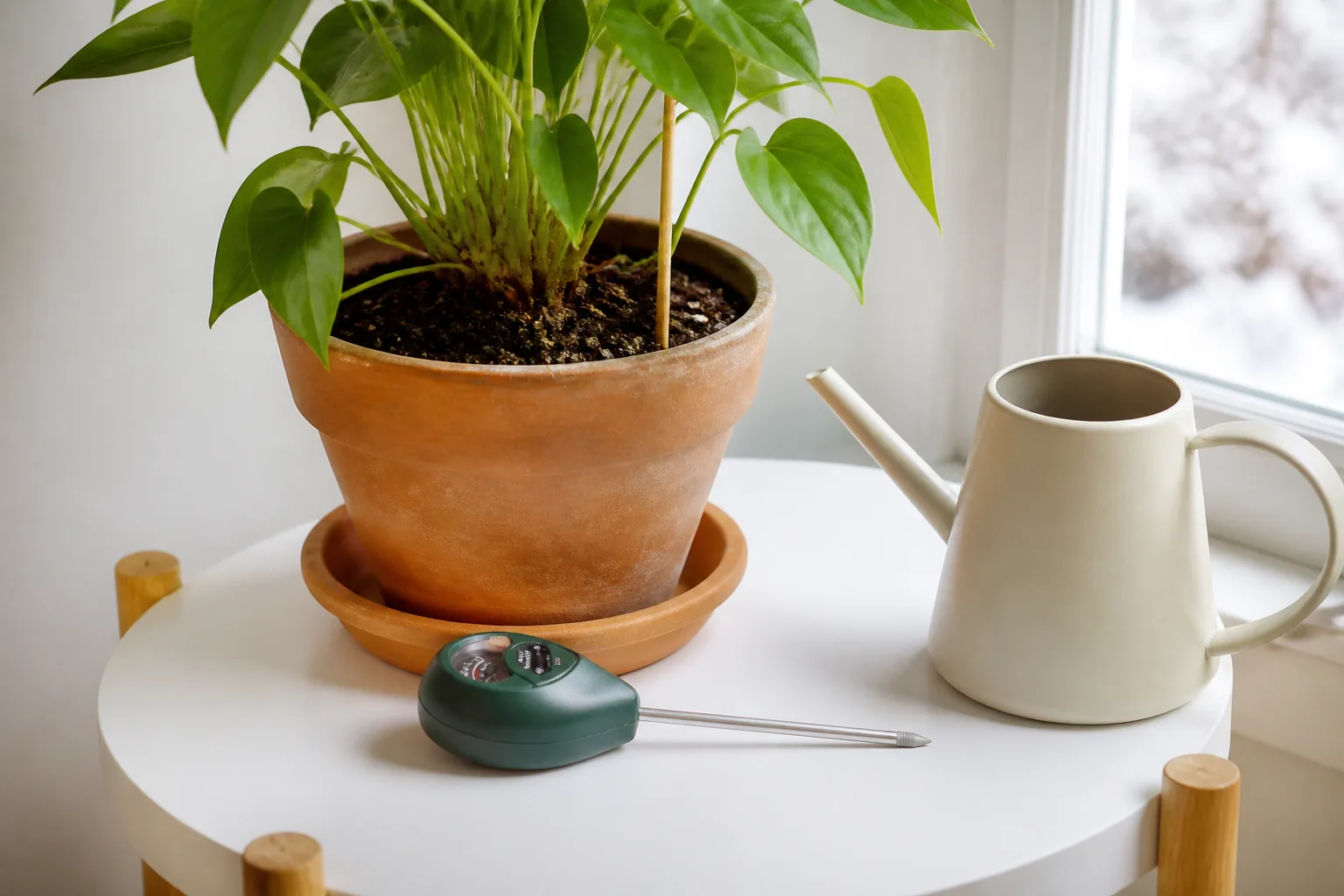
For small houseplants, insert a finger about an inch into the potting mix, lift the pot to learn its “needs water” weight, or use a moisture meter as a second opinion. The tool is not a substitute for knowing the plant’s preferred moisture range, but it can reveal a wet lower root zone when the surface looks dry.
This check is more reliable than a winter schedule. In one climate, a month without rain may be a serious problem; in another, the same month may include enough rain or snow to keep established roots comfortable. Even Colorado State University Extension’s winter guidance frames its timing and volume recommendations around local Front Range conditions rather than a universal rule.
Choose the Safest Weather Window
The best outdoor watering window is usually the warmest part of a mild day, often late morning to early afternoon, when the soil is above freezing and the water can move into the root zone before nighttime temperatures drop. Colorado State University Extension’s Pueblo guidance uses above 40°F, no snow on the ground, and no recent rain or snow as practical gates for winter watering in its region. It also recommends watering around midday so the soil has time to absorb the water.
Do not treat 40°F as a magic number for every plant or climate. It is a useful regional benchmark, not a promise that all soil is thawed or all plants need water at that temperature. First confirm that the soil is not frozen, the plant is actually dry, and the forecast is not delivering heavy rain or a hard freeze immediately.
When to Wait
Wait if the ground is frozen, covered in ice or snow, water is running off instead of soaking in, or the root zone is already damp. Watering frozen soil can leave a slick surface and fail to reach roots; watering saturated soil removes air from the root zone and encourages decay. Wait as well when a hard freeze is imminent and you cannot apply the water early enough for it to infiltrate.
There is a useful exception for genuinely dry soil before a frost. Moist soil can hold and release more heat than bone-dry soil, so a thorough watering a few days before a predicted frost may help reduce stress when the plant is otherwise dry and the soil drains well. That is a moisture-management decision, not an instruction to flood a plant on the afternoon of every freeze.
Water Trees and Shrubs at the Root Zone
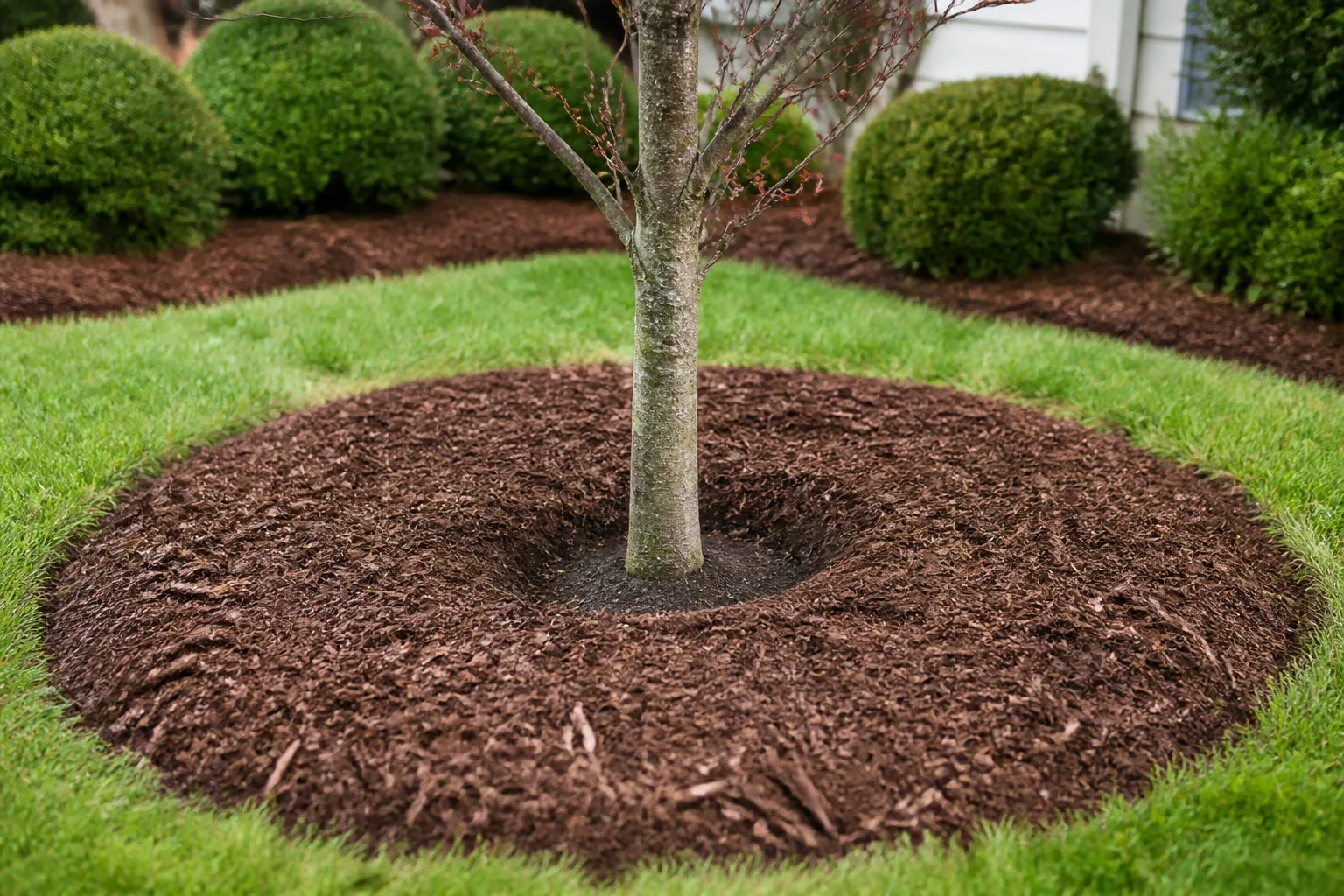
For a tree or large shrub, water the soil rather than the trunk. The most useful target is the drip line, the rough ring beneath the outer edge of the canopy, plus some area just inside and outside it. Many absorbing roots extend beyond the trunk, so a small puddle at the base can leave much of the root zone dry while keeping the trunk collar needlessly wet.
Apply water slowly at several points around the ring. Stop briefly if the surface begins to shed water, then resume at a lower flow. A soaker hose can distribute water along a bed or around a tree, but it does not make poor placement or compacted soil disappear; check that water is actually entering the soil rather than running downhill.
Colorado State University Extension gives a regional example of about 10 gallons per inch of trunk diameter for a winter tree watering in its Front Range conditions, with water applied across the drip line and enough infiltration to reach about 12 inches. Use that as a starting point for understanding “deep,” not as a universal prescription. Soil texture, tree size, recent precipitation, irrigation output, and local extension advice should determine the final amount.
Mulch can slow moisture loss and moderate temperature swings, but it is not a substitute for checking the soil. Keep mulch spread in a broad, shallow layer and away from direct contact with trunks and crowns. A mulch volcano can hold moisture against bark, hide a wet root collar, and create a different problem from the dry conditions you were trying to solve.
Water Beds, Perennials, Lawns, and Vegetables Differently
Beds of established perennials generally need less winter watering than new plantings. If a perennial is dormant and the soil is moist below the surface, leave it alone. If it is newly planted or sits in a rain shadow, water around the root zone rather than spraying the foliage, then allow the soil to drain.
Lawns are a separate decision. A dormant cool-season lawn normally does not need a standing winter schedule, while a newly seeded lawn, a warm-region lawn that is still growing, or a dry south-facing patch may need occasional moisture. Look at the turf’s season and soil, not the color alone.
Winter vegetables and leafy crops can continue growing in mild climates, so their water needs may be higher than a dormant ornamental’s. Water the root zone when the soil dries, keep leaves as dry as practical, and avoid frequent shallow sprinkling that wets the canopy without replenishing the root area.
Handle Winter Containers as a Separate Case
Check outdoor pots at least as carefully as in-ground plants, especially evergreens, shrubs, and anything sheltered from rain. Feel the mix below the surface and look at the drainage holes. If the pot is light and the root zone is dry, water slowly until a little drains from the bottom; if the mix is cold and wet, do not add more just because the leaves look dull.
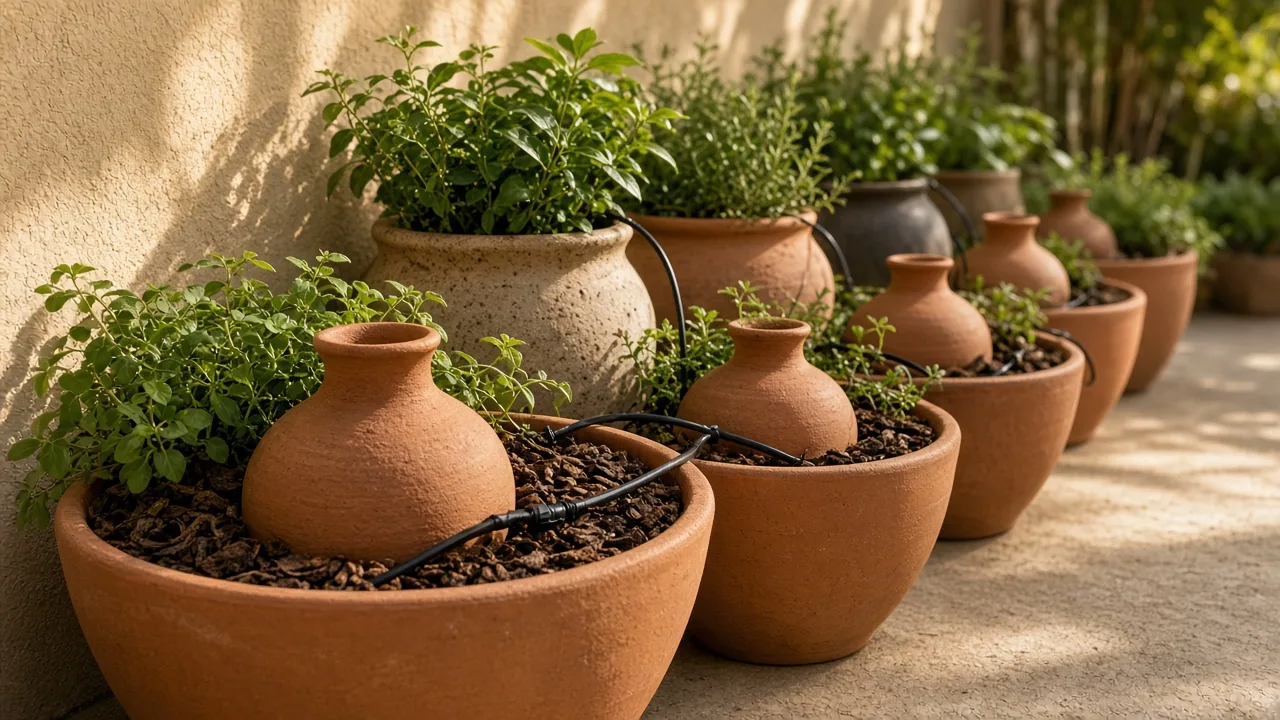
Pots under a roof or against a wall may receive almost no precipitation, while containers in an exposed patio may receive too much. Grouping pots near a sheltered wall can reduce wind exposure, but leave enough space for air movement and do not trap water in a saucer. The RHS specifically advises removing saucers in winter where they could keep pots sitting in water.
For a plant that is borderline hardy, moving the container to an unheated but frost-protected space may be safer than trying to manage its water outdoors. A garage or shed can work for a dormant plant only if the species tolerates low light and the space remains within its safe temperature range. A warm indoor room changes the plant’s water and light needs, so do not assume “inside” automatically means “water more.”
Protect Pots From Wetness, Wind, and Freeze-Thaw Stress
Use a pot with an open drainage path, raise it slightly so the hole is not sealed against the ground, and shelter it from prevailing wind. Insulate the container sides when appropriate, but do not wrap the soil surface so tightly that it cannot drain or breathe. In very wet spells, temporary cover can be more helpful than another watering.
If a potting mix has become hydrophobic after drying, water in two or three smaller passes rather than pouring a large volume that escapes down the sides. If the mix never drains, investigate the hole and the structure of the mix before changing the watering frequency. A poorly draining container cannot be rescued by a better calendar.
Water Houseplants After Indoor Conditions Change
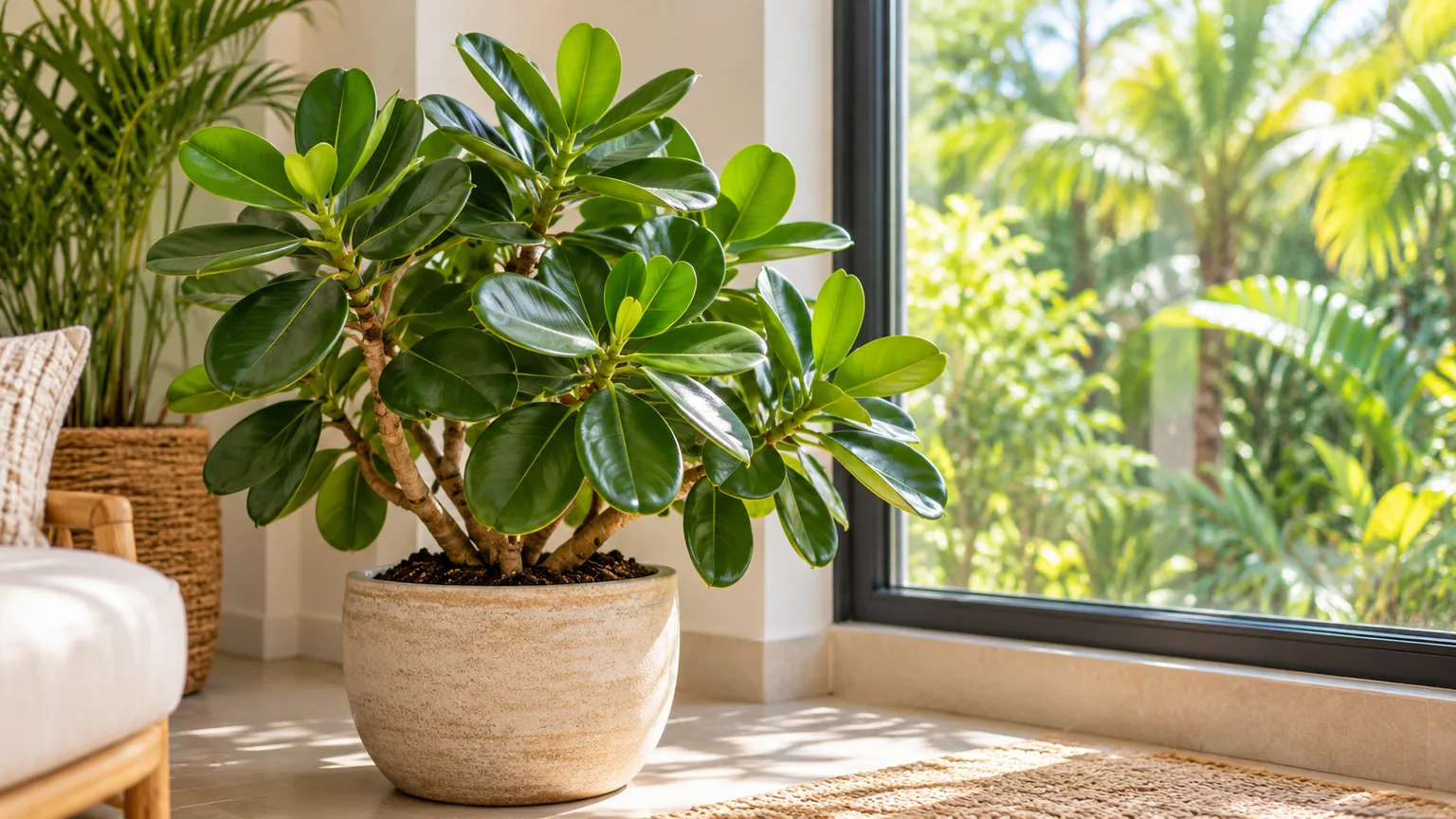
Houseplants do not experience outdoor winter in the same way, but their routine often changes when daylight shortens, windows cool, heaters run, and growth slows. A plant beside a bright window may continue using water, while the same species in a dim corner may stay wet much longer. Tropical plants, succulents, cacti, and plants in bark-based mixes each need a different dry-down interval.
The best adjustment is to check more often at first, then let the evidence set the interval. BHG’s houseplant watering guidance recommends checking indoor plants weekly rather than waiting for severe wilting, while also noting that seasonal growth changes can justify reducing water. Check the soil and the plant’s recent light exposure before reducing the amount automatically.
Winter air can be dry without the potting mix being dry. Heating may increase leaf moisture loss, but it does not mean the roots need to sit in water. Move plants away from hot registers and cold drafts, improve light where appropriate, and address humidity separately; misting leaves may briefly change surface humidity but does not replace root watering.
Water Thoroughly, Then Empty Runoff
When a houseplant needs water, use room-temperature water and wet the mix evenly until some drains from the bottom. This flushes the root zone instead of wetting only the top crust. Empty the saucer or cachepot after the excess has finished draining; do not leave the pot standing in runoff through a low-light winter week.
Bottom watering can help a very dry or compacted mix rehydrate, and it can suit plants that dislike wet foliage. Set the nursery pot in a shallow basin, let it absorb for roughly 15 to 30 minutes, then remove it and let it drain fully. Bottom watering is a method, not a license to keep the pot permanently submerged.
Diagnose Too Little Versus Too Much Water
Winter symptoms overlap, so diagnose the root zone before reacting to leaves. A wilted plant can be thirsty, root-bound, cold, or overwatered enough that damaged roots can no longer move water. A yellow leaf can be old, light-stressed, chilled, or part of a wet-root problem.
Signs that support underwatering or winter dehydration include dry soil well below the surface, a pot that is unusually light, drooping that improves after a thorough watering, crispy edges, and exposure to dry wind, bright sun, or a rain shadow. Water only after confirming that the soil is dry enough for that plant.
Signs that support overwatering include persistently wet mix, slow or absent new growth, a sour smell, fungus gnats, yellowing alongside wet soil, water pooled in a saucer, and soft or dark roots when a failing plant is inspected. Let the mix dry to the plant’s normal threshold, improve drainage, and reduce water volume or frequency. Do not keep adding water to “fix” a wilt that is actually caused by root damage.
For outdoor plants, brown foliage after a freeze may be cold injury rather than thirst. Avoid pruning or heavy watering as an instant reaction; check soil, stems, buds, and the forecast, then give the plant time to show which tissue is still alive. Winter damage often becomes clearer when temperatures stabilize.
Choose Tools That Put Water Where Roots Can Use It
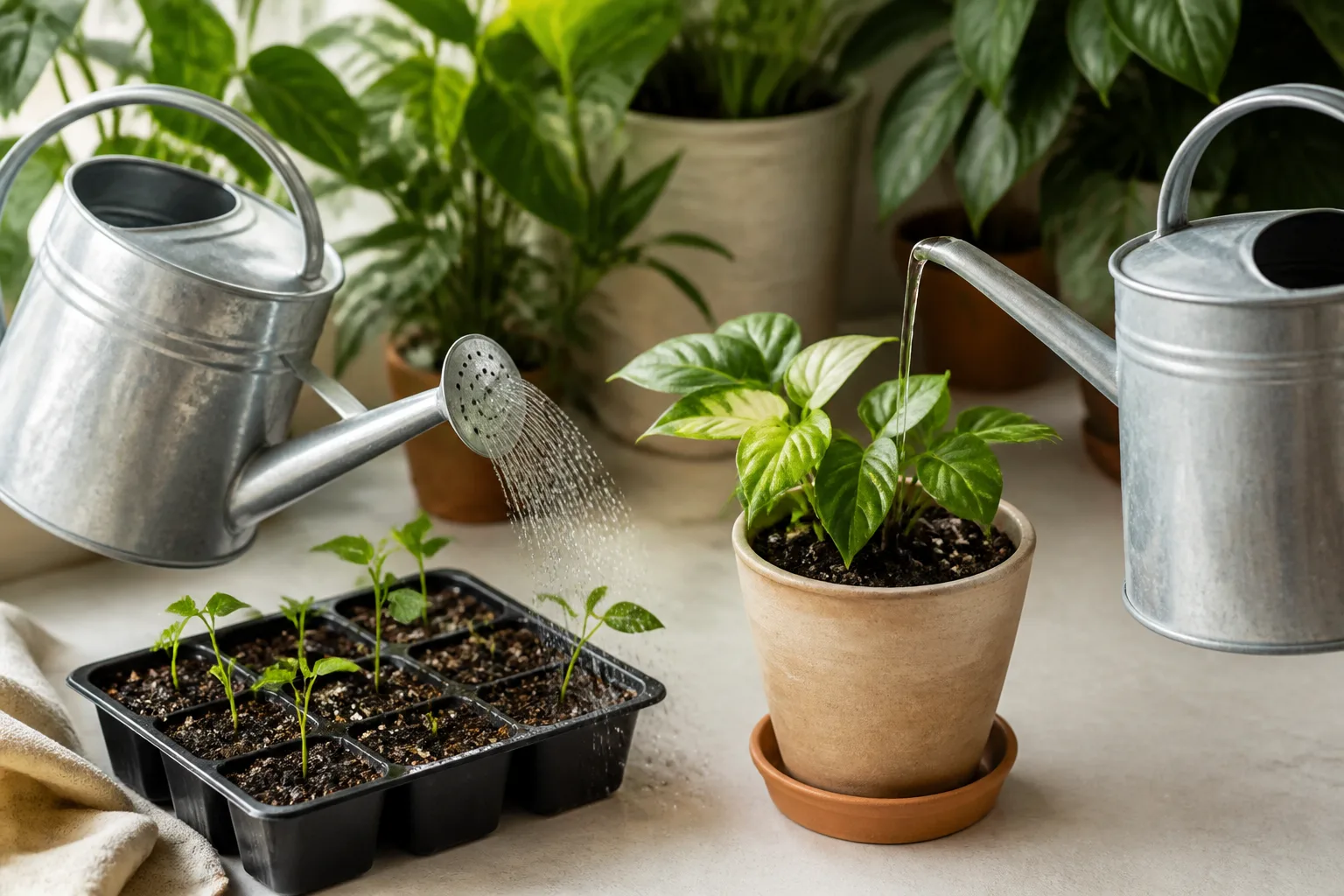
A watering can is useful for small containers, seedlings, and indoor plants because its flow is easy to control. A hose with a gentle setting works for beds, but a high-pressure spray can wash soil away or scatter water beyond the root zone. A soaker hose is helpful for a long bed or tree ring when it is laid where roots actually spread and run slowly enough to avoid runoff.
A trowel, finger, or moisture meter is often more valuable than a larger watering device. Use a rain gauge or a simple note on the date and weather to remember what the garden received, but do not turn recorded rainfall into an automatic watering command. The soil check is still the final gate.
For indoor plants, drainage holes are non-negotiable. A decorative cachepot can hide runoff, and a self-watering container can hold a reservoir longer than a winter-dormant plant can use it. Read the pot’s behavior, not the label’s promise: if the lower mix stays wet, the plant needs more air at the roots, not another refill.
Build a Climate-Based Winter Routine
Instead of “water every two weeks,” use a repeatable check:
- Walk the exposure: flag evergreens, new plantings, pots under eaves, windy corners, sunny walls, and anything on a berm.
- Check the root zone: test below the surface at more than one point, and check drainage before applying water.
- Read the weather: wait for a mild, above-freezing window with time for infiltration; skip watering before useful rain or snow.
- Water slowly and widely: aim at the root zone or drip line, not trunks, leaves, pavement, or the middle of a mulch mound.
- Recheck the result: look for infiltration rather than runoff, and make sure containers are not left in standing water.
Established in-ground deciduous plants in a wet climate may pass several checks without needing water. A newly planted evergreen in a dry, windy climate may need inspection every few weeks. As a regional illustration, Colorado State University Extension recommends withholding winter watering when the garden has received rain or snow within the previous three to four weeks, while Homes & Gardens’ winter tree guidance describes monthly checks for established trees and more frequent checks for new plantings or containers. Those intervals are useful reference points, not substitutes for local weather and soil conditions.
Avoid the Winter Watering Mistakes That Cause Losses
The most common mistake is keeping a summer schedule after light, temperature, and growth have dropped. The second is stopping all checks because winter looks wet. Both errors ignore the plant’s actual root-zone conditions.
Avoid these shortcuts:
- Watering frozen soil: wait until the ground can accept water.
- Watering by leaf color alone: inspect soil and roots before treating symptoms.
- Spraying the trunk: apply water across the root zone and drip line.
- Treating all containers like garden beds: pots have less insulation and different drainage.
- Leaving saucers full: remove standing water after indoor watering and avoid winter saucers outdoors when they hold excess moisture.
- Assuming rain reached every plant: eaves, walls, dense evergreen canopies, and plastic covers create rain shadows.
- Using misting as root watering: humidity support cannot replace moisture in the potting mix.
- Applying a regional volume everywhere: soil, species, root spread, and climate change the correct amount.
If you remember only one sequence, make it check, wait for a safe window, water slowly, then verify drainage. That is enough to replace both winter neglect and anxious overwatering with a routine that responds to the garden in front of you.
Conclusion
Plants may need water in winter, but winter is not a watering season with one universal frequency. Water outdoor plants when the root zone is dry, the soil is not frozen or saturated, and a mild stretch lets water soak in; then direct it widely across the roots, especially for trees and shrubs. Give containers extra inspection because they dry and freeze faster, and adjust houseplants by light, growth, and drainage rather than by the month alone.
The goal is not to keep every plant constantly moist. It is to keep roots supplied with usable moisture and enough air to stay healthy until spring. A short moisture check before every winter watering will usually tell you more than a calendar ever can.