Hummingbird Migration Map and Timing Guide
Track spring hummingbird migration by region, understand map limitations, and set up a clean, flower-rich stopover for arriving birds.
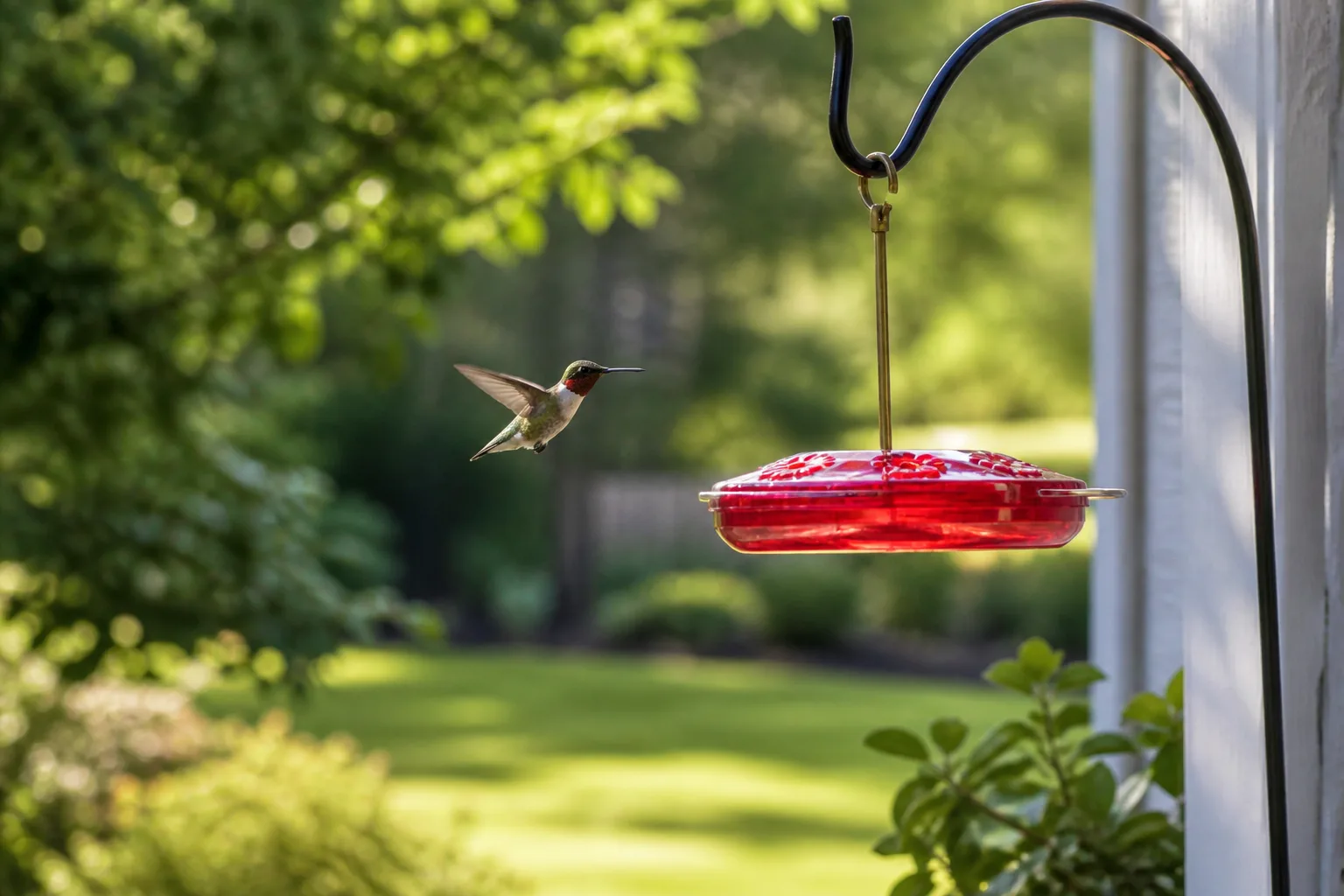
Every spring, hummingbirds spread north through the United States and into Canada, but they do not arrive everywhere on one dependable date. A hummingbird migration map is useful because it turns scattered observations into a moving picture: where birds have been reported, which species are appearing, and whether the leading edge is approaching your region.
The important word is reported. A sighting map is not a radar image and it does not count every hummingbird. It reflects the places where people looked, identified a bird, and submitted the observation. Use it as evidence of seasonal movement, then combine it with your latitude, local weather, flowering plants, and the species normally found in your area.
That distinction keeps the map useful instead of frustrating. If a pin appears 100 miles away, it does not guarantee a bird will reach your feeder tomorrow. If your town has no pin, it does not prove that no hummingbird is present. The map is a prompt to prepare and observe—not a promise of a sighting.
What a Hummingbird Migration Map Actually Shows
The Hummingbird Central spring migration map collects public sighting reports and displays them by date and location. In the local scrape, reports showed more than one species moving through the southern and western United States, including ruby-throated hummingbirds in the Southeast, black-chinned hummingbirds around Texas, New Mexico, and Arizona, and rufous hummingbirds primarily in California. That snapshot is valuable because it shows the broad direction of movement while reminding you that “hummingbird migration” is not one single route.
Most map pins answer a narrow question: Where did somebody see a hummingbird, and when? They do not necessarily answer how many birds are in the surrounding county, how long one bird stayed, whether the bird was migrating or already resident, or whether a quiet neighboring county has no birds. A sighting can be a first arrival, a passing migrant, a wintering bird, or a local bird that never left.
The map is therefore strongest for identifying a seasonal pattern. A line of recent reports advancing north gives you a reason to clean a feeder, inspect early flowers, and watch your yard. It is weaker as a day-by-day forecast for one address.
How to Read Recent Sightings Without Overpromising
Start by filtering your attention to reports that are recent enough to match the current season. An old pin may describe a real bird but tell you little about this week’s movement. Then look at the species, not just the word hummingbird. Ruby-throated hummingbirds dominate much of the eastern spring route, while black-chinned, rufous, Anna’s, Allen’s, and other species shape the western picture differently.
Next, look for a cluster, a direction, and a time span. One isolated report can be a local resident or an identification mistake. Several verified-looking reports appearing across a corridor over several days are more meaningful. Even then, avoid drawing a perfect line between pins. Birds follow food, shelter, elevation, coastlines, and weather, and people report more often near cities, parks, feeders, and popular birding routes.
Date and location matter more than a crowded pin cluster
Write down three things when you use the map: the newest nearby report, the nearest report from the same species, and the direction in which recent reports are changing. A report in your state is more actionable than a dramatic cluster far away. A report in the same county may still be too early if it is from a sheltered garden, a warmer urban pocket, or a different elevation.
Use the map to choose a preparation window. If reports are moving toward your area, put out a clean feeder before the expected arrival period and make sure early flowers are open. Do not fill several large feeders with nectar simply because a pin appeared. Start with a small amount you can replace and clean promptly.
Reports show presence, not every bird in the area
No report can mean no one looked, no one knew how to submit it, poor weather, or a genuinely quiet stretch. Hummingbirds are tiny and fast; a yard can host brief visits that a person misses. Weather can also pause migration or push birds along an alternate route. A quiet map is a reason to reduce certainty, not a reason to abandon habitat preparation.
Spring Migration Patterns by Region
The eastern ruby-throated route
Ruby-throated hummingbirds commonly move north through the Gulf Coast and southeastern United States before spreading across the eastern half of the country. In broad terms, southern states see arrivals before the Mid-Atlantic, Midwest, Northeast, and Canada. Exact timing varies by year, latitude, elevation, cold snaps, and the availability of early flowers.
The birds do not wait for a universal calendar date. They respond to seasonal conditions that affect food and survival, including changing day length, temperature, wind, and the plants and insects available along the route. A warm week can bring an early report; a storm can delay the next wave. Treat regional arrival charts as a range, then let current local reports refine your expectations. Penn State Extension’s hummingbird guidance likewise emphasizes matching food and shelter to the local season rather than treating one date as universal.
Western species and resident populations
Western migration is less tidy because several species overlap and some populations remain in the same broad region year-round. Black-chinned hummingbirds are associated with much of the Southwest, while rufous hummingbirds use a long coastal and inland route through the West. Anna’s hummingbirds may be present through winter in parts of the Pacific Coast and are not represented by a simple “arrive in spring, leave in fall” pattern.
That is why a western gardener should identify the species before deciding that a map pin means the feeder season has started or ended. A resident bird needs a dependable clean station and flowering habitat on a different schedule from a short-stay migrant. When in doubt, use local birding records or a regional extension recommendation rather than applying eastern ruby-throat timing to the entire country.
Why Hummingbirds Move North
Hummingbirds migrate because the seasonal balance of food, weather, breeding opportunities, and daylight changes across the continent. Spring brings expanding flower and insect resources farther north, while the breeding range offers territory and nesting habitat. Fall movement reverses the pattern as conditions and food availability change.
They are not simply following a feeder. Nectar feeders provide supplemental carbohydrates, but hummingbirds also need insects and spiders for protein and other nutrients. They use shrubs and trees for shelter and perches, and they need safe routes around buildings. A feeder can help a bird refuel, but it cannot turn an unsuitable yard into complete habitat.
The map also cannot tell you whether a bird is carrying out a long migration or moving locally between gardens. That is another reason to read it alongside species information and habitat clues. A bird at a feeder in Arizona may represent a resident or a migrant; the pin alone does not supply enough context.
When to Put Out a Feeder
Put out a clean feeder before the first locally expected arrivals, using regional timing and the map’s newest nearby reports as your guide. You do not need to wait until somebody reports a bird on your street. Early migrants may arrive tired and hungry, and a feeder is most useful when it is already in place, easy to find, and filled with fresh, clear nectar.
Use plain white granulated sugar and water at the standard one part sugar to four parts water by volume. Do not add red dye, honey, brown sugar, artificial sweetener, or vitamins. A small batch is safer than an oversized reservoir because it is easier to replace before it spoils. The Cornell Lab of Ornithology’s feeder guidance recommends the same simple approach, while the local hummingbird nectar reference recommends cleaning before refilling and adjusting the replacement interval for heat, shade, and bird traffic.
Put the feeder where birds can approach and leave without squeezing through dense foliage. Bright shade or morning sun with afternoon protection is usually easier on nectar than full afternoon sun. Keep the feeder away from cat launch points and use a deliberate glass-safety plan if it hangs near a window. If the first placement is inconvenient to clean, it is not a successful placement no matter how attractive it looks.
Build a Stopover Garden Before the Birds Arrive
Early, middle, and late-season flowers
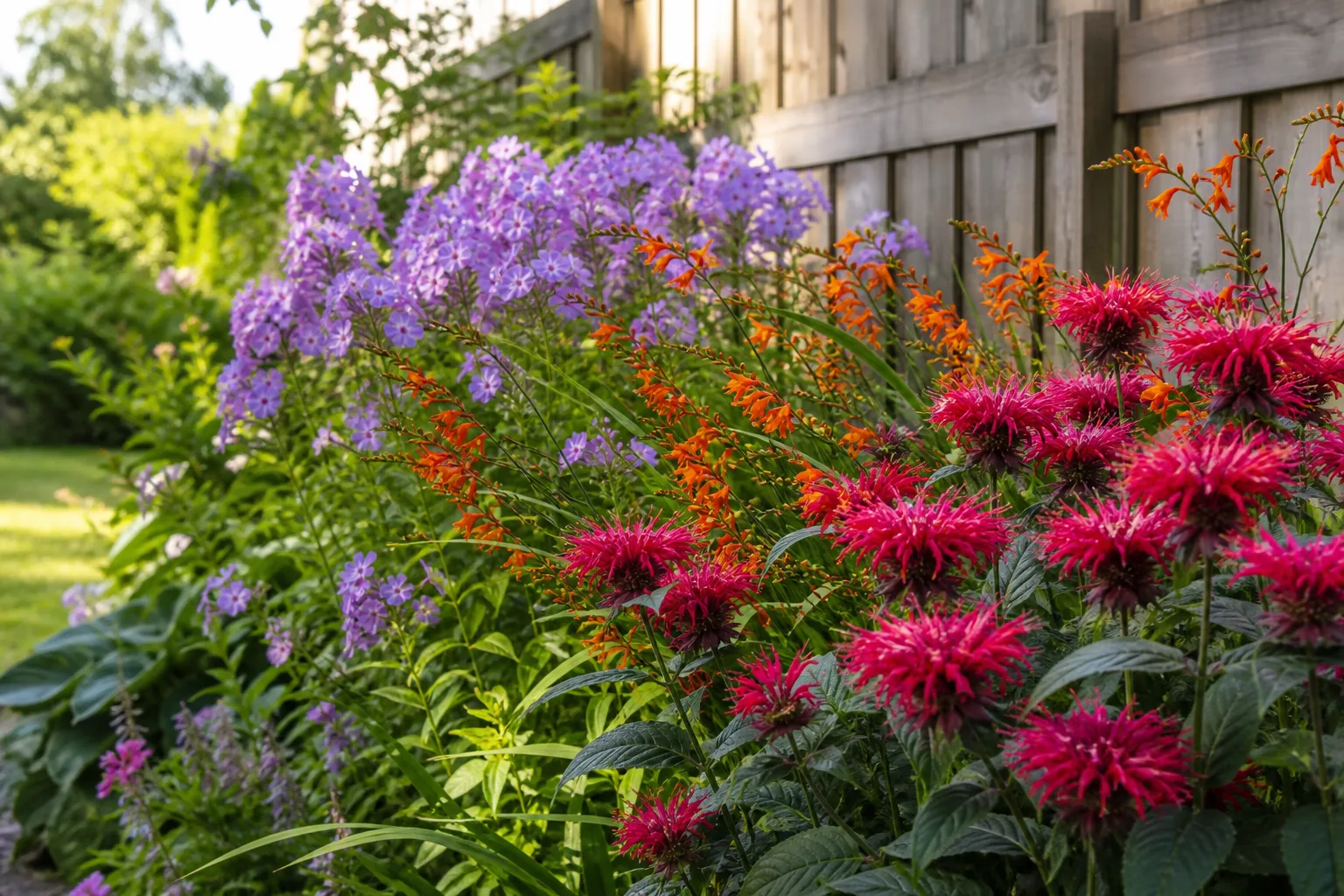
Plant for continuity, not one week of spectacular color. Early bloomers such as columbine, azalea, and rhododendron can support the first arrivals in appropriate climates. Bee balm, cardinal flower, salvia, penstemon, fuchsia, and other tubular flowers can carry the garden through summer. Late-blooming salvias, asters, goldenrod, and other regionally suitable plants help when fall migrants still need fuel.
Use plants suited to your soil, moisture, and climate, and check local invasive-plant lists before buying aggressive vines or shrubs. The goal is a sequence of accessible blooms, not a particular color scheme. Hummingbirds notice red and orange readily, but they also visit purple, pink, yellow, and white flowers when nectar is available.
Shelter, insects, and safe water
Leave some layered vegetation near the feeding area: a small tree, shrub, vine, or dense planting where birds can rest and retreat. Keep the immediate approach open so a hummingbird can hover, circle, and depart. Avoid broad pesticide use around the garden because insects and spiders are part of the diet, and a chemically simplified yard offers less than a diverse one.
Hummingbirds do not need a deep birdbath. A shallow, clean water source or fine mist can be useful, but standing water should be refreshed and kept free of algae. The most important habitat upgrade is often not another feeder; it is a safer garden with flowers across the season, cover, clean water, and fewer hazards.
Feeder Safety During Migration
Check the feeder every day during hot weather and at least every few days in mild weather. Change the nectar sooner if it becomes cloudy, stringy, fermented, moldy, or unusually warm. Never top off old nectar with new nectar. Take the feeder down, discard the liquid, wash the reservoir and ports, rinse thoroughly, and refill only after it is clean.
If bees or wasps gather, inspect for leaks, sticky residue, and full sun before reaching for a deterrent. Do not grease ports or apply pesticides to a feeder. Move it slightly into shade, repair the leak, reduce the fill amount, and protect access without harming pollinators. If ants arrive, clean the trail and use a feeder design or ant moat that keeps the solution away from the hanger.
Window safety deserves equal attention. A feeder directly beside a window or well away from it is generally safer than one placed at an intermediate distance on a direct flight path. Exterior screens, closely spaced patterns, or other collision treatments can reduce risk. A single decorative bird silhouette is not a complete solution if reflective glass remains exposed.
What Can Make a Map Look Empty or Late
The most common explanation is not that migration stopped. It may be that observers are sparse, reports are delayed, a front changed the route, or birds passed through quickly. A map may also look late when your area is cooler, higher, farther north, or less connected to the route represented by nearby reports.
Species confusion is another limit. A fast bird at a feeder can be hard to identify, especially in poor light. If you cannot confidently identify the species, record the observation as a hummingbird without forcing a species label. A careful uncertain report is more useful than a precise-looking error.
Do not remove a feeder because a map has gone quiet for a day or two. Do not keep feeding a dirty feeder because a pin suggests a bird might arrive soon. The correct response is to keep the station clean, watch flowers and weather, and adjust the amount of nectar to actual use.
How to Report a Useful Sighting
When you see a hummingbird, note the date, approximate time, location, species if you are confident, and what the bird was doing. A photo can help, but do not chase or stress the bird for a better picture. Record whether it visited flowers, a feeder, a tree, or a water source. If several birds appear, estimate rather than pretending to count perfectly.
Submit the observation through the map’s stated sighting-reporting process and follow its policies. Reports are most valuable when they are timely, honest about uncertainty, and specific enough to interpret. A good report helps other gardeners prepare while adding to a community picture of migration. For broader bird observations, Project FeederWatch is another useful local reference point, but its coverage and reporting purpose are not identical to a hummingbird-specific map.
A practical map-to-yard checklist
- Open the most current local migration map or sighting page.
- Check the newest nearby reports and the species named.
- Compare those reports with your region’s normal arrival window.
- Put out a clean feeder before likely arrival, but fill only a manageable amount.
- Inspect early flowers, shelter, water, windows, and cat access.
- Watch for actual visits instead of assuming a map pin guarantees one.
- Report a careful sighting with date, location, and confidence level.
- Keep nectar fresh while birds use it, then maintain habitat even when the map moves on.
Conclusion
A hummingbird migration map is best understood as a living record of observations, not a countdown clock. Use recent, nearby reports to anticipate the season, identify which species may be moving, and prepare a safe stopover before the birds arrive. Then make the yard do more than offer sugar water: provide sequential blooms, insect habitat, shelter, clean water, shade, and a flight path free of cats and hazardous glass.
The map becomes genuinely useful when it changes a decision. It can tell you when to wash the feeder, check the first flowers, reduce uncertainty, or report what you see. It cannot promise a bird at one address—and responsible bird care begins by respecting that uncertainty.