Septoria Leaf Spot on Tomatoes: Treat and Prevent
Black spots on tomato leaves may be Septoria leaf spot. Learn the signs, safe first steps, fungicide limits, and prevention plan that protects your harvest.
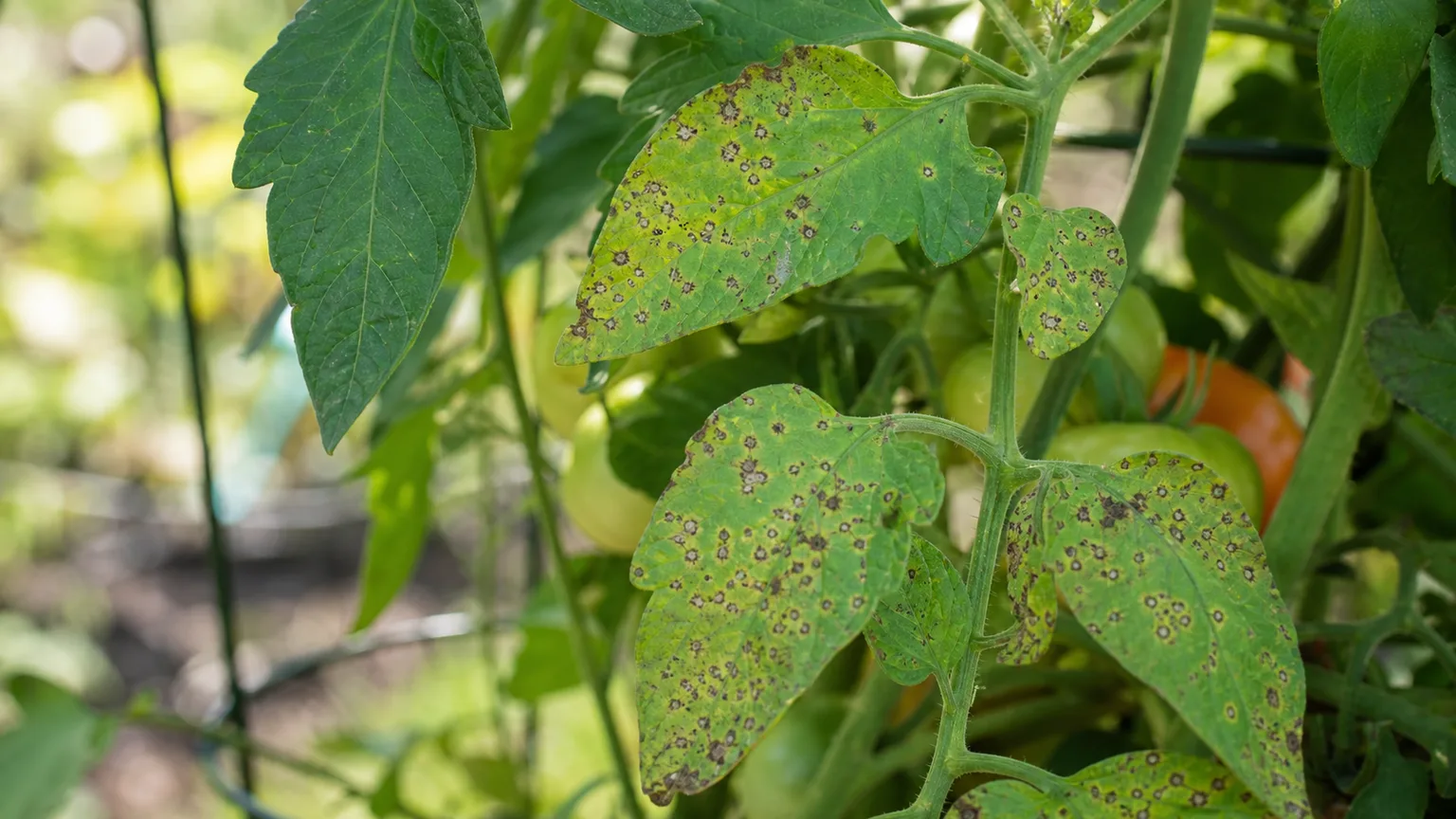
Black spots on tomato leaves are alarming, but the pattern tells you more than the color. Septoria leaf spot usually begins as many small, round lesions on the oldest lower leaves. Each spot has a tan or gray center, a dark brown edge, and sometimes a narrow yellow halo. With a hand lens, you may see tiny black dots in the center.
That combination points toward the fungus Septoria lycopersici. It is a disease of foliage rather than a rot of the tomato fruit, but it can still reduce a plant’s harvest by removing leaves that feed ripening fruit. The useful goal is not to make damaged leaves green again. It is to confirm the diagnosis, remove sources of spores, keep new leaves dry, and protect enough healthy canopy to finish the crop.
Start with a 60-second Septoria check
Before reaching for a spray, inspect three leaves: one affected lower leaf, one leaf just above it, and one apparently healthy leaf. Look at both sides. Septoria often starts on the underside of older leaves, so checking only the top surface can make the first signs easy to miss.
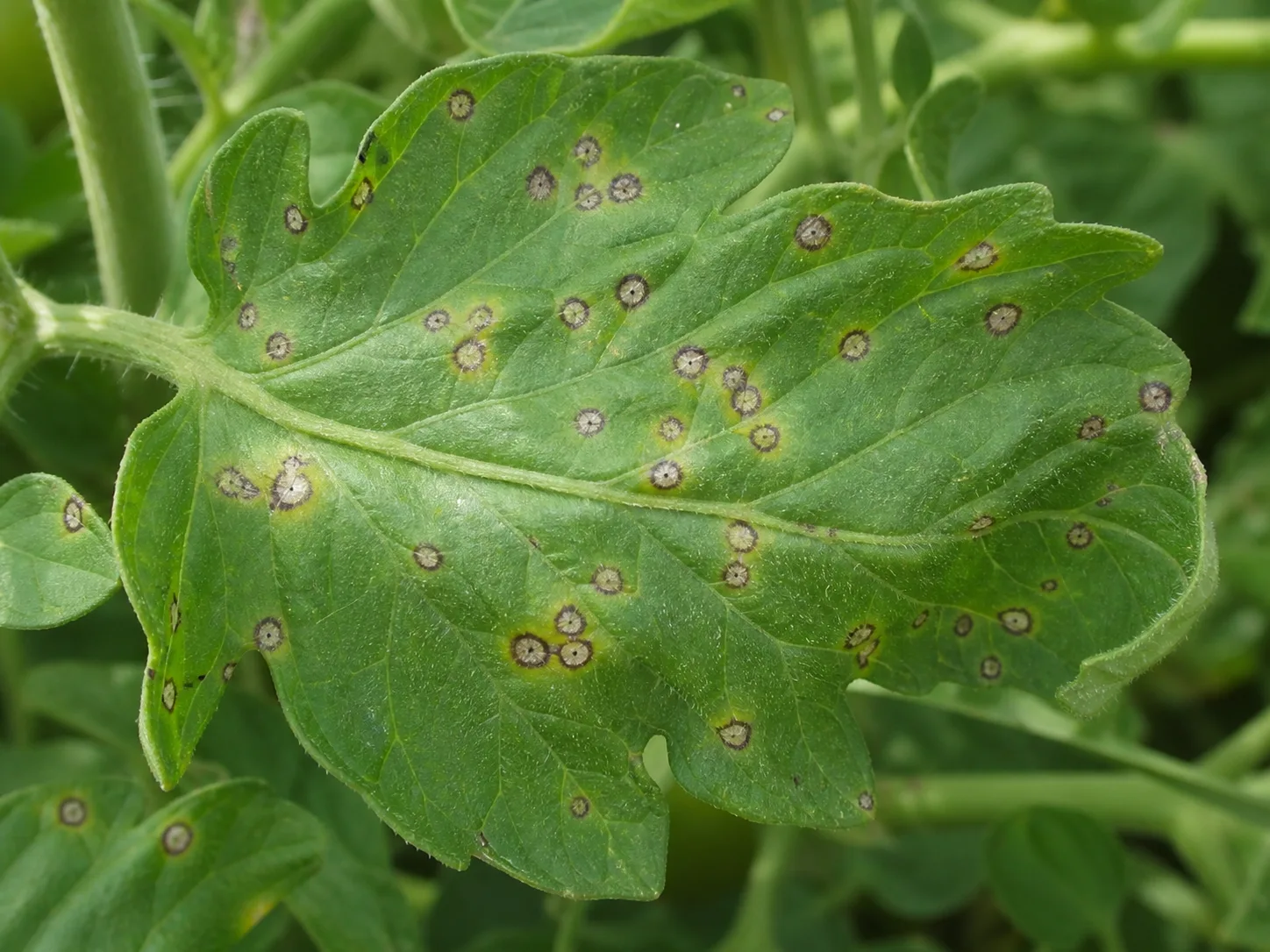
Use a phone camera zoom or a 10× hand lens. Septoria lesions are commonly about 1/16 to 1/8 inch across, although they can merge into larger dead areas as the disease advances. The tiny dark fruiting bodies, called pycnidia, are a valuable clue, but their absence from a quick visual check does not prove that the disease is not Septoria.
The diagnosis is more convincing when several clues line up: the lowest leaves are affected first, there are many small spots rather than a few large ones, the centers are pale, and the disease is moving upward after rain, heavy dew, or periods of high humidity. If the spots are large target-like rings, concentrated on fruit, or accompanied by a sticky bacterial ooze, pause before treating; you may be dealing with another problem.
A visual diagnosis also has limits. A leaf can carry more than one stress at once, and a phone photograph may not resolve pycnidia or show whether a lesion is raised, sunken, or water-soaked. When the pattern is ambiguous, take photographs of the whole plant, the lower and upper leaf surfaces, and one close lesion, then ask an extension service or plant diagnostic clinic before committing to a season-long spray program.
What Septoria leaf spot does to tomato plants
Septoria leaf spot is caused by Septoria lycopersici, a fungal pathogen that can also affect related nightshade crops such as potatoes and eggplants. University plant pathologists describe it as a disease that usually starts low in the canopy and progresses upward as conditions stay wet and humid. West Virginia University Extension notes that stems, blossoms, and calyxes can be affected under heavy pressure, while fruit infection is uncommon.
The immediate damage is loss of photosynthetic leaf area. As lesions join together, leaves turn yellow, then brown, dry, and drop. The plant may continue growing after a light outbreak, but severe defoliation exposes tomatoes to sunscald and leaves the plant with too little healthy foliage to support new flowers and ripening fruit.
This is why an infected plant can look productive one week and suddenly decline the next. The fungus is not usually killing the fruit directly; it is taking away the canopy that shades and feeds it. A plant with a few spotted lower leaves has a very different outlook from one with lesions on most leaves above the fruit clusters.
Symptoms by stage: what to look for
Early symptoms are easy to overlook. Start with the leaves nearest the soil and inspect the undersides after a spell of wet weather. The first lesions may look water-soaked, then develop tan, gray, or off-white centers and darker margins. A thin yellow halo may surround some spots, especially while the leaf is still green.
As new lesions appear, the lower leaves develop a peppered appearance. Spots may grow together along the leaf edge or between veins. A hand lens can reveal pycnidia as small dark, raised dots inside mature lesions; this feature is more helpful than calling every dark spot “black mold.”
In a progressing outbreak, the plant’s yellowing and leaf drop move upward from the base. Stems, flower parts, and the green calyx above a tomato can occasionally show spots, but obvious lesions on the fruit itself are unusual for Septoria. UW–Madison Vegetable Pathology describes the disease cycle as fast enough for new lesions to develop within roughly five days and new pycnidia to appear later, which explains why a wet week can change the plant quickly.
How to separate Septoria from look-alike problems
Tomatoes can show similar colors for very different reasons. A diagnosis based only on “brown spots” can lead to needless spraying, missed bacterial disease, or aggressive pruning that leaves the plant weaker. Use the pattern as a screening tool, and ask a local extension office or plant clinic for help when the crop matters or the symptoms do not fit.
| Problem | Pattern that points toward it | Useful distinction |
|---|---|---|
| Septoria leaf spot | Many small tan-to-gray spots with dark margins, often on lower leaves; black pycnidia may be visible | Fruit is rarely affected directly |
| Early blight | Fewer, larger brown lesions with concentric “target” rings and a yellow halo | Stem cankers and dark, sunken fruit lesions are more typical |
| Bacterial spot | Small dark spots that may have yellow halos; spots can occur on leaves, stems, and fruit | Fruit spotting is a stronger warning that the issue may be bacterial rather than Septoria |
| Spray injury or sunscald | Irregular bleached, scorched, or one-sided damage | Damage may match spray coverage or the sun-exposed side instead of starting in the lower canopy |
Septoria versus early blight
Early blight is the most common mix-up. WVU Extension describes early blight lesions as larger spots, sometimes up to about 1/2 inch, with concentric ridges that make a target pattern. Septoria is usually more numerous and finer-textured, with pale centers and tiny pycnidia.
The two diseases can occur in the same garden, and a single plant can have more than one problem. Do not assume that one fungicide application proves the diagnosis. Remove the most clearly infected leaves, improve the growing conditions that favor both diseases, and photograph close-ups of the lesion pattern if you need a diagnosis.
Septoria versus bacterial spot
Bacterial spot can also produce small lesions and yellow halos, but it is more likely to affect fruit and can spread through splashing water, contaminated seed, and handling. Septoria’s classic clue is the small dark fruiting bodies inside pale-centered leaf lesions, not simply a dark margin.
If spots are on fruit, if leaves look water-soaked and ragged after storms, or if the plant has a history of purchased transplants with symptoms, treat the diagnosis as uncertain. Avoid a homemade mix or pesticide escalation until you know that the product is labeled for the suspected disease and crop.
Where the fungus comes from and how it spreads
The main reservoir is infected tomato or other solanaceous plant debris left in or near the bed. Spores can also persist on host weeds such as horse nettle and black nightshade, and can move on tools, cages, stakes, workers, insects, rain, and irrigation water. UConn Integrated Pest Management explains that the extent of true seedborne transmission is not fully settled, which is a good reason to start with reputable seed and healthy transplants without claiming that seed is always the source.
Rain and overhead watering lift spores from debris and splash them onto low leaves. Warm, wet weather, dew that lingers on foliage, dense growth, and poor airflow give the pathogen repeated opportunities to infect. UW–Madison lists high humidity, moderate temperatures around 68–77°F, wet conditions, and a closed canopy as favorable conditions; the practical takeaway is to shorten leaf-wetness periods and reduce contact between foliage and contaminated soil.
Once lesions form, they become new spore-producing sites. A gardener who handles a wet infected leaf and then ties up a healthy stem can move the problem without realizing it. That is why sanitation and the order of operations—remove diseased material first, then work on healthy plants—matter as much as the choice of spray.
Container tomatoes and plants under cover are not automatically safer. A patio pot can still receive splashed spores from contaminated soil or a reused cage, while a greenhouse or plastic-covered bed can hold humidity around the leaves for longer. In those settings, ventilation and morning irrigation are especially important, and a plant should not be crowded against a wall where foliage dries slowly.
What to do today when you find spots
Start on a dry day if possible. Your first pass should reduce spores and improve the plant’s microclimate; it should not be an attempt to strip every leaf with a blemish.
Remove and dispose of the first infected leaves
Take off the worst lower leaves first, especially leaves that are yellowing, mostly covered with lesions, or touching the soil. Use clean, sharp pruners, cut the leaf stalk without tearing the main stem, and place the material directly into a bag or covered container. Do not shake infected leaves over neighboring plants.
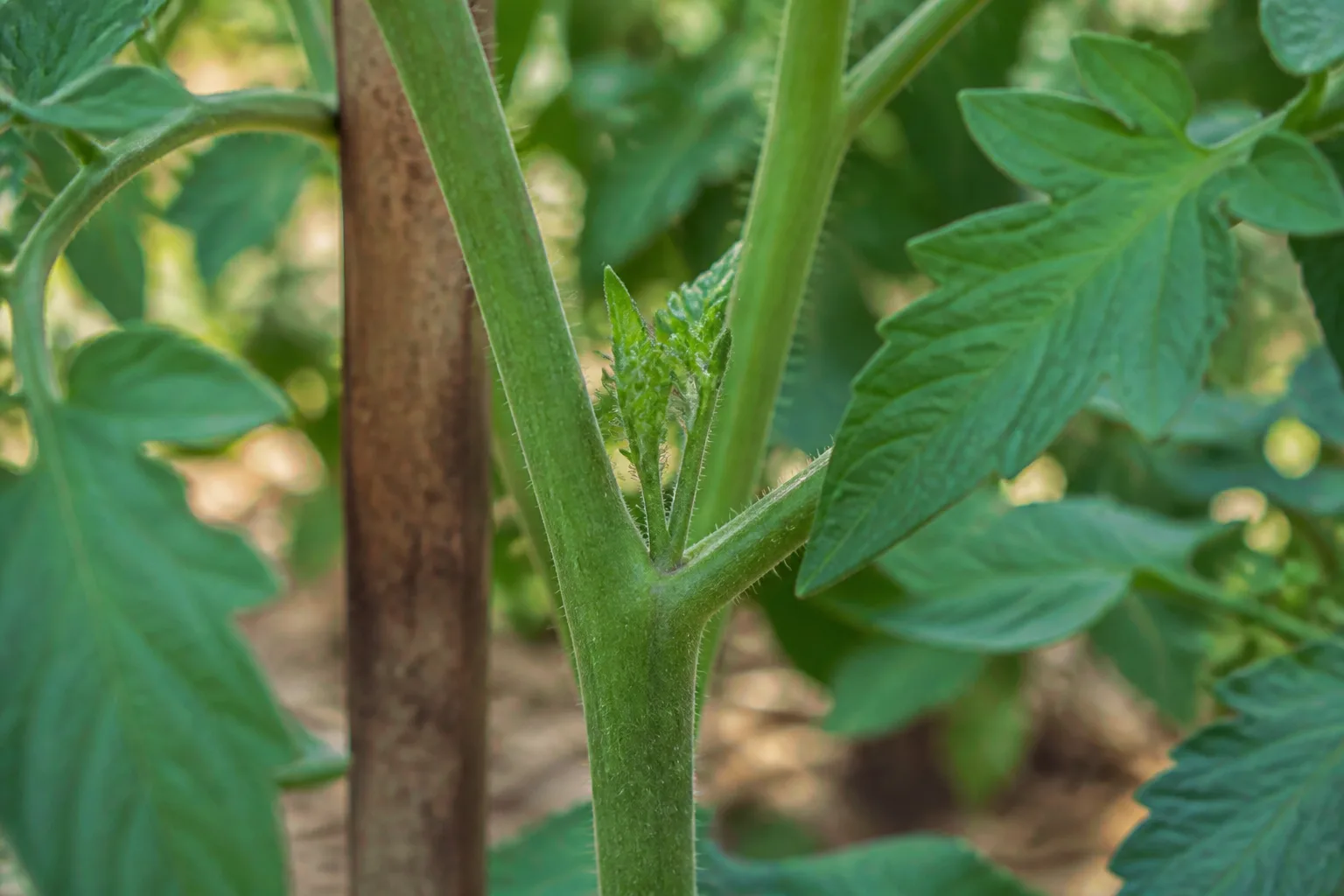
Afterward, wash your hands and clean the blades before moving to another tomato. A household disinfectant used according to its label, or a suitable tool-cleaning routine recommended by your extension service, is safer than assuming a quick wipe with soil has removed spores. Pick up fallen leaves beneath the plant as well. Epic Gardening likewise emphasizes removing damaged material and cleaning tools, because treatment cannot undo a leaf that is already spotted.
Do not put heavily infected tomato foliage into a small home compost pile. Most home piles do not reliably maintain the heat, time, and turning needed to destroy every pathogen, and unfinished compost may return infected debris to the bed. Bag the material for local yard-waste disposal or follow your area’s rules for burying or destroying diseased plant waste.
Make the canopy dry and harder to reinfect
Water the soil, not the leaves. Drip irrigation and a soaker hose are useful because they deliver water at the base; if you must use a hose, use a gentle stream directed at the soil and water early enough for incidental splashes to dry. Do not respond to Septoria by keeping the root zone dry—water stress can reduce growth and fruit quality—but do avoid repeated leaf wetting.
Support the plant with a cage or stake so lower leaves are not resting on soil. Remove only crowded or clearly diseased foliage; a tomato still needs a working canopy, and over-pruning in hot sun can expose fruit to sunscald. If neighboring tomato, potato, or eggplant plants are also showing symptoms, inspect them now rather than treating only the first plant you noticed.
Fungicides: useful protection, not a leaf eraser
Fungicides are protectants. They can reduce new infections when the active ingredient is labeled for Septoria on tomatoes and applied on schedule, but they do not repair existing lesions or turn a yellow leaf green. In a dry garden with a light outbreak, sanitation and leaf-drying practices may be enough; in a rainy, humid season or a garden with a predictable history of disease, a labeled protectant can be worthwhile.
Copper and biological products
Fixed copper products and some biological products based on organisms such as Bacillus subtilis are used in integrated disease-management programs. “Organic” does not mean risk-free: copper can accumulate in soil, burn foliage when misapplied, and harm aquatic life if it runs off. Use only a product whose label lists tomatoes and the disease, and follow its rate, protective equipment, re-entry instructions, spray interval, and harvest interval.
Potassium bicarbonate is sometimes recommended for fungal diseases, but a kitchen baking-soda recipe is not the same thing as a tested, labeled agricultural product. Concentration, spreader, weather, and leaf sensitivity all change the result. Do not treat a homemade recipe as a cure or spray it on a stressed plant without considering phytotoxicity.
Conventional products and label rules
Depending on location and formulation, labels may list active ingredients such as chlorothalonil, mancozeb, or azoxystrobin for tomato disease management. The product name and legal use can change, so a source that lists an ingredient is not permission to use any bottle that happens to contain it. UConn Extension directs growers to regional vegetable-management guidance and stresses consulting the label; use that standard for a home garden too.
Never increase the rate because the spots look bad, mix products unless the labels allow it, or spray during heat, wind, or rain. Keep a note of the date and product used. The preharvest interval on the label is the minimum time between application and harvest, and it applies even when the fruit looks clean.
Timing matters because protectants work best before or at the edge of a new infection period. If a plant is already losing most of its leaves, spraying the remaining foliage will not reverse the damage; it may only be useful for protecting clean new growth while you correct sanitation and moisture problems. Read the label for the maximum number of applications and the allowed interval between sprays rather than adopting a weekly calendar from a different product or climate.
Can you eat tomatoes from an affected plant?
Usually, Septoria leaf spot affects the leaves, not the tomato fruit itself. A sound tomato from an affected plant is generally a different situation from a tomato with a suspicious lesion, soft rot, cracking, or mold. Harvest only fruit that is firm and free of disease symptoms, wash it under running water, and discard fruit that is damaged or deteriorating.
The important exception is treatment. If you applied a fungicide or another pesticide, follow that product’s preharvest interval and any washing or handling directions. Do not decide that fruit is safe simply because Septoria is “only a leaf disease.” If the diagnosis is uncertain or the fruit is spotted, contact your local extension service rather than relying on a photograph from a different disease.
Prevention for the rest of this season and next year
Prevention is a system, not one magic spray. You are trying to break at least one link in the disease cycle: remove infected material, block soil splash, dry foliage quickly, reduce the number of host plants, and keep monitoring early enough to respond.
Pair mulch, base watering, and airflow
Apply a clean mulch layer after the soil has warmed and the tomato is established. Straw, chopped leaves that are free of disease, or another appropriate garden mulch can reduce soil splash and keep lower leaves from contacting wet soil. Leave a small gap around the main stem so the crown does not stay wet, and replenish mulch when it thins rather than piling it against the plant.
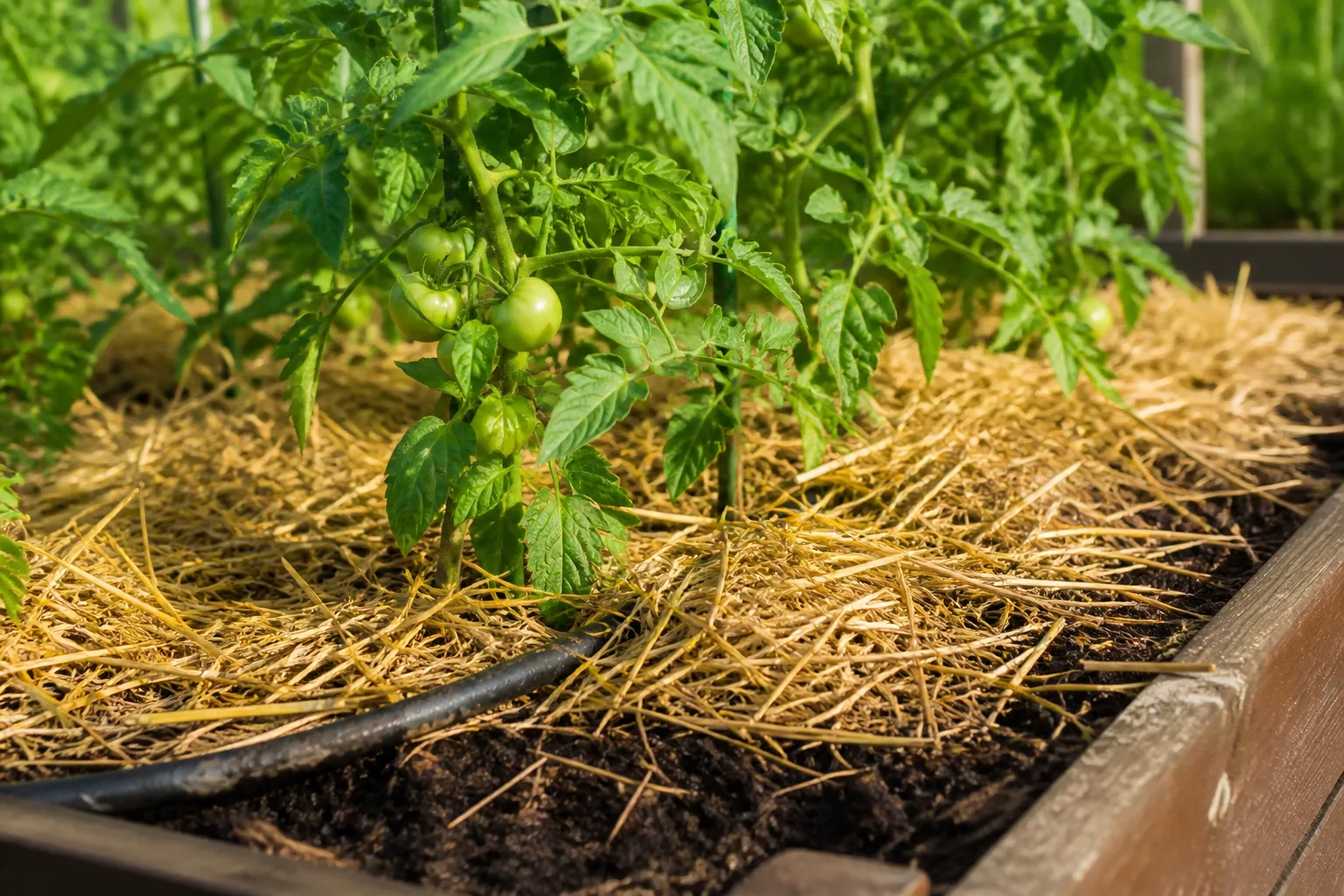
Give plants the spacing their mature size requires, not the width of the transplant pot. A dense hedge of tomato foliage stays humid even when the soil surface looks dry. Cages, trellises, and selective removal of the lowest leaves improve air movement, but pruning cannot compensate for plants packed too tightly or a site with no drying breeze.
Water early in the day when practical. Morning watering is not a guarantee against disease—rain can arrive whenever it wants—but it gives leaves and soil more time to dry than evening irrigation. If your bed is chronically damp, solve drainage and airflow rather than simply spraying more often.
Finish with sanitation, rotation, and variety choices
At the end of the season, remove tomato vines and fallen leaves promptly. Pull or control solanaceous weeds around the bed, clean soil and plant residue from cages and stakes, and avoid carrying wet debris from an infected bed into a clean one. University of New Hampshire Extension reinforces the value of starting with clean beds, good spacing, and keeping foliage dry during disease-favorable weather.
Rotate tomatoes away from the same bed when you can. Small gardens rarely allow a perfect multi-year rotation, but even moving tomatoes, potatoes, and eggplants to a different bed for a season reduces the chance that a fresh plant sits directly above last year’s debris. If rotation is impossible, sanitation, mulch, base watering, and early scouting become more important.
No tomato cultivar has complete immunity to Septoria. Some varieties are described as tolerant or may perform better in local trials, but tolerance is not a guarantee, especially in a wet year. Choose disease-tolerant varieties when reliable local information is available, then use cultural controls anyway.
Start each season with clean transplants and inspect the undersides of leaves before bringing a plant into the garden. Avoid saving seed from a diseased plant when you have a clean alternative, and do not assume a healthy-looking transplant is clean if it was packed tightly, kept wet, or transported with older symptomatic plants. These precautions lower the starting inoculum; they do not replace garden sanitation once the crop is planted.
When a tomato plant is too far gone
A plant is worth trying to save when it still has a substantial amount of healthy green foliage, growing tips, and fruit that can mature. Remove the worst leaves, improve the canopy, and watch the newest growth for seven to ten days. If new leaves stay clean while older damaged leaves decline, your actions are helping even though the original spots remain visible.
Consider removing the plant when most of the canopy is yellow or brown, new growth is also spotted, stems are collapsing, or the plant is serving as a dense spore source beside healthier tomatoes. Pulling one failing plant can protect several productive plants, particularly in a small bed where airflow is already limited. Bag it or dispose of it according to local rules, clean the support and tools, and do not replant another tomato directly into the same debris.
Conclusion
Septoria leaf spot is most manageable when you treat it as a disease-cycle problem rather than a cosmetic blemish. Confirm the small pale-centered lesions on lower leaves, look for pycnidia with a hand lens, remove the worst foliage without stripping the plant, keep water off the canopy, mulch against soil splash, and use only a labeled protectant when the season and disease pressure justify it.
The spotted leaves will not recover. Your decision is whether the plant still has enough healthy canopy and growing time to finish the crop. Early sanitation, dry foliage, clean supports, and a better rotation plan give the next flush of leaves—and next season’s tomatoes—the best chance.