Should You Rake Leaves in Fall? A Practical Guide
Should you rake leaves in fall? Learn when to mulch, leave, or remove them for healthier turf, richer soil, safer paths, and better wildlife habitat.
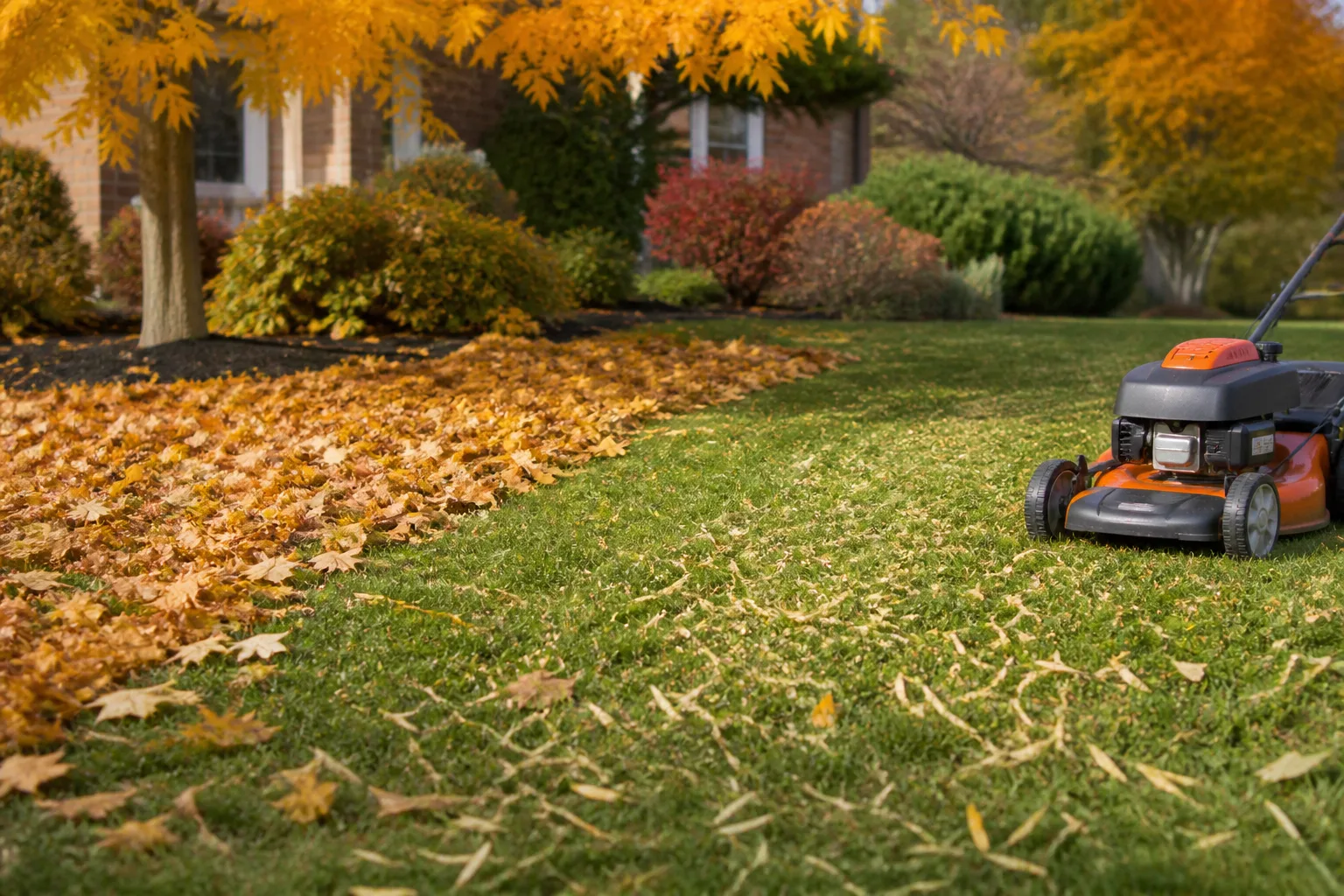
You probably do not need to rake every leaf in your yard. The better question is where the leaves landed, how thick and wet the layer is, and what you can do with the material once you move it.
On garden soil, a loose layer of clean leaves is free organic matter and winter cover. On a lawn, a thin layer can be chopped in place with a mower; a thick, wet mat should be removed or redistributed. On a sidewalk, stair, drain, gutter, or pond, leaves are a safety or maintenance problem and should be cleared.
Penn State Extension describes fallen leaves as a resource that can become mulch or leaf mold, while University of Illinois Extension summarizes research showing that mulched leaves can return nutrients to established turf. That does not mean “never rake.” It means raking is a targeted tool, not an annual obligation to make every square foot bare.
The short answer: don’t rake by habit—sort leaves by surface
Use this quick map before you pull out the rake:
| Where the leaves are | Default move | Why |
|---|---|---|
| Garden beds and under established trees | Leave a thin, loose layer or spread it evenly | The leaves protect bare soil and feed decomposers as they break down. |
| Lawn with light or moderate, dry cover | Mow and mulch in place | Small pieces settle between grass blades and return organic matter to the soil. |
| Lawn with a thick, wet, or matted blanket | Rake, vacuum, or collect the excess | Dense cover can reduce light and air movement and may encourage disease or vole damage. |
| Sidewalks, steps, driveways, and decks | Clear them | Wet leaves become slippery and stain hard surfaces. |
| Gutters, storm drains, and drainage swales | Clear them before heavy rain | Leaves can block water flow and redirect runoff. |
| Ponds and small water features | Remove floating or sinking leaves | Decomposing material can cloud water and reduce oxygen. |
The most useful fall cleanup is often a mix of three actions: mulch the lawn, leave or relocate leaves in beds, and clear surfaces where people or water need to move. Gardeners who follow that sequence do less work while keeping the parts of the yard that need to function clear.
Why fallen leaves help soil and wildlife
In a forest, no one bags the leaves every October. They accumulate on the soil, shelter small organisms, and gradually return carbon and nutrients to the root zone. A home landscape is more managed than a forest, but the same basic cycle still works when the leaf layer is placed where it will not harm turf, crowns, paths, or drainage.
What leaves return to the soil
Leaves are a slow input, not a fast fertilizer. Fungi, bacteria, earthworms, and other decomposers break them into smaller particles and transform that material over time. The result helps soil hold moisture and develop a softer, more workable structure, but it should not be treated as a complete replacement for a soil test or a fertilizer plan when a plant has a documented nutrient deficiency.
Penn State Extension recommends two main ways to recycle leaves: shred them for mulch or pile whole leaves to make leaf mold. Shredded leaves break down more quickly and are less likely to form a solid mat. Leaf mold takes longer, but its crumbly structure is useful as a soil amendment and moisture-retaining mulch.
Leaves can also protect exposed soil from pounding rain. Bare soil is more vulnerable to erosion, crusting, and weed establishment, especially on a slope or in a bed that will remain empty until spring. A loose layer slows the impact of raindrops without creating the deep, airless cover that causes trouble on turf.
The benefit is not limited to nutrients. Organic material at the surface supports the organisms that process it, and those organisms help maintain the living structure of soil. This is why hauling away every leaf and then buying compost or mulch later can be an inefficient loop, provided the leaves are clean and used in an appropriate place.
Why leaf litter is habitat
Leaf litter is not just dead material. Many insects spend part of their life cycle in or beneath it, and the layer can also provide shelter for small animals. Penn State Extension’s guidance on “soft landings” describes how leaf litter, twigs, and shade-tolerant plants beneath trees can protect overwintering caterpillars, moths, beetles, lacewings, bumblebees, and fireflies from mowers and predators. Some of those insects later become food for nestling birds.
That makes a tidy, leaf-free lawn a poor substitute for a small undisturbed area beneath a tree or along a fence. You do not need to let every corner become a deep pile. Keeping a modest leaf zone in a bed, under a hedge, or at the quiet edge of the property is enough to preserve habitat while the main walking and playing areas remain usable.
There is an important limit: do not dump a new mountain of leaves onto an existing woodland floor or naturalized area. Penn State Extension notes that animals and insects may be overwintering at a particular depth in the existing duff. Adding extra material can disrupt that layer just as much as removing it.
When leaves become a lawn problem
Grass is the surface where “leave the leaves” needs the most qualification. Turf can benefit from finely chopped leaf pieces, but intact leaves that stay wet and packed together are a different situation.
Use grass visibility as your first test
Stand at the edge of the lawn and look across it. If you can see grass blades through a loose scattering of leaves, the cover may be light enough to ignore for a short period or mulch with one mower pass. If the leaves form a continuous blanket that hides the turf, treat it as a job to reduce rather than a wildlife habitat to preserve on that surface.
There is no single number that works for every grass species, climate, mower, and yard. Leaf size, moisture, wind, shade, and how often new leaves arrive all change the outcome. A thin layer of small, dry pieces is easier for grass to tolerate than large maple or oak leaves that overlap like shingles.
University of Illinois Extension reports that Michigan State University experiments found no apparent adverse effects when leaves were mulched into established turf, with some studies finding quicker spring green-up and fewer weeds. The operative word is mulched. The mower must chop the leaves finely enough for them to settle through the canopy; leaving six inches of whole leaves in place is not the same treatment.
Wet, matted layers deserve faster action
Wet leaves are heavier, harder to rake, and more likely to stick together. On turf, a saturated mat can restrict air movement, hide uneven ground, and remain in place beneath snow or repeated rain. University of Minnesota Extension’s answer to a homeowner with drought-stressed lawn cautions that an uncleared layer may encourage vole damage or disease, even though leaves can be excellent mulch for trees, shrubs, and perennials.
That is a reason to watch weather, not panic at the first leaf. A dry day after a windy front is usually a better time to mow or rake than the day after a long rain. If the grass is soft enough that your mower wheels leave ruts, wait for firmer conditions; compacting wet soil can create a longer-lasting problem than a few extra leaves.
Shade also matters. A thin layer may dry quickly in an open, sunny lawn and remain damp for days under dense tree cover. Give shaded turf a lower tolerance for whole-leaf buildup, especially if your lawn has a history of gray or pink snow mold patches. The goal is not to make grass sterile; it is to keep a wet, compressed blanket from sitting on it for weeks.
A three-zone fall plan for most yards
Most homeowners do not need one leaf policy for the entire property. Divide the yard into zones and give each surface the treatment it can use.
Turf: mulch in place
On a mowable lawn, start with a visual inspection. Pick up sticks, toys, stones, and anything else the leaves may have hidden. Then mow when the leaves are relatively dry, using the mower’s normal or highest safe setting. If a visible layer remains, make a second pass at a right angle to the first.
Penn State Extension suggests that a layer of shredded leaf material up to roughly one-half inch on the lawn can be beneficial. That is a useful post-mowing target because the pieces should disappear between the grass blades rather than sit in clumps on top. If you still see broad, overlapping leaf pieces after two passes, collect them and use them in a bed or leaf bin.
If your mower has a bagging attachment, you can alternate methods: mulch the first light drop, collect the heavy fall, and spread the collected leaves under shrubs. This avoids forcing a mower through a pile it cannot chop and keeps the nutrient loop on your property.
Beds and tree rings: leave or relocate
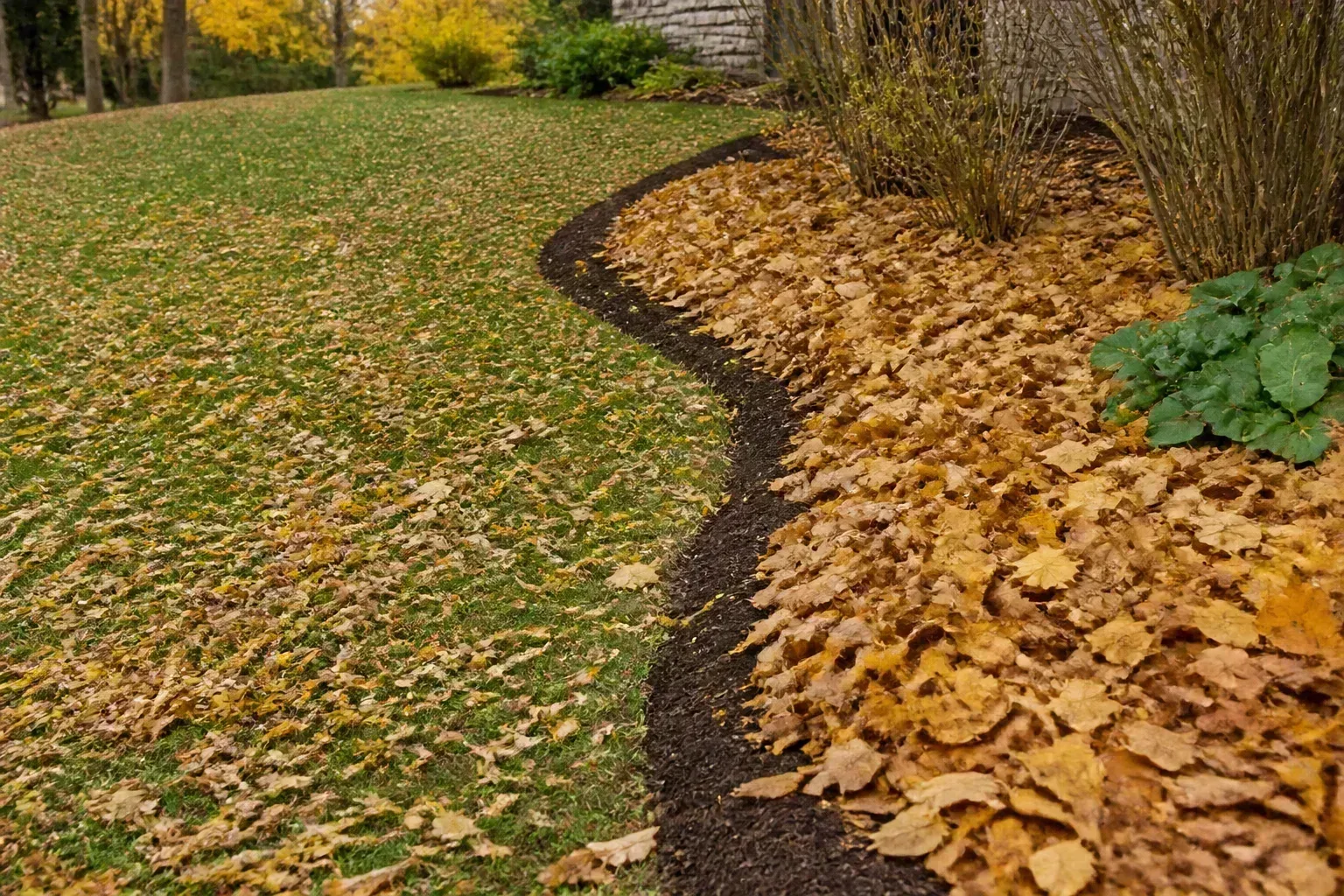
Leaves that land directly on bare soil or beneath shrubs are usually doing useful work. Spread them so water can move through the layer, break up thick pockets, and leave the crowns of herbaceous perennials visible. Around a tree, keep leaves and any added mulch away from the trunk flare; a flat ring that widens toward the drip line is healthier than a wet mound pressed against bark.
Whole leaves are acceptable when the layer stays loose and the bed drains well. If your leaf species are broad and slippery, shred them before spreading or mix them with coarser material so they do not knit into a waterproof sheet. Recheck after the first heavy rain because a layer that looked airy when dry can settle into a mat.
Leave a portion undisturbed where habitat is the goal, but do not cover low crowns, emerging seedlings, or plants that naturally dislike winter-wet conditions. Some plants evolved in open prairie, gravelly slopes, or dry woodland edges rather than beneath a deep deciduous canopy. Their winter care should follow the plant and the site, not a universal “more leaves is better” rule.
Pavement, drains, and water: clear
Raking is absolutely worth the time when leaves are on steps, ramps, sidewalks, decks, and driveway surfaces. Once wet, they reduce traction and can hide ice or uneven paving. Move the leaves to a bed, compost area, or leaf bin rather than sweeping them into the street.
Clear gutters, downspout outlets, catch basins, and storm drains before a forecast of heavy rain. Leaves that block an outlet can push water against foundations, wash out a bed, or turn a low walkway into a pond. If your property drains toward a road, keep leaf piles out of the flow path even if the pile itself is not a problem for plants.
Water features need their own rule. A few leaves are harmless, but a thick layer on the bottom will decompose in the water. Use a net or skimmer for a small pond and remove the material before it becomes a sludge layer. The same leaf that improves a garden bed can reduce water quality in a confined basin.
How to mulch leaves into a lawn
Mulching leaves into turf is simple when you treat it as a repeated light task rather than a single heroic cleanup. BBC Gardeners’ World Magazine recommends raking leaves off lawns where they can smother growth, while transferring them under shrubs or into a ventilated container for leaf mold. That is the practical middle ground: keep leaves moving toward the surface where they help.
- Choose a workable day. Dry or barely crisp leaves cut more cleanly than rain-soaked leaves. Avoid mowing when the soil is soft enough to rut.
- Inspect the lawn. Remove branches and hard objects hidden under the leaf layer. This is a safety check for you and the mower.
- Mow slowly. Use a mulching mower if you have one, but a regular mower can work. A slower pass gives the blade more time to chop.
- Make a cross-pass if needed. If you can still identify large pieces, mow in the opposite direction instead of accepting a thick residue.
- Look for grass, not perfection. The finished surface should show grass through the pieces. If clumps remain, rake or collect the excess.
- Repeat during leaf drop. A short pass once or twice a week is usually easier on the mower and lawn than waiting for the final storm of leaves.
Do not use the mower as a leaf shredder when the pile contains hidden branches, stones, or toys. Do not assume a powerful machine fixes excessive volume; if the deck clogs, the leaves are too wet or too deep for that pass. Bag the overflow and spread it elsewhere.
How to turn surplus leaves into leaf mold
If you have more leaves than your beds need, make a leaf-mold pile. Leaf mold is not hot compost. It is a cool, slow decomposition process driven largely by fungi, so it takes patience rather than constant turning.
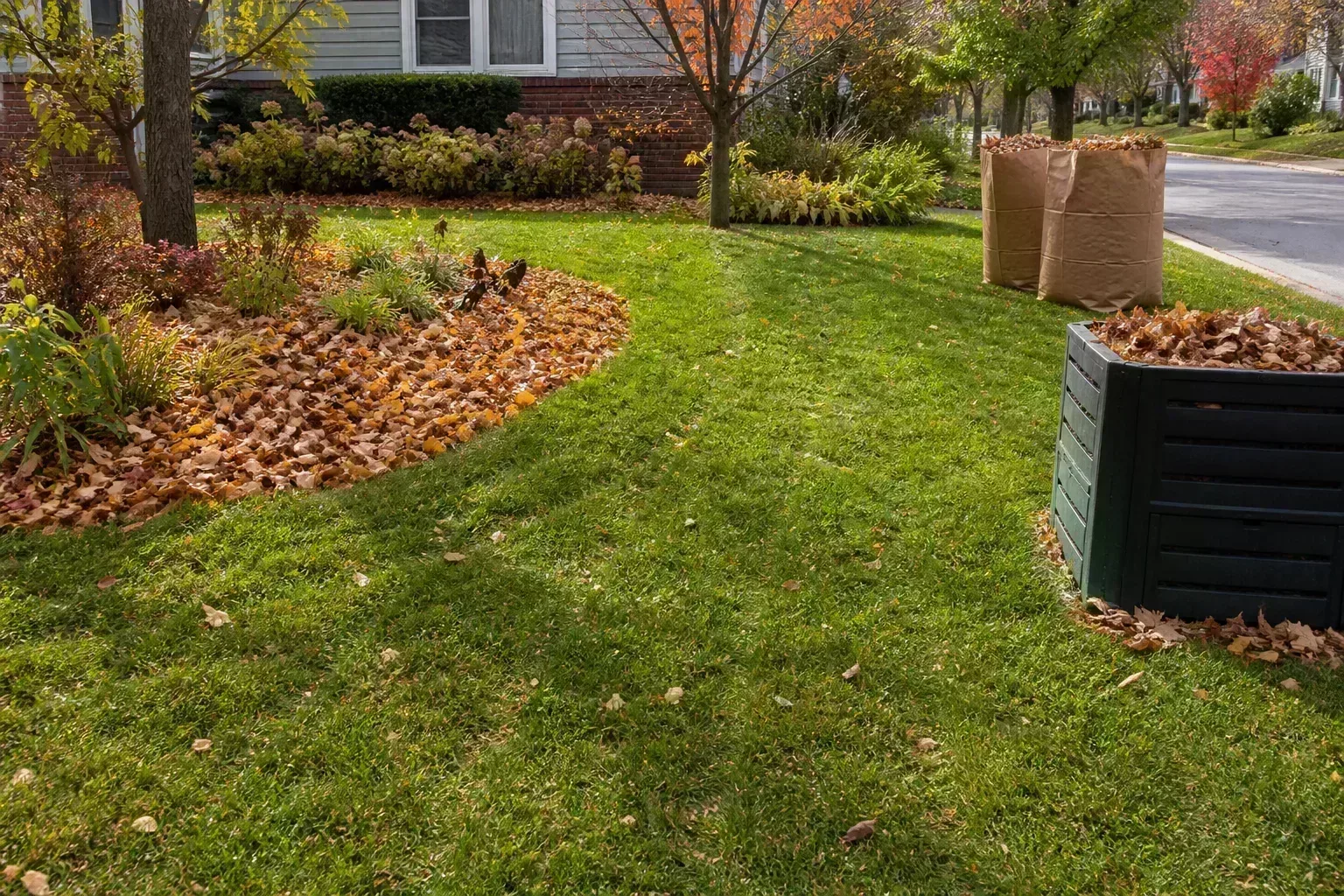
The Old Farmer’s Almanac’s garden guidance explains that whole leaves can be contained in a simple wire bin, ventilated bag, or similar enclosure. A bin roughly three feet wide and three feet tall keeps a useful volume from blowing away. Add leaves as they fall, moisten the pile when it becomes very dry, and leave airflow rather than sealing it airtight.
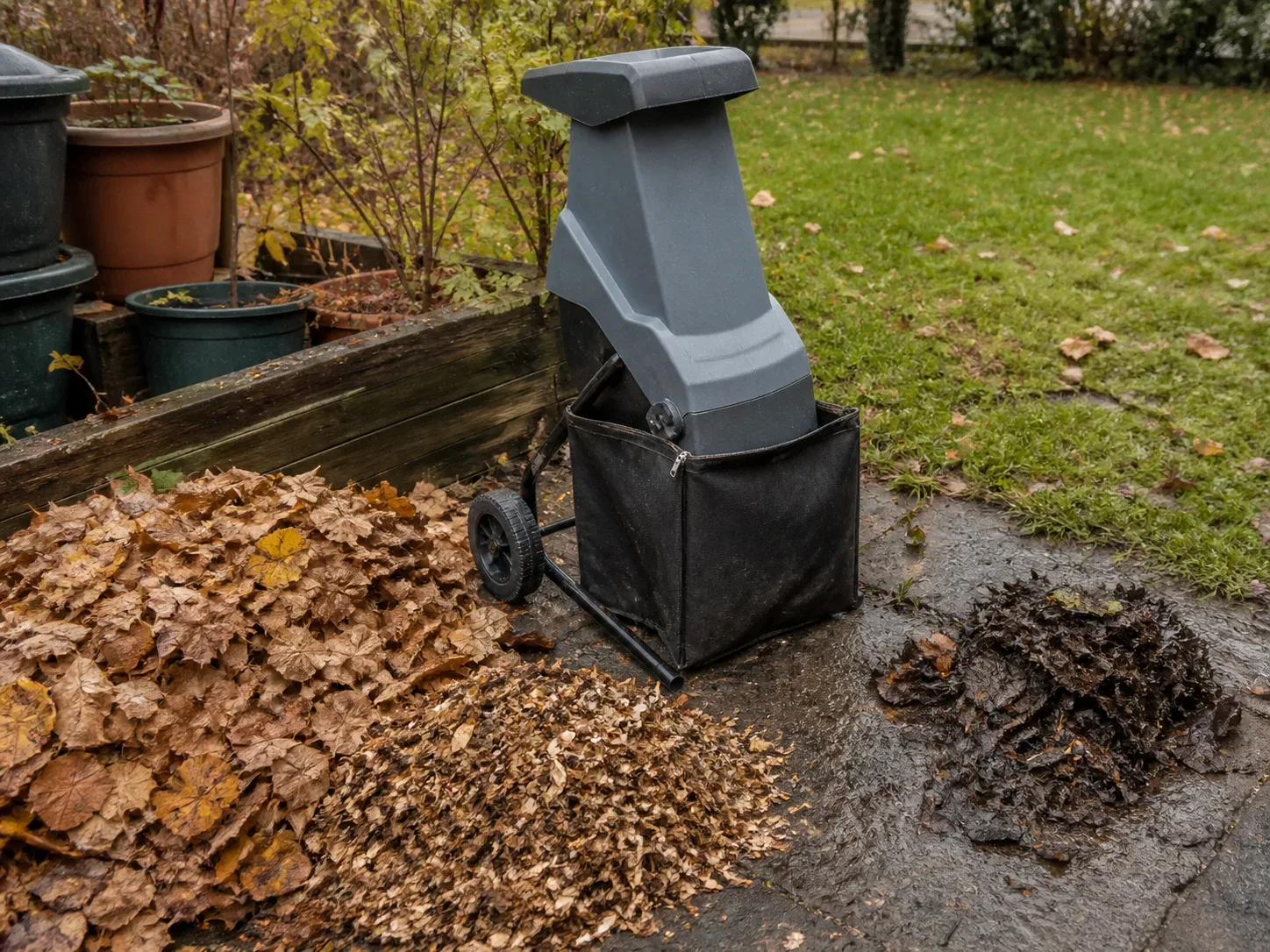
Dry leaves are easier to crush before they are wet. You can stomp through a pile, run a mower over a thin layer, or use a shredder. Shredding is especially helpful for thick leaves that otherwise bridge across the pile and shed rain. Keep the material moist like a wrung-out sponge, not saturated.
Expect about one to two years for a fine, dark leaf mold, depending on leaf type, climate, moisture, and particle size. Partly broken-down leaves can be used sooner as a loose mulch around established plants. Finished leaf mold improves water retention and soil texture, but it is relatively low in nutrients, so think of it as a conditioner rather than a complete fertilizer.
Never gather leaves from a roadside or a location where you do not know what chemicals or trash may be mixed in. The safest leaf supply is your own yard or a source with a clear management history. If municipal leaf compost is your only option, ask what materials are included and whether the finished product is screened and tested before applying it around edible crops.
What to do with diseased or contaminated leaves
Do not spread every leaf evenly just because redistribution is better than disposal. A plant with a serious, identifiable disease changes the plan. Remove the diseased foliage from beneath susceptible plants and follow your local extension service’s advice for disposal; a casual backyard pile may not reach the temperature or time needed to reliably destroy every pathogen.
Be especially cautious with leaves mixed with persistent weeds, invasive plant fragments, pet waste, or unknown lawn chemicals. A leaf that is merely spotted is not automatically dangerous, and many leaf spots do not survive long outside their host. The practical question is whether you can identify a recurring disease pattern and whether the material is being placed near a plant that could be affected.
For an ordinary household compost pile, balance the carbon-rich leaves with fresh green material, keep the pile moist, and manage it according to its intended use. For leaf mold, keep a separate pile so you can preserve the slow, leaf-focused process. Do not add synthetic packaging, treated wood, or trash to either system.
If you are unsure, isolate the questionable leaves in a labeled yard-waste container and ask a county or university extension office. That small pause is better than carrying an avoidable plant-health problem through every bed.
Common fall leaf mistakes that backfire
The biggest problems come from applying a good idea in the wrong place or in too much volume.
- Leaving whole leaves on turf until snow arrives. A light scatter is not the same as a deep, wet blanket. Mulch or remove the layer before it becomes compressed.
- Bagging every leaf and sending it away. This exports organic matter you could use as mulch or leaf mold, and it often creates a second purchase in spring.
- Creating a leaf volcano around a tree. Do not pile leaves or wood chips against the trunk. Keep the root-zone cover flat and the bark dry.
- Spreading a wet mat over small perennials. Heavy leaves can bend, bury, or keep crowns wet. Shred them or use a thinner layer.
- Mowing without inspecting the lawn. Hidden branches and stones can damage equipment and create a safety hazard.
- Raking onto the street. The next storm can carry leaves into drainage infrastructure and local waterways.
- Adding leaves to an already saturated bed. Mulch slows evaporation; it cannot repair poor drainage and may prolong waterlogging.
- Dumping excess leaves on a natural woodland floor. Preserve the existing duff layer instead of burying its overwintering residents.
- Treating leaf mulch as fertilizer in a bag. Decomposing leaves are a slow organic input, not a guaranteed answer to every nutrient deficiency.
The common thread is measurement. Look at the surface, feel the moisture, and inspect the plant bases before you choose the tool.
A low-effort routine from first drop to first freeze
You can avoid the exhausting final-weekend cleanup by using a short loop throughout fall.
Early leaf drop: Pick up branches, check gutters and drains, and mow the first light layer while it is dry. Leave leaves that land in beds unless they are covering crowns or forming a mat.
Peak leaf drop: Walk the lawn every few days. Mulch light cover, collect the overflow, and move the collection to beds, a compost pile, or a leaf-mold bin. Clear steps and paths whenever rain makes them slick.
After a wet spell: Do not force a mower over soft soil. When conditions improve, break up or remove matted areas first. Check shaded turf and the low points where leaves collect.
Before the ground freezes: Make one final inspection of turf, gutters, drains, walkways, and vulnerable crowns. A thin leaf layer under shrubs can stay. Dense turf cover, slippery surfaces, and blocked outlets should not.
After winter storms: If wind moves leaves back onto the lawn or drain, repeat only the affected zone. Fall cleanup is not a one-time moral test; it is maintenance that can be limited to the places where leaves create a real problem.
That schedule also gives you a better answer to “When should I rake leaves?” The right time is usually when the surface needs a different treatment and the leaves are workable, not a fixed date on the calendar.
Conclusion: make leaves work where they land
Should you rake your leaves in fall? Usually not all of them, and not for the same reason. Leave clean, loose leaves on garden soil and beneath trees where they can shelter organisms and become organic matter. Mulch light-to-moderate lawn cover so the pieces settle between grass blades. Rake, collect, or blow only the excess from turf, and clear every place where leaves create a slipping, clogging, or water-quality hazard.
Your best fall cleanup may take less effort than a traditional rake-and-bag routine: one mower pass, a few targeted raking sessions, a leaf bin, and a clear path to the drain. The yard is not messier because some leaves remain. It is more functional because each surface is getting the treatment it can actually use.



