How to Keep Bees Away From Outdoor Dining Areas
Learn which insects visit outdoor tables, how to protect food and drinks, what to skip, and when a nearby nest calls for a different response.
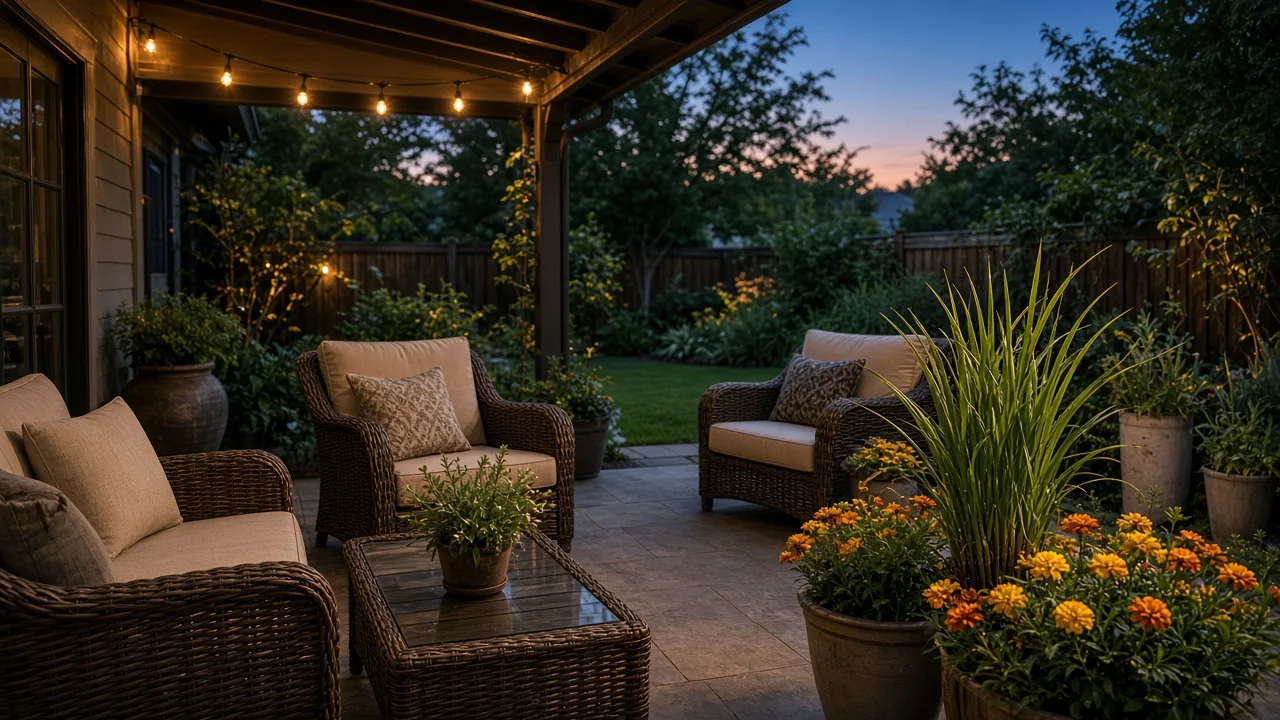
A bee drifting past a plate is usually looking for a flower, water, or a momentary smell—not a fight. The insects that repeatedly investigate burgers, fruit, soda, and open garbage are more often yellowjackets, a group of social wasps that scavenge human food. Knowing which visitor you have helps you choose the right response: protect the meal from yellowjackets, give foraging bees room, and avoid disturbing a nest.
You cannot make a garden table completely insect-proof without enclosing it, and most scent-based “repellents” are not dependable barriers. You can make a meal less rewarding to investigate. Start with the changes that physically block access to food and drink, then use the rest of the seven tips to reduce repeat visits without poisoning pollinators or turning a brief nuisance into a bigger problem.
Why bees and wasps show up around a meal
“Bee” often becomes a catch-all name for any yellow-and-black insect that appears near a picnic. That shorthand can send you toward the wrong fix. Honey bees and bumblebees are primarily foragers visiting flowers for nectar and pollen; they may investigate a sweet spill, but a procession of insects landing on meat, soda, or food waste is a stronger clue that yellowjackets are present.
UC Integrated Pest Management (UC IPM) describes yellowjackets as scavengers of human food and garbage, while honey bees are less brightly striped and hairier. The practical distinction is not absolute—honey bees can visit sweets, and wasps also feed on flowers—but repeated visits to exposed barbecue food are much more likely to be a wasp problem than a bee problem. That matters because food covers and waste control target the cause without treating pollinators as pests.
A useful first check is where the insects spend their time. A fuzzy bee moving between nearby blooms is probably foraging; a compact, smooth-bodied, sharply striped insect repeatedly visiting a drink or plate may be a yellowjacket. In late summer and fall, yellowjackets can become especially interested in ripe fruit and sugary food as the colony’s seasonal needs change, so an afternoon barbecue may draw more attention than the same meal earlier in summer.
The Old Farmer’s Almanac Garden Planner describes this shift from hunting soft-bodied garden insects to ripe fruit and sweet foods. Do not use the season alone to identify an insect, but use repeated food visits as a reason to tighten the setup.
Do not catch or handle an insect to identify it. Watch from a comfortable distance, and remember that local species vary in appearance.
A quick bee-or-yellowjacket check
Honey bees usually have a visibly hairy body and a less sharply defined yellow-and-black pattern. Yellowjackets tend to look smooth, compact, and vividly striped, with a narrow waist that is not especially long or slender.
The University of California’s IPM identification guide compares common yellowjackets, paper wasps, mud daubers, and honey bees; BBC Gardeners’ World’s wasp guide also emphasizes that wasps are a diverse group, so a quick color glance cannot identify every species. You do not need a precise species name to make the immediate choice: cover the food, do not swat, and move away from a nest if you see repeated traffic to one opening.
This distinction matters for both comfort and conservation. Yellowjackets may need management around exposed food, but bees visiting flowers are doing a different job and usually do not need to be driven from the whole yard. The aim is to make the dining area less accessible and less interesting—not to eliminate every bee or wasp from the landscape.
Seven practical ways to make outdoor dining less attractive
1. Choose a table away from active insect traffic
Before carrying out the meal, spend a minute observing the yard. Look for a steady flight path to one flowering shrub, a fruit tree with split or ripe fruit, a hummingbird feeder, a water source, or a hole in the ground or wall that insects repeatedly enter.
Move the table away from that route instead of trying to “clear” the whole garden. A single bee visiting blossoms is not a reason to cut flowers or avoid a garden bed; repeated in-and-out movement from one opening is a reason to give that area a wide berth.
If an outdoor dining area is used often, put the table where people can move around it without brushing flowering plants or walking barefoot through clover. Keep a clear path to the house, and avoid setting food beside bins, compost, fallen fruit, or a nest entrance. A bee garden does not have to become a no-go zone: shift the table a few yards or use a different patio corner rather than cutting back blooming plants.
Cornell Cooperative Extension’s pollinator-garden guidance recommends keeping flowering habitat available and avoiding chemicals when possible, which fits this simple separation strategy. At a rental, park, or vacation home where you cannot change the landscape, choose another picnic table if activity is concentrated in one spot.
2. Cover food between servings
The simplest reliable change is physical coverage. Keep platters in lidded containers, use mesh food domes, or leave dishes covered with an inverted plate until people are ready to serve themselves.
A screen over a buffet or a screened porch creates a stronger barrier than a candle or herb placed on the table. Penn State Extension recommends keeping food and food waste tightly covered when managing foraging wasps and yellowjackets; it also notes that insects can be attracted to resources even when a nest is not nearby.
A practical hosting routine is to bring food out in smaller batches. Put out what guests will eat over the next few minutes, then return the rest to a cooler or indoors. Close condiment bottles, cover cut fruit and sweets first, and do not leave serving utensils sitting in an uncovered dish.
For a buffet, set the covers where guests can replace them without reaching across a hot grill or brushing an insect away. If you are eating at a park, use the picnic basket or cooler as the default holding place and uncover one container at a time.
A fitted mesh dome is most useful when people are serving themselves over a longer stretch; for a short meal, a plate or lid between servings may be all you need. Choose sturdy covers that will not blow off and can be lifted without brushing insects away.
3. Keep drinks closed and easy to inspect
Open cans and unattended cups create a particular problem because an insect can crawl inside where you cannot see it. Pour drinks into clear glasses with lids or use cups with wide, visible openings; check the rim and liquid before each sip.
If you do use cans, cover the opening between sips with a purpose-made can cover or keep the can indoors until someone is ready to drink. Do not drink straight from a can that has been left outside.
A straw can help, but it is not a substitute for a lid or a visual check. Set drinks on a separate tray away from the food-prep area, and clear empties as soon as they are finished. Sugary residue on a cup, sticky table, or recycling container can keep attracting yellowjackets after the meal itself has been covered.
The UC IPM yellowjacket guide specifically advises covering outdoor soda cans so wasps cannot crawl inside; the American College of Allergy, Asthma & Immunology (ACAAI) gives the same precaution because an insect in an open can is difficult to see. For children, older adults, or anyone who cannot reliably inspect a drink, use a clear lidded cup and keep it in hand or within sight rather than leaving it on the lawn.
4. Clean spills and secure food waste
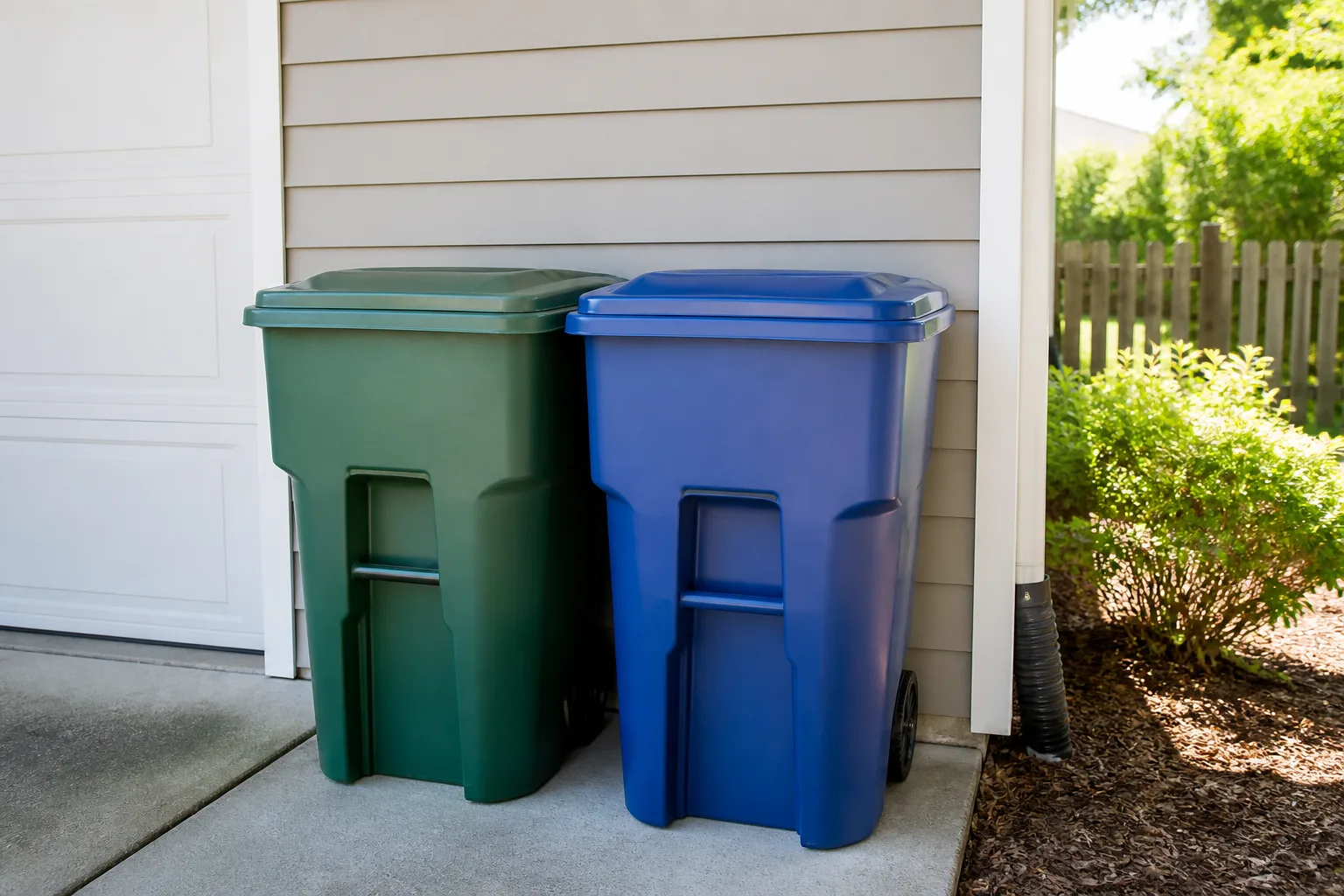
Wipe up juice, soda, barbecue sauce, and drips from fruit as soon as you see them. Rinse sticky serving dishes before stacking them, and place napkins, bones, and food scraps in a bin with a tight-fitting lid rather than an open paper bag. Penn State Extension recommends tightly covering food and food waste and cleaning spills promptly; it also notes that insects may be using a food or water source even when their nest is somewhere else.
That is why a clean table can still have visitors if an open garbage can, leaky hose, birdbath, or fallen fruit is nearby. Make the clean-up station easy to reach, but keep its waste bin away from the serving end of the table. If recycling will sit outside until the end of the day, rinse beverage containers and close the recycling lid.
Check around the table as well as on top of it. Cut fruit can drip onto grass, and fallen peaches, plums, grapes, or other soft ripe fruit under nearby trees can attract wasps. BBC Gardeners’ World’s fruit guide describes wasps feeding on soft, juicy fruit; removing windfalls and damaged fruit before guests arrive can reduce another food source near the dining spot.
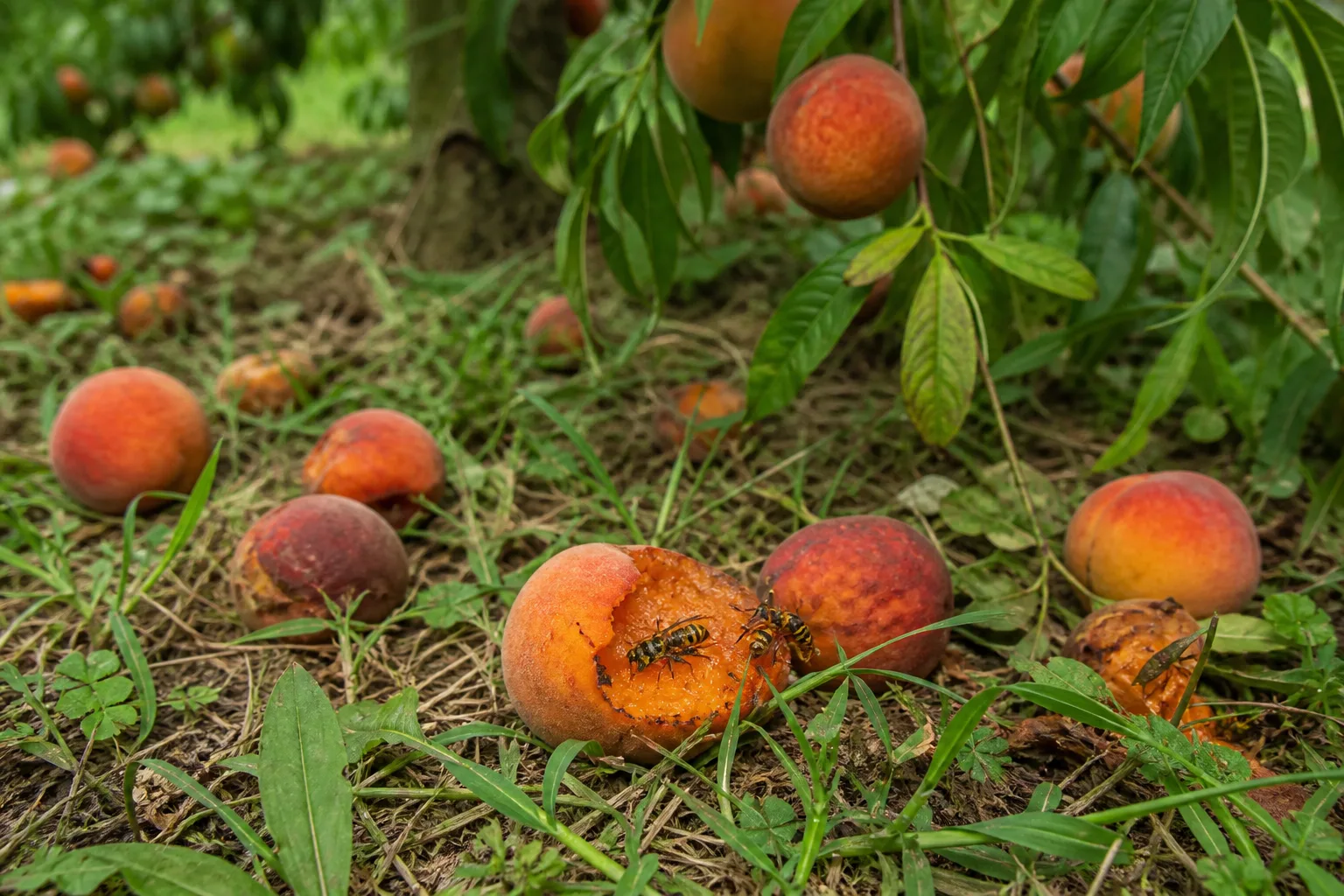
Put scraps in a sealed container, not in an uncovered compost pail beside the patio, and empty the pail after the gathering. If you find a nest during cleanup, leave it alone and move the table rather than striking the area with a rake or mower. If the party is already underway, clean the food source, then relocate diners if activity remains concentrated.
5. Keep fragrance and clothing changes in perspective
If you know that bees or wasps are active around the meal area, unscented soap, lotion, and hair products are a reasonable precaution. Strong floral or sweet fragrances may be one of several cues an insect investigates, but they are a weaker variable than a plate of exposed food.
University of California IPM also recommends avoiding brightly patterned clothing in areas of insect activity. Treat that advice as a small precaution, not a promise that a plain shirt or fragrance-free shampoo will keep insects away.
There is no need to change the garden’s flowers or dress an entire group in neutral colors. Pollinator-friendly plantings can stay where they are; simply place the dining table elsewhere if blooming plants are drawing a steady stream of visitors. The Old Farmer’s Almanac Garden Planner describes wasps as predators of garden pests and notes that some species shift toward ripe fruit and sugary food later in the season.
A flower border can therefore be valuable habitat and still be the wrong place to put the buffet. Give active blooms a little space, keep foot traffic on a path, and reserve the most flower-filled section for looking at rather than eating beside. That seasonal behavior is another reason food management tends to matter more than redecorating the yard.
6. Add a physical barrier when activity persists
When insects keep testing the table despite prompt cleanup, move the meal into a screened porch or under a properly fitted mesh canopy. Mesh over a buffet can protect dishes while leaving the rest of the patio open.
For a children’s party or a meal with someone who has a known severe sting allergy, a screened space may be a better decision than trying several scents or sprays. Make sure the screen is secured so guests do not pull it down onto hot food or an open flame.
A small tabletop fan may make a light breeze, but it is not a tested bee or wasp barrier and can scatter napkins or interfere with candles. If you already have a screened area, use that. A full screened porch is especially useful when the meal lasts for hours, insects are repeatedly landing on dishes, or someone in the group has a known sting allergy.
A canopy without mesh may provide shade but will not stop insects from flying under it; do not mistake a roof or umbrella for an insect screen. You can also move the serving table into the screened area and leave guests free to sit outside after the food is put away.
If you are buying covers, choose ones with enough clearance over the dish so mesh does not touch the food, and make sure guests can see and lift the cover safely. A physical barrier is the one tip here that can meaningfully block access while the food is being served.
7. Skip table-side traps and unproven repellents
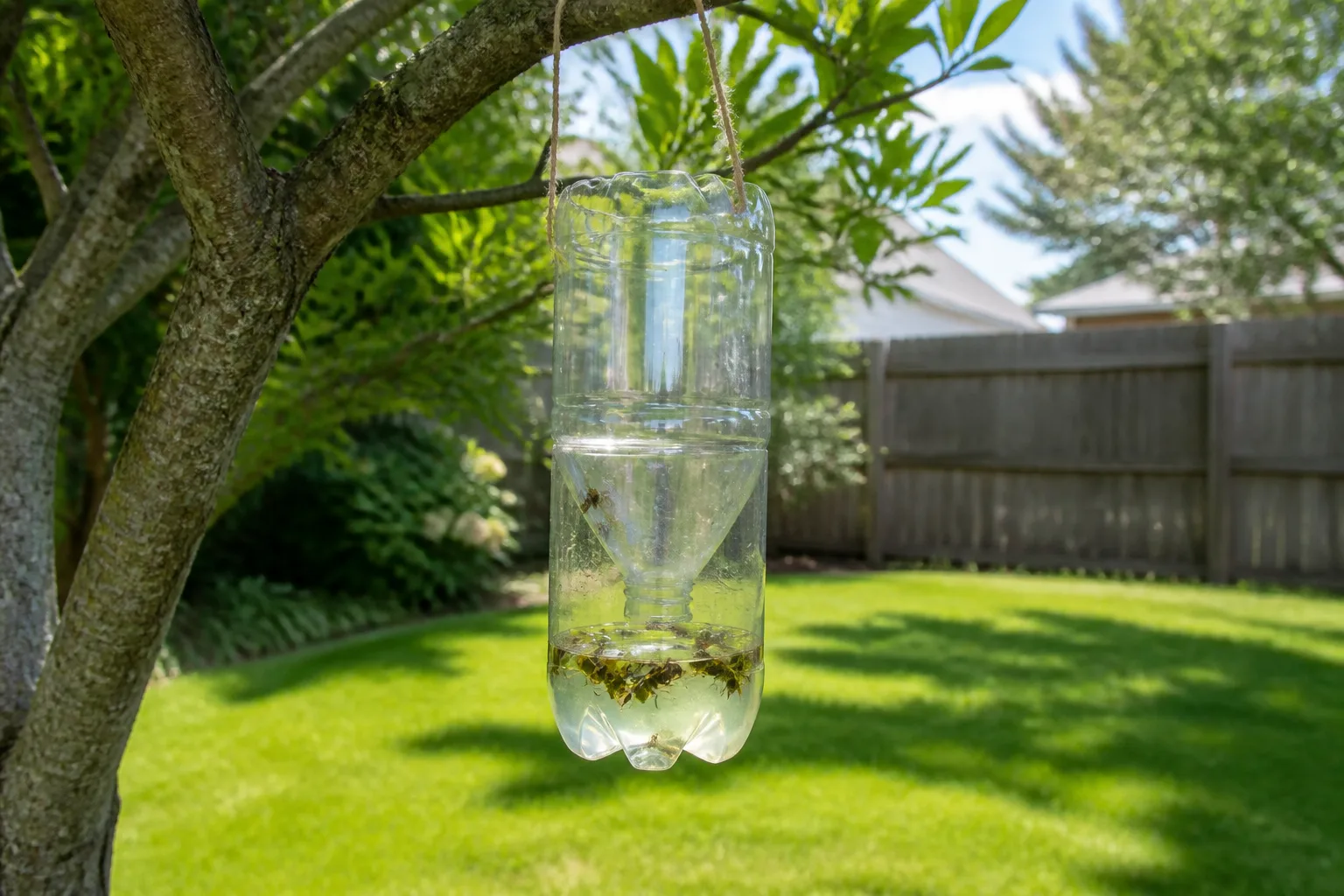
Do not put a baited trap beside the dining table. A trap can attract foraging yellowjackets to its location, and even when properly placed it is a population-reduction tool, not a shield around one meal. UC IPM says yellowjacket traps may reduce foraging by some species and should be placed away from picnic tables.
Penn State Extension likewise cautions that traps may thin out workers but are unlikely to solve the whole problem. If you decide to use one for a persistent seasonal issue, follow the label and place it at the edge of the property, well away from people, pets, and food. Do not set one out minutes before the meal and assume it will pull every insect away; bait choice and yellowjacket foraging change with the season, and a single lure will not control a colony.
Be skeptical of essential-oil sprays, citronella candles, dryer sheets, mint pots, or a paper-bag “decoy nest” as a guaranteed solution. Some scents can attract rather than repel particular insects, and Penn State Extension says there is no clear evidence that decoy nests prevent paper wasps or yellowjackets from nesting.
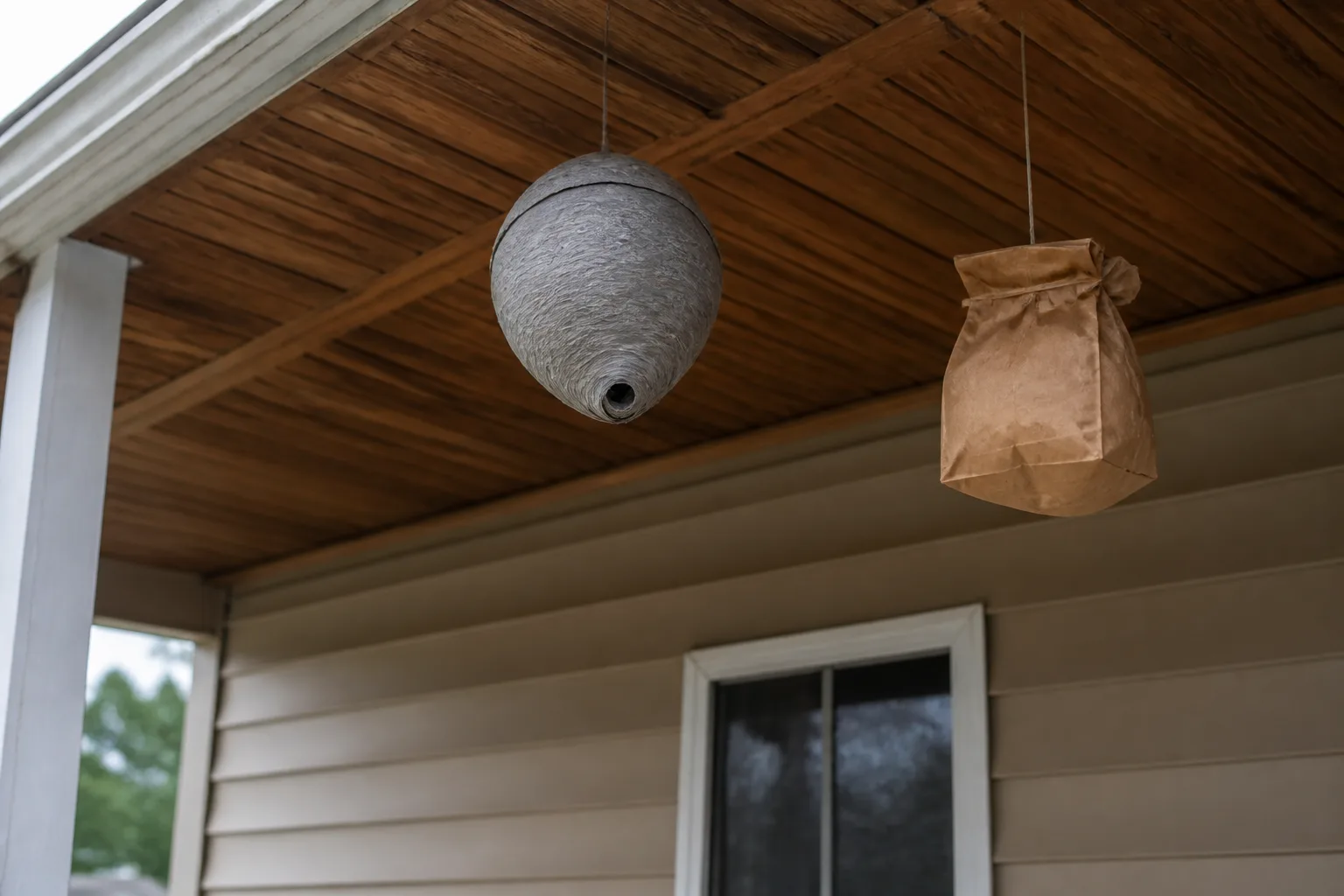
UC IPM and ACAAI note that ordinary skin or clothing insect repellents do not deter stinging bees and wasps. A citronella candle marketed for mosquitoes should not be treated as protection from a sting.
If a scent product makes guests more comfortable, use it only as directed and away from food, but do not let it replace coverage, cleanup, or a move indoors. Never spray pesticide over food, eating surfaces, people, or blooming plants; if a real nest is creating a hazard, identify the insect and contact a licensed pest professional instead of improvising a spray treatment.
What to do when one bee or wasp comes close
A single insect checking a table does not mean you have a nest in the patio. Put down the fork, cover the plate or cup if you can do so without reaching toward the insect, and give it an open route away from people. Avoid swatting, striking, or crushing it.
Penn State Extension notes that foraging wasps away from a nest are generally not defensive, but they may sting if trapped or crushed against skin; UC IPM advises staying calm if an insect lands on you. A slow approach matters most around a drink: leave it alone until the insect flies off, then inspect it before taking another sip.
If it lands on your arm, hold still for a moment and let it move on. If you need to remove it, slowly brush it away with a piece of paper or similar object rather than slapping it.
Do not trap it under a cup against your skin, pinch it, or wave a towel around the table. If several insects arrive, calmly move indoors or to a screened area and leave the food behind until you can cover it; do not run through a garden bed or toward the nest entrance.
When repeated traffic points to a nearby nest
Notice whether insects are simply visiting food or repeatedly traveling to one fixed point. A regular stream entering a hole in soil, a gap in siding, an eave, or a wall void can indicate a nest.
Do not poke the entrance, block it, pour liquid into it, mow directly over it, or stand close to film the insects. Keep children and pets away, shift the dining area, and contact a local extension office or licensed pest professional to identify the species and advise whether the nest needs management.
Many wasps provide ecological services, so the safest choice depends on location and exposure rather than fear alone. If a nest is far from a walkway and does not interfere with how the yard is used, leaving it undisturbed may be possible. A nest beside a frequently used door, table, play area, or accessible path is a different risk calculation—especially if someone in the household has a sting allergy.
The Old Farmer’s Almanac Garden Planner notes that wasps prey on garden pests and supports coexistence when a nest can be kept away from people. Penn State Extension’s guidance on social wasps recommends assessing the species, the nest location, and how people use the area before choosing a response. If you cannot safely identify the insects or nest, let a qualified professional do it rather than getting close for a better look.
Sting safety and signs of an emergency
Most local pain and swelling after a single sting are not the same as a severe allergic reaction, but symptoms beyond the sting site can be urgent. Trouble breathing, swelling of the tongue or throat, dizziness, fainting, or widespread hives after a sting can signal anaphylaxis. Call emergency services immediately.
If the person has a prescribed epinephrine auto-injector, use it according to their emergency plan and device instructions; do not wait to see whether an antihistamine will work. The American College of Allergy, Asthma & Immunology explains that epinephrine is the first-line emergency treatment for anaphylaxis and that emergency care is still needed afterward, even if symptoms improve.
Antihistamines are not a substitute for prescribed epinephrine during a severe reaction. If a guest has a written allergy action plan, follow it and do not delay emergency services while debating whether symptoms are serious enough.
For a typical local reaction, move away from the insect, wash the area, and apply a cool compress. If a honey bee leaves a stinger, remove it promptly by the quickest method available; UC IPM’s sting guidance notes that the method matters less than removing it without delay. Because an outdoor dining guide cannot assess a person’s medical history or diagnose an allergic reaction, seek medical advice if symptoms are unusual, worsening, or difficult to interpret.
A known allergy should be managed with the person’s clinician-provided plan, not with a home remedy. A sting inside the mouth or throat, multiple stings, a reaction that worsens, or uncertainty about a child’s symptoms warrants prompt medical advice. Anyone with a diagnosed sting allergy should keep their prescribed emergency medication accessible at an outdoor meal and make sure companions know where it is and how to call for help.
Conclusion
The most dependable way to reduce bees and wasps around outdoor dining is to make food and drink difficult to reach: cover servings, use protected cups, clean sticky spills, and keep waste in closed containers. Move the table away from obvious insect traffic, use a screen if visits continue, and treat fragrance or trap ideas as secondary measures with real limits.
If one insect appears, stay calm and give it space; if traffic repeatedly enters a nest opening near people, move diners and get informed help. Those habits let you enjoy the patio while leaving pollinators and beneficial wasps to do their work elsewhere in the garden.