24 Stunning Koi Pond Ideas for Your Backyard
Explore 24 koi pond ideas, from natural stone edges and waterfalls to compact layouts, with practical planning tips for fish, plants, filtration, and safe paths.
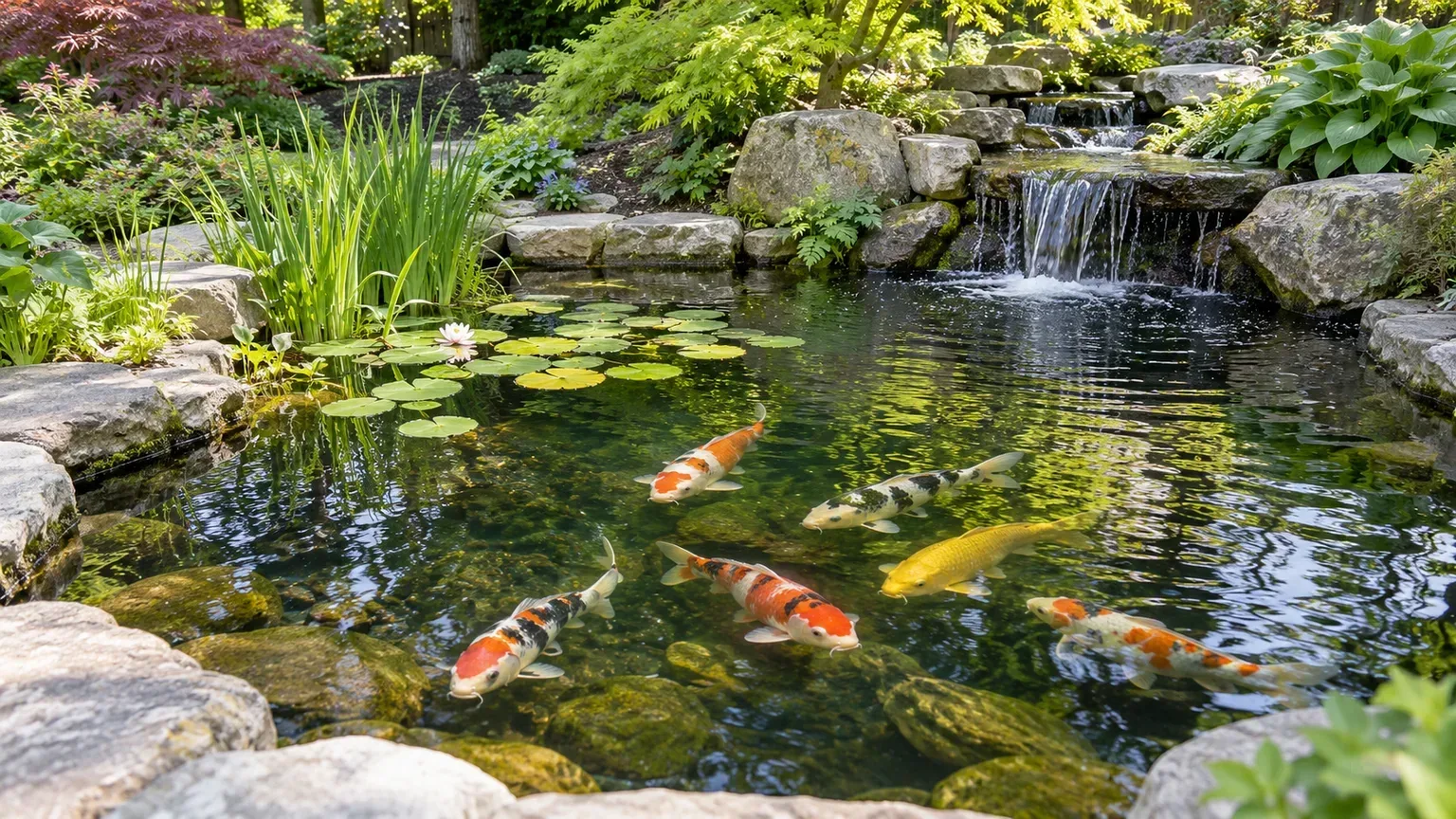
A koi pond can become the focal point of a garden, but the best design starts with the fish and the site, not a waterfall or a stone border. Koi grow large, produce waste, and need stable water conditions, so pond volume, circulation, filtration, depth, shade, and service access must work together. Once those essentials fit your yard and climate, decorative choices can make the pond feel modern, woodland, intimate, or dramatic.
Use these 24 koi pond ideas as design directions rather than fixed plans. Better Homes & Gardens’ backyard pond profile shows how a family-sized koi pond can combine seating, a waterfall, and aquatic planting, but an individual garden is not a stocking or construction formula. For water-quality decisions, consult local extension or aquaculture guidance such as Penn State Extension’s pond-water overview, New Mexico State University Extension’s pond guide, and the Southern Regional Aquaculture Center’s water-quality reference. Ask a qualified pond professional to size the system for your fish, region, and intended maintenance routine.
Plan the pond around fish, place, and maintenance
Before choosing a shape, decide what the pond needs to support. Koi grow over time and can live for many years when their environment is managed well. A small decorative basin may look like a koi pond in a photo but may be a better fit for a few aquatic plants than for adult koi. The design brief should describe the fish you hope to keep, your climate, available space, how you will maintain the system, and what the pond should look like from the house and garden.
Decide whether koi or a planted water garden is the priority
Koi and ornamental planting can share a pond, but they do not always make easy companions. Koi browse roots and leaves and can disturb pots, while plants can help shade water and provide structure. A specialist koi-pond guide from Living Water Aeration notes the practical challenge of protecting plants from fish activity. Design planting shelves or protected baskets from the start, and accept that some delicate plants may not survive in an open koi pond.
If lush lilies and a dense water garden matter more than keeping fish, consider a separate plant pond or a fish-light water feature. Keeping the two functions distinct can give you clearer water, more reliable planting, and simpler care. A mixed pond can still work, but it needs robust filtration, protected planting zones, and a plan for removing debris without damaging roots or disturbing fish.
Also decide whether fish are the only animals the pond is meant to support. Ducks add droppings and stir sediment; turtles have different habitat and care needs from koi. Combining animals because the scene looks appealing can strain water quality and complicate welfare. Plan a separate habitat for other species unless an aquatic veterinarian or qualified specialist confirms that the specific setup is suitable.
Size for adult fish and local weather
There is no single depth or fish-per-gallon rule that suits every pond. The appropriate volume and depth depend on adult fish, climate, pond geometry, water turnover, filtration, and how winter or summer extremes affect your site. In regions with prolonged freezing, a shallow pond can freeze too deeply; in hot climates, shallow sunlit water can warm quickly and hold less dissolved oxygen. Ask a local pond or aquaculture professional to size the habitat and equipment as a connected system.
Choose a site that can carry the finished pond and equipment, has access to a suitable power supply installed to local code, and is reachable for routine service. Avoid places where roof drainage or lawn runoff can carry fertilizer, soil, or pesticides into the water. Leave room for a filter, pump access, plumbing, and a path to remove leaves or sludge. The equipment area is part of the design, even if planting or screening hides it from the patio.
24 koi pond ideas for different yards and styles
The ideas below are starting points. Combine only details that suit the same site and fish plan: a tight rectangular pond and a woodland-style edge can look awkward together, while a restrained stone border may connect a modern basin to a naturalistic garden. Keep the maintenance route and safe access visible on your drawing before finalizing decorative elements.
Clean-lined and contemporary ponds
1. A minimal rectangle. A crisp rectangular pond pairs naturally with a modern patio, straight paths, and simple planting. Use a clean coping material and a dark interior finish if you want the fish colors to stand out, but include a safe, slip-resistant edge and a concealed route to the filter. The formal outline should frame the water without making equipment difficult to reach.
2. A glass viewing wall. A transparent pond wall can create a striking side view of koi and make the water feel close to a deck or indoor room. It is a specialized structural feature, not a standard DIY panel: water pressure, bonding, foundation movement, impact resistance, and long-term access all matter. Have the complete design engineered for the pond’s dimensions and local conditions, and keep the viewing area protected from falls.
3. A dark reflecting basin. Deep gray or black surfaces reduce visual clutter and make moving fish easy to see against the water. This restrained palette works with pale paving, grasses, and a simple spillway. Confirm that the finish is designed for aquatic use, and avoid a mirror-smooth perimeter that becomes slick when splashed or covered in algae.
4. A raised-edge pond. Raising one or more sides can create a comfortable viewing height and double as a low seat. A raised wall also makes the pond’s structure part of the architecture, so design the foundation, waterproofing, coping, and overflow deliberately. Keep the wall low and broad enough to use safely; do not treat a narrow cap as a substitute for a proper bench.
Naturalistic edges and stone
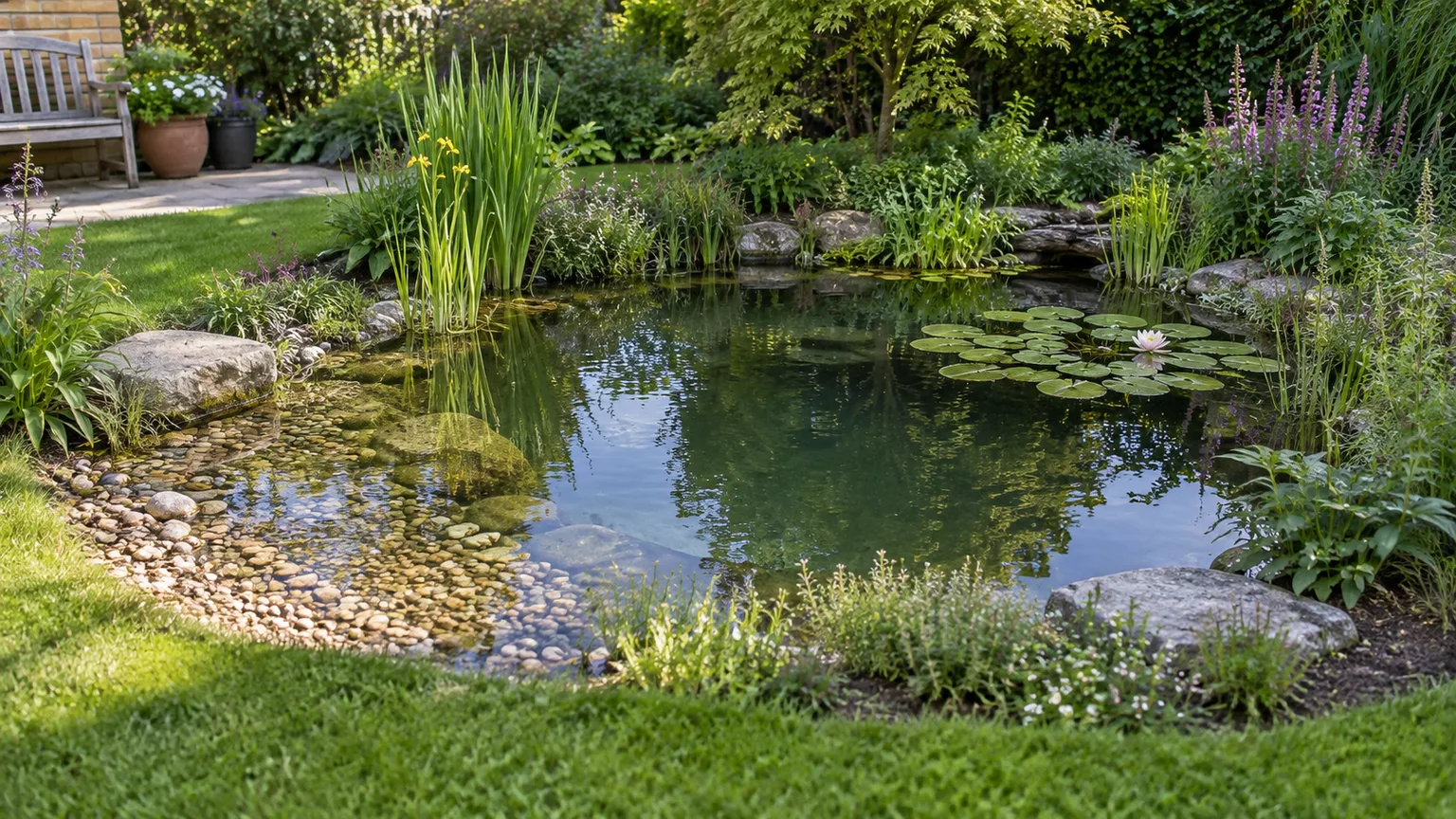
5. A softly curved shoreline. A curve can make a pond feel established in a cottage or woodland garden, especially when the edge changes direction gently rather than tracing a perfect oval. Check that the outline still allows a liner, shelves, and circulation to fit without narrow stagnant pockets. Leave a clear service point where a skimmer and access path can meet the water.
6. A layered rock edge. Use a few larger, stable stones with smaller transitions to soften a liner or coping edge. Avoid loose rocks that can shift underfoot or roll into the pond, and do not stack heavy stone on a liner without a structurally appropriate base. A natural look works best when rocks have a clear purpose: edge protection, a planting pocket, or a small cascade.
7. A woodland backdrop. Shade from trees can make a pond feel quiet and settled, but overhanging branches drop leaves, flowers, and seed pods into the water. Place the pond beside—not directly under—the heaviest canopy where possible. Use smaller, well-chosen plants or an evergreen screen to suggest woodland atmosphere without creating a constant leaf-removal job.
8. A gravel-textured shallow shelf. A planted marginal shelf can transition from water to garden and give emergent plants a place to grow. Keep the koi-swimming zone deep and open, and contain substrate so it cannot migrate into a bottom drain or filter. If fish forage in the shelf, use sturdy containers or physical barriers; a loose bed of gravel is harder to clean and can trap waste.
Moving water and sound
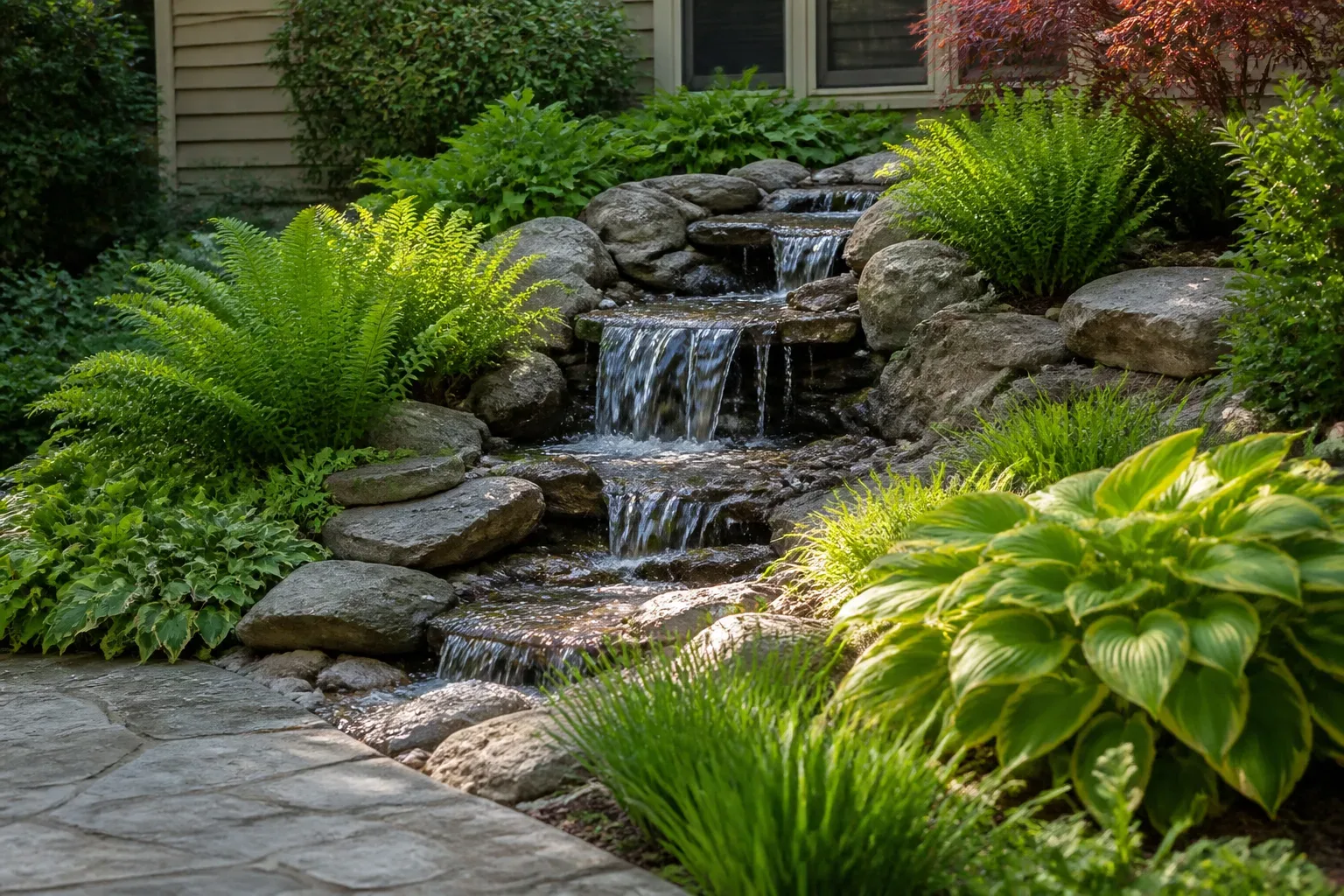
9. A low stone spillway. A short fall of water adds movement and a soft sound without dominating the garden. Size the pump and plumbing for the desired flow and system design, and provide a bypass or adjustment so the feature can be controlled. A spillway can help mix and aerate water, but it does not replace properly sized biological filtration and circulation.
10. A stream that joins the pond. A narrow stream can connect a higher planted basin or rain-fed-looking feature with the main pool. Build a stable channel that can be cleaned and inspected, and prevent soil or fertilizer from washing into the koi water during storms. A stream adds surface area and sound but also adds pump demand and splash loss, so include those needs in the equipment plan.
11. A discreet fountain. A small fountain gives vertical movement and can break up a broad surface. Choose a quiet, adjustable pattern that suits the pond’s scale, and direct spray back into the pool to limit water loss. Keep the intake protected from leaves and fish, and ensure that the fountain can be removed or serviced without draining the pond.
12. A hidden filter return. Water can re-enter through a rock crevice, a wall slot, or a low ledge so the feature feels integrated instead of mechanical. Hidden returns still need accessible plumbing and enough flow to prevent dead areas. Draw the pipe route and cleanout points before laying stone; a beautiful cascade becomes a frustration if a leak cannot be found without dismantling it.
Viewing, seating, and paths
13. A pondside bench. Place a weather-resistant bench where you can watch fish without blocking the equipment route. A slight angle gives views across the water and into planting, while some afternoon shade can make summer sitting more comfortable. Leave room to stand and feed fish safely rather than placing the bench flush against an unguarded edge.
14. A viewing trail. A curved path can reveal the pond from different angles and invite a slow walk around it. Make the everyday route firm, well drained, and wide enough to pass with a bucket or net. Use low plants that do not hide the edge from view, and preserve a direct service approach for pump checks and maintenance.
15. A deck overlooking the water. A small deck creates a clear place to sit, dine, or observe koi. Position it so furniture and people do not crowd the pond’s access points, and choose boards or pavers with grip when wet. Include a barrier or other fall protection when the location, local code, or household needs call for it; children and visitors may not recognize an open water edge as a hazard.
16. Stepping stones at a crossing. Stones can suggest a path through a shallow planted zone, but placing loose stones across koi water creates a slipping and fall risk. If a crossing is essential, have it designed as a stable, code-appropriate bridge or walkway with secure footing and suitable edge protection. For most yards, a path around the pond delivers the same visual connection with less risk and easier maintenance.
Plants, shade, and fish refuge
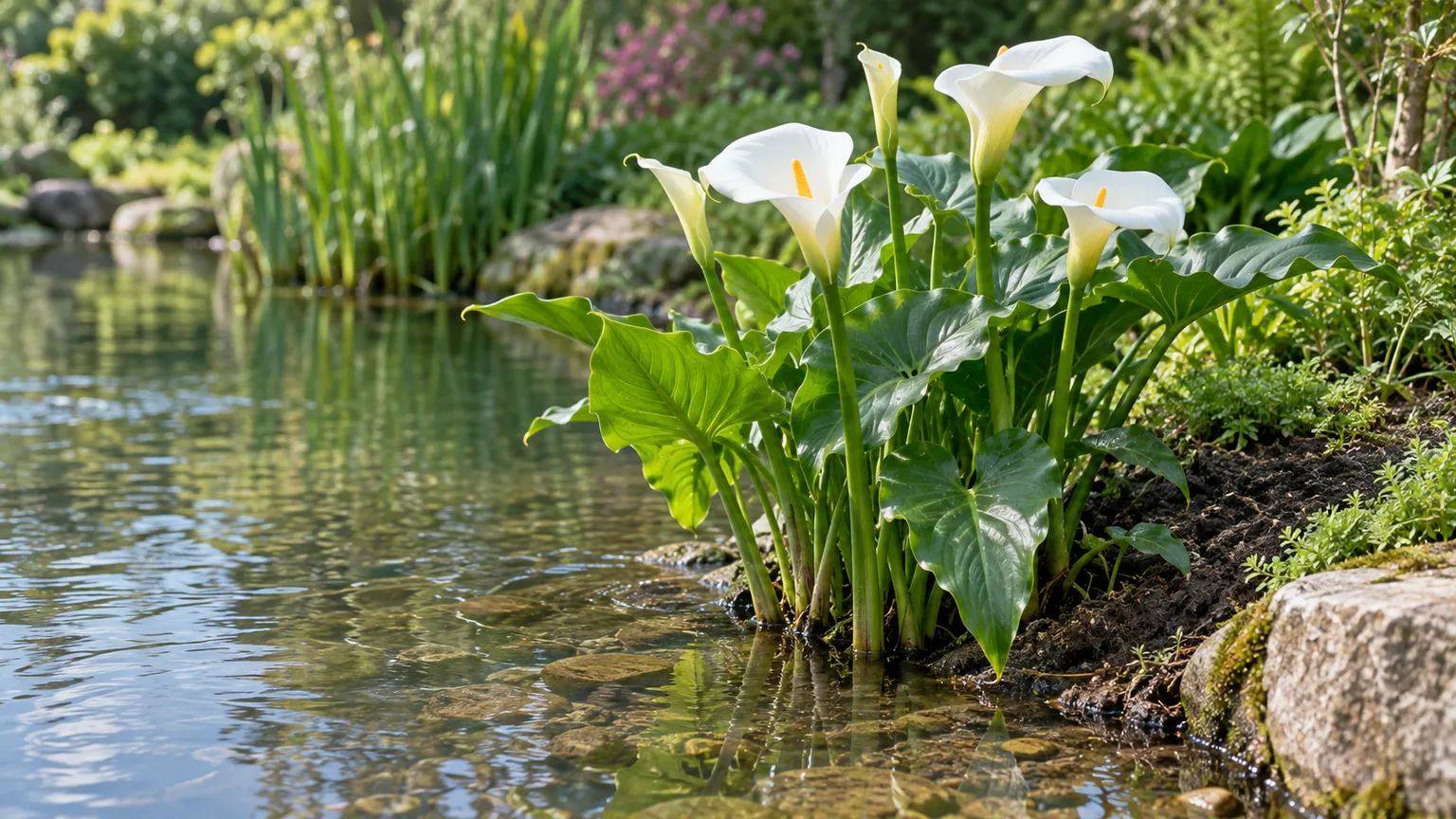
17. A restrained lily display. Water lilies can shade part of the water and add broad leaves and seasonal flowers. Start with a small, secured planting basket and monitor how the fish interact with it. Koi may nibble leaves, disturb roots, or scatter the planting medium, so an open pond may never look like a still-life photograph. Avoid letting floating leaves cover the whole surface, which can reduce light and gas exchange.
18. A lotus focal point. Lotus foliage and flowers bring bold scale to a broad pond, but lotus needs space, warmth, and a stable planting container. Set it where leaves will not block a filter intake or crowd the main swimming area. Verify that the selected variety suits your climate and pond depth; a plant that thrives in one region may need seasonal protection elsewhere.
19. Sheltered marginal planting. Papyrus, rushes, and other suitable marginal plants can soften a hard edge and create visual height. Choose species appropriate to your climate and containment needs, and plant them in baskets or a protected ledge where koi cannot easily uproot them. A contained plant zone is easier to thin and maintain than loose soil mixed through the pond.
20. A shaded refuge. Combine a shaded edge, overhanging ledge, or purpose-designed submerged refuge to give fish a calmer area out of bright sun. Keep the refuge open enough for circulation and observation, with no tight cavities where fish could become trapped. Shade can moderate heating, but a pond still needs adequate surface exchange and oxygen management during hot weather.
Compact and statement-scale layouts
21. A courtyard pond with a separate fish decision. A small courtyard can fit a reflective water feature, planted basin, or viewing pool. Be realistic about whether its volume, depth, filtration, and service space can support adult koi through local seasonal extremes. If those needs do not fit, keep the same design language but use plants or a recirculating feature without fish.
22. A pond tucked beside a patio. A narrow side-yard pond can make a neglected strip feel purposeful when it runs parallel to a path or seating area. Leave enough width for circulation, cleaning, and a safe edge; a channel too narrow for access may be attractive but difficult to maintain. Account for fences, footings, utility lines, and shade before excavation.
23. A formal pond with a central platform. A stable island or platform can create a sculptural focal point in a broad garden pond. It changes water circulation and can create inaccessible spaces where debris collects, so work out maintenance access and hydraulic flow first. If the platform is intended for people, have its supports, slip resistance, load rating, and edge protection designed for that use.
24. A sculptural focal point. One carefully chosen stone, lantern-like form, or aquatic-safe sculpture can anchor the pond without competing with the fish. Check the material’s suitability for long-term contact with pond water, stability, and ease of cleaning. A focal point is most effective when it sits off-center and leaves the main water surface open for viewing and fish movement.
Design details that protect water quality
A decorative feature changes the water system. A waterfall adds splash and evaporation; dense planting can limit open surface; a bridge may shade part of the pond; and a hidden return may be difficult to service. Sketch the pond, equipment, plumbing, plants, viewing points, and safe maintenance path together. Penn State Extension explains that warm water holds less dissolved oxygen and that decaying vegetation and nutrient enrichment can further reduce oxygen. Those principles make debris control, circulation, and runoff management part of the aesthetic plan, not optional afterthoughts.
Keep filtration and maintenance reachable
Koi waste and uneaten food create an ongoing biological load. The pump, skimmer, mechanical prefilter, and biological filter must be selected for the actual pond and fish load; decorative rocks should not be used to disguise an undersized system. Ask the pond builder to explain how to isolate, clean, and inspect each component and where dirty water will go during maintenance.
Leave a firm route to the filter and pump, even if a planting screen hides them from view. Provide valves and unions where service is needed, keep electrical components protected and installed to local requirements, and choose access covers that can be lifted without damaging surrounding stone. New Mexico State University Extension’s pond guidance and the Southern Regional Aquaculture Center discuss the connected water-quality factors that pond operators monitor; a koi system should be sized and checked with its biological load in mind.
Plan depth, volume, and circulation together
Set depth and volume based on the mature fish plan and the region, not on the shape of an inspiration photo. A broad, shallow pond can warm quickly; a deep pond still needs suitable circulation and oxygen exchange. Discuss winter ice, summer heat, fish refuge, turnover, drain placement, and safe water testing with a qualified local professional. Avoid adding more fish because a pond “looks empty”; stocking capacity depends on the whole system and ongoing management.
Water movement should reach the parts of the pond where waste and leaves accumulate. A bottom drain, skimmer, returns, and waterfall have different jobs and should be coordinated rather than added as isolated decorations. A waterfall can be turned down or bypassed when needed, and some systems require separate aeration. Ask how the pond will behave if a pump fails or power is interrupted, and plan an alert or backup procedure suited to your climate and fish.
Choose planting and materials with koi in mind
Use baskets, shelves, or a separated planting zone to keep roots and substrate contained. Start with plants known to suit local conditions, then observe what the fish disturb. Water lilies and lotus are not guaranteed to stay intact in a koi pond, while tougher emergent plants may work when protected. Keep enough open water to watch the fish and remove debris.
Select liner, sealant, stone, and ornaments specified for aquatic use. Avoid coatings, treated wood, or unverified materials that may leach substances into water. Rounded coping can look refined, but it should remain secure and provide stable footing. If a project includes electrical work, structural glass, raised masonry, or a deck over water, use qualified tradespeople and follow local building and electrical codes.
Make maintenance and safety part of the layout
The cleanest pond design is one that makes routine care easy enough to do. Plan where leaves will collect, how you will reach a skimmer, whether hoses can drain safely, and where tools can be stored. Check water parameters according to the system and fish-care plan, remove waste, and avoid sudden changes in feeding or water conditions. A specialist can help establish a monitoring schedule that reflects stocking, filtration, source water, and climate.
Keep leaves and runoff out of the pond
Leaves and dead plant matter decompose and add organic material to the water. Penn State Extension’s water-quality guidance describes how nutrient inputs and decaying vegetation can contribute to algae and low oxygen. Keep the pond away from concentrated roof or lawn drainage, avoid directing fertilizer-rich soil or clippings into it, and use a skimmer or net sized for the seasonal debris load.
Place trees for filtered shade without positioning the pond beneath heavy leaf fall. Use a buffer planting to intercept runoff, but choose plants that will not send roots into the liner or overwhelm the service path. Store fertilizers, pesticides, and cleaning products away from the pond, and follow their label and local guidance to prevent drift or wash-off. A clear overflow route should carry excess stormwater away from fish and neighboring property.
Design for people, predators, and seasonal access
Treat every pond edge, bridge, deck, and glass wall as a safety decision. Make paths stable, non-slip, and visible; avoid narrow loose stepping stones above deep water; and add a suitable barrier where children, visitors, pets, or local rules make one necessary. Have structural crossings and retaining walls designed for their loads rather than relying on decorative stone placement.
Protect fish from predators with a refuge, appropriate depth, and a plan for seasonal changes in foliage. Do not stretch exposed netting where people can trip or wildlife can become entangled; if a temporary net is needed for leaf fall, secure it and check it frequently. Keep equipment reachable in winter, know what the pond needs during freezing weather, and confirm the local fish-care plan before a storm or heat wave. For a major build, a qualified pond professional can review safety, structural details, and the filtration plan before construction locks those decisions in.
Conclusion
The most successful koi pond combines a style you love with a water system and layout you can maintain. Choose the site, plan for adult fish and local weather, specify circulation and filtration, then add rocks, plants, waterfalls, seating, or a viewing path where they fit. A thoughtful design makes the fish easier to care for and the garden easier to enjoy.