How to Level a Yard Quickly and Affordably
Fix a bumpy lawn with the right method for shallow dips, deep holes, slopes, and drainage problems—plus material math and when to hire help.
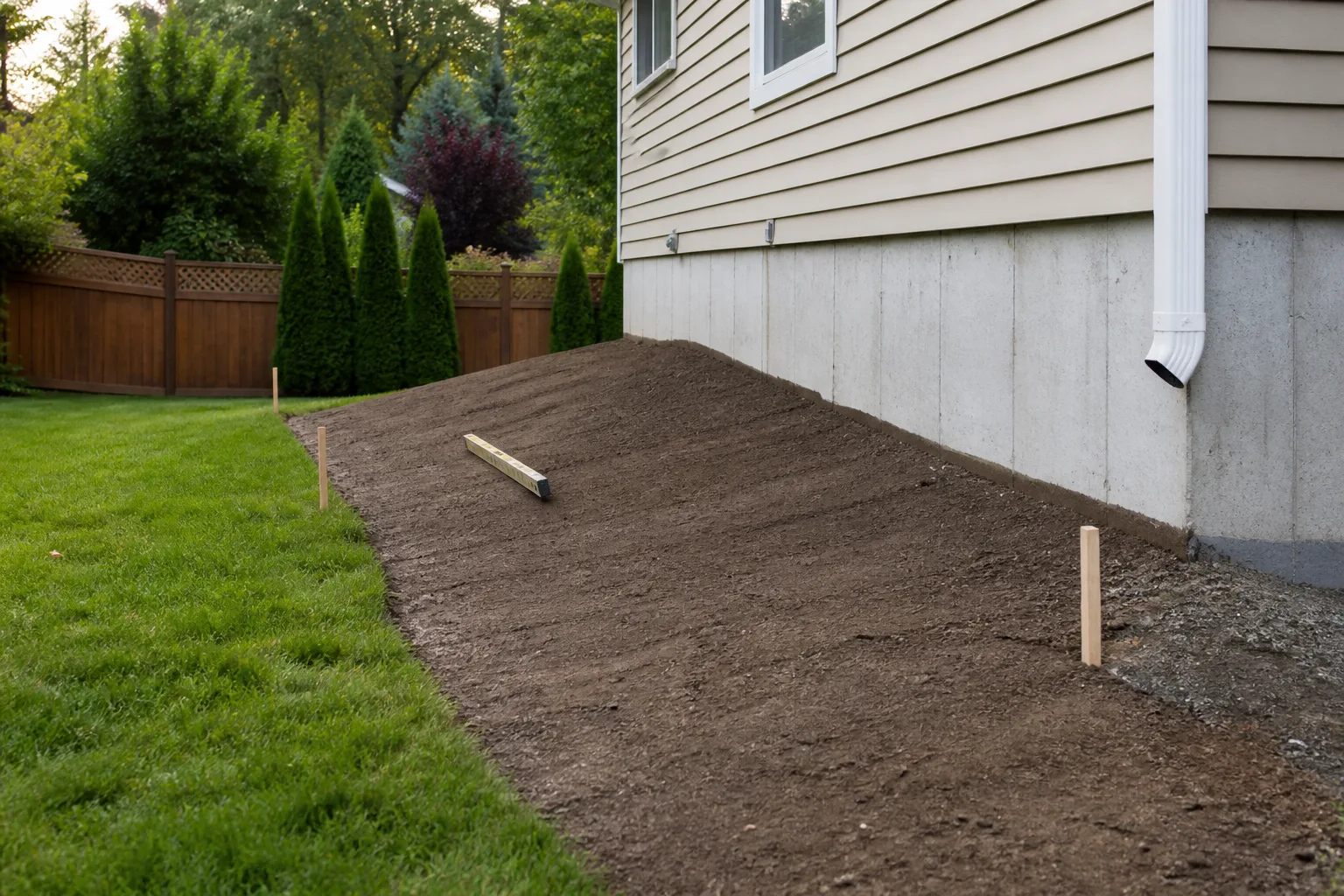
An uneven yard is not always a full-landscape problem. A few shallow depressions can often be corrected with a small amount of compatible soil, a rake, and several patient applications. The expensive mistake is treating every dip the same: adding sand to clay, burying healthy grass under a thick layer, or raising a low area without asking where rainwater will go.
The fastest affordable approach is to match the repair to the damage. Use thin topdressing for shallow hollows, lift and reset the turf when a dip is deeper, and reserve true regrading for broad slopes, severe settling, erosion, or water that repeatedly collects against a house. This guide takes you from diagnosis to final grass recovery, with enough measurements to buy only what the yard needs.
Start with a diagnosis, not a pile of soil
Walk the yard when the soil is firm but not bone-dry, then walk it again after a moderate rain. Mark the low places, high bumps, muddy paths, bare patches, and any area where a downspout empties. If water disappears within a reasonable time and the problem is mostly a mower jolt or a visible dip, you may have a simple surface-level repair. If water stays for a long time, flows toward the foundation, or cuts a channel through the lawn, leveling alone is not the first fix.
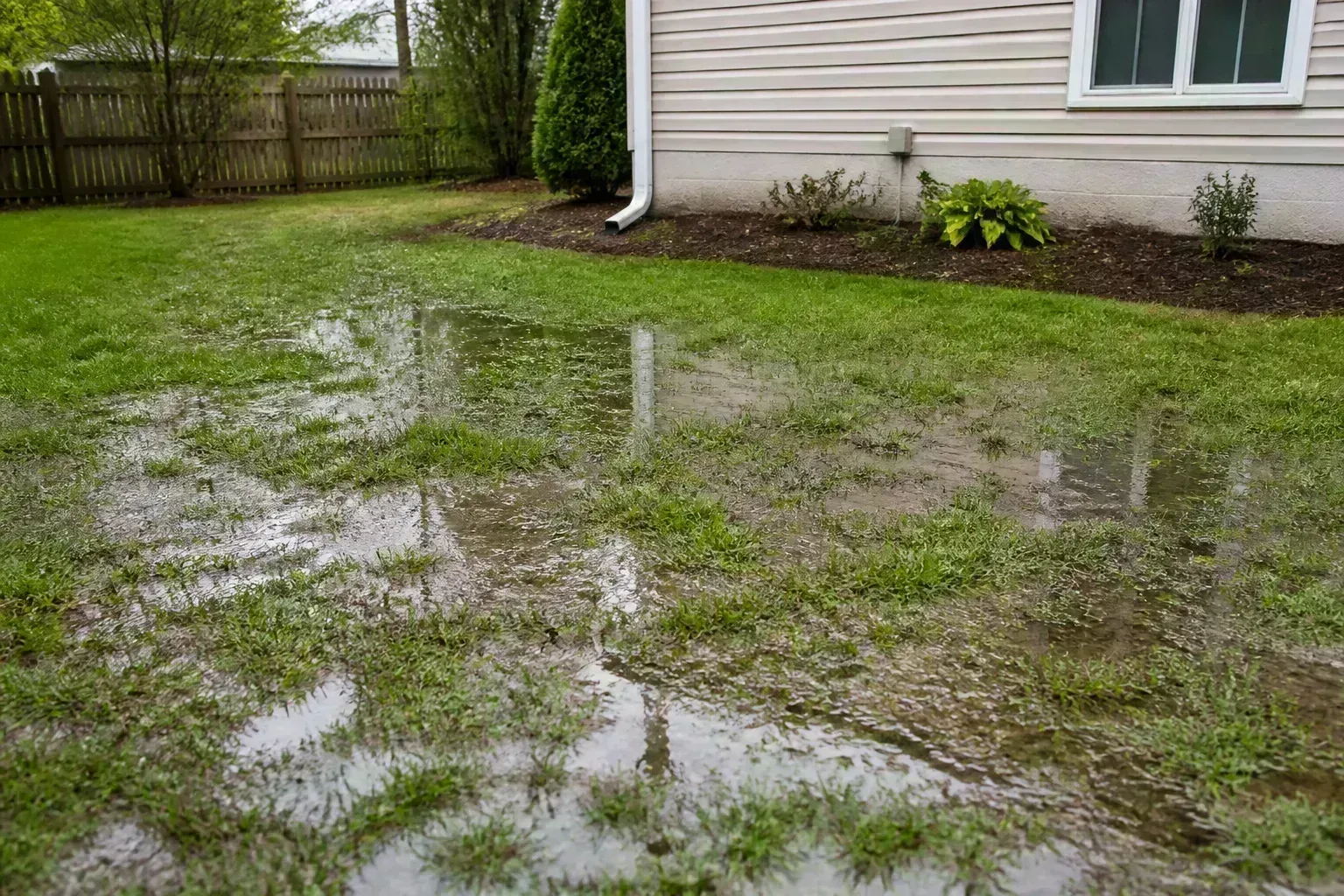
Look for clues about why the yard changed. Frost heave can move soil in climates with freeze-thaw cycles; heavy foot traffic can compact the root zone; animals can create holes; a removed tree or old construction trench can settle for years; and a leaking irrigation line can wash soil away. A low spot that keeps returning after you fill it is evidence, not bad luck. Find the cause before spending on another load of material.
Check slope, drainage, and nearby structures
“Level” does not necessarily mean perfectly flat. A lawn near a house usually needs a gentle fall that moves water away from the foundation, while a play area or seating lawn may simply need a smoother surface with the existing overall slope preserved. Flattening a yard by eye can create a new basin or redirect runoff toward a neighbor, path, retaining wall, septic area, or basement window.
Use a long, straight board and a carpenter’s level to compare short sections, or stretch a taut string between stakes and measure the gap to the soil at several points. You do not need a survey for a small cosmetic repair, but you do need a clear reference line. Check downspouts, hose bibs, irrigation heads, drains, edging, steps, and the bottom of siding before deciding how high the finished lawn can be.
If digging beyond a very shallow scrape, contact Call 811 or your state’s before-you-dig service a few business days ahead. The free service marks buried utility lines so a spade, edging tool, or rented machine does not turn a lawn project into a dangerous repair.
Measure the depth and scope of the problem
Lay a straightedge across the dip and measure from its underside to the soil at the deepest point. Repeat in two directions because a depression may be longer or deeper than it looks. Also measure the length and width of the area; the amount of fill depends on all three dimensions, not just the deepest hole.
As a practical rule, a shallow depression that is roughly an inch or less below the surrounding lawn can often be corrected while the grass remains in place. A deeper isolated hole is usually better repaired by cutting and lifting the sod, adding soil underneath, and resetting the turf at the surrounding grade. If the whole area is uneven, the soil is bare, or the surface has a visible slope problem, plan on a rough-grade and finish-grade project instead of repeated topdressing.
Choose the right repair method
There are three useful tiers. Topdressing is the least disruptive and least expensive when the turf is mostly healthy. Sod lifting costs more labor but corrects depth quickly and keeps an established lawn intact. Regrading is the right choice when you must reshape the soil surface over a broad area or solve how water moves across the property.
Top-dress shallow depressions
Topdressing means spreading a thin, even layer of material over growing grass and brushing it down between the blades. Clemson Cooperative Extension describes it as a way to improve soil and fill low or bare spots, but recommends no more than one-half inch per application so existing turf is not shaded or stunted. For a visible dip, expect to repeat the application after the grass has grown through, rather than trying to erase the entire depression in one afternoon.
This method is affordable because it uses hand tools and preserves the lawn. It is not a good choice for a hole that swallows several inches of soil, a trench that continues to settle, or a low area that stays saturated. Covering those problems can hide the cause while stressing the grass.
Lift sod for deeper isolated holes
For a distinct dip, cut the turf into a shallow H or two-sided flap with a sharp spade. Make the cuts deep enough to slide under the root mat, then fold the pieces back without tearing them. Add compatible topsoil in small lifts, firm each lift gently, and keep checking against the surrounding surface; a hole often settles after watering, so finishing slightly high is safer than finishing low.
Set the sod back down with its crown at the same height as the surrounding grass. Press the edges together, brush a little soil into any seams, and water thoroughly. The Royal Horticultural Society’s lawn-repair guidance uses the same basic principle for minor hollows: add or remove soil under the turf, firm the base, check the level, and water after the sod is reset.
Regrade bare or badly settled ground
When grass is already sparse, construction has left a broad uneven surface, or erosion has created channels, remove debris and work with the soil profile rather than sprinkling material on top. Strip and stockpile usable topsoil if you need to move a lot of soil, loosen compacted layers only when the ground is workable, establish the broad slope first, then finish the surface with a fine, even grade.
Do not bury the flare of a mature tree or pile soil against siding. Roots need air, and a raised grade can trap moisture against structures. For large grade changes, retaining walls, steep slopes, or water leaving the property, a landscape contractor or drainage professional can identify the safer layout before you buy fill.
Gather tools and materials
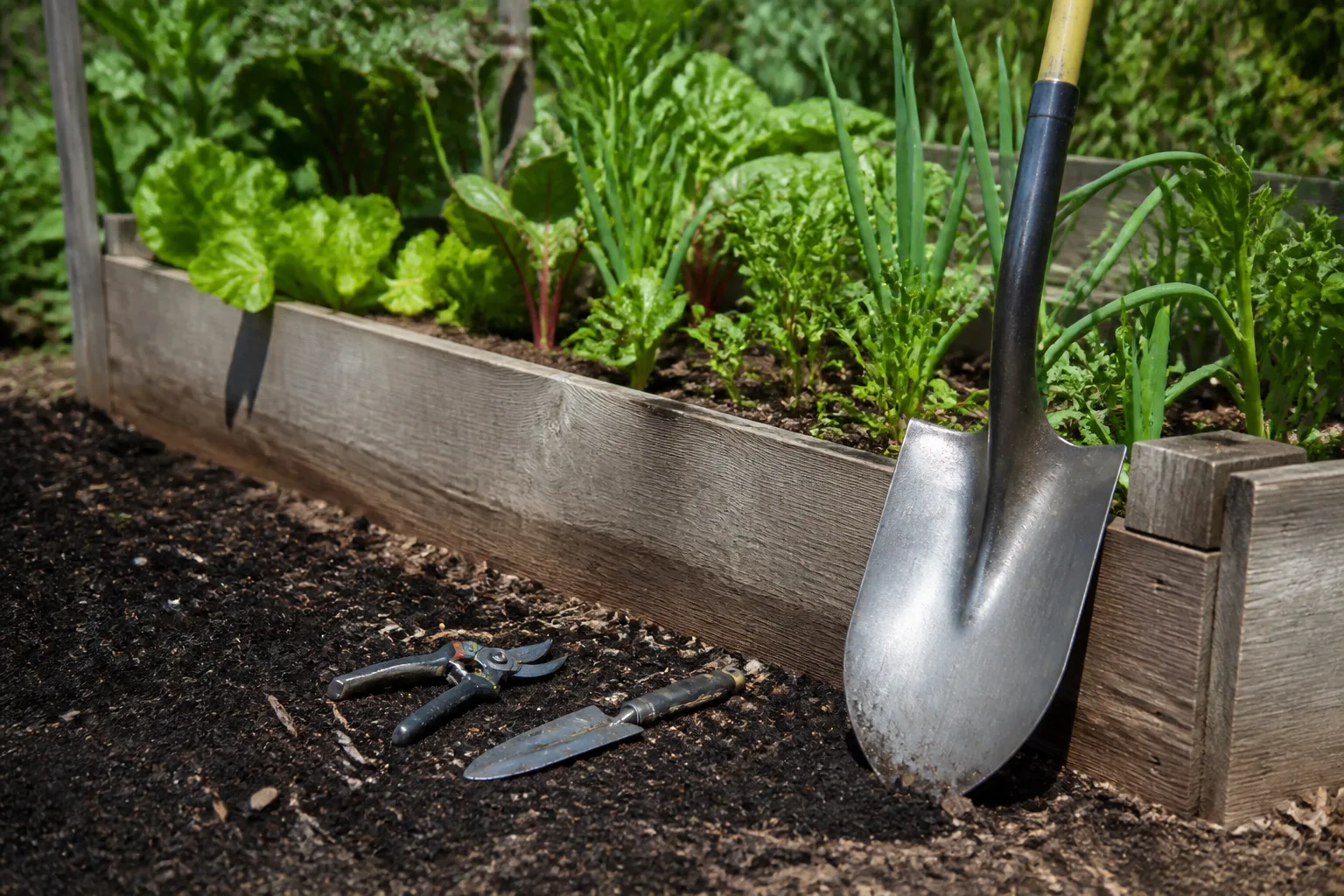
For a small lawn repair, gather a mower, stiff lawn rake, garden spade or half-moon edger, shovel, wheelbarrow or tarp, straight board, level, stakes, mallet, gloves, hose with a gentle spray, and a bucket or measuring container. A dethatching rake helps when dead material blocks the soil surface. A core aerator is useful for compacted turf, but renting one makes more sense than buying it for a single project.
Choose materials based on the repair, not on whichever bag is cheapest. You may need screened topsoil for volume, mature screened compost for organic matter, a compatible sandy loam, grass seed suited to the existing lawn, or a small piece of matching sod. Avoid potting soil, fresh manure, chunky unfinished compost, demolition soil, and fill that contains glass, rubble, roots, or visible weed growth.
Calculate soil volume and budget before you buy
Measure the repair area in square feet and estimate the average depth in feet. Multiply length by width by average depth to get cubic feet, then divide by 27 for cubic yards. For example, a 12-by-10-foot area with an average fill depth of 2 inches is 240 cubic feet-inches, or about 0.74 cubic yards after converting the depth to feet. Order a little extra for settling, but do not buy a truckload based only on the deepest point.
For topdressing, a quarter-inch layer over 1,000 square feet is roughly 0.77 cubic yards of material. That estimate is useful for a broad, thin application; a small patch may be easier to handle with bags, while a larger job is usually less expensive per unit when delivered in bulk. Compare delivery fees, screened quality, and moisture content as well as the sticker price.
The cheapest method is usually the one that prevents a second repair. Spending a little more on screened, compatible soil can be less expensive than correcting a lawn full of stones or weed seedlings. Likewise, renting a core aerator for compacted soil may be worthwhile, but renting a tiller for healthy established turf can create unnecessary disturbance.
Choose a fill mix compatible with your soil
Clemson Extension recommends matching topsoil to the native soil and using compost or other organic matter to improve soil structure. Use screened topsoil or sandy loam when you need material that holds a grade, and use mature compost as an amendment rather than assuming compost alone will make a stable mound. A simple practical mix for many ordinary lawns is mostly compatible topsoil with a modest amount of fine compost, adjusted after observing the native soil.
Test a handful of damp native soil. Gritty soil drains quickly and may benefit from organic matter that improves water holding. Sticky clay needs organic matter and careful aeration, not a blanket of coarse sand. A soft, crumbly loam is easiest: use a similar screened soil for filling and add compost only as needed.
For established grass, the goal is not to create a dramatic new soil layer. It is to help the material move into the existing surface and root zone over time. The Clemson topdressing guide notes that light, repeated applications are safer and more effective than one heavy application, and that a soil analysis can be useful when you are changing soil quality rather than merely filling a small hollow.
Why pure sand can fail
Sand is not a universal lawn-leveling ingredient. The Gardening Know How explanation of sand on lawns warns that heavy sand applications over clay can create a dense, poorly draining layer. Clemson similarly limits sand topdressing to situations where the native soil is sandy; sports fields and golf greens often have specialized sand-based root zones that do not resemble a typical home lawn.
If your soil is sandy, a sand-and-compost blend may make sense for a small leveling pass. If it is clay, choose fine compost and compatible topsoil, improve compaction with core aeration when appropriate, and avoid trying to “fix” the clay by dumping sand on top. Do not use builders’ sand, beach sand, or a mystery bulk material just because the color looks right.
Time the project for fast recovery
Repair while the grass is actively growing and the soil is workable. Warm-season turf generally recovers during its warm growing period; cool-season turf often establishes seed best in late summer or early autumn where that timing suits the local climate. Spring can work for some repairs, but emerging weeds and hot weather can make moisture management harder.
Never spread soil over waterlogged ground. Working wet soil smears and compacts the root zone, which can leave you with a smoother-looking but less healthy lawn. The RHS lawn-repair guidance identifies spring and autumn as useful repair windows, while its autumn lawn-care guidance pairs aeration, topdressing, and repair with active recovery.
Level shallow dips in existing grass
Start by mowing at the lower end of the normal height for your grass, never down to bare stems. Rake away leaves and loose thatch so the fill can reach the soil. If a thatch layer is thick enough that you cannot see soil between the blades, remove some first; the RHS notes that excessive thatch can block water and air movement.
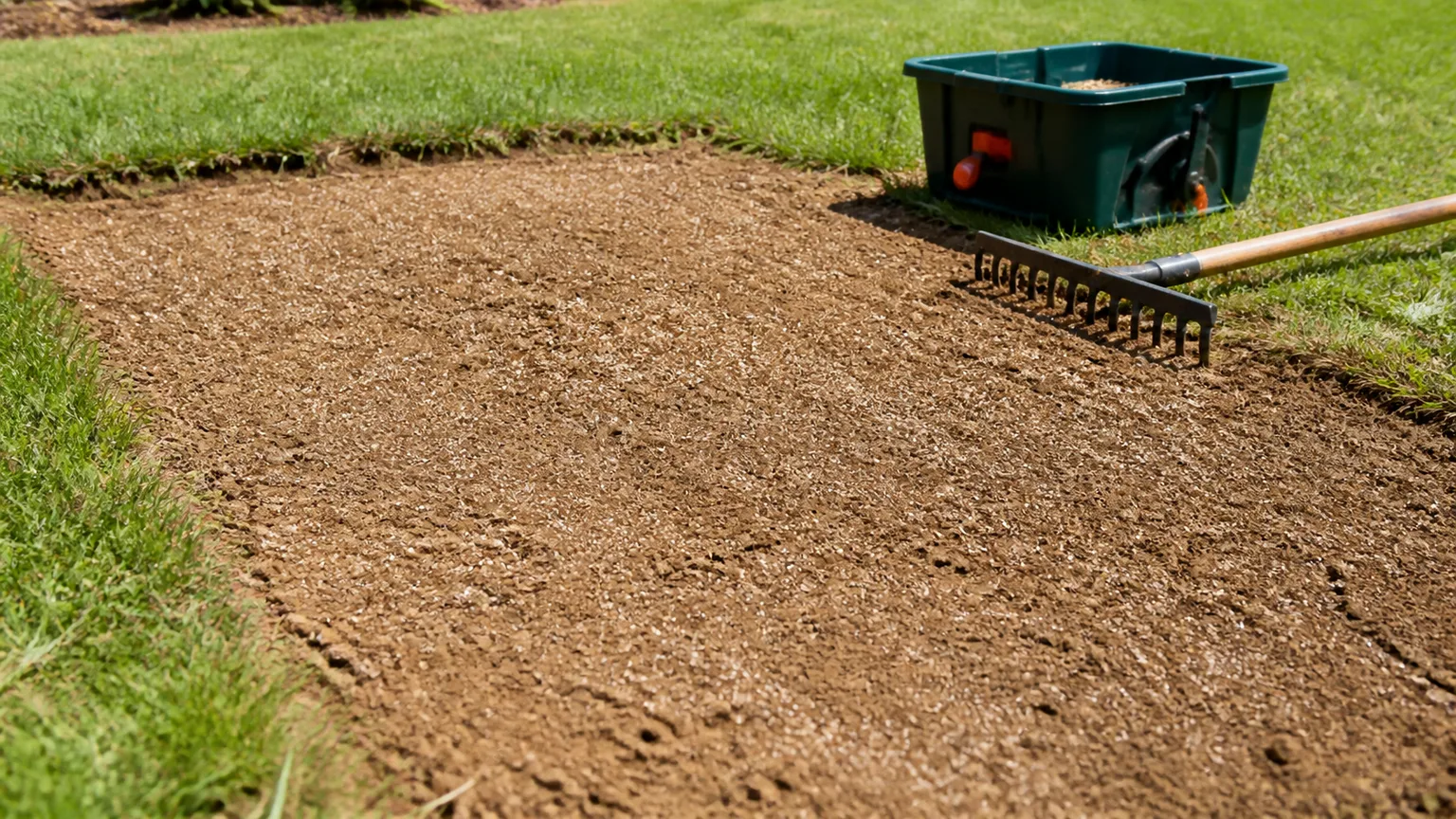
Spread the prepared mix over a small test section first. Use a shovel to place small piles, then pull the material with the back of a stiff rake or brush it with a push broom until the grass blades are standing through the layer. Keep the application even and no thicker than one-half inch; a quarter-inch is a safer starting point for healthy turf.
If the surface is compacted, core-aerate before topdressing so some material can fall into the holes. The RHS recommends spacing fork holes roughly 4 to 6 inches apart for small areas and using a hollow-tined aerator on heavy or waterlogged soil. Aeration is not mandatory for every lawn, and it should not be used as a substitute for repairing a leaking line or a failed drain.
Water gently until the mix settles without washing it into a new pile. Keep foot traffic light for several days, mow only after the turf has recovered, and wait roughly four to six weeks before deciding whether another thin pass is needed. A low place may look unchanged immediately after watering because the soil has settled; judge it after the grass grows through and after the next rain.
Repair a deep low spot under the turf
Mow and mark a repair area that extends beyond the visible hole. Cut the sod in a flap or manageable squares, keeping the pieces organized so they return in the same orientation. Peel them back carefully, remove loose roots or debris, and inspect the base for a buried object, rotting stump, animal tunnel, irrigation leak, or soft muddy layer.
Add fill in lifts rather than tipping all the soil into the hole. Firm each lift with the back of a shovel or a few careful passes on a board, but do not pound wet clay or compact the soil into a hard pan. Recheck with your straightedge from several directions and leave the finished base at the height that lets the sod crown match the surrounding lawn.
Replace the sod, press out air pockets, and close the seams. Water deeply enough to moisten the root zone, then check the area the next day for settlement or runoff. If the sod dries at the edges, water more often with less force until roots reconnect; if water pools on the repair, correct the grade before adding more material.
Regrade a larger bare area
For a broad bare yard, begin with a rough grade. Remove rocks, construction debris, large roots, and unwanted vegetation; protect trees and mark utilities. Move soil from high spots to low spots when it is clean and suitable, then add screened topsoil only where the existing supply is insufficient. Establish the intended fall with stakes and string, and use a long board or landscape rake to feather the transition into the unchanged lawn.
Finish grading when the broad shape is correct. Break clods, remove stones, fill wheel ruts, and create a firm but not concrete-hard seedbed. Do not make the surface powdery; loose soil is easily displaced by the first storm. A light, even rolling can settle the seedbed, but a heavy lawn roller cannot correct a bad grade and can compact the root zone.
If rain forms a channel, direct the water into a suitable planted swale, drain, or other approved outlet rather than simply filling the channel. A drainage feature must have somewhere safe to send water. Changing the grade near a property line or foundation without considering the downstream effect can trade your mud problem for someone else’s.
Know when the job is too big for a quick DIY repair
Get professional help when the lawn slopes toward the house, a basement or crawl space is damp, a retaining wall is involved, water crosses a walkway, or the repair requires moving many cubic yards of soil. Also pause if a low spot sits over a septic system, near a well, around major tree roots, or where buried utilities are likely. These are design and safety questions, not just lawn-smoothing questions.
Repeated washouts, sinkholes, a broken irrigation line, and groundwater that rises into the hole need diagnosis before grading. A contractor may use a laser level, compact equipment, or a drainage plan that saves labor and prevents the new grade from failing. Ask for the proposed finished slope, the fill specification, disposal and delivery charges, and how the lawn will be restored so the quote is comparable.
Finish with seed, sod, water, and a follow-up check
Seed bare spots with a blend suited to the grass, sun, and wear level already present. Rake the seed into the surface, cover it with a very light layer of fine soil or compost, and keep the seed zone evenly moist rather than flooded. The RHS recommends following the packet rate; using extra seed does not compensate for buried seed, poor contact, or drying.
Use matching sod when you need an immediate cover or when the growing window is short, but make sure the piece sits flush with the surrounding lawn. Seed is cheaper and can blend well, while sod reduces erosion and gives faster visual coverage; neither will thrive if the underlying grade or drainage is wrong. Water repaired turf with a gentle spray, and do not let a hose carve a channel through fresh soil.
After the first substantial rain, walk the area again. Look for ponding, rills, exposed roots, raised seams, settling, and water moving toward a structure. Brush a little compatible soil into minor seams, but do not keep adding topdressing to a depression that is being washed out or sinking for an unknown reason. A short follow-up check is what turns a one-day smoothing job into a repair that lasts.
Conclusion
To level a yard quickly and affordably, first decide whether you have a shallow surface dip, a deep isolated hole, or a real grade and drainage problem. Thin topdressing is the budget-friendly answer for healthy turf and small imperfections; lifting sod is better for deeper spots; and broad regrading needs a planned slope, compatible fill, and sometimes professional equipment.
Measure before buying, use screened material that resembles your native soil, keep every topdressing layer light, and treat pure sand as a specialized choice rather than a default. Protect utilities, trees, and structures, reseed or resod at the right time, and inspect the yard after rain. The best repair is not the one that looks level for a week—it is the one that stays smooth while grass roots, water, and soil continue to work together.