How to Grow and Care for London Planetree
Learn how to grow London planetree: plan for its full canopy and roots, plant at the right depth, water young trees, and choose a sensible pruning plan.
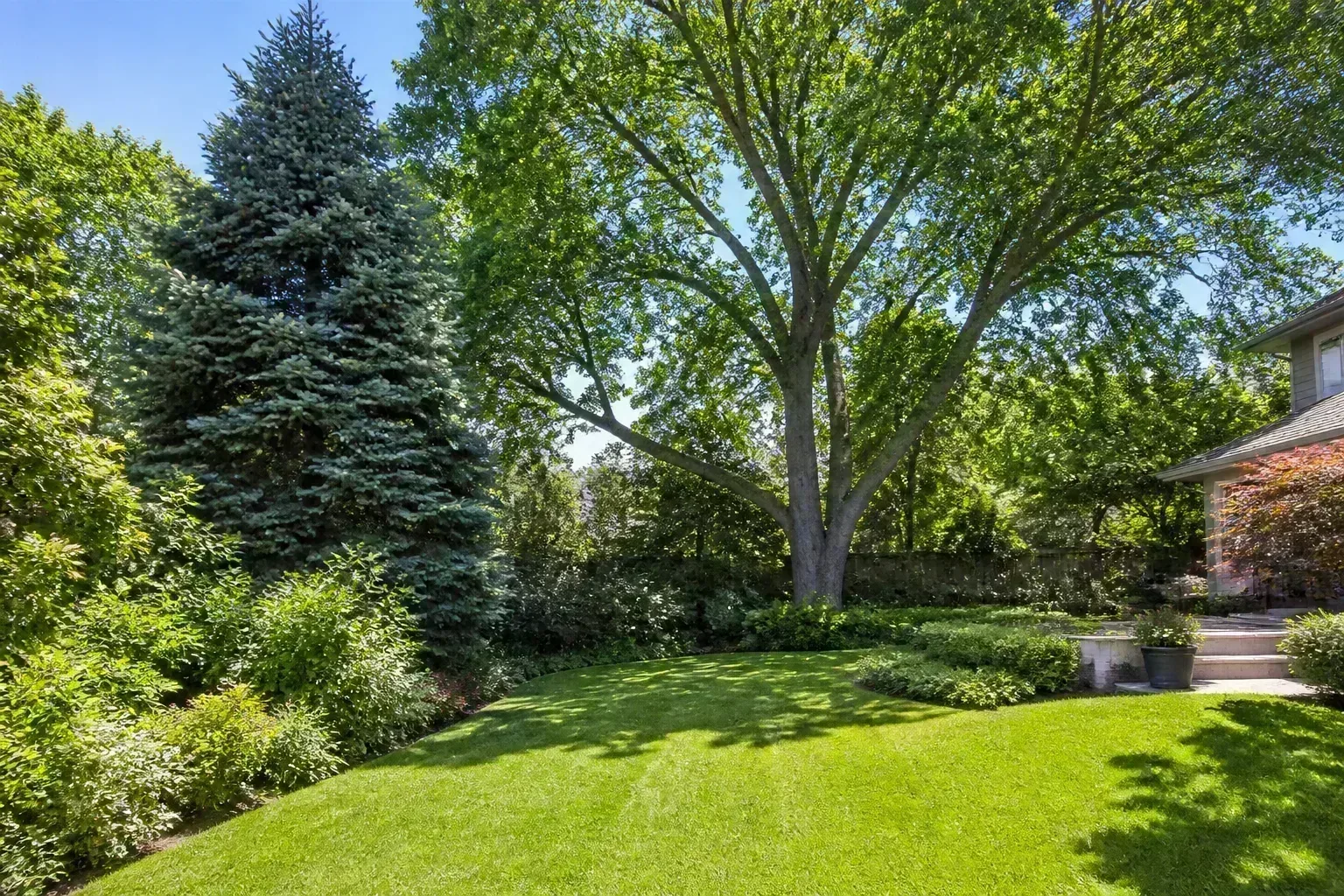
The London planetree can turn a large lawn, park, or broad street verge into a cool, high-canopy space. It also becomes a very large tree with a wide root system and a steady supply of leaves, twigs, bark flakes, and seed balls. The most important part of London planetree care happens before planting: confirm that the site can accommodate the mature tree without forcing it against a house, paving, or overhead wires.
Once it has room, this hybrid is adaptable. It tolerates urban pollution, clay, and a range of soil conditions, but young trees still need deliberate watering and mulch while roots spread beyond the nursery root ball. Later care is mostly inspection, modest structural pruning, and cleanup—not routine fertilizer or repeated sprays.
Identify the Tree Before You Plant
The London planetree, also called London plane or maple-leaved plane, is a deciduous hybrid of the American sycamore (Platanus occidentalis) and Oriental plane (P. orientalis). Plant references use both Platanus × acerifolia and P. × hispanica; the names describe the same widely planted hybrid in many horticultural catalogs. Its mottled bark, maple-shaped leaves, and bristly fruit balls give it winter as well as summer interest. NC State Extension and the Orem Arboretum’s tree profile describe these traits and the hybrid’s disputed naming history.
Its size is more important than any single leaf-level difference. A young specimen may have a narrow, upright shape, but the crown broadens with age; do not use the nursery tree’s current canopy as a proxy for its eventual footprint. For identification, London planes commonly carry two round fruit heads on a stalk, while an American sycamore usually carries one. The lobes on a London-plane leaf are often deeper, but individual leaves vary and hybrids can be difficult to separate by one feature alone.
Decide Whether Your Site Is Large Enough
Plan for a tree roughly 70 to 100 feet tall with a spread around 60 to 80 feet, while treating those figures as a range rather than a guarantee. NC State Extension gives 70–100 feet high and 60–75 feet wide; Purdue Arboretum lists 70–100 feet high and 65–80 feet wide. Differences reflect the source’s plant records and the way cultivars, climate, and site conditions affect growth. Both point to the same conclusion: this is a large shade tree that needs generous open ground, not a small-yard ornamental. (NC State Extension; Purdue Arboretum).
Before buying, stand where the trunk would go and imagine the mature crown overhead. Check where shade will fall, whether the canopy will reach a roof or neighbor’s yard, and whether branches can grow without repeated cutting. If you have to keep the tree small to preserve light, views, parking, or access, choose a smaller species instead of relying on pruning to solve a space problem.
This tree makes more sense on an estate lawn, campus, park, large courtyard, or wide public planting strip with an open canopy and enough soil volume. Grants Pass Urban Forestry lists London planetree as a large tree for the city’s broadest planting strips and notes that it requires ample room from roots to crown. That is a useful reality check even for a private yard: urban toughness does not make a giant tree a compact residential fit. (City of Grants Pass Urban Forestry).
Plan Around Roots, Pavement, and Utilities
Roots spread through the soil volume that offers oxygen, water, and room to grow; they are not confined to a tidy circle directly beneath the canopy. As a large tree gains size, surface roots can conflict with thin sidewalks, small patios, lawn edging, and shallow underground infrastructure. Roots do not usually “seek out” sound pipes, but can exploit leaks, joints, or other openings. Do not plant where future root growth would make you choose between damaging the tree and repeatedly repairing hardscape.
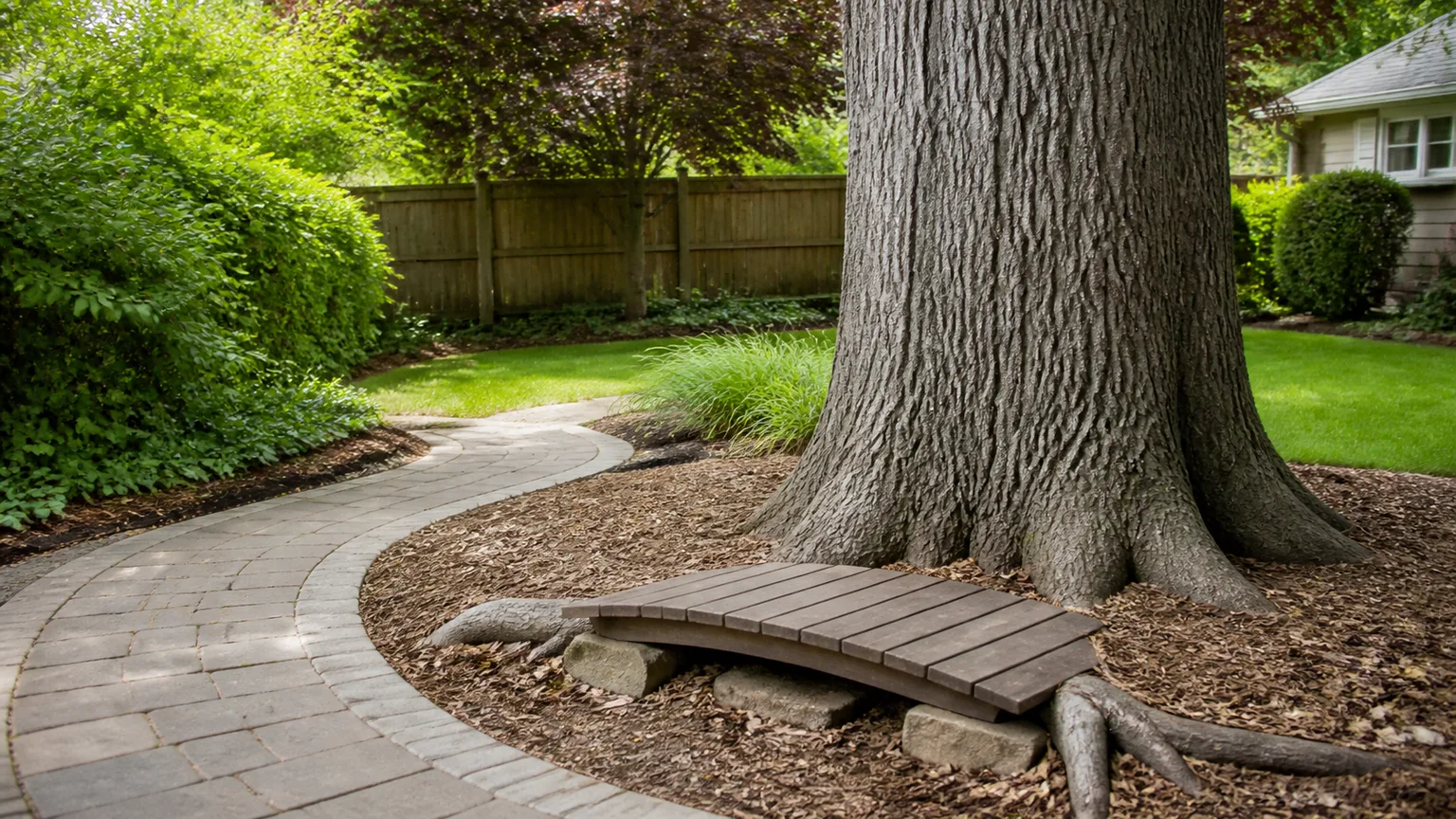
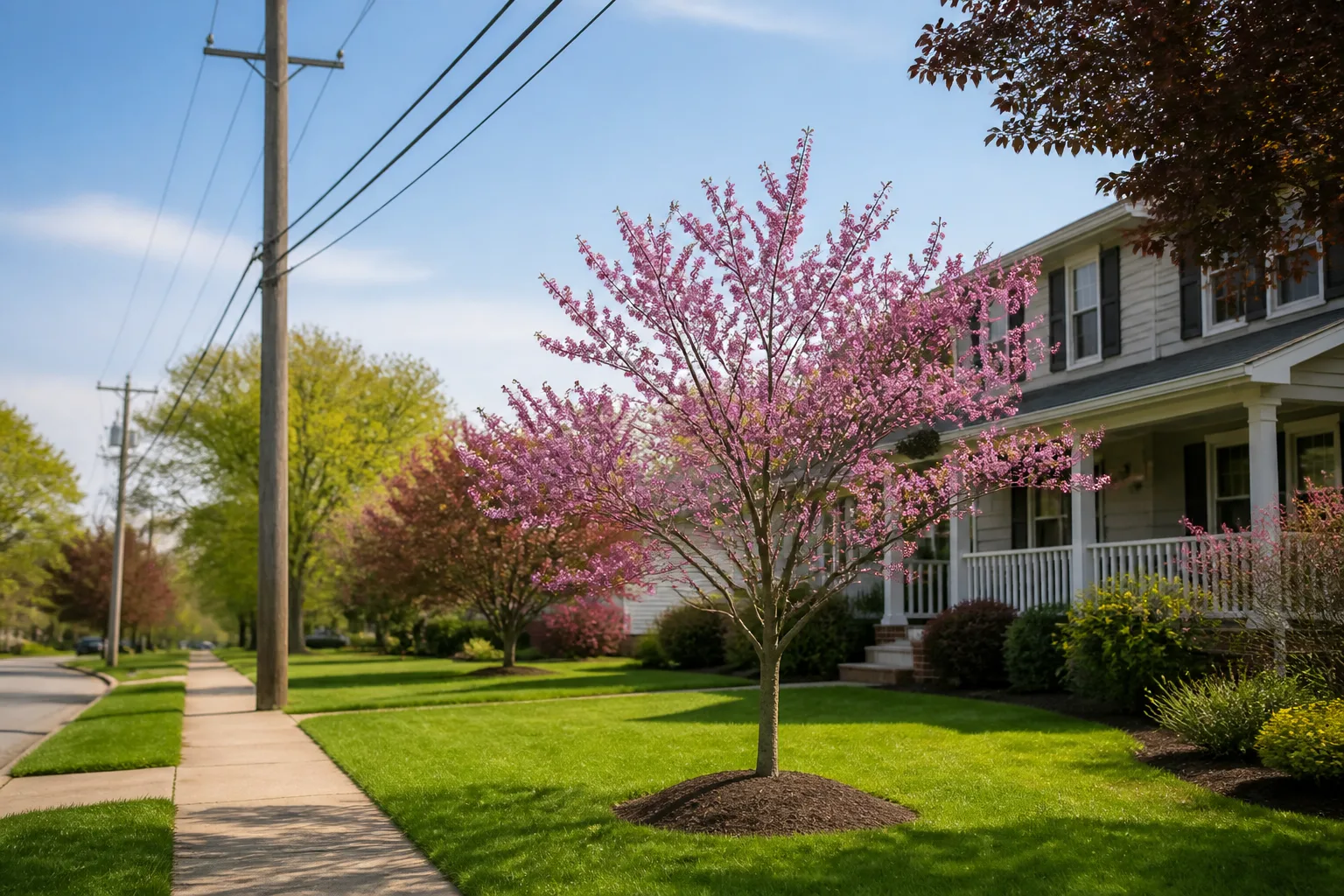
There is no single setback number that works for every house, pipe, retaining wall, and soil. Use the tree’s projected canopy and municipal guidance as a starting point, then confirm underground utilities, sewer or septic lines, and property restrictions before digging. If roots must be boxed into a tiny strip or the crown would have to be cut away from power lines, another species is the more responsible choice. Structural soil or engineered planting systems can help in some civic installations, but they do not erase the tree’s eventual scale.
Choose Sun and Soil That Support Strong Growth
For the best crown and growth, give a London planetree full sun—about six or more hours of direct light daily. It can tolerate light shade, but a shaded position may produce a less vigorous or less balanced canopy as nearby trees compete for light. Choose the brightest open site available rather than expecting shade tolerance to compensate for a cramped planting location. (NC State Extension).
The tree adapts to clay, loam, and sandy soils and tolerates a fairly broad pH range. Its preferred conditions are still meaningful: deep, moisture-retentive ground that drains reasonably well. Occasional wetness is different from a planting hole that stays waterlogged for days. If a test hole fills with water after rain and drains very slowly, improve the site or select a tree better suited to persistent saturation rather than assuming pollution tolerance means tolerance of every root-zone problem.
London planetree is prized in cities because it can cope with pollution, compaction, and imperfect urban conditions better than many trees. But “tolerant” means it can survive stress, not that it will grow well in a tiny soil pocket under sealed pavement. Allow an unpaved, mulched root zone as large as practical, and avoid parking equipment or piling soil over the root area once the tree is established.
Plant a London Planetree at the Correct Depth
Plant container, balled-and-burlapped, or bare-root stock when the soil is workable and local weather is not unusually hot, dry, or frozen. In many regions, fall or early spring gives roots time to establish before summer heat, but local conditions matter more than a rigid calendar date. Select nursery stock with a straight trunk, a stable central leader, sound bark, and roots that are not circling tightly around the container.
Find the root flare—the point where the trunk widens and the first structural roots emerge—before setting the tree. If the nursery has buried it under potting mix or burlap, expose it carefully; the flare should sit at or slightly above the finished soil level. Dig a broad hole, no deeper than the root ball, loosen circling roots, and backfill mainly with the excavated soil so roots move into the surrounding ground rather than staying in a rich pocket.
Water thoroughly after planting to settle soil around the roots, then apply a broad mulch ring. Keep mulch a few inches away from the trunk so bark stays dry and the flare remains visible. Stake only when the root ball cannot stay upright or the site is exposed; remove or loosen supports once the tree can stand on its own, and check ties so they do not girdle the trunk.
Water Through Establishment, Then Adjust to Weather
A newly planted London plane needs regular moisture while its roots occupy the small volume of the original root ball. The exact interval depends on rainfall, temperature, soil texture, root-ball size, and drainage, so a calendar rule such as “every other week” can be too little in a heat wave and too much in cool wet weather. Probe the soil several inches down at the root ball and just outside it; water slowly when that zone is drying, then let excess drain.
For the first few growing seasons, inspect the tree during dry spells rather than waiting for wilt or scorched leaves. Deep, slow watering encourages moisture to soak into the root zone; short surface sprinklings wet only the topsoil. As the canopy and root system expand, reduce supplemental water, but provide a deep soak during a prolonged drought if the soil is dry and the tree shows stress. Avoid keeping heavy clay continuously saturated.
Mulch makes this routine more dependable by slowing evaporation and reducing competition from turf. It also helps a tree recover from a hot sidewalk edge, where soil can dry faster than the rest of the yard. Leave the root flare open and refresh the mulch before it becomes a deep, trunk-touching mound.
Mulch and Fertilize Only When the Tree Needs It
A healthy tree planted in fertile soil usually does not need regular fertilizer. First check the pattern of decline: poor growth can result from drought, compacted soil, buried roots, drainage trouble, or pests, and extra nitrogen will not correct those conditions. If a soil test or an arborist’s assessment identifies a nutrient shortage, follow the test and local label directions rather than applying a product by guesswork.
Compost and organic mulch are often more useful than a high-nitrogen lawn fertilizer beneath the canopy. Keep lawn fertilizer from accumulating around the trunk, and avoid fertilizing late in the season when you do not want to push tender growth ahead of cold weather. If the tree has a full canopy and normal annual extension growth, leave it alone and preserve the soil environment.
Prune for Structure; Treat Pollarding as a Long-Term System
In its natural form, the London plane becomes an expansive tree. Young-tree pruning should therefore establish a strong framework, not try to suppress the species: preserve one well-spaced central leader, remove dead or rubbing branches, and correct structural problems while limbs are small. Make clean cuts just outside the branch collar; do not leave long stubs, flush-cut the trunk, or remove large branches simply to force a neat outline.
Once mature, routine work is limited to removing dead, damaged, or hazardous limbs and resolving a specific conflict. Large branches and overhead work belong to a qualified arborist. Never top the tree to reduce height: heading cuts create weak, fast-growing shoots and leave large wounds that can lead to decay or repeated failure.
Pollarding is a planned pruning system that begins while a tree is young enough to establish permanent pollard heads, then returns on a regular cycle to cut new shoots back to those same points. It is not a one-time shortcut for a mature tree that has outgrown its space. In a documented estate allée, London planes were pruned after leaf fall by a gardening crew, and follow-up removal of shoots was part of the continuing routine; that example shows the time and access commitment behind the formal look. (Martha Stewart’s garden account).
If you want a pollarded or pleached form, decide that before planting and have a local arborist or experienced tree grower design the framework and cycle. Pollarding can maintain a deliberately shaped crown, but it still leaves a large trunk and root system, requires repeated labor, and can fail when old trees are cut back harshly without preparation. For most home landscapes, a healthy natural crown with modest structural pruning is simpler and safer. Gardeners’ World’s general pruning calendar likewise emphasizes matching timing and method to the plant and pruning in suitable frost-free conditions rather than making cuts by habit. (Gardeners’ World).
Compare Cultivars Without Assuming Immunity
Cultivar choice matters most when disease pressure, space, and desired form are known. NC State Extension lists several named selections: ‘Bloodgood’ is selected for anthracnose resistance; ‘Columbia’ and ‘Liberty’ are described as disease-resistant and around 50 feet tall; ‘Metzam’ has a more pyramidal form; and ‘Morton Circle’ is noted for a strong central leader. Those figures are cultivar descriptions, not a promise that each tree will stay compact in every climate or soil.
Ask a reputable nursery which cultivar is available, what disease resistance has been documented locally, and how large it becomes under regional conditions. Resistant does not mean immune, and the names on municipal lists may vary by climate and supplier. Do not buy a vigorous full-size plane tree because a label says “disease resistant” if the site itself cannot accommodate the species.
Expect Seasonal Litter and Plan Cleanup
London planetree offers striking bark, deep shade, and a strong urban presence, but it is not a tidy specimen. Leaves fall in autumn, small twigs drop over time, the exfoliating bark sheds flakes, and the fruiting heads can hang into winter before breaking apart. NC State Extension and Purdue Arboretum both flag the tree’s substantial litter as a maintenance drawback. (NC State Extension; Purdue Arboretum).
Think about where that material will land before planting. Avoid placing the canopy over a small pond, a narrow path that must stay clear, a pool, or a gutter system that is difficult to clean. A leaf-mulching mower or compost pile can make the annual cleanup manageable, but the tree will not stop dropping material because the lawn is neatly maintained.
Recognize Pests and the Diseases That Matter
Many established London planes grow without serious insect damage, but the species can host scales, borers, mites, caterpillars, and lace bugs. Inspect the undersides of leaves and smaller branches if you see stippling, premature yellowing, sticky residue, or repeated dieback. Treat the cause only after confirming the pest; broad insecticide use can harm beneficial insects and rarely fixes drought or root problems that look similar from a distance.
Sycamore anthracnose is a fungal disease that can cause blotched or browned leaves, twig dieback, and early leaf drop, especially in cool, wet spring weather. A single spring flush of damage does not automatically mean the whole tree is dying; established trees may produce another flush as weather warms. Rake up affected leaves, avoid unnecessary overhead irrigation, and monitor whether new growth returns. Severe or repeated symptoms call for a local extension diagnosis rather than a calendar fungicide application.
Canker stain deserves more urgency because it can be fatal. A growing canker, bark discoloration, progressive crown thinning, or dieback moving from one scaffold branch toward the trunk should be assessed by an ISA-certified arborist. NC State Extension lists canker stain and anthracnose among the important disease concerns and notes that some cultivars are more resistant, while Purdue’s arboretum profile cautions that resistance varies among hybrids. (NC State Extension; Purdue Arboretum).
Troubleshoot Decline Before Reaching for a Spray
If the canopy thins, start by checking soil moisture and the planting zone. Dry soil around the root ball, a mulch volcano, a buried flare, new pavement, soil piled beneath the branches, or recent trenching can all disrupt the tree. Compare the current symptoms with the previous season and note whether damage is concentrated on one branch, one side, or the entire crown; the pattern helps an arborist distinguish a local injury from a root-zone stress.
If leaves develop spots in a wet spring but new leaves emerge later, keep the tree watered during dry weather and watch the next flush. If one side continues to die back, a branch develops a sunken lesion, or a crack appears near a major union, arrange an assessment promptly. Do not seal a wound, cut into a canker, or remove large limbs as an experiment; incorrect cuts can worsen damage and hide the original pattern.
Grow from Seed Only If Variation Is Acceptable
The round fruit heads contain many small achenes, so seed propagation is possible, but it is a slow project and seedlings may not reproduce the qualities of a selected cultivar. Collect mature heads after they turn brown, separate some seeds, and sow them in a clean, freely draining seed mix kept evenly moist. Keep the tray in bright light and protect it from drying and heavy rain; transplant only once seedlings are sturdy enough to handle.
Do not expect a seed-grown tree to match a parent’s disease resistance, shape, or mature dimensions. If you want ‘Bloodgood’, ‘Columbia’, or another named selection, buy that cultivar from a nursery that can identify its stock rather than relying on seed or an unverified cutting. A seedling also needs the same future space as a full-size plane tree, so do not start one in a small pot with the plan to “find a place later.”
Avoid These Common Planting and Care Mistakes
The costliest mistake is planting first and checking mature size later. A London planetree can outgrow a small yard, push at hardscape, and force repeated canopy reduction; if the available space is limited, choose a smaller tree before you dig. A second mistake is confusing urban tolerance with low maintenance: this species can handle difficult settings yet still produce heavy seasonal litter and need ample root volume.
Other preventable problems include burying the root flare, relying on shallow sprinkling during establishment, mounding mulch against the trunk, fertilizing without a diagnosis, and topping a tree to solve a space conflict. Pollarding is not a substitute for choosing the right tree, and a resistant cultivar is not disease-proof. Take time to verify cultivar, site, utilities, and cleanup expectations before bringing the tree home.
Conclusion
London planetree care is straightforward when the tree gets the space its mature crown and roots demand. Give it full sun, moisture during establishment, a visible root flare, a generous mulch ring, and pruning aimed at a durable structure. After that, expect seasonal litter, inspect the canopy for disease or damage, and avoid trying to shrink a tree that was planted in the wrong place. If your site can support a large shade tree for decades, this adaptable hybrid can become a long-lived, distinctive focal point; if it cannot, a smaller tree will serve the landscape better.