Marguerite Daisy Care: Why Heat Can Pause the Flowers
Marguerite daisy care made practical: choose a sunny, well-drained site, deadhead at the right time, troubleshoot sparse blooms, and overwinter tender plants.
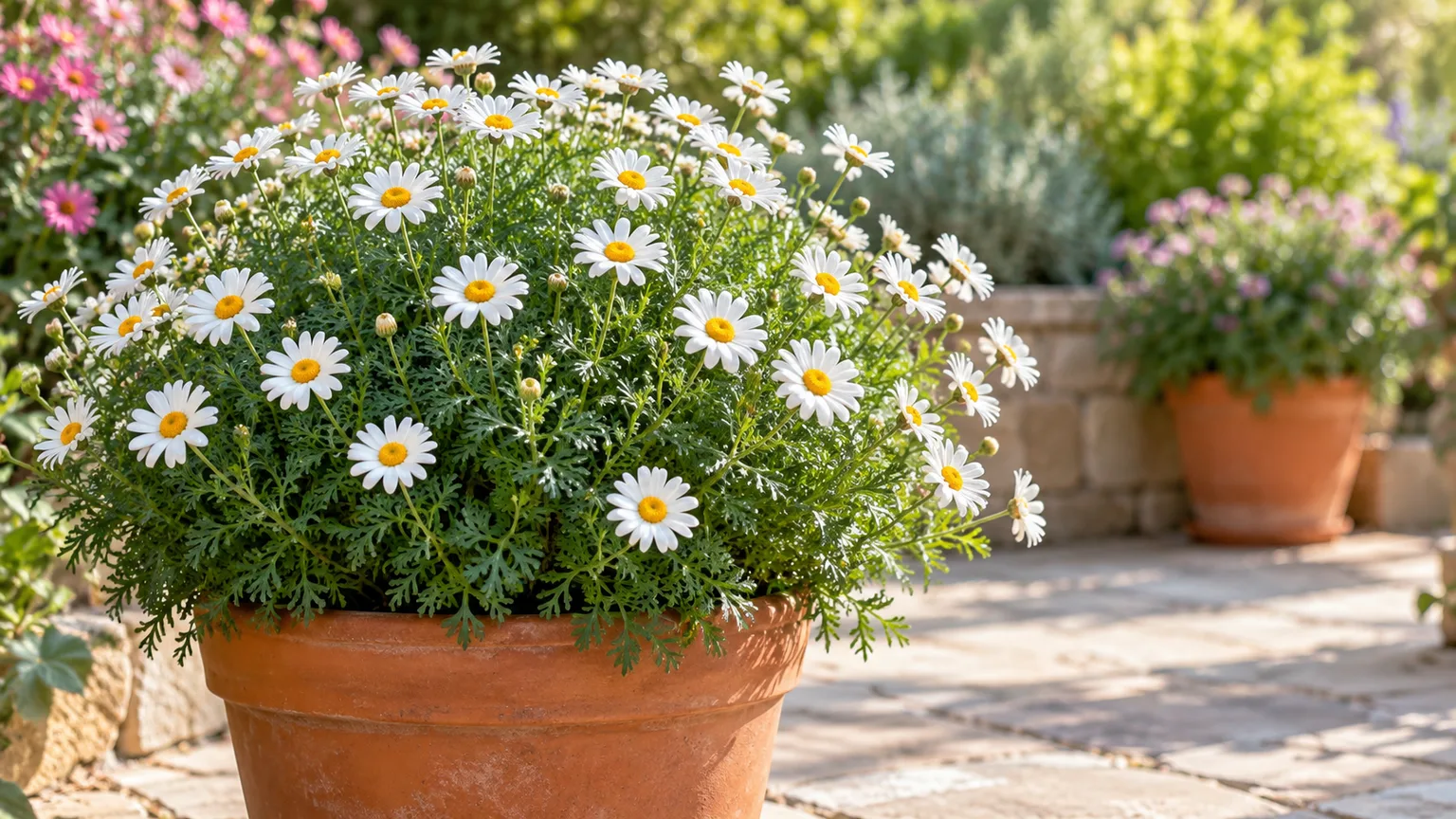
Marguerite daisies look like easygoing daisies, but their rounded, shrubby habit and sensitivity to frost make them behave more like a tender patio subshrub. Give one bright light, soil that drains promptly, and steady moisture while it establishes; then adjust care when summer heat slows the flowers or cold weather threatens the plant. That last part matters: a marguerite can be a perennial in a mild climate and a seasonal annual in a colder one.
The name usually refers to Argyranthemum frutescens, also sold as Paris daisy. It is a Canary Islands native with finely cut leaves and white, pink, red, or yellow daisy-like flowers. The plant is useful in a border or large pot, but its mature size, bloom pace, and winter survival depend on the cultivar and the conditions where you grow it.
Know What a Marguerite Daisy Needs
This is a rounded, woody-based subshrub in the Asteraceae family, not a small version of every plant called a daisy. A mature marguerite often reaches roughly 1 to 3 feet in height and width, although compact cultivars stay smaller. The Royal Horticultural Society describes A. frutescens as a bushy evergreen subshrub with finely divided foliage and flowers that can continue from late spring into autumn. The Missouri Botanical Garden likewise notes that it may slow during summer heat and is short-lived and tender in climates where it cannot overwinter outdoors. (RHS plant profile; Missouri Botanical Garden Plant Finder)
Its basic needs fit a sunny, well-drained garden, but “full sun” does not mean that the plant loves relentless heat. In cooler summers, direct sun encourages a compact mound and generous flowering. In a hot inland garden, bright morning sun with relief from the harshest afternoon rays can keep the foliage from wilting and may help the plant hold flowers longer.
Before buying, check the label for the exact cultivar, mature width, and hardiness guidance. Some forms are compact and bred for containers; others make a larger mound. A tag that says perennial describes a potential lifespan under suitable conditions, not a promise that the plant will survive every winter in your yard.
Choose a Site That Balances Sun, Heat, and Drainage
Aim for at least six hours of direct light in a mild-summer area. Where summer afternoons are very hot, choose a position that still gets strong morning light but is shaded later. GardenDesign.com describes the same useful distinction: full sun is a sound baseline, while afternoon protection can help in hotter climates. If a plant is green and leafy but makes few flowers in a shaded spot, test more light before changing its fertilizer.
Give It Strong Light, With Afternoon Relief in Hot Climates
The plant’s flowers often slow when temperatures rise, even if the foliage stays healthy. Missouri Botanical Garden reports that blooms may diminish considerably during hot St. Louis summers, and GardenDesign.com notes that flowering can pause in hotter weather and resume as temperatures cool. Treat this as a seasonal response, not a precise thermometer cutoff: cultivar, nighttime temperatures, water supply, and exposure all matter. (GardenDesign’s growing guide)
If buds stop forming during a heat wave, keep the root zone evenly moist and avoid drastic pruning. A plant in a dark, overheated patio corner may benefit from better light earlier in the day and some afternoon shelter. Once cooler conditions return, new buds may follow; repeatedly adding fertilizer or cutting the plant to the ground will not solve heat stress.
Prioritize Drainage Over Rich Soil
Marguerites prefer moderately fertile soil that releases excess water. The RHS lists loam or sand and well-drained conditions; the Missouri Botanical Garden recommends average, medium, well-drained soil. You do not need a special acidic mix or a heavily amended planting hole. If water stands after rain, fix the drainage or choose a raised bed or container instead of burying the roots in wet ground.
For an in-ground planting, blend a modest amount of finished compost into poor soil across the bed rather than creating a rich pocket just around the roots. In heavy clay, avoid digging a small hole and filling it with loose potting mix: that can become a basin where water collects. A broad raised mound or a different site is safer than trying to make one planting hole behave unlike the surrounding soil.
Plant After Frost and Set the Root Ball at Soil Level
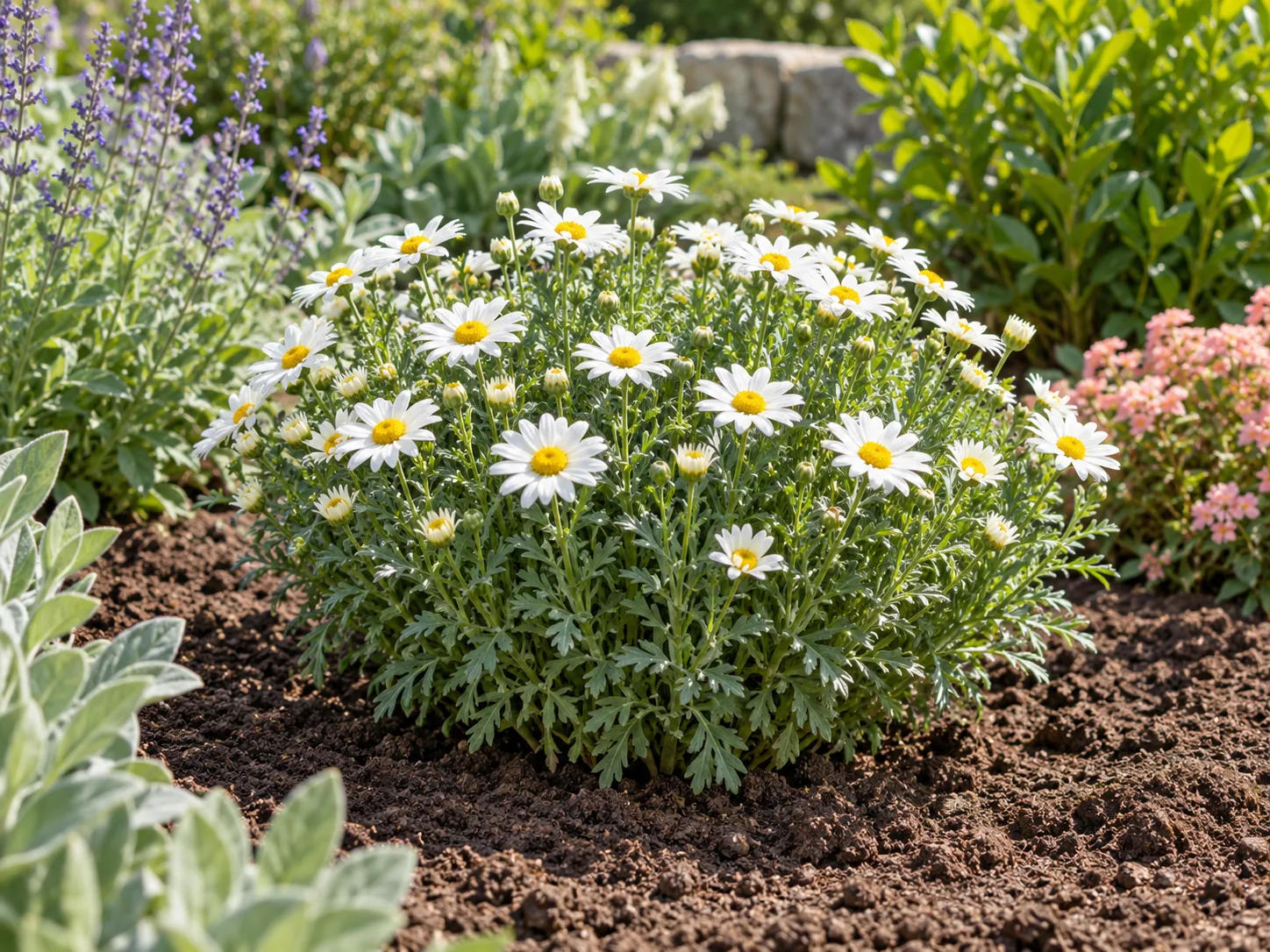
Wait until the local frost danger has passed and the soil has begun to warm before planting outdoors. In a frost-free region, spring planting gives the roots time to settle before the plant’s main flowering stretch. Acclimate a greenhouse-grown or indoor plant gradually to outdoor light over several days so tender leaves are not suddenly exposed to stronger sun and wind.
Dig a hole about as deep as the nursery pot and wider than the root ball. Ease the plant out, tease apart only roots that are tightly circling, and set it so the top of the root ball sits level with the surrounding soil. Backfill, firm gently, and water thoroughly to settle soil around the roots. Leave room for the cultivar’s mature spread rather than packing plants together for instant fullness; crowding reduces airflow and makes later watering and deadheading harder.
For a mass planting, repeat the same spacing rule across the whole bed and follow the plant label’s mature width. GardenDesign.com gives a broad 1-to-3-foot size range, while the RHS lists the species profile at roughly half to one meter in height and spread, so a single universal spacing number is misleading. Smaller named cultivars can sit closer than a full-size, vigorous form.
Water by Checking the Root Zone
Water a newly planted marguerite deeply enough to moisten the root ball and surrounding soil. During establishment, check every few days in warm, dry weather; water when the upper inch or two begins to dry rather than waiting for the entire plant to wilt. As roots spread, the plant becomes less dependent on frequent irrigation, but it still does not want to be bone dry for long stretches while it is flowering.
The most common watering mistake is responding to a drooping plant by watering automatically. Heat and dry soil can both cause limp leaves, but a plant in soggy soil may wilt because damaged roots cannot take up water. Feel the soil first. If it is wet, pause watering and check that runoff can escape; if it is dry below the surface, water slowly at soil level and let the excess drain away.
Do not rely on a fixed “one inch per week” rule for every location. Sandy soil, wind, high temperatures, and small containers dry faster than a sheltered bed with loam. Rainfall helps only when it actually reaches the root zone. A finger check or a wooden skewer inserted near the root ball gives a better local signal than the calendar.
Feed Lightly and Read a Summer Bloom Pause Correctly
Start with moderately fertile soil and avoid heavy feeding. If a container plant has been growing for several weeks and the potting mix is not pre-fertilized, use a balanced liquid fertilizer at the label rate during active growth. GardenDesign.com suggests feeding once or twice monthly, while Harvest to Table recommends monthly feeding; those are broad schedules, not instructions to keep increasing the dose. A label-directed, modest routine is safer than frequent strong applications.
Too much nitrogen can produce soft leaves and long stems at the expense of flowers. If the plant is lush but sparse in bloom, first check its sunlight, heat exposure, waterlogged soil, and whether spent flower heads remain. More fertilizer is not a reliable response to summer heat or poor drainage.
Deadhead Spent Flowers, but Do Not Shear During Peak Heat
Remove faded flower heads down to the next healthy leaf or branching point. Regular deadheading improves the plant’s appearance and can encourage additional flowers when conditions suit it. It cannot force blooms through a period of intense heat, and you do not need to remove every aging flower if you prefer a looser, natural look.
If flowering slows in mild weather and the plant has become leggy, lightly shear the outer growth by a few inches to encourage branching. Avoid cutting deep into old woody stems unless you know the plant can resprout from them. Water normally after pruning and give it a little time to produce new growth; a hard haircut during heat or drought adds stress when the plant is already conserving resources.
Grow Marguerite Daisies in Pots
A pot makes the plant easier to move away from frost, prolonged rain, or extreme afternoon heat. Choose a container with several unobstructed drainage holes and enough volume for the cultivar’s mature width. A very small pot may dry out rapidly and tip in wind; a huge pot filled with wet mix can stay saturated around a small root ball.
Use a quality all-purpose potting mix that drains freely. Set the root ball at the same depth it grew in its nursery pot, then water until liquid exits the bottom. Empty a saucer after watering, and do not let the container stand in a cachepot full of water. Check pots more often than garden beds in warm or windy weather because the whole root zone is exposed to drying air.
Position the container where it receives strong light, with afternoon shade in very hot regions. Turn it occasionally if growth leans toward one direction. If flowering stalls during peak summer but foliage remains firm and green, move the pot to a cooler bright position and keep soil moisture steady instead of feeding heavily. Container-grown plants are also easier to protect, but their roots are more exposed to cold than roots in the ground.
Shape a Bushy Plant Without Hard Pruning
Marguerite daisies naturally form a rounded mound, so routine structural pruning is usually unnecessary. Pinching the tips of a young plant once or twice before it begins setting many buds can encourage branching, but each pinch removes a potential flower tip. If immediate flowers matter more than a denser shape, let the plant grow and deadhead instead.
Use clean, sharp snips for deadheading and light shaping. Remove a damaged or crossing stem back to a healthy branch, and avoid leaving a ragged stub that can die back. For a tired but otherwise healthy plant, a modest midsummer shear can refresh its outline after the first major flowering flush, especially in a cool-summer climate. In hot climates, wait for temperatures to ease before making a substantial cut.
Overwinter the Plant or Take a Cutting Before Frost
Marguerite daisy is a tender perennial; the Missouri Botanical Garden lists it for USDA zones 10–11 and suggests growing it as an annual in the St. Louis area. Treat that range as a broad guide, not a guarantee. A sheltered wall, winter wet, pot exposure, cultivar, and local microclimate can all affect survival. Where freezing weather is routine, plan to replace it in spring or save a plant under protection rather than assuming it will return outdoors.
If yours is in a container, move it before a frost forecast into a bright, cool, frost-free space. Inspect leaves and stems for insects first, remove dead material, and water less often as growth slows. The mix should not remain waterlogged, but do not let the root ball turn completely dry for weeks. A dim, warm room often causes weak, stretched growth; cooler conditions and bright light are a better combination.
For an in-ground plant that is marginally hardy, a dry winter mulch may offer some root protection, but it cannot make a tender shrub reliably frost-proof. Taking a cutting before the cold arrives is a useful insurance plan. The RHS specifically recommends cuttings where temperatures fall below freezing, and the Missouri Botanical Garden notes that prized cultivars do not come true from seed. (RHS propagation guidance; Missouri Botanical Garden Plant Finder)
Propagate Marguerite Daisies From Nonflowering Shoots
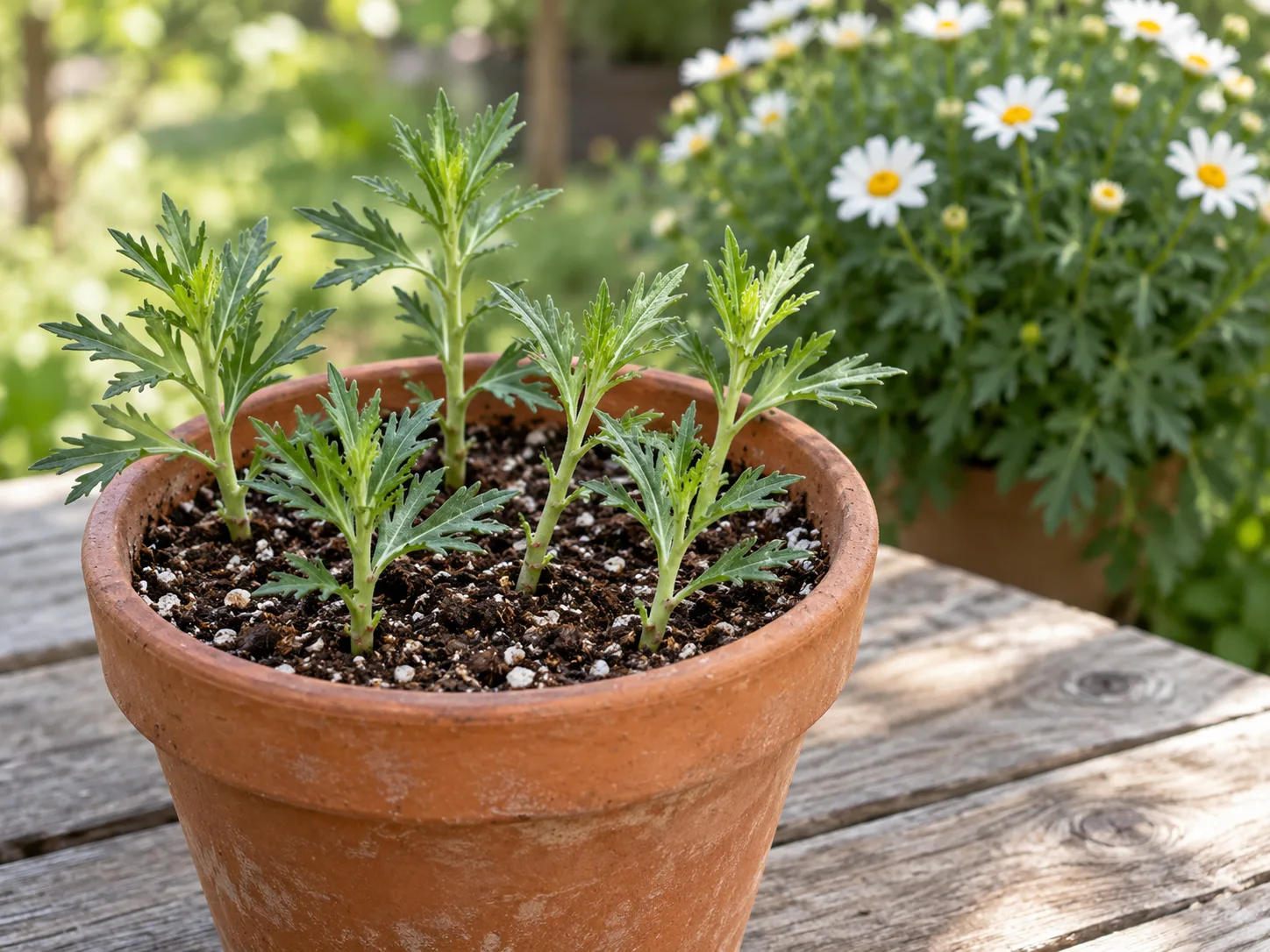
Take softwood cuttings in spring or semi-ripe cuttings in summer from healthy, nonflowering shoots. The RHS recommends pieces about 5 to 10 centimeters long; choose flexible new growth that is not so soft it collapses, and avoid stems bearing buds or flowers. Propagating named cultivars by cuttings preserves their traits more reliably than saving seed, which may produce variable offspring. (RHS plant profile; Harvest to Table’s Argyranthemum guide)
Root Cuttings in a Small, Evenly Moist Setup
Fill a small clean pot with a free-draining propagation mix and moisten it so the mix is damp, not dripping. Cut just below a leaf node with clean snips, remove leaves from the lower portion, and insert the bare node into the medium. A rooting hormone is optional; it cannot compensate for a waterlogged medium or a weak cutting.
Place the pot in bright indirect light and keep the medium lightly moist. A loose clear cover can reduce moisture loss, but keep it from touching the leaves and air the setup if condensation stays heavy. Do not put a newly cut stem in strong sun or leave its pot standing in water. Once the cutting resists a very gentle tug or begins making new growth, pot it on carefully and keep it protected while it establishes.
Take more than one cutting if you are preserving a favorite plant, because not every stem will root. Label each cultivar as you go. Keep young cuttings bright and cool over winter, then harden them off gradually before moving them outdoors after frost danger passes.
Diagnose Sparse Flowers, Pests, and Disease
When a marguerite stops flowering, diagnose in this order: temperature, light, moisture, then pruning and feeding. A brief summer pause with healthy foliage often points to heat; a shaded, leafy plant often needs more light. A plant that wilts despite wet soil needs drainage checked, while a crispy root ball needs a slow, thorough watering. Fix the condition that fits the evidence rather than changing every part of the care routine at once.
Inspect the leaves and stems before treating pests. Aphids cluster on soft tips and buds; whiteflies flutter from the undersides of leaves when disturbed; leaf miners leave pale, winding trails inside leaves. The RHS lists leaf miners as a possible problem, while the Missouri Botanical Garden reports no serious routine insect or disease problems for the species. That difference is a useful reminder that pest pressure varies by garden and season. Remove a few mined leaves if damage is limited, and monitor new growth before deciding on further action. (RHS plant profile; Missouri Botanical Garden Plant Finder)
Inspect the Plant Before Treating Insects
For a small aphid or whitefly population, start by rinsing foliage with a steady stream of water and checking again after several days. Protect beneficial insects and follow any pesticide label exactly if a more serious problem requires a labeled treatment. Do not spray a stressed plant in hot midday sun, and do not assume a generic oil treatment is harmless to every cultivar or pollinator.
Persistent wilt, blackened stems, or a crown that turns soft can indicate roots or the stem base are staying too wet. Improve drainage, water at the soil surface, and remove collapsed material with clean tools. Crown gall appears as abnormal rough growth near the crown or roots; do not cut into a suspicious gall and propagate from that plant. Seek local extension or nursery advice if the diagnosis is unclear or the plant is declining despite corrected care.
Choose a Cultivar for Color and Mature Size
Cultivars vary more than the species name suggests. You can find white, yellow, pink, and red flowers, as well as single, semi-double, and double forms. GardenDesign.com describes compact selections such as ‘Sassy Red’ for containers and mass planting, and ‘Pure White Butterfly’ for a taller, upright display; it also notes heat tolerance differences among varieties. Use the label’s actual mature dimensions and local availability rather than assuming every marguerite reaches the same size. (GardenDesign’s cultivar guide; Proven Winners’ ‘Pure White Butterfly’ profile)
For a container, a compact mound is easier to keep balanced and water evenly. In a border, a larger cultivar can fill the middle or front of a sunny bed, provided there is airflow around it. If winter protection is important, select a pot-friendly size you can move or take cuttings from, and confirm the tag’s hardiness information before planting it permanently.
Use a Seasonal Care Checklist
- After frost in spring: plant or move the plant outside gradually; water the root ball well and check it regularly while roots establish.
- During active growth: keep the soil evenly moist but draining, remove spent blooms, and feed modestly only when the plant is actively growing.
- During hot weather: check moisture before watering, provide afternoon relief if the site is scorching, and expect flowering to slow temporarily.
- Before cold weather: take labeled cuttings or move a container to bright, cool, frost-free shelter; reduce watering as growth slows.
Use the checklist as a prompt to inspect the plant, not as a rigid schedule. A rainy week may mean no watering is needed, while a small pot on a windy patio may dry quickly even in mild weather.
Conclusion
The simplest reliable approach to marguerite daisy care is to match the plant to your climate, give it strong light and fast-draining soil, and water according to what the root zone feels like. Deadheading keeps the mound tidy and may extend flowers, but it will not override a hot spell; a pause in bloom is often solved with patience and better conditions, not more fertilizer.
Treat the plant as a tender perennial where winters are mild and as a seasonal flower where frost is a risk. If you want to keep a particular color or cultivar, take cuttings before cold weather and overwinter them in bright, cool shelter. That practical backup turns an uncertain winter into a fresh start next season.



