Hummingbird Garden Design: What Keeps Birds Coming Back
Learn how to make a hummingbird garden with native flowers, staggered blooms, safe water, shelter, and feeder care tailored to your region, step by step.
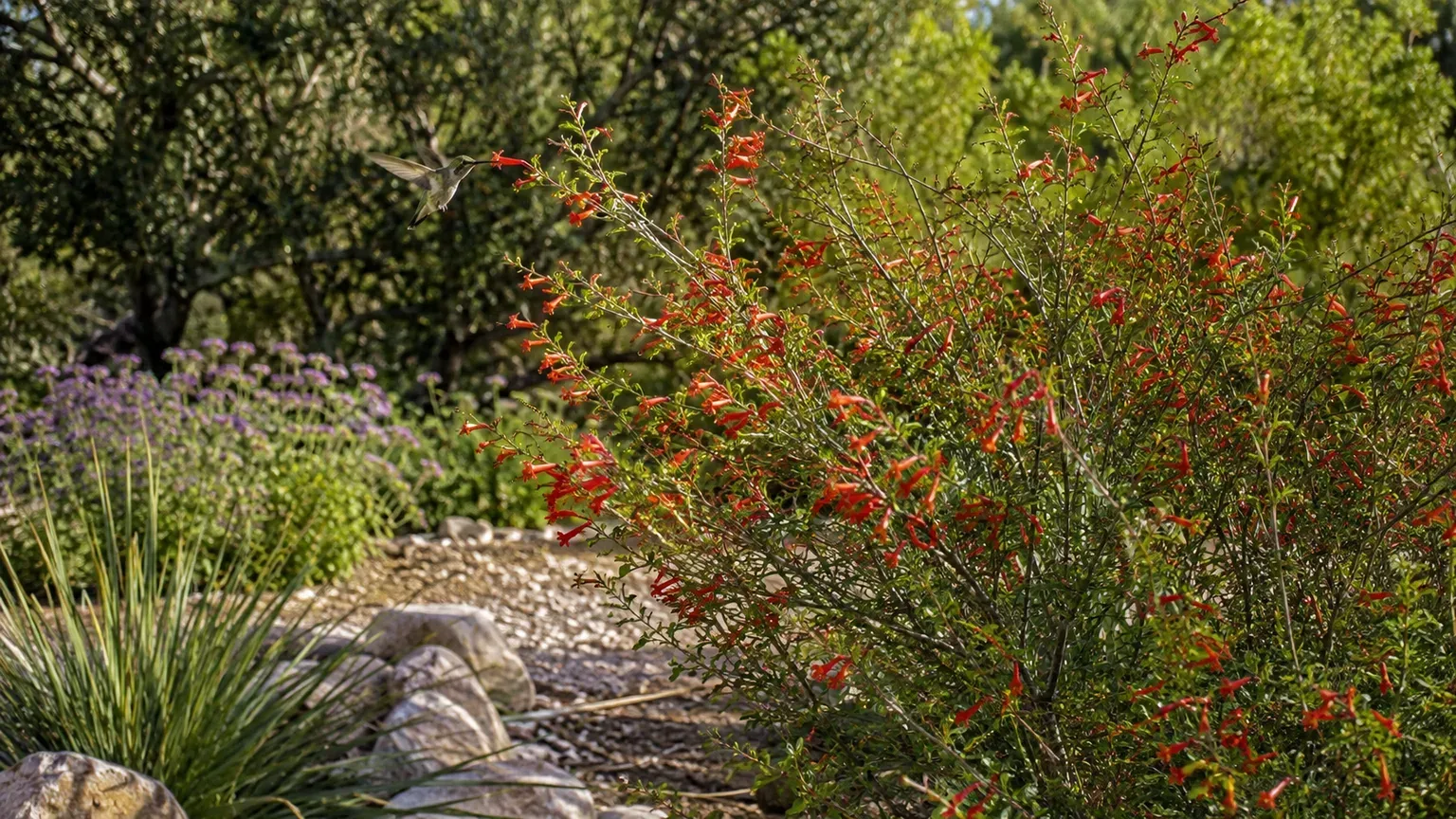
A hummingbird garden is more than a row of red flowers or a feeder hung from a hook. It is a small habitat with nectar, insect prey, water, perches, and cover available when hummingbirds are actually in your region. A bed, fence-line planting, patio, or collection of containers can all help if the plants suit the site and the visiting birds.
Start with the local species and their seasonal schedule, then build the garden around that information. The best plan usually combines nectar-rich native plants that bloom at different times, a few shrubs or trees for shelter, and a clean water source; a feeder is optional. That sequence matters because a bright feeder cannot make up for an empty bloom calendar or a yard with no safe place to rest.
Start with the hummingbirds in your region
Hummingbird species and their timing vary widely across North America. A ruby-throated hummingbird may be the familiar summer visitor in the East, while western and southwestern gardeners may see different species, and some western birds remain through winter. Their ranges, migration windows, nesting season, elevation, and local weather all affect when they are likely to use a garden, so a plant list copied from another region can miss the moment when food is most needed.
Before buying plants, look for records from a local Audubon chapter, birding group, extension office, or regional native-plant organization. Note the earliest and latest weeks that hummingbirds are usually seen, then focus on flowers and habitat that will be ready during that window. If you already see hummingbirds, keep a simple calendar of first sightings, last sightings, and which flowers they visit; a few seasons of observations can make future planting choices much more precise.
Track when they pass through
Use local observations as a guide, not a promise. Weather and elevation can shift arrival and departure, and a garden may receive migrants only briefly even when the plants are appropriate. A feeder or newly planted bed may take days or several weeks to be discovered, so do not keep moving it after one quiet afternoon; check whether it is visible from open flight paths and whether nearby flowers are in bloom.
The timing question also helps you decide what to plant first. If birds tend to arrive before summer perennials flower, prioritize early-blooming native shrubs, vines, or bulbs suited to your soil and climate. If visits taper off in late summer, add locally appropriate late-season bloomers instead of purchasing more of the flowers already doing well in midsummer.
Choose a site with sun, shelter, and a clear view
Most nectar plants flower best with several hours of sun, but a garden does not need to be exposed from dawn to dusk. Look for a sunny bed or patio that has nearby trees, a hedge, or another sheltered edge where birds can perch and retreat. A sunny planting against a lightly shaded backdrop often provides more useful variety than a single hot, open strip or a deep bed where few flowers bloom.
Choose a position where you can see the flowers from a window or sitting area without putting feeders or baths where birds must fly into broad panes of reflective glass. Leave an open approach to the flowers, avoid placing a water dish next to dense, low cover where a cat could hide, and make sure you can reach the site to weed, refill water, and clean a feeder. A narrow border along a fence or a trellis beside a patio can be enough; the goal is a connected set of resources, not a particular square footage.
Lay out a layered garden instead of isolated flowers
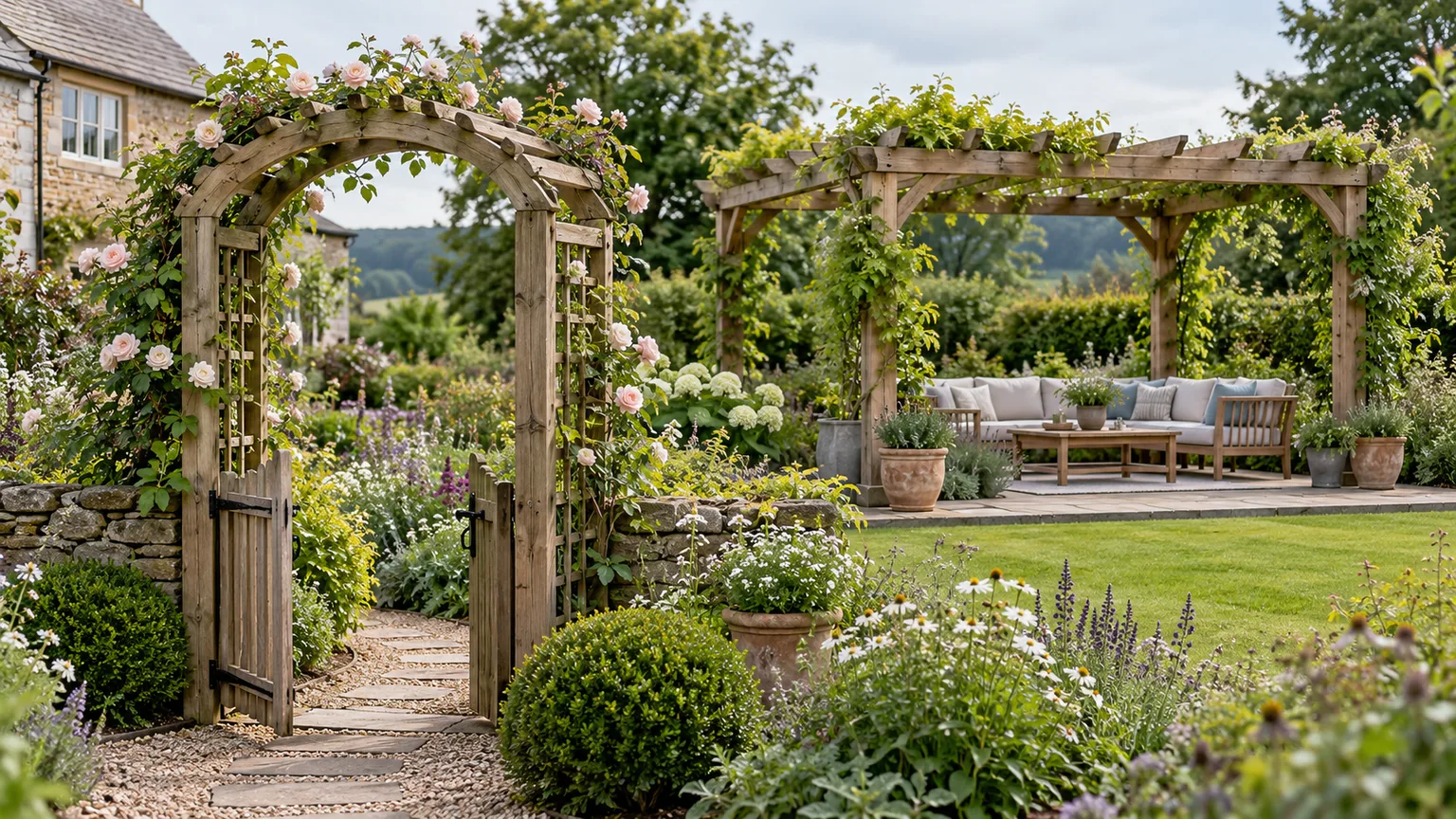
Hummingbirds move between blooms, perches, and cover, so think vertically as well as horizontally. Combine low flowers at the front, taller perennials or grasses in the middle, and a shrub, small tree, or vine-covered trellis toward the back or along an edge. This gives birds more than one feeding height and creates the sheltered branching structure they use to rest and watch the garden.
Plant several of the same flower together when space permits rather than scattering one specimen at a time. A patch is easier for a bird to notice, gives more nectar in one location, and makes it simpler for you to see when that plant’s bloom has ended. Audubon’s garden guidance recommends thinking in layers, using local native plants, and grouping flowers; garden writer Stacy Ling describes the same layered approach in a Zone 6b home garden (Audubon; Stacy Ling).
If you have a small yard, let a trellis carry a native flowering vine and put two or three compatible perennials below it. In a larger landscape, repeat the same plants in separate clusters so a territorial bird cannot easily monopolize every food source. You do not need a formal border, perfect symmetry, or decorative red objects; a simple planting that connects flowers to a perch and a safe retreat is more useful than a crowded display.
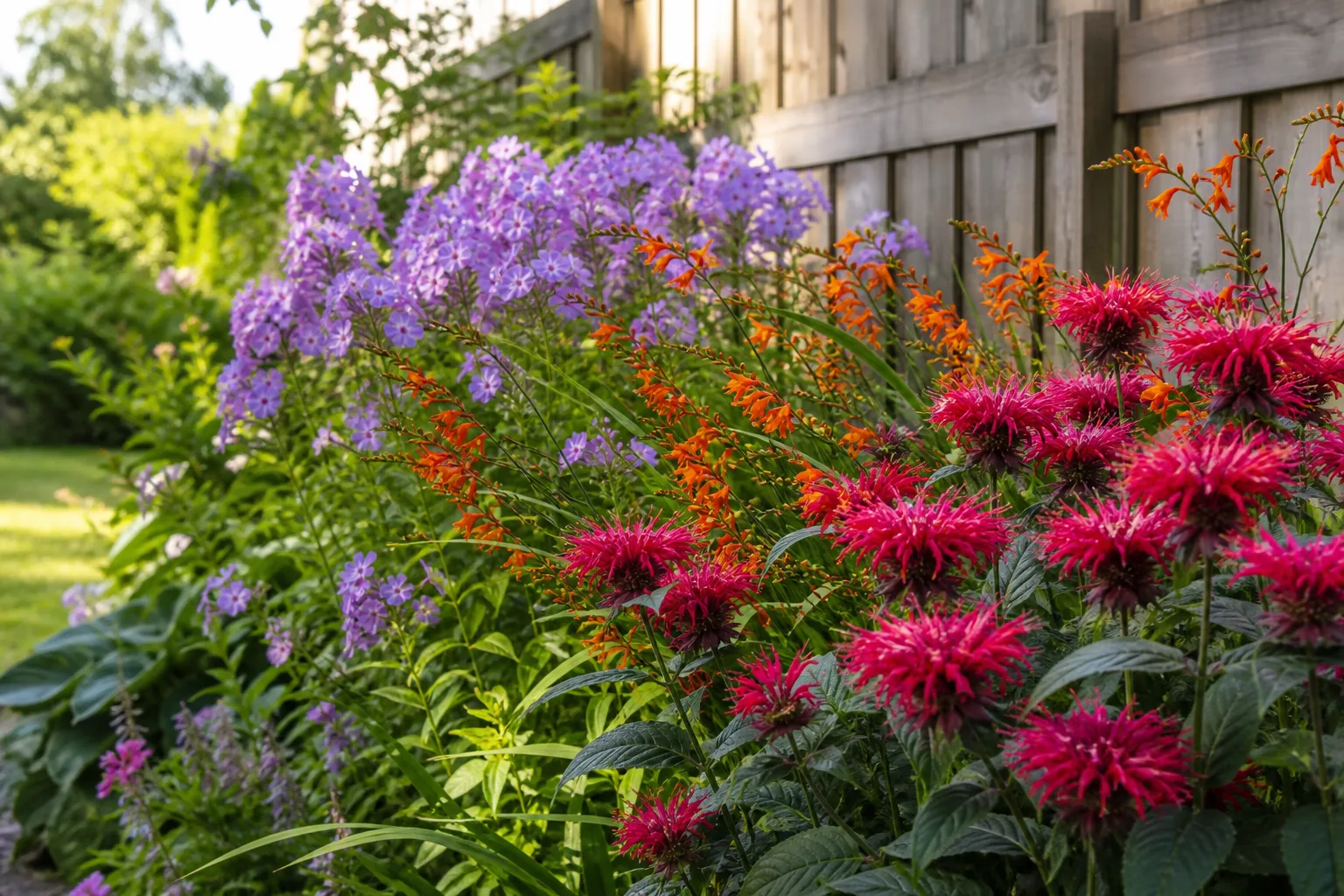
Choose locally native plants with overlapping bloom times
Native plants are a strong starting point because they fit regional conditions and support the insects hummingbirds hunt as well as the flowers they drink from. In the East, species such as coral honeysuckle, cardinal flower, bee balm, and red buckeye are examples of plants that can serve hummingbirds in appropriate conditions; University of Florida IFAS also lists firebush and native salvias for warmer areas. Those are examples, not a universal shopping list: confirm that a plant is native or well-behaved in your area and that it matches your light, soil moisture, and winter temperatures (UF/IFAS; Cornell Lab of Ornithology).
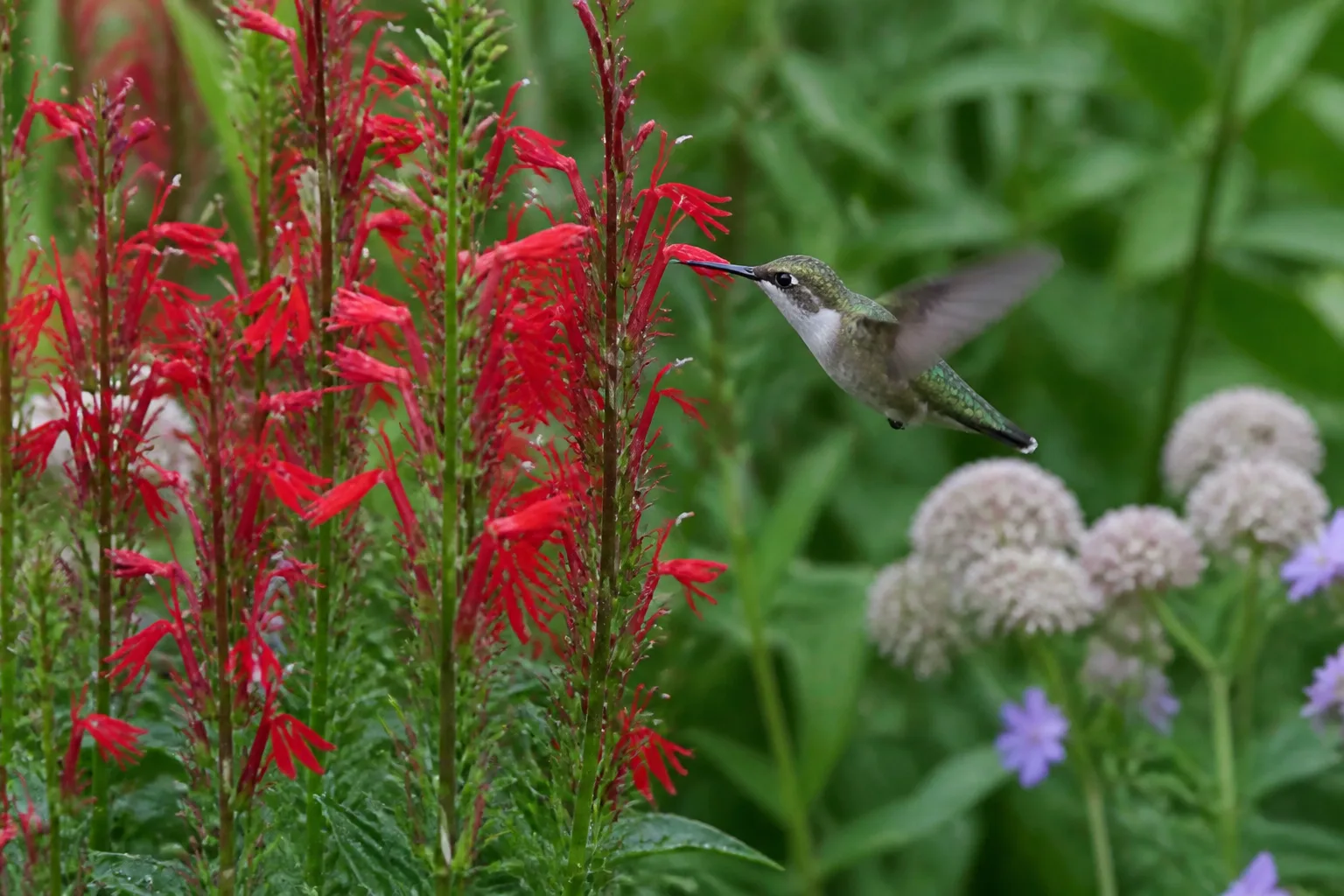
Long, tubular flowers in red, orange, or pink can be easy for hummingbirds to spot, but color alone does not guarantee nectar. Birds also visit other flower colors, and a showy cultivar may produce little usable nectar.
Choose plants by local suitability and known nectar value first, then use bloom color as a helpful design detail. Avoid invasive exotic honeysuckles; coral honeysuckle is a native vine in much of the East, but even familiar common names can hide very different plants.
Match plants to light, water, and space
Read the mature size and growing conditions before you purchase. A large vine can cover a fence quickly but overwhelm a small trellis; a moisture-loving cardinal flower will struggle in a dry gravel bed, while a drought-tolerant western perennial can rot in a wet low spot. Plant labels, local extension pages, and native-plant nurseries can help you sort plants by sun, drainage, and mature spread, which is more reliable than choosing by a photograph alone.
The region changes the palette. For example, UF/IFAS describes cardinal flower as a good fit for moist edges and rain gardens, while its recommendations for warm Florida landscapes include firebush and scarlet sage (UF/IFAS).
High Country Gardens’ western garden guidance offers a different seasonal mix, including agastache, red yucca, and other plants suited to drier western conditions (High Country Gardens). The useful lesson is not to transplant those lists wholesale; ask which equivalent native species fill those roles near you.
Build a bloom calendar from spring through fall
Aim for overlapping flowers from the first expected arrival through the final weeks of local hummingbird activity. A bloom calendar is more useful than a list of “hummingbird plants” because it exposes the gaps: mark each candidate plant’s usual flowering period, then select a mix so several kinds overlap rather than all peaking in one month. Include early flowers for spring migrants, summer staples, and late bloomers for birds feeding before or during fall movement.
A practical starter plan might pair a spring-blooming native shrub or vine with one summer perennial and one late-season species, then add annuals in containers while slower plants establish. High Country Gardens recommends a mix of early and later flowering plants to extend the food window, and the National Park Service points gardeners to ecoregional planting guides with native flowers that bloom at different times (High Country Gardens; National Park Service). Keep local flowering dates flexible: drought, shade, and pruning can move bloom earlier or later, and a plant that flowers reliably in one town may not do so at the same time across a mountain or coast.
Keep the garden rich in insect prey
Nectar is only one part of a hummingbird’s diet. Ruby-throated hummingbirds catch small insects in midair, pick them from leaves, and take spiders from webs; Cornell Lab lists gnats, mosquitoes, fruit flies, small bees, spiders, caterpillars, and aphids among their prey. That means a garden with flowers but no insect life is missing an important food source, especially during nesting when adults are feeding young (Cornell Lab of Ornithology).
Avoid broad pesticide use around blooming plants and feeding areas. Insecticides can reduce the prey that birds need, and a treated flower can expose visitors through nectar or insects; herbicide use can also remove flowering weeds and host plants that sustain small invertebrates.
If a pest problem needs attention, first identify the insect and try hand removal, a barrier, pruning of a badly affected stem, or other targeted integrated pest management. Follow local extension advice and the product label if treatment is still necessary, and do not spray open blooms or hummingbirds themselves.
Add safe water for drinking and bathing
A deep, still birdbath is not the only option, and it is often harder for tiny birds to use than a fine spray or moving water. A mister directed over leaves, a slow dripper onto a shallow textured basin, or a small fountain that creates a thin film can make droplets available for bathing. High Country Gardens also recommends dripping or spraying water for hummingbirds, while UF/IFAS advises that general birdbaths have a textured footing and shallow, gently sloped basin (High Country Gardens; UF/IFAS).
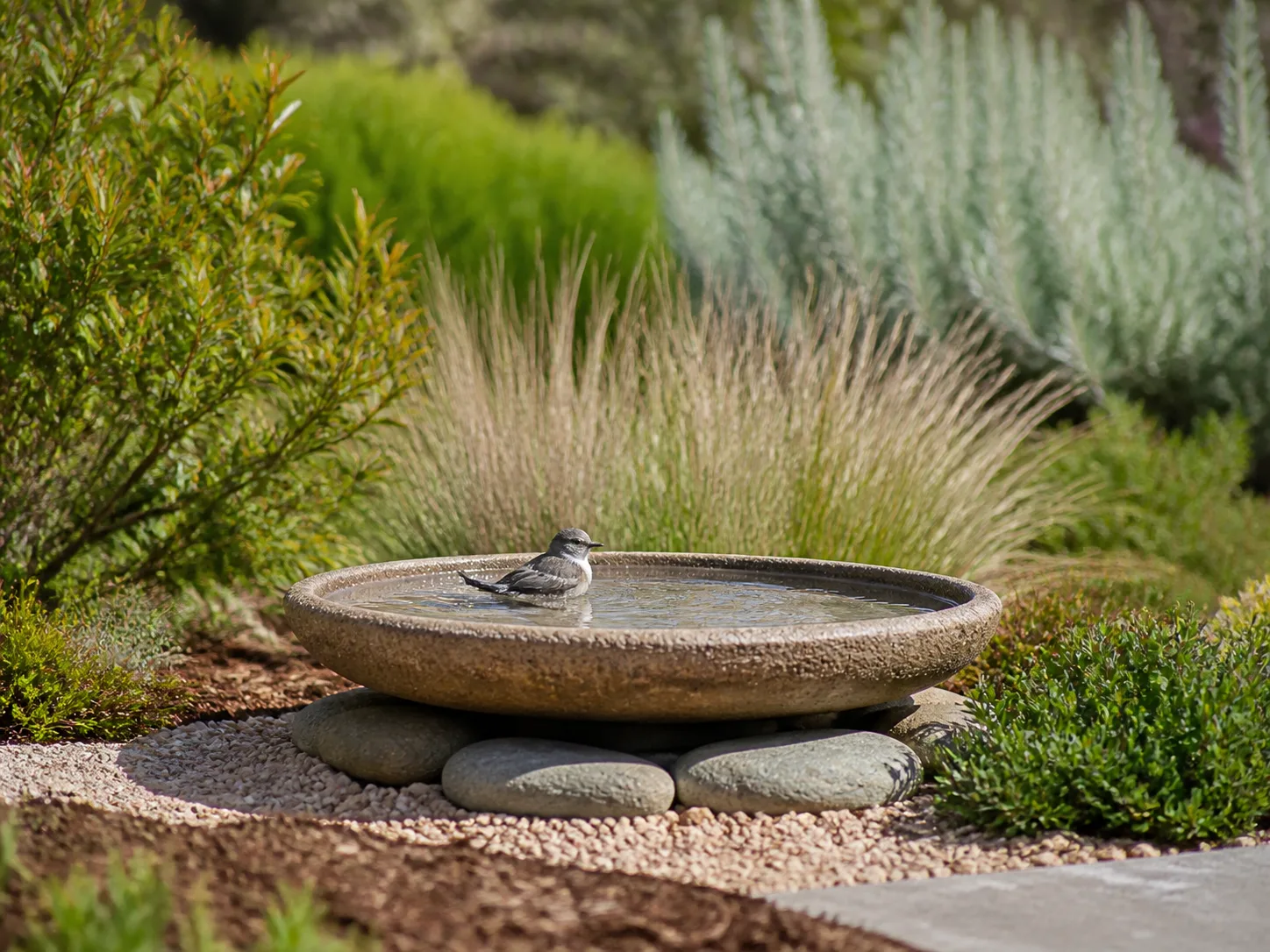
Keep any basin fresh: rinse and refill it regularly, scrub away algae, and change standing water at least weekly so it does not become stagnant or a place for mosquito larvae. Put the bath in a visible spot with a clear approach and a nearby perch, but not directly beside thick ground-level shrubs where a cat can ambush a bathing bird. A small mister can be the more practical choice if you do not have space for a basin; it also lets nearby leaves hold droplets after the spray stops.
Keep perches, shelter, and nesting habitat
Trees and shrubs are not decorative extras. They offer places to rest between feeding trips, shelter from weather, and branches where some hummingbirds build nests. Cornell Lab describes ruby-throated hummingbird nests on slender branches, often in deciduous trees, with plant down held together by spider silk; traditional enclosed birdhouses do not match that nesting style (Cornell Lab of Ornithology).
Preserve a small tree or existing shrub if it is safe and healthy, or add a compact native shrub suited to the site. A trellis or tall perennial can provide a perch nearby, but it does not replace mature woody cover where local birds need it. Avoid trimming a shrub blindly during the nesting season; pause first to check for an active nest and follow local wildlife guidance if you find one.
Leave some natural plant structure through the season rather than cutting every stem to the ground as soon as flowers fade. Seed heads and leaf litter support insects and other wildlife, while spider webs and soft plant fibers are materials that birds may use. Keep paths and windows clear, but a hummingbird garden does not need to be stripped bare to look tidy.
Decide whether to add a hummingbird feeder
A feeder can help while a new garden matures, bridge a short seasonal bloom gap, or make a balcony more useful when there is room for only a few plants. It is an optional supplement, not a requirement; flowers and the insects associated with them make the garden a more complete food source. If you are away often or cannot keep a feeder clean, skip it and invest in plants and water that you can maintain reliably.
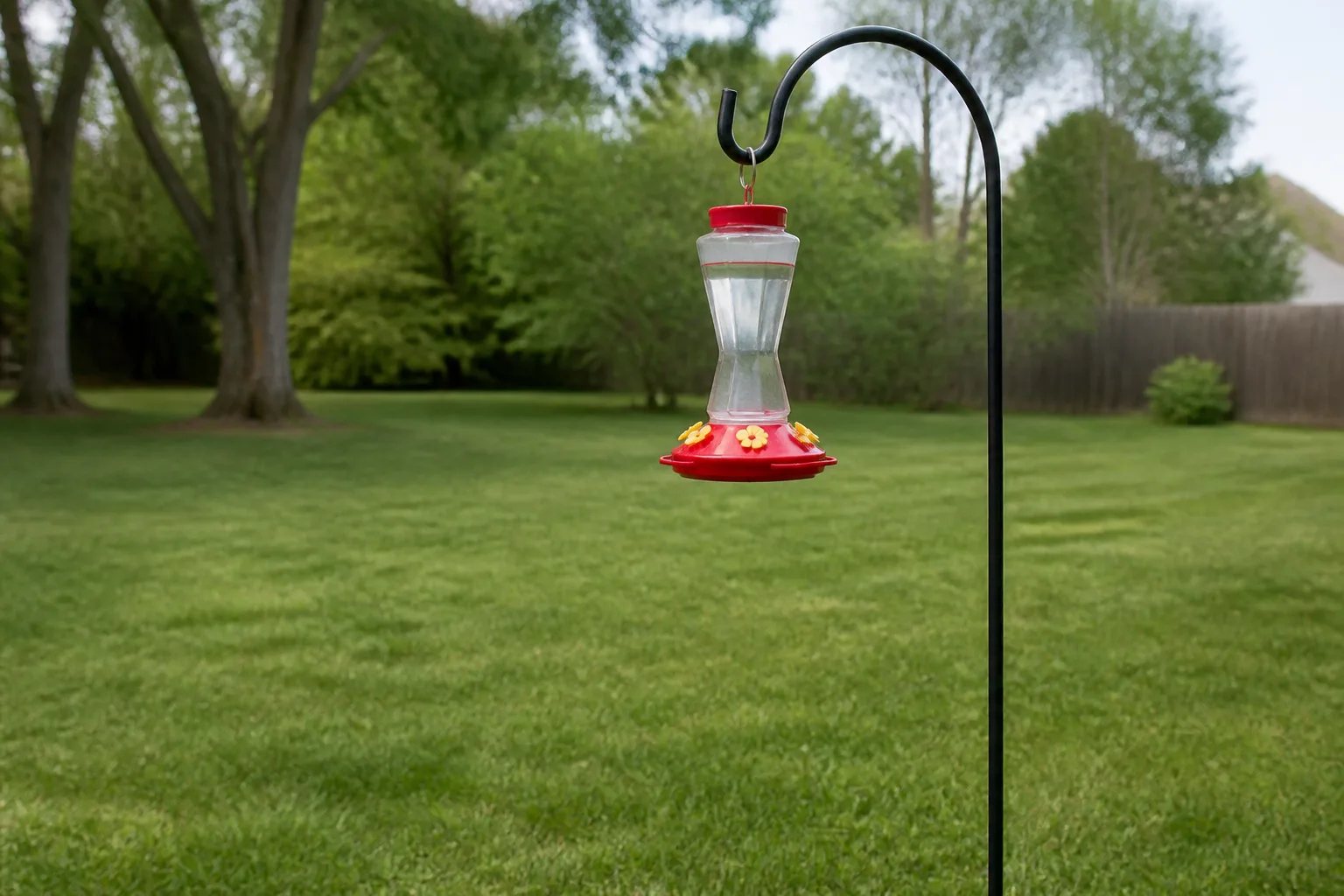
If you do add one, choose a model that comes apart easily for cleaning and place it where you can see leaks, cloudy nectar, ants, or insects. A partly shaded location slows heating compared with direct afternoon sun, and a separate feeding station can help when one bird guards a single feeder. Audubon notes that hummingbirds are territorial around flowers and feeders, so adding multiple stations in different sightlines may improve access, although it cannot prevent every chase (Audubon).
Mix nectar simply and place the feeder safely
Use one part plain white granulated sugar to four parts water. For a small batch, dissolve one-quarter cup sugar in one cup water; a larger feeder can use one cup sugar in four cups water.
Do not add red food coloring, honey, brown sugar, molasses, or artificial sweeteners. Red parts on the feeder can help make it visible, but the liquid should stay clear; UF/IFAS recommends the simple four-to-one sugar-water mixture and says not to dye it (UF/IFAS).
Hang the feeder where birds have an unobstructed approach and where you can reach it without a ladder. Keep it away from windows that could create a collision risk, and do not use a feeder location that lets outdoor cats crouch behind a shrub or jump from a roof edge. If ants reach the ports, use a feeder with a built-in ant moat or a separate moat; never use insecticide, sticky petroleum products, or oils where birds can touch them.
Clean regularly and manage feeder conflicts
Nectar ferments and grows mold more quickly in heat, so check the feeder daily and do not wait for it to look dirty. UF/IFAS advises changing the solution and cleaning the feeder every four to five days, with hot water and a little soap followed by a thorough rinse; replace the mixture sooner if it turns cloudy, smells sour, or shows mold. During a hot spell, shorter intervals are sensible because a feeder in direct sun can spoil faster (UF/IFAS).
Make only as much nectar as you will use before the next cleaning, and clean ports, seams, and the reservoir where residue can collect. If bees or wasps crowd the feeder, confirm that it is not leaking, remove any spilled sugar water, and try a different feeder design or move it a short distance. Do not kill pollinators to solve a feeder conflict; a flower-rich garden gives insects other places to feed, and a working garden does not require exclusive access for hummingbirds.
Maintain the garden without losing its habitat value
Water new plants while they establish, then adjust care to each species rather than giving every bed the same schedule. Group plants with similar moisture needs to make watering easier, mulch exposed soil without burying crowns, and prune according to the plant’s growth habit. Deadheading can extend bloom for some annuals and perennials, but leave some seed heads and stems if they are safe and useful to local wildlife.
Use compost or a soil test when the planting bed needs improvement; extra fertilizer is not a shortcut to nectar and can push leafy growth at the expense of sturdy, well-adapted plants. Avoid pesticides that wipe out insect prey, and choose plants that can thrive without constant spraying or watering. The National Park Service encourages native flowers that bloom at different times, flower clusters, shallow water, and reduced pesticide exposure in a home pollinator garden (National Park Service).
Do a brief check every week during the active season: note which flowers are blooming, whether the water is clean, and whether a feeder needs service. That routine catches a bloom gap or spoiled nectar before it lasts for weeks, while a once-a-year redesign is rarely needed. When a plant fails, replace it with a locally suited species that fills the same bloom period and moisture role instead of repeating the same mismatch.
Troubleshoot a garden with few visits
Start with timing, not a new purchase. If hummingbirds are outside their local range or have not migrated through yet, a well-planted garden can remain quiet; compare your sightings with local records and give new plantings time to establish. If birds are nearby but pass over the bed, check whether flowers are hidden behind a wall, blocked from open flight, or clustered in a spot with no nearby perch or cover.
Then look for a food gap. A garden that blooms heavily for three weeks and then goes green may attract a brief visit but does not offer a reason to return; add early- or late-season flowers that match your climate.
If plants bloom but no insects are visible, reduce pesticide use and let some plant structure remain. If the only resource is a feeder, add flowers and shelter so the yard offers more than sugar water.
A quiet feeder can also be an access problem: ants, bees, leaks, sour nectar, a dominant bird, or a location next to glass or a predator route can make it less useful. Move it only after checking sanitation and safety, and avoid changing several variables at once. Hummingbirds may take time to find a new food source, and their visits can shift when a nearby patch comes into bloom; absence for a short stretch is not proof that the garden has failed.
Adapt the plan for a balcony or small yard
A balcony can provide nectar and water without pretending to replace a larger habitat. Use several stable pots with locally appropriate flowering plants that bloom at different times, and secure every container so wind cannot tip it. Give each plant enough root space and drainage, group pots by their water needs, and place them where they receive the amount of sun the species require.
A compact native vine on a railing trellis adds height; a few flowering containers at different levels create more feeding options than a single pot of one annual. If a feeder is practical, choose a small one that is easy to clean and keep it shaded and within reach. A shallow, frequently refreshed water dish can help other visiting birds and pollinators, while a low-volume mister aimed at foliage may suit hummingbirds better than a deep basin.
In a yard with no room for a conventional bed, replace a strip of lawn along a fence, use a sturdy window box, or plant one native shrub in a sunny corner with a few perennials below it. Check building rules before attaching a feeder or planter, and avoid placing a pot where runoff drips onto a neighbor’s space. A small, maintained patch of local flowers and cover is more useful than a large collection of plants that cannot thrive in the conditions you have.
Conclusion
Build a hummingbird garden around the birds that actually visit your region: find their seasonal window, map the sunlight and shelter you already have, and choose native nectar plants that overlap in bloom. Add insects by limiting pesticide use, offer safe water and perches, and use a feeder only if you can keep it clean and protected from predators.
Then give the planting time to grow. Record what blooms and when, check for visits over the season rather than one day, and fill the gaps you observe with plants suited to your local soil and climate. A small, well-timed habitat is a more dependable invitation than a bright ornament or a feeder left unattended.