18 Best Medium-Sized Trees for Your Yard
Compare 18 medium-sized trees by mature height, spread, climate, and care so you can choose a tree that fits your yard for the long term.
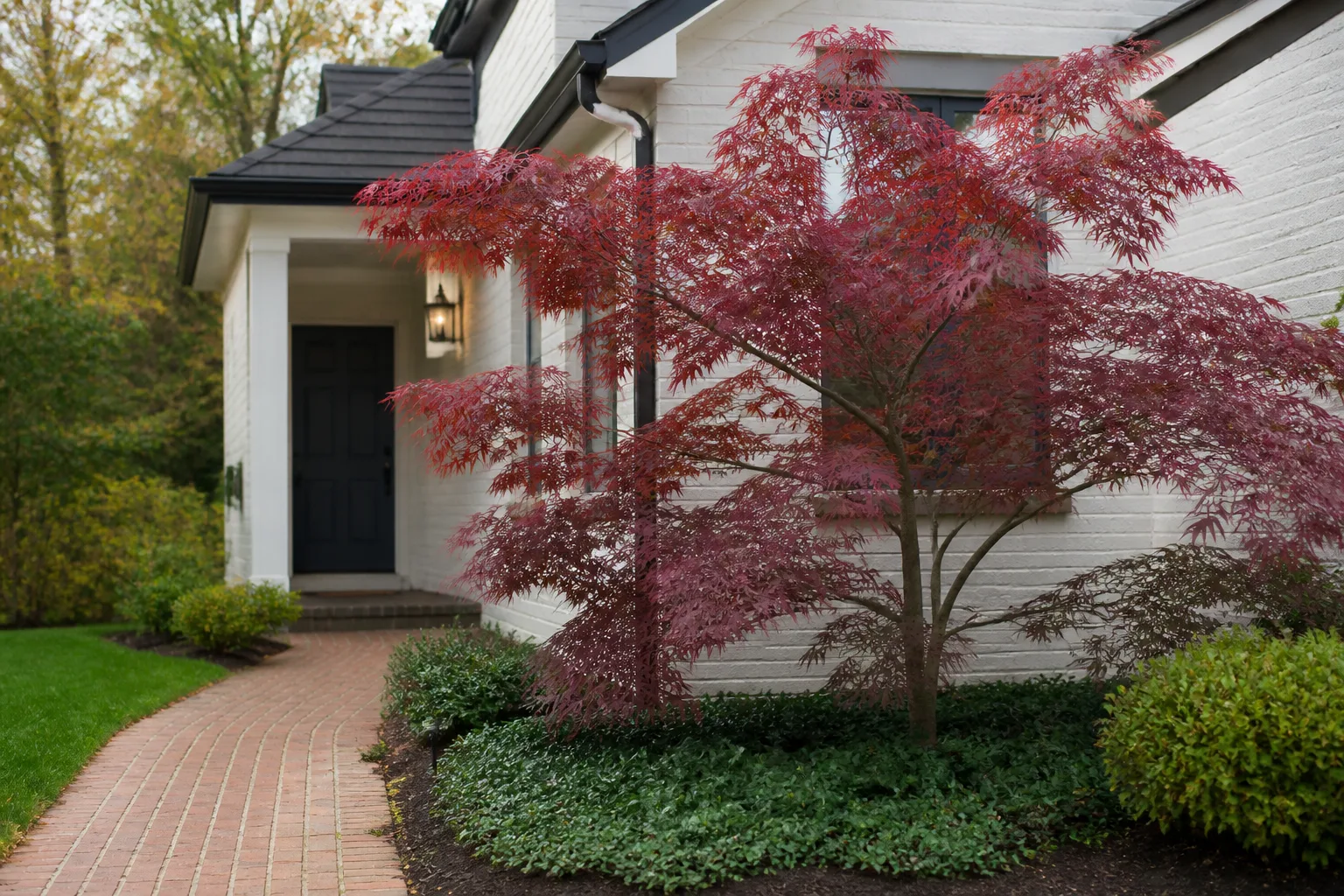
A tree can look perfectly scaled in a nursery pot and overwhelm a yard a decade later. When you compare medium-sized trees for your yard, look at both mature height and canopy spread, then match those dimensions to your planting space, climate, and maintenance tolerance. A tree that reaches 20 feet but spreads 30 feet may be a poor fit beside a narrow walk, while a taller columnar tree can suit a tighter site.
There is no universal cutoff for “medium-sized.” One gardening publication treats trees up to about 25 feet tall as small, while Washington State University Extension’s urban-tree list focuses on trees under 20 feet wide at maturity. Those different yardsticks show why a plant label or a general list cannot replace the mature dimensions of the exact species and cultivar you plan to buy. A useful first pass is to measure open canopy room in every direction, then check the local nursery tag and extension guidance. Fine Gardening’s small-tree overview and WSU Extension’s guide to trees for home landscapes emphasize scale and final width, not simply the young plant’s height.
The ranges below are planning estimates, not guarantees. Cultivar, rootstock, pruning, soil, water, and climate can change a tree’s eventual form; hardiness zones tell you about average winter cold, not heat tolerance, drought, or local pests. Some plants on this list are better choices for a large suburban yard than for a genuinely small lot. The notes call those out so you can decide before planting. Birds & Blooms’ flowering-tree guide also illustrates how broad the size range can be within a single common name such as magnolia.
| Tree | Approximate mature size | Broad reported zones | Best fit and main tradeoff |
|---|---|---|---|
| Red buckeye | 10–20 ft tall; 10–20 ft wide | 4–8 | Part shade and moist soil; seeds are poisonous |
| Crabapple | 12–25 ft tall and wide | 4–8 | Flowers and bird food; size and disease resistance vary by cultivar |
| Crape myrtle | 6–30 ft tall and wide | 6–10 | Long summer bloom; confirm cultivar size and winter fit |
| Flowering dogwood | 15–25 ft tall; similar spread | 5–9 | Spring bracts and fruit; needs a cool, well-drained root zone |
| Golden chain tree | 15–25 ft tall and wide | 6–8 | Pendulous flowers; every part is poisonous |
| Cockspur hawthorn | 20–35 ft tall; often broadly spreading | 3–7 | Flowers, fruit, and fall color; sharp thorns |
| Japanese maple | About 10–25 ft tall and wide, depending on selection | 5–8 | Many shapes and colors; avoid hot, drying exposure for delicate leaves |
| Saucer magnolia | About 15–30 ft tall and wide | 4–9 | Early flowers; broad canopy and frost-prone blooms |
| Mimosa or silk tree | 20–40 ft tall; 20–50 ft wide | 6–9 | Tropical-looking flowers; invasive in some regions, weak wood |
| Pawpaw | 15–30 ft tall; often 15–25 ft wide | 5–8 | Native fruit tree; plant a second genetically different tree for fruit |
| Eastern redbud | 20–30 ft tall; often 25–35 ft wide | 4–9 | Early bloom; broad crown and poor transplant tolerance |
| Serviceberry | Roughly 10–25 ft tall and wide | 4–8 | Flowers, berries, and fall color; suckers and species size vary |
| Dwarf Alberta spruce | Roughly 10–13 ft tall; 5–8 ft wide over time | 2–8 | Evergreen, slow growth; can struggle with heat and spider mites |
| Japanese stewartia | About 25–35 ft tall; 15–25 ft wide | 5–8 | Flowers and exfoliating bark; slow and often larger than a small yard can hold |
| Chaste tree | About 8–20 ft tall; 5–20 ft wide | 6–9 | Summer flowers; technically a large shrub and can be cold-sensitive |
| Weeping cherry | Roughly 8–40 ft, depending on cultivar and graft | 4–9 | Dramatic spring bloom; verify the exact mature canopy before buying |
| Witch hazel | About 10–20 ft tall and wide | 5–8 | Fragrant fall or winter bloom; species determine bloom season |
| Paper birch | About 50–70 ft tall; 25–45 ft wide | 2–6 | Striking white bark; too large and heat-sensitive for many small yards |
1. Red Buckeye
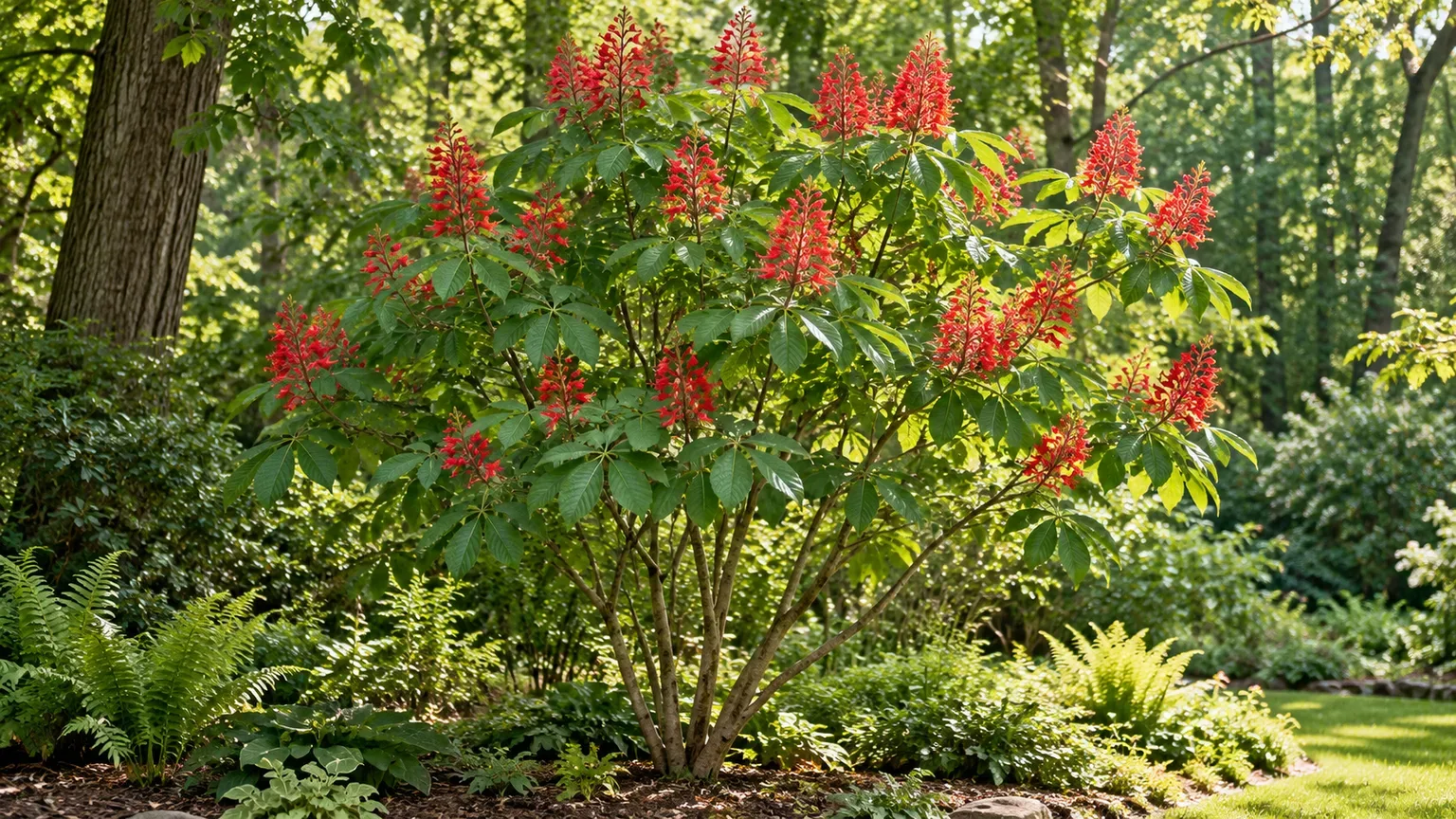
Red buckeye (Aesculus pavia) is a small tree or large, multi-stemmed shrub that usually reaches about 10 to 20 feet tall, with a similar spread. Its upright red flower clusters open in spring and attract hummingbirds, making it a strong choice for a partly shaded yard in the Southeast and other areas within its broad hardiness range. It appreciates moist, fertile, well-drained soil, and its foliage can scorch when hot weather combines with dry soil. The Missouri Botanical Garden lists a similar 12-to-15-foot height and spread and recommends afternoon shade in hot-summer climates. Missouri Botanical Garden’s red buckeye profile also notes that the seeds are poisonous.
Give it room to keep its natural rounded form rather than planning to prune it into a narrow silhouette. Because the seed capsules contain poisonous buckeyes, choose another tree if children or pets are likely to handle fallen seeds; do not assume wildlife will remove them. This is a better fit for a layered border or woodland edge than a dry, exposed lawn.
2. Crabapple
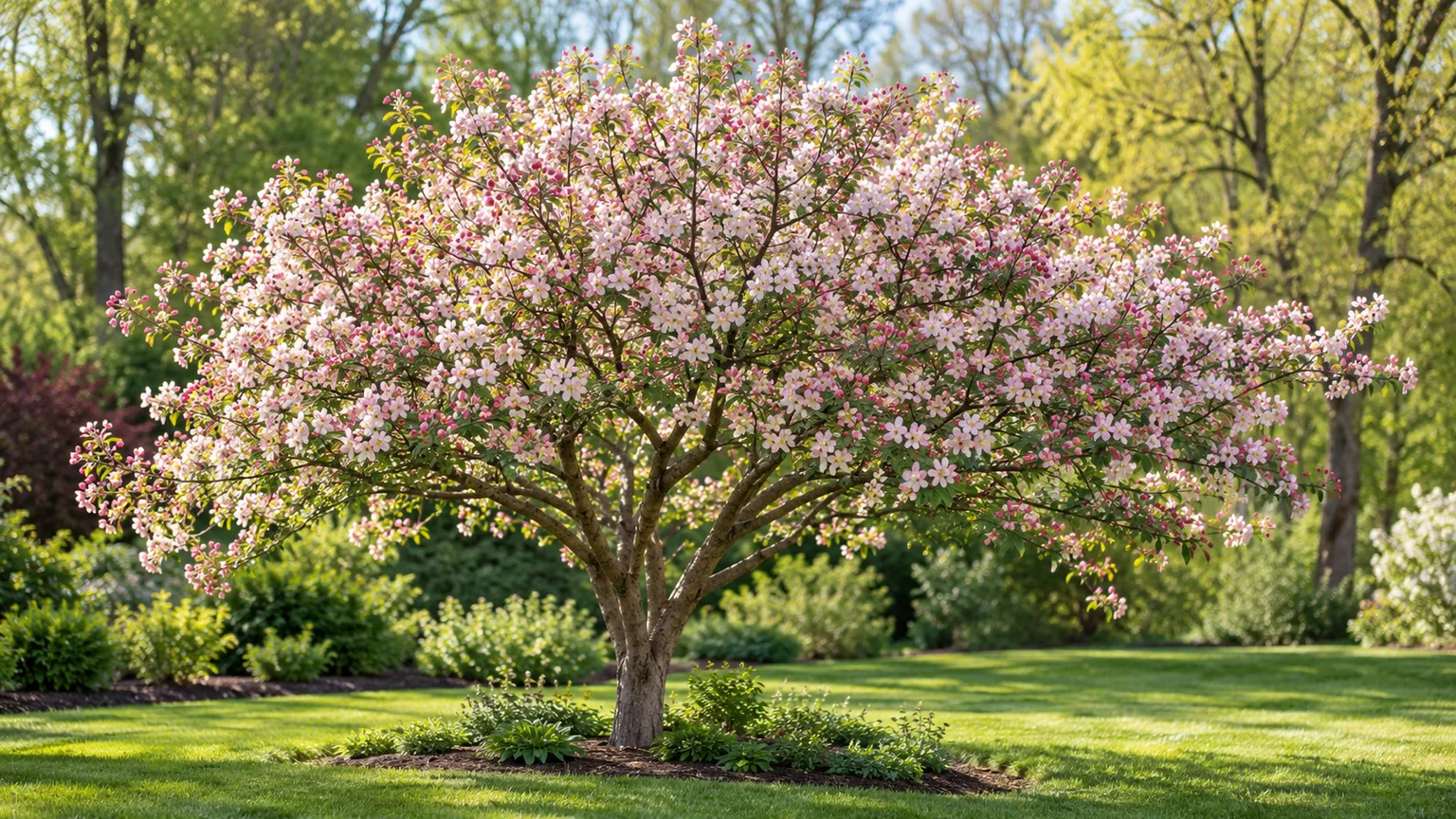
Crabapple (Malus) is a useful small-yard choice when you want spring flowers, fall fruit, and seasonal structure in one deciduous tree. The genus includes many forms, so expect anything from a compact tree to a wider canopy and select a named cultivar only after checking both its mature height and spread. The cultivar ‘Sugar Tyme,’ for example, is listed by WSU Extension at about 18 feet tall and 15 feet wide; that same guide describes its resistance to apple scab and its persistent fruit. WSU’s cultivar listing is a better buying reference than a generic “crabapple” label.
Plant in full sun for dependable flowering, and expect fruit drop if birds do not eat every crabapple. Newer disease-resistant cultivars can reduce leaf-scab problems, but resistance is not identical across all varieties or climates. Ask a local nursery or extension office which cultivars perform well in your area, especially where apple scab, fire blight, or other regional fruit-tree diseases are common.
3. Crape Myrtle
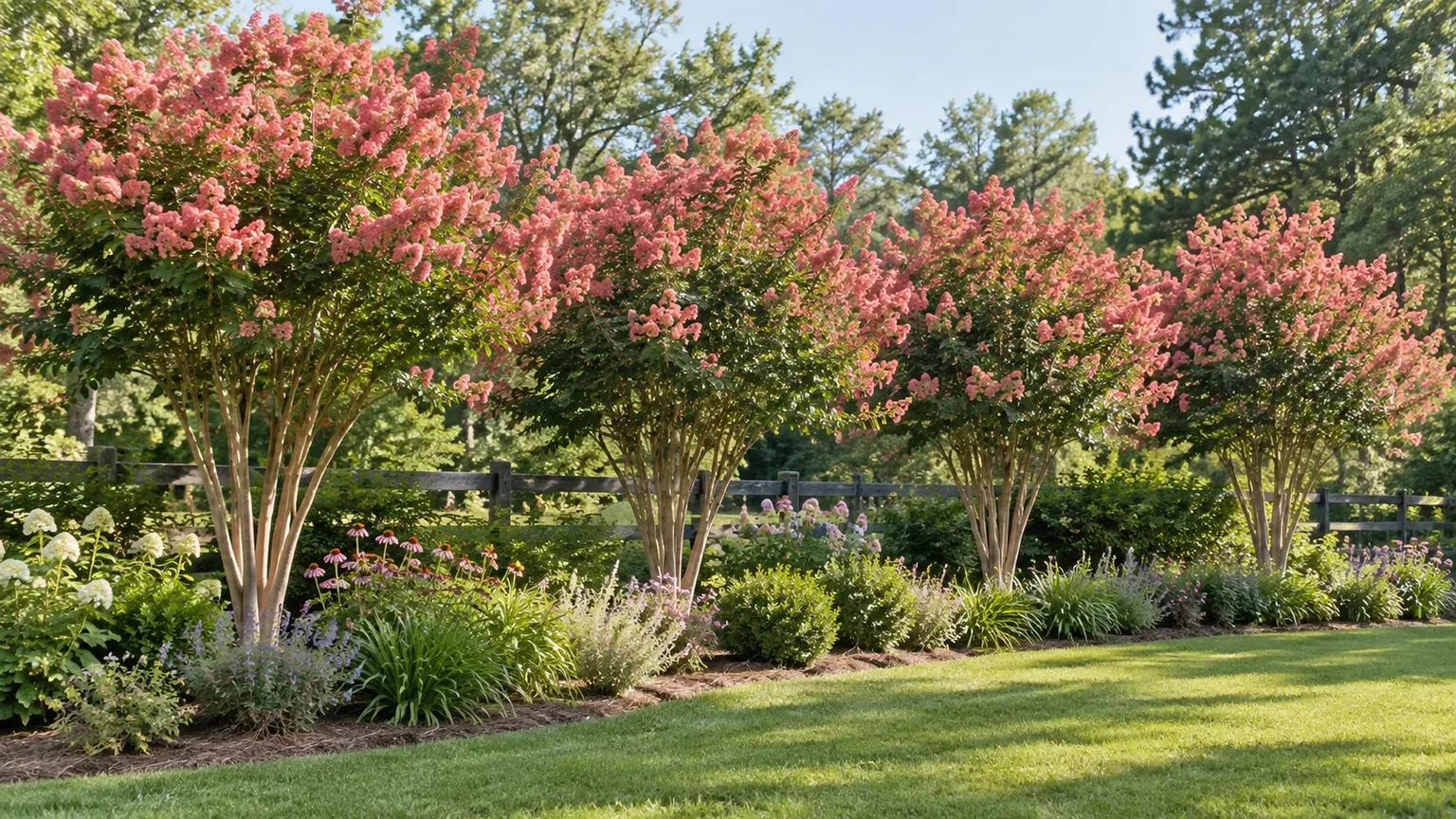
Crape myrtle (Lagerstroemia indica) earns its place in warm-climate yards with showy flowers in summer, attractive exfoliating bark, and colorful autumn leaves. Its mature height can range widely—roughly 6 to 30 feet—because cultivar choice determines whether it grows as a small shrub or a full tree. The NC State Extension Plant Toolbox gives that range and notes that the plant blooms on new growth, which is why size selection should happen before pruning. NC State Extension’s crape myrtle profile recommends full sun and a sheltered planting spot, especially in colder parts of its range.
Check the cultivar’s actual mature size instead of assuming that every crape myrtle is a 25-foot tree or that aggressive annual topping will keep it small. In cooler edge zones, winter injury can kill top growth even if roots survive; warm-climate gardeners should also account for flower drop near pavement and the possibility of aphids, scale, or mildew. Choose a cultivar sized for the space, then allow its natural form to develop.
4. Flowering Dogwood
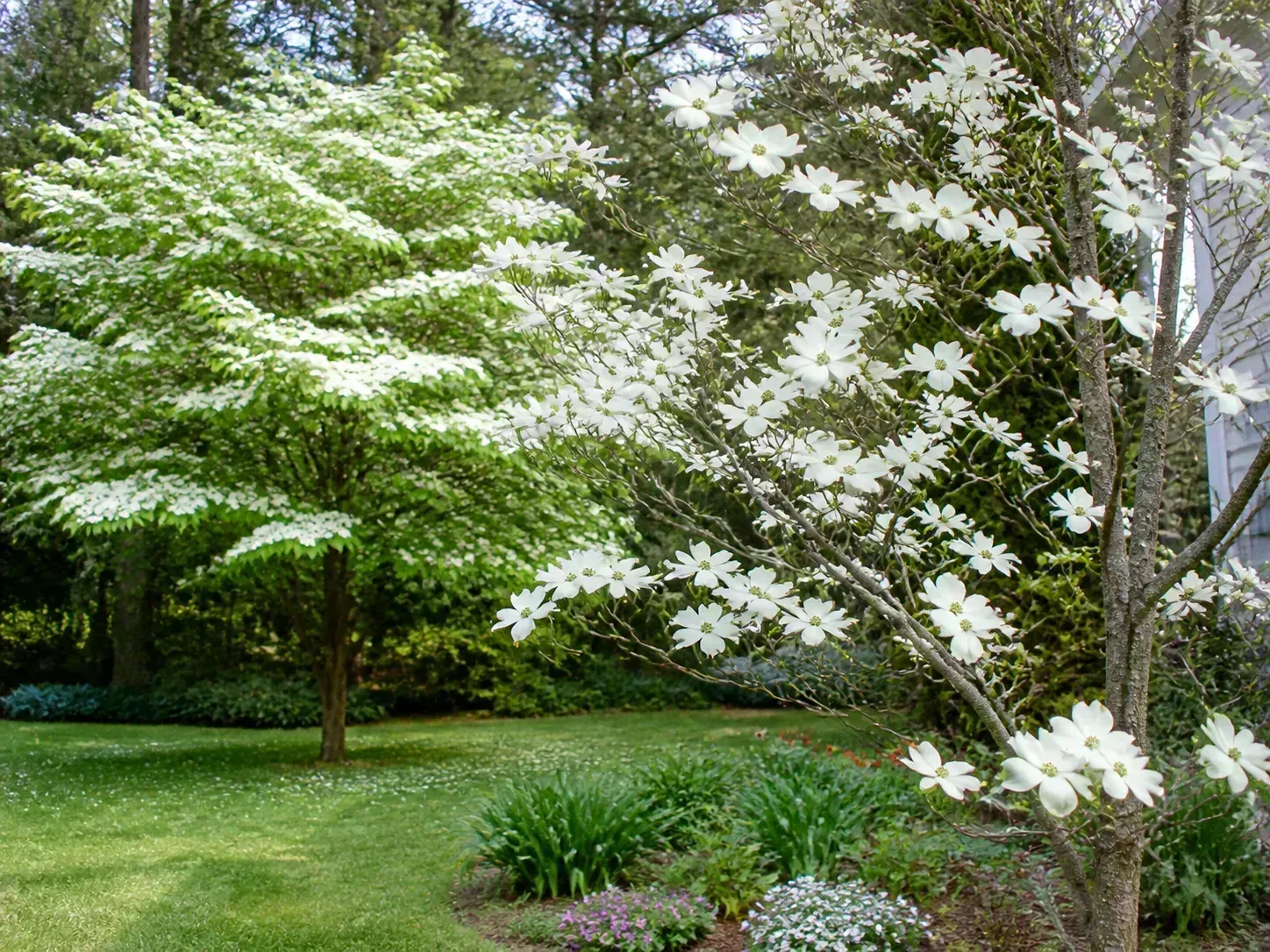
Flowering dogwood (Cornus florida) usually grows about 15 to 25 feet tall and can provide four-season interest through spring bracts, red fall fruit, autumn foliage, and branching in winter. It suits eastern and central North American gardens where it receives morning sun or dappled light and has rich, well-drained soil. NC State Extension recommends partial shade in hotter Piedmont and coastal locations and a 2-to-4-inch mulch layer to help keep the root zone cool and moist. NC State Extension’s flowering dogwood profile also describes cultivar differences in flower color and disease resistance.
Dogwood is not the best tree for a hot, exposed site with compacted soil or poor drainage. Choose a locally recommended cultivar and ask about resistance to dogwood anthracnose and spot anthracnose; resistant does not mean immune, and susceptibility varies by cultivar. Keep mulch off the trunk and water during establishment rather than trying to compensate for a mismatched location with repeated pruning or fertilizer.
5. Golden Chain Tree
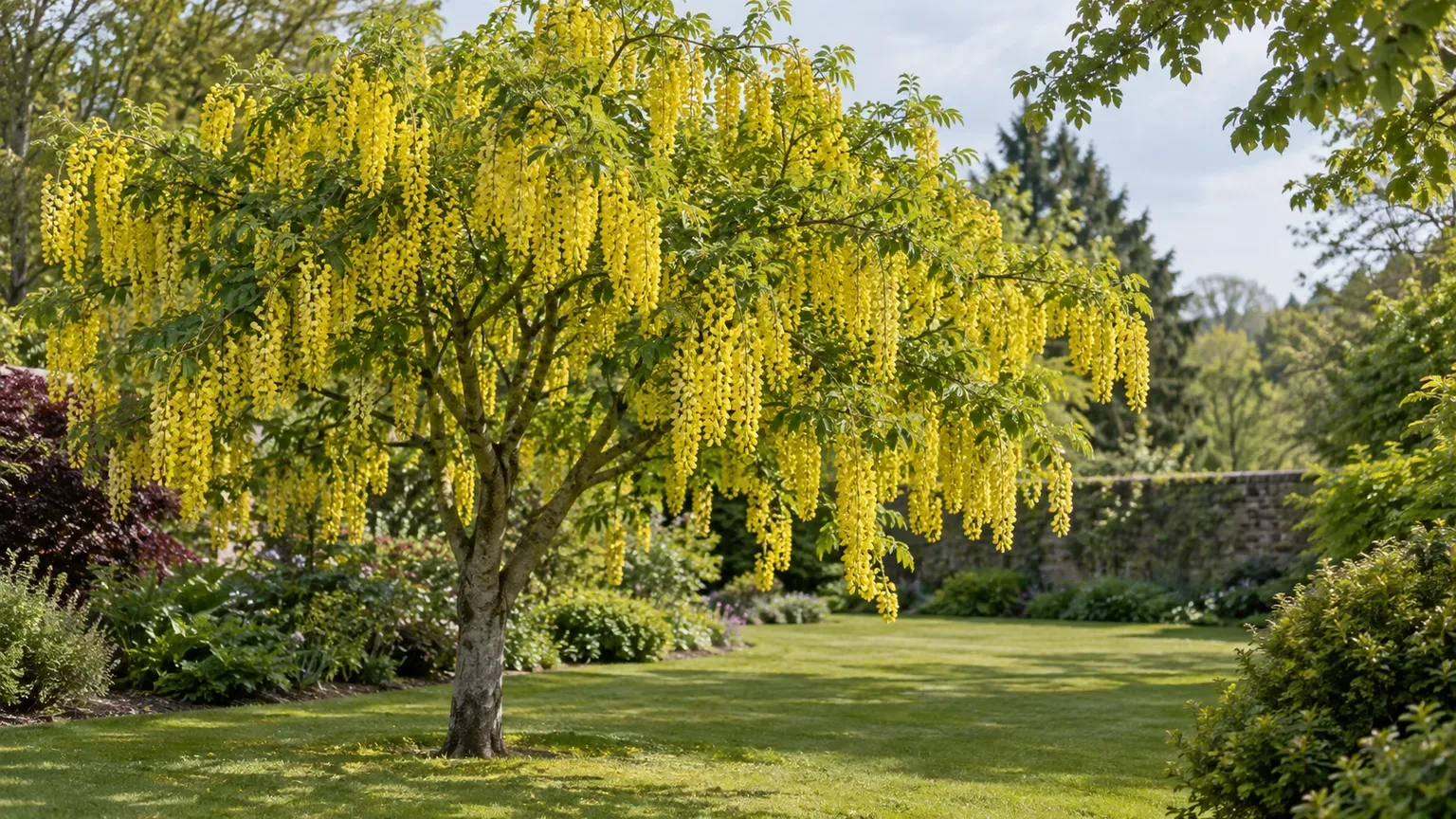
Golden chain tree (Laburnum × watereri) is valued for long, hanging clusters of yellow flowers in late spring. It generally reaches about 15 to 25 feet tall and wide, making it a manageable specimen for a sunny-to-partly-shaded garden in cooler climates. WSU Extension lists the ‘Watereri’ hybrid at about 20 feet tall and wide and cautions that every part of the plant is poisonous. Its landscape guide describes it as popular in cooler regions, where flower clusters can hang 10 to 20 inches long.
This tree needs a deliberate safety decision, not just a size check. If children, pets, or grazing animals could reach the fallen flowers, leaves, or seed pods, choose a different flowering tree. Golden chain can tolerate some shade, but avoid a hot, exposed planting site; its spectacular flower display is relatively brief, so use it as a focal tree rather than expecting months of color.
6. Cockspur Hawthorn
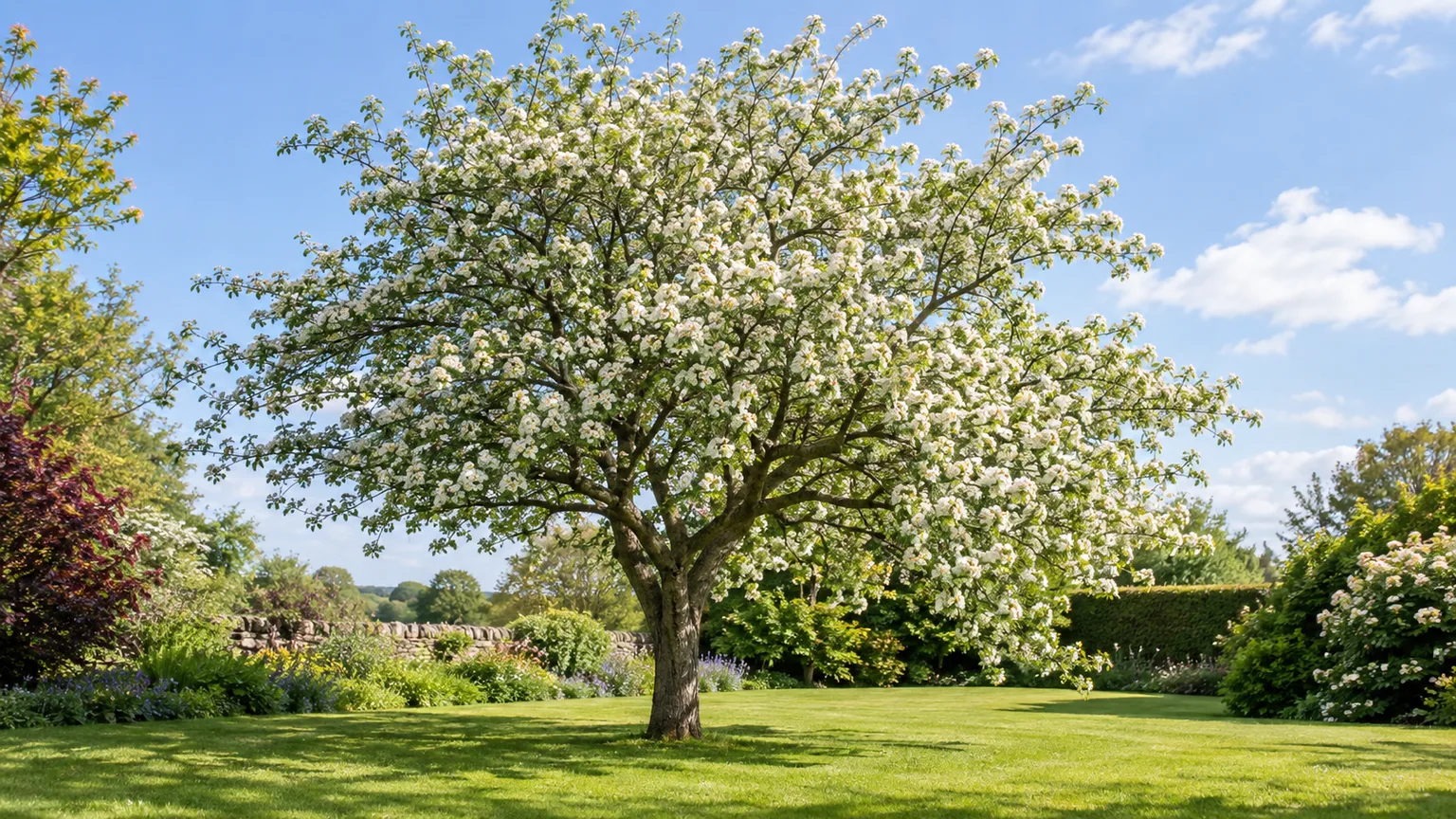
Cockspur hawthorn (Crataegus crus-galli) is a small flowering tree that can reach 20 to 35 feet tall and spread broadly. Spring blossoms, red fruit, and orange-to-red fall foliage bring several seasons of interest, while the fruit feeds birds. Penn State Extension reports that it grows from Vermont to Texas, does best in full sun with moist, well-drained soil, and is not salt-tolerant. It also notes woody thorns and identifies the thornless cultivar ‘Inermis,’ often sold as ‘Crusader.’ Read Penn State’s hawthorn profile before choosing a planting location.
The thorns matter beside a path, play area, or narrow driveway, and a thornless selection still needs enough canopy room. Hawthorns can be vulnerable to fire blight, so ask for a cultivar suited to your region rather than relying on the species name alone. This is a stronger fit for a sunny lawn edge or wildlife planting than a tight foundation bed.
7. Japanese Maple
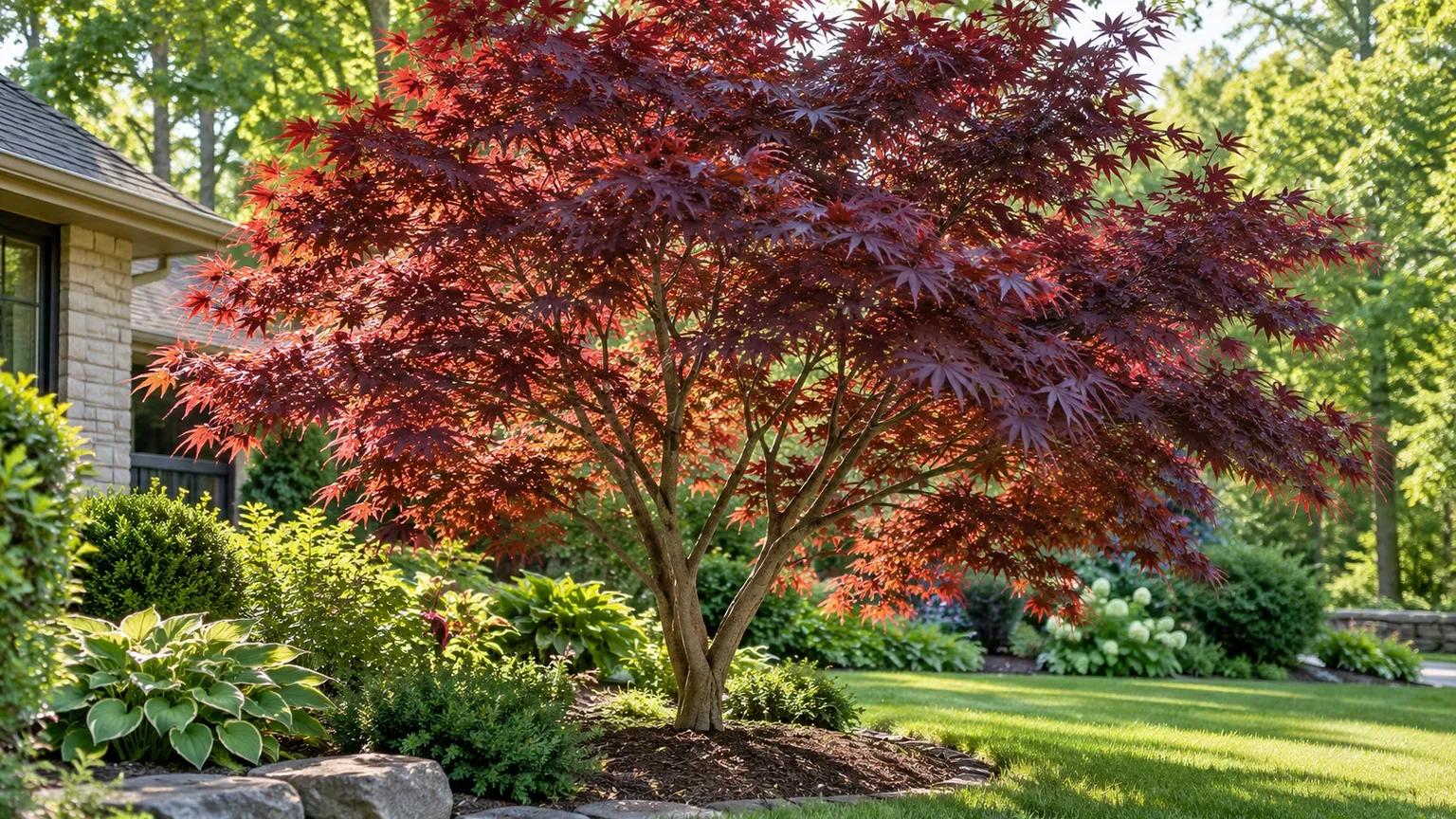
Japanese maple (Acer palmatum) is a flexible choice because cultivars vary from compact, low weepers to upright trees around 20 feet tall and wide. The key is to buy for the named cultivar’s mature size and shape: a laceleaf maple that stays low will not provide the same vertical canopy as an upright selection. WSU Extension lists ‘Bloodgood’ at about 20 by 20 feet and ‘Coral Bark’ at roughly 18 by 14 feet in its small-tree guide. Those cultivar measurements show why the broad species name alone is not enough.
Most Japanese maples prefer well-drained soil and protection from hot afternoon sun, drying wind, and reflected heat. Morning sun with afternoon shade is often safer in hot-summer climates, especially for finely divided leaves that can scorch. They are good focal trees for patios and front yards, but do not plant one where its mature spread will be forced against the house or walkway.
8. Saucer Magnolia
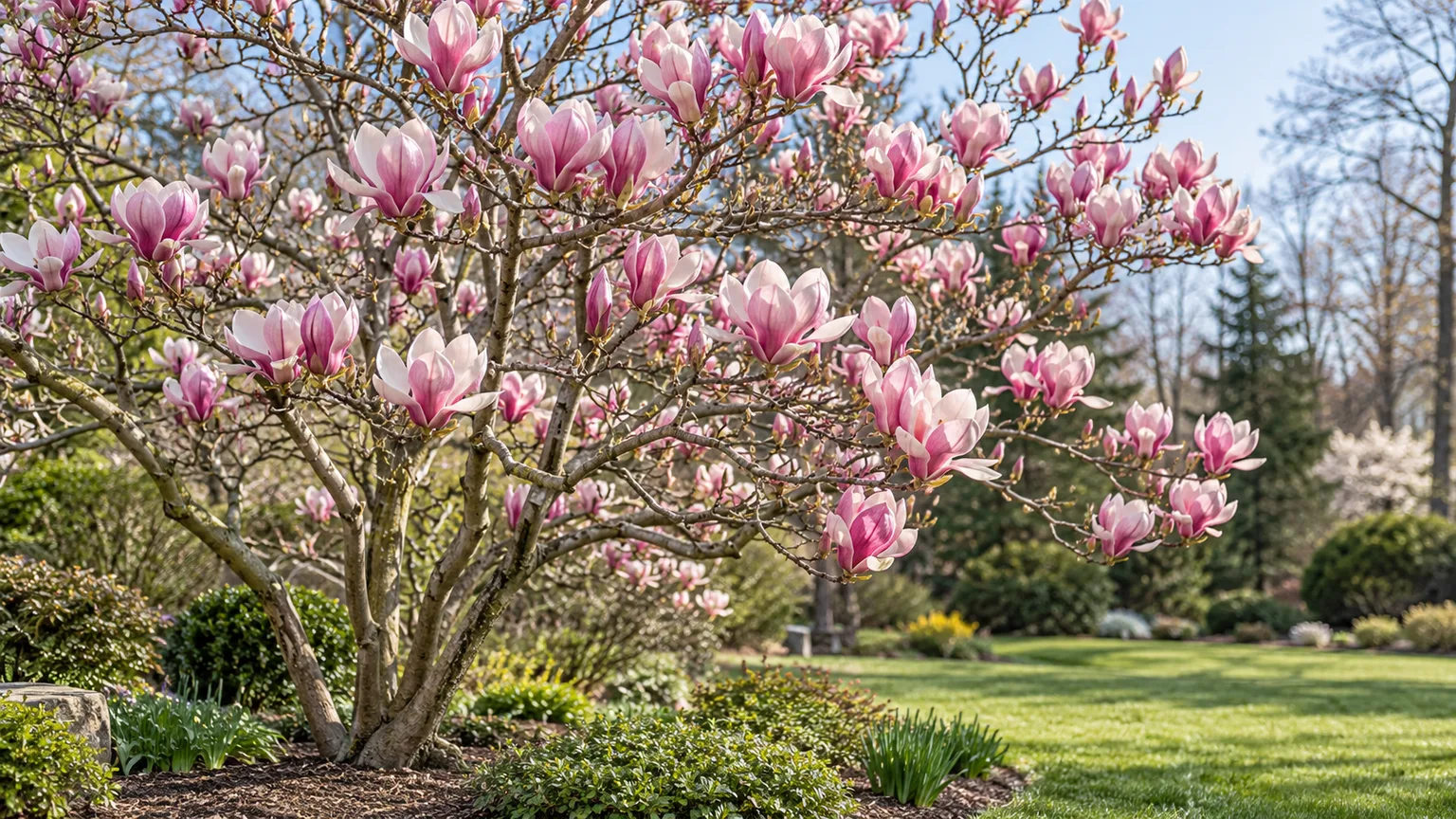
Saucer magnolia (Magnolia × soulangeana) typically reaches about 20 to 30 feet tall and can become just as wide. Its large pink or white flowers open before the leaves, making the tree a dramatic spring focal point; a late frost can brown those early blooms. The ‘Rustica Rubra’ cultivar described by WSU Extension is smaller—about 15 to 20 feet tall by 20 feet wide—and has rose-red flowers. The WSU entry illustrates why checking the cultivar label matters even when the plant has a familiar common name.
This magnolia needs a site with enough lateral room for its spreading branches, consistent moisture, and good drainage. It may be hardy in a range of climates, but the flowers are vulnerable where spring freezes follow warm spells. Select it for a lawn or open bed where its canopy can be seen from indoors, not for a narrow strip beside a foundation.
9. Mimosa or Silk Tree
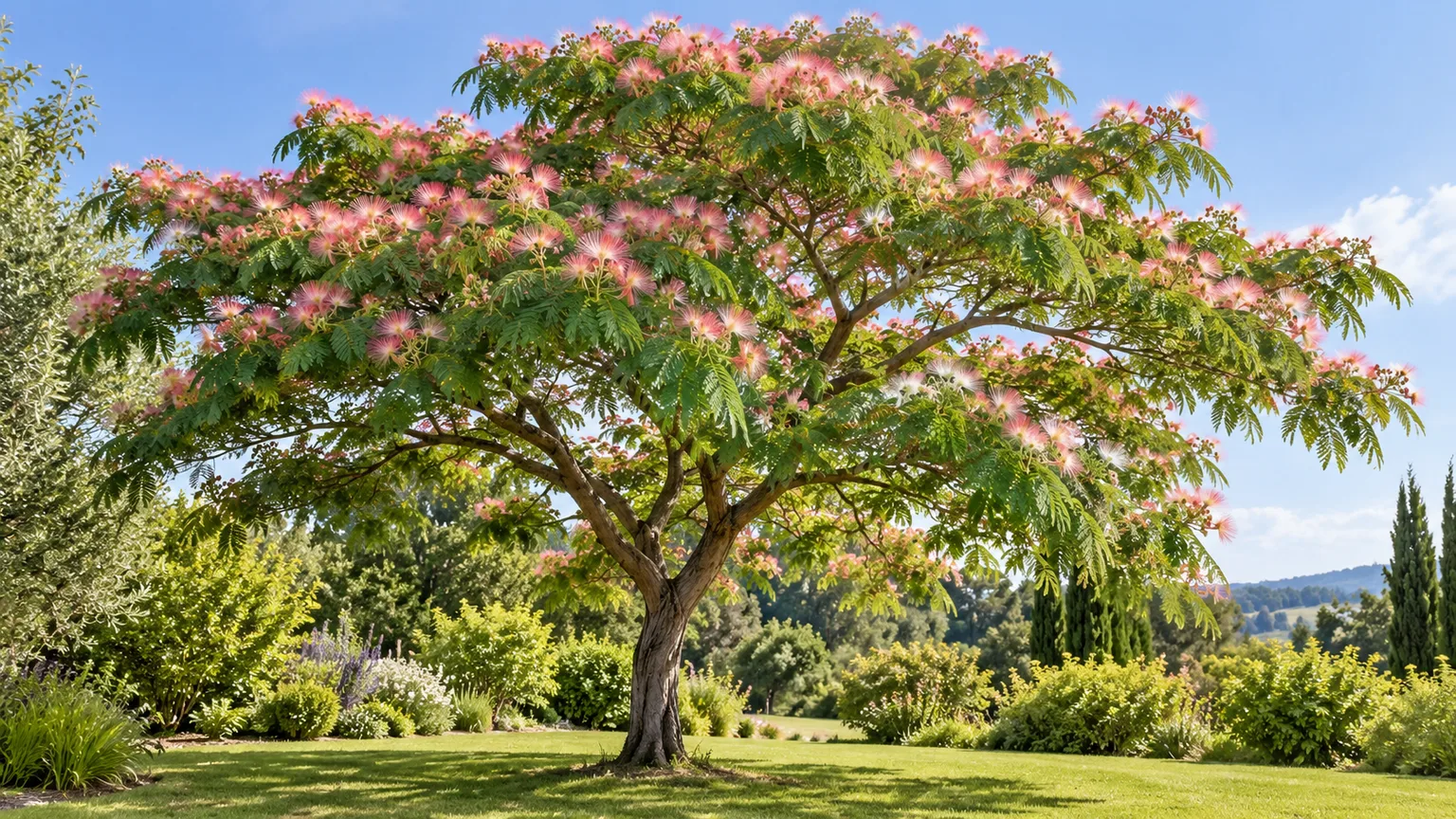
Mimosa or silk tree (Albizia julibrissin) has fernlike leaves and fragrant pink summer flowers, but its dimensions and behavior make it a poor choice for many yards. NC State Extension lists it at 20 to 40 feet tall and 20 to 50 feet wide, with weak branches that can break in storms and substantial cleanup from flowers, leaves, and seed pods. The plant is invasive in North Carolina and other parts of the Southeast; its seeds can also be toxic to dogs and livestock. NC State Extension’s mimosa profile says it is not recommended for landscapes and notes that sterile cultivars may reduce reseeding but do not turn the species into a universally suitable tree.
Before planting one, check your state’s invasive-plant list and local extension guidance. If mimosa is invasive or discouraged where you live, choose a native flowering tree instead. Even where it is permitted, its broad canopy, short life, and storm-prone limbs call for a large, open site away from structures and parking areas.
10. Pawpaw
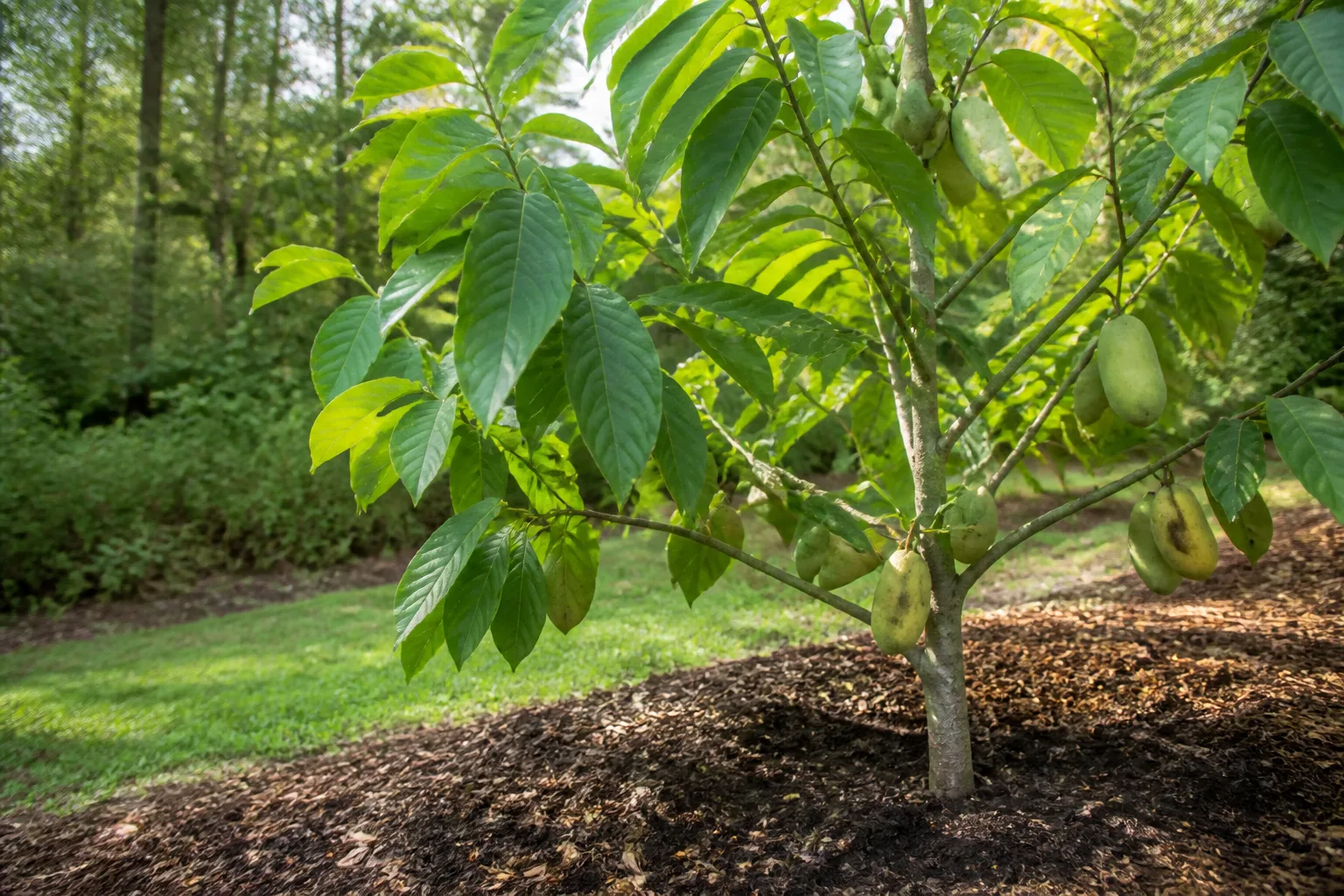
Pawpaw (Asimina triloba) is a native understory tree that usually reaches about 15 to 30 feet, with broad leaves and edible fruit that ripens in late summer or early fall. It can grow in partial shade, but a sunny site generally supports better fruit production; keep the soil moisture-retentive but not waterlogged. A single tree can flower without setting fruit: its flowers are self-incompatible, so fruit production requires pollen from a genetically different tree. NC State Extension’s pawpaw profile explains this pollination requirement and notes that root suckers can become a maintenance issue.
Pawpaw fits a naturalized border or woodland-edge garden better than a highly manicured foundation bed. Plant two unrelated seedlings or distinct cultivars if you want reliable fruit, and leave room for suckers around the parent tree. The fruit is a worthwhile harvest, but wildlife may reach it first, and gloves are sensible when handling fruit if you have sensitive skin.
11. Eastern Redbud
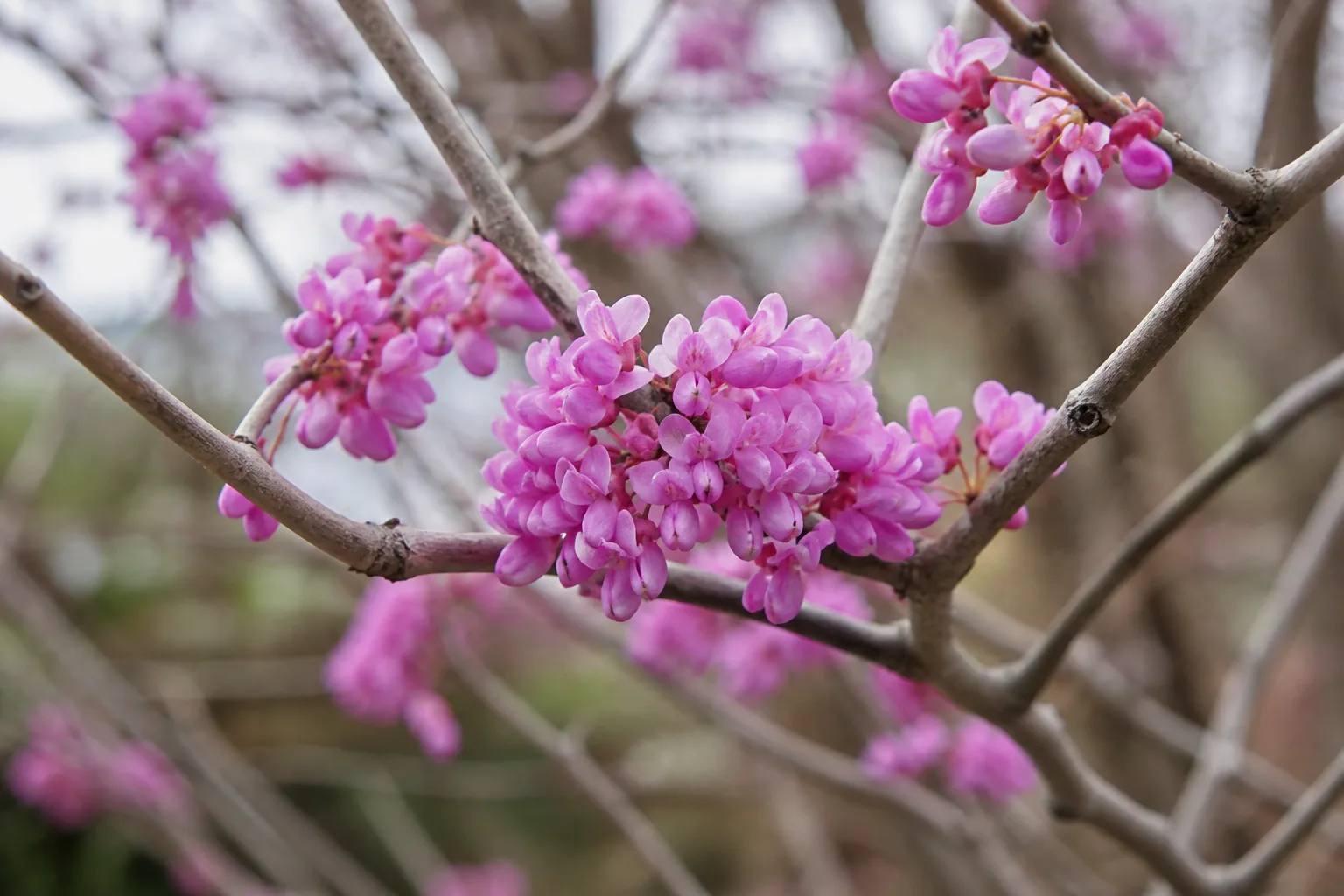
Eastern redbud (Cercis canadensis) typically matures at about 20 to 30 feet tall, often with a spread wider than its height. It flowers on bare branches in early spring, then provides heart-shaped foliage and seedpods through the growing season. The Missouri Botanical Garden describes it as a multi-trunked understory tree and recommends well-drained soil with consistent moisture; it does not transplant well, so plant a young tree and leave it in place. Missouri Botanical Garden’s eastern redbud profile reports a typical height of 20 to 30 feet and notes that part shade helps in hot-summer regions.
Give the canopy room to spread and avoid a waterlogged site. Redbud is a good choice for a front lawn, woodland edge, or partly shaded garden, but do not squeeze it into a narrow bed simply because the nursery plant is small. If you want a weeping form, check its mature height and width separately; those cultivars do not share the same shape as the straight species.
12. Serviceberry
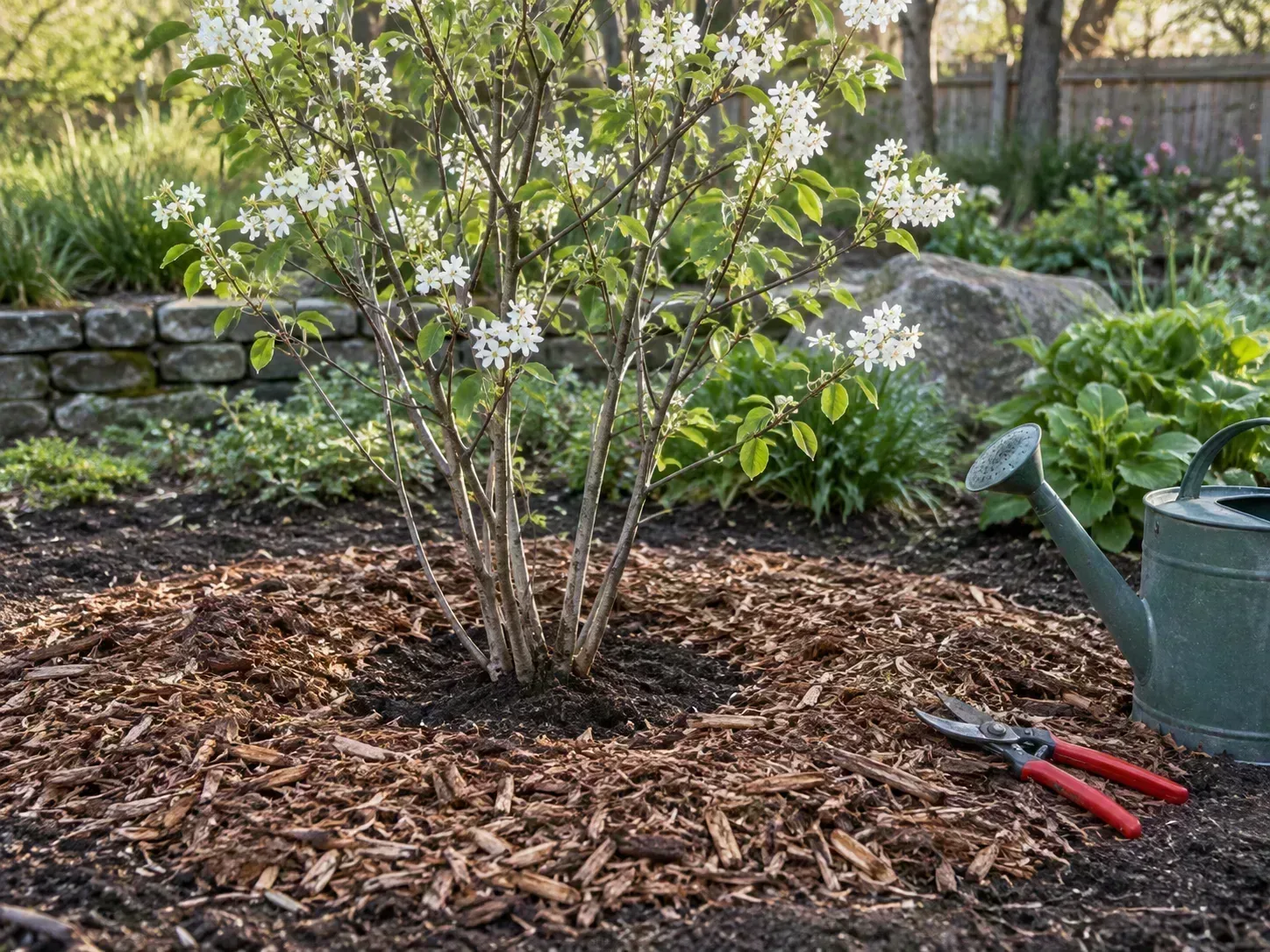
Serviceberry (Amelanchier) includes small trees and large shrubs, and many selections reach roughly 10 to 25 feet. Their spring flowers, summer berries, and fall color make them useful in a wildlife-friendly yard, but the common name covers several species and hybrids with different habits. NC State Extension’s downy serviceberry profile gives A. arborea a typical height of 15 to 25 feet and says the tree may form a more shrubby clump if root suckers are left. It prefers moist, well-drained soil and can handle sun or partial shade. NC State Extension’s downy serviceberry profile for species-specific details.
Choose the species or cultivar for the form you want: a single-trunk small tree, a multi-stem specimen, or a wildlife hedge. Berries can attract birds, but that also means fruit may fall on a patio or be eaten before you harvest it. Ask whether the selection is self-fruitful or benefits from a second compatible serviceberry if fruit production matters.
13. Dwarf Alberta Spruce
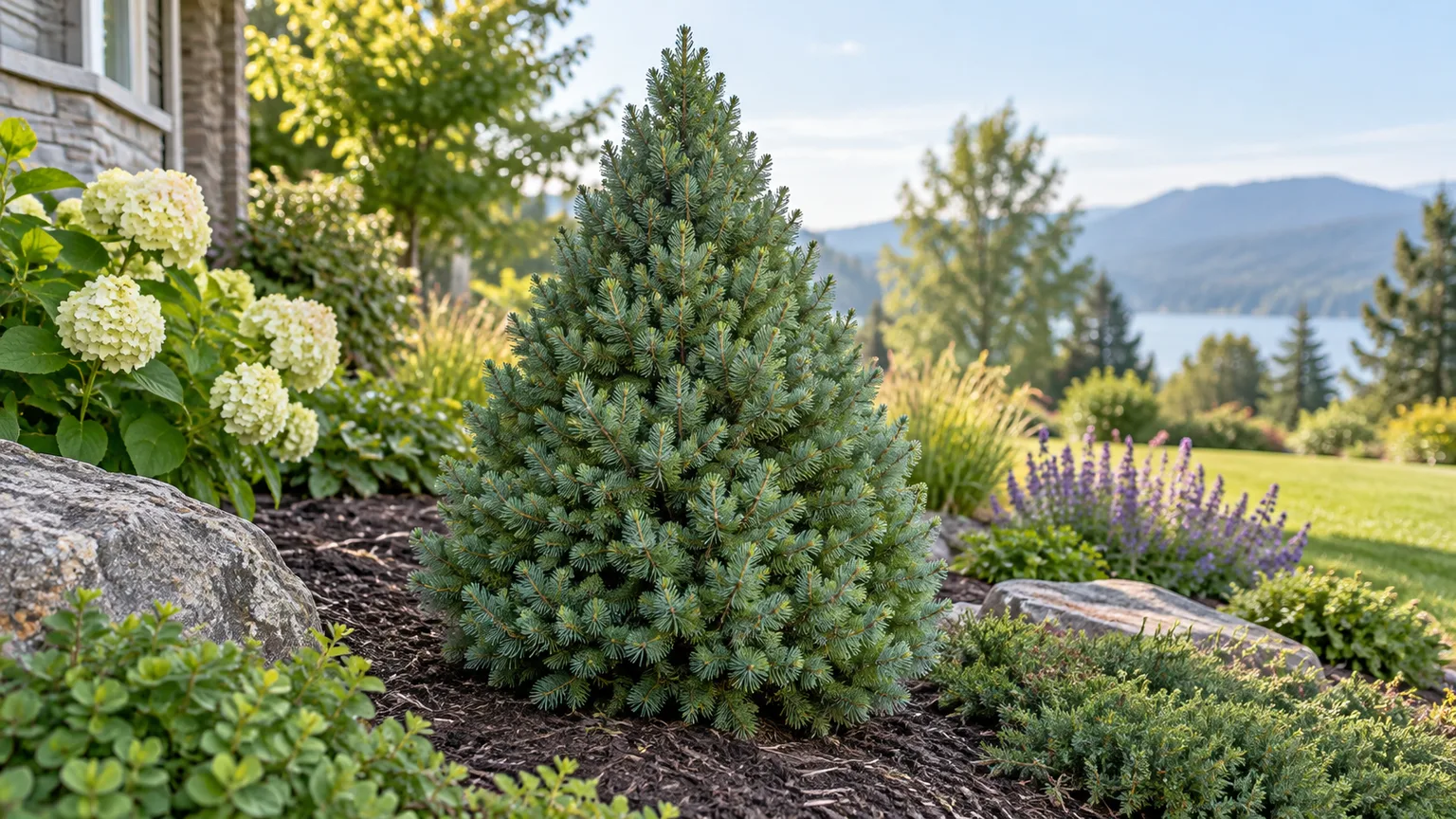
Dwarf Alberta spruce (Picea glauca ‘Conica’) grows slowly into a dense cone, eventually reaching around 10 to 13 feet tall and 5 to 8 feet wide in many landscapes. That slow growth makes it easy to underestimate its eventual size. WSU Extension lists it at about 12 feet high and 6 feet wide and recommends a site protected from hot or cold winds and intense exposure. Its small-tree guide also notes that hot, dry winds can invite spider-mite problems.
This cultivar works well as a narrow evergreen accent in cooler regions with a well-drained root zone. In hot, humid climates or beside a sun-baked wall, it can struggle even if its hardiness zone seems suitable. Do not shear it to hold an arbitrary shape; choose another evergreen if your site is hot, exposed, or too tight for its mature cone.
14. Japanese Stewartia
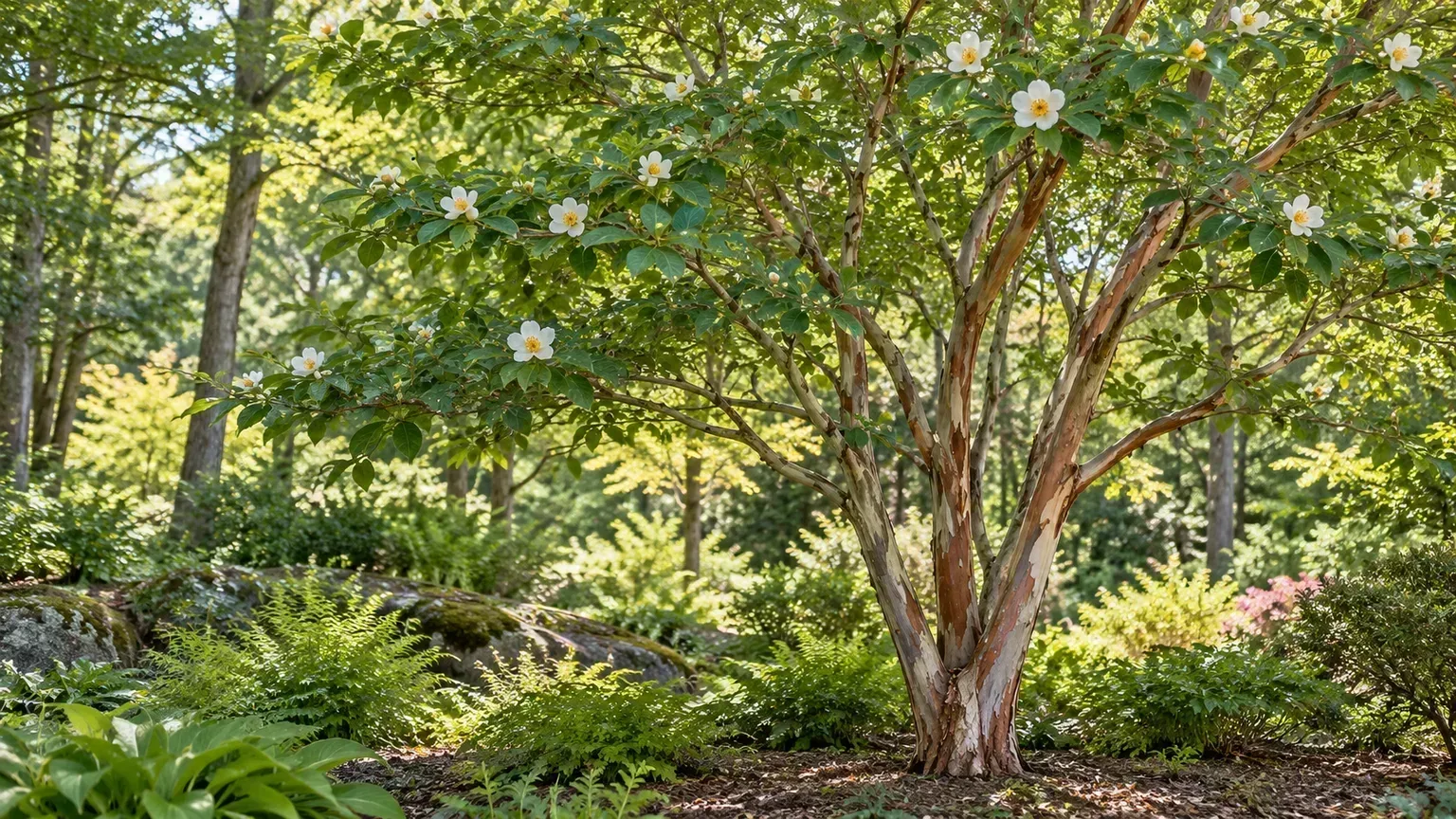
Japanese stewartia (Stewartia pseudocamellia) grows slowly but can eventually reach 25 to 35 feet, with a canopy broad enough to make it a poor fit for many very small yards. It offers white midsummer flowers, red-to-purple fall foliage, and exfoliating bark that stays attractive after leaves drop. Fine Gardening highlights stewartia as one of its small-tree choices, but “small” there includes trees up to about 25 feet; mature size can exceed that mark under favorable conditions. The Fine Gardening list is a useful reminder to treat list categories as approximate.
Plant it in a sheltered position with moist, acidic, well-drained soil and room to mature. It is slow to establish, so do not buy it expecting fast shade. Japanese stewartia suits a patient gardener who wants a distinctive specimen and can accommodate a medium-to-large canopy over time.
15. Chaste Tree
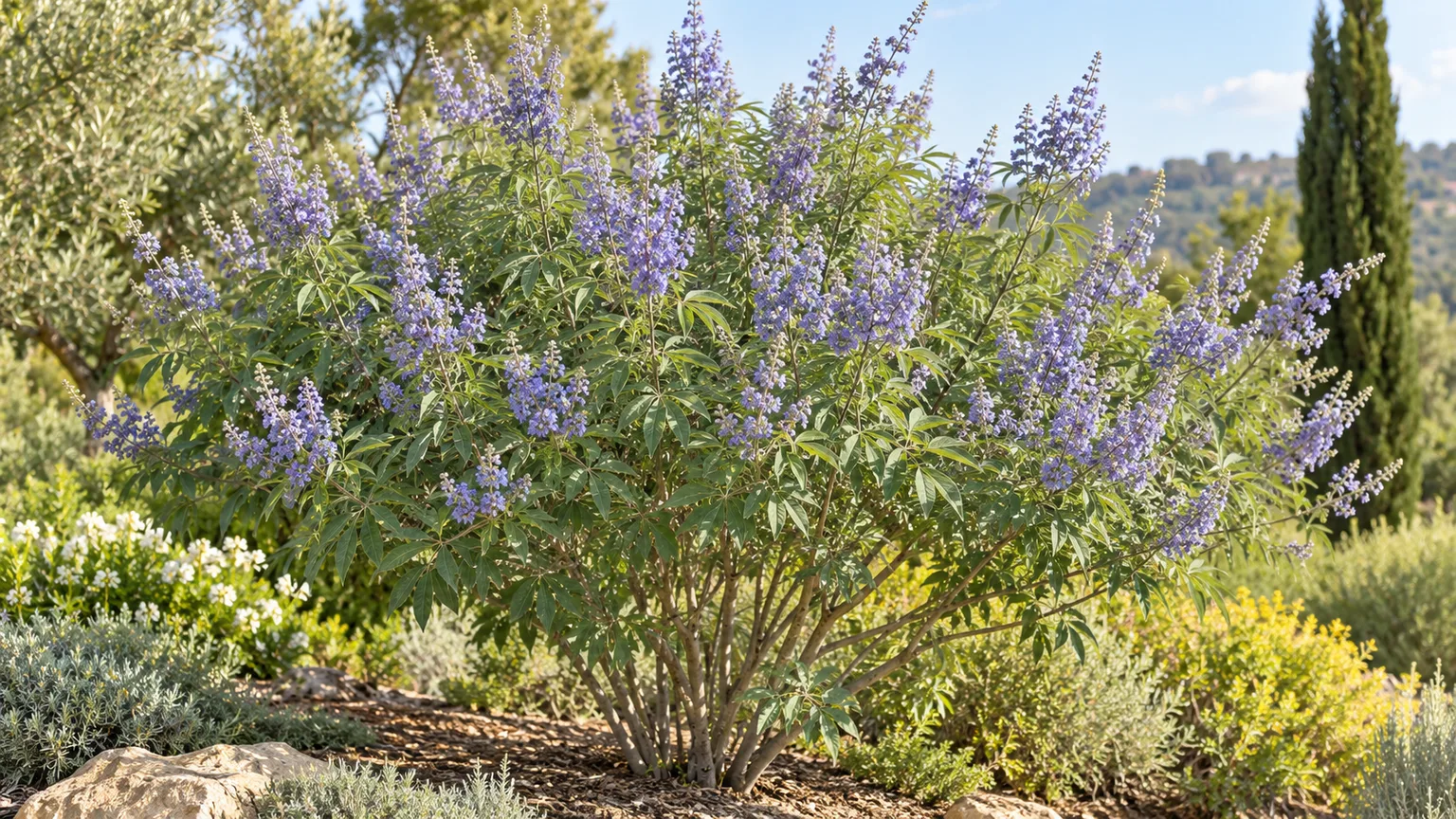
Chaste tree (Vitex agnus-castus) is more accurately a large deciduous shrub or multi-stemmed small tree, usually around 8 to 20 feet tall and 5 to 20 feet wide. Its aromatic foliage and lavender, blue, or white summer flower spikes attract pollinators, and removing spent flowers may encourage another flush. NC State Extension describes it as a warm-climate plant for full sun and well-drained soil; in colder parts of its range, stems can die back and regrow as a shrub. NC State Extension’s chaste tree profile before treating it as a dependable single-trunk tree.
Vitex works best in a sunny, warm site where a multi-stem habit is welcome. It can be pruned to shape, but repeated hard pruning changes the plant’s form and may reduce its value as a small tree. Confirm local hardiness and invasive status before planting, particularly near natural areas.
16. Weeping Cherry
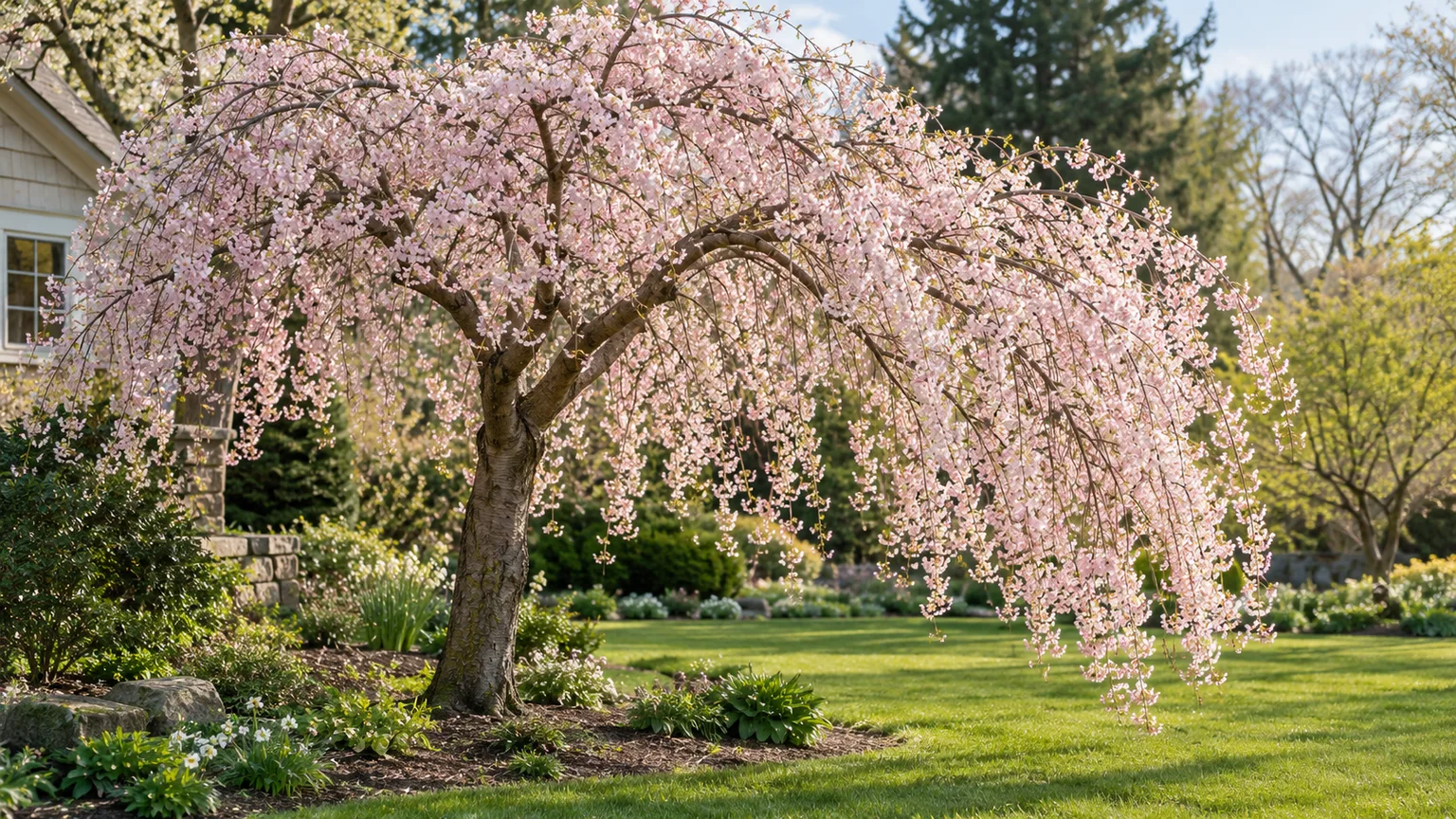
“Weeping cherry” can describe multiple cultivars grafted onto rootstocks, so mature size ranges from a compact fountain form to a tree that reaches several dozen feet. WSU Extension lists ‘Snow Fountains’ at about 12 feet tall by 12 to 15 feet wide and describes its cascading branches and spring flowers. That figure applies to that particular selection, not every tree sold under the common name. The extension cultivar entry is a good reason to get the exact cultivar and rootstock in writing.
Flowering cherries prefer sun and well-drained soil, and their flowers can be damaged by late frost. Choose the graft height and canopy spread for the spot: a high-grafted weeper may look taller at planting than its eventual canopy suggests. Prune mainly to remove dead, damaged, or crossing branches, and avoid planting it where regular shaping would destroy the fountain form.
17. Witch Hazel
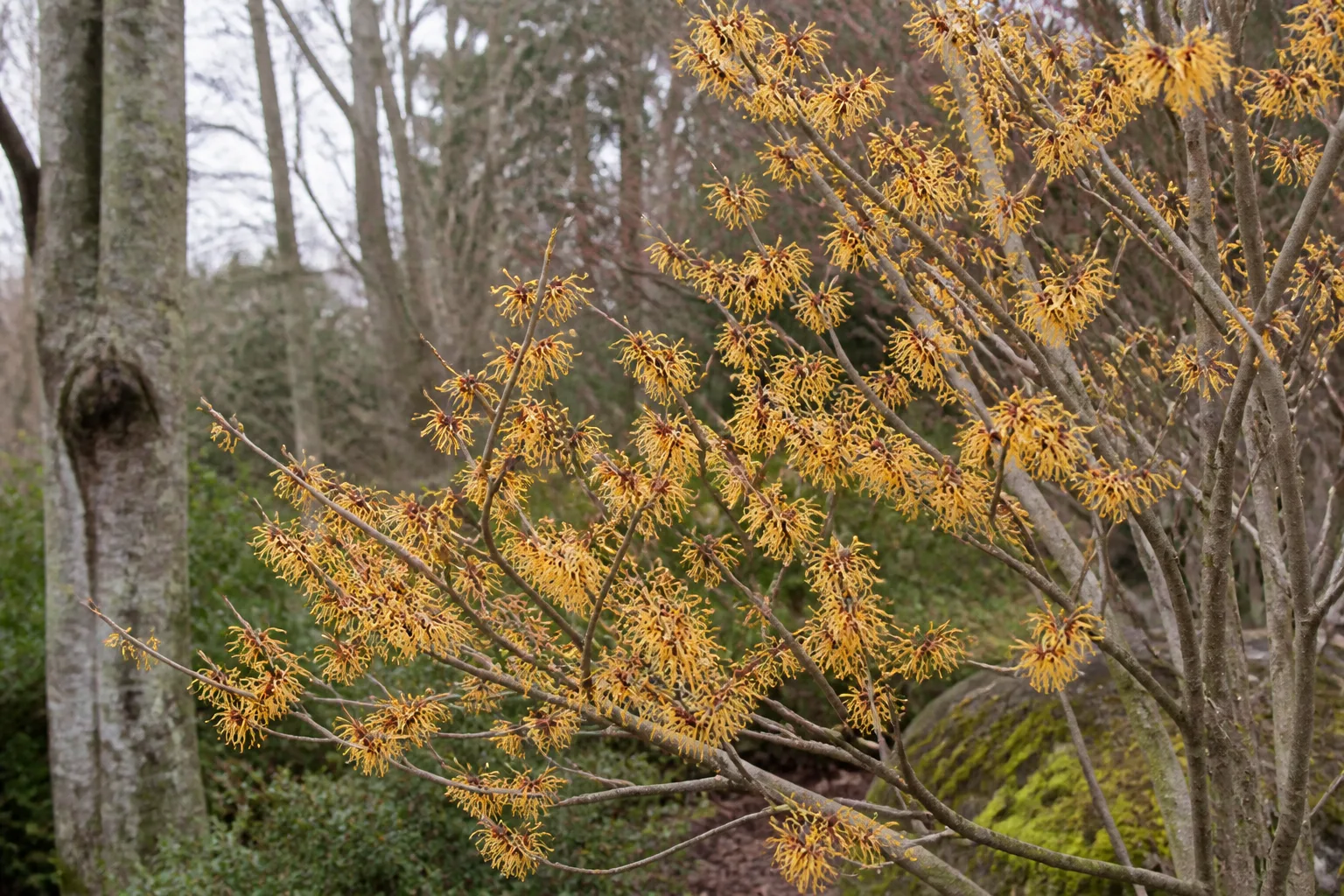
Witch hazel (Hamamelis) is usually a 10-to-20-foot shrub or small tree, with bloom season determined by species. Native H. virginiana flowers in fall, while several Asian species and hybrids bloom in winter. Its spidery, fragrant petals are a welcome surprise when most of the garden is dormant, and its rounded habit works along a woodland edge or mixed border. NC State Extension’s profile of American witch hazel describes a native plant that tolerates sun to partial shade and moist, well-drained soil. NC State Extension’s American witch hazel profile.
Check the botanical name before buying if winter flowers are your main goal; a label that only says “witch hazel” does not tell you whether it blooms in autumn or winter. Give it room to mature as a multi-stem shrub, and remove damaged or crossing growth rather than shearing it into a formal hedge. It is a better choice for a layered garden than a narrow foundation strip.
18. Paper Birch
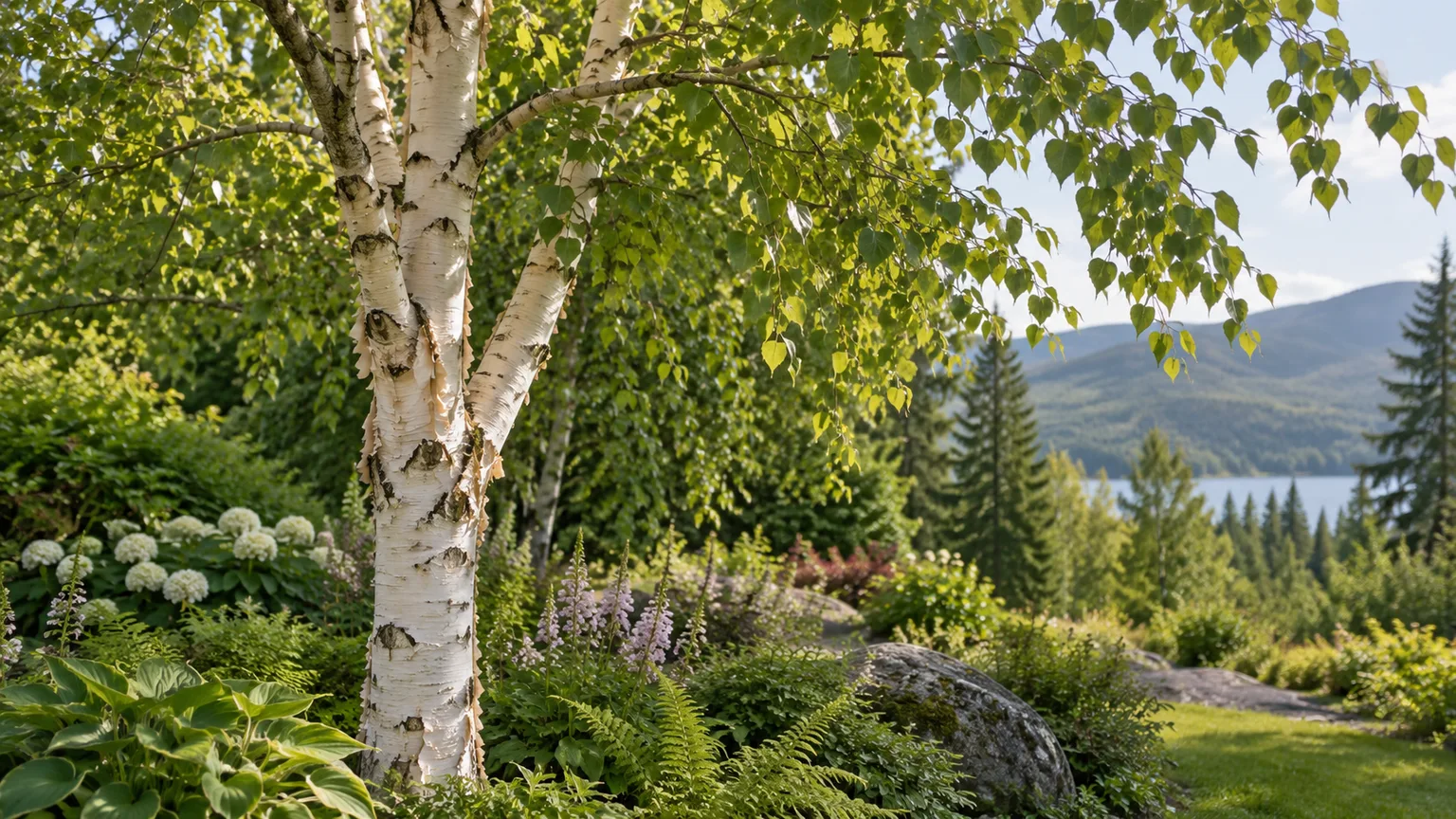
Paper birch (Betula papyrifera) has unmistakable peeling white bark, but it is not a medium-sized tree for most yards. NC State Extension lists a mature size of about 50 to 70 feet tall and 25 to 45 feet wide, far beyond the scale of a typical compact lot. NC State Extension’s paper birch profile describes the species as a fast-growing pioneer tree; its broad mature dimensions are the main reason to reserve it for a spacious, cool-climate property.
Paper birch prefers cooler conditions and moist soil, and it can be stressed by hot, dry summers. If you love birch bark but lack space, ask a local arborist or extension office about a genuinely smaller, region-adapted birch species or cultivar rather than relying on repeated pruning to restrain a full-size paper birch. This item belongs on a medium-tree list only with that size warning attached.
Conclusion: Choose for the Mature Tree
Before you buy, measure the full planting area and compare the tree’s mature height and spread with buildings, fences, overhead lines, sidewalks, and neighboring property. Do not use pruning as the plan for holding a naturally large species in a small footprint. Local utility rules and municipal planting restrictions may also affect where a tree can go; WSU Extension advises checking local planting guidance and considering mature canopy dimensions before choosing an urban tree.
Then verify the exact botanical name, cultivar, and rootstock on the nursery tag. Match hardiness to your winter lows, but also check summer heat, soil drainage, moisture needs, and known local pests or invasive status. If the tag gives only a common name, ask the seller to identify the selection and its expected mature size. A tree that fits its location naturally will be easier to care for and more likely to keep the flowers, foliage, fruit, or evergreen structure that made you choose it.